Learn to Sew: Where to Start and What to Learn First (2026)
Sewing looks complicated from the outside, but it rests on a handful of skills you can learn in an afternoon. This guide shows what you need, what to learn first and how the rest of the craft builds on those basics.
In This Article
The Beginner's Short List
- Tools: needles, thread, fabric scissors, pins, a tape measure, a seam ripper and an iron
- First skills: threading a needle, tying a knot, a running stitch, a backstitch and sewing on a button
- First fabric: medium-weight woven cotton
- First projects: rectangles and straight seams, such as a pillowcase or tote bag
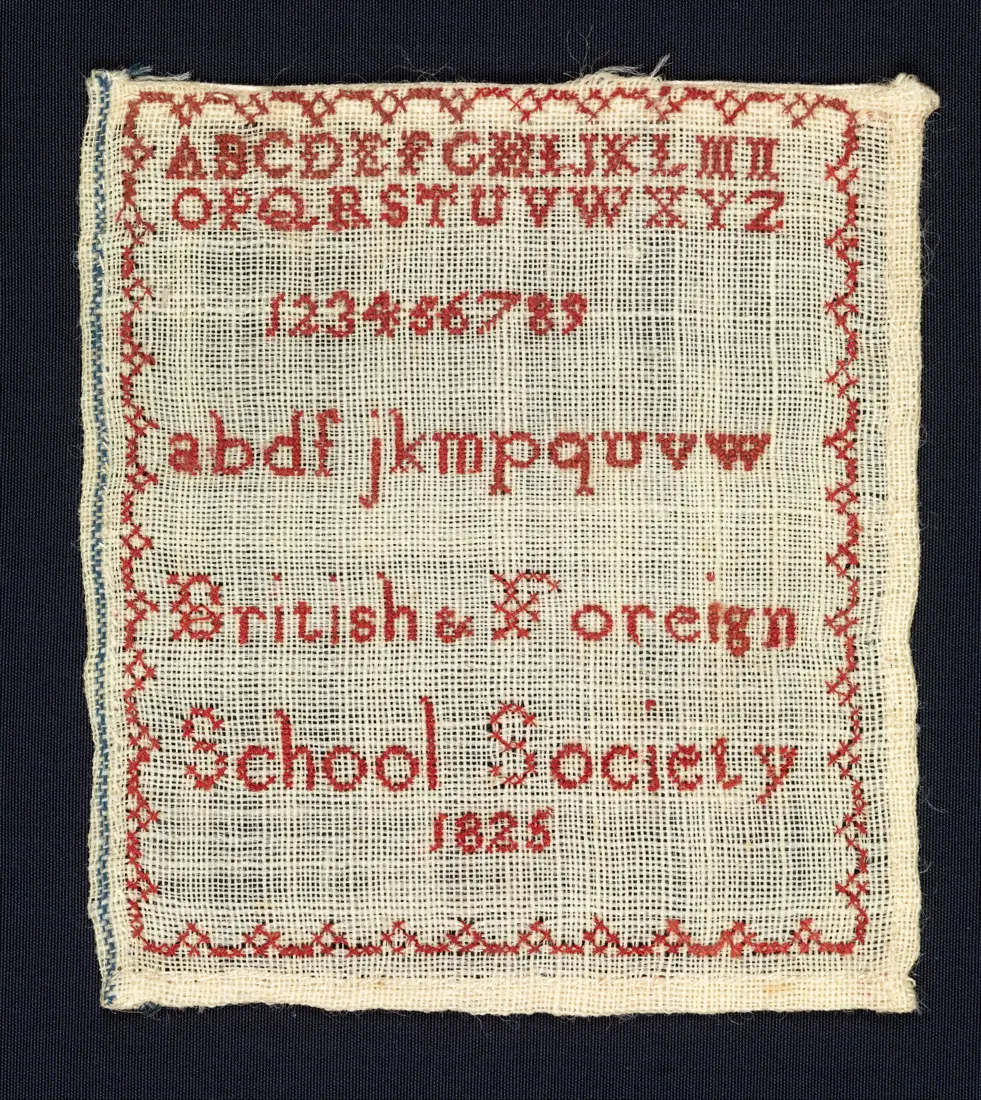
People have taught each other to sew for tens of thousands of years, and for most of that time children learned at home or at school by stitching samplers like the one above. You do not need a sewing room, an expensive machine or a natural talent. You need a few tools, some practice fabric and a sensible order to learn things in.
What You Need to Start
A beginner's kit is small. Buy reasonable quality where it matters most, scissors and pins, and keep everything else simple.
| Tool | What It Is For | Beginner Tip |
|---|---|---|
| Hand-sewing needles | Every hand stitch, repairs and finishing | A mixed pack of "sharps" covers most fabrics |
| Thread | Joining fabric | All-purpose polyester in a color matching your fabric |
| Fabric scissors | Cutting fabric cleanly | Never use them on paper, which dulls the blades |
| Small snips | Trimming threads | Keep them beside you while you sew |
| Pins and pincushion | Holding layers together before sewing | Glass-head pins will not melt under an iron |
| Tape measure and ruler | Measuring fabric, bodies and seam allowances | A clear quilting ruler makes straight lines easy |
| Seam ripper | Unpicking mistakes | Every sewist uses one, so expect to as well |
| Fabric marker or chalk | Marking cutting and stitching lines | Test it on a scrap to be sure it washes out |
| Iron | Pressing seams flat as you go | Pressing is half the secret of neat sewing |
A sewing machine is optional at the start. If you buy or borrow one, our guide to sewing machines explains the types and parts, and a basic model with an adjustable straight stitch, a zigzag stitch and a reverse button handles almost every beginner project. Our guide to hand sewing vs. machine sewing helps you decide when each makes sense.
The First Skills to Learn
Learn these in order. Each one builds on the one before.
- Thread a needle and tie a knot. It sounds trivial, but a good knot and the right thread length prevent most early frustration. See how to thread a needle and tie a knot.
- Tell the right side of fabric from the wrong side. Patterns depend on it. See right side vs. wrong side of fabric.
- Sew a running stitch and a backstitch. The running stitch is quick for basting and gathering; the backstitch is strong enough for seams. See hand sewing stitches.
- Sew a straight seam with a seam allowance. Place two pieces right sides together, pin, and stitch a set distance from the edge.
- Press the seam and finish the edges. Pressing makes seams lie flat, and finishing stops woven fabric from fraying. See types of seams and seam finishes.
- Hem an edge. Fold the raw edge under twice and stitch it down.
- Sew on a button. The most useful repair skill of all.
Choosing Your First Fabric
The right fabric makes learning far easier. Look for a medium-weight woven cotton, such as quilting cotton, poplin, chambray or a light canvas. These fabrics stay put while you cut and sew, show where the grain runs, take a crisp press and are affordable to practice on.
Leave these for later: slippery fabrics such as satin, chiffon and silk, which shift as you cut; stretchy knits such as jersey, which need special needles and stitches; and very thick fabrics, which are hard to sew through by hand or on a basic machine. Old sheets, pillowcases and shirts make good free practice fabric.
Good First Projects
The best first projects are flat, use straight lines and need no fitting. They teach cutting, pinning, seams, pressing and hems in a low-stakes way.
| Project | Skills It Teaches |
|---|---|
| Tea towels or napkins | Cutting straight, pressing and double-fold hems |
| Pillowcase | Straight seams, enclosed seams and a hemmed opening |
| Envelope cushion cover | Measuring, overlapping edges and corners |
| Tote bag | Seams, boxed corners and attaching straps |
| Drawstring bag | Making a casing and threading a cord |
| Simple elastic-waist skirt or pajama pants | Reading a pattern, casings and a first garment |
Pick one or two new skills per project. Once you can make a pillowcase neatly, a tote bag adds straps and corners; after that, a simple garment adds pattern reading and fitting.
Learning to Read a Pattern
Sooner or later you will want to follow a sewing pattern. Patterns have their own language of symbols, markings and shorthand, from RST for "right sides together" to WOF for "width of fabric." Our list of sewing abbreviations decodes the common ones, and the sewing glossary covers the terms. For beginners, look for patterns labeled easy or beginner with few pieces and no zippers or buttonholes; our guide to sewing skill levels explains what each label usually means.
Habits That Make Sewing Easier
- Press as you sew. Press each seam before you cross it with another.
- Measure twice, cut once. Fabric cannot be uncut.
- Test on a scrap. Check stitch length, tension and marking tools on a leftover piece first.
- Keep thread lengths short when hand sewing, which prevents tangles.
- Expect to unpick. Taking out a seam is a normal part of sewing, not a failure.
- Practice little and often. Short regular sessions build skill faster than rare marathons.
Learn to Sew: Start Here
Hand Sewing vs. Machine Sewing
Speed, strength, control and cost compared, plus when to use each.
Right Side vs. Wrong Side of Fabric
Simple checks for prints, solids, selvedges, knits and double-sided cloth.
How to Thread a Needle and Tie a Knot
Thread length, threading tricks, three knots and how to finish off.
Sewing Abbreviations
RST, WOF, SA, FBA, HST, UFO and dozens more explained.
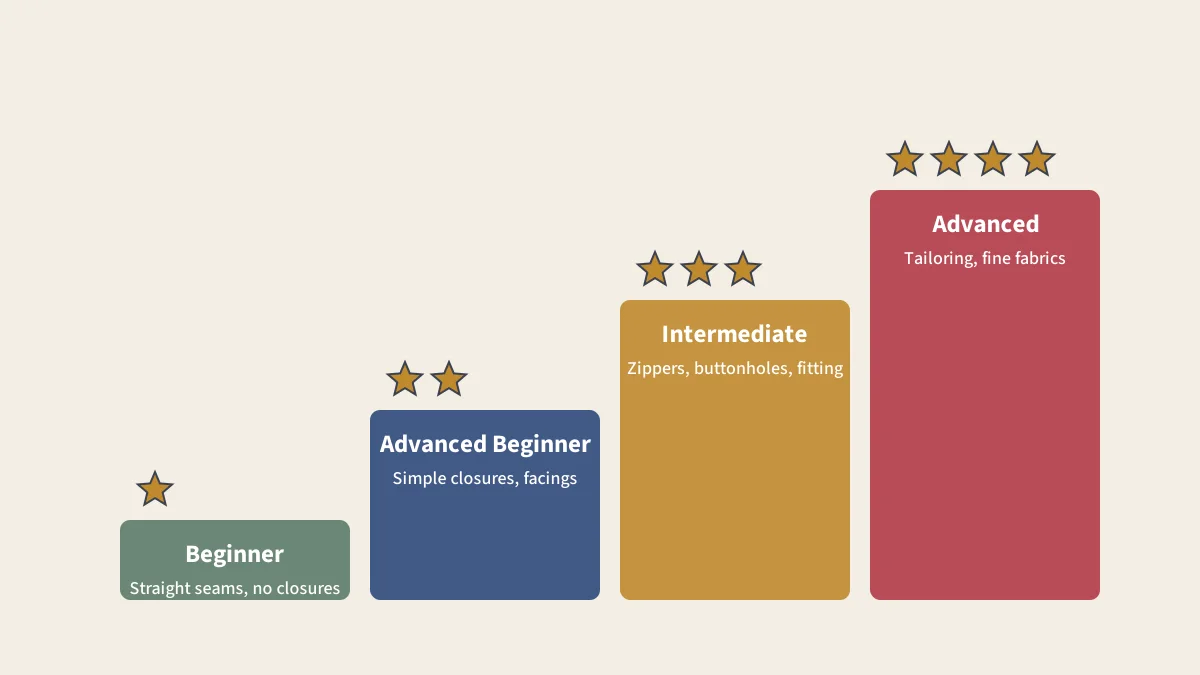
Sewing Skill Levels Explained
What each pattern difficulty label expects and how to level up.
When you want a break from practicing, our sewing history section and sewing facts page show just how long people have been doing what you are learning now.
Sources
- Sampler, British and Foreign School Society, The Metropolitan Museum of Art
Frequently Asked Questions
Can I learn to sew without a sewing machine?
Yes. Every basic seam, hem and repair can be sewn by hand, and hand sewing is a good way to learn how stitches and seams work. A machine makes longer projects much faster, so many people add one later.
What should I sew first?
Choose a small, flat project made from rectangles and straight seams, such as a pillowcase, tote bag, cushion cover, scarf or tea towel. These teach cutting, pinning, seams and hems without fitting.
What is the best fabric for beginners?
Medium-weight woven cotton such as quilting cotton, poplin or chambray. It does not stretch, slip or fray badly, it presses well, and it is affordable. Leave slippery fabrics and stretchy knits until you have more practice.
How long does it take to learn to sew?
You can learn to thread a needle, sew a straight seam and finish a simple project in a few sessions. Skills such as fitting garments take longer, and most sewists keep learning one technique at a time for years.
Keep Reading
Hand Sewing vs. Machine Sewing
Speed, strength, control and cost compared, plus when to use each.
How to Thread a Needle and Tie a Knot
Thread length, threading tricks, three knots and how to finish off.
Right Side vs. Wrong Side of Fabric
Simple checks for prints, solids, selvedges, knits and double-sided cloth.
Sewing Abbreviations
RST, WOF, SA, FBA, HST, UFO and dozens more explained.