Types of Fabric: How Fibers Become the Cloth We Sew (2026)
Every fabric is the answer to two questions: what fiber is it made of, and how were those fibers turned into cloth? Learn those two things and almost any fabric becomes easy to understand.
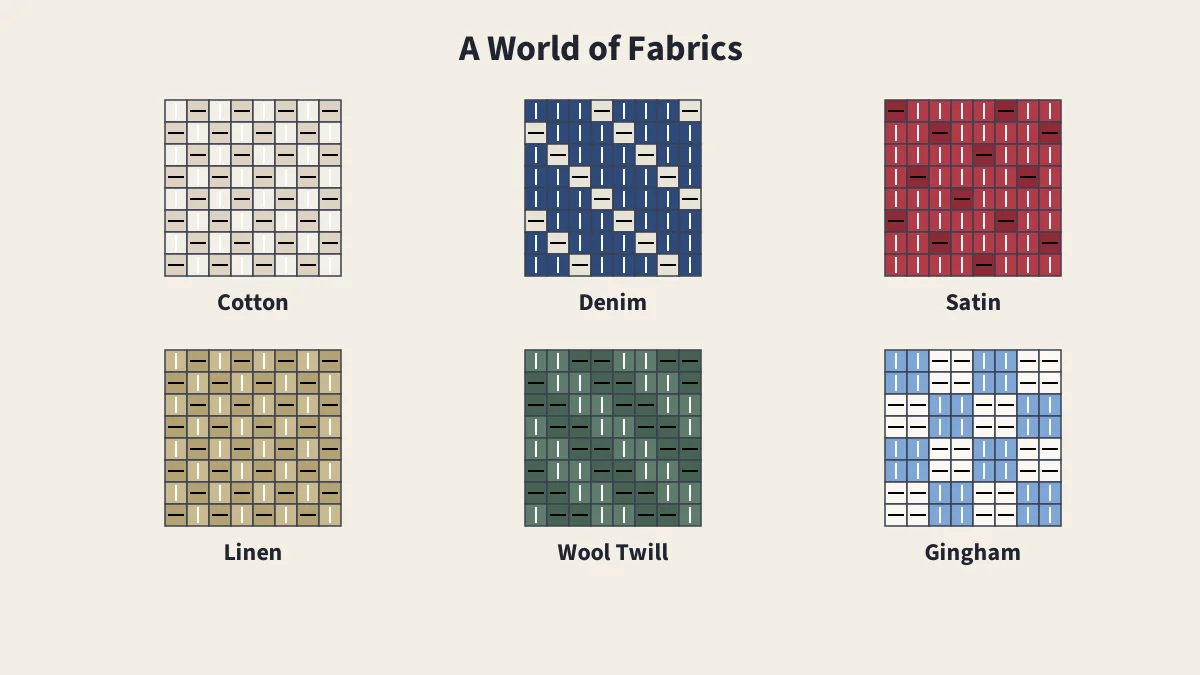
In This Article
Fabric in Brief
- Fiber: natural (plant or animal) or manufactured
- Yarn: fibers spun or twisted together
- Construction: woven, knit or nonwoven
- Weave: plain, twill or satin, plus patterned weaves
- Finish: dyeing, printing and treatments
Fabric shops can seem overwhelming, with hundreds of names on the bolts. But most fabrics can be understood with just a few questions. What fiber is it? How was it constructed? What weave or knit was used? And how was it finished? This section answers each of those questions, then looks at the fibers themselves.
How Fabric Is Made
Almost every fabric goes through the same journey: fiber, then yarn, then fabric, then finishing. The construction method has the biggest effect on how a fabric behaves: woven fabrics are stable, knits stretch, and nonwovens are bonded sheets of fibers.
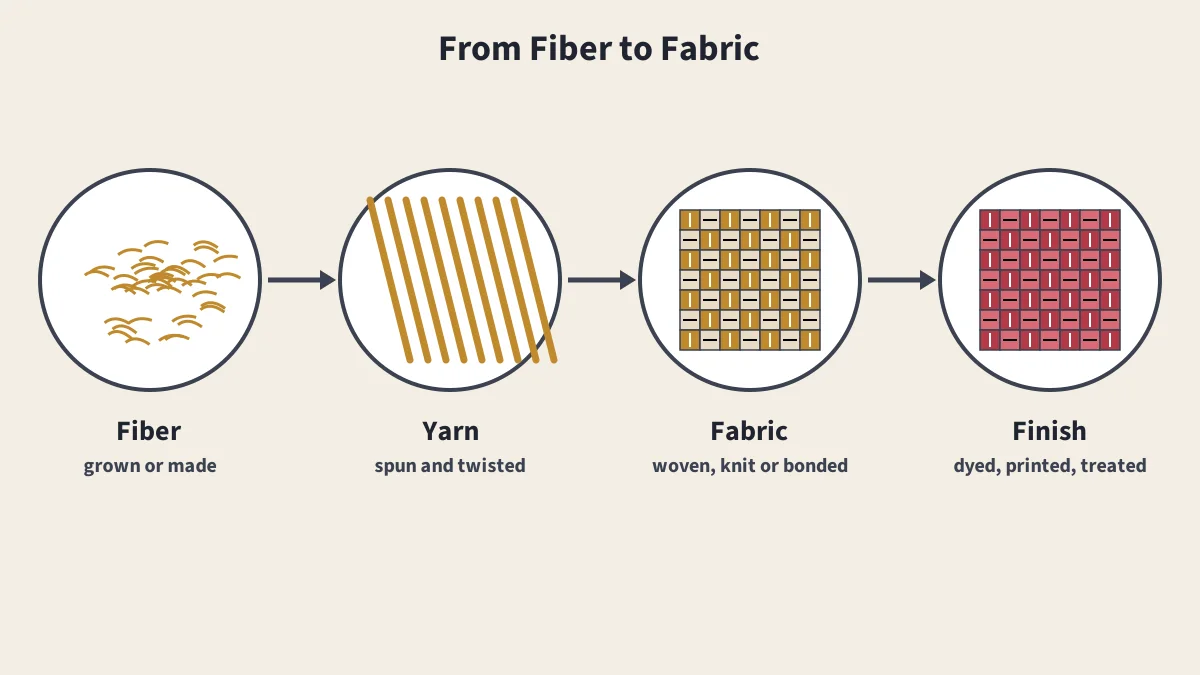
How Fabric Is Made
The four stages: fiber, yarn, fabric construction and finishing.
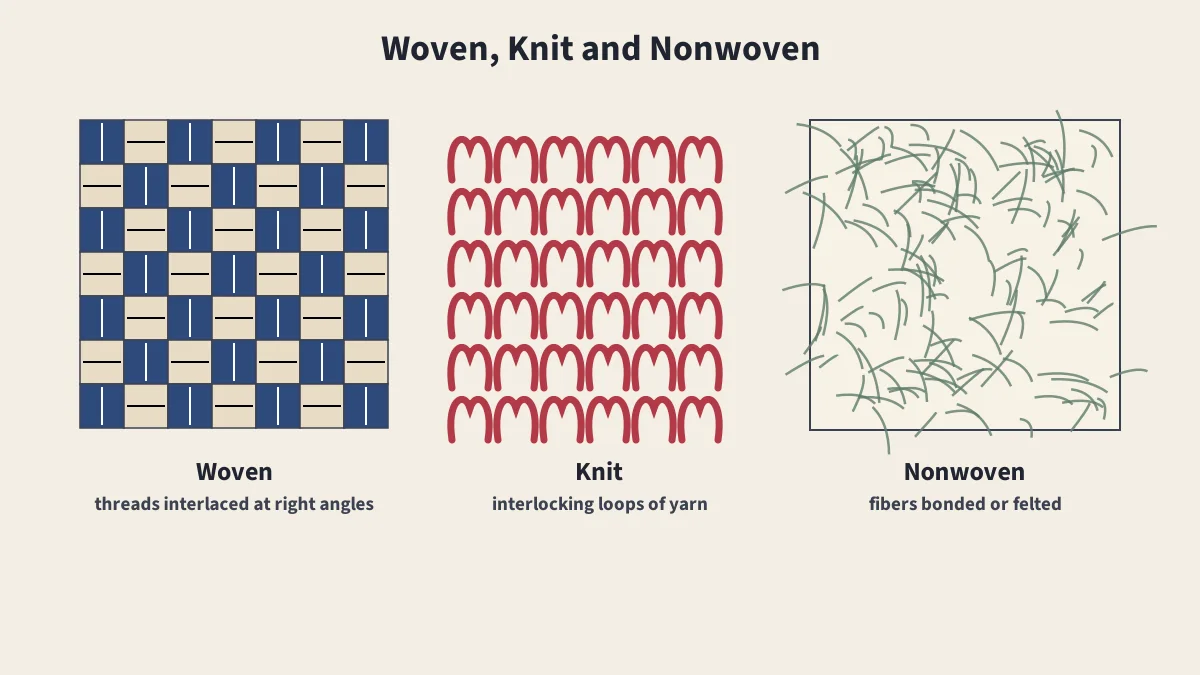
Woven vs. Knit vs. Nonwoven
How the three constructions differ, and how to tell them apart.
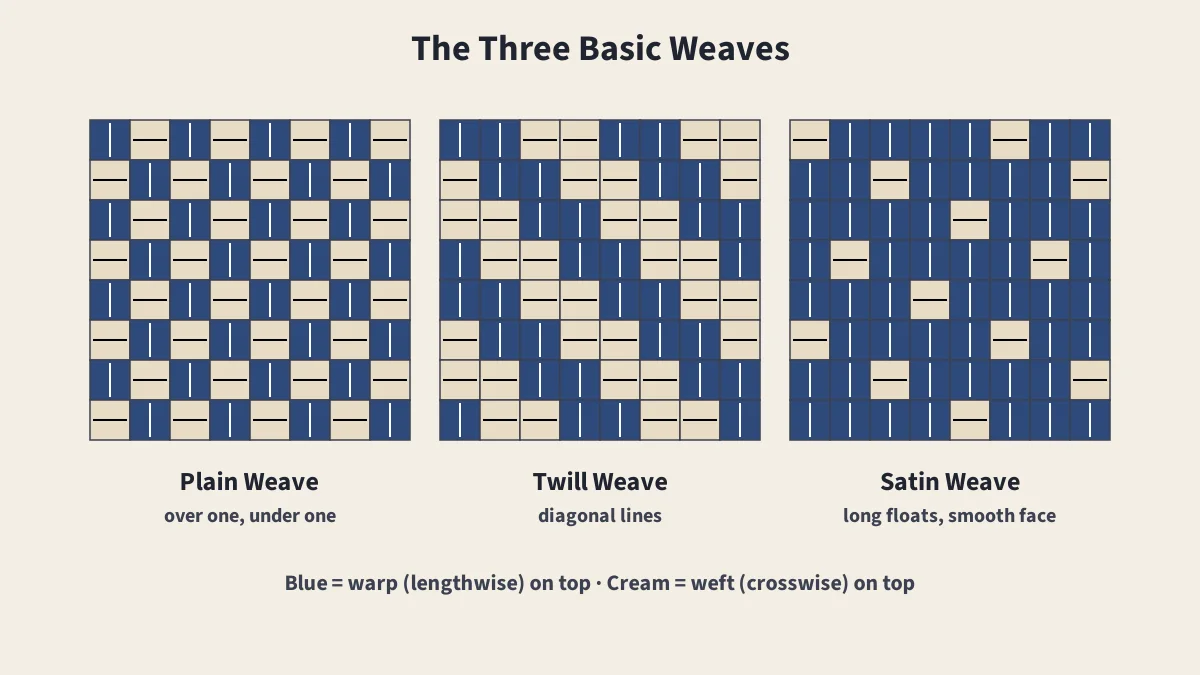
Fabric Weaves
Plain, twill and satin weaves, plus dobby and jacquard.
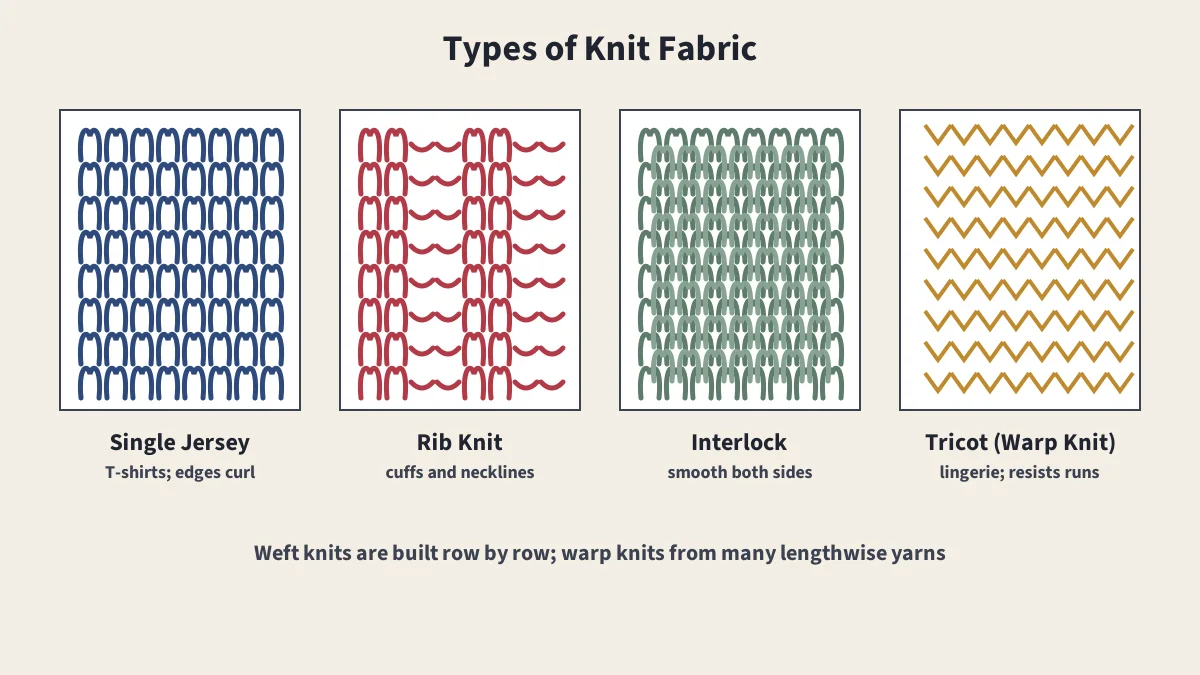
Types of Knit Fabric
Jersey, rib, interlock, ponte, fleece and tricot explained.
Fibers
Fibers come from plants, animals or factories. Plant fibers such as cotton and linen are made of cellulose; animal fibers such as wool and silk are made of protein; manufactured fibers are either regenerated from wood cellulose, like rayon, or fully synthetic, like polyester.
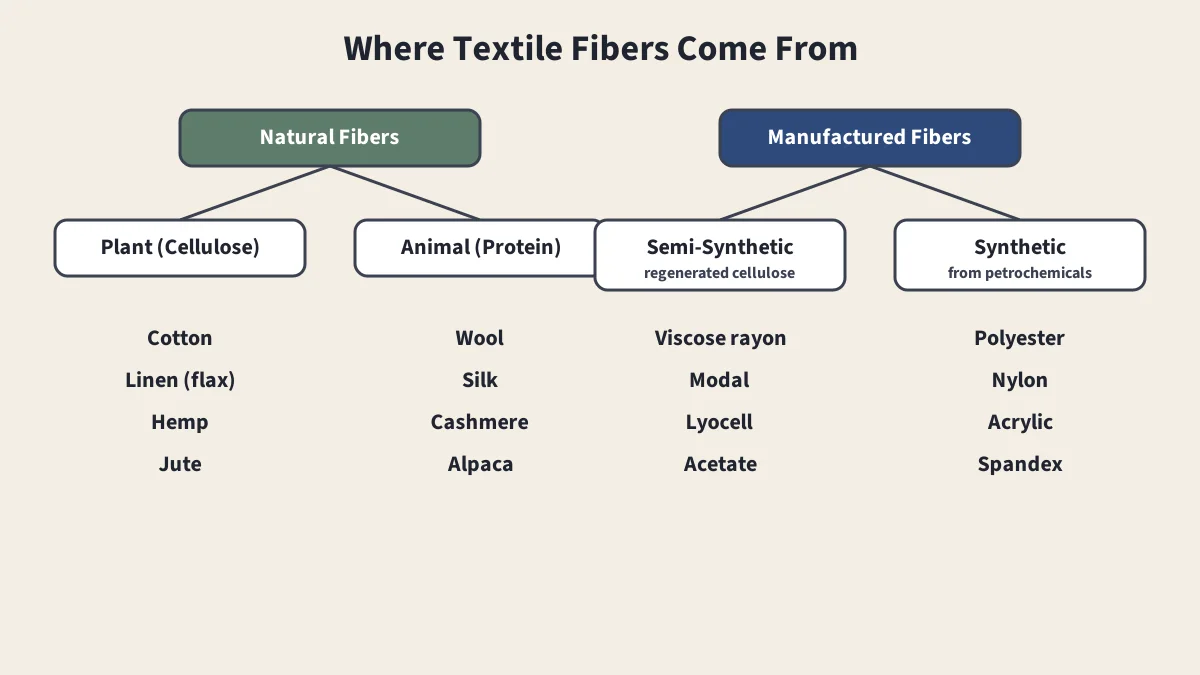
Natural vs. Synthetic Fibers
Plant, animal, semi-synthetic and synthetic fibers compared.
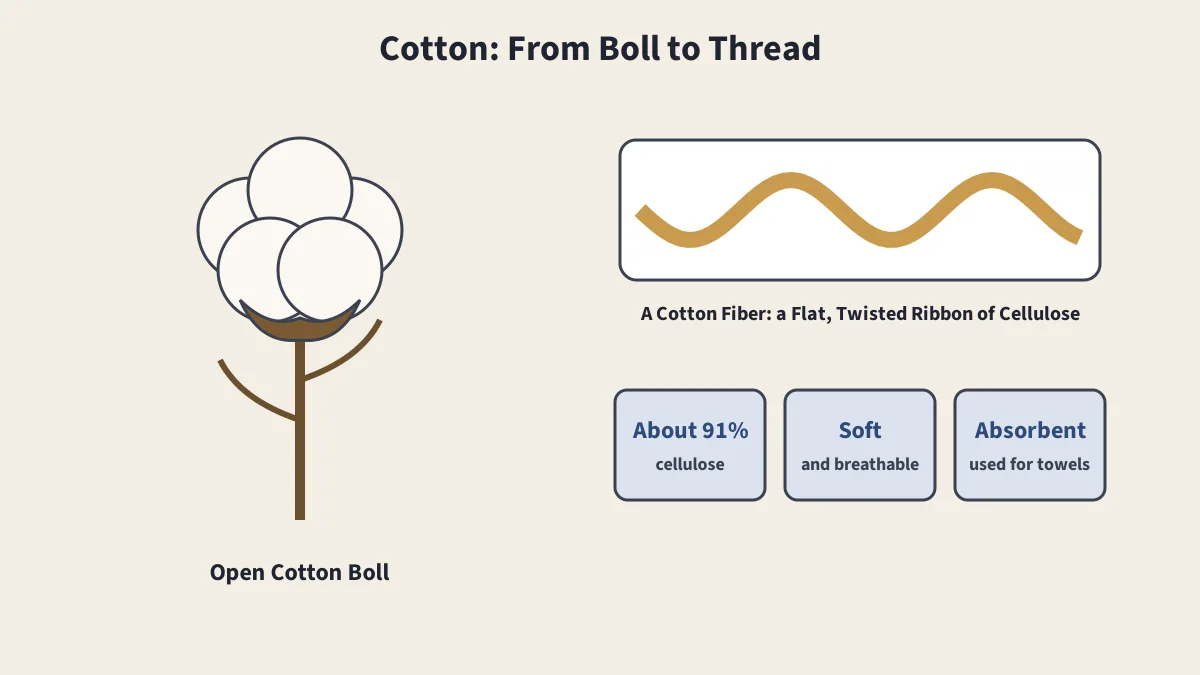
Cotton
Where cotton comes from, its history and how it behaves.
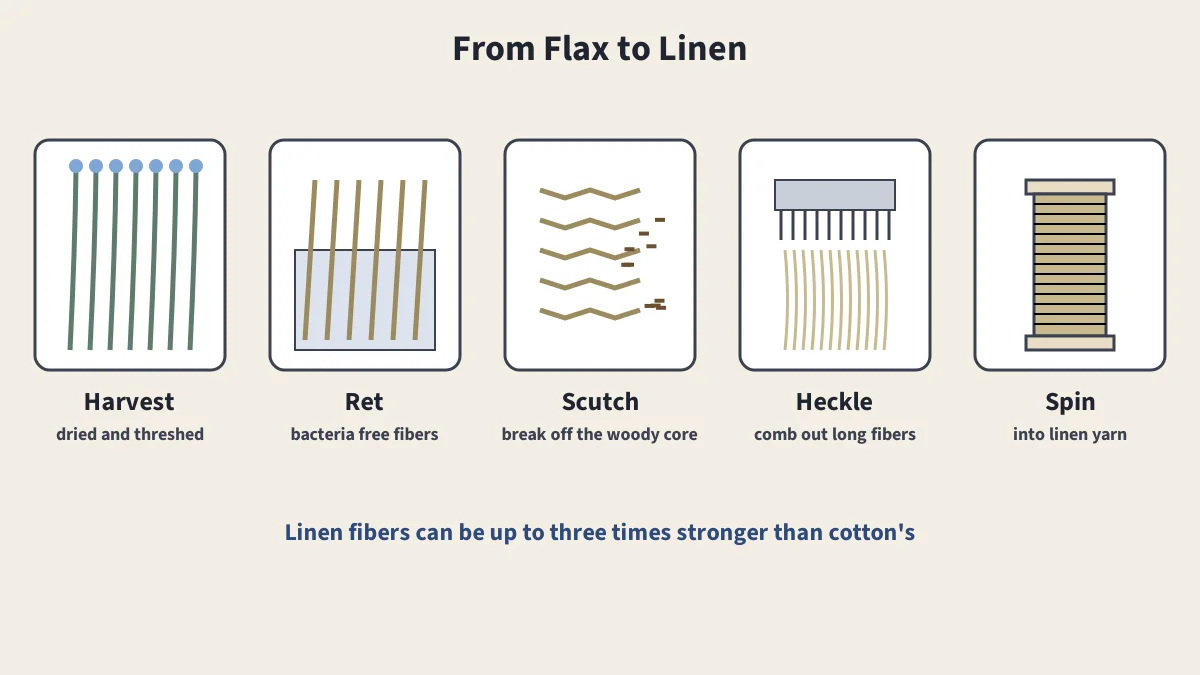
Linen
How flax becomes linen, its long history and how it behaves.
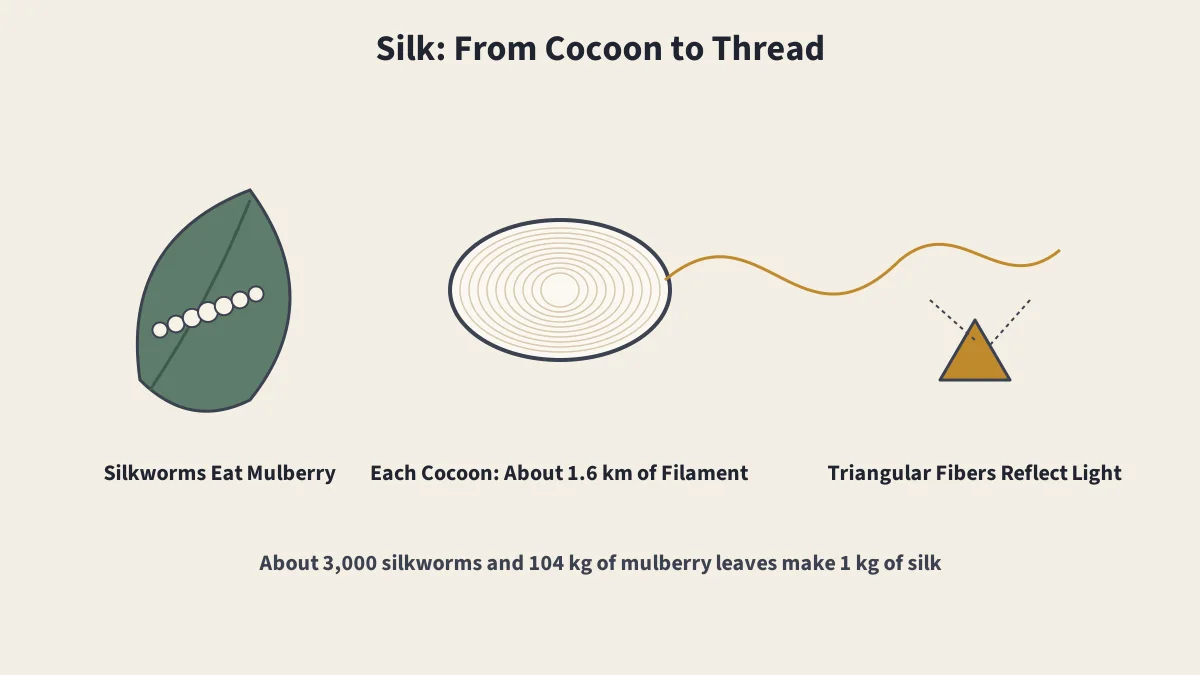
Silk
How silkworms make silk, its history and how it behaves.
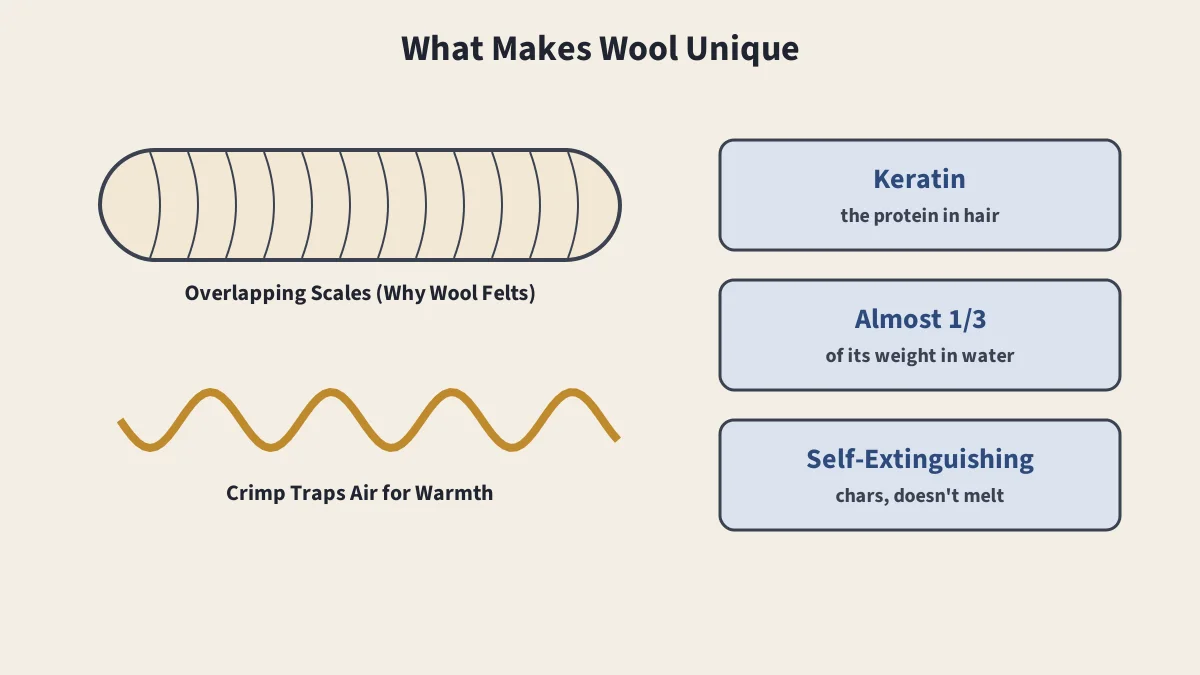
Wool
What wool is, why it is warm and felts, and how to sew it.
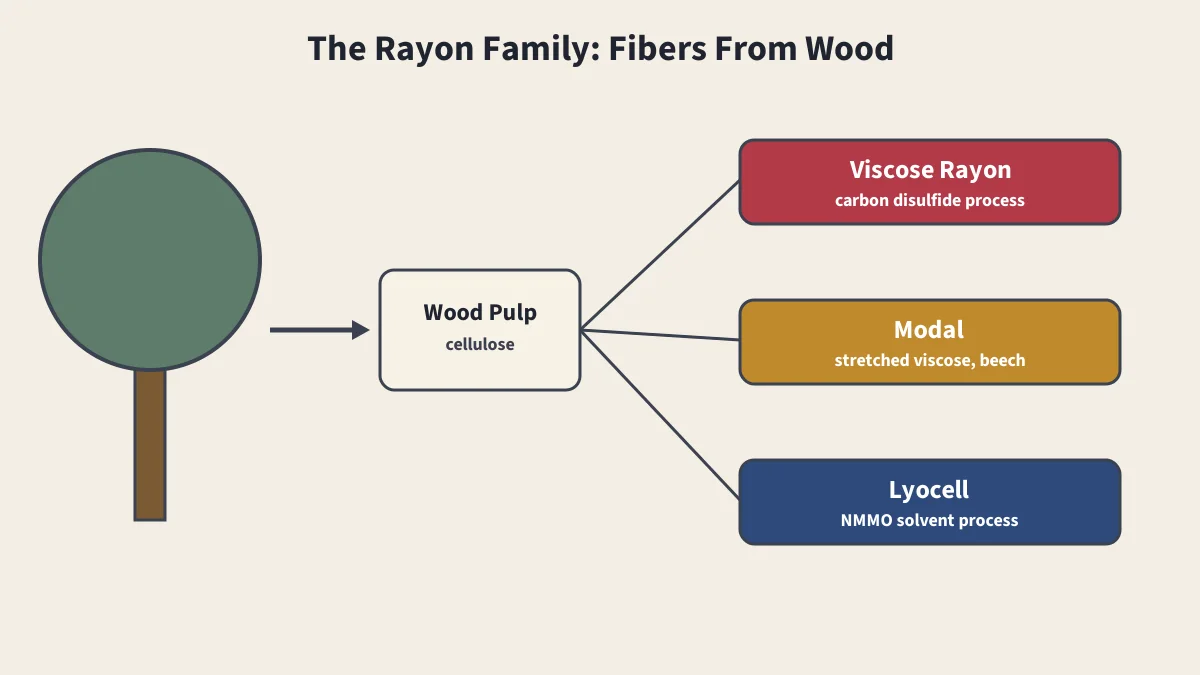
Rayon, Viscose, Modal and Lyocell
How the wood-based fibers are made, and how they differ.
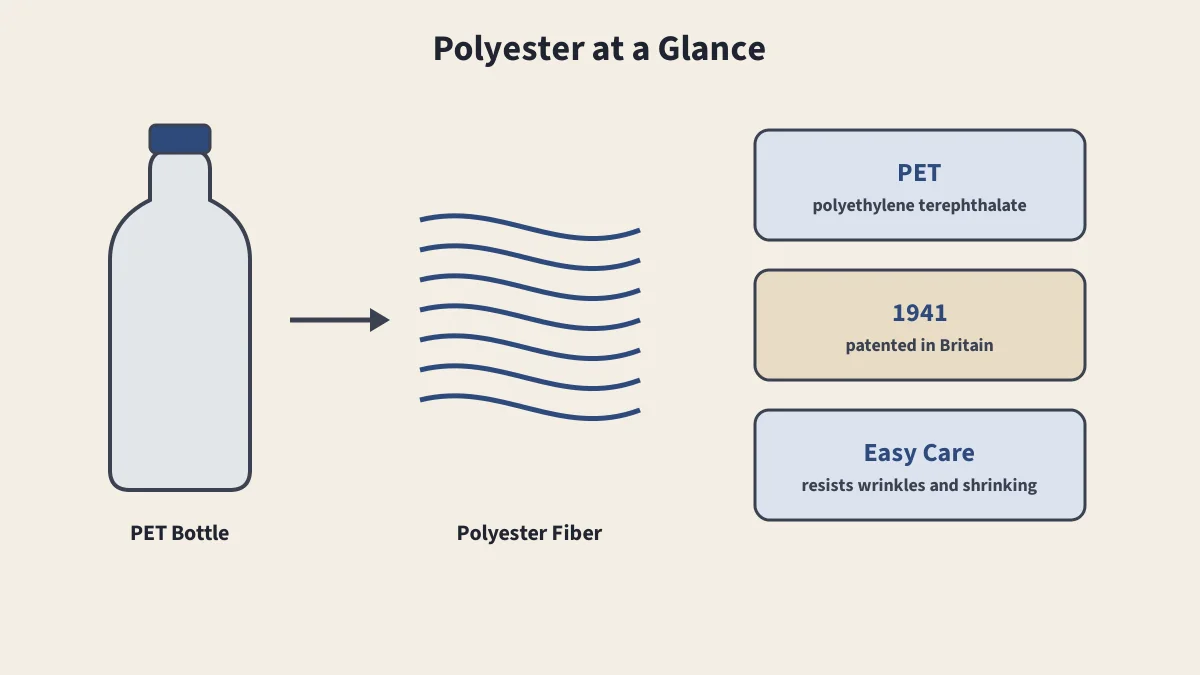
Polyester
What polyester is, its history, its pros and cons and how to sew it.
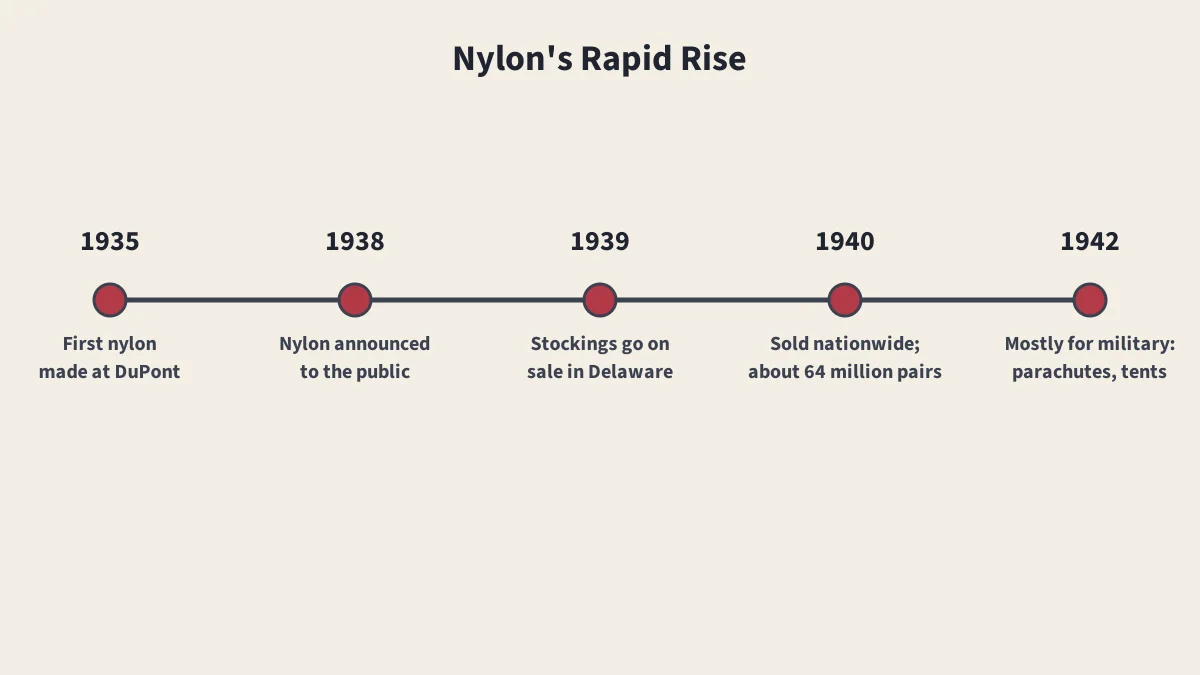
Nylon
The first synthetic fiber, from stockings to parachutes.
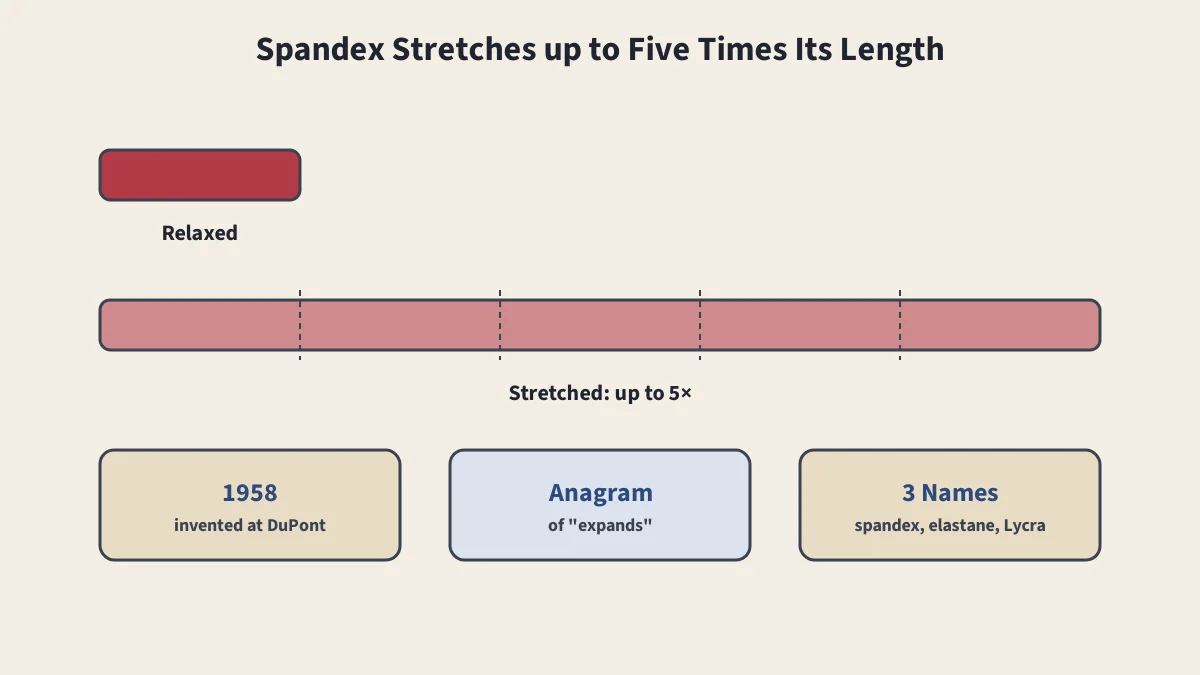
Spandex, Elastane and Lycra
The stretch fiber behind leggings, swimwear and stretch denim.
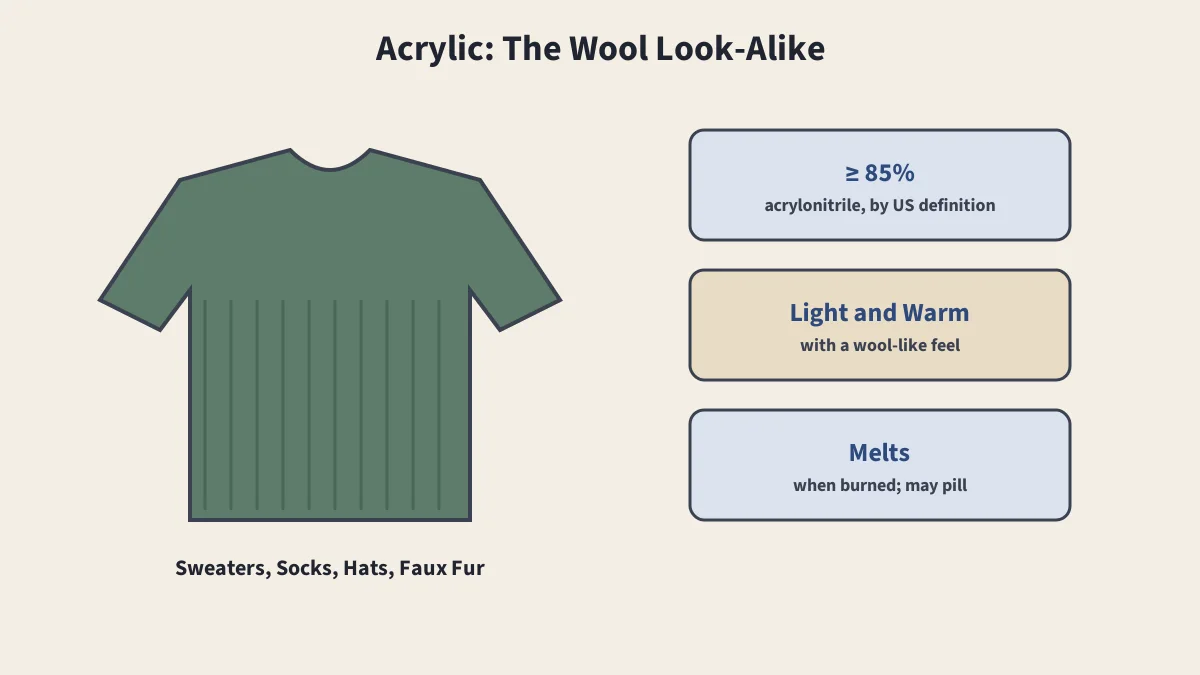
Acrylic
The wool look-alike: properties, modacrylic and faux fur.
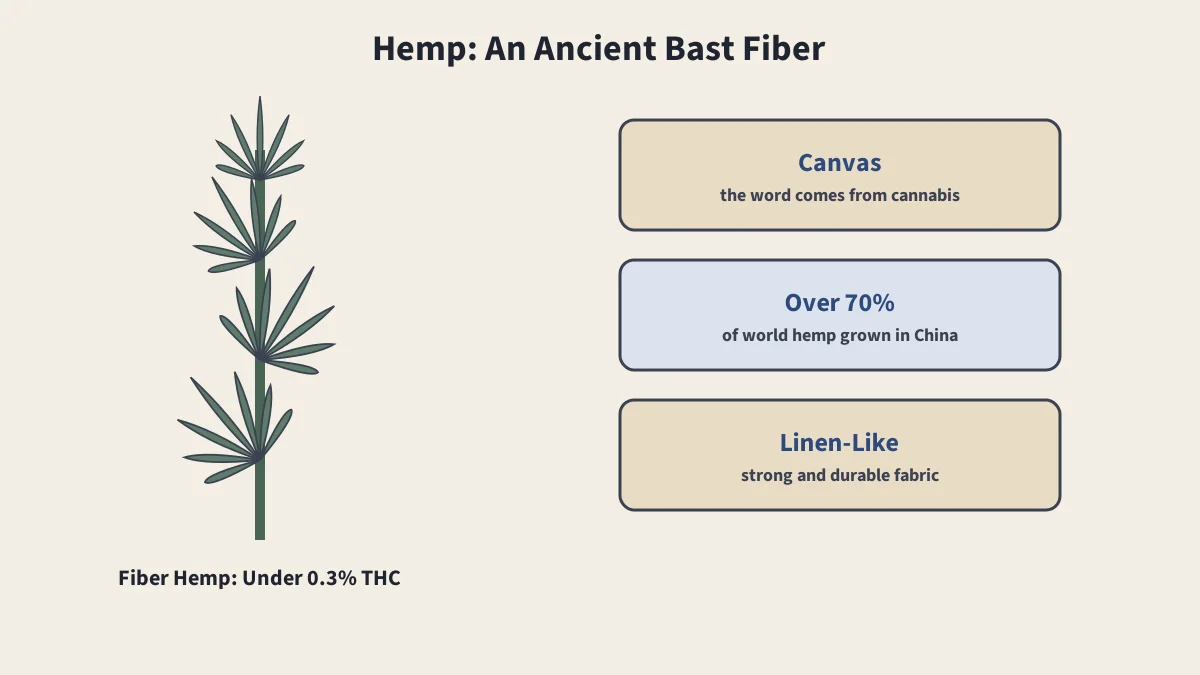
Hemp
The bast fiber behind sails, rope and the word canvas.
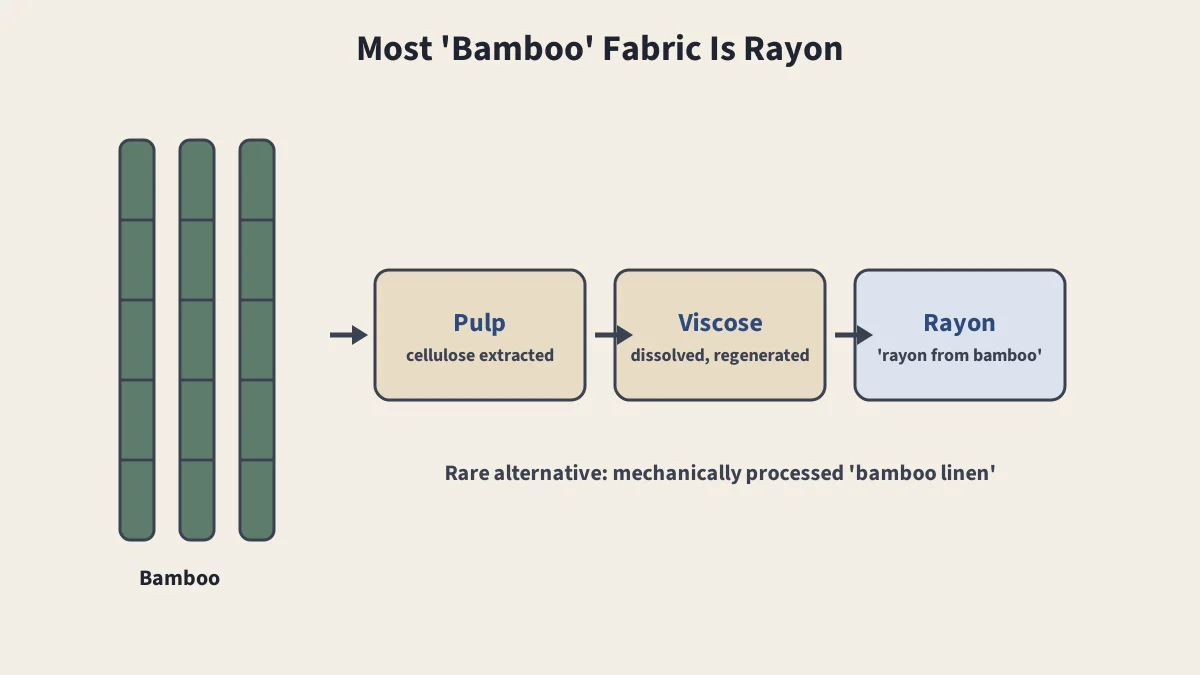
Bamboo Fabric
Why most bamboo fabric is rayon, and what the label must say.
Fabric Families
The same fiber becomes many named fabrics. These guides cover the main cotton, wool and silk fabrics, the sheers, the pile fabrics and the great patterned weaves.
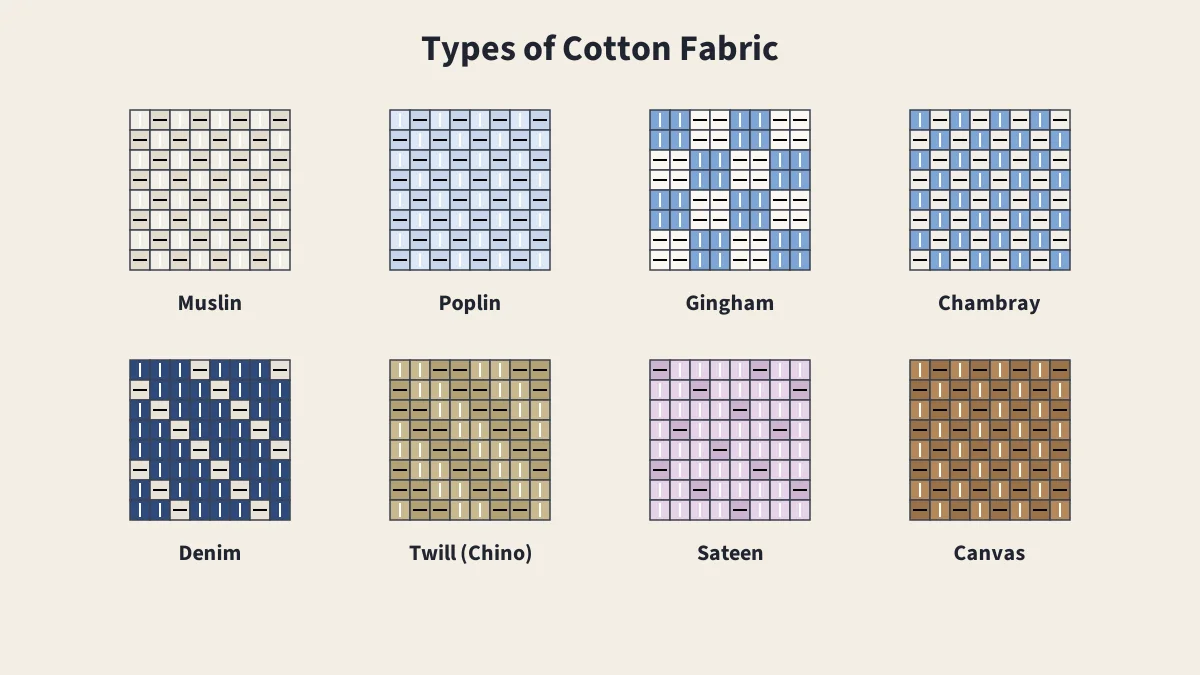
Types of Cotton Fabric
Muslin, poplin, gingham, chambray, denim, corduroy and more.
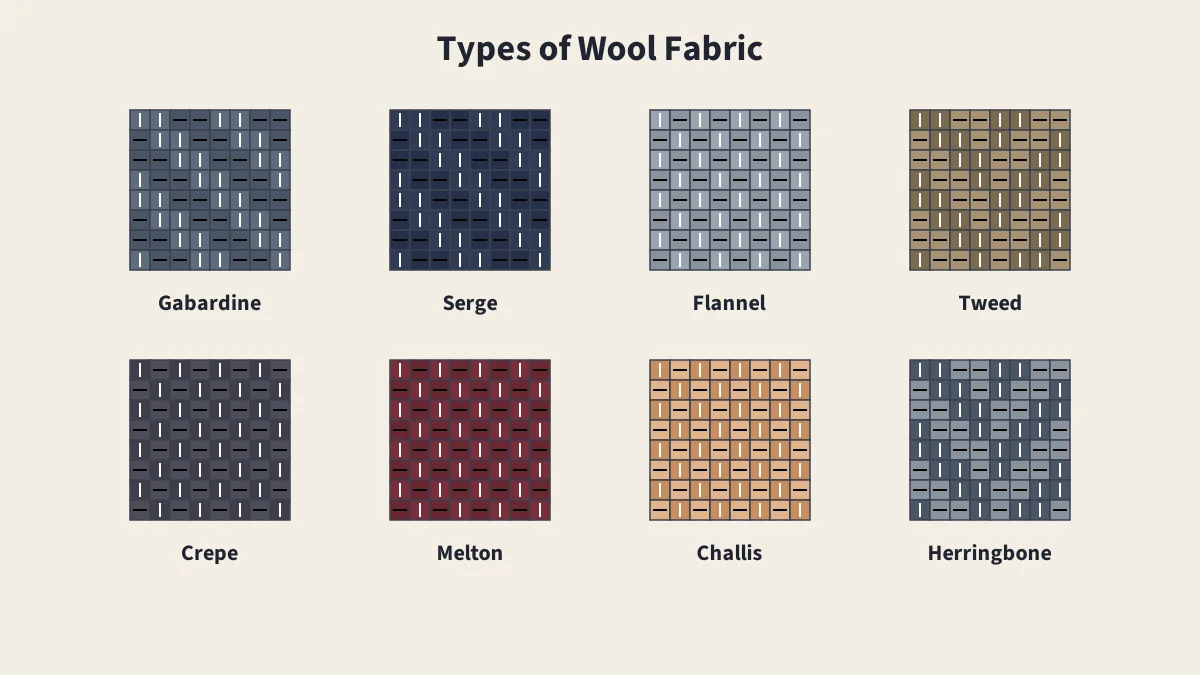
Types of Wool Fabric
Worsted vs. woolen, plus gabardine, tweed, flannel and more.
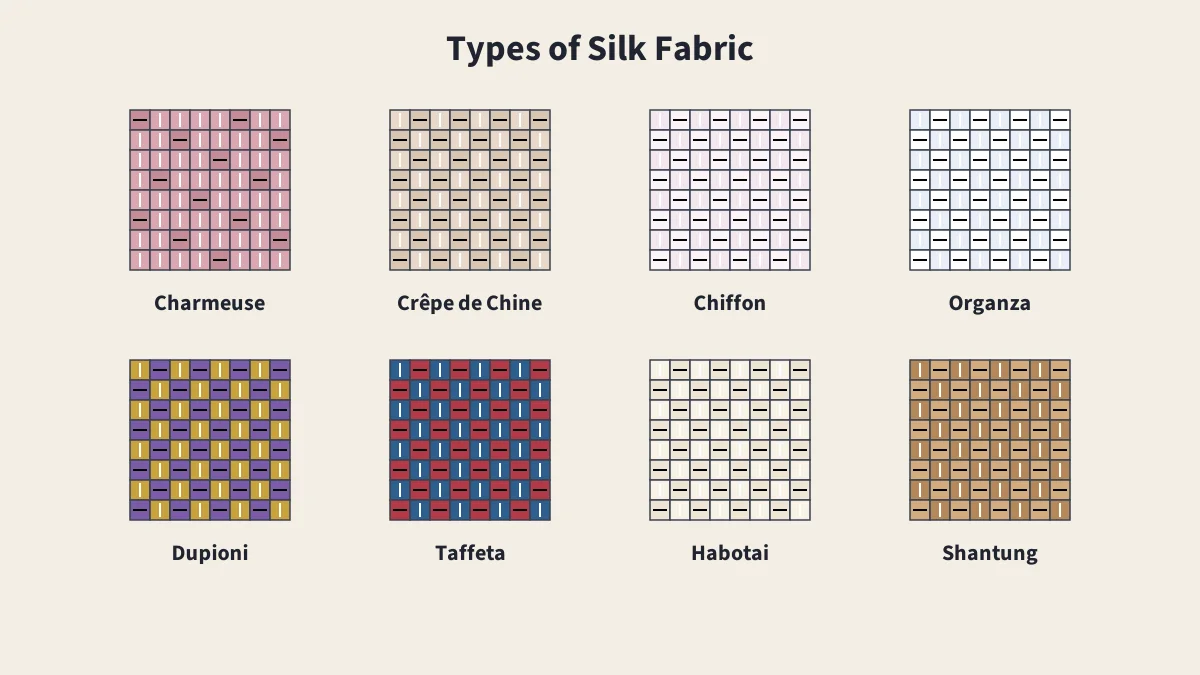
Types of Silk Fabric
Charmeuse, crêpe de chine, organza, dupioni, taffeta and more.
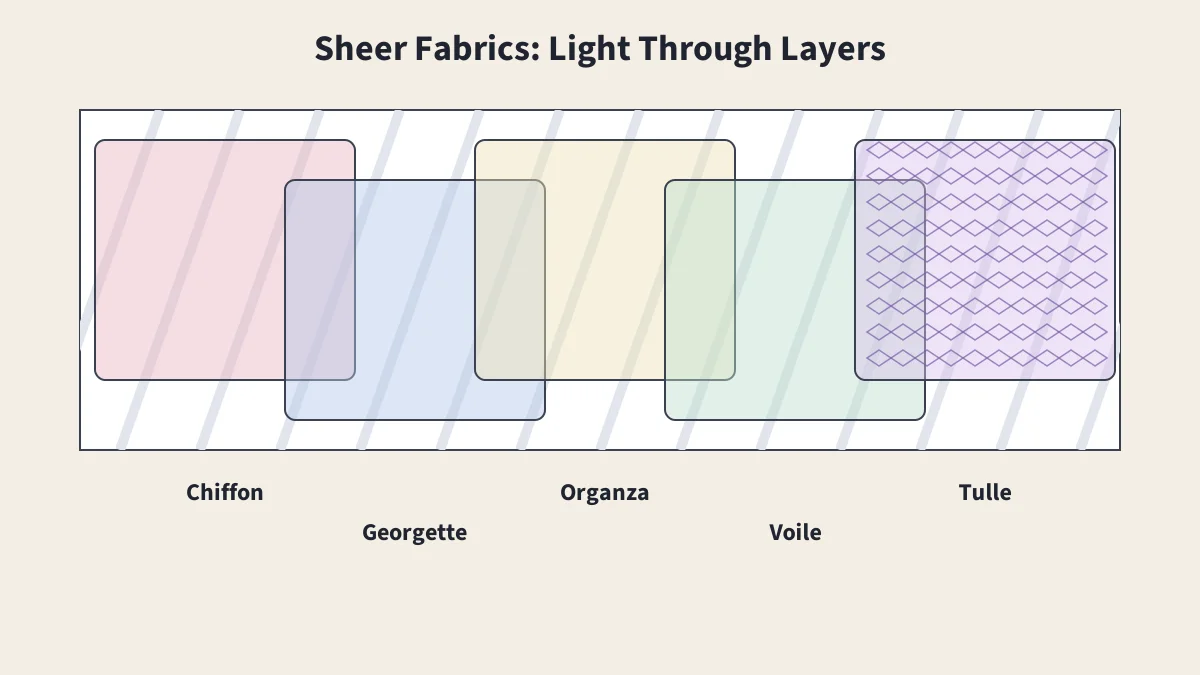
Sheer Fabrics
Chiffon, georgette, organza, voile and tulle compared.
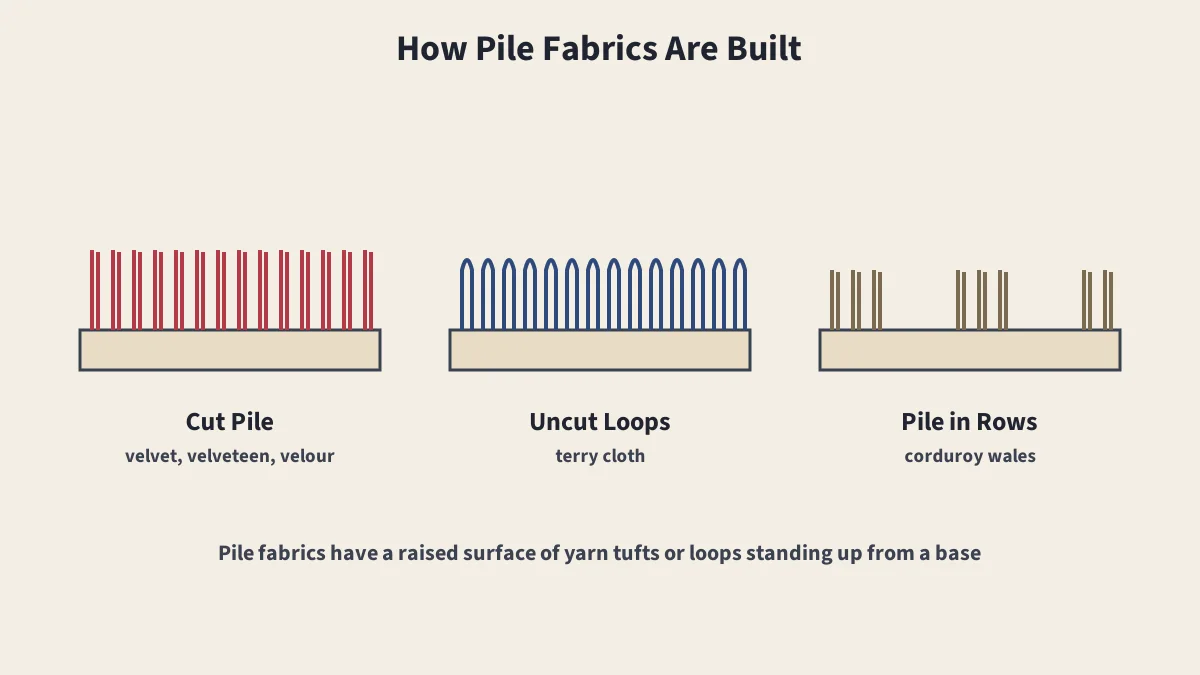
Pile Fabrics
Velvet, velveteen, velour, corduroy, chenille and terry compared.
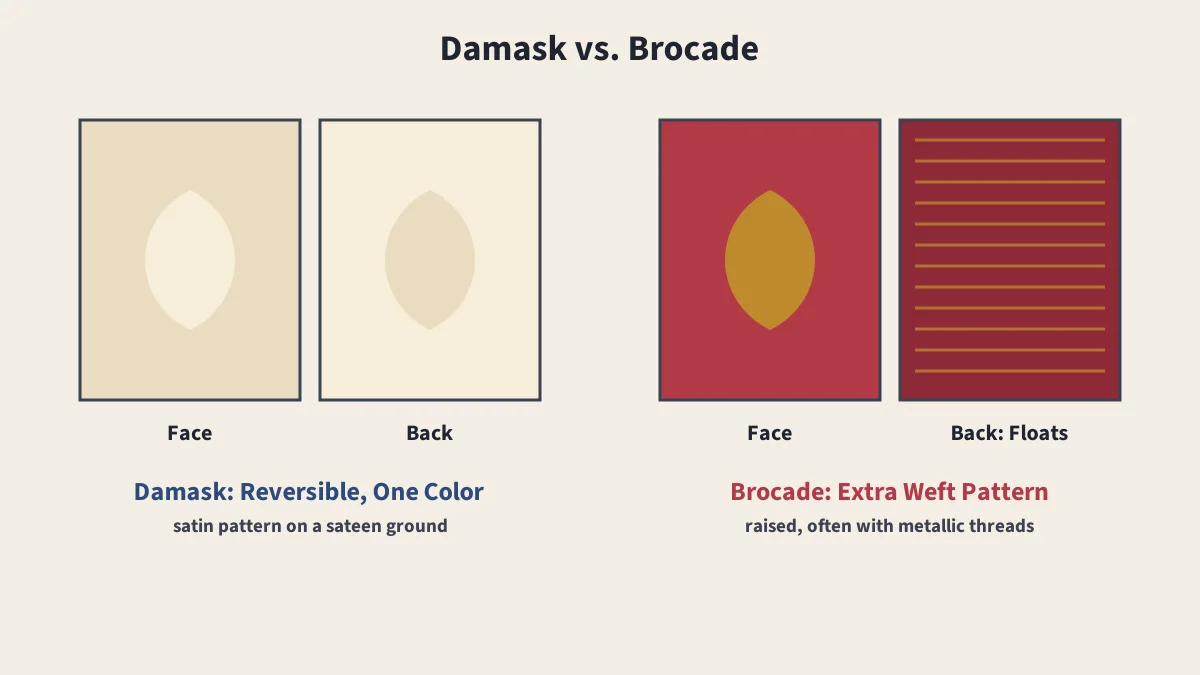
Brocade vs. Damask vs. Jacquard
How the three woven-pattern terms differ, and how to spot each.
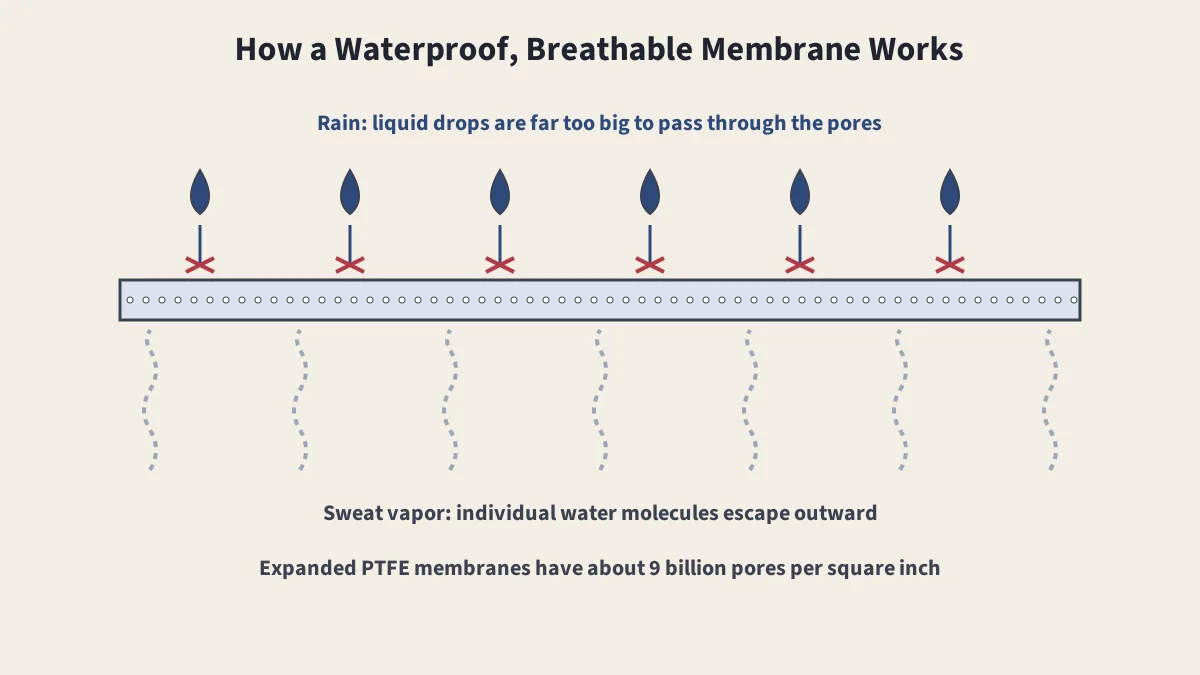
Technical and Outdoor Fabrics
Membranes, ripstop, DWR and aramids explained.
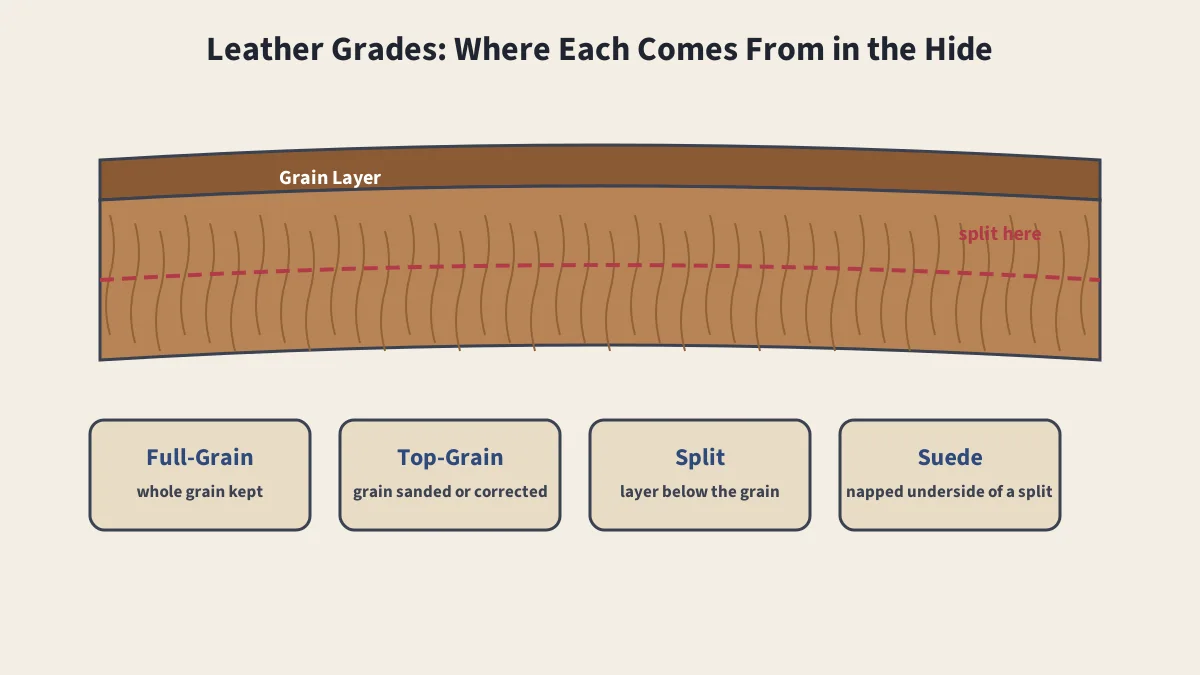
Leather, Suede and Faux Leather
Leather grades, tanning, suede and faux leather explained.
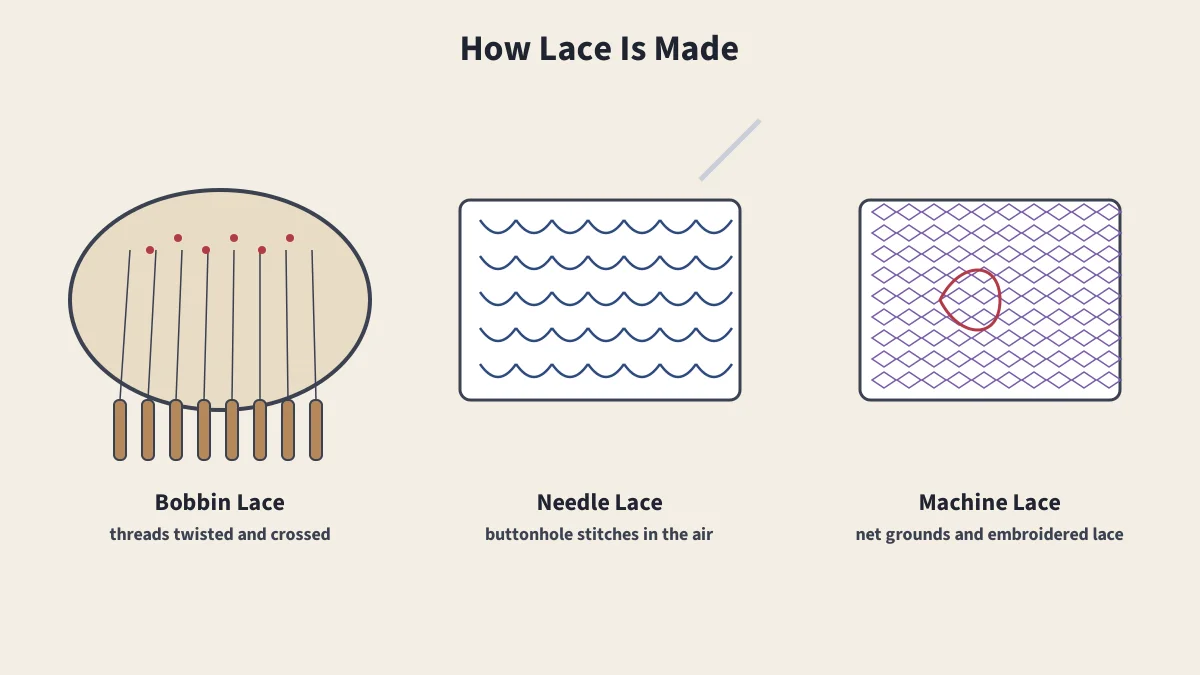
Types of Lace
Bobbin lace, needle lace, tatting and machine lace explained.
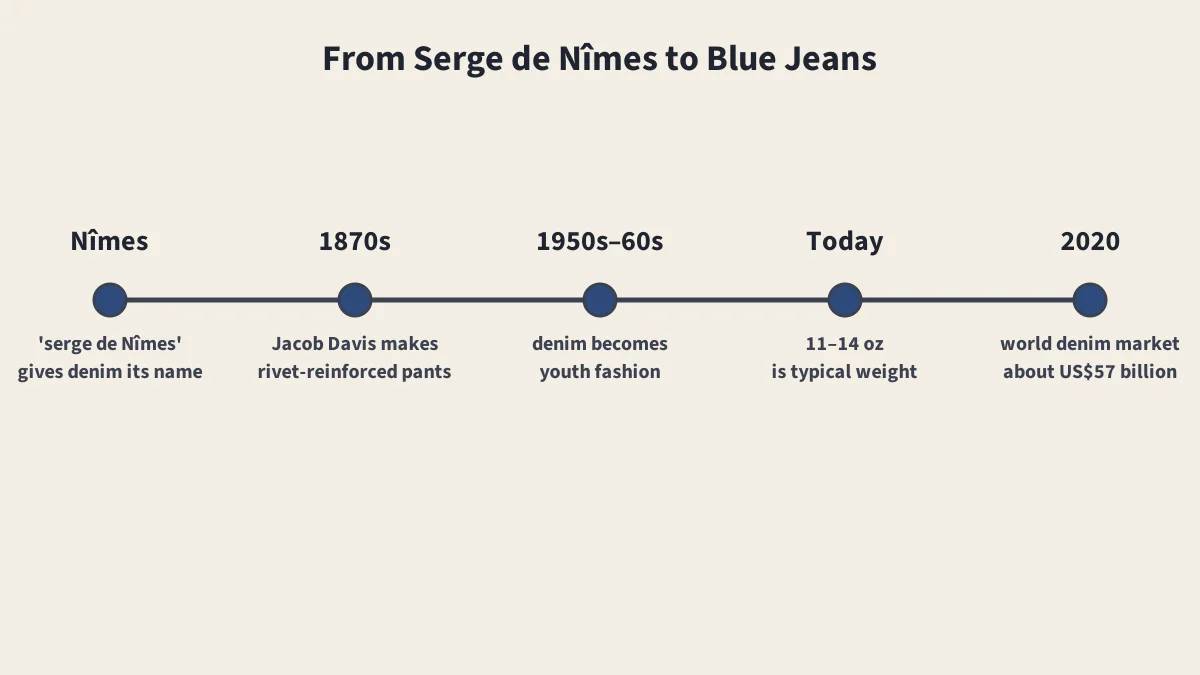
History of Denim
Nîmes, Genoa, the 1873 rivet patent and denim's rise.
Patterns, Dyes and World Textiles
How patterns get into and onto cloth, and the textile traditions and place names behind them.
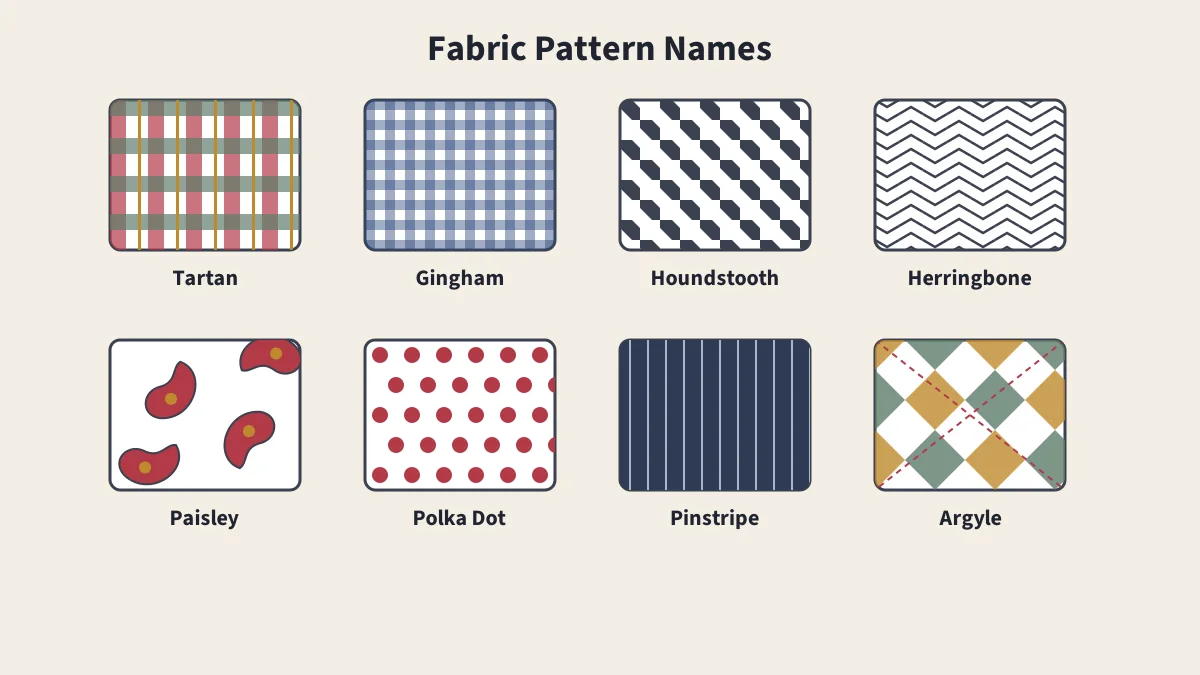
Fabric Pattern Names
Tartan, gingham, houndstooth, paisley, polka dots and more.
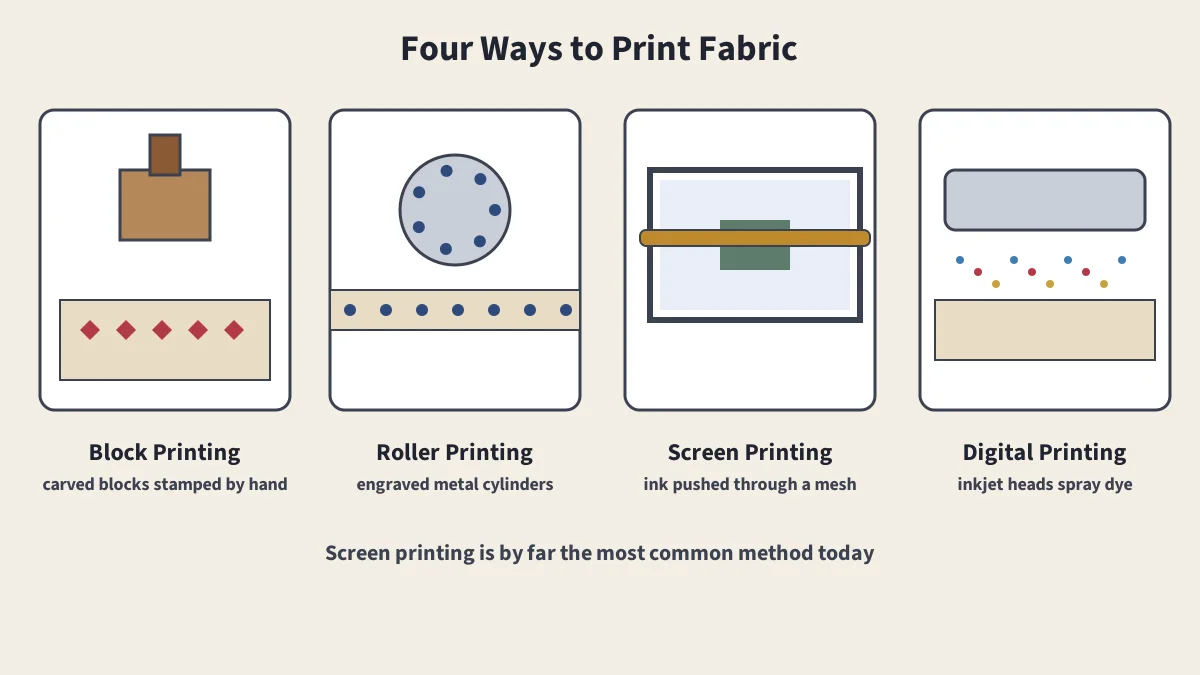
Textile Printing Methods
Block, roller, screen and digital printing explained.
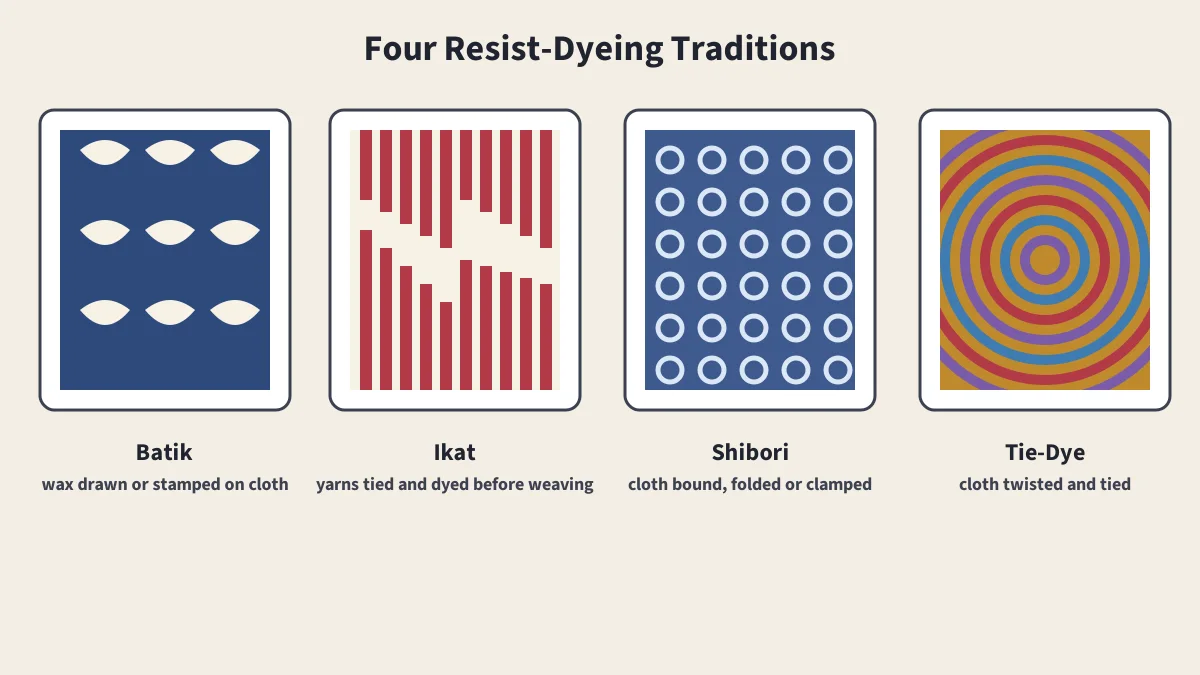
Resist Dyeing
How batik, ikat, shibori and tie-dye block the dye.
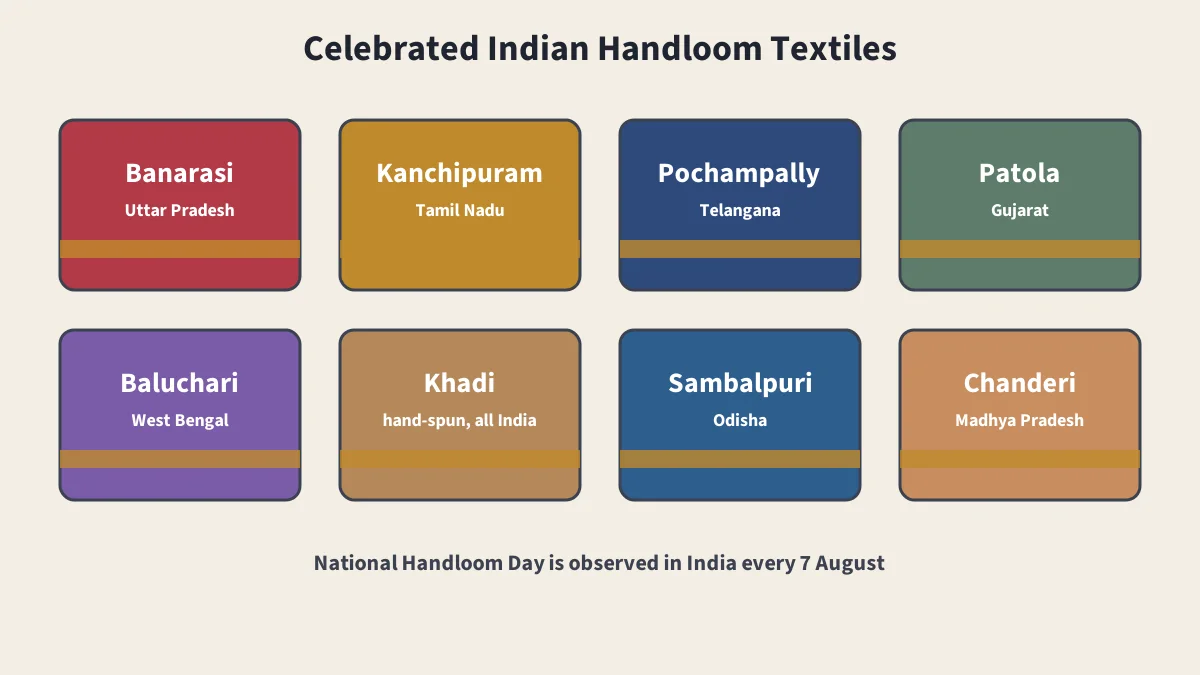
Indian Handloom Textiles
Banarasi, Kanchipuram, Pochampally, Patola, Jamdani and khadi.
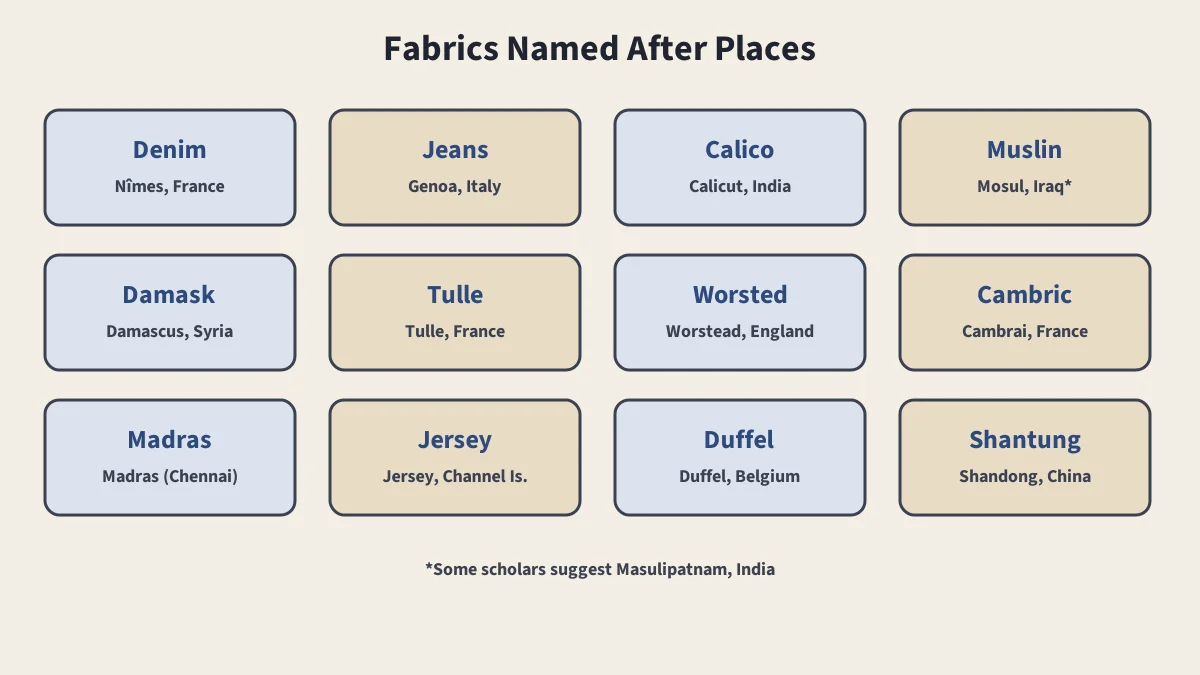
Fabrics Named After Places
Denim, calico, damask, tulle, madras and other place names.
Practical Fabric Facts
Grain, weight and shrinkage: the properties that decide how fabric cuts, sews and washes.
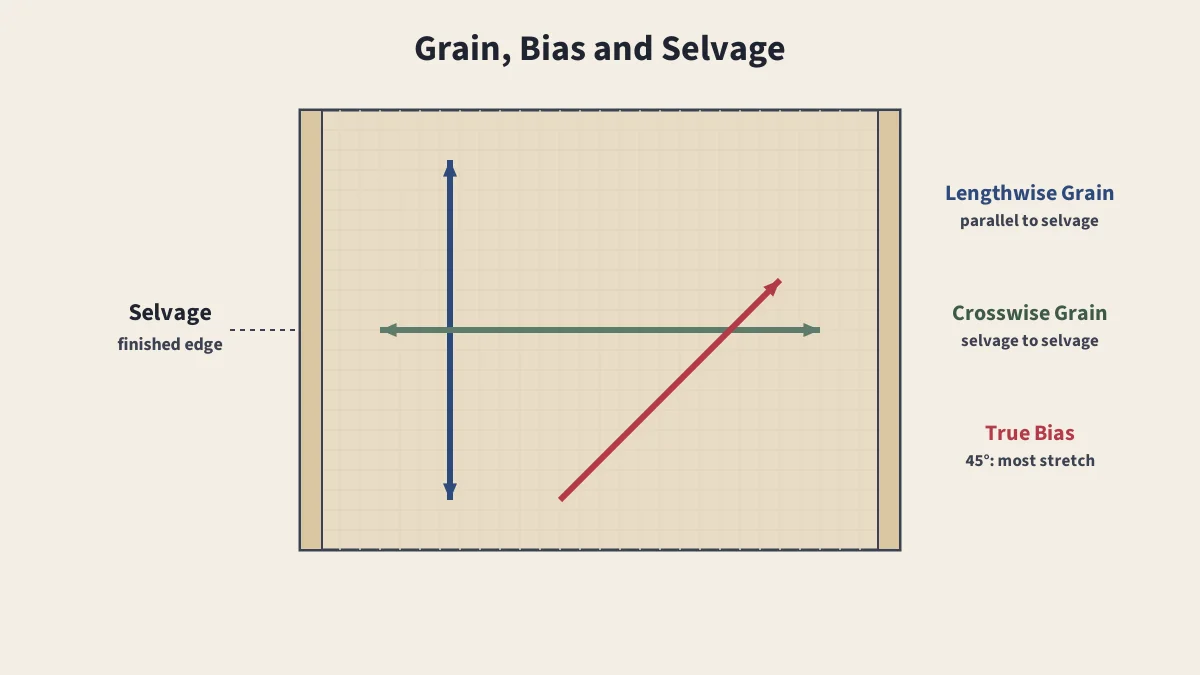
Grain, Bias and Selvage
Lengthwise grain, crosswise grain, true bias and selvage.
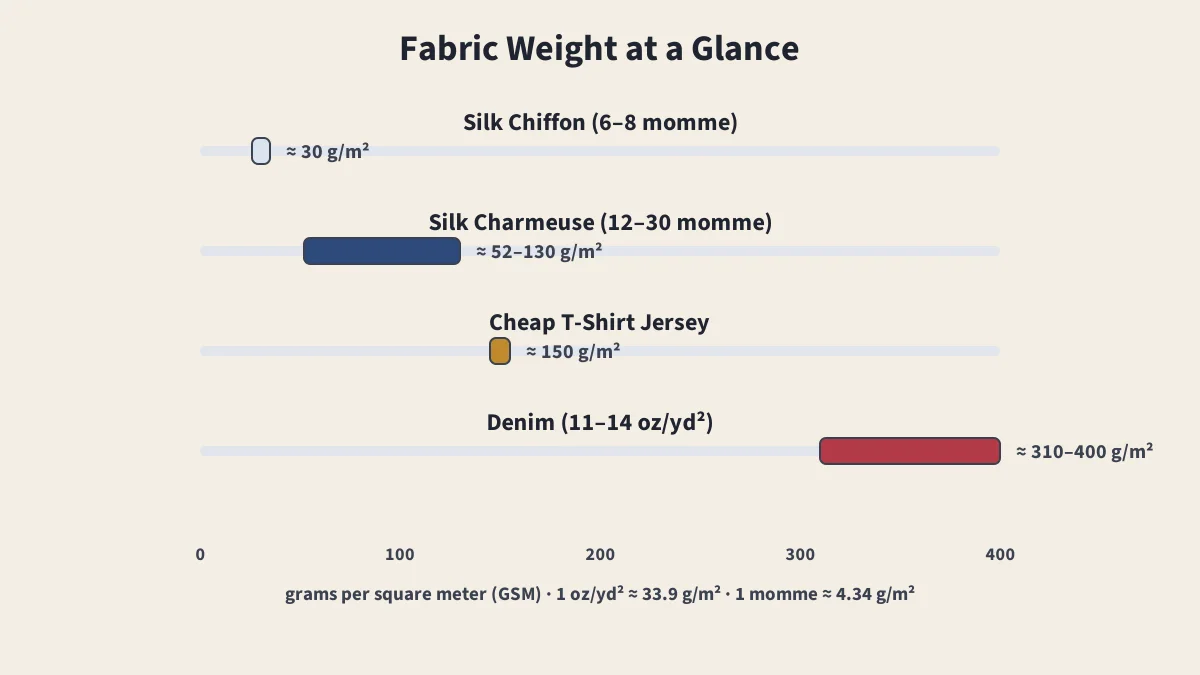
Fabric Weight (GSM and Oz)
GSM, oz/yd² and momme explained, with a converter.
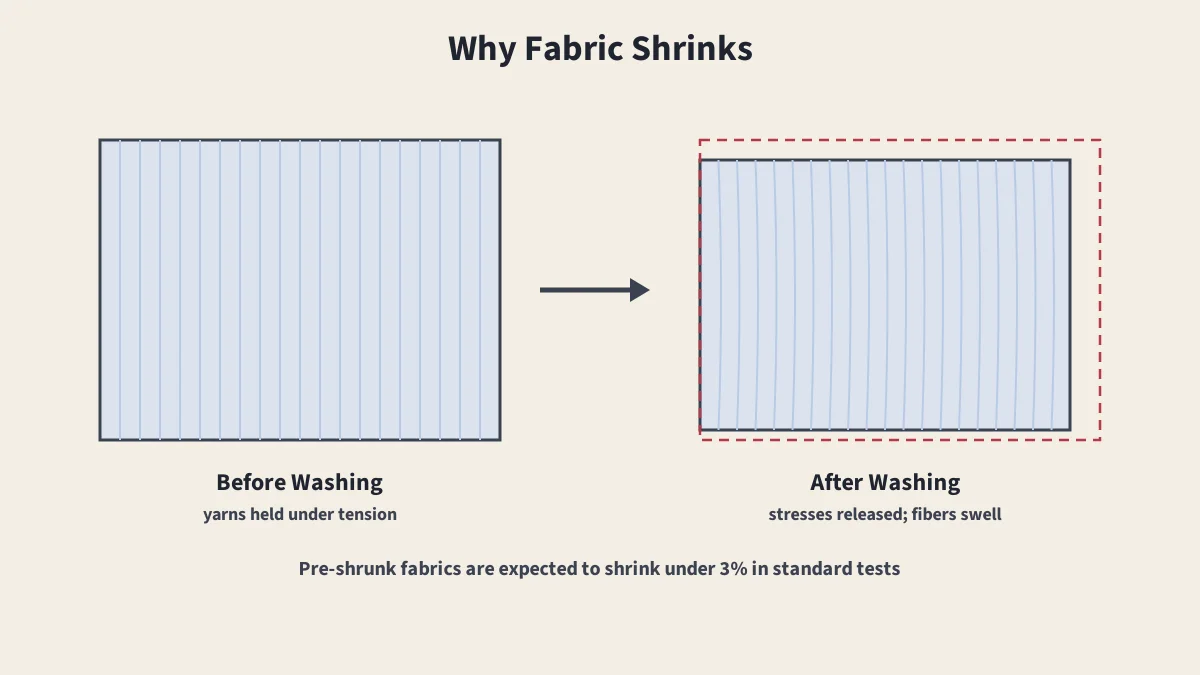
Fabric Shrinkage and Pre-Washing
Why fabric shrinks, sanforizing, and how to pre-wash.
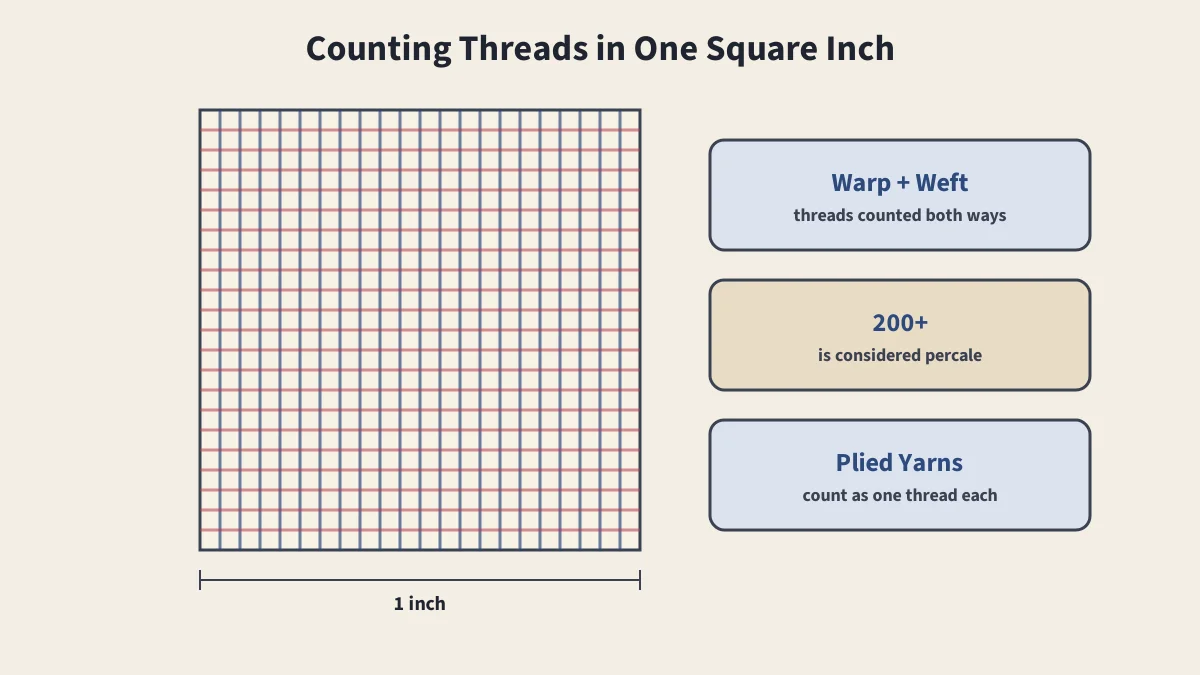
Thread Count
What thread count measures and why bigger is not always better.
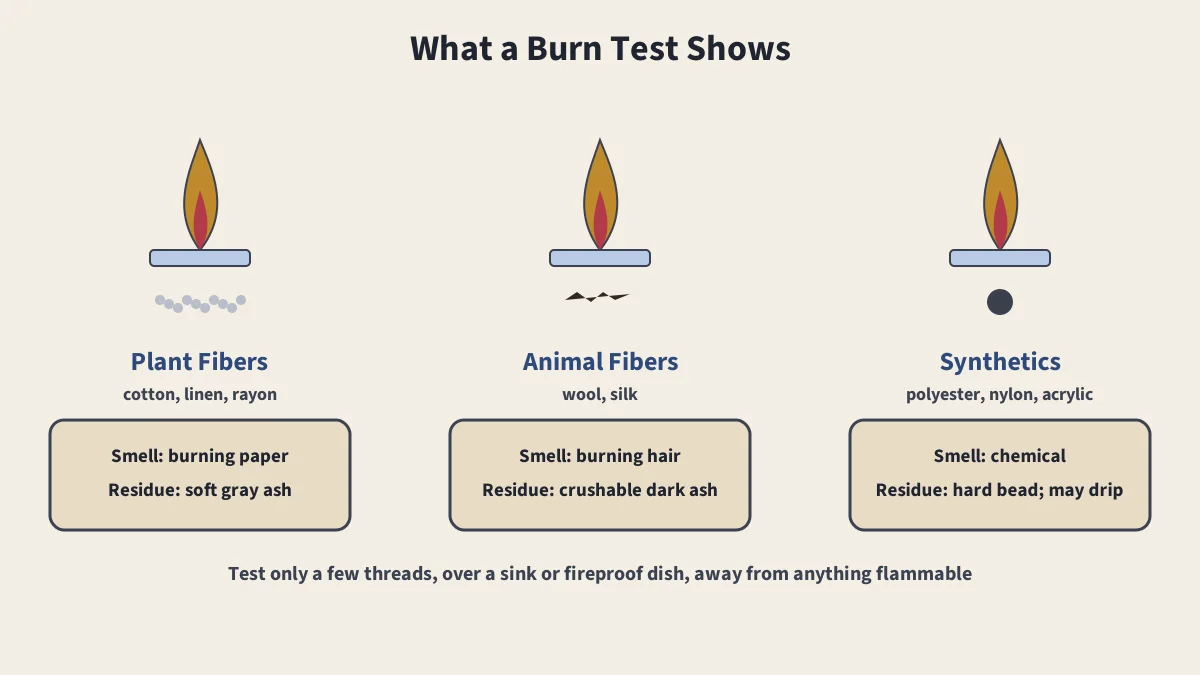
Fabric Burn Test
How plant, animal and synthetic fibers burn, smell and leave ash.
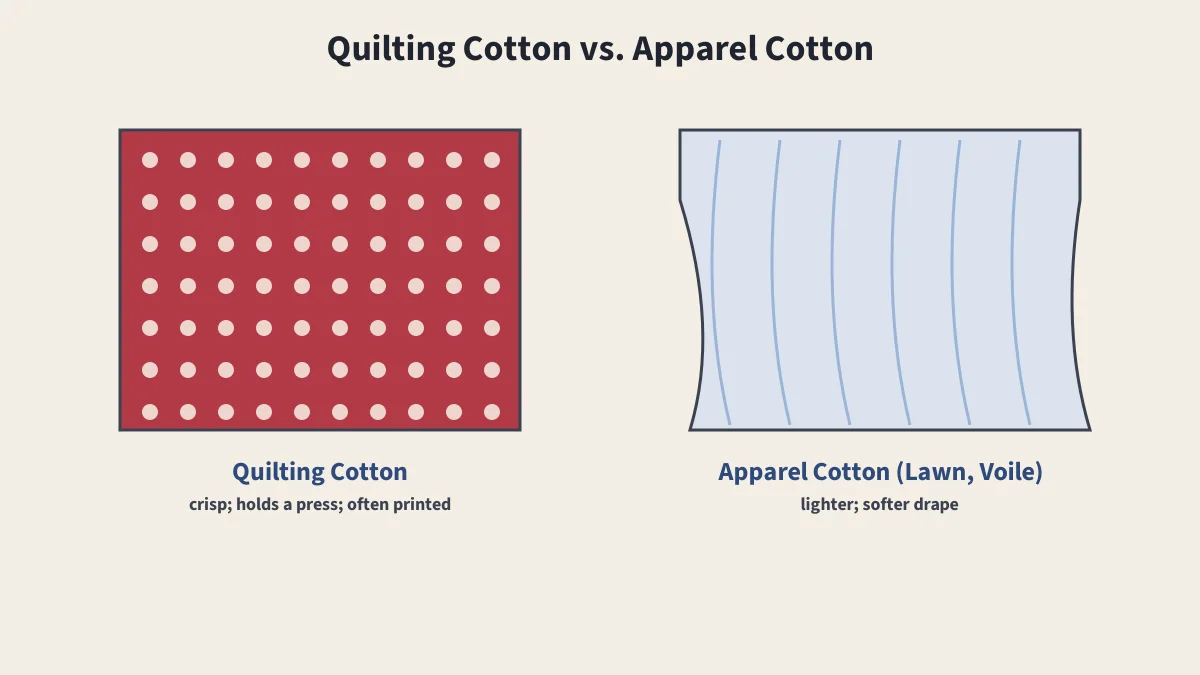
Quilting vs. Apparel Cotton
When quilting cotton works for clothing, and when it doesn't.
Care and Sustainability
How to read care labels, set the iron and make fabric last, with sourced facts on textile waste.
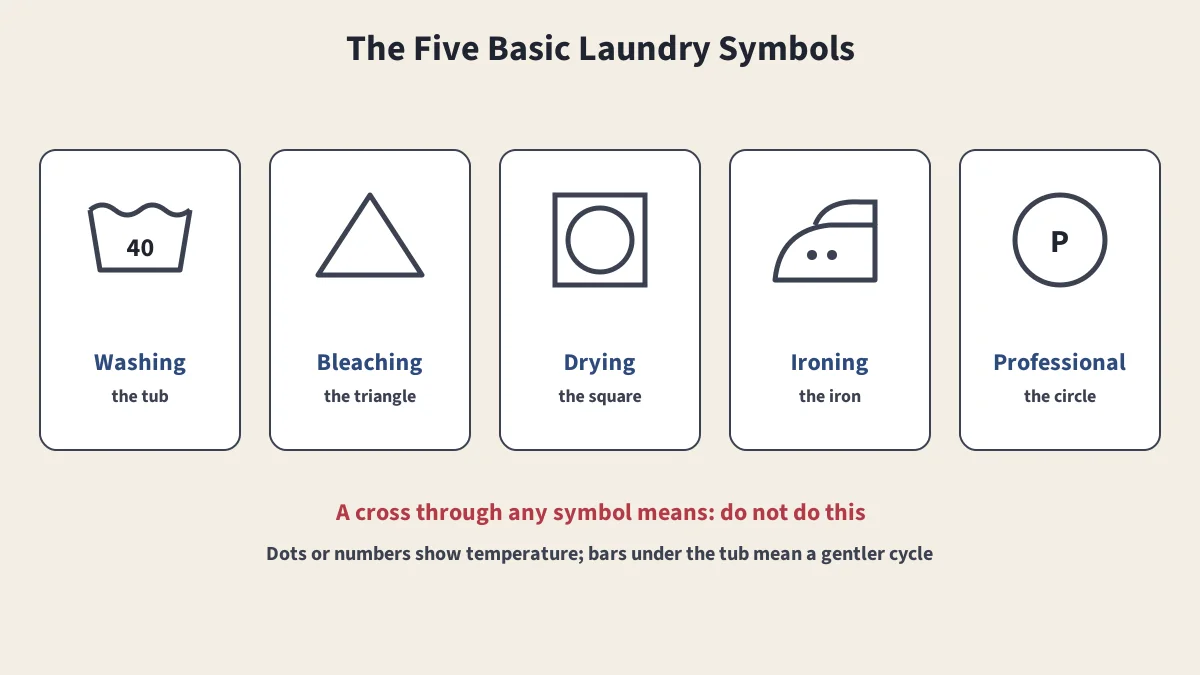
Laundry Care Symbols
The tub, triangle, square, iron and circle, with dots and bars.
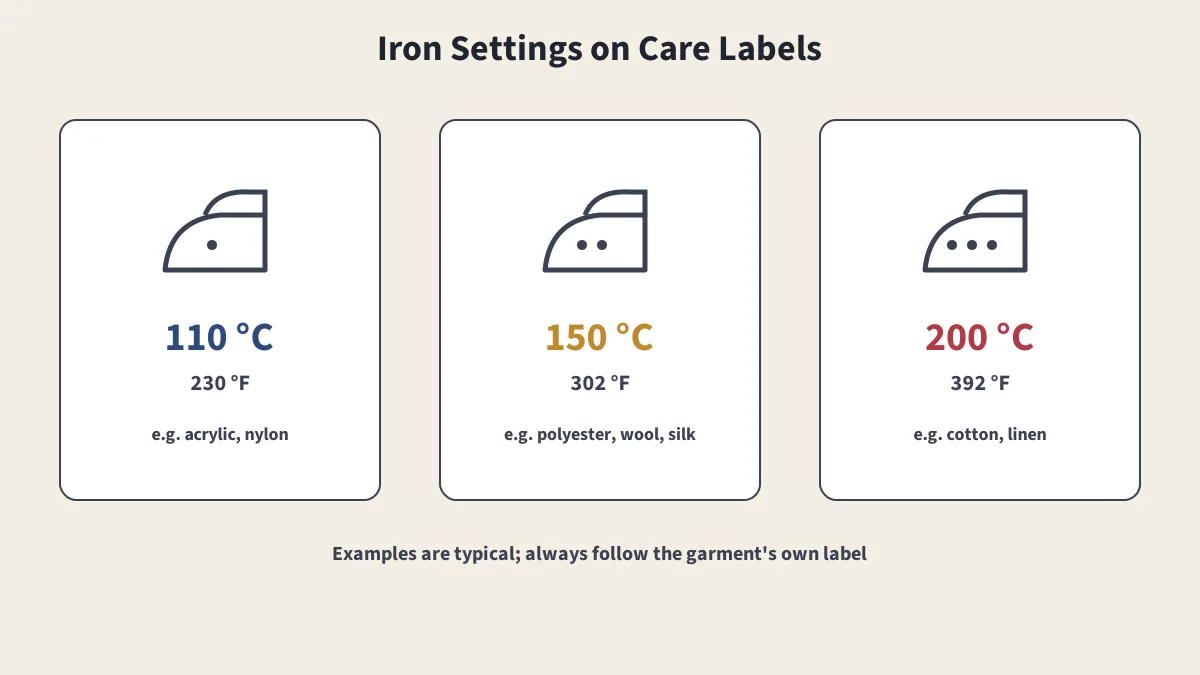
Ironing Temperatures
What iron dots mean and the right heat for common fabrics.
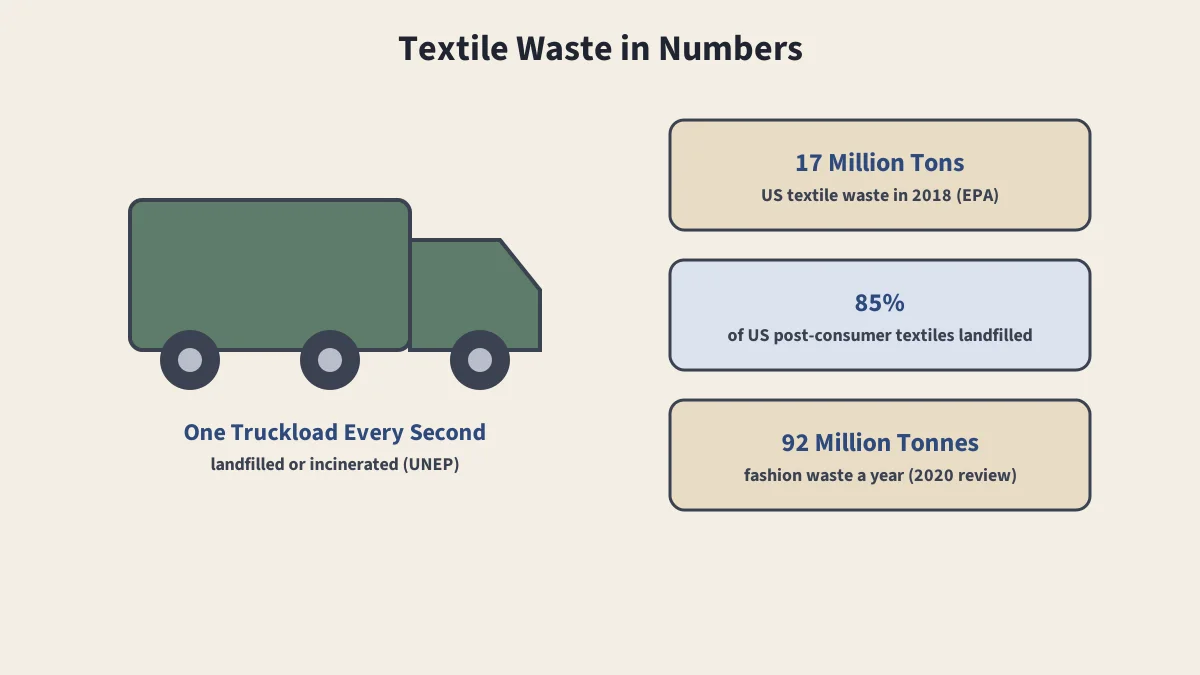
Textile Waste and Sustainability
Sourced textile waste figures, recycling and practical steps.
Fiber Families at a Glance
| Fiber | Source | Known For |
|---|---|---|
| Cotton | Seed hairs of the cotton plant | Soft, breathable, absorbent |
| Linen | Stem fibers of flax | Strong, cool, wrinkles easily |
| Silk | Silkworm cocoons | Sheen, strength, drape |
| Wool | Sheep fleece | Warmth, crimp, felting |
| Rayon family | Wood pulp cellulose | Drape, softness, absorbency |
| Polyester and nylon | Petrochemicals | Strength, easy care |
Why Fabric Matters for Sewing
- Pattern choice: patterns list suitable fabrics, and knits and wovens are rarely interchangeable.
- Needles and thread: fine fabrics need fine needles; see sewing machine needles and types of thread.
- Pressing: each fiber takes a different heat; see pressing tools.
- Seams and finishes: fraying wovens need seam finishes; knits need stretch stitches; see seam finishes.
Unfamiliar fabric word? Try the sewing glossary.
Sources
- Textile, Wikipedia
- Weaving, Wikipedia
- Synthetic fiber, Wikipedia
Frequently Asked Questions
What are the main types of fabric?
Fabrics are usually grouped two ways: by construction (woven, knit or nonwoven) and by fiber (natural fibers such as cotton, linen, silk and wool, or manufactured fibers such as rayon, polyester and nylon).
What is the most common fabric fiber?
By volume, synthetic fibers now make up about half of all fibers produced, with polyester the largest. Among natural fibers, cotton is dominant in scale of production and use.
What is the difference between fiber, yarn and fabric?
A fiber is a single strand, such as a cotton fiber or a silk filament. Yarn is fibers spun or twisted together into a continuous strand. Fabric is yarn (or fibers) made into cloth by weaving, knitting or bonding.
How can I tell what a fabric is made of?
Start with the label or bolt end. Without one, clues include how it drapes, wrinkles and feels, and whether it stretches. A careful burn test can help distinguish natural from synthetic fibers.
Keep Reading
How Fabric Is Made
The four stages: fiber, yarn, fabric construction and finishing.
Woven vs. Knit vs. Nonwoven
How the three constructions differ, and how to tell them apart.
Fabric Weaves
Plain, twill and satin weaves, plus dobby and jacquard.
Natural vs. Synthetic Fibers
Plant, animal, semi-synthetic and synthetic fibers compared.