Essential Sewing Techniques: The Skills Behind Every Garment (2026)
Most sewing projects are built from the same handful of techniques: closing an opening, adding fullness, finishing an edge. Learn these, and almost any pattern becomes approachable.
In This Article
Techniques in Brief
- Closures: zippers, buttonholes, buttons and snaps
- Shaping and fullness: gathering, shirring and ruching
- Edges: bias binding
- Construction: knits, curves, sleeves, pressing, cutting
- Mending and alterations: darning, patching, hemming, fitting
Patterns may look very different, but they rely on a common set of techniques. A dress, a bag and a cushion cover might all need a zipper; a shirt, a coat and a pillow sham might all need buttonholes. This section explains those techniques step by step, with the reasons behind each step.
Closures
Every garment needs a way in and out. These guides cover the main ways to close an opening, from zippers to buttons and snaps.
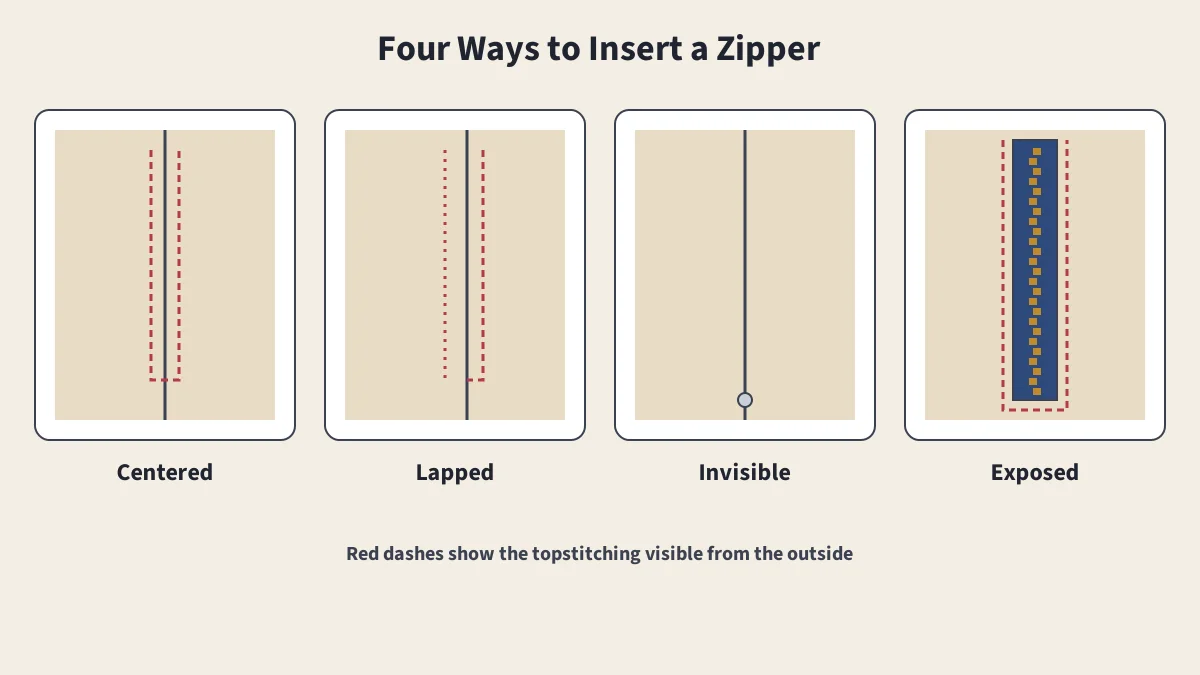
How to Insert a Zipper
Centered, lapped, invisible and exposed zippers, step by step.
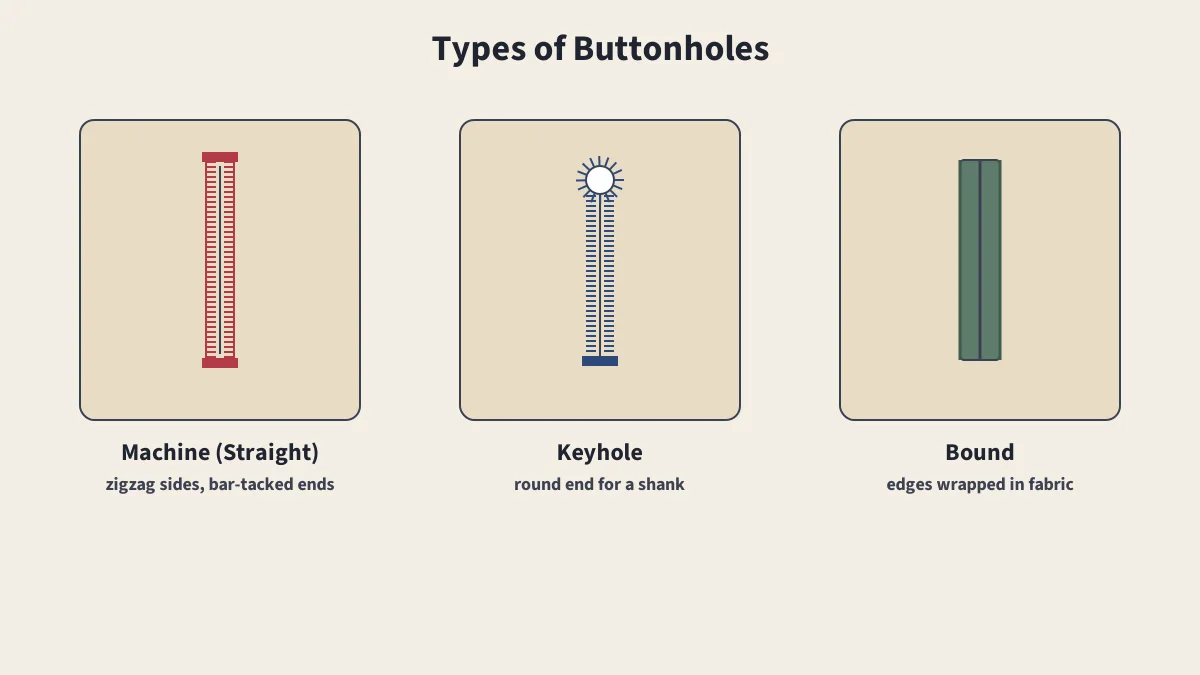
Types of Buttonholes
Machine, keyhole, bound and hand-worked buttonholes explained.
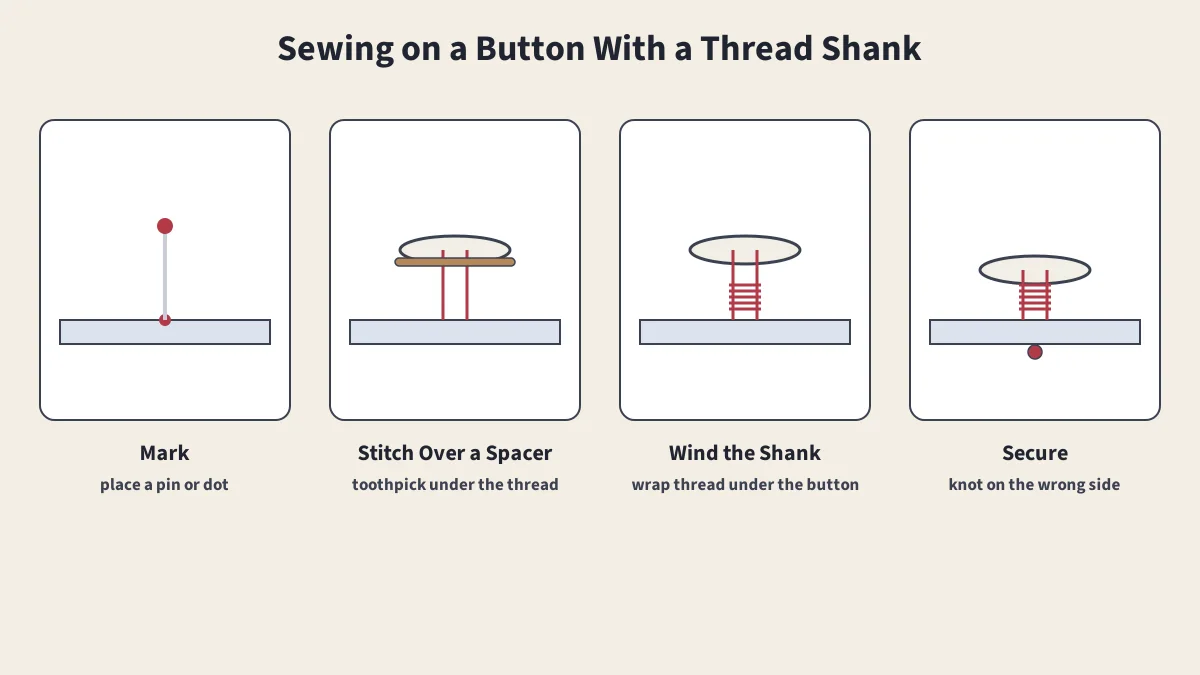
Sewing on Buttons and Snaps
Flat and shank buttons, thread shanks and sew-on snaps.
For the hardware itself, see types of zippers, buttons and snaps, hooks and other closures.
Adding Fullness
Gathers, shirring and ruching turn a wide piece of fabric into a narrow one, adding volume and texture.
Finishing Edges
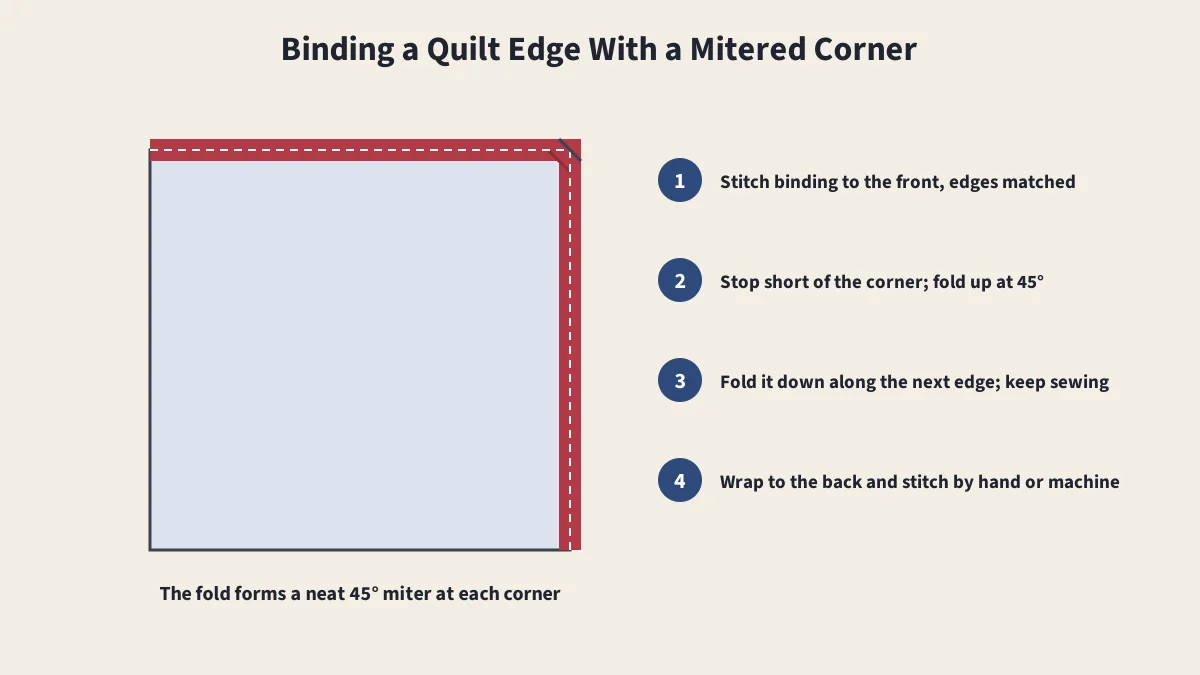
Bias binding wraps raw edges at necklines, armholes and quilt edges.
Construction Skills
The everyday skills behind well-made garments: handling knits, shaping curves and corners, setting in sleeves, pressing and cutting accurately.
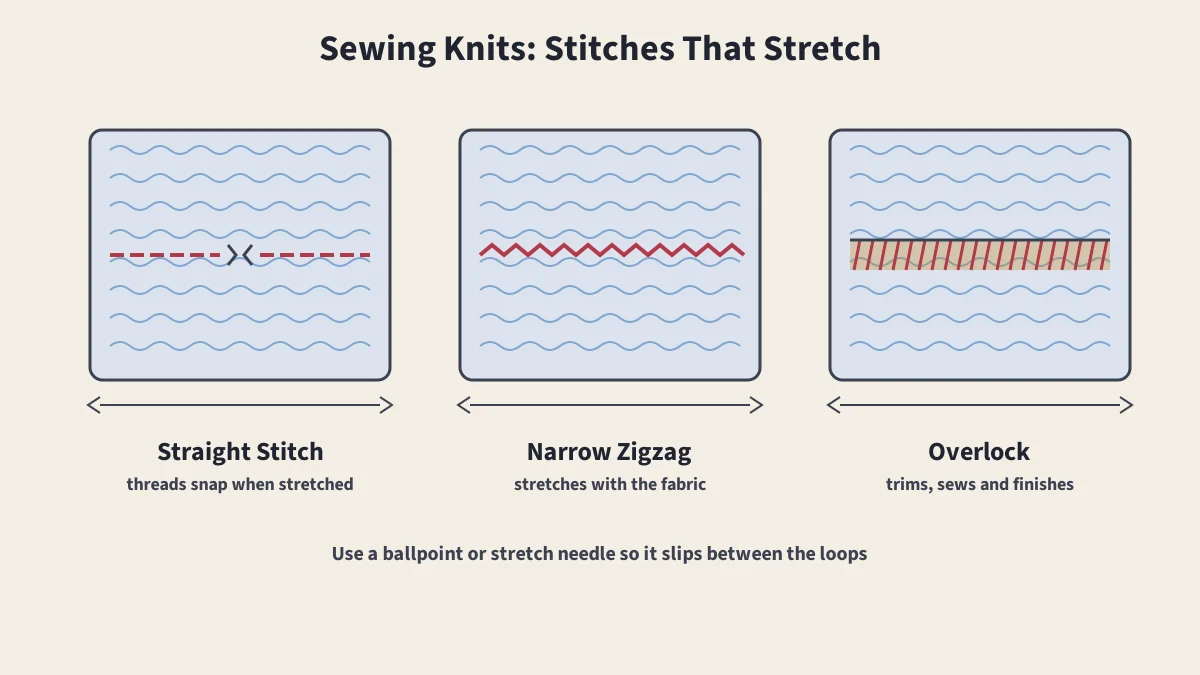
Sewing Knit Fabrics
Needles, stretch stitches and hems for jersey and other knits.
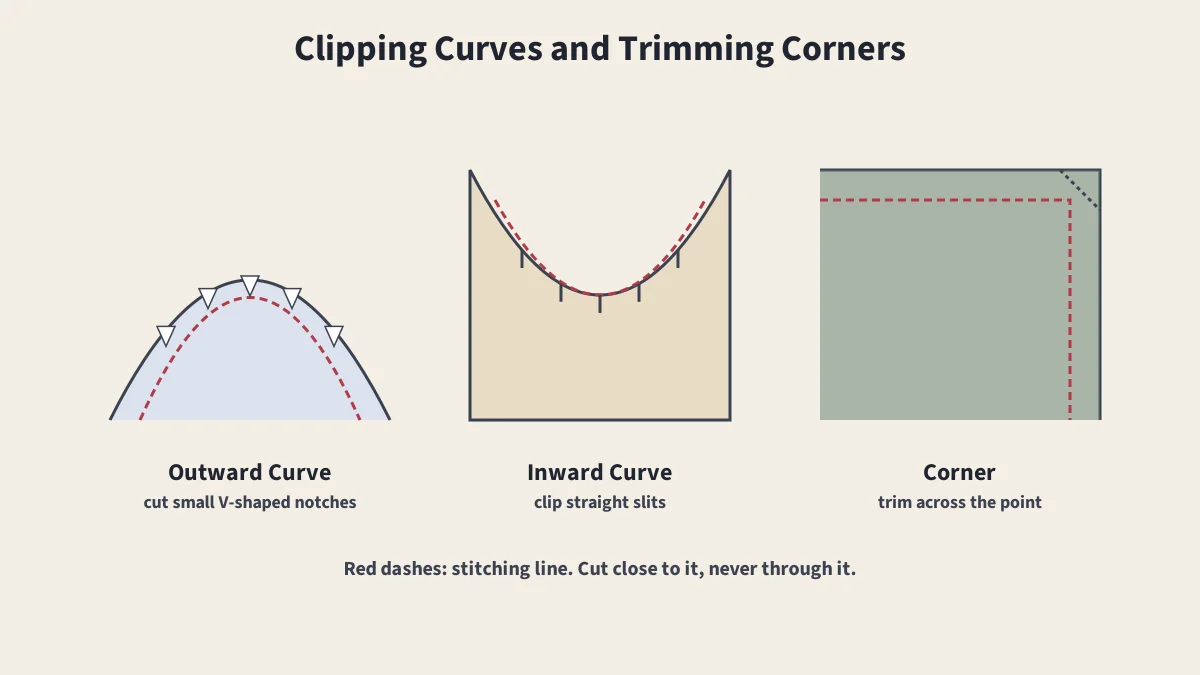
Sewing Curves and Corners
Pivoting, clipping, notching and grading for crisp results.
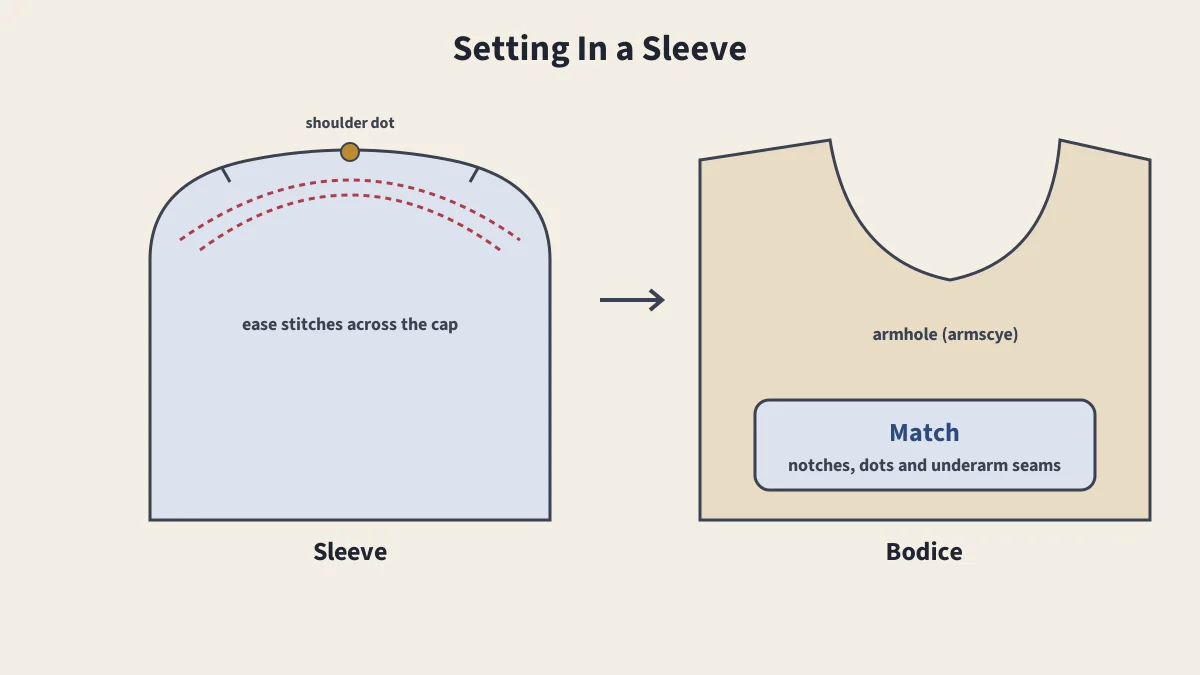
Set-In Sleeves
Easing the sleeve cap and sewing it in flat or in the round.
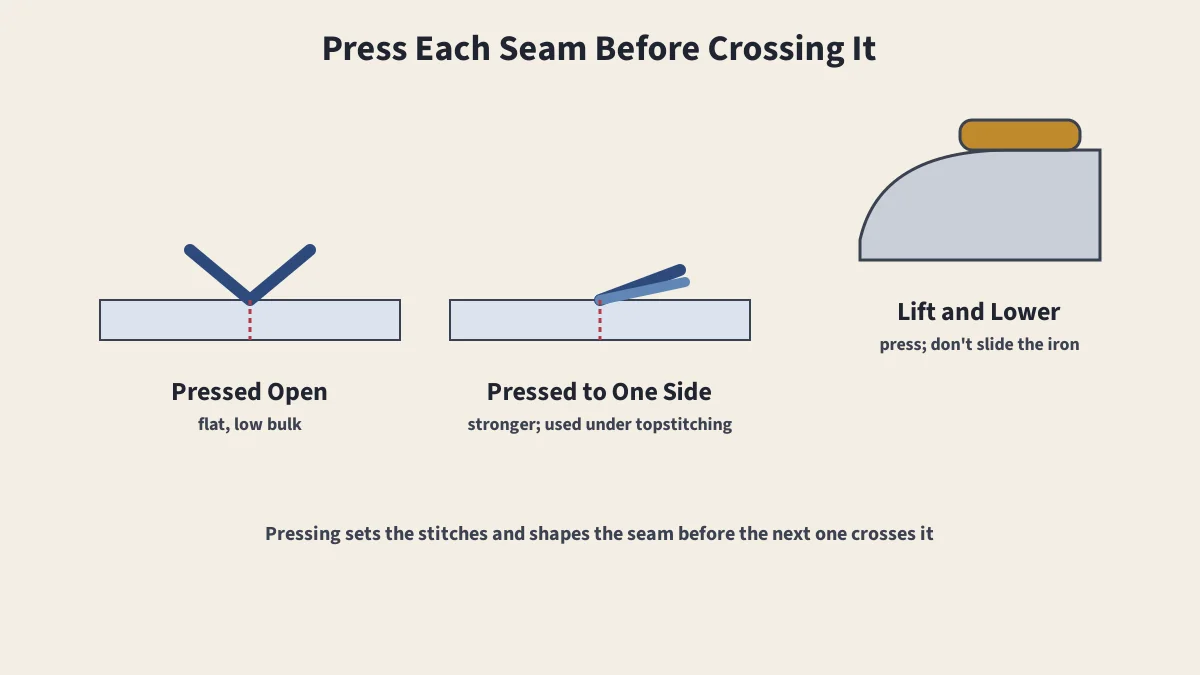
Pressing as You Sew
Pressing vs. ironing, seams, curves and darts.
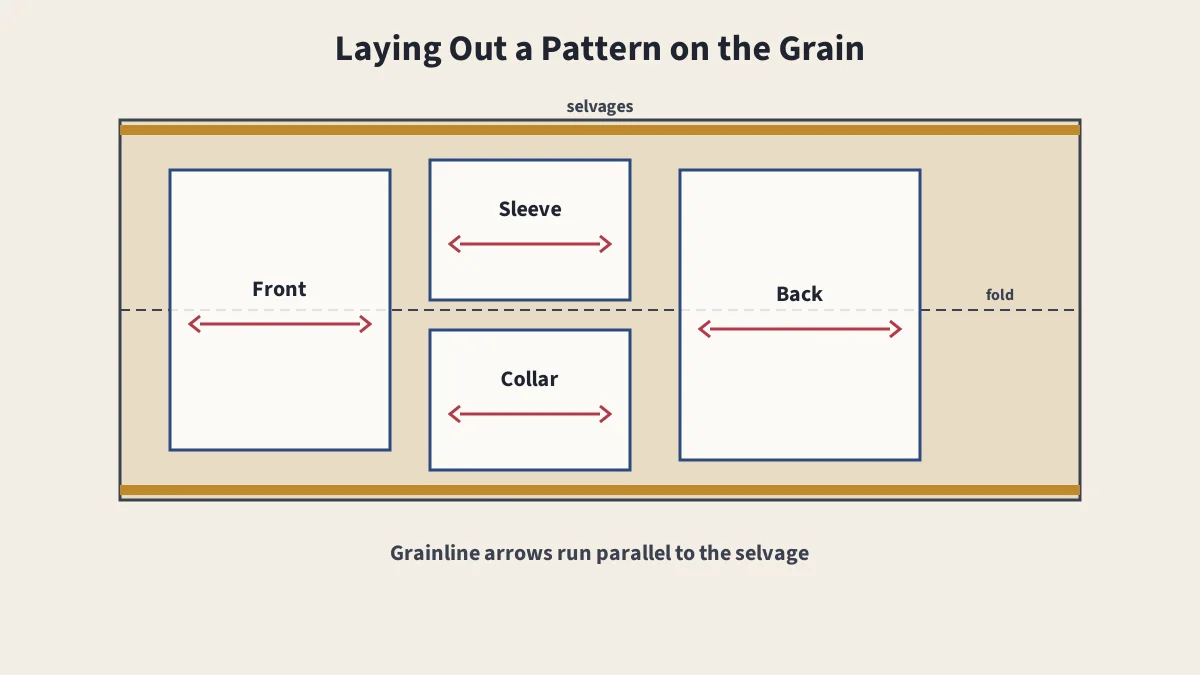
Cutting Fabric and Layout
Grainlines, folds, napped fabrics and clean cutting.
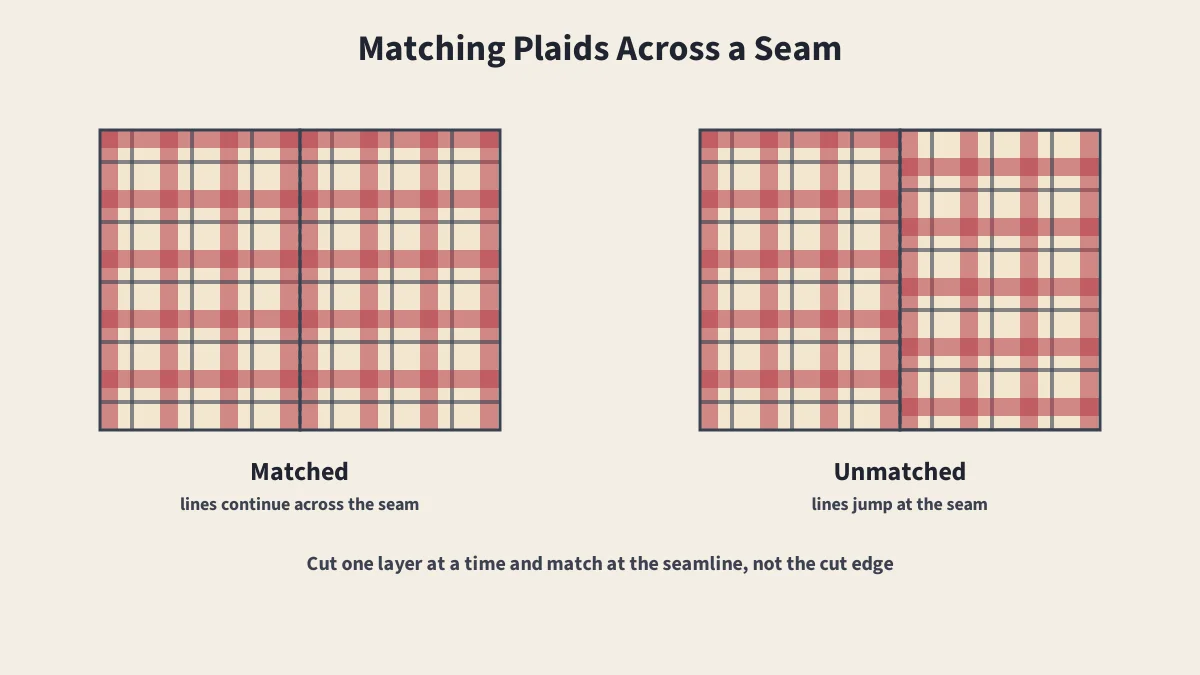
Matching Plaids and Stripes
Even and uneven plaids, cutting and pinning to match.
Linings and Facings
How garments are finished on the inside.
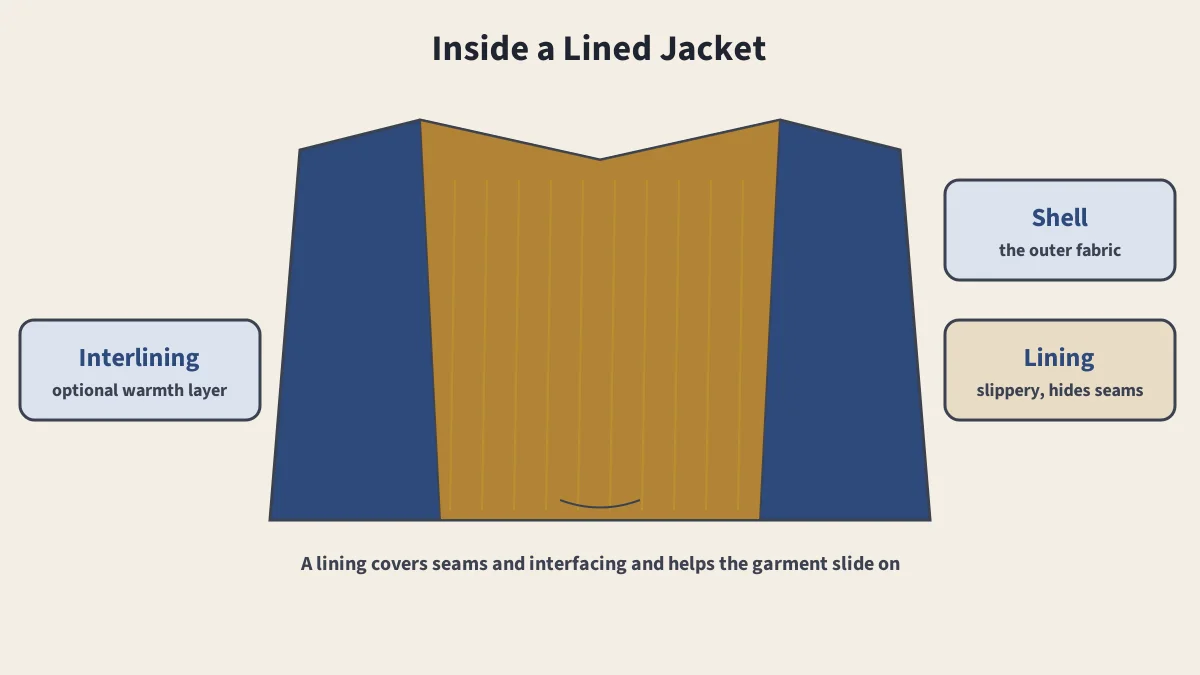
Lining a Garment
Lining fabrics, interlining and lining a skirt or jacket.
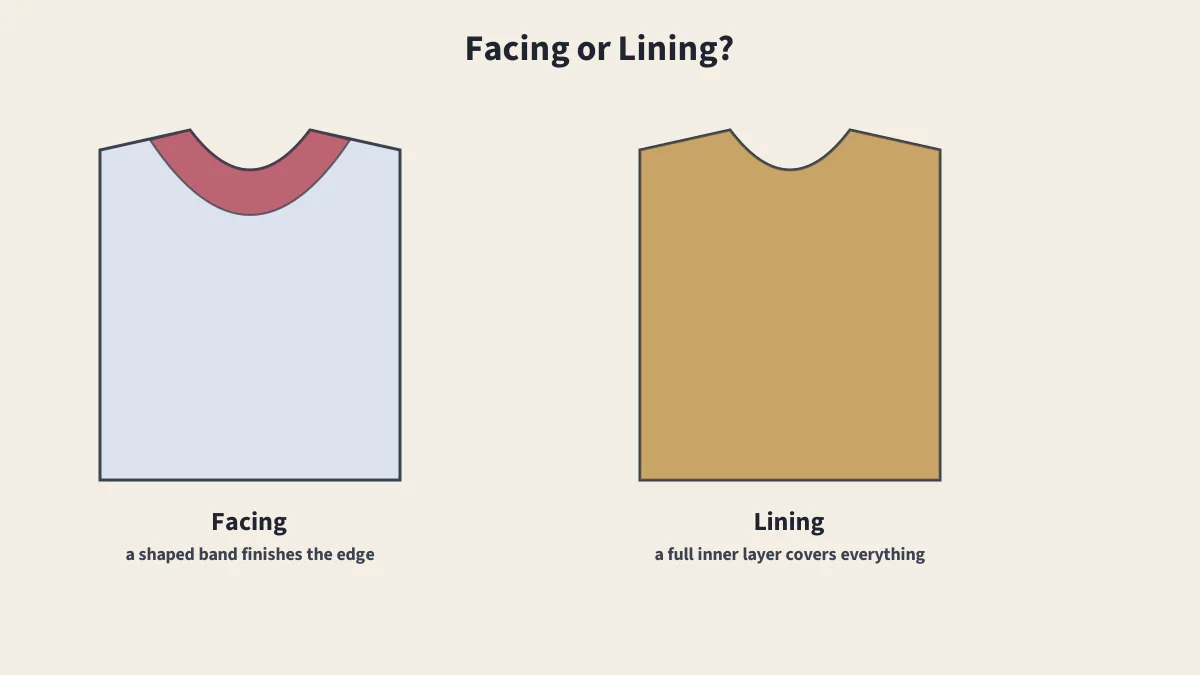
Facings vs. Linings
Shaped, extended, bias and all-in-one facings compared.
Mending
Repairing holes and worn areas, invisibly or as decoration.
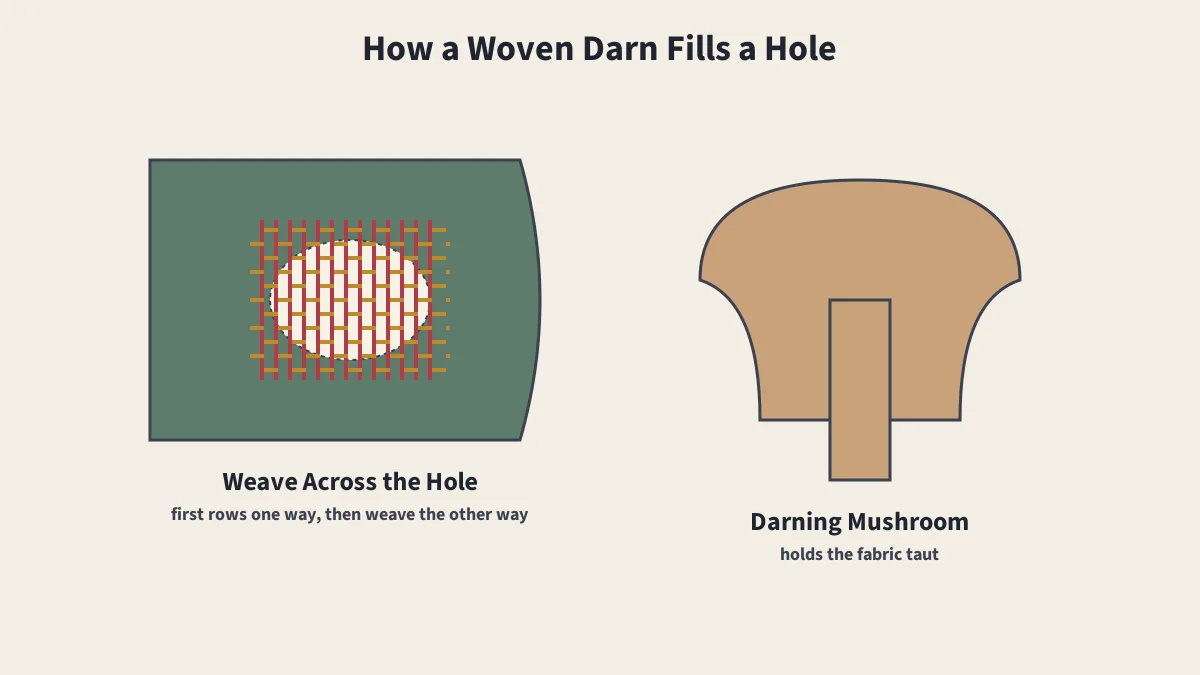
Darning
The woven darn, darning tools, machine darning and history.
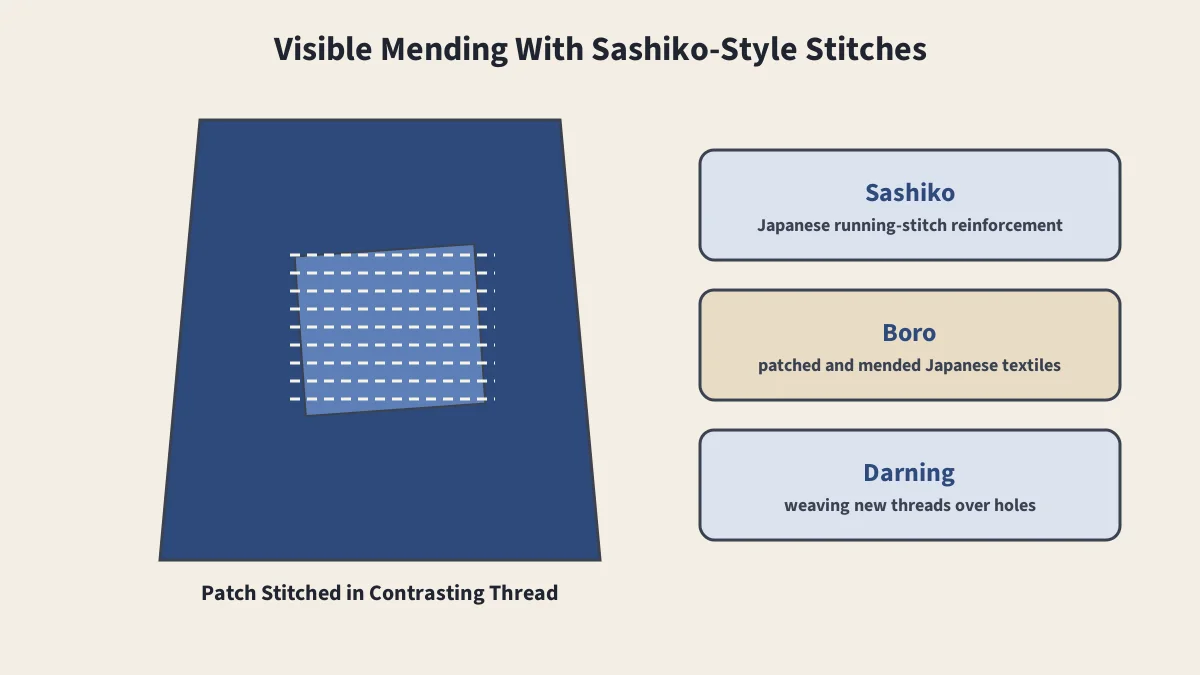
Patching and Visible Mending
Patching methods, sashiko, boro and visible mending.
Alterations
Changing ready-made clothes to fit, or remaking them into something new.
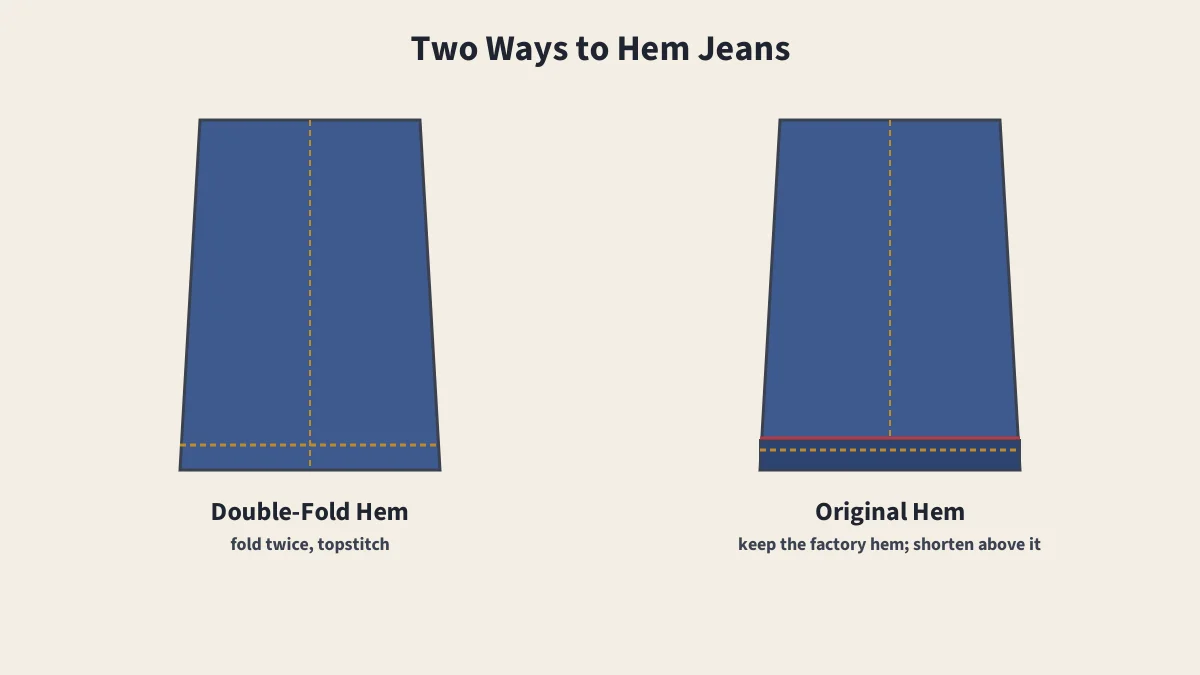
Hemming Pants and Jeans
Measuring, blind hems and keeping the original jeans hem.
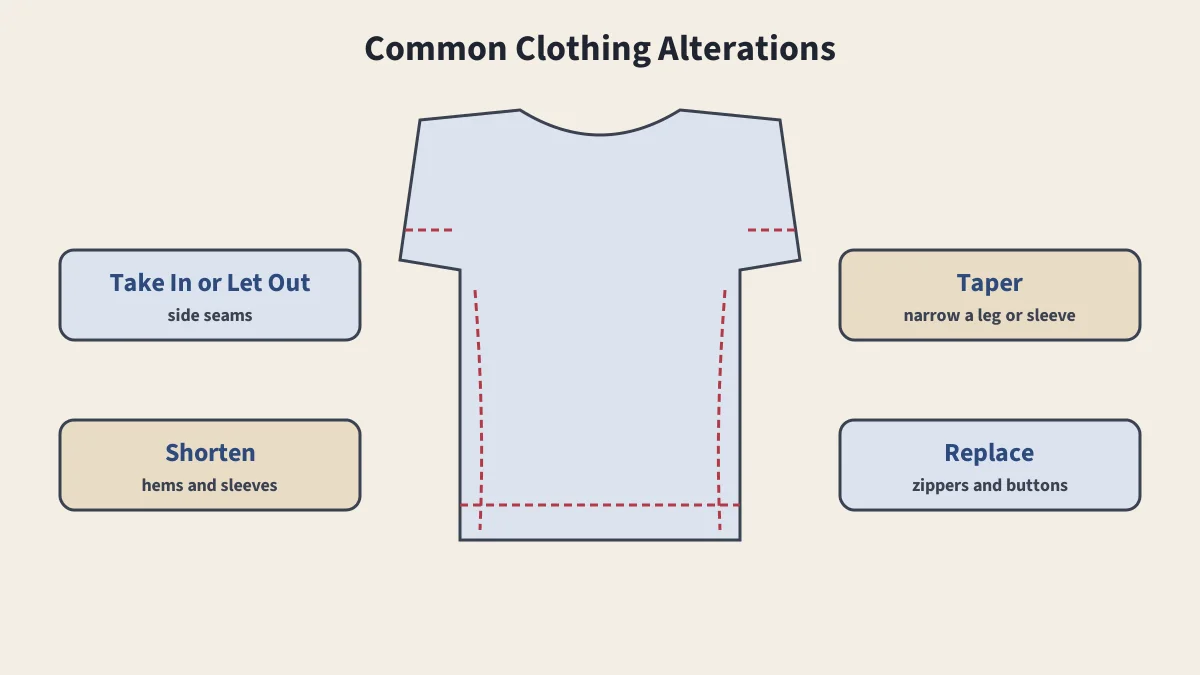
Clothing Alterations Basics
Easy and hard alterations, and when to see a tailor.
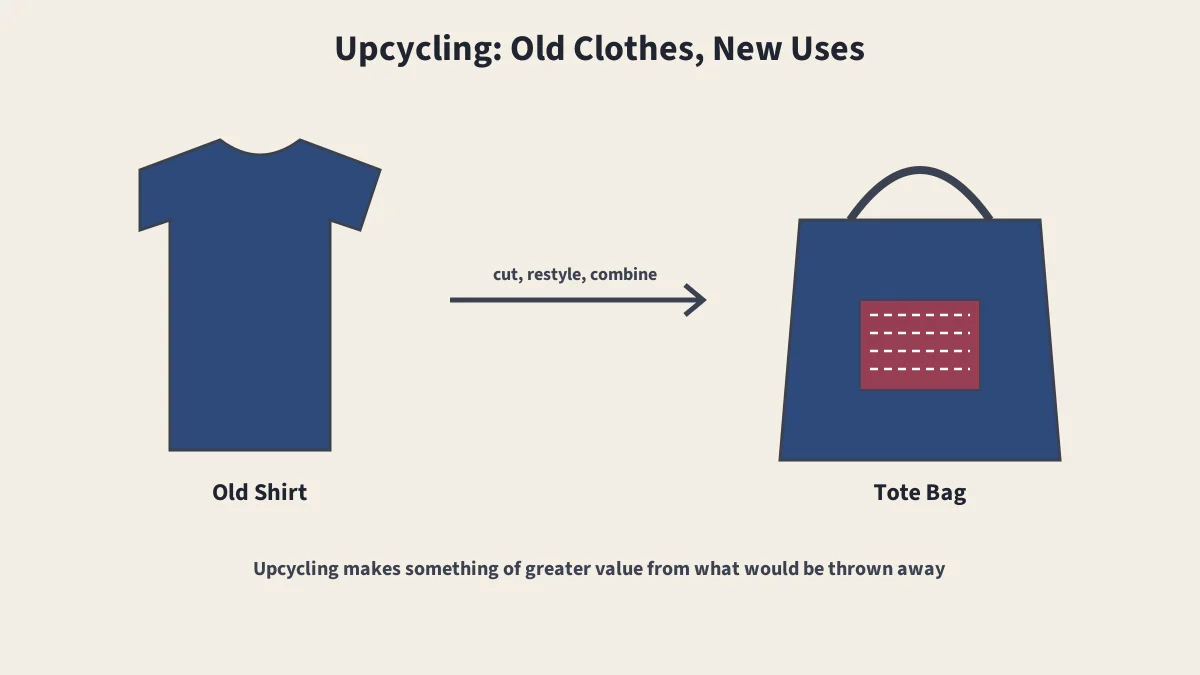
Upcycling Clothes
Restyling, combining and reusing old clothes and fabric.
Before You Begin
- Learn the basics: see learn to sew and parts of a sewing machine.
- Know your seams: see types of seams and seam allowance.
- Press as you go: see pressing tools.
- Use the right foot: see the presser feet guide.
Sources
- Sewing, Wikipedia
- Buttonhole, Wikipedia
Frequently Asked Questions
What sewing techniques should a beginner learn first?
Start with straight seams and pressing, then sewing on buttons, hemming, gathering and inserting a simple centered zipper. These cover a large share of beginner patterns.
Are hand-sewing and machine techniques different?
Many techniques can be done either way. Machines are faster for long seams and buttonholes, while hand stitching gives control for finishing, buttons, hems and delicate fabrics.
How do I get better at sewing techniques?
Practice on scraps before working on a project, press as you go, and use the right presser foot and needle for the job.
Where do I start if I am completely new?
Begin with our learn-to-sew guides on threading a needle, hand vs. machine sewing and the parts of a sewing machine, then come back to these techniques.
Keep Reading
How to Insert a Zipper
Centered, lapped, invisible and exposed zippers, step by step.
Types of Buttonholes
Machine, keyhole, bound and hand-worked buttonholes explained.
Sewing on Buttons and Snaps
Flat and shank buttons, thread shanks and sew-on snaps.
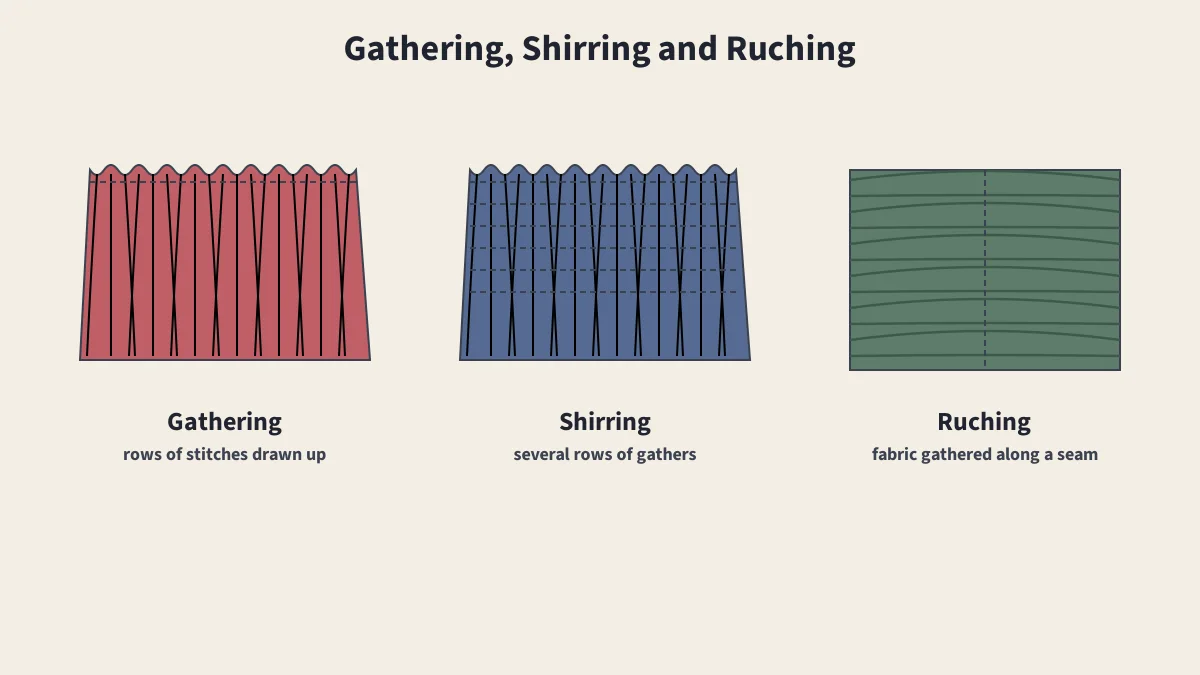
Gathering, Ruching and Shirring
Gathers, shirring, ruching and smocking explained.