Embroidery: An Illustrated Guide to Stitches, Styles and History (2026)
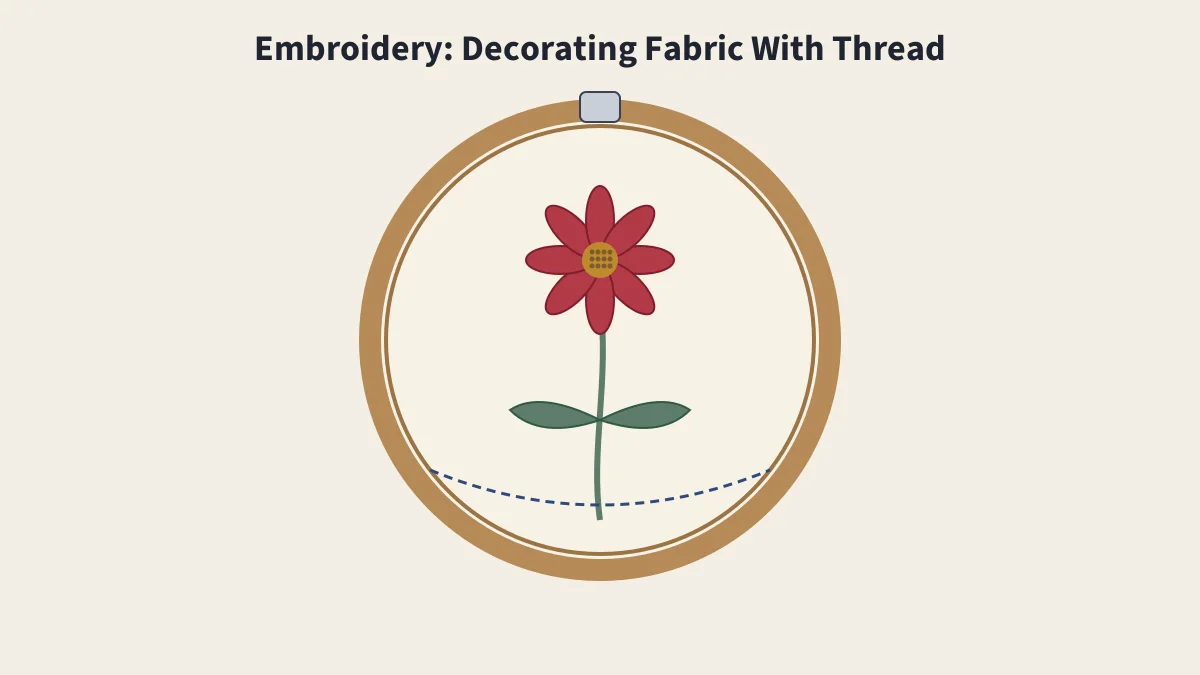
Embroidery is the decoration of fabric with thread and a needle, and one of the oldest forms of needlework. From Chinese silks to the Bayeux Tapestry, every culture has developed its own styles.
In This Article
Embroidery in Brief
- What: decorating fabric with thread and needle
- Families: surface, counted thread, canvas work
- Threads: silk, wool, linen, cotton, metal
- Tools: needle, hoop or frame, scissors
- Machines: from 1832
Embroidery is the craft of decorating fabric or other materials by stitching thread or yarn with a needle. A person who embroiders is an embroiderer; the old word is "broderer." Wool, linen and silk have been used for thousands of years, and today's threads also include cotton, rayon and novelty yarns.
Explore Embroidery
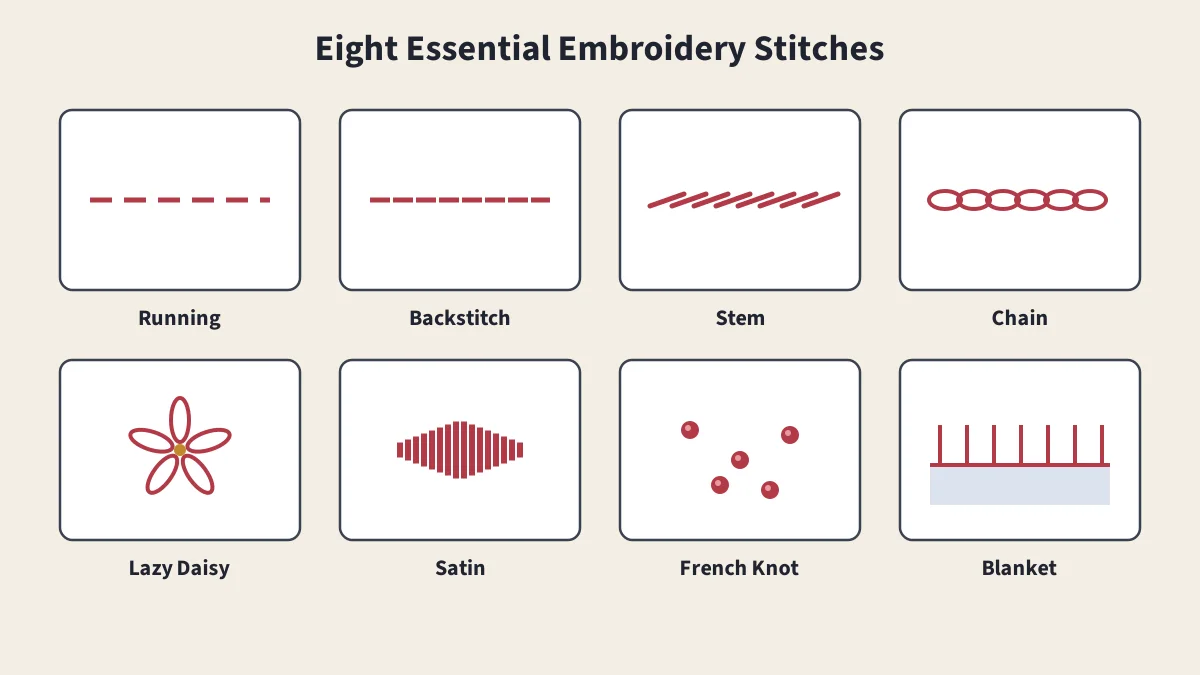
Embroidery Stitches
Flat, looped, knotted and couched stitches.
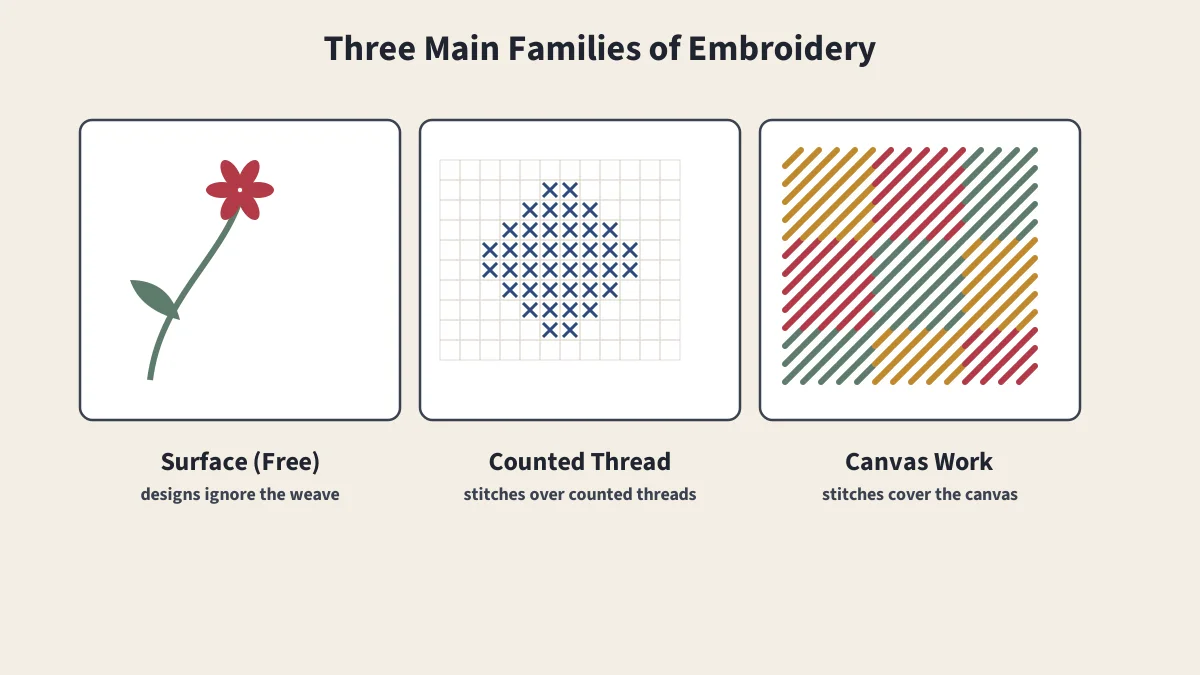
Types of Embroidery
The main families and named styles of embroidery.
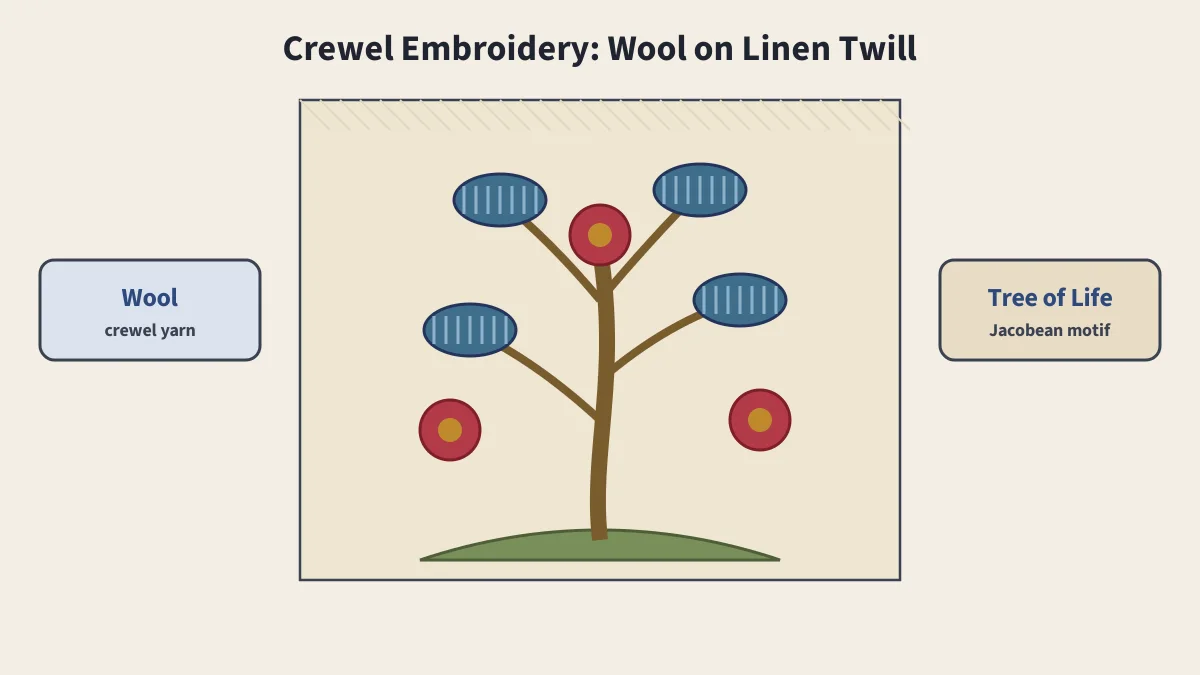
Crewel Embroidery
Wool embroidery, Jacobean designs and history.
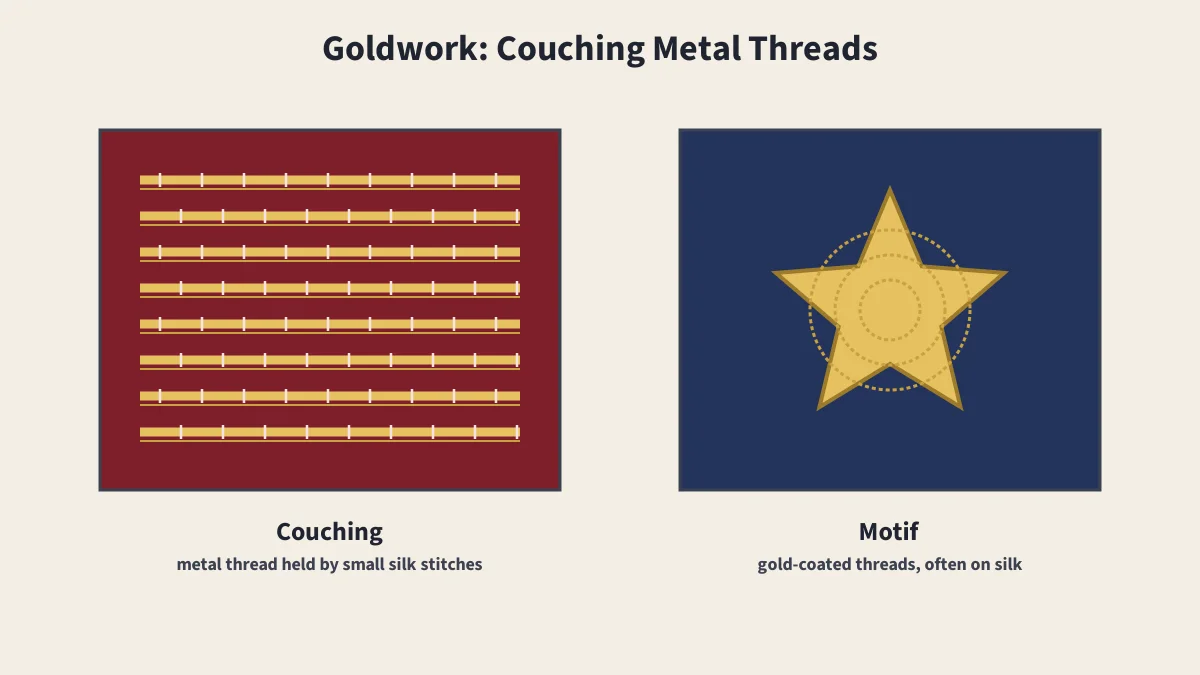
Goldwork
Metal threads, couching and centuries of history.
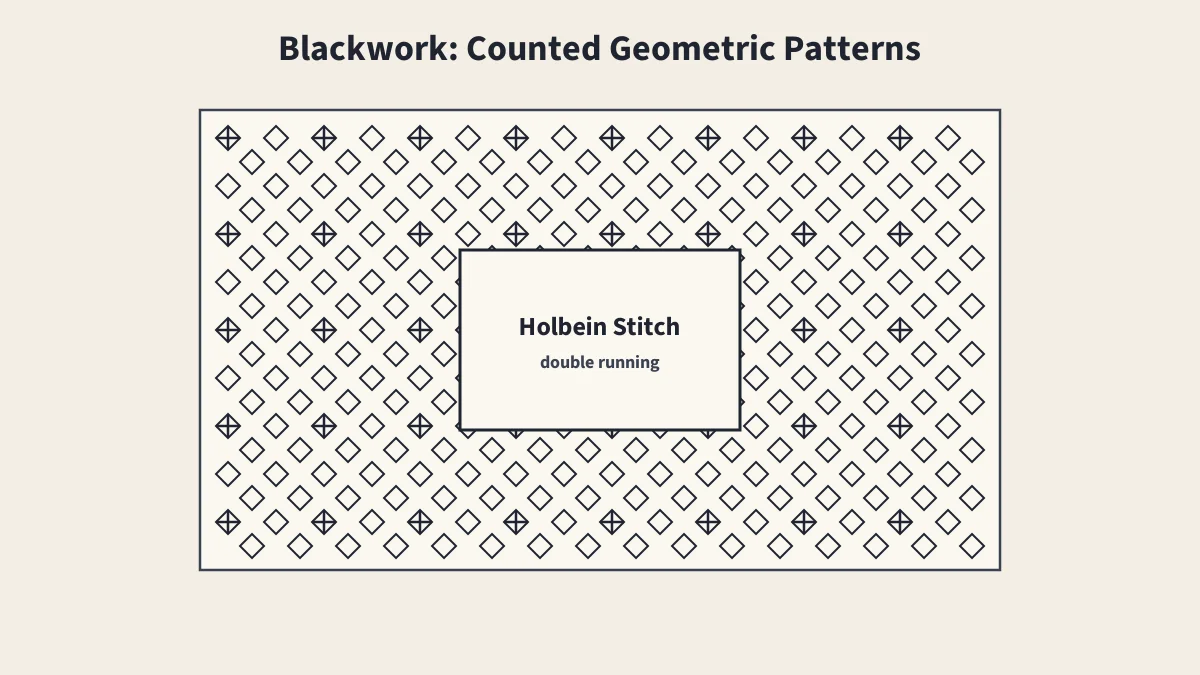
Blackwork
Black-on-white counted embroidery from Tudor England.
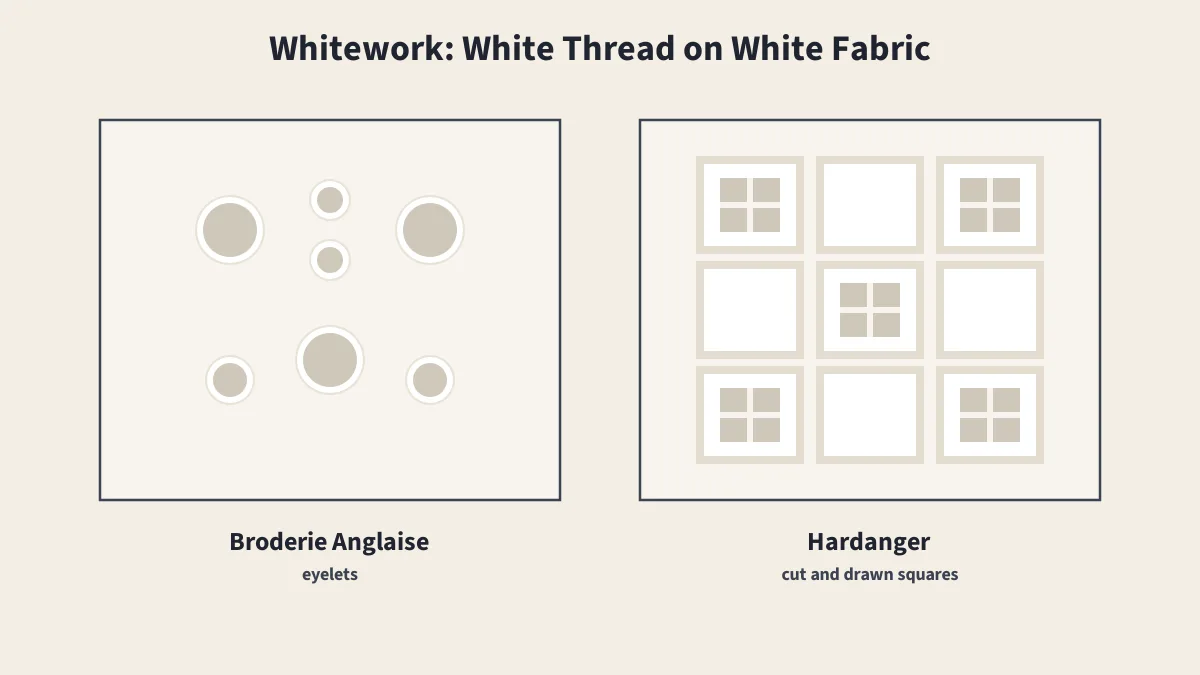
Whitework
Broderie anglaise, Hardanger and other white-on-white styles.
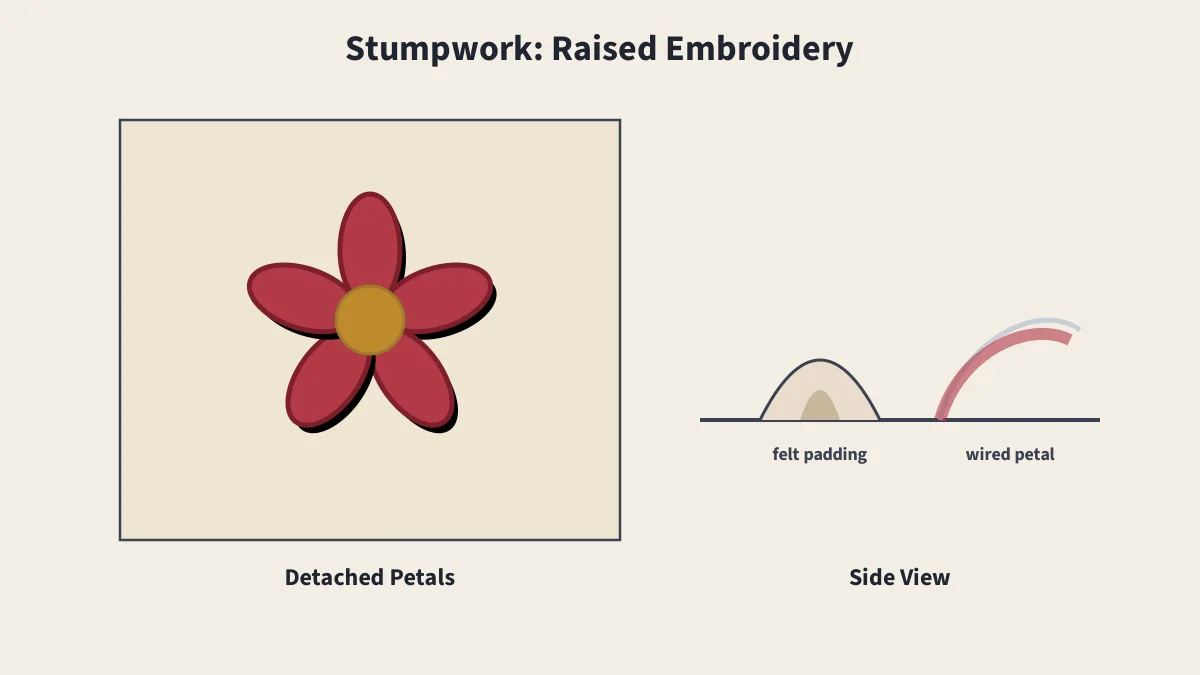
Stumpwork
Raised embroidery with wire and padding.
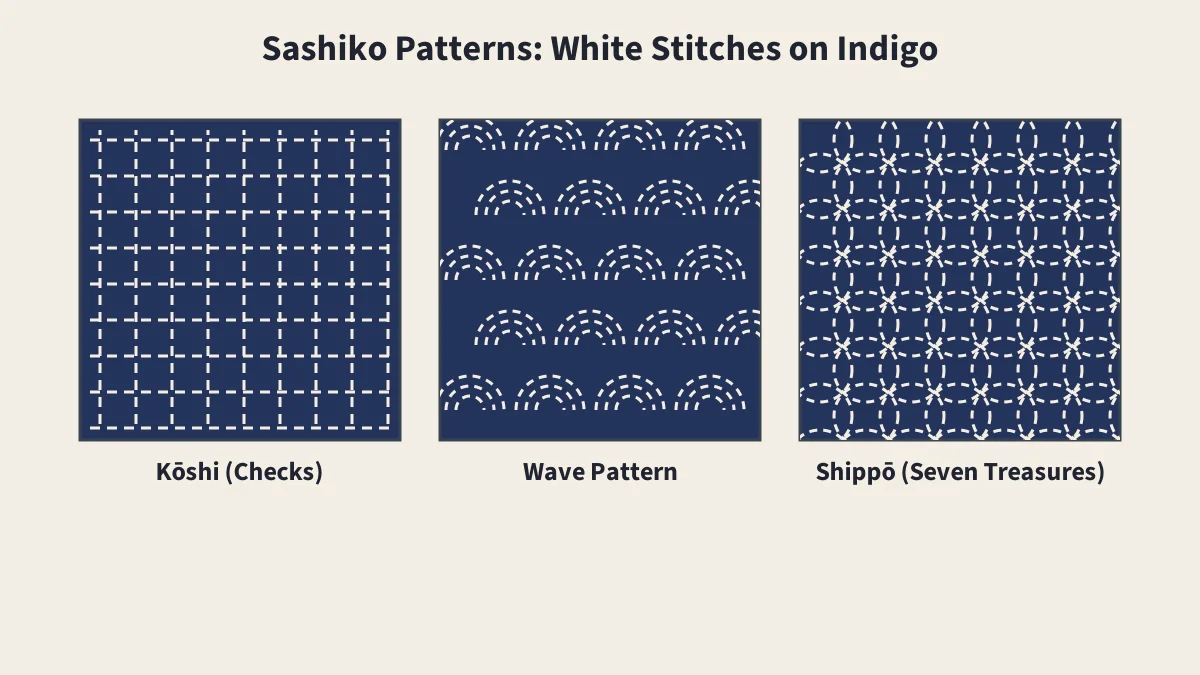
Sashiko and Boro
Sashiko patterns, regional styles and boro history.
Indian Embroidery
Regional traditions from Lucknow, Punjab, Bengal and beyond.
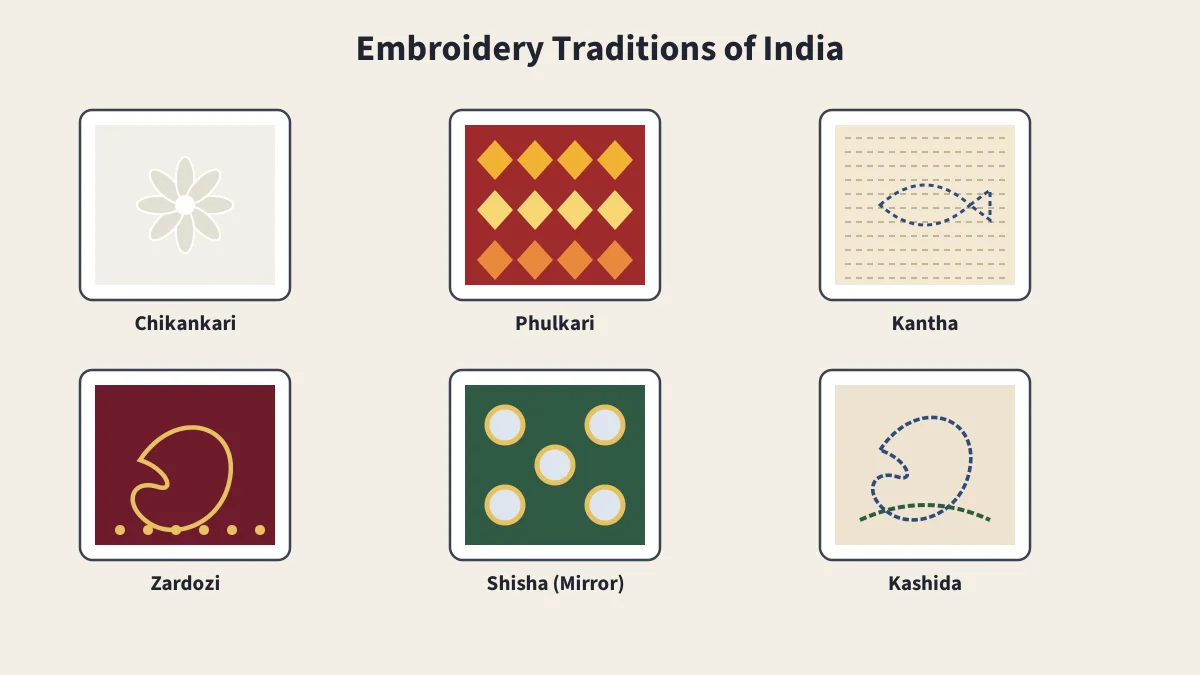
Indian Embroidery Styles
Chikankari, phulkari, kantha, zardozi and more.
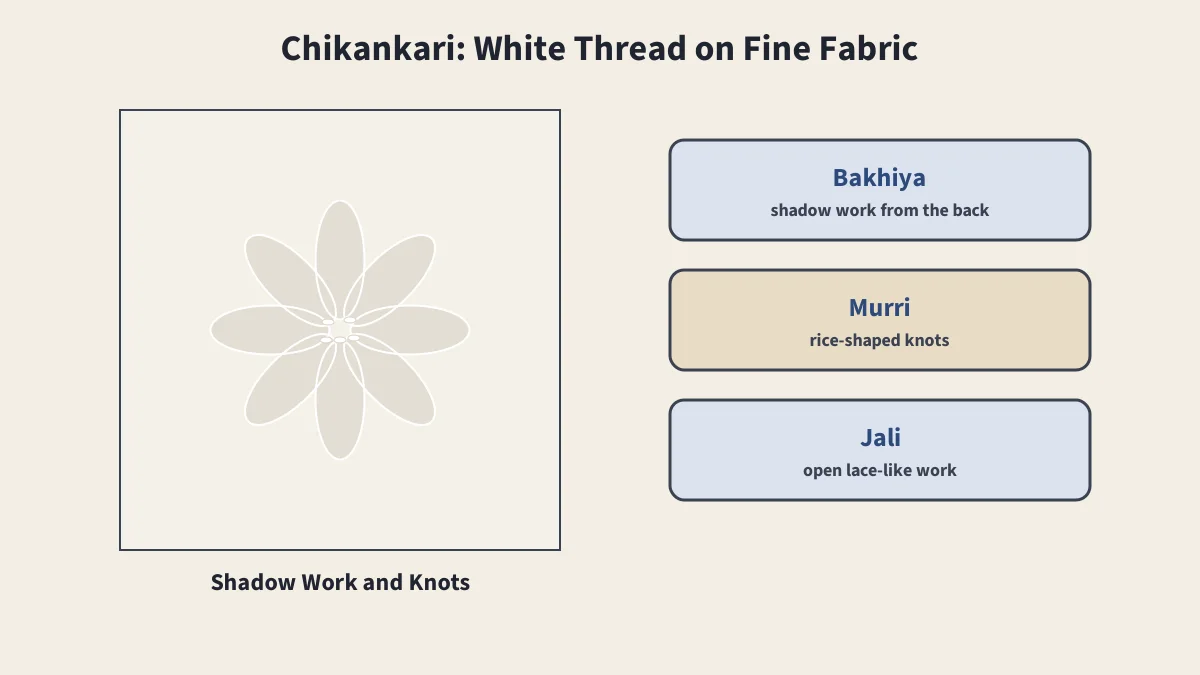
Chikankari
Lucknow's white-on-white embroidery and its stitches.
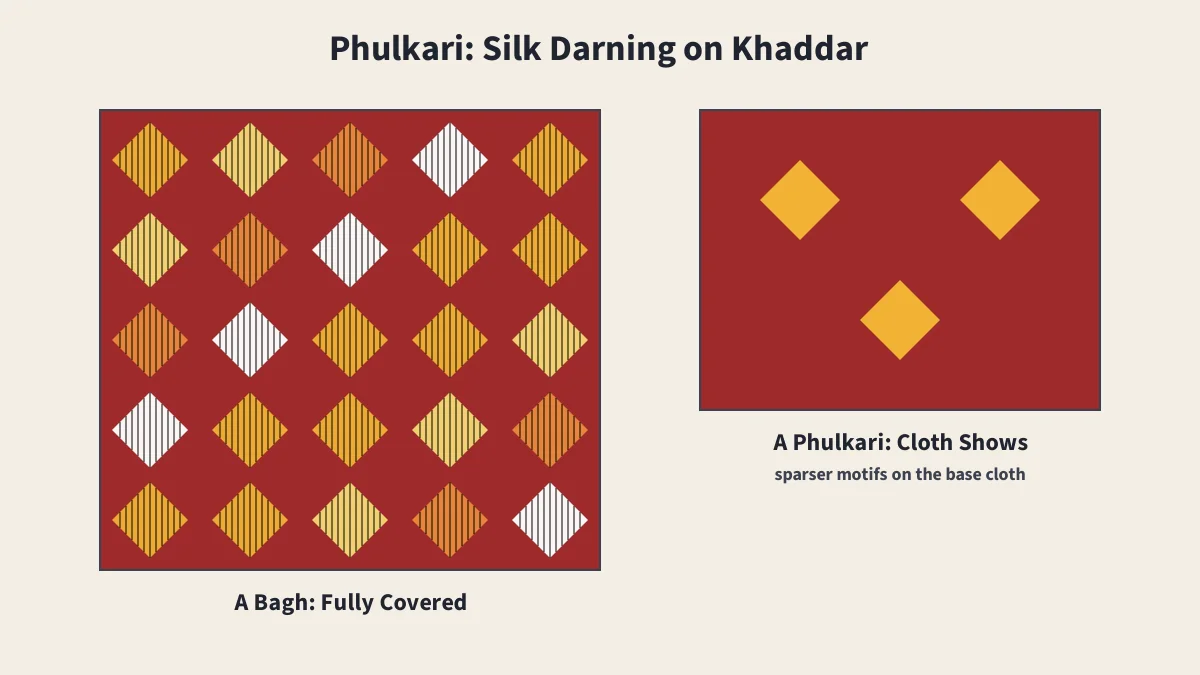
Phulkari
Punjab's silk-floss flower embroidery.
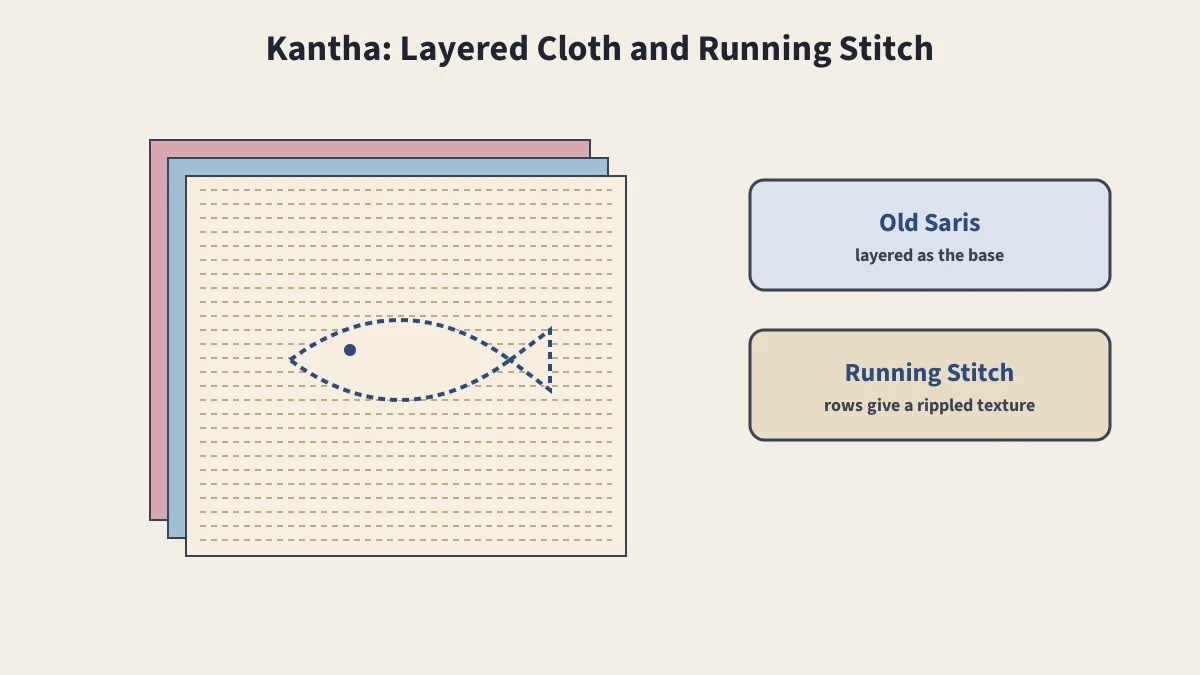
Kantha
Layered saris, running stitch and nakshi kantha.
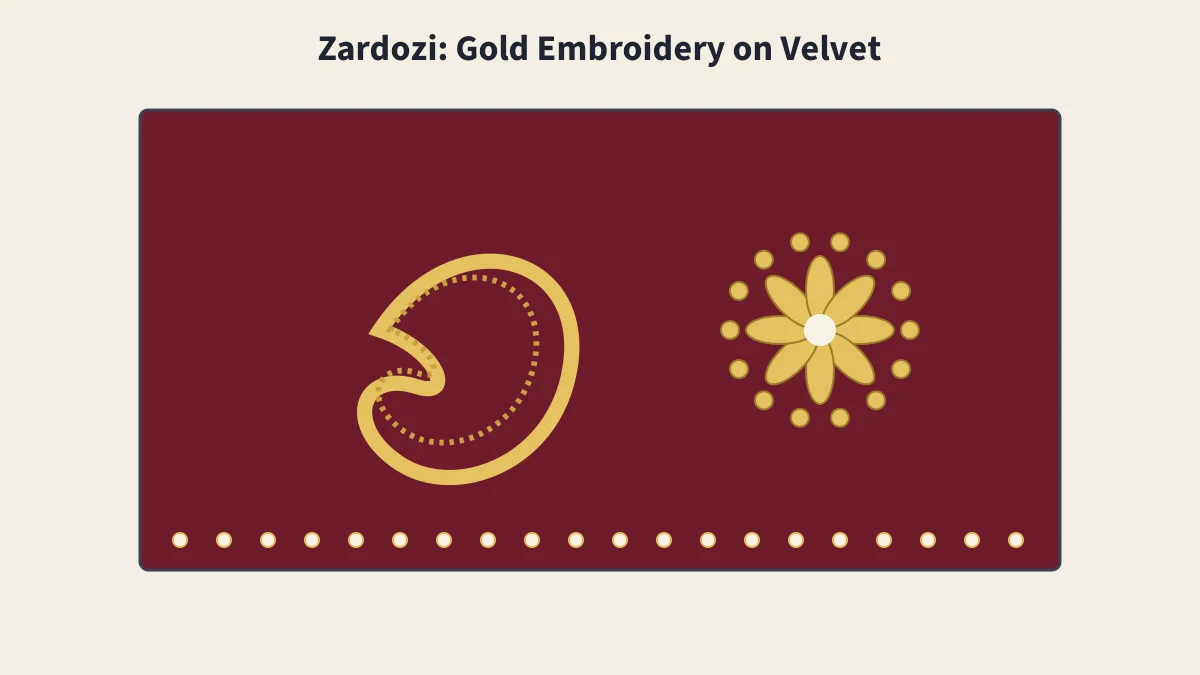
Zardozi
Metal-thread embroidery from the Mughal court to today.
Needlecraft and Techniques
Counted work, samplers, smocking, appliqué, beading and the supplies you need.
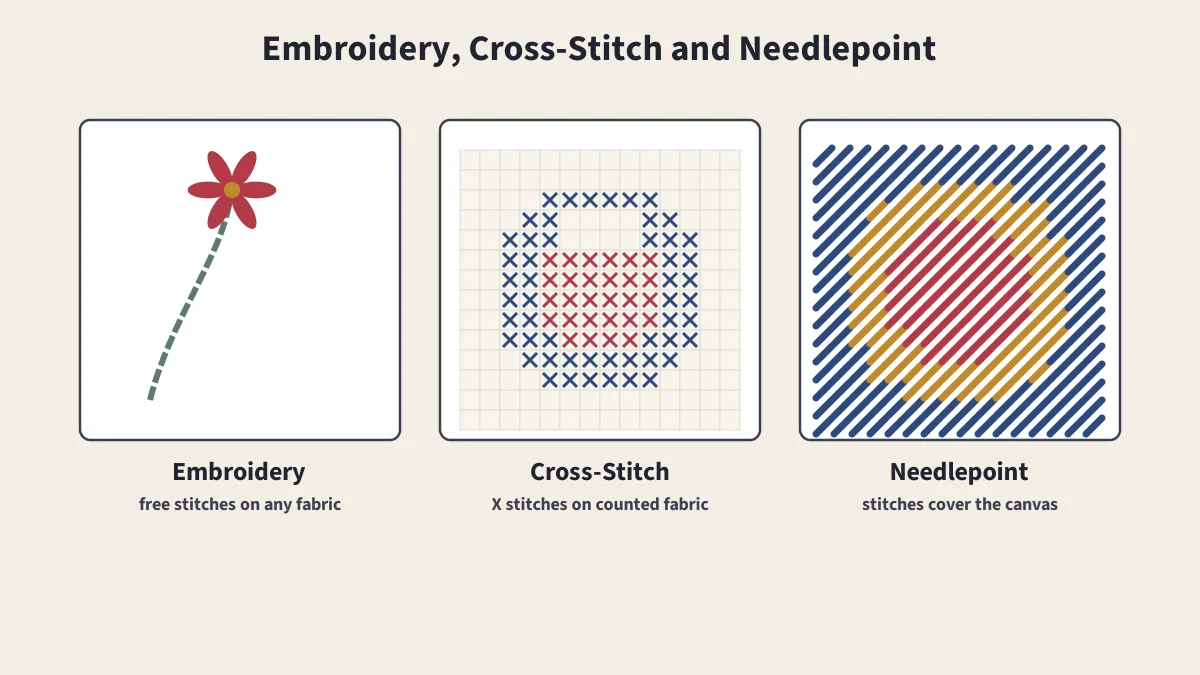
Cross-Stitch vs. Needlepoint
Fabrics, stitches and tools compared.
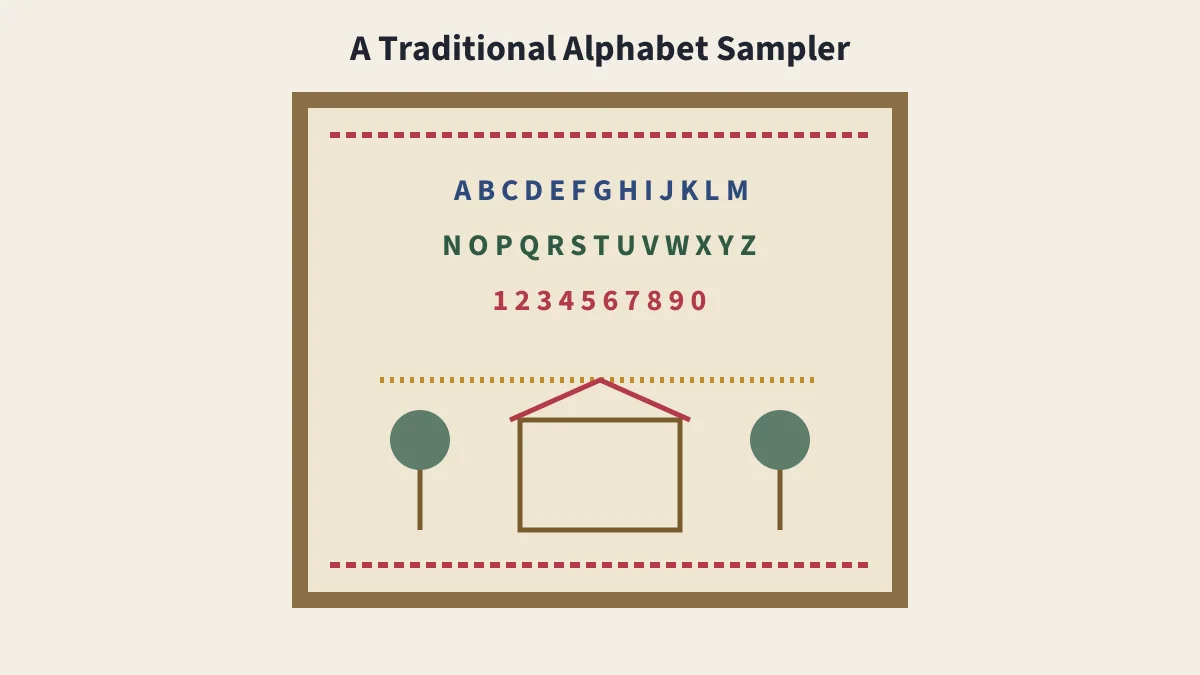
History of Embroidery Samplers
From pattern records to schoolgirl samplers.
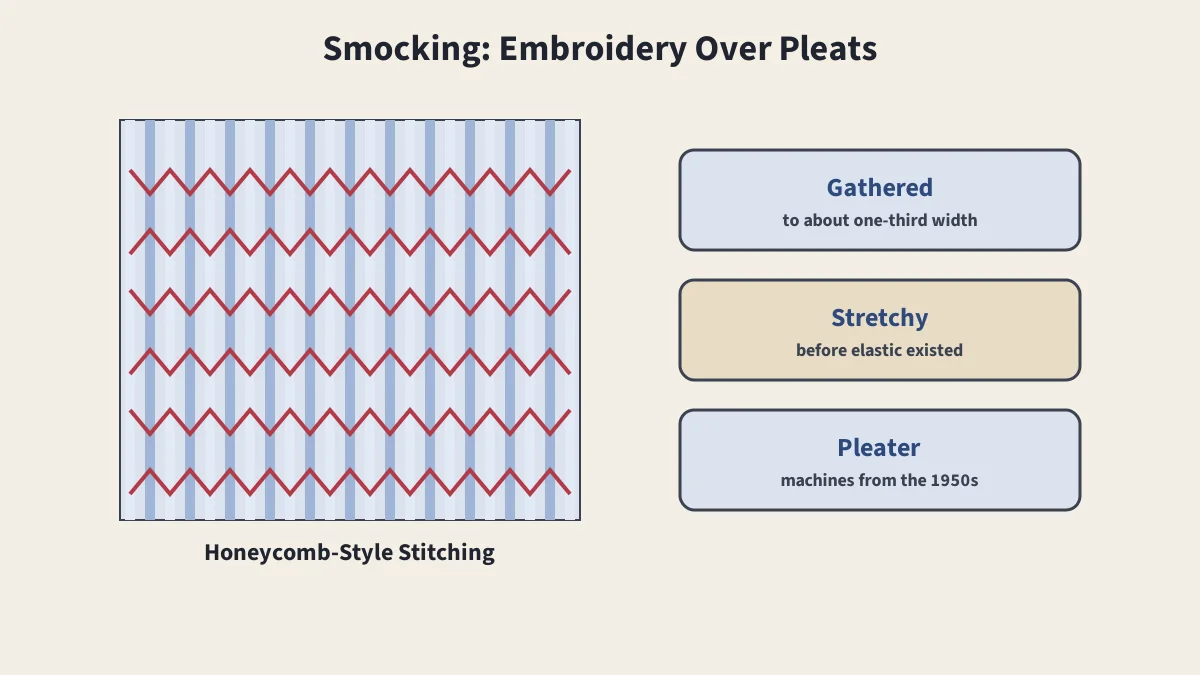
Smocking
Embroidery over pleats, from smock frocks to today.
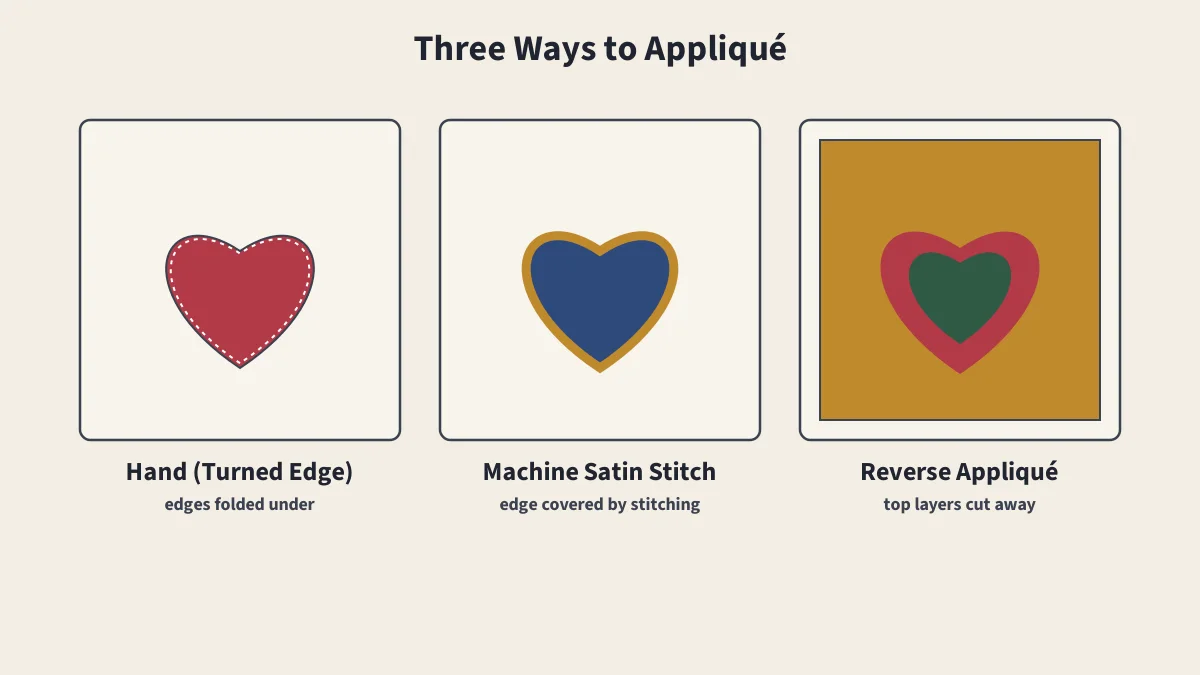
Types of Appliqué
Appliqué techniques and traditions worldwide.
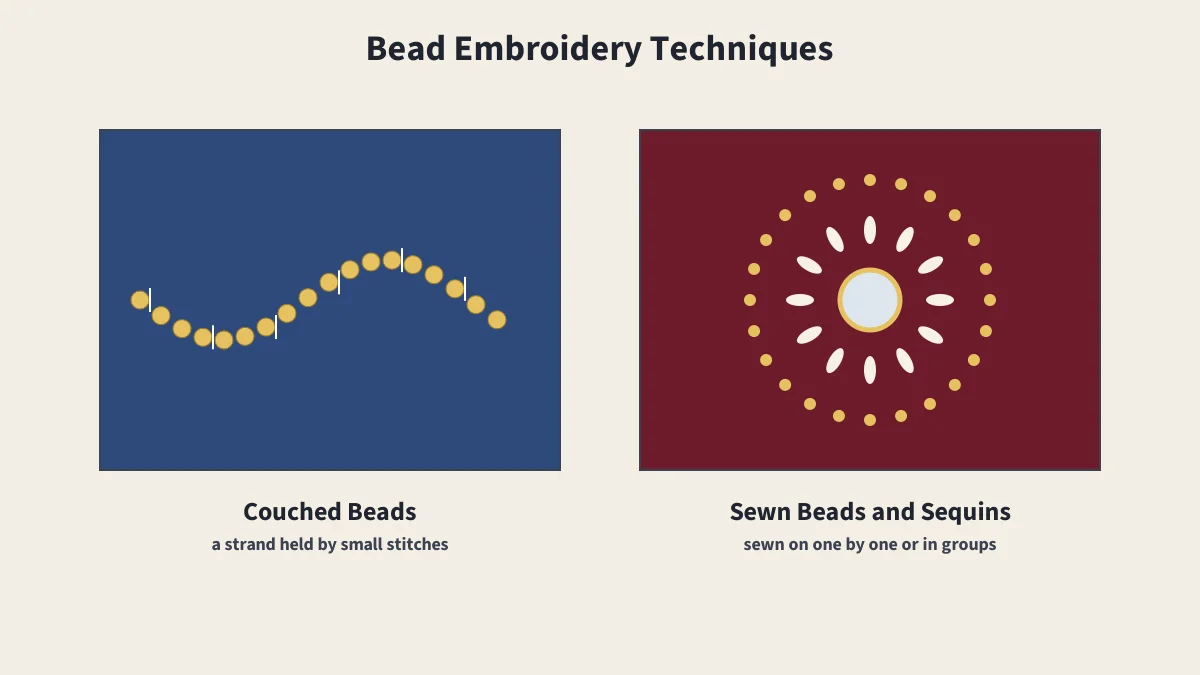
Bead Embroidery
Beading techniques and traditions.
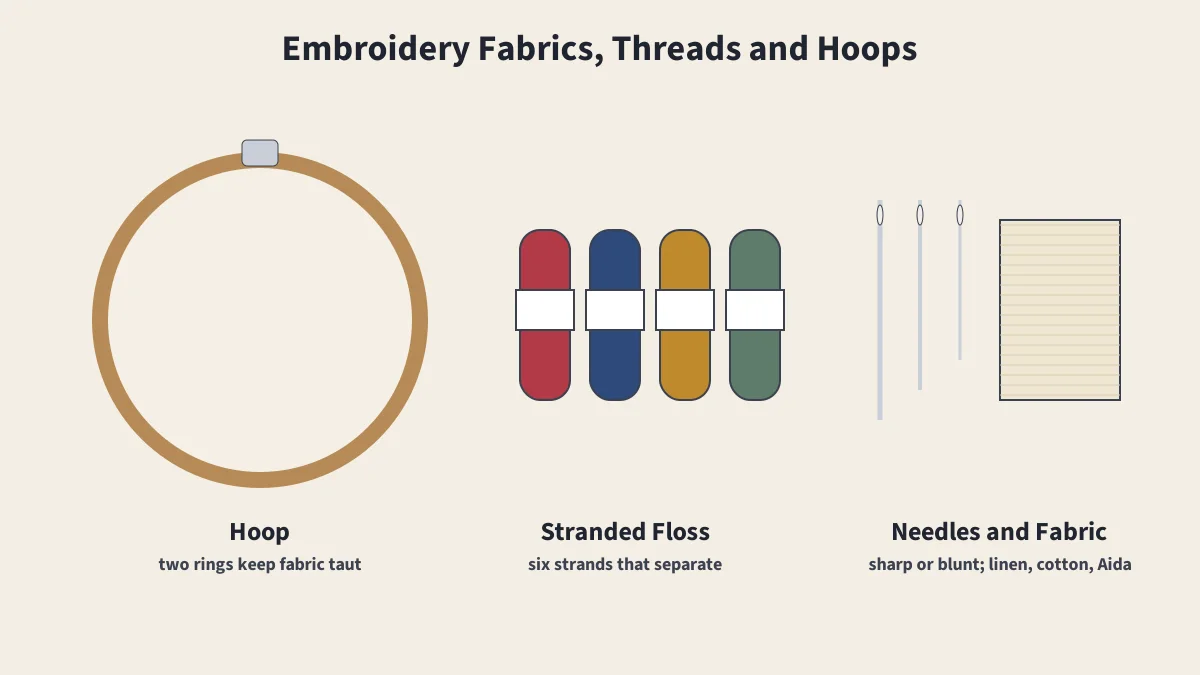
Embroidery Fabrics, Threads and Hoops
Fabric, thread, needles, hoops and frames.
A Famous Embroidery
A Brief History
- Early surviving embroidered cloth comes from Egypt, where appliqué with leather and beads was used.
- Chinese embroidery dates to the Warring States period (5th–3rd century BC).
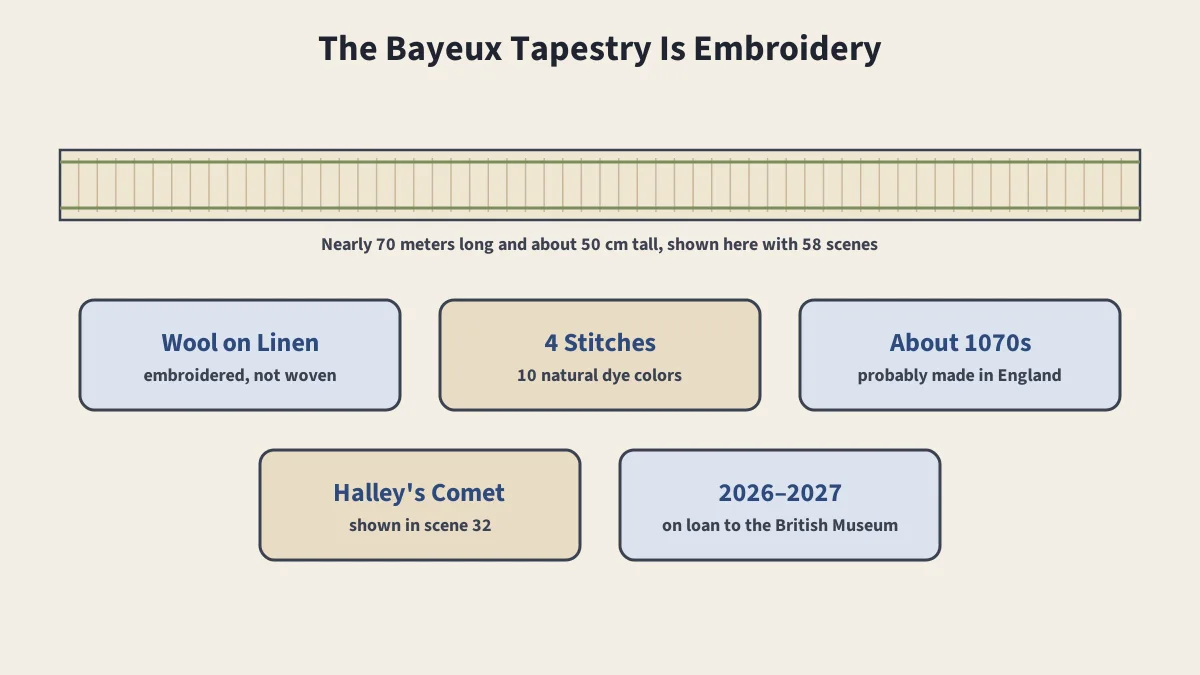
- The Bayeux Tapestry, made around the 11th century, is in fact an embroidery nearly 70 meters long.
- In medieval England, Opus Anglicanum workshops embellished church textiles with fine embroidery.
- Josué Heilmann invented a hand embroidery machine in France in 1832; schiffli machines then automated embroidery, which flourished in St. Gallen, Switzerland, in the late 19th century.
For machine embroidery today, see how embroidery machines work.
Getting Started
- Needles: sharp embroidery (crewel) needles for surface work; blunt tapestry needles for counted work. See hand sewing needles.
- Thread: stranded cotton floss is the most versatile; see types of thread.
- Hoop or frame: keeps the fabric taut so stitches lie evenly.
- Fabric: firm cotton or linen for surface work; evenweave for counted work.
- Beeswax: often used to smooth and strengthen thread.
Sources
- Embroidery, Wikipedia
Frequently Asked Questions
What is embroidery?
The craft of decorating fabric or other materials by stitching thread or yarn with a needle. Embroidery may also include beads, sequins, pearls and metal threads.
How old is embroidery?
Very old. Early surviving embroidered cloth comes from Egypt, and Chinese embroidery dates to the Warring States period, between the 5th and 3rd centuries BC.
What do I need to start embroidery?
An embroidery needle, embroidery floss, a piece of firm fabric such as cotton or linen, an embroidery hoop and small sharp scissors.
What is the difference between hand and machine embroidery?
Hand embroidery is stitched with a needle by hand. Machine embroidery uses a sewing or embroidery machine; Josué Heilmann invented a hand embroidery machine in France in 1832, and later schiffli machines automated the process.
Keep Reading
Embroidery Stitches
Flat, looped, knotted and couched stitches.
Types of Embroidery
The main families and named styles of embroidery.
Crewel Embroidery
Wool embroidery, Jacobean designs and history.
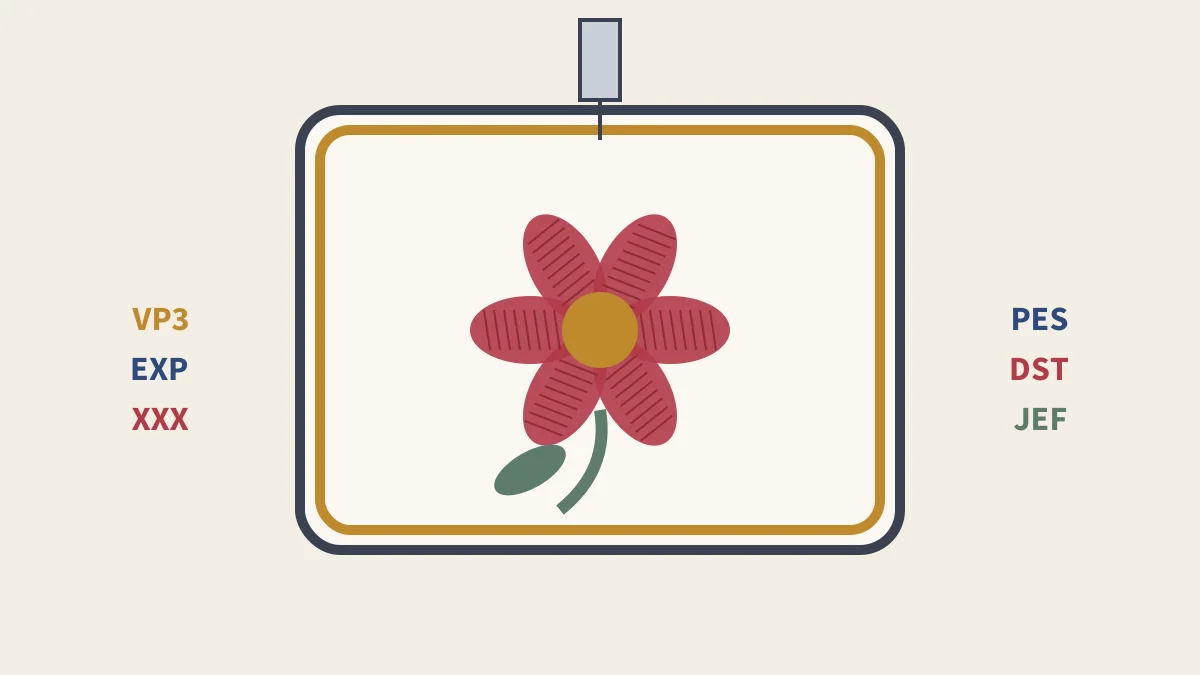
How Embroidery Machines Work
Hoops, digitizing, stabilizers and embroidery file formats explained.