Essential Sewing Tools: What Each One Does and Why It Matters (2026)
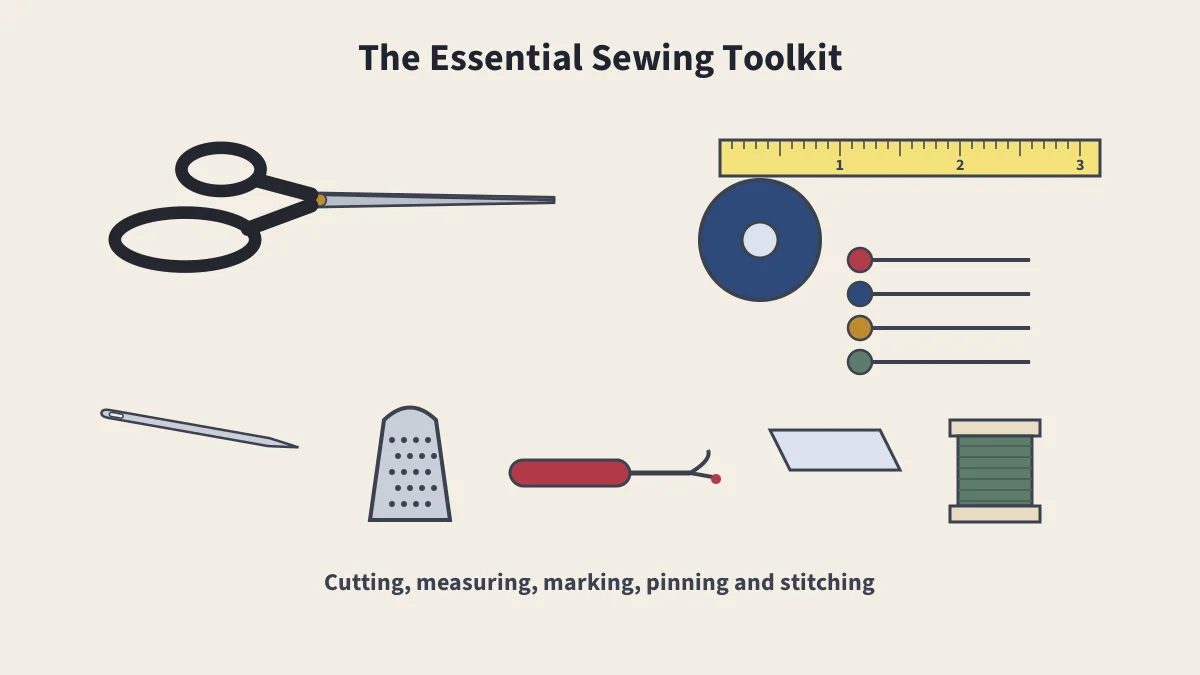
A sewing machine gets the attention, but most of the work of sewing happens with small tools: cutting, measuring, marking, pinning and pressing. Here is what each essential tool does, with guides to the main types.
In This Article
The Five Jobs of Sewing Tools
- Cutting: shears, scissors, snips and rotary cutters
- Measuring: tape measures, gauges and rulers
- Marking: chalk, pens and tracing tools
- Holding: pins, clips and weights
- Stitching and fixing: needles, thimbles and seam rippers
Every sewing project follows the same basic path: measure, mark, cut, hold the pieces together, then stitch and press. Each step has its own tools, and good tools make each step easier and more accurate. Many of these tools are ancient. Needles have been found in archaeological sites tens of thousands of years old, and scissors date back thousands of years; see the history of the needle and the history of scissors.
Tools vs. Notions
In sewing, a tool is something you reuse, like scissors or a tape measure. A notion is a small item that ends up in the finished project, like thread, a zipper or buttons. The two words are often used loosely, and shops usually sell them side by side.
Cutting Tools
Clean, accurate cutting is the foundation of a good fit. The main cutting tools are long-bladed fabric shears, small scissors and snips for trimming threads, pinking shears for zigzag edges, and rotary cutters for fast straight lines.
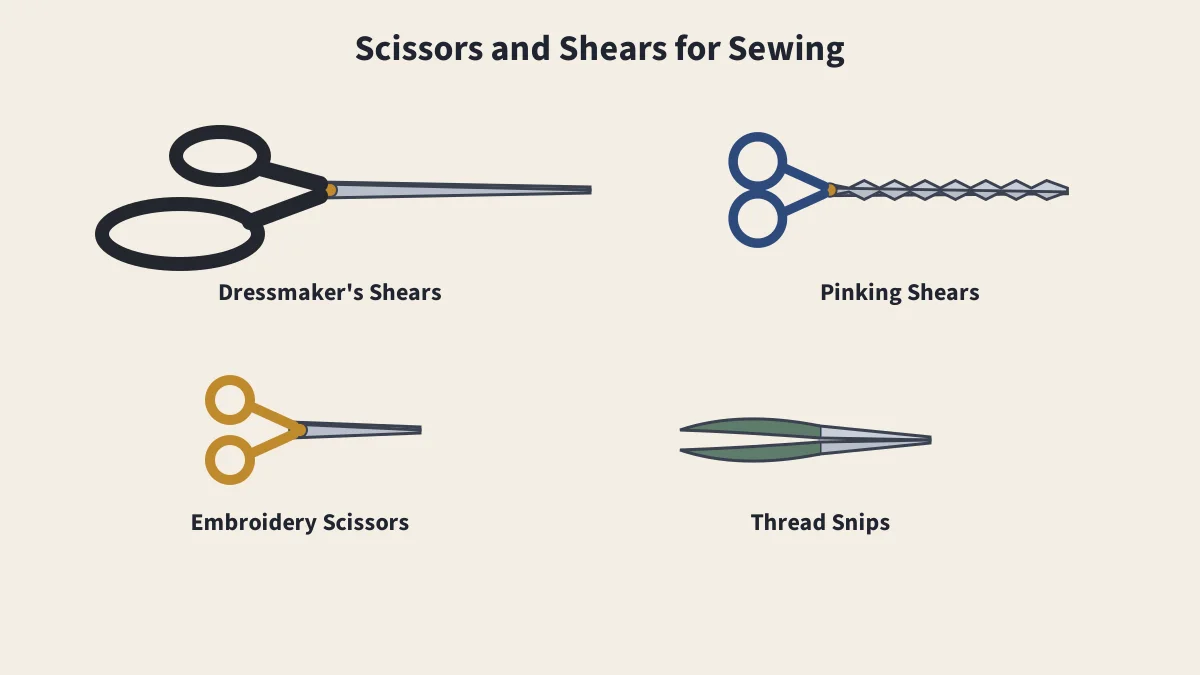
Scissors and Shears
Shears, pinking shears, embroidery scissors and snips compared.
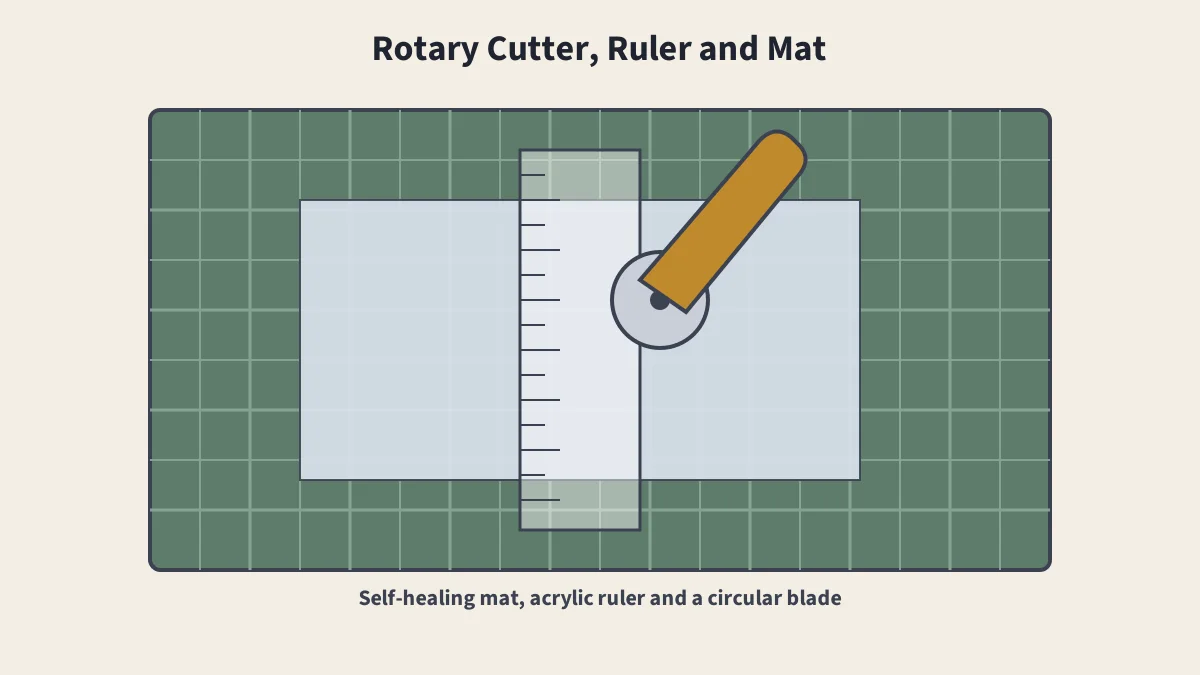
Rotary Cutters and Mats
The 1979 invention, blade sizes, mats, rulers and safe cutting.
Needles and Pins
Hand needles come in many types for different fabrics and jobs, from fine sharps to blunt tapestry needles. Pins hold fabric layers together before stitching, and they vary in length, thickness and head style.
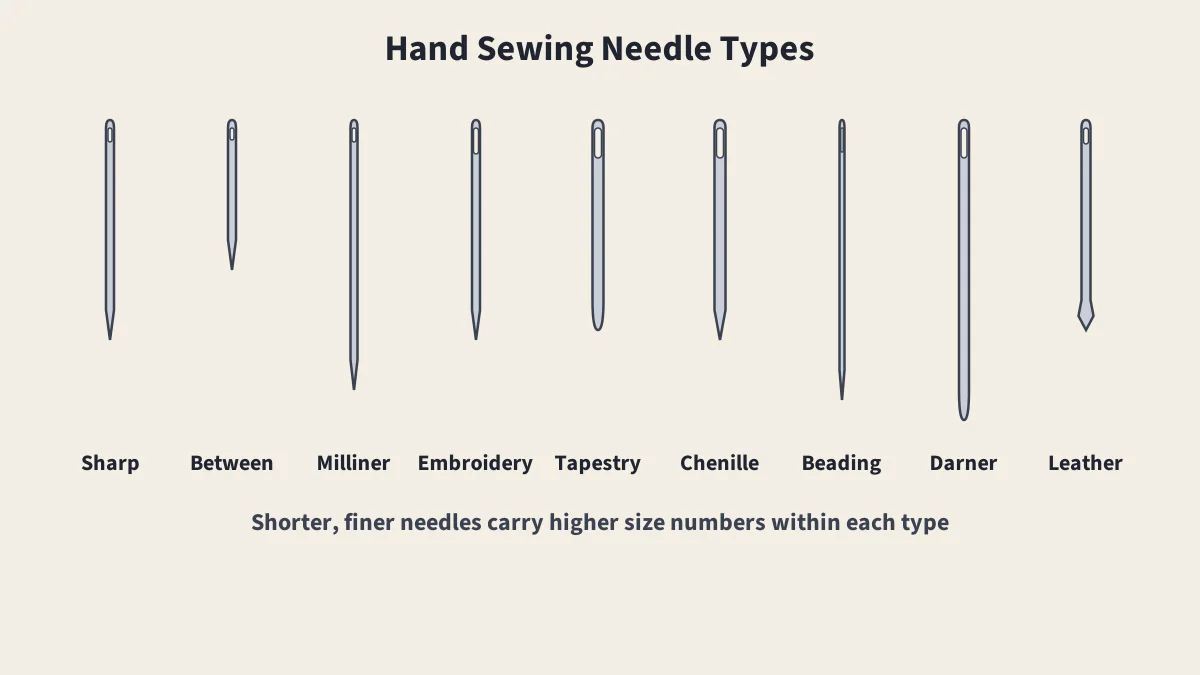
Hand Sewing Needle Types
Every common hand needle type, what it is for and how sizes work.
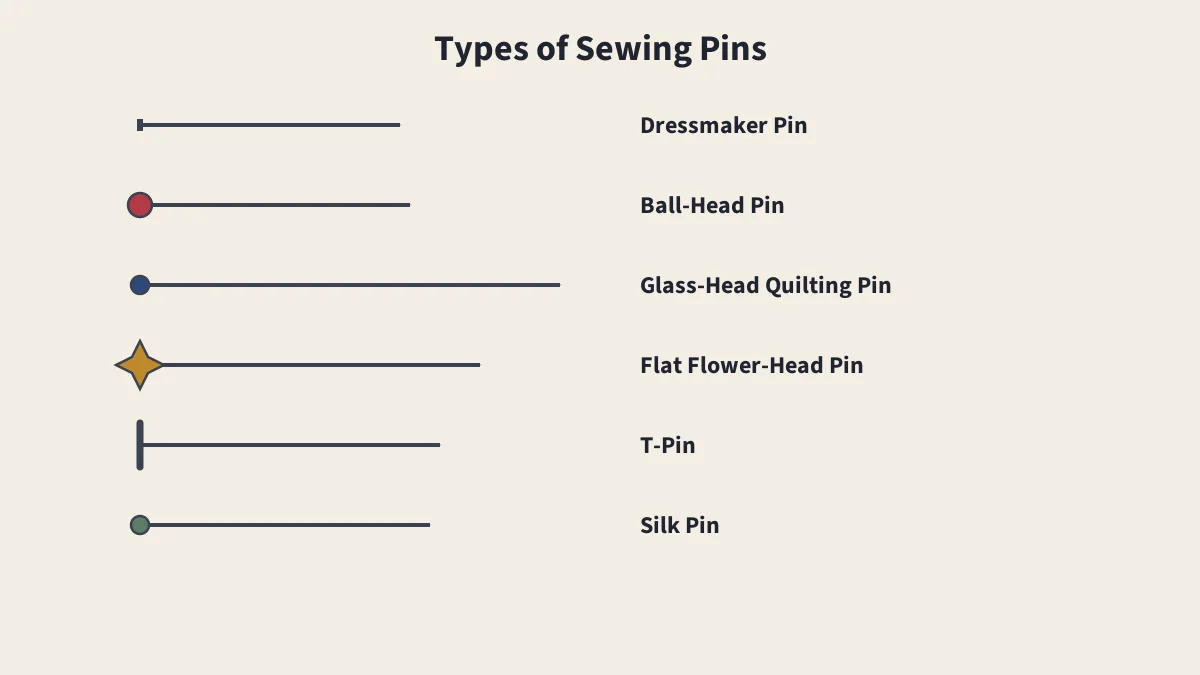
Types of Pins
Pin types, sizes and head styles, plus a short history of the pin.
Machine needles are a separate system; see sewing machine needles.
Measuring Tools
A flexible tape measure handles body measurements and curves, a short sewing gauge measures hems and seam allowances, and rulers and curves help with straight lines and pattern shapes.
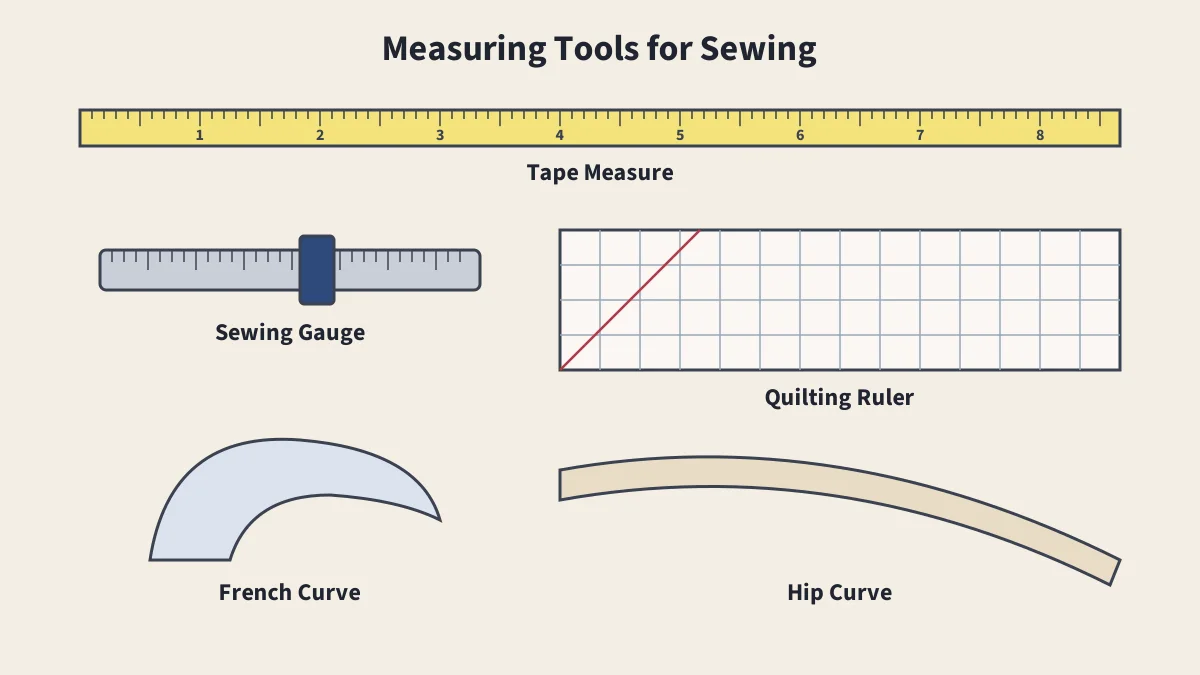
Measuring Tools
Tape measures, gauges, quilting rulers and curves explained.
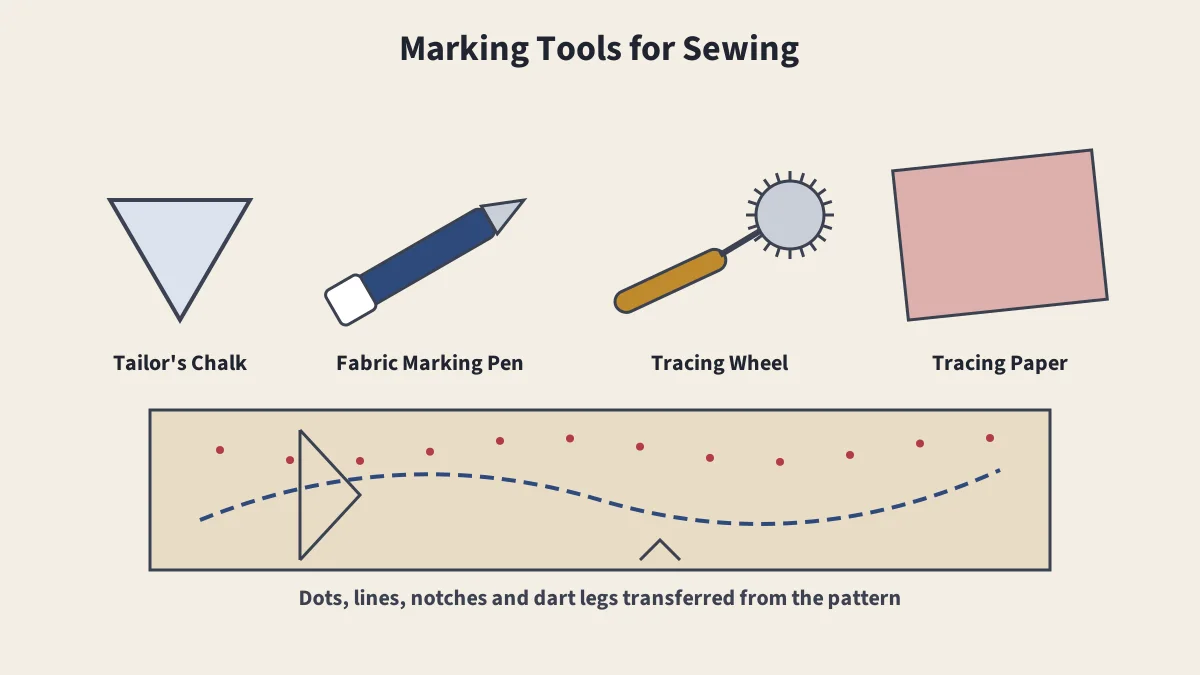
Marking Tools
Chalk, pens, tracing wheels, tailor's tacks and notches compared.
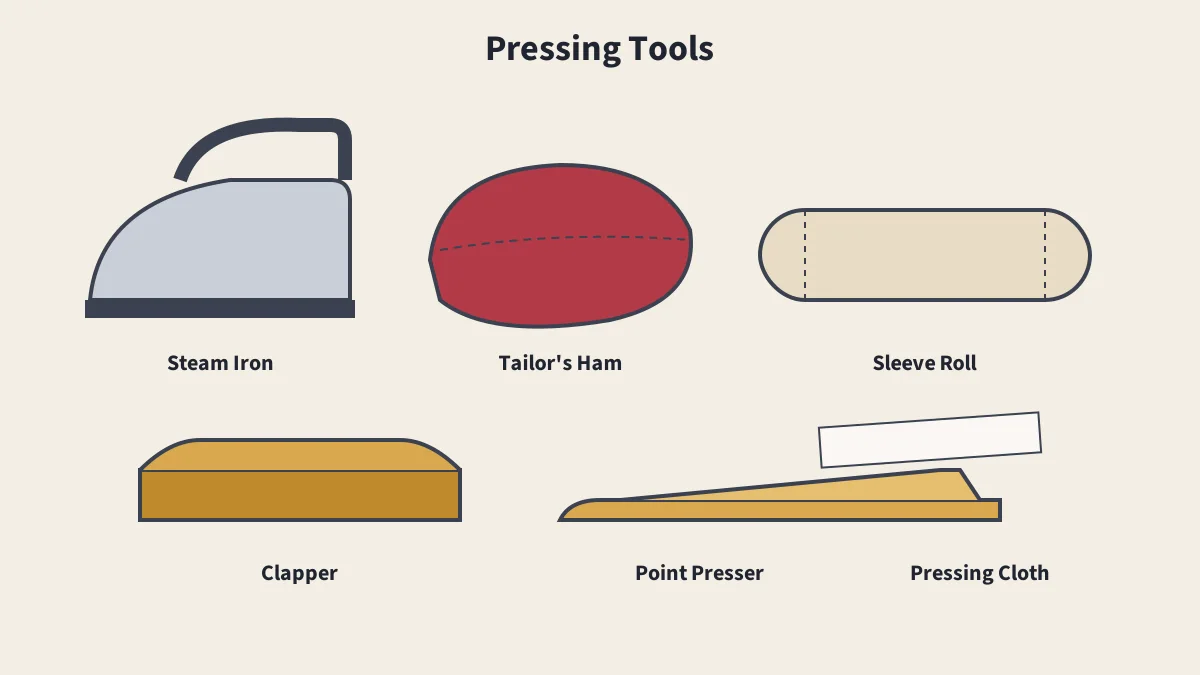
Pressing Tools
Pressing as you sew shapes seams and curves. The iron does the work, helped by a tailor's ham, sleeve roll, clapper and pressing cloth.
Thread, Interfacing, Stabilizers and Adhesives
Thread holds every seam together, interfacing gives collars and cuffs their shape, stabilizers support fabric under machine embroidery, and fusible web bonds fabric with heat.
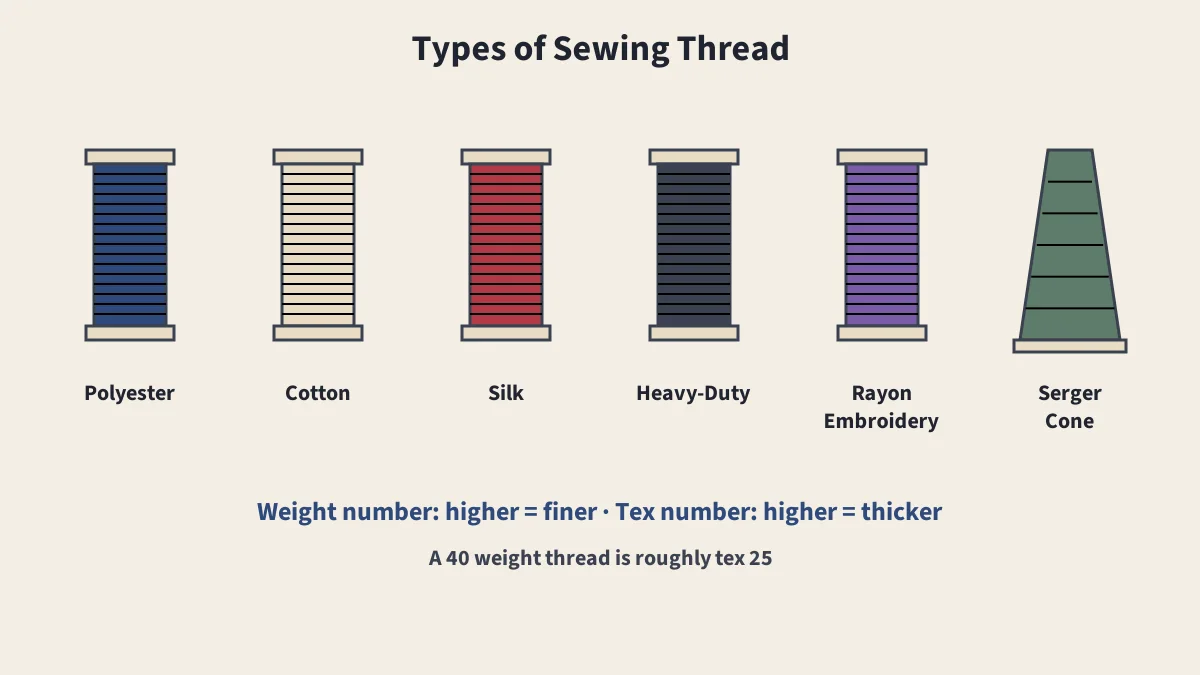
Types of Thread
Thread fibers, uses, and weight, tex and denier explained.
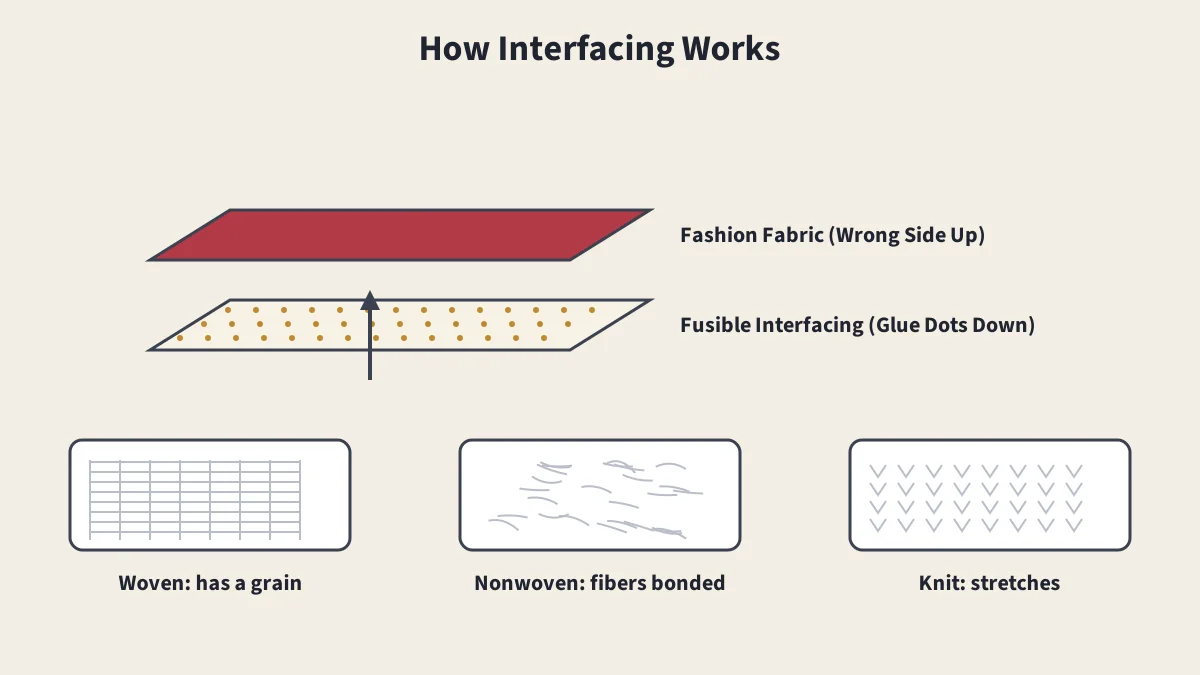
Interfacing Types
Fusible vs. sew-in, woven vs. nonwoven vs. knit, and how to apply it.
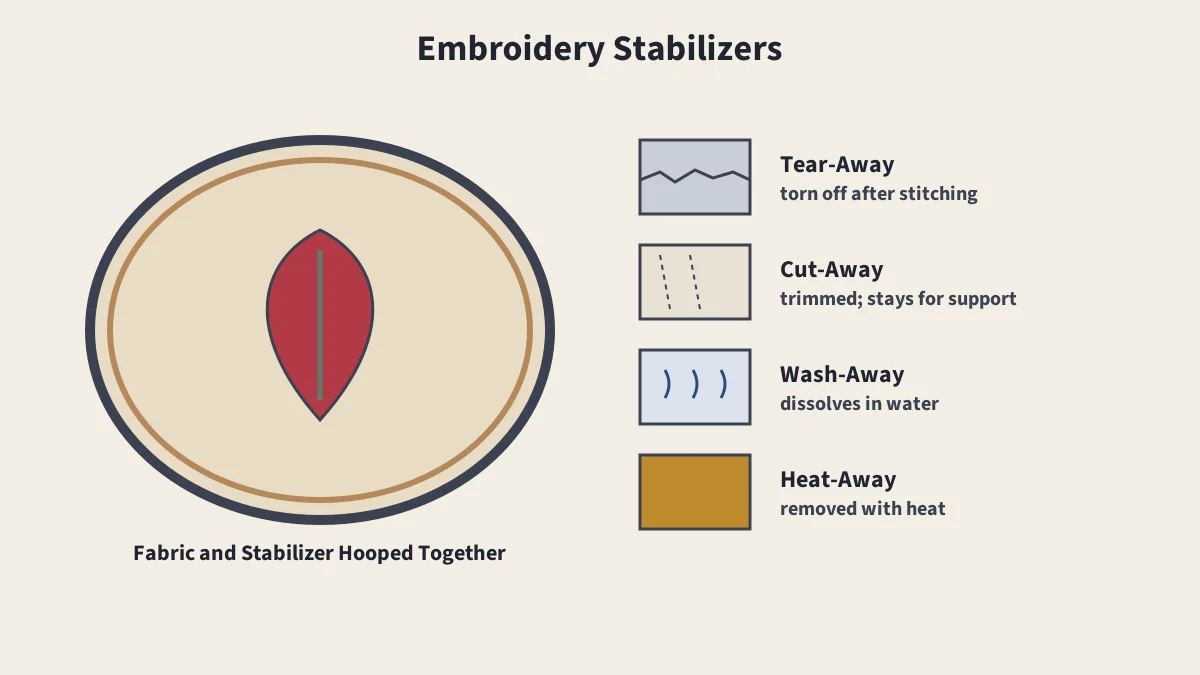
Embroidery Stabilizers
Tear-away, cut-away, wash-away and heat-away stabilizers explained.
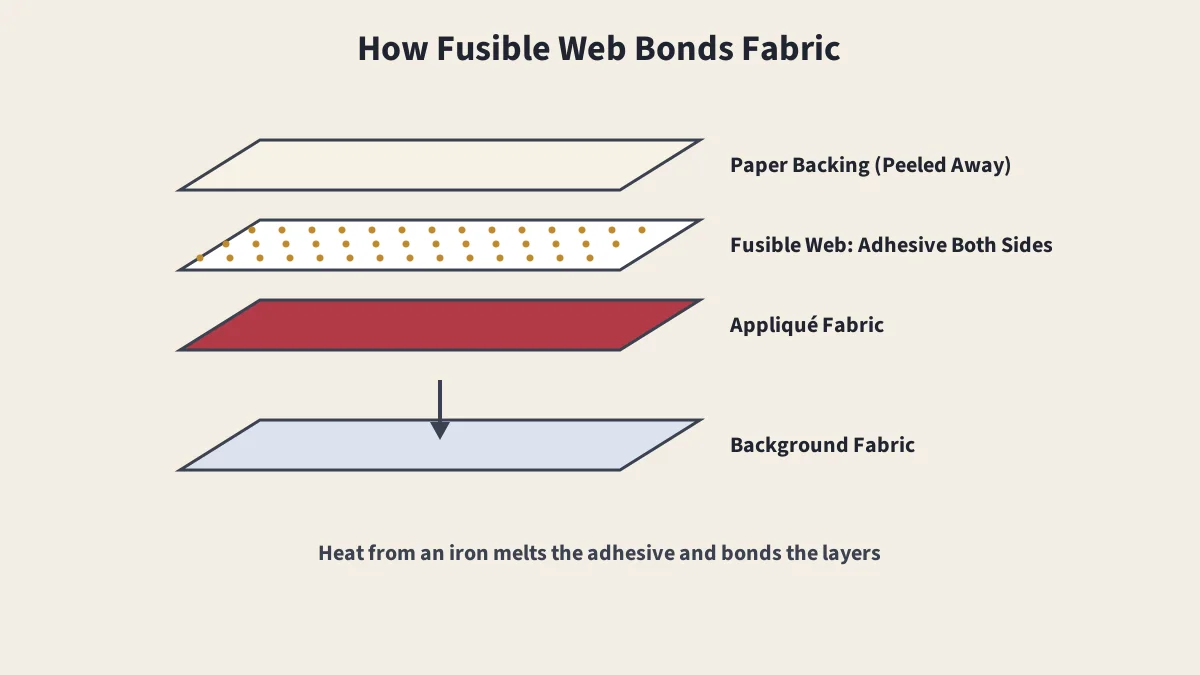
Fusible Web and Adhesives
Fusible web, fusible tape, fabric glue and basting spray compared.
Closures and Notions
Elastic, zippers, buttons, snaps and hooks open and close garments; bias tape and trims finish and decorate their edges.
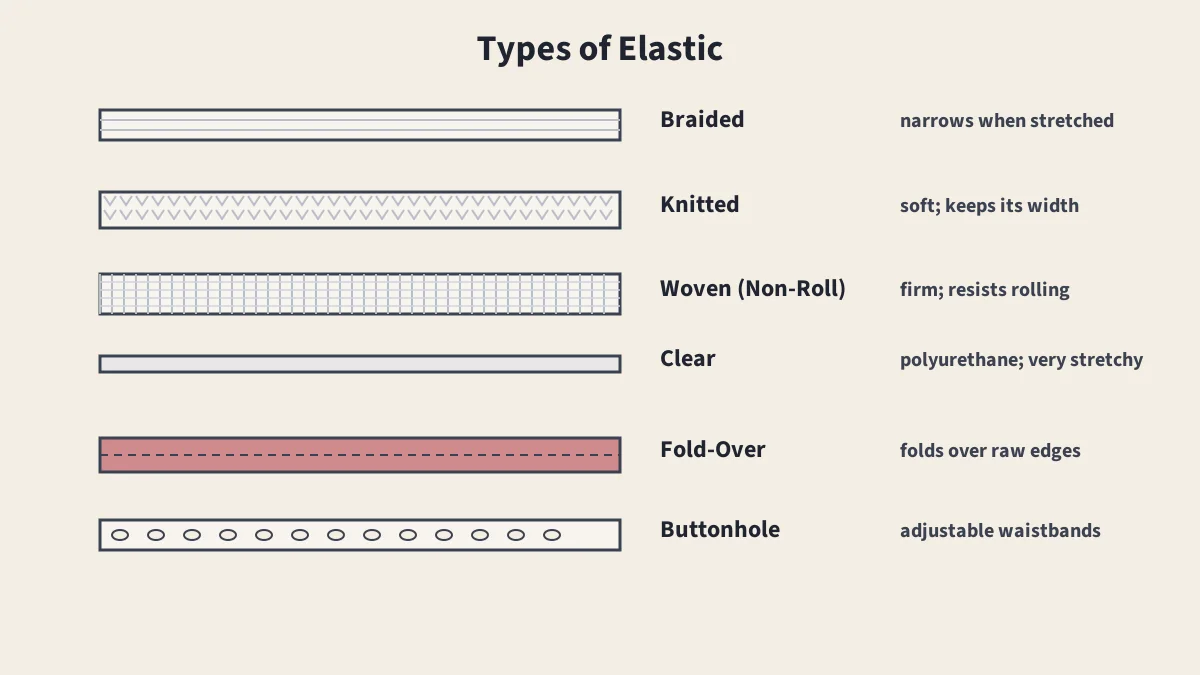
Types of Elastic
Braided, knit, woven, clear and fold-over elastic compared.
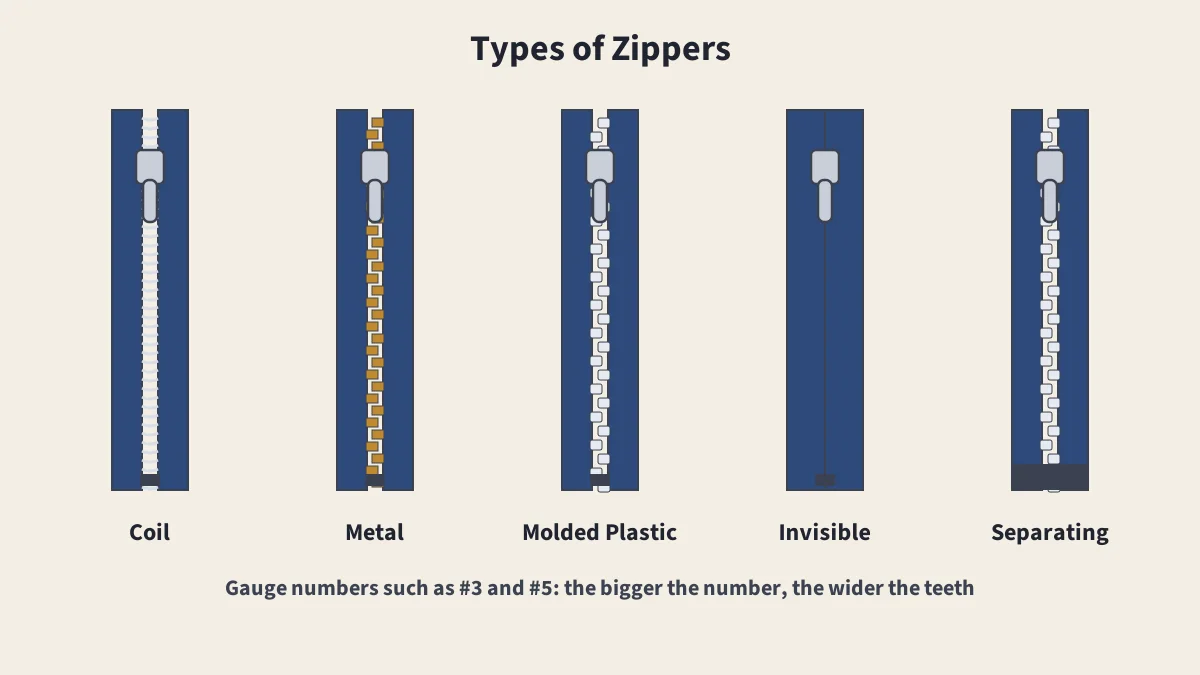
Types of Zippers
Coil, metal, plastic, invisible and separating zippers compared.
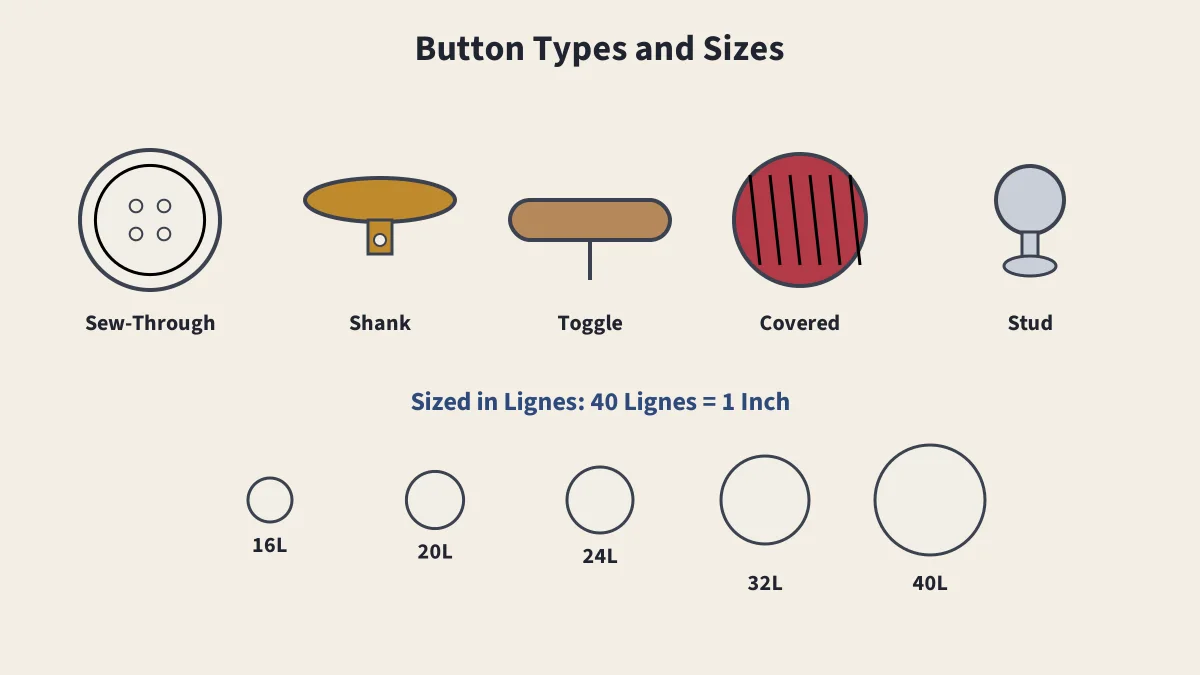
Buttons
Button types, ligne sizes, materials and history.
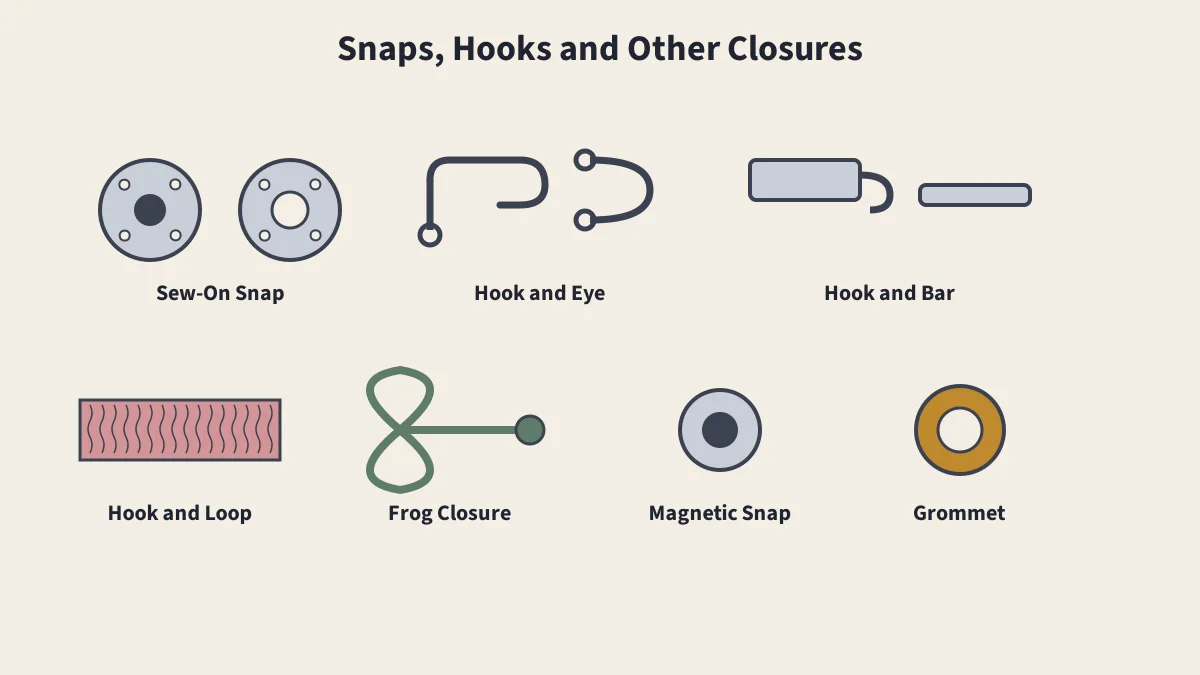
Snaps, Hooks and Closures
Snaps, hooks and eyes, hook and bar, frogs, magnets and grommets.
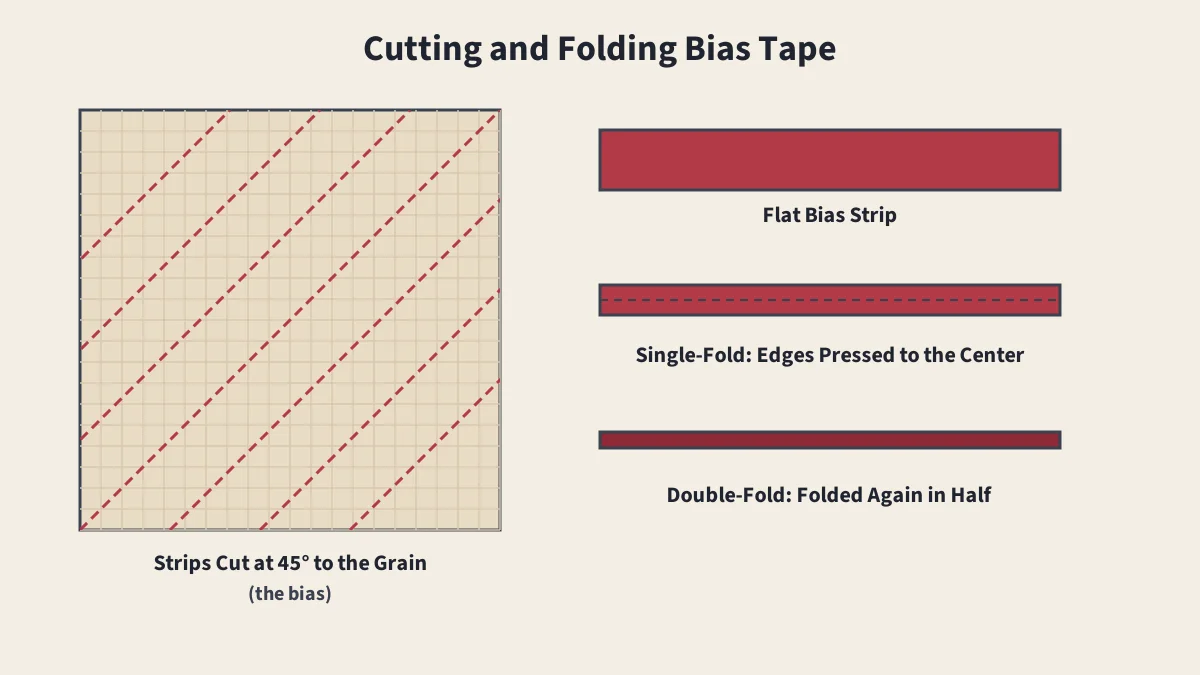
Bias Tape and Binding
Single-fold vs. double-fold bias tape, and how to use binding.
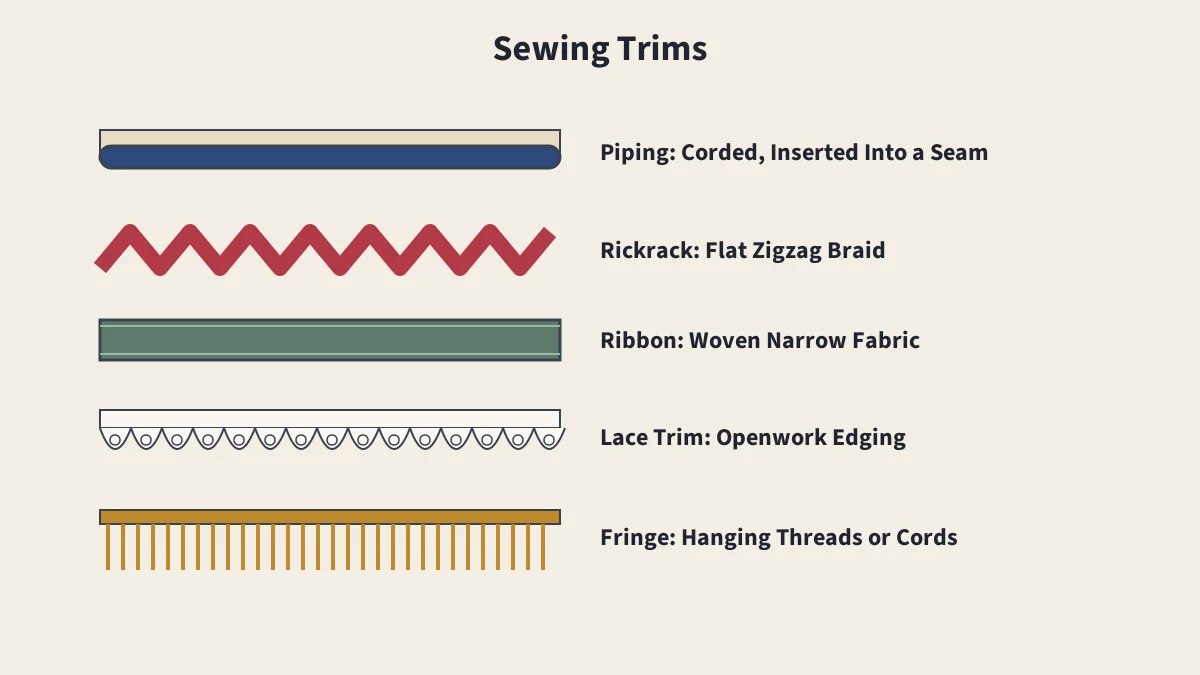
Sewing Trims
Piping, rickrack, ribbon, lace trim and fringe explained.
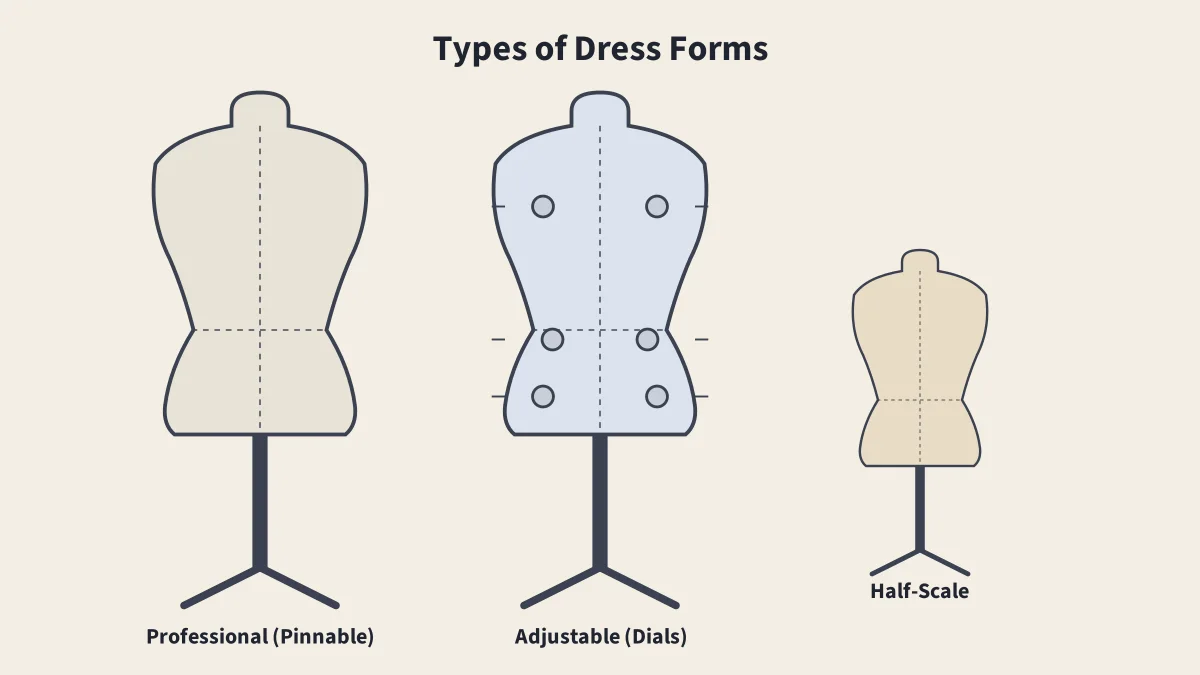
Dress Forms
A dress form stands in for a body while you fit and drape.
The Rest of the Basic Kit
| Tool | What It Does |
|---|---|
| Seam ripper | A small hooked blade for removing stitches cleanly |
| Thimble | Protects the finger that pushes the needle; see the history of the thimble |
| Marking chalk or pen | Transfers pattern markings to fabric; see marking tools |
| Pincushion | Keeps pins and needles in reach |
| Iron | Pressing seams as you go makes a big difference; see pressing tools |
| Thread | Usually matched to the fabric's color and fiber; see types of thread |
Caring for Sewing Tools
- Keep fabric shears for fabric. Paper and other materials dull blades faster.
- Replace needles and pins when they bend, dull or rust; a blunt point can snag fabric.
- Change rotary blades when they start skipping threads, and always close the blade guard.
- Store tape measures loosely so they do not stretch or kink.
- Keep sharp tools away from children and use a case for rotary cutters.
Where to Go Next
New to sewing? Start with learn to sew and how to thread a needle and tie a knot, then explore the essential hand stitches. Unfamiliar word? Look it up in the sewing glossary.
Sources
- Sewing needle, Wikipedia
- Scissors, Wikipedia
- Notions (sewing), Wikipedia
Frequently Asked Questions
What tools do I need to start sewing?
A basic kit covers five jobs: cutting (fabric shears and small snips), measuring (a flexible tape measure and a sewing gauge), marking (chalk or a fabric marker), holding (pins or clips) and stitching (hand needles, thread and a thimble). A seam ripper and an iron complete the essentials.
What is the difference between sewing tools and notions?
Tools are reused from project to project, such as scissors, rulers and pins. Notions are the small items that become part of the finished piece, such as thread, buttons, zippers, elastic and trims. The words overlap in everyday use.
Why should fabric scissors only be used on fabric?
Cutting paper and other materials dulls the blades faster. Sharp blades cut fabric cleanly and accurately, so many sewists keep a separate pair of scissors for paper patterns.
Do I need a rotary cutter?
Not to start. Rotary cutters with a ruler and mat are fastest for cutting straight strips and squares, which is why quilters rely on them. Many garment sewists use both shears and a rotary cutter.
Keep Reading
Hand Sewing Needle Types
Every common hand needle type, what it is for and how sizes work.
Scissors and Shears
Shears, pinking shears, embroidery scissors and snips compared.
Types of Pins
Pin types, sizes and head styles, plus a short history of the pin.
Measuring Tools
Tape measures, gauges, quilting rulers and curves explained.