The History of Sewing Patterns: How Fashion Went Paper-Thin (2026)
Before paper patterns, copying a fashionable dress meant taking an old one apart. Here is how pattern sheets, graded sizes and printed tissue made style something anyone could sew at home.
In This Article
Key Dates
- c. 1770: full-size pattern sheets appear in some women's periodicals
- 1808: The Lady's Economical Assistant publishes traceable patterns in England
- 1863: Ebenezer Butterick begins selling patterns in standard graded sizes
- 1870: James McCall founds the McCall Pattern Company in New York
- c. 1919–1921: McCall prints markings directly onto pattern pieces
- 1927: Simplicity begins producing patterns
- 2004: downloadable patterns go on sale
A sewing pattern is a set of templates for cutting fabric. That sounds obvious today, but for most of history clothing was cut by professionals who drafted shapes by eye or by rule, or by home sewists who unpicked an existing garment to copy it. The commercial paper pattern changed that, and it grew up alongside the sewing machine to put fashion within reach of millions of households.
Before Paper Patterns
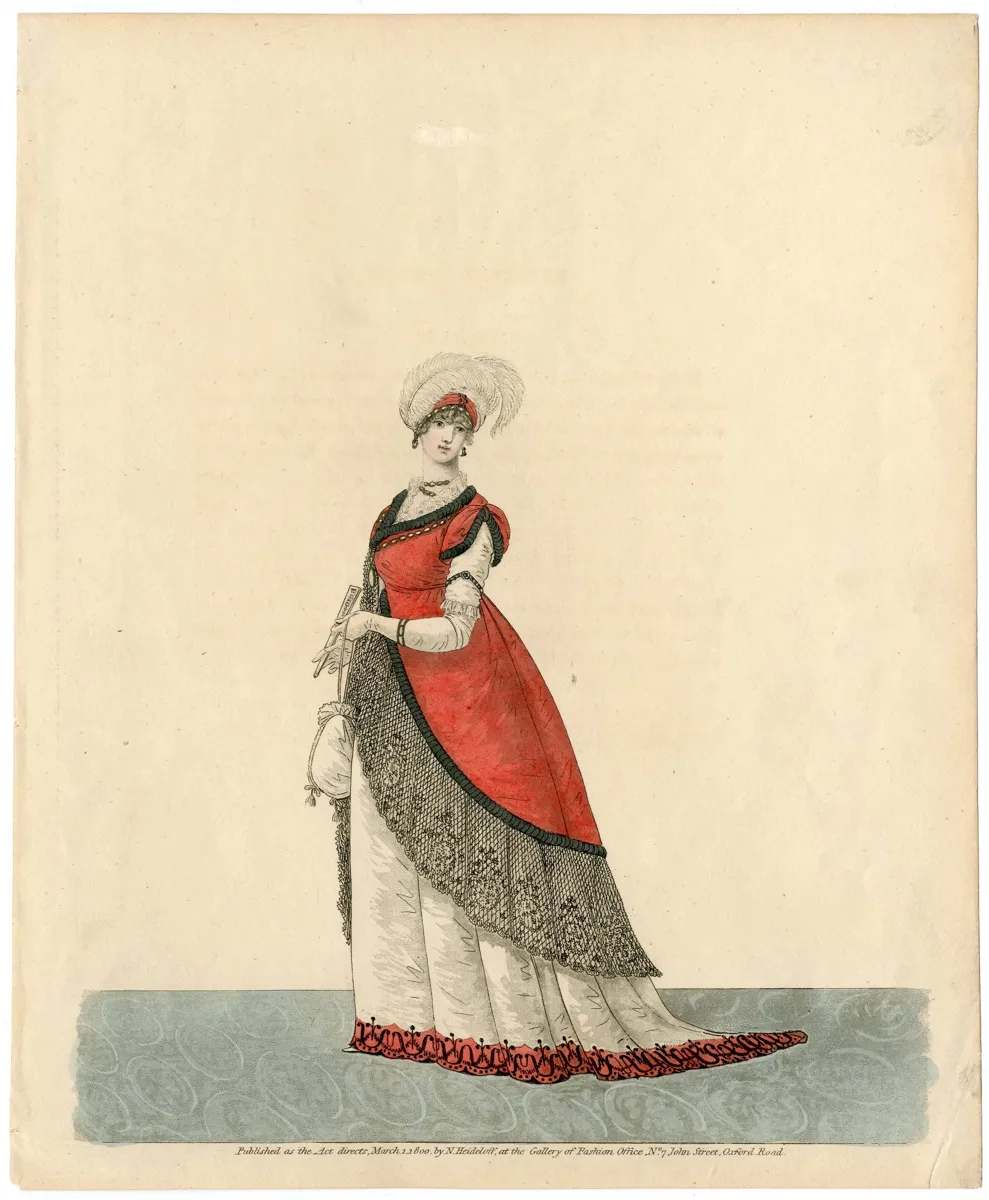
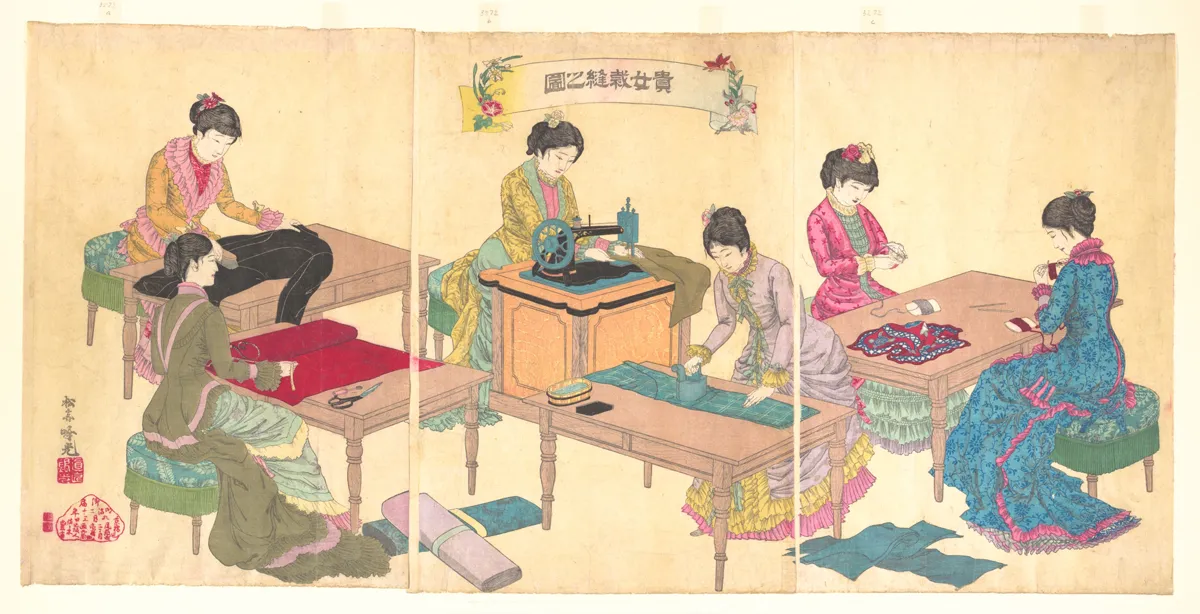
Until the mid-1800s, many women sewed their family's clothes by hand. Tailors and dressmakers used their own drafting systems, and fashionable ideas traveled through fashion plates, illustrations like the one below that showed what to wear but not how to cut it.
Patterns began appearing in print in the late eighteenth century. From around 1770, some women's periodicals included full-size pattern sheets. In 1808, The Lady's Economical Assistant was published in England with full-size patterns that readers could trace. These were usually a single size, so the sewist still had to adjust them to fit.
Magazines Take the Lead
Through the nineteenth century, magazines were the main way patterns reached the public.
- 1828The Gentleman's Magazine of Fashion is founded in England and later includes pattern sheets for men's clothing.
- 1833France's Journal des Demoiselles launches with scale drafts and full-size patterns.
- 1849The Gentleman's Magazine of Fashion includes full-size tissue paper patterns in each issue, also available by mail.
- 1853America's Godey's Lady's Book begins offering a pattern in each issue.
- 1860The Englishwoman's Domestic Magazine adds pattern supplements and a mail-order service.
- 1861William Jennings and Ellen Louise Demorest publish Mme. Demorest's Mirror of Fashion with full-size patterns.
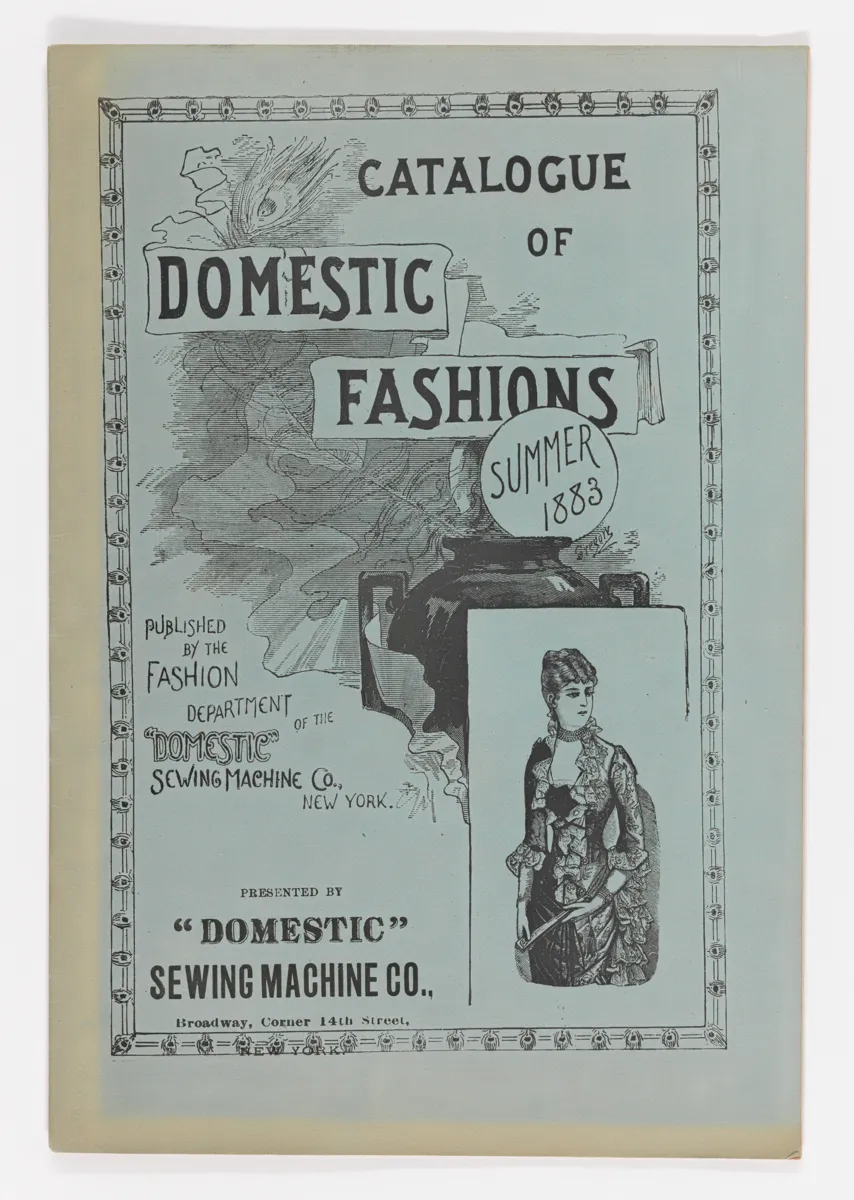
Sewing machine companies saw the opportunity too. The Domestic Sewing Machine Company, for example, published catalogues of "Domestic Fashions" like the one pictured at the top of this page.
Butterick and Graded Sizes
The breakthrough was sizing. In 1863, Ebenezer Butterick, a tailor in Sterling, Massachusetts, and his wife Ellen, a skilled home sewist, began making heavy cardboard templates for children's clothing. They came in a series of standard graded sizes, so one design could fit many people. Members of the Butterick family cut and folded the first ones by hand at home.
Cardboard was hard to fold and package, so Butterick switched to thin tissue paper, which could be folded into a small packet and sent by mail. In 1866 the company added women's fashions and later men's clothing. From 1873 it published its own magazine, The Delineator, to promote its patterns. In the early 1900s Butterick began selling patterns in envelopes, and in the late 1910s it introduced the "Deltor," an illustrated instruction sheet showing how to lay out and assemble the pieces.
McCall, Weldon's, Vogue and Simplicity
Competitors followed quickly. James McCall, a Scottish tailor, founded the McCall Pattern Company in New York City in 1870. Around 1919 to 1921 (sources differ on the exact year), McCall began printing cutting lines and markings directly on the pattern pieces, a huge improvement over punched holes. In the 1920s some McCall envelopes carried full-color illustrations, and from 1932 all of them did. Because McCall consistently printed release dates, its vintage patterns are among the easiest to date.
In England, Weldon's, founded in 1879, became the first major commercial pattern company, selling its designs through its own magazine into the 1950s. Vogue magazine's weekly pattern feature became the Vogue Pattern Service in 1899, the Vogue Pattern Company was formed in 1914, and Vogue patterns were sold in department stores from 1916.
Simplicity Pattern Co. arrived in New York in 1927 with a simple pitch: easy instructions and low prices. Its patterns sold for 15 cents when others cost 25 cents to a dollar, and that made it a success during the Great Depression, and from 1931 to 1946 it also made DuBarry patterns exclusively for the Woolworth chain. Simplicity's last unprinted patterns were made in 1946.
Hollywood, Department Stores and Wartime
The 1930s brought celebrity patterns. Condé Nast's Hollywood Patterns, based on styles worn by film stars, ran from 1932 to the end of the Second World War. Retailers had their own lines too: Advance made patterns exclusively for JCPenney from 1933 until it was sold after 1966.
During the war, rationing made home sewing a necessity in many countries, and patterns for remaking and altering clothes became popular. Our article on Make Do and Mend covers how Britain encouraged sewing at home. After the war, Butterick bought presses in 1948 to print markings directly onto its tissue.
The Big 4 Come Together
For decades, four American brands dominated home sewing patterns: Simplicity, McCall's, Butterick and Vogue. They gradually merged:
| Year | Change |
|---|---|
| 1961 | Butterick takes over the Vogue Pattern Service |
| 2001 | McCall's buys Butterick (and with it Vogue Patterns) |
| 2016 | CSS Industries acquires the McCall Pattern Company |
| 2017 | CSS Industries acquires Simplicity, uniting all four brands under one owner |
| 2020 | British company IG Design Group acquires CSS Industries |
| 2025 | IG Design Group sells its U.S. division to Hilco Capital; the division files for Chapter 11 in July; in September the pattern business is sold to Rubelmann Capital with existing management |
The Big 4 have been estimated to hold about 90 percent of the U.S. sewing pattern market, so these changes are closely watched by sewists.
PDF Patterns and the Indie Boom
The internet changed patterns again. In 2004, Fitzpatterns began offering downloadable sewing patterns. Sewists could print them at home on letter or A4 paper and tape the pages together, or send a large-format file to a copy shop. Without printing and distribution costs, small independent designers could sell directly to a worldwide audience. That shift also created new roles in the community, such as pattern testers who sew and review a design before release.
Some ideas from the past keep returning. Clothkits, for example, printed pattern lines directly on fabric so buyers could skip paper altogether, and many pattern makers now include layered sizes so sewists can print only the sizes they need.
Reading Old Patterns
Vintage patterns are now popular with collectors and historical sewists. A few clues help date them:
- Unprinted tissue with punched holes usually means an older pattern. Most brands switched to printed markings between 1919 and the late 1940s.
- Full-color envelope art on a McCall pattern points to the 1920s or later, and McCall printed release dates on its patterns.
- Single-size patterns were standard for most of the twentieth century. Multisize envelopes became common later.
To make sense of a modern pattern envelope and its markings, see how to read a sewing pattern.
For how patterns are sized today, see pattern grading and pattern sizes vs. store sizes.
For the companies behind most commercial patterns today, see the Big 4 pattern companies.
For the classic books of historical scale patterns, see Janet Arnold's Patterns of Fashion.
Sources
- History of sewing patterns, Wikipedia
- Simplicity Pattern, Wikipedia
- Ebenezer Butterick, Wikipedia
Frequently Asked Questions
Who invented the paper sewing pattern?
No single person. Full-size pattern sheets appeared in women's magazines from about 1770, and England's The Lady's Economical Assistant of 1808 included traceable patterns. Ebenezer Butterick is credited with popularizing patterns sold in standard graded sizes from 1863.
When did patterns start having printed markings?
McCall began printing information directly onto pattern pieces around 1919 to 1921; sources differ on the year. Before that, most tissue patterns used punched holes and notches to show markings. Simplicity stopped making unprinted patterns in 1946.
Which are the Big 4 pattern companies?
Simplicity, McCall's, Butterick and Vogue Patterns. Butterick took over Vogue Patterns in 1961, McCall's bought Butterick in 2001, and all four came under one owner in 2017.
Who owns Simplicity, McCall's, Butterick and Vogue patterns now?
In September 2025, a U.S. bankruptcy court approved the sale of the pattern business to Rubelmann Capital in partnership with its existing management, after its former parent, IG Design Group Americas, filed for Chapter 11.
Keep Reading
Isaac Singer and the Singer Company
An actor, a lawyer and a payment plan built sewing's most famous brand.
Make Do and Mend
Coupons, blackout-curtain dresses and Mrs Sew and Sew in wartime Britain.
History of Sewing
How a bone splinter became a global industry, from the Ice Age to PDF patterns.
Sewing Glossary A–Z
450+ sewing terms explained in plain English, from appliqué to zipper foot.