The History of Sewing: From Bone Needles to Machines (2026)
Sewing is older than farming, writing and the wheel. Here is how a sharpened splinter of bone turned into a global industry, and the inventions, people and turning points along the way.
In This Article
- Key Facts
- Sewing Is Older Than Farming
- Ancient Sewing: Linen, Bronze and the Oldest Dress
- Guilds, Tailors and Needlework
- The Sewing Machine Changes Everything
- Home Sewing, Patterns and Ready-to-Wear
- Sewing in the 20th Century
- Sewing Today
- Explore Every Sewing History Article
- A Timeline of Sewing History
- Sources
- Frequently Asked Questions
Key Facts
- Oldest needles: bone needles roughly 50,000–40,000 years old, from Denisova Cave in Siberia and Potok Cave in Slovenia.
- Oldest woven garment: the Tarkhan Dress from Egypt, made between 3482 and 3102 BC.
- First lockstitch machine patent in the U.S.: Elias Howe, September 10, 1846.
- First patent pool in U.S. history: the Sewing Machine Combination of 1856.
- First graded paper patterns sold widely: Butterick, from 1863.
Every garment you have ever worn was assembled with the same basic idea: pass a thread through two layers so they hold together. What changed over tens of thousands of years was the tool doing the passing, from a pointed bone to a steel needle to a machine that makes hundreds of stitches a minute. Follow that tool and you follow some of the biggest shifts in human history, including migration into cold climates, the rise of guilds, the Industrial Revolution and the first consumer credit plans.
Sewing Is Older Than Farming
Clothing rarely survives in the ground, so archaeologists look for the tools that made it. The earliest are awls: pointed bones used to punch holes through hide so that sinew or plant fiber could be pushed through. Bone awls from Blombos Cave in South Africa date to roughly 73,000–70,000 years ago.
True needles, with an eye to carry the thread, come later. A possible needle point from Sibudu Cave in South Africa is about 61,000 years old. A bird-bone needle from Denisova Cave in Siberia, associated with the Denisovans, is around 50,000 years old, and a bone needle from Potok Cave in Slovenia dates to 47,000–41,000 years ago. By 30,000 years ago, eyed needles of bone and ivory were being made at sites from Kostenki in Russia to Xiaogushan in northeast China.
There is even a clue in our parasites. Clothing lice can only live in clothes, so the moment they split from head lice tells us roughly when people started dressing. A 2011 University of Florida study dated that split to at least 83,000 and possibly 170,000 years ago, long before humans moved into colder regions.
Ancient Sewing: Linen, Bronze and the Oldest Dress
Once people learned to spin fiber and weave cloth, sewing moved from hides to textiles. The oldest woven garment known is the Tarkhan Dress, a pleated linen shirt found by Flinders Petrie in an Egyptian cemetery in 1913. It sat unnoticed in a pile of linen until conservators recognized it in 1977, and radiocarbon testing in 2015 dated it to between 3482 and 3102 BC. It is now in the UCL Petrie Museum in London.
Metal changed the needle itself. Petrie also found copper sewing needles at Naqada in Egypt dating from about 4400 to 3000 BC, and iron needles appear in Europe by the third century BC at the Celtic town of Manching in Bavaria. Bronze needles like the one below look strikingly modern: a slim shaft, a sharp point and a small eye.
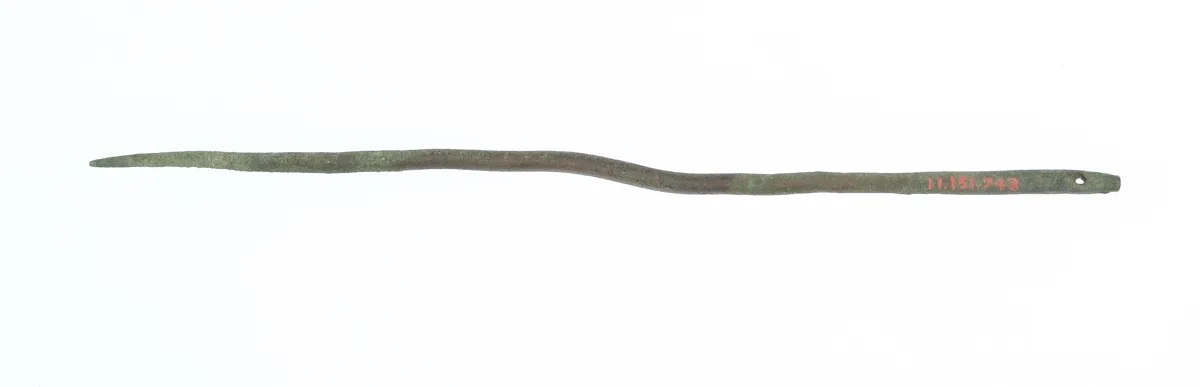
Read the full story of how needles developed in our history of the sewing needle.
Guilds, Tailors and Needlework
For most of recorded history, sewing was both a household task and a skilled trade. In medieval Europe, tailors, dressmakers and embroiderers organized into guilds that controlled training and prices. Fine embroidery was a mark of wealth: the famous Bayeux Tapestry is not a woven tapestry at all but an embroidery, about 68 meters of wool stitched on linen in the late eleventh century.
Tools became a trade of their own. Nuremberg was an early center of brass thimble making from the fifteenth century, and England began making needles at Redditch in 1639. By the eighteenth century Redditch was producing needles in enormous quantities, making a once-precious tool cheap enough for every household. Our history of the thimble follows that same shift from luxury to everyday item.
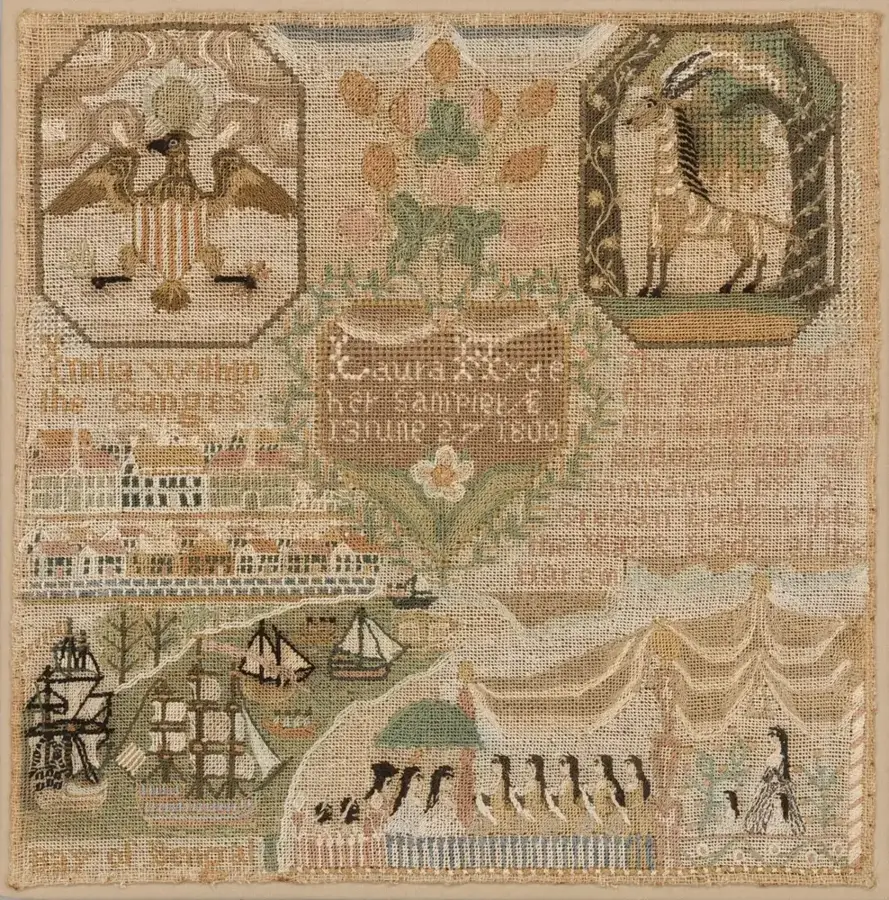
Girls in many families learned their stitches by working a sampler, a practice piece of alphabets, numbers and motifs that doubled as proof of skill.
The Sewing Machine Changes Everything
Inventors tried to mechanize sewing for almost a century before anyone succeeded commercially. Charles Weisenthal patented a needle for mechanical sewing in 1755, Thomas Saint described a complete machine in a 1790 British patent, and French tailor Barthélemy Thimonnier ran around 80 machines in a Paris workshop in 1830 before rioting tailors destroyed dozens of them in 1831.
The design that won combined an eye-pointed needle with a second thread underneath to form a lockstitch. Walter Hunt built one around 1833 but never patented it. Elias Howe received U.S. patent No. 4,750 for his lockstitch machine on September 10, 1846, and Isaac Singer patented his improved, practical machine in 1851. Their lawsuits, and everyone else's, are told in the Sewing Machine War, and the full cast of inventors is in who invented the sewing machine.
Home Sewing, Patterns and Ready-to-Wear
Machines alone did not put sewing into every home. Two business ideas did. In 1856 Singer's partner Edward Clark introduced a hire-purchase plan that let families pay for a machine in installments, one of the earliest consumer credit plans in the United States. At around the same time, paper patterns made fashionable styles reproducible. Butterick began selling graded tissue patterns in 1863, followed by companies such as McCall's in 1870. See our history of sewing patterns for how they evolved.
The same machines powered factories. The sewing machine made mass-produced, ready-to-wear clothing possible, and with it the garment workshops of the late nineteenth century. Singer's own sales show the speed of change: from 810 machines in 1853 to more than 262,000 in 1876. Read more in our history of the Singer Company and our history of ready-to-wear clothing.
Sewing in the 20th Century
The twentieth century brought electricity, new fasteners and war. Singer demonstrated a workable electric sewing machine in 1910, and electric motors gradually replaced treadles and hand cranks. The zipper, perfected by Gideon Sundback between 1913 and 1917, moved from boots into everyday clothing during the 1930s, as told in our history of the zipper.
During the Second World War, sewing became a civic duty. Britain rationed clothing from June 1941, and the government's Make Do and Mend campaign taught people to repair and remake what they had. After the war, the zigzag stitch arrived in home machines: the Italian Necchi, first imported to the United States in 1947, brought a stitch that had previously been limited to industrial machines. Sewing even reached the Moon. The Apollo spacesuits were stitched by a team of seamstresses at the International Latex Corporation; see the Apollo spacesuit seamstresses.
Sewing Today
Home sewing is now as much a creative hobby as a household necessity. Downloadable patterns, first offered by Fitzpatterns in 2004, let independent designers sell directly to sewists around the world, and computerized machines handle embroidery and quilting that once took hours by hand. Repair and visible mending have also returned, partly as a response to the environmental cost of fast fashion.
The tools look different, but the principle has not changed since the Ice Age: a sharp point, a thread and a hand guiding the work.
Explore Every Sewing History Article
Each article below goes deeper into one invention, tool or chapter of sewing's past.
Machines and Industry
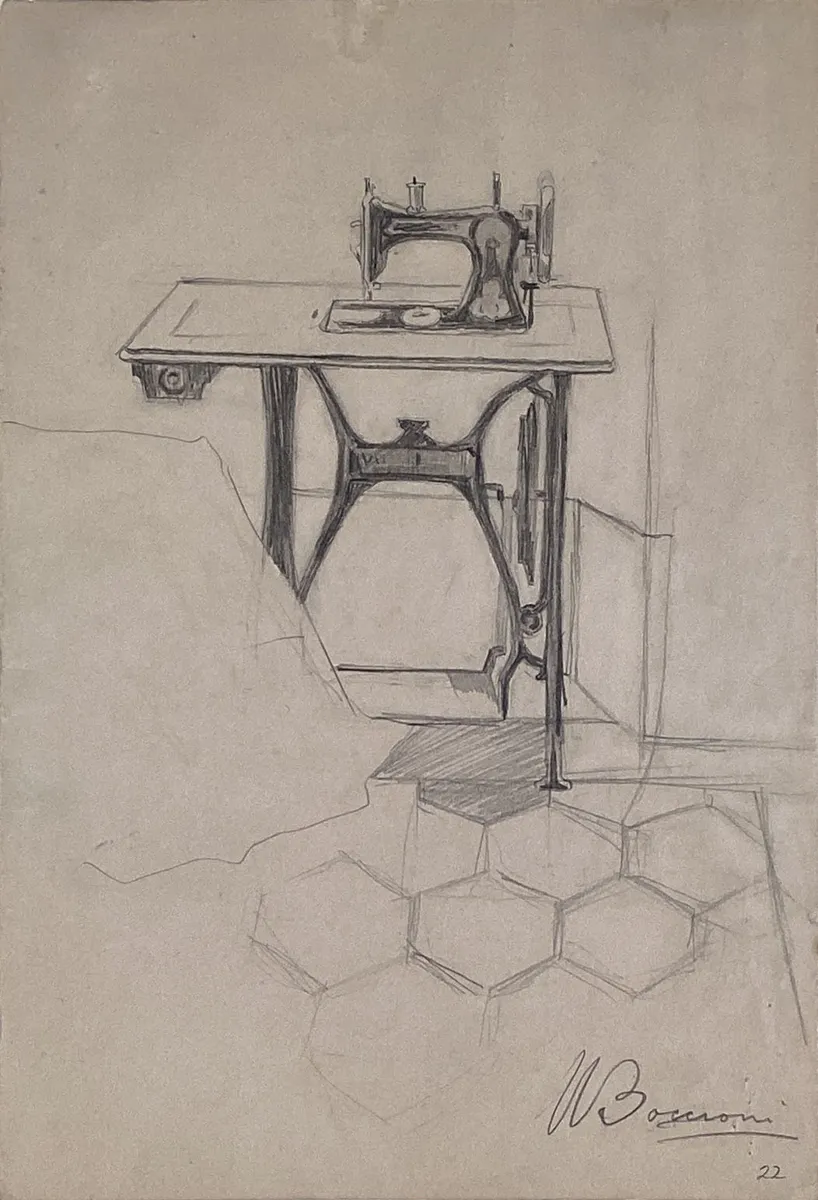
Who Invented the Sewing Machine?
Saint, Thimonnier, Hunt, Howe or Singer? The inventors and who deserves the credit.
The Sewing Machine War
How Howe and Singer's feud ended in America's first patent pool.
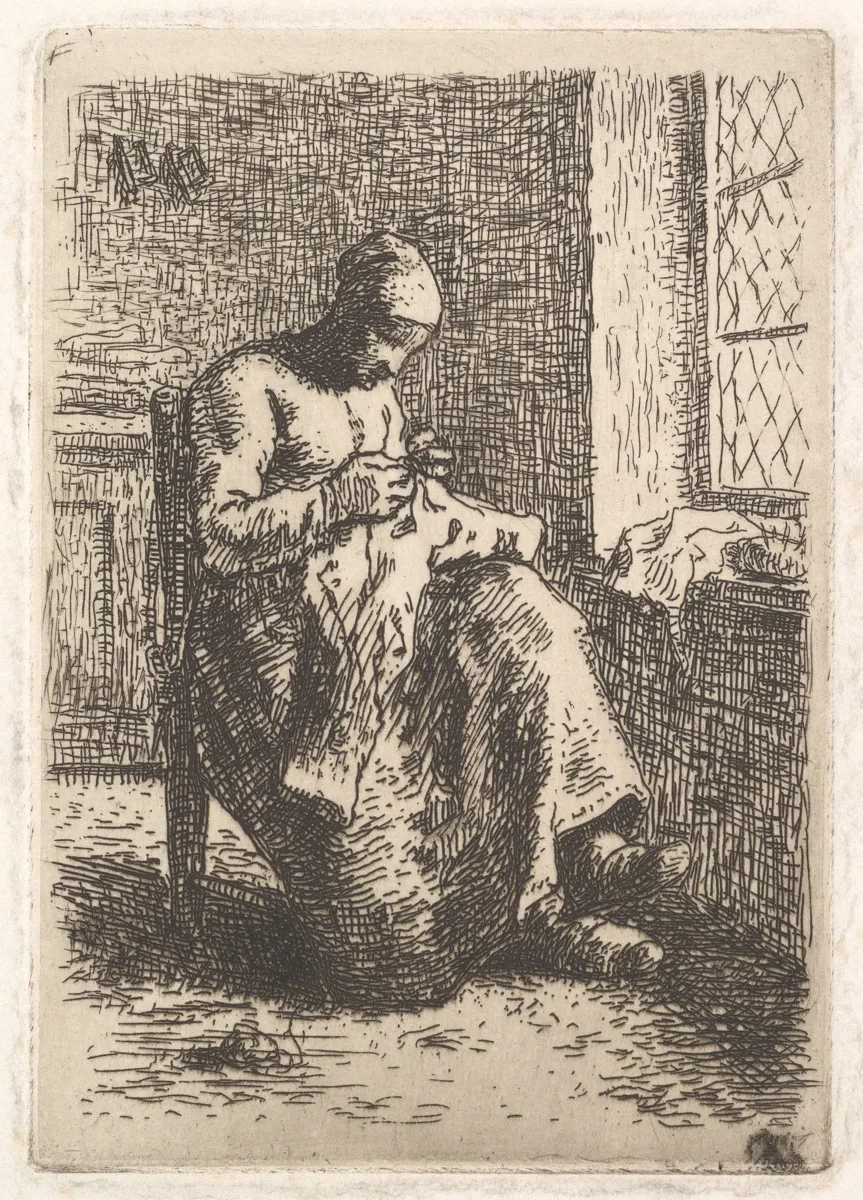
Isaac Singer and the Singer Company
An actor, a lawyer and a payment plan built sewing's most famous brand.
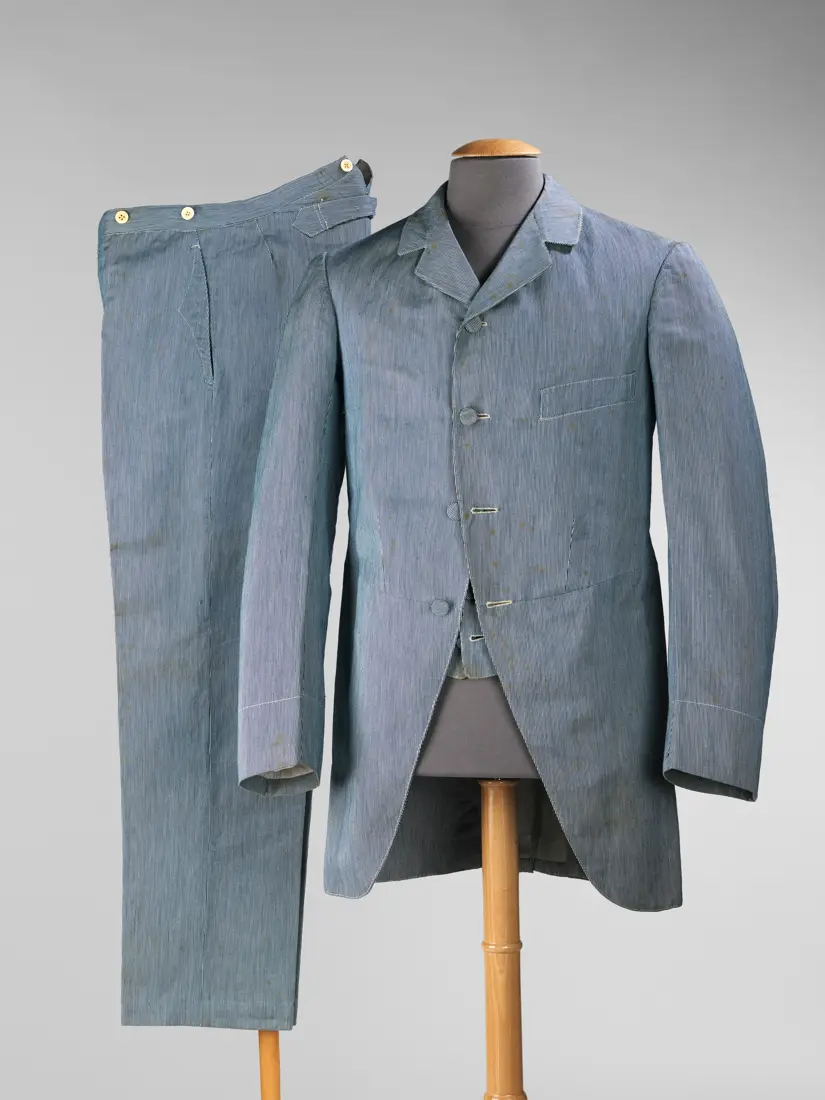
History of Ready-to-Wear Clothing
How slop shops, war uniforms and sewing machines created off-the-rack clothes.
Tools and Notions
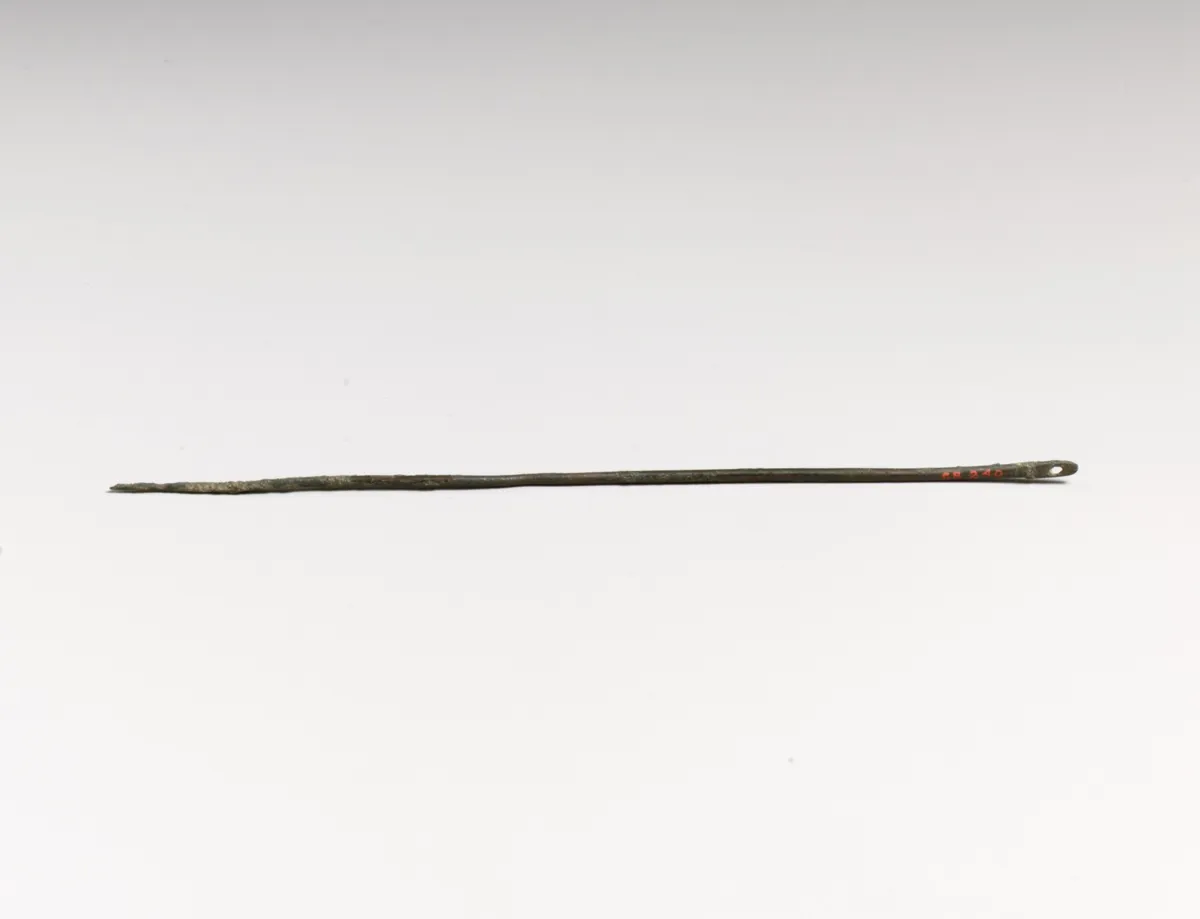
History of the Sewing Needle
From Denisovan bird bone to Redditch steel, the tool behind every stitch.
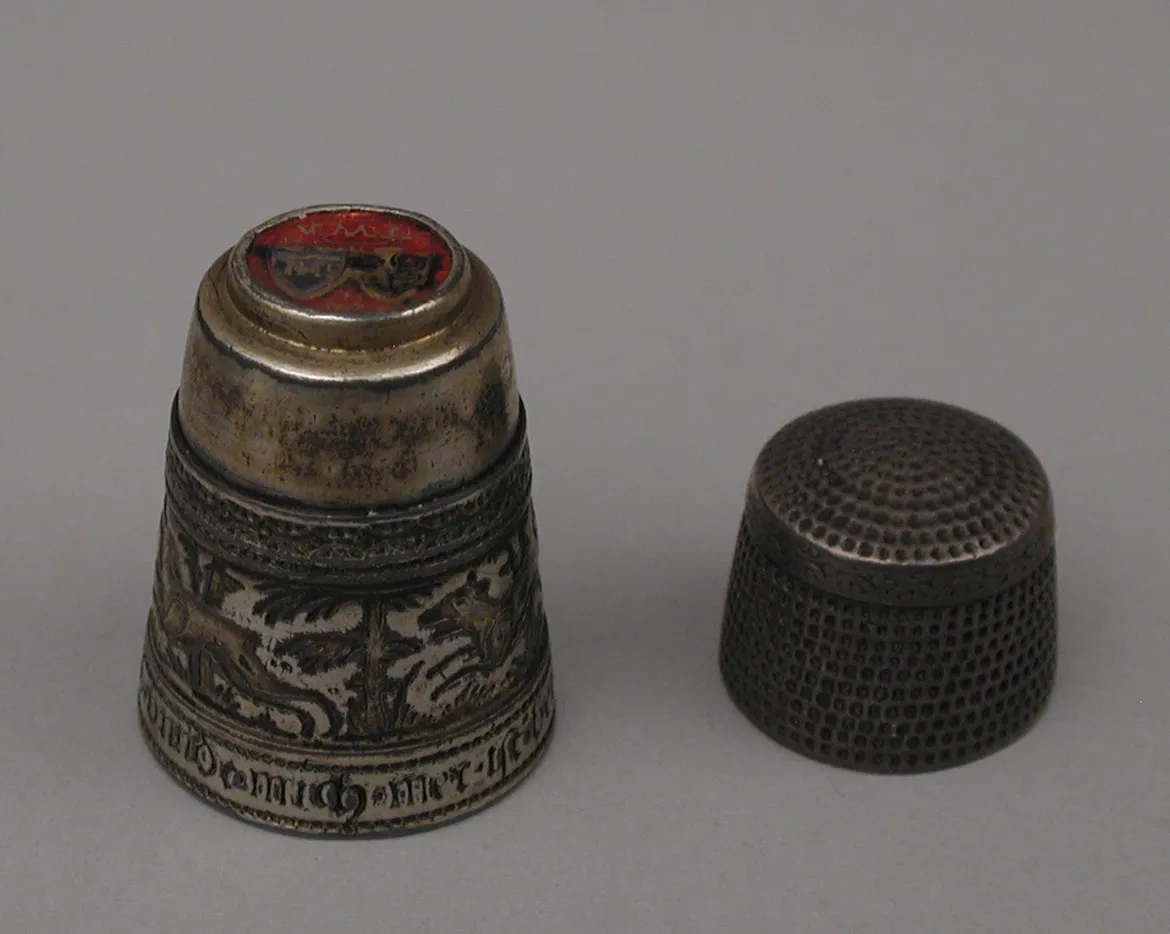
History of the Thimble
Melted for WWI hospitals, used to measure gunpowder, sold for $18,000.
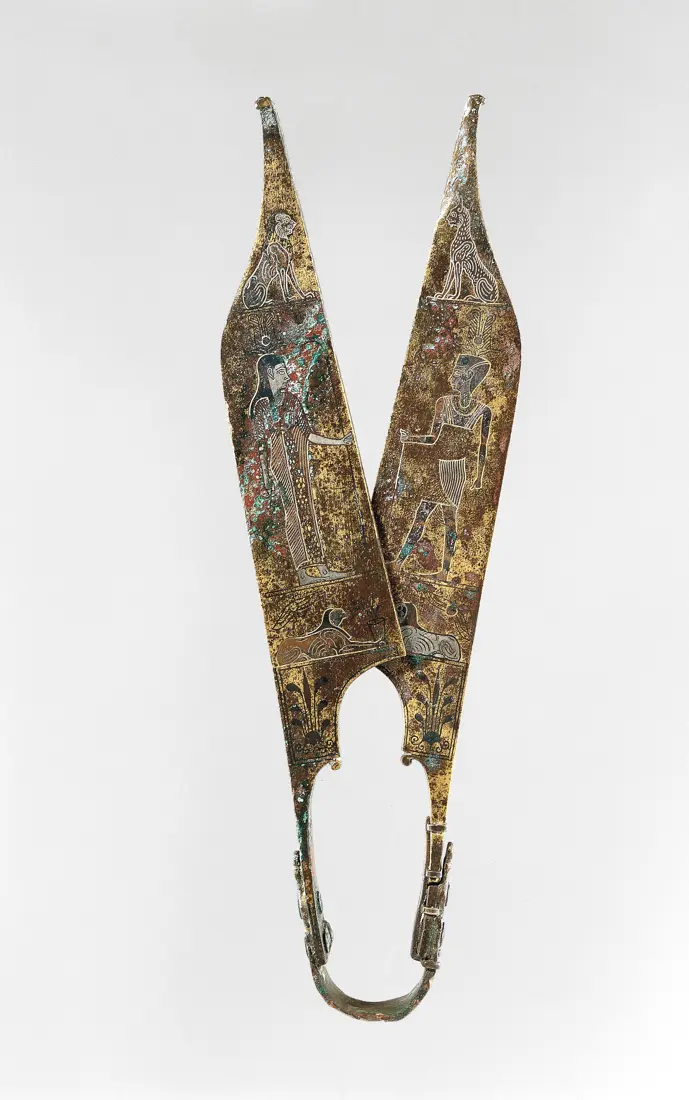
History of Scissors and Shears
From Bronze Age spring shears to Sheffield steel and pinking shears.
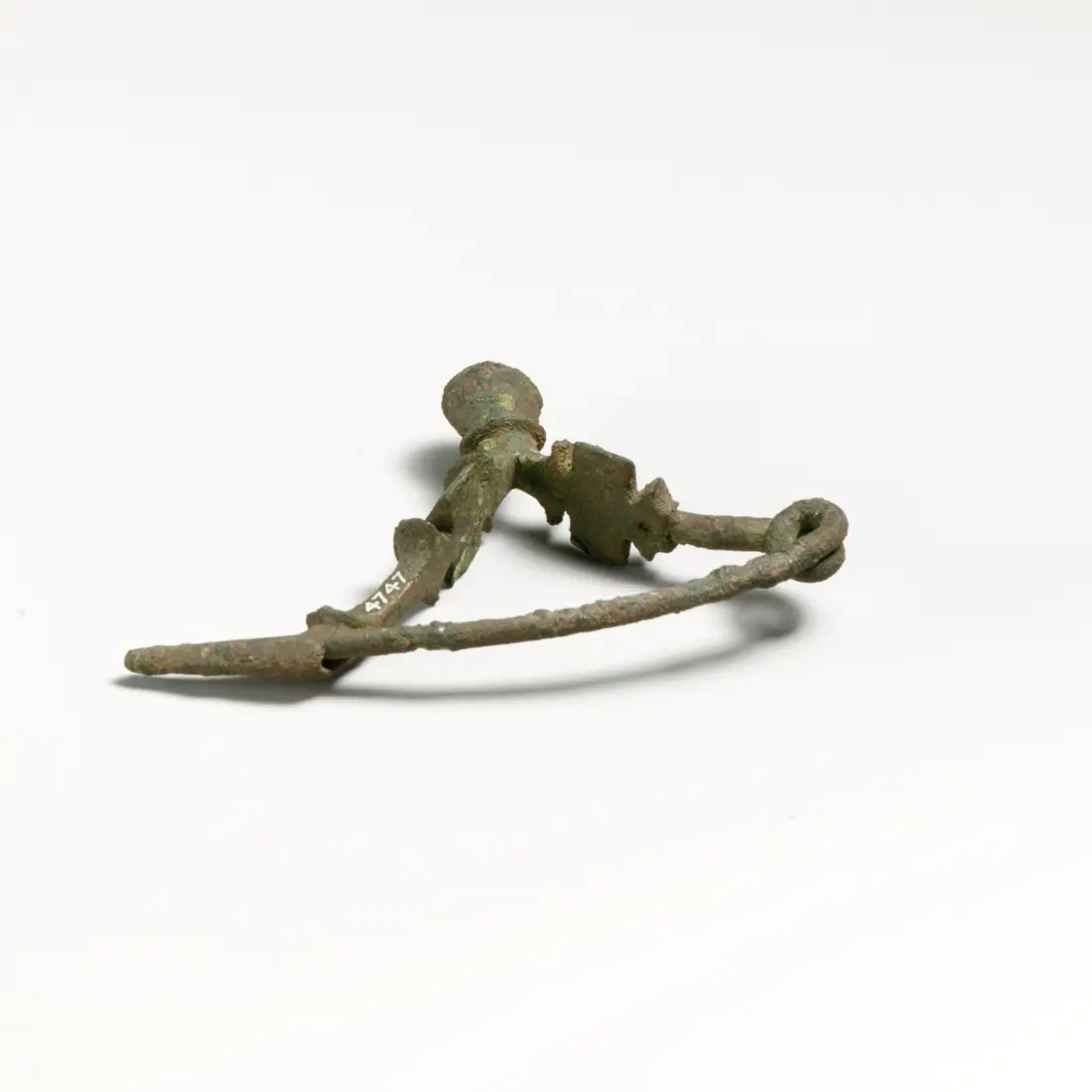
History of the Safety Pin
From Bronze Age fibulae to Walter Hunt's 1849 patent and punk.
History of the Zipper
A shoe fastener flop, a Swedish engineer and a pair of rubber boots.
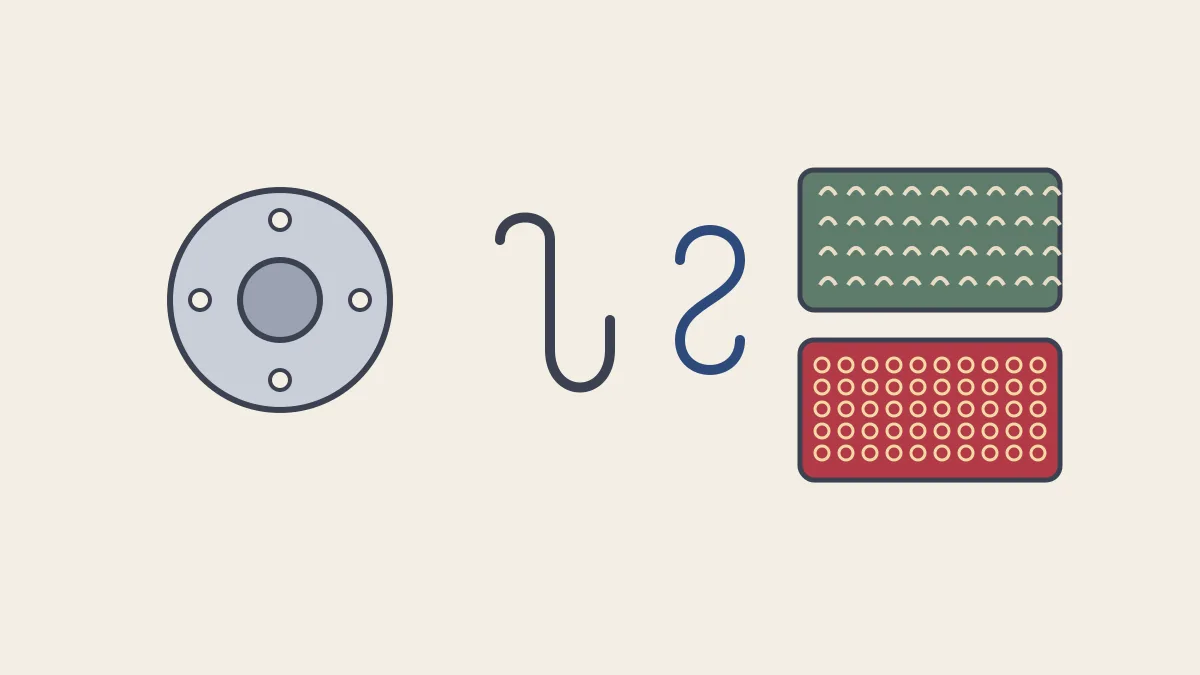
History of Snaps, Hooks and Velcro
Medieval hooks and eyes, 1880s snaps, and Velcro's burr-covered origins.
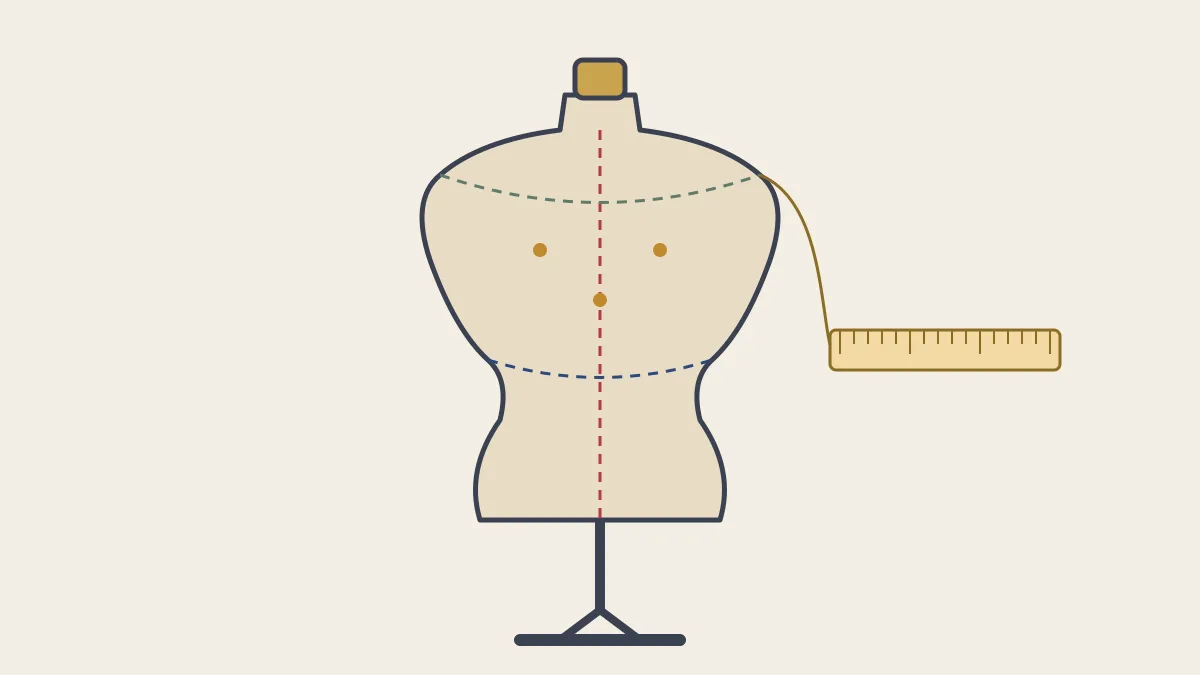
History of the Dress Form
From Tutankhamun's torso to wicker, wire and Stockman forms.
Patterns, Thrift and Community
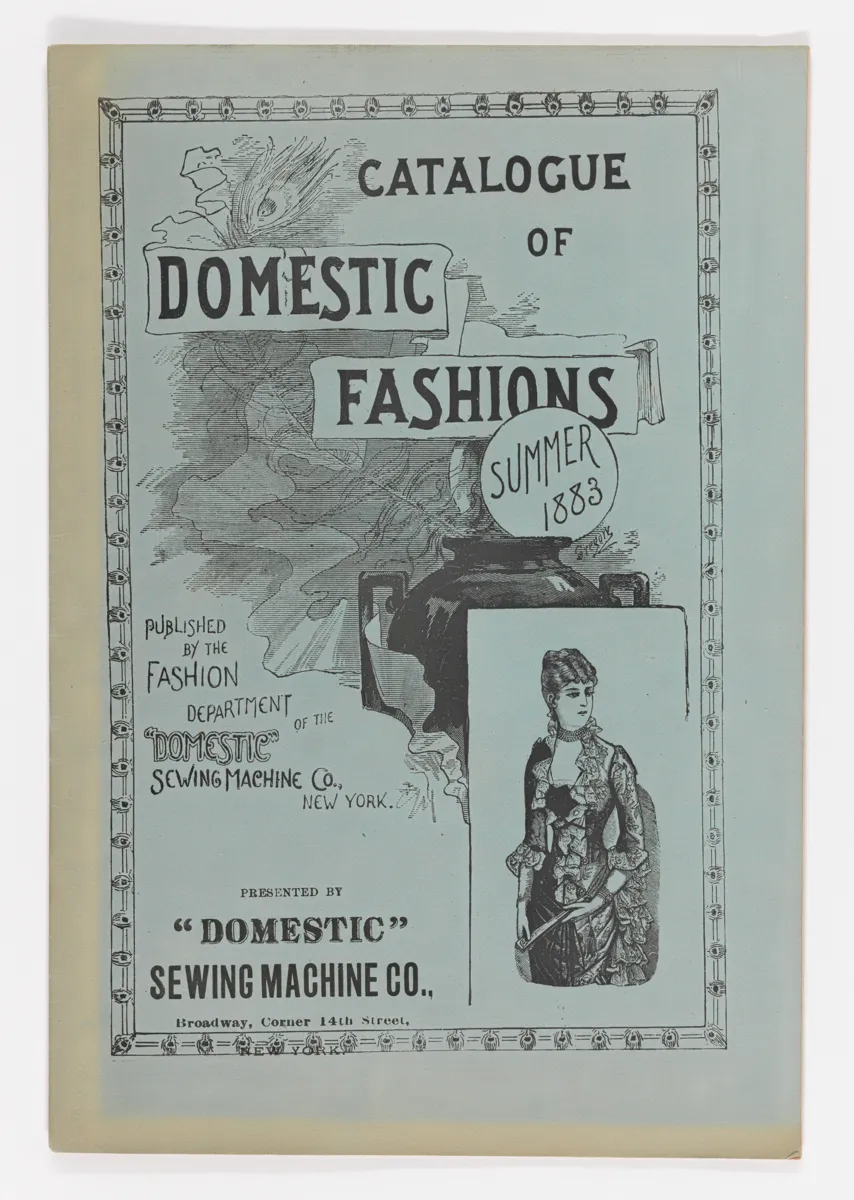
History of Sewing Patterns
Butterick, McCall's, Vogue and Simplicity, from 1800s magazines to PDFs.
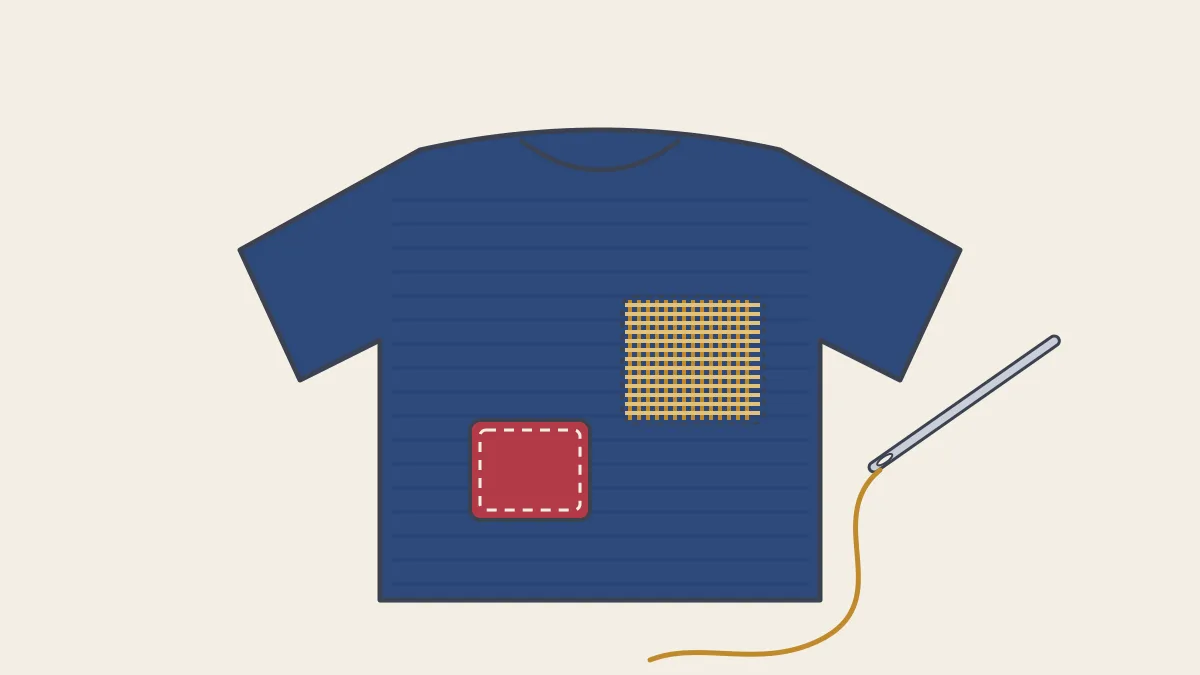
Make Do and Mend
Coupons, blackout-curtain dresses and Mrs Sew and Sew in wartime Britain.
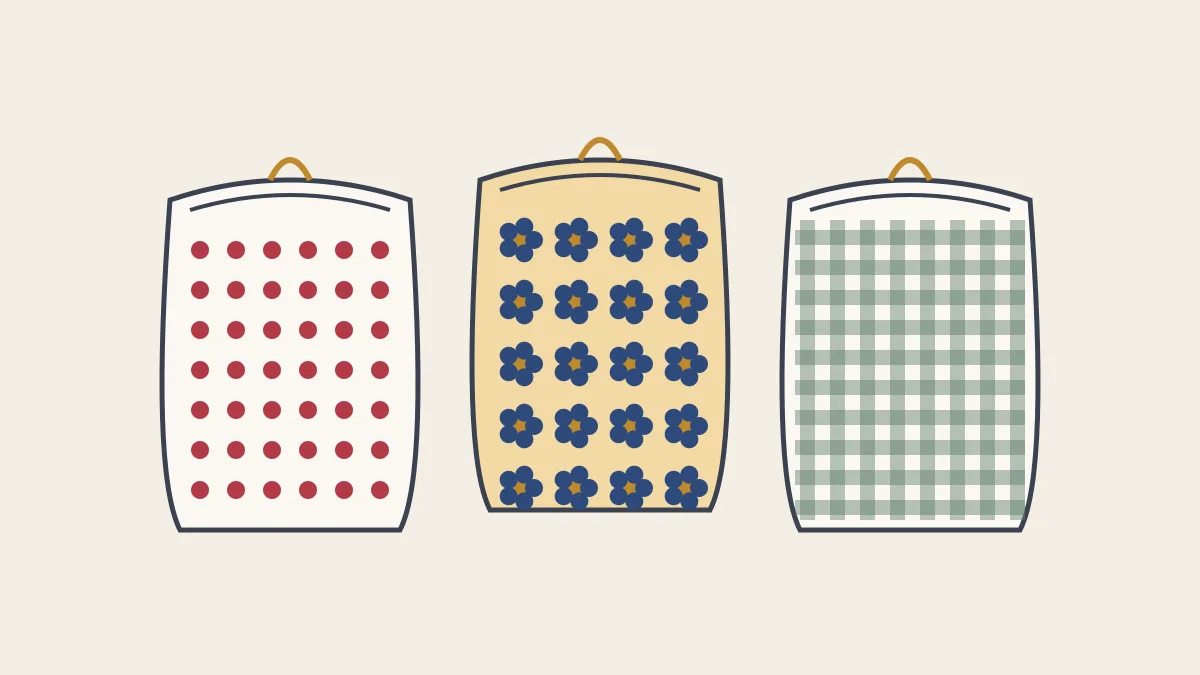
Feed Sack Dresses
How flour and feed bags became printed dress fabric for rural families.
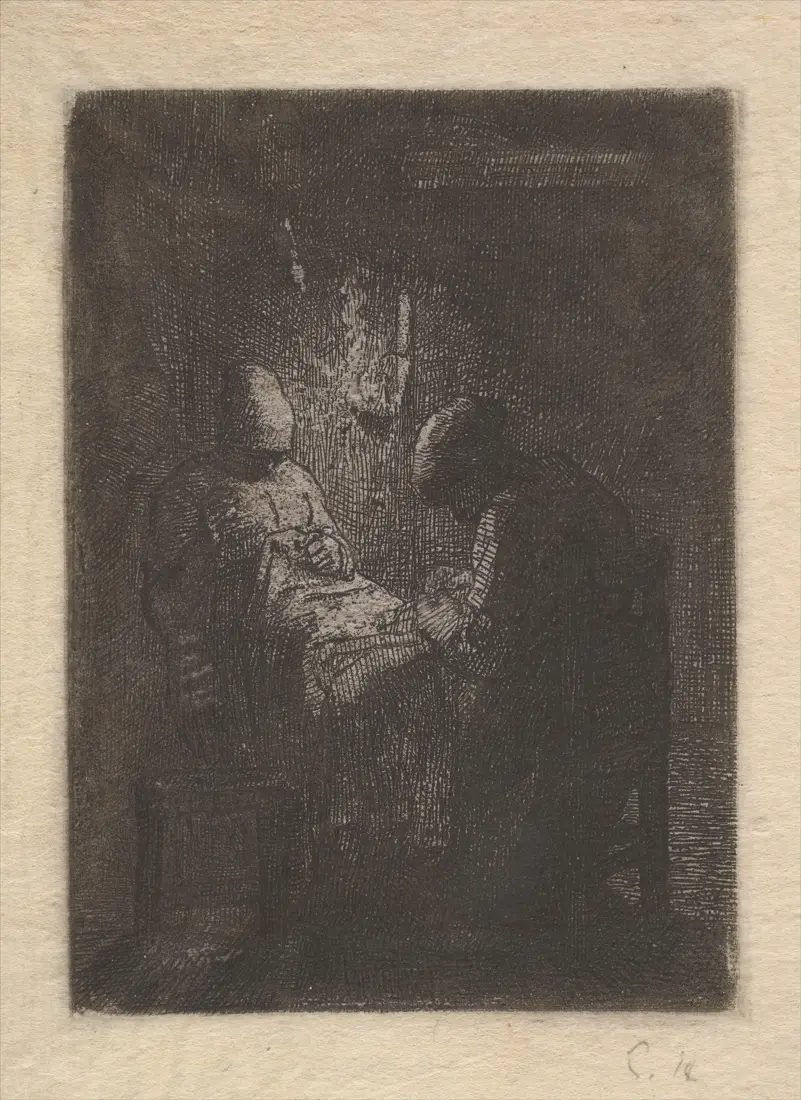
Sewing Circles and Quilting Bees
How sewing circles and quilting bees became charities, causes and clubs.
A Timeline of Sewing History
| Date | Milestone |
|---|---|
| c. 73,000–70,000 years ago | Bone awls at Blombos Cave, South Africa |
| At least 83,000 (possibly 170,000) years ago | Clothing lice split from head lice, a sign people were wearing clothes |
| c. 50,000 years ago | Bird-bone needle at Denisova Cave, Siberia |
| c. 3482–3102 BC | Tarkhan Dress, the oldest known woven garment |
| c. 1070s | Bayeux Tapestry embroidered in wool on linen |
| 1639 | Needle making begins at Redditch, England |
| 1755 | Weisenthal patents a needle for mechanical sewing |
| 1790 | Thomas Saint's British patent describes a sewing machine |
| 1830–1831 | Thimonnier's 80-machine workshop, destroyed by tailors |
| 1846 | Elias Howe's lockstitch patent (U.S. No. 4,750) |
| 1851 | Isaac Singer's patent (U.S. No. 8,294) |
| 1856 | Sewing Machine Combination patent pool; Singer's hire-purchase plan |
| 1863 | Butterick begins selling graded paper patterns |
| 1910 | Singer demonstrates a workable electric sewing machine |
| 1913–1917 | Gideon Sundback perfects the modern zipper |
| 1941 | Clothes rationing begins in Britain |
| 1947 | Necchi zigzag machines imported to the U.S. |
| 2004 | Downloadable full-size sewing patterns go on sale |
Ready to test what you know? Try our 20-question sewing history quiz.
Sources
- Sewing needle, Wikipedia (archaeological finds and dates)
- UF study of lice DNA shows humans first wore clothes 170,000 years ago, University of Florida, 2011
- Tarkhan Dress: world's oldest woven garment, UCL, 2016
- Tapestry or embroidery?, Bayeux Museum
- Sewing machines: who really invented them?, British Library, 2022
- Stitches in Time, Museum of American Heritage
- Singer Corporation, Wikipedia (sales figures, electric machine)
- History of sewing patterns, Wikipedia
- Apollo/Skylab A7L, Wikipedia
Frequently Asked Questions
When did humans start sewing?
Clearly identified eyed needles appear around 50,000 to 40,000 years ago, and genetic studies of clothing lice suggest people were wearing clothes far earlier, at least 83,000 and possibly 170,000 years ago. Sewing almost certainly began with awls that punched holes in hides before eyed needles existed.
Who invented sewing?
No single person did. Sewing developed independently among prehistoric peoples who needed fitted clothing, shelter and containers. The oldest needles come from sites as far apart as Siberia, Slovenia, South Africa and China.
What is the oldest surviving sewn garment?
The Tarkhan Dress, a linen shirt from Egypt, is the oldest woven garment known. Radiocarbon testing in 2015 dated it to between 3482 and 3102 BC.
When did sewing machines become common in homes?
Sewing machines spread into homes from the late 1850s, once patent disputes were settled in 1856 and companies such as Singer began selling machines on installment plans.
Keep Reading
Who Invented the Sewing Machine?
Saint, Thimonnier, Hunt, Howe or Singer? The inventors and who deserves the credit.
History of the Sewing Needle
From Denisovan bird bone to Redditch steel, the tool behind every stitch.
History of Sewing Patterns
Butterick, McCall's, Vogue and Simplicity, from 1800s magazines to PDFs.
Sewing Facts
Surprising facts about sewing history, machines, tools and fabric, each one checked.