Types of Seams: How to Choose the Right One (2026)
A seam is more than a line of stitching. How the layers are placed and finished decides how strong, flat, neat and comfortable it is. Here are the seams sewists use most and where each one belongs.
In This Article
Seams at a Glance
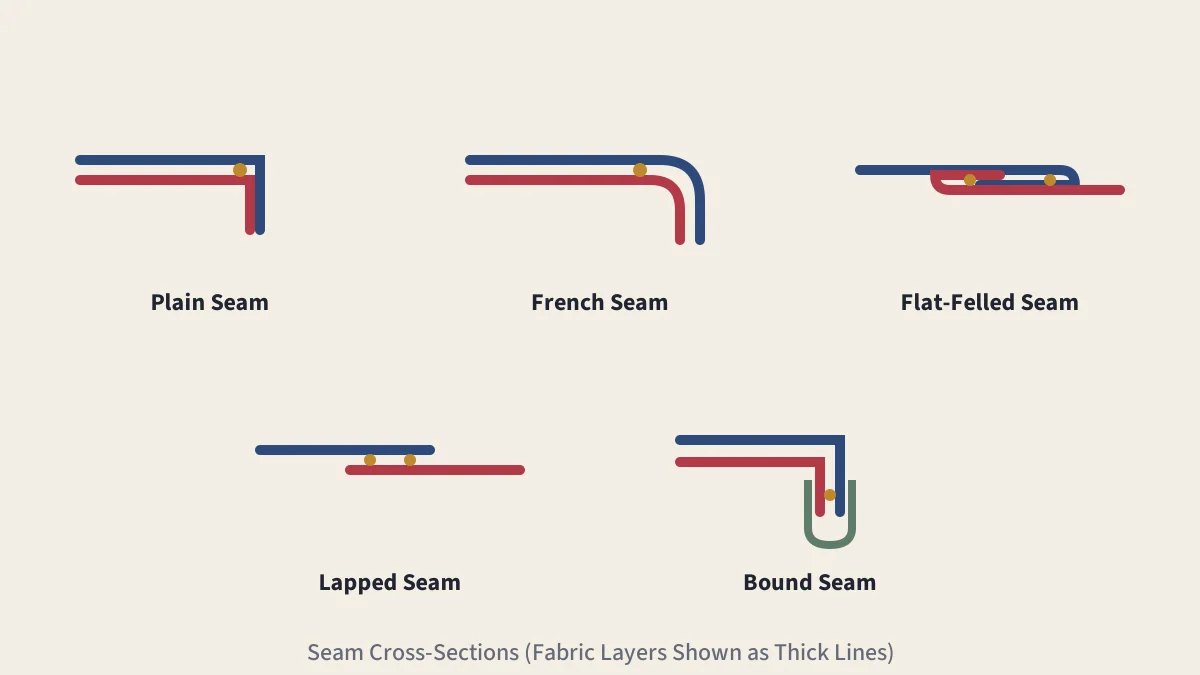
- Plain seam: the everyday seam for most projects
- French seam: encloses raw edges on sheer and fine fabrics
- Flat-felled seam: very strong; jeans and shirts
- Lapped seam: overlapping edges; leather, felt and non-fraying fabrics
- Bound seam: edges wrapped in binding; unlined jackets
A seam is the line where two or more pieces of fabric are joined. The simplest seam is two layers stitched together near the edge, but many variations exist, each with a different balance of strength, flatness, neatness and bulk. Choosing the right one depends on the fabric, the garment and whether the inside will be seen.
How the Industry Classifies Seams
Seams were traditionally described as flat, superimposed, lapped or bound. Today the garment industry uses the ISO 4916:1991 standard, which defines eight classes of seams according to the type and number of components used:
| Class | Name | Example |
|---|---|---|
| 1 | Superimposed seams | Plain seam, French seam |
| 2 | Lapped seams | Flat-felled seam, lapped seam |
| 3 | Bound seams | Bound edges and seams |
| 4 | Flat seams | Edges butted together and covered, as in activewear |
| 5 | Decorative or ornamental stitching | Pintucks, decorative topstitching |
| 6 | Edge finishing or neatening | Hems, overlocked edges |
| 7 | Attaching separate items | Elastic, lace, trims |
| 8 | Single-ply construction | Belt loops, straps made from one piece |
Home sewists rarely use these numbers, but they explain why seams are named the way they are.
Plain Seam
How: place two pieces right sides together, stitch along the seam line, then press the seam allowances open or to one side and finish the raw edges.
Use it for: almost everything: garments, home décor, bags. It is the base of most other seams. Raw edges need a seam finish unless they will be enclosed by a lining.
French Seam
How: sew the pieces wrong sides together with a narrow seam, trim the allowance close, then fold right sides together so the first seam is on the fold, press, and stitch again, enclosing the raw edges inside a narrow tube.
Use it for: sheer and lightweight fabrics such as chiffon, voile, batiste and silk, and in unlined garments where the inside shows. It is less suitable for curves and thick fabrics, where it becomes bulky.
Flat-Felled Seam
How: stitch a plain seam, trim one seam allowance, fold the wider one over it, then fold both down flat and stitch through all layers. The result has two visible rows of stitching on the outside and no raw edges inside.
Use it for: jeans, work shirts, children's clothes and anything that needs strength and repeated washing. In factories, special "feed-off-the-arm" machines sew it in one operation.
Lapped Seam
How: overlap one edge over the other, right side up, and stitch through both, often with two rows.
Use it for: leather, suede, felt, fleece and other non-fraying materials, where raw edges can stay exposed. It also reduces bulk in interfacing and padding.
Bound Seam
How: sew a plain seam, then wrap each seam allowance (or both together) in bias binding. A Hong Kong finish binds each allowance separately.
Use it for: unlined jackets and coats, where the inside will be seen, and fabrics that fray badly.
Welt and Double-Stitched Seams
How: sew a plain seam, press both allowances to one side, trim the lower allowance, and topstitch through the upper one. A double welt adds a second row near the seam line.
Use it for: thick fabrics where a flat-felled seam would be too bulky, and as a decorative, strong seam on coats and bags.
Other Seams You Will Meet
- Princess seam: a long curved seam shaping a bodice from shoulder or armhole to waist; it is a plain seam on a curve, named for its position.
- Piped seam: a plain seam with a fabric-covered cord inserted, common on cushions and garments.
- Mock French seam: a plain seam with allowances folded inward and stitched together, used on curves.
- Overlocked seam: sewn and finished in one pass on a serger; standard for knits. See how a serger works.
- Flatlock seam: edges joined flat with a stitch that covers both; used on activewear and underwear.
Choosing a Seam
| Fabric or Situation | Recommended Seam |
|---|---|
| Most woven fabrics | Plain seam with a seam finish |
| Sheer or delicate fabric | French seam |
| Denim, workwear, children's clothes | Flat-felled seam |
| Leather, felt, fleece | Lapped seam |
| Unlined jacket or coat | Bound or Hong Kong seam |
| Thick fabric needing strength | Welt seam |
| Knits | Overlocked seam or stretch-stitched plain seam |
| Activewear | Flatlock or coverstitched seams |
Most seams start with a plain seam and a consistent seam allowance. For how to keep raw edges from fraying, see seam finishes; for the stitches themselves, see machine stitch types.
Sources
- Seam (sewing), Wikipedia
Frequently Asked Questions
What is the most common type of seam?
The plain seam: two pieces placed right sides together and stitched a set distance from the edge, then pressed open or to one side. It is used for most garments and home sewing.
What is the strongest seam?
The flat-felled seam is one of the strongest, because the seam allowances are folded together and stitched down twice, enclosing all raw edges. It is used on jeans and work shirts.
When should I use a French seam?
Use a French seam on sheer, lightweight or fraying fabrics, such as chiffon, voile and silk, where the inside of the garment may be visible. It encloses the raw edges in a narrow tube.
How are seams classified in the garment industry?
The ISO 4916 standard groups stitched seams into eight classes: superimposed, lapped, bound, flat, decorative or ornamental, edge finishing, attaching separate items, and single-ply construction.
Keep Reading
Seam Finishes
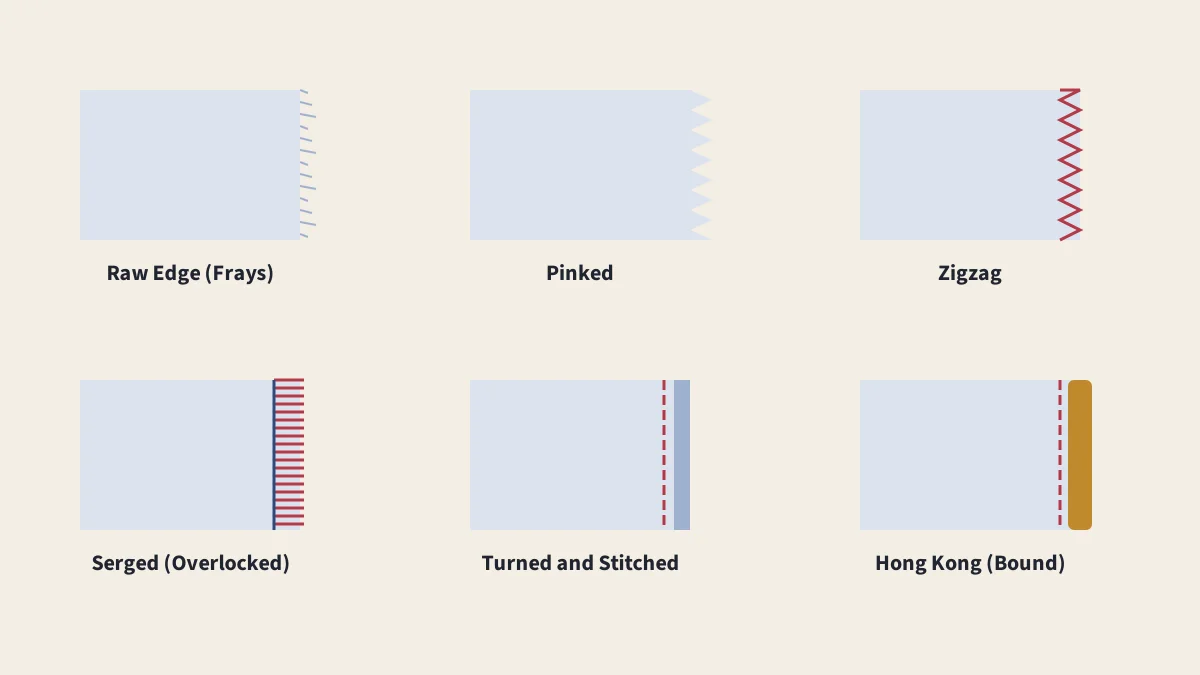
Pinked, zigzag, serged, Hong Kong, bound and enclosed finishes.
Machine Stitch Types
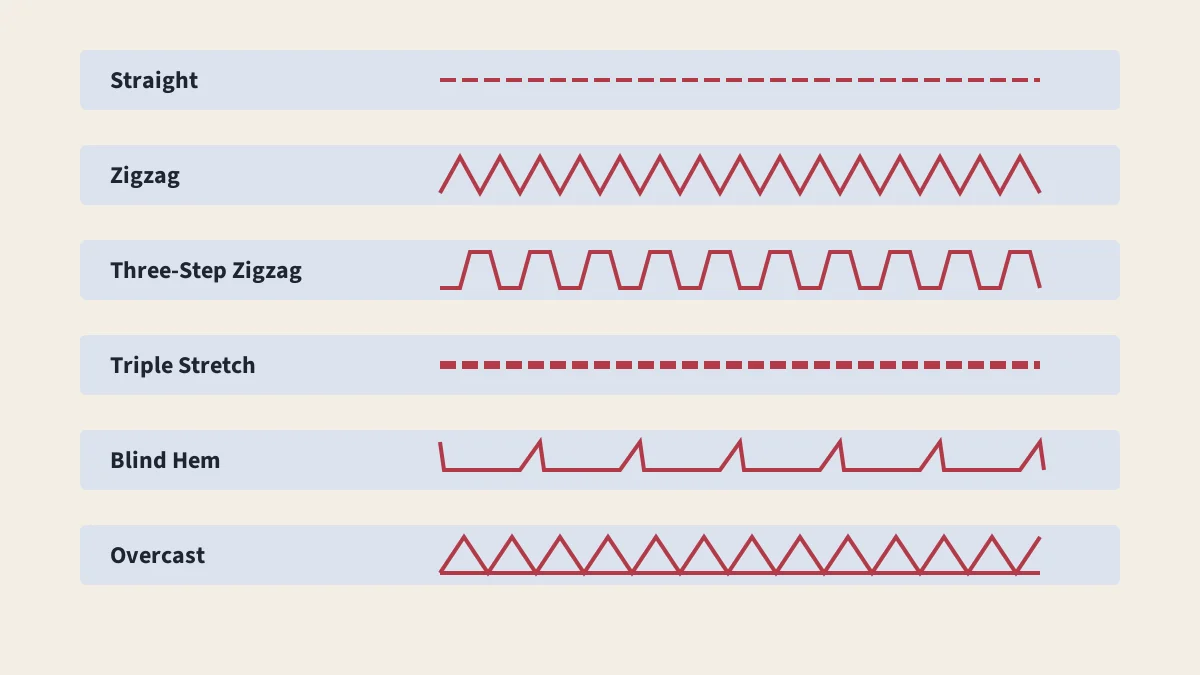
The utility stitches that do most of the work, and when to use each.
Hand Sewing Stitches
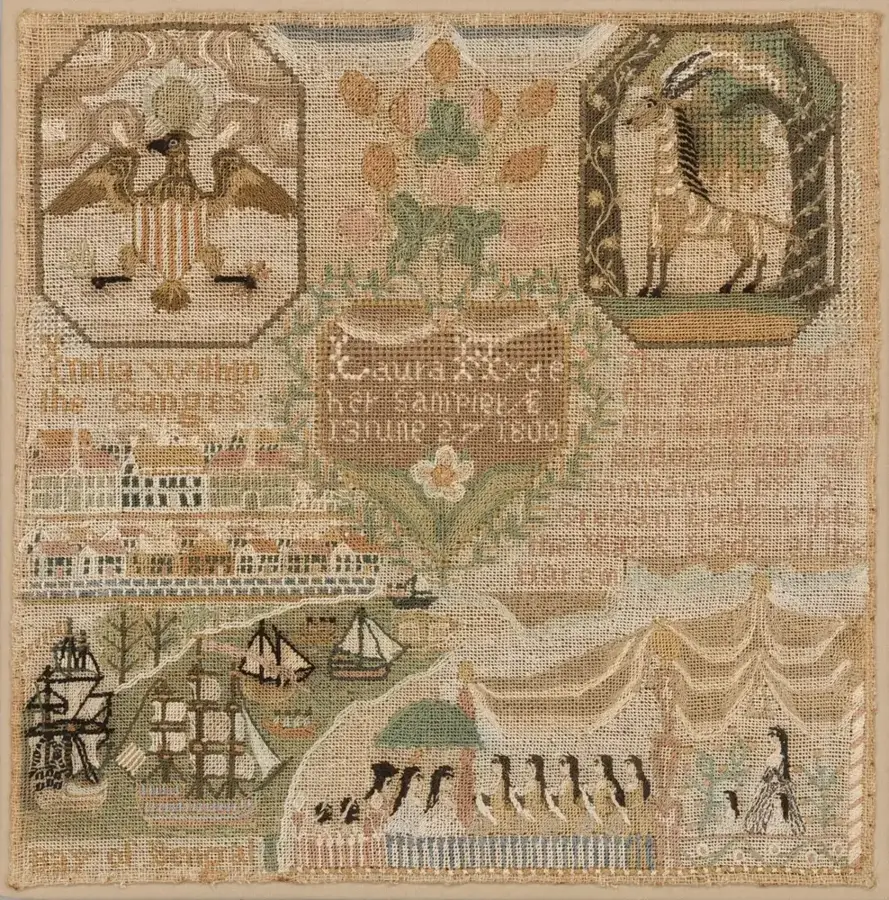
Every essential hand stitch, what it is for and how to sew it.
Right Side vs. Wrong Side of Fabric
Simple checks for prints, solids, selvedges, knits and double-sided cloth.