How to Identify a Vintage Sewing Machine (2026)
Found an old sewing machine in a cabinet, an attic or a thrift store? Most can be identified from a few clues: the serial number, the bobbin system, the decals and the shape of the machine. Here is where to look and what it tells you.
In This Article
- Identification Checklist
- Step 1: Find the Maker
- Step 2: Find the Serial Number
- Step 3: Look at the Bobbin System
- Step 4: Check the Decals and Finish
- Step 5: Look at How It Was Powered
- Step 6: Note the Shape and Features
- Popular Vintage Singer Models
- Treadles and Hand Cranks
- Other Makers
- See Historic Machines in Person
- Dating, Decals and Value
- Caring for a Vintage Machine
- Sources
- Frequently Asked Questions
Identification Checklist
- Maker's name: on the arm, bed, badge or faceplate
- Serial number: usually stamped on the bed or a plate
- Bobbin system: long shuttle, round drop-in or front-loading
- Decals and badges: patterns change by model and era
- Power: treadle, hand crank, belt motor or built-in motor
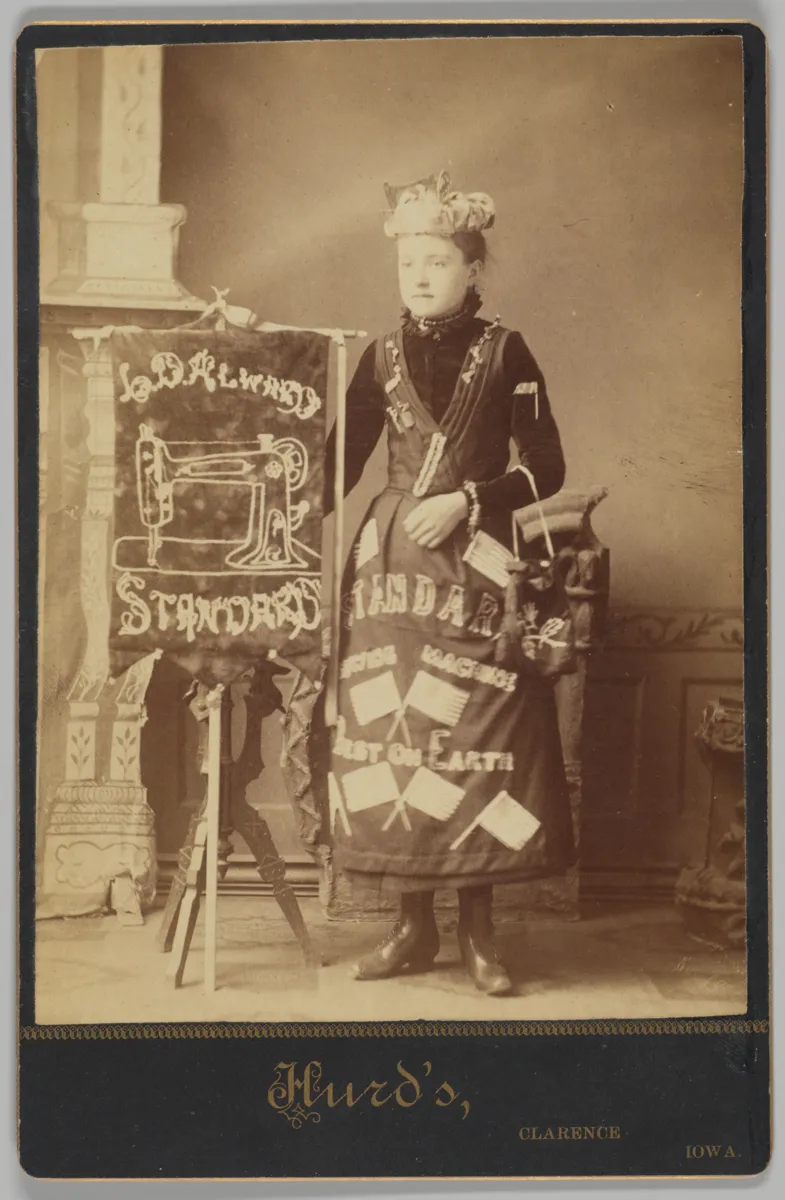
Sewing machines were among the first mass-produced consumer goods, and millions of them survive. Many still sew beautifully. Before you can date one, find parts for it or decide whether to restore it, you need to know what it is. The good news is that most vintage machines carry plenty of clues. The 1880s portrait above, made for a local merchants' carnival, shows how proudly sewing machines were advertised in their heyday; the dealer is promoting the Standard brand.
Step 1: Find the Maker
Look for a name on the arm, the bed, a round or oval badge on the front of the arm, or the faceplate on the left end. Singer machines usually say Singer, though machines made for department stores and other retailers often carried store names instead of the manufacturer's. Many Japanese machines of the 1950s and 1960s were sold under dozens of different brand names, a practice known as badge engineering, so the name on the front is not always the name of the factory that made it. See our guide to vintage sewing machine brands.
Step 2: Find the Serial Number
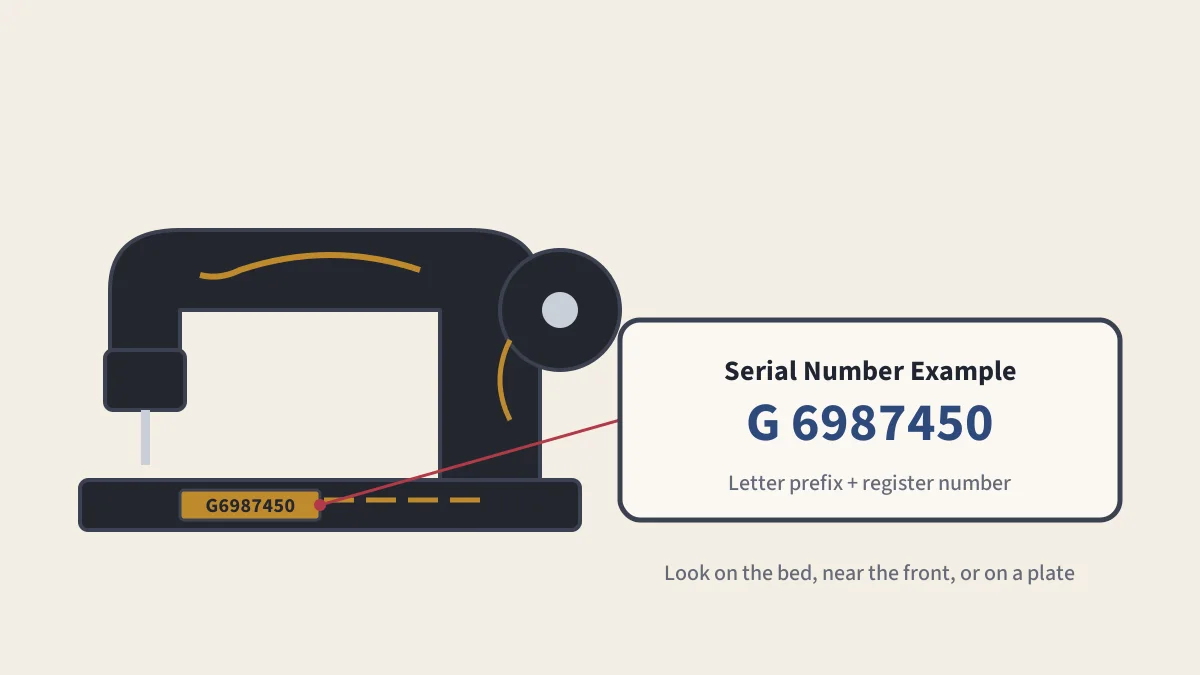
Most Singer machines have a serial number stamped into the bed, often at the front right. Other makers stamped numbers on the bed, under the machine or on a plate. Note any letters at the start. On Singers, a letter prefix was used on serial numbers from 1900, and the numbers can be matched to published tables of allotment dates. Our guide to Singer serial numbers explains how.
Step 3: Look at the Bobbin System
The bobbin area is one of the fastest ways to place a machine in its family.
| What You See | What It Suggests |
|---|---|
| A long, bullet-shaped shuttle that rocks back and forth | A vibrating shuttle machine, common in the late 19th and early 20th centuries |
| A round bobbin dropped in from the top under a cover plate | A horizontal drop-in system, such as Singer's 66, 99 and 201 |
| A round bobbin in a removable case inserted from the front or side | A front- or side-loading system, such as Singer's 15 class and many later machines |
| A small round bobbin in a vertical hook, side-loaded | A vertical rotary hook, as on the Featherweight and 301 |
For modern bobbin classes, see bobbin types and classes.
Step 4: Check the Decals and Finish
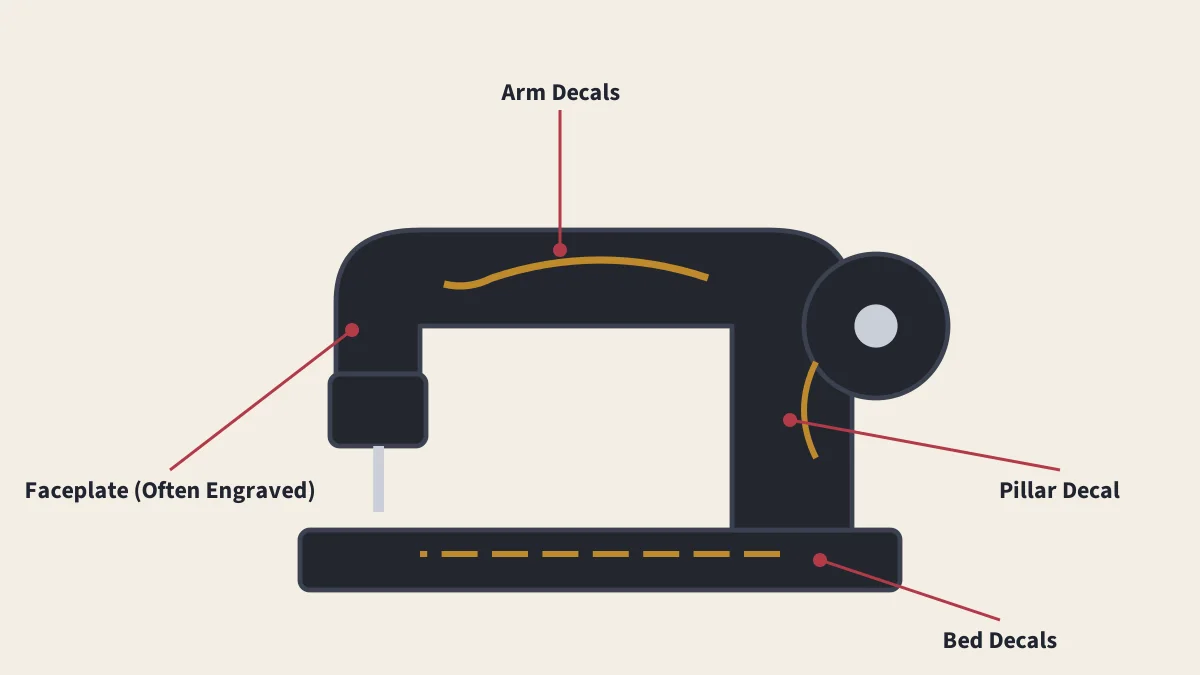
Singer and other makers decorated their machines with gold and colored decals, and the designs changed over time. Collectors have given many of them names, such as "Sphinx," "Red Eye" and "Tiffany." A matching decal set narrows down both model and era. See our Singer decals identification guide.
Finish is another clue. Black japanned cast iron with gold decals is typical of the late 19th and early 20th centuries; crinkle finishes, beige and two-tone paint, aluminum bodies and plastic covers appear in the mid-20th century.
Step 5: Look at How It Was Powered
- Treadle: a cast-iron stand with a foot plate and a large flywheel driving a belt. See treadle sewing machines.
- Hand crank: a handle attached to the handwheel or a geared crank on the side. See hand-crank sewing machines.
- Belt-driven motor: an electric motor mounted on the back of the machine, driving the handwheel by a belt.
- Built-in motor: a motor inside the machine or attached directly to the gears, such as the "potted" motor on the Singer 201-2.
Many machines were converted from treadle to electric over their lives, so the power source does not always date the machine itself.
Step 6: Note the Shape and Features
- Straight stitch only, or zigzag? Zigzag became common on home machines in the 1950s.
- Slant or straight needle? Singer's slant-needle machines began with the 301 in 1951.
- Cast iron or aluminum? Aluminum bodies mark lightweight models such as the Featherweight and 301.
- Reverse lever? Many early machines had no reverse.
- Cams? Removable cams indicate mid-century decorative stitch machines.
Popular Vintage Singer Models
Some Singer models are especially popular with collectors and sewists. Each has its own guide:
Singer Featherweight 221 and 222
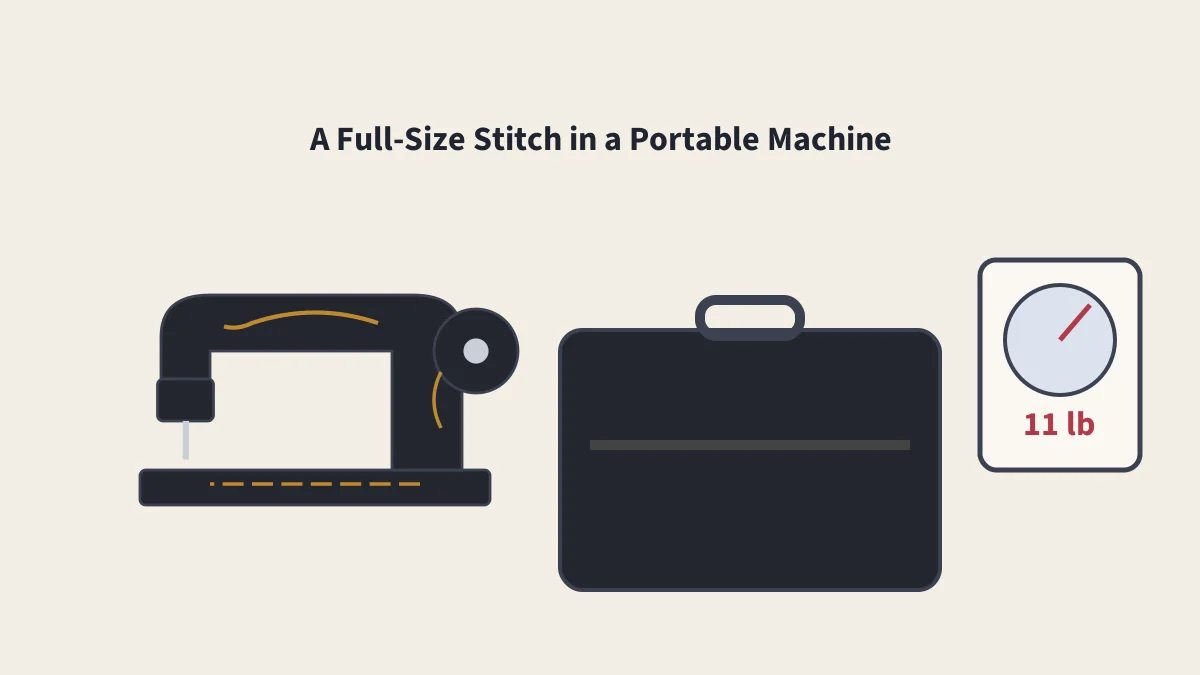
History of the 11-pound 221 and free-arm 222K, and why it endures.
Singer 201
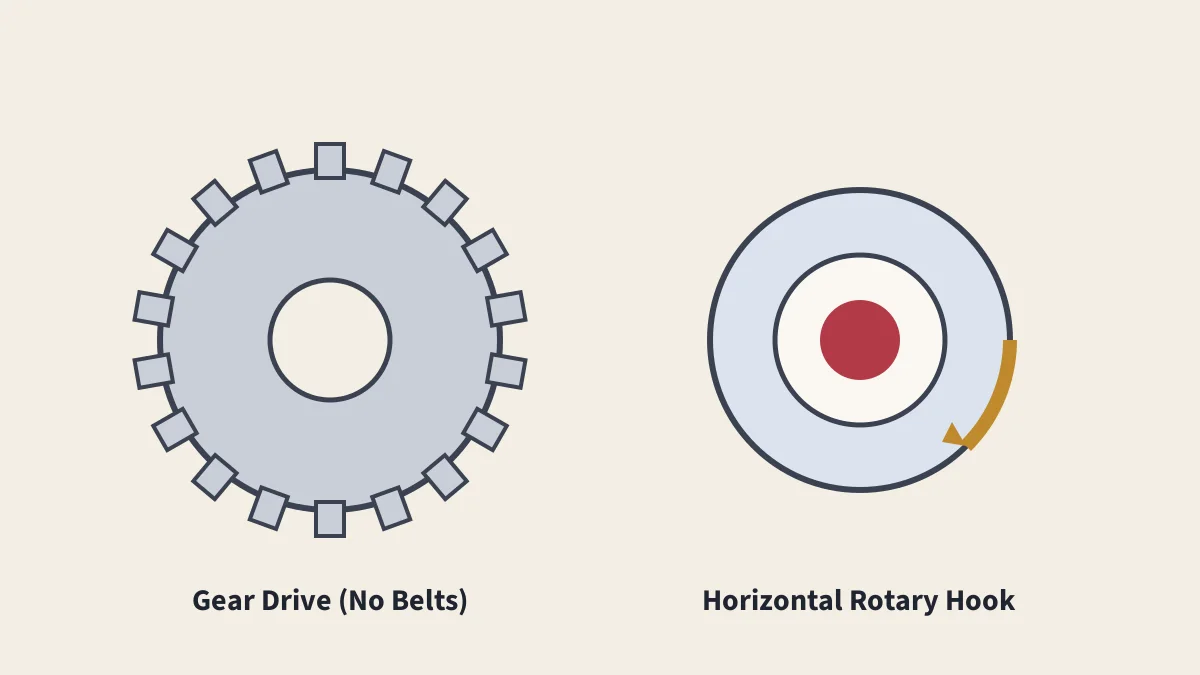
The gear-driven, rotary-hook 201 and its variants explained.
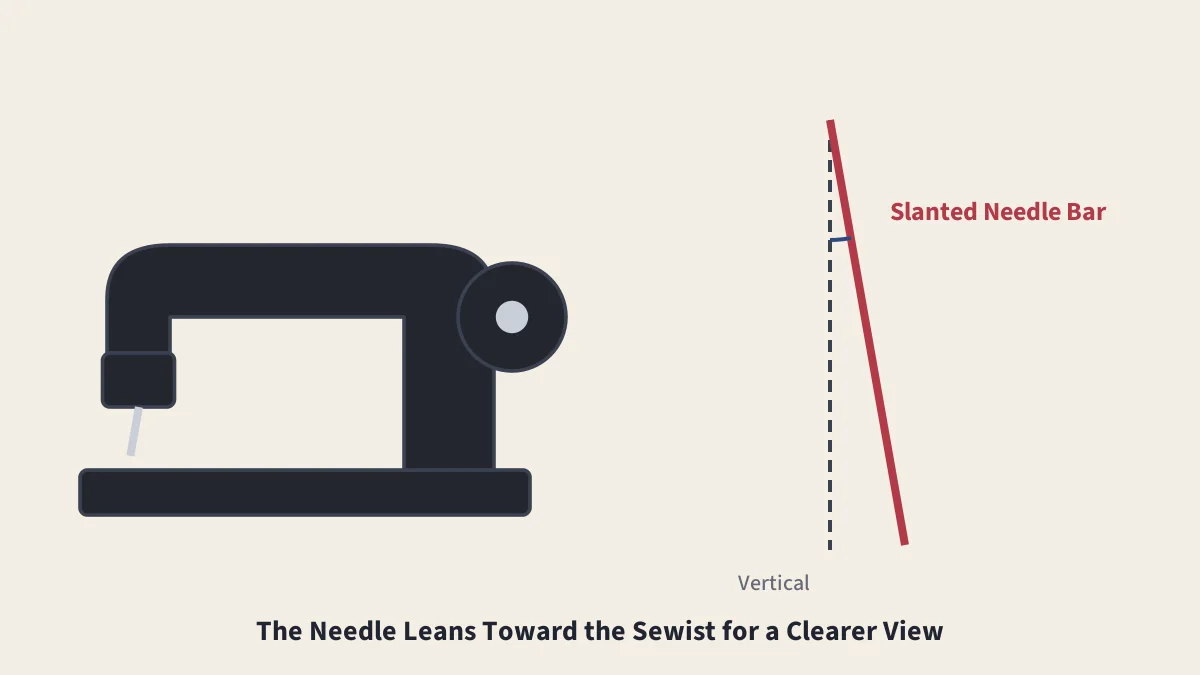
Singer 301
Singer's first slant-needle machine: history, versions and features.
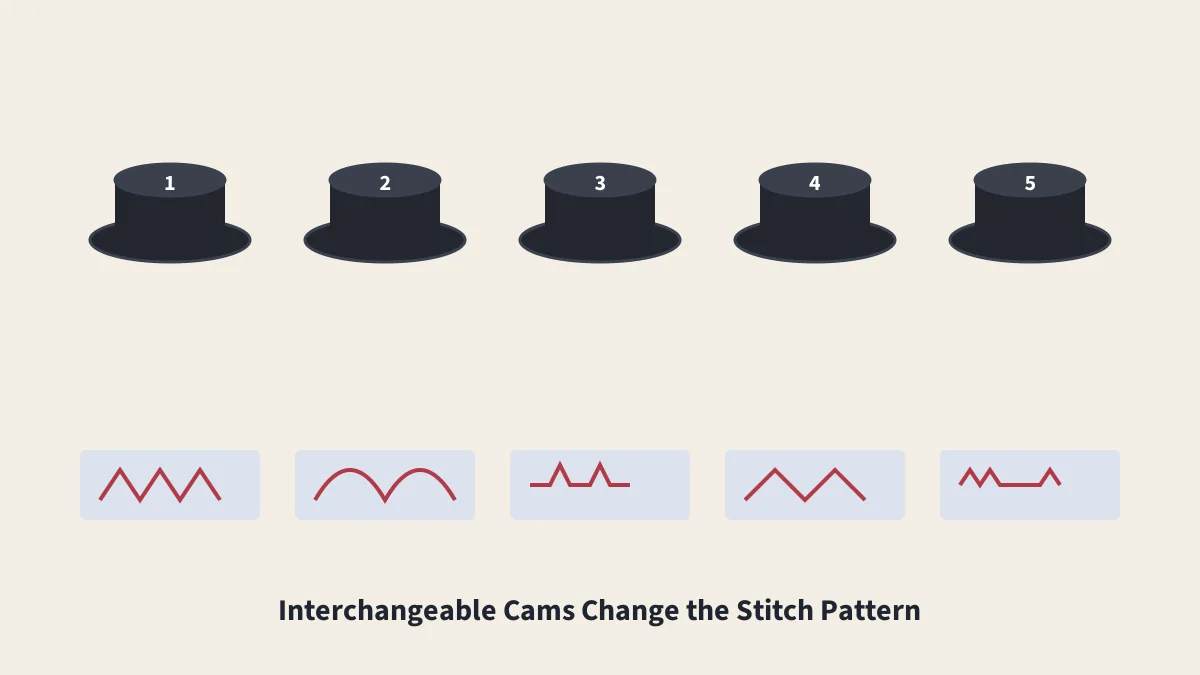
Singer Slant-o-Matic
The 401A, 403A, 404 and 500A Rocketeer compared, with cams explained.
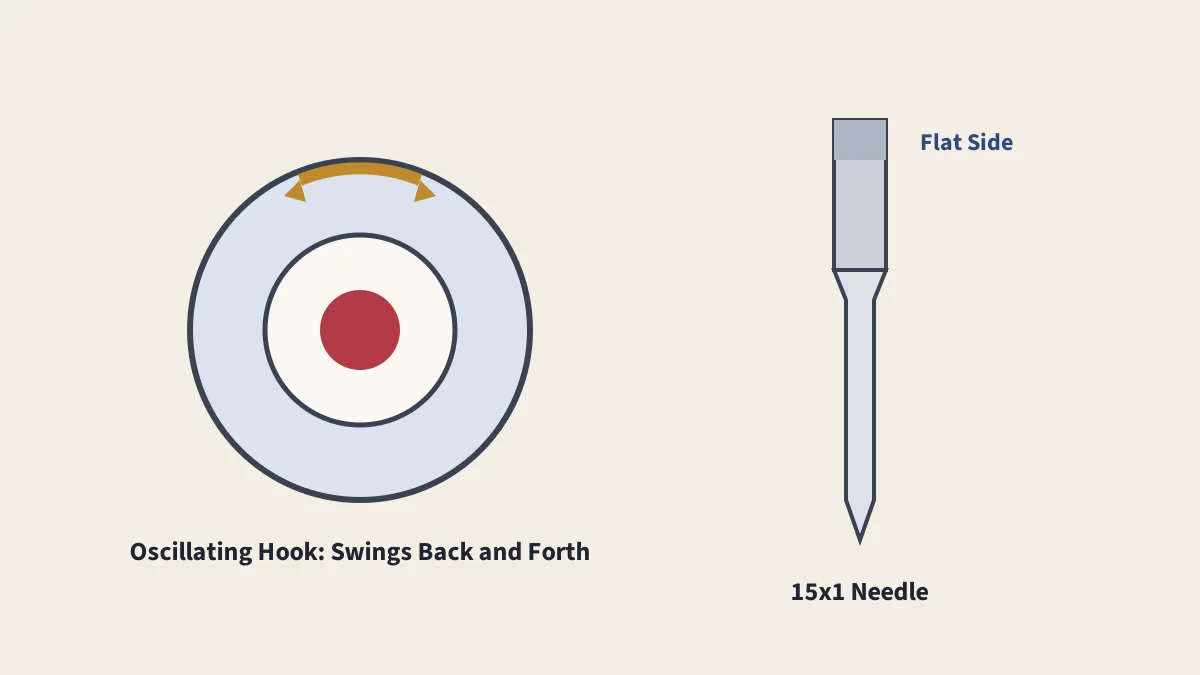
Singer 15 Class
The long-lived 15 class and its versions, from 15-30 to 15-91.
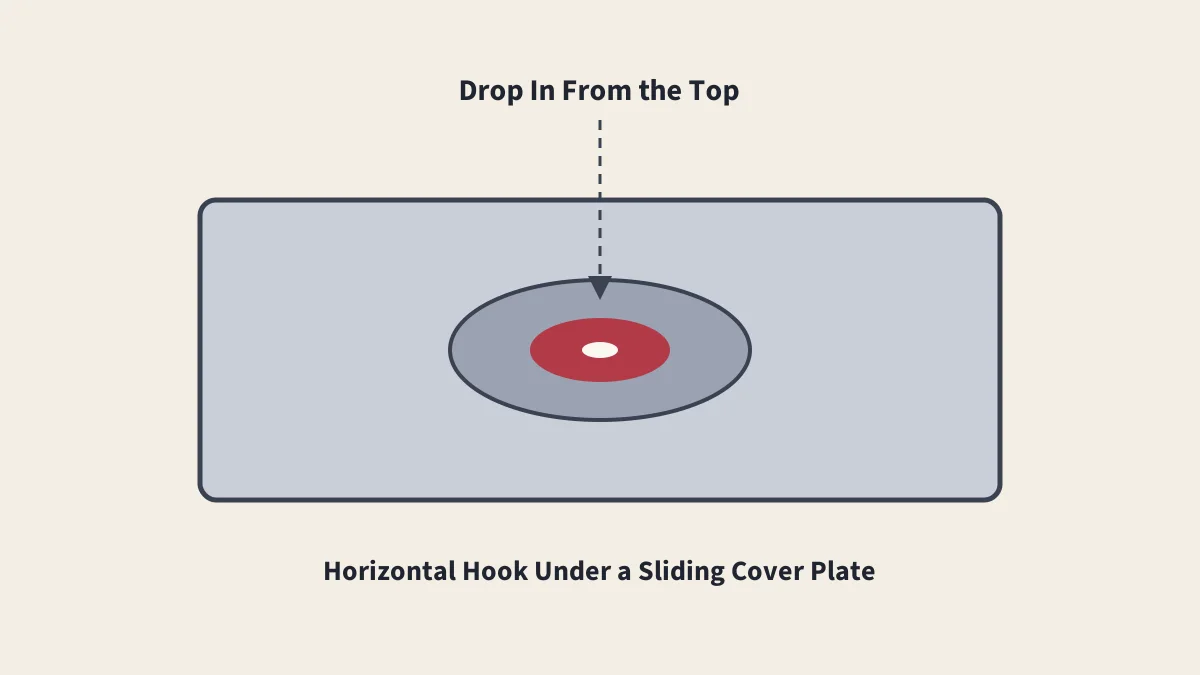
Singer 66 Red Eye
The 1902 drop-in-bobbin 66, Red Eye decals and back-clamp feet.
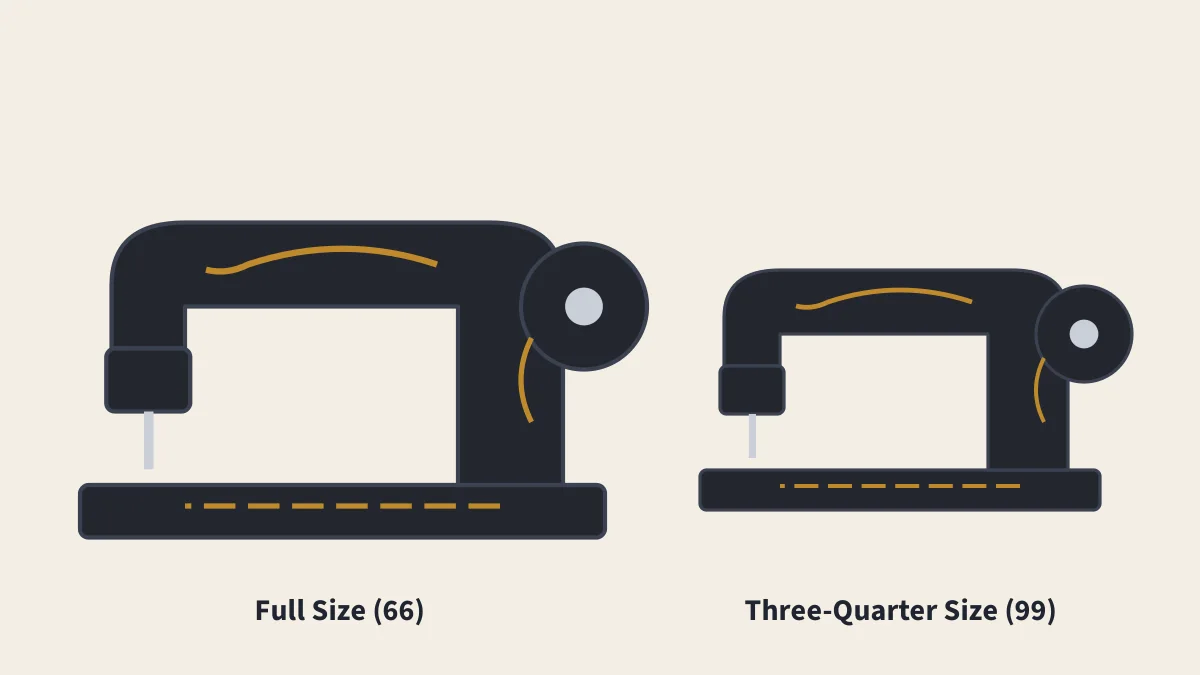
Singer 99
The 1911 three-quarter-size 99 and how it differs from the 66.
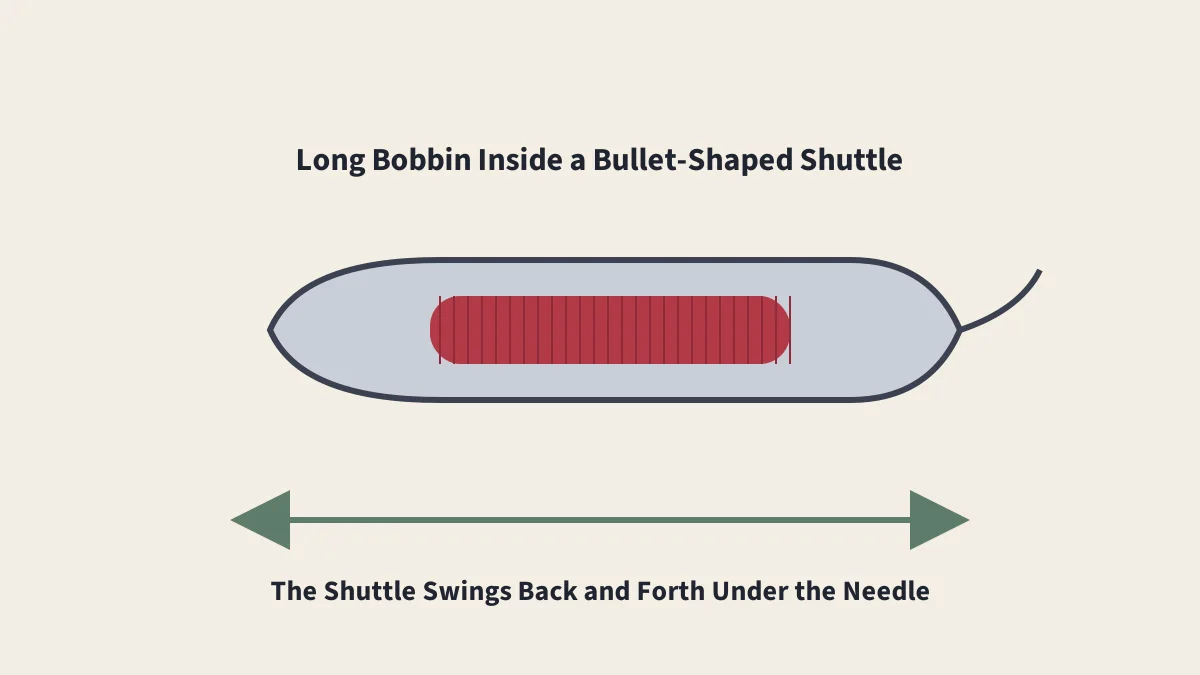
Singer 27, 28, 127 and 128
The VS-1 to 128 family, the long shuttle and how to tell models apart.
Treadles and Hand Cranks
Before electric motors, sewing machines ran on foot or hand power. Both are still used today:
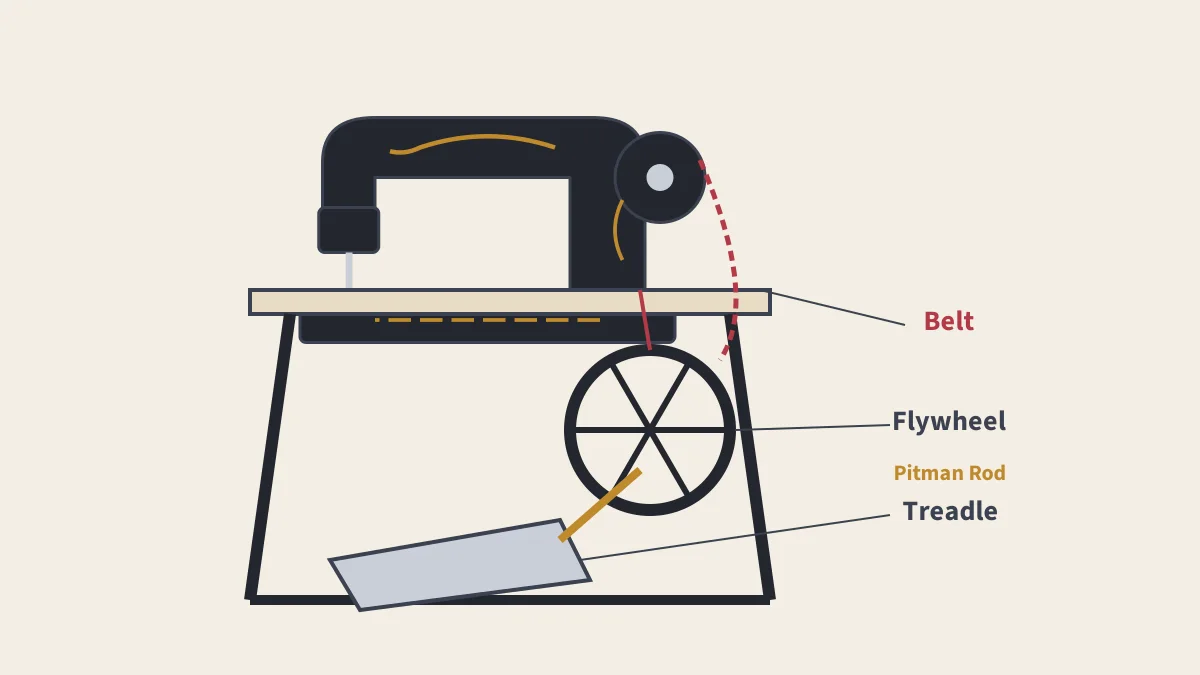
Treadle Sewing Machines
How foot power drives the machine, and how to treadle smoothly.
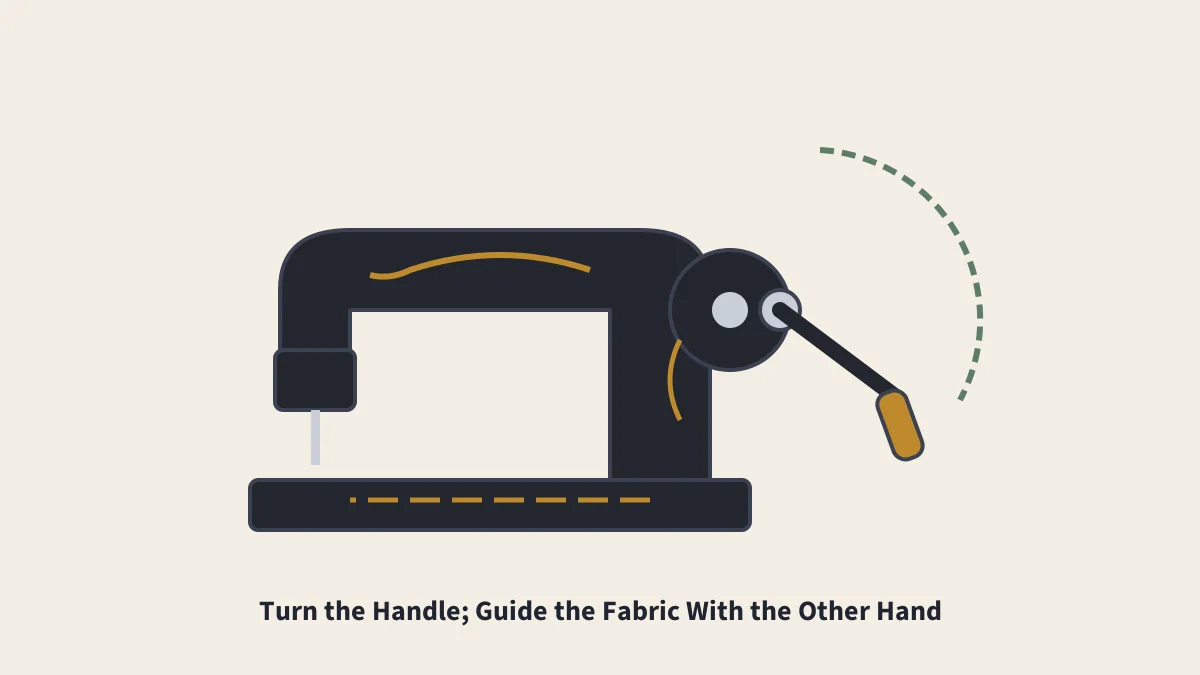
Hand-Crank Sewing Machines
How hand-crank machines work and how to sew with one hand.
Other Makers
Singer was never alone. These guides cover other major brands and their histories:
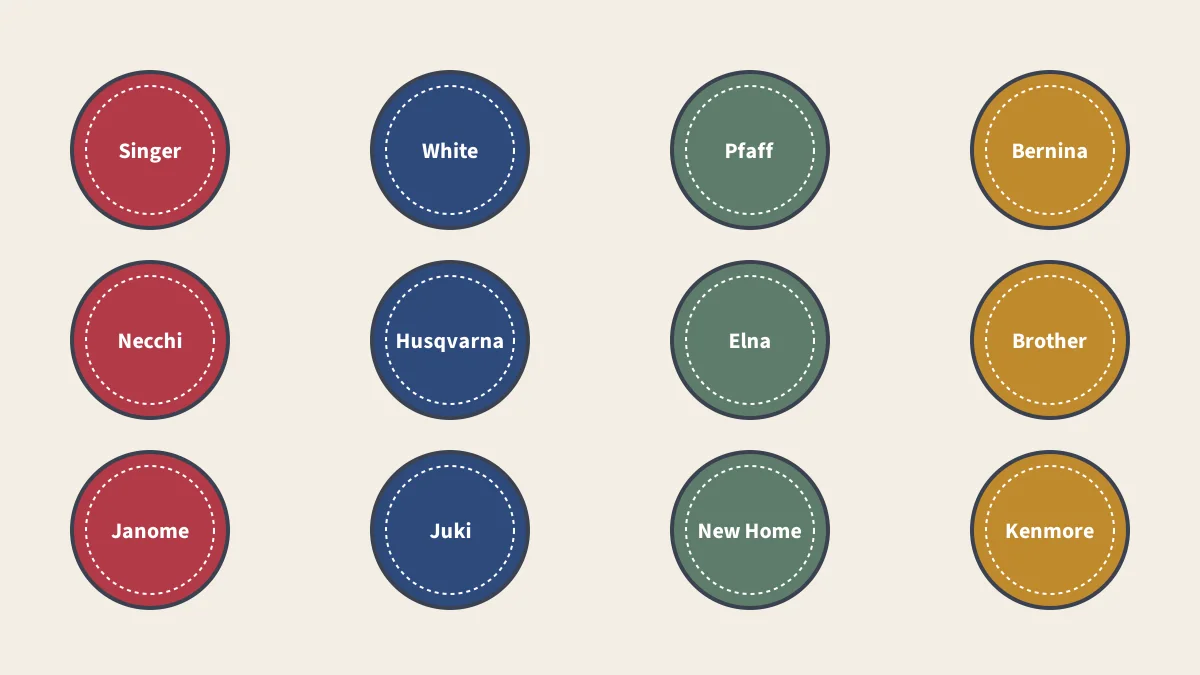
Vintage Sewing Machine Brands
American, European and Japanese makers, plus badge-engineered machines.
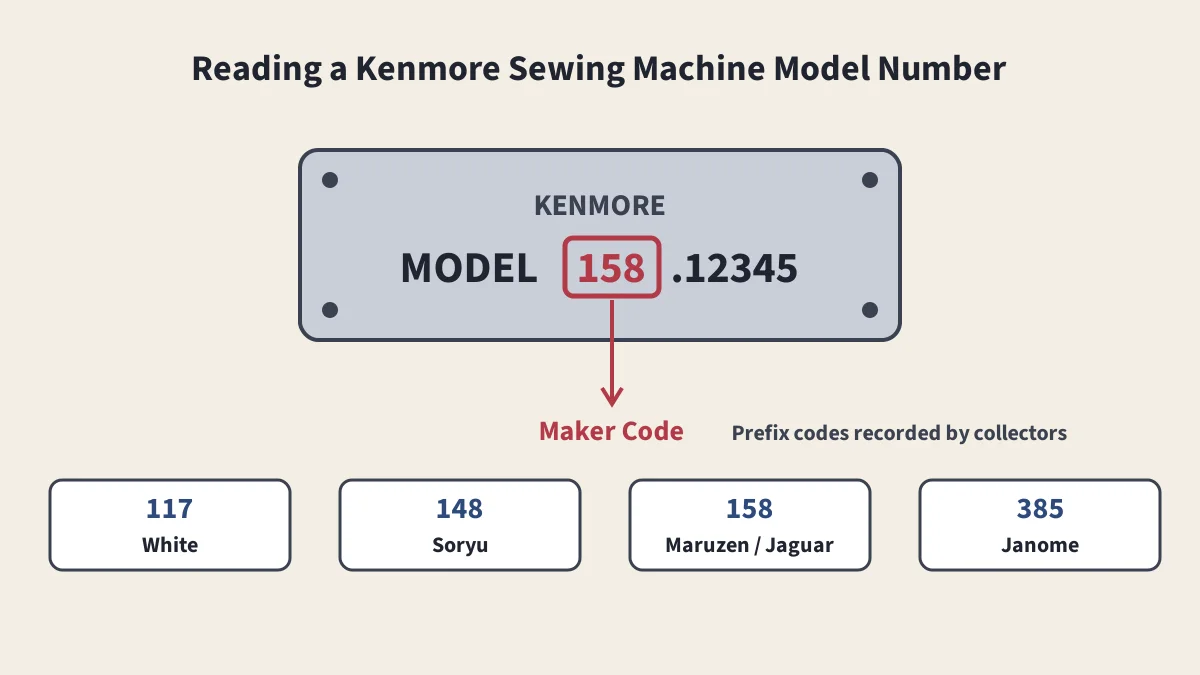
Kenmore Sewing Machines
How Sears sourced Kenmore machines and how to read the model number.
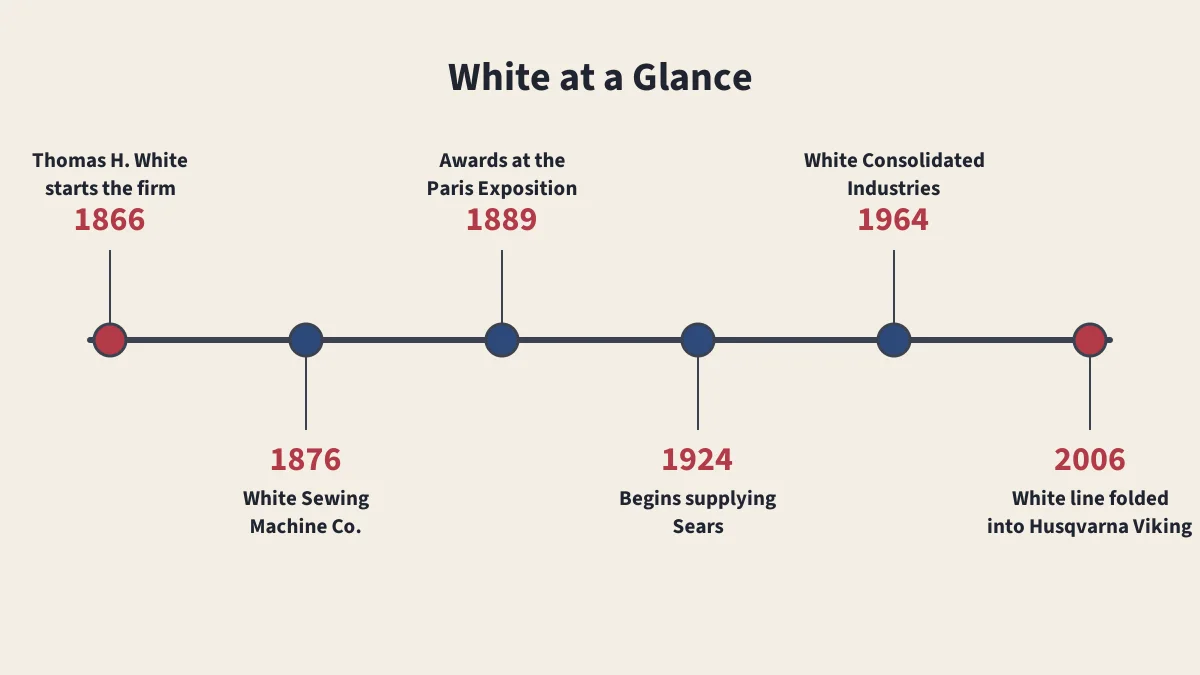
White Sewing Machine History
Thomas White's company, the White Rotary and the Sears connection.
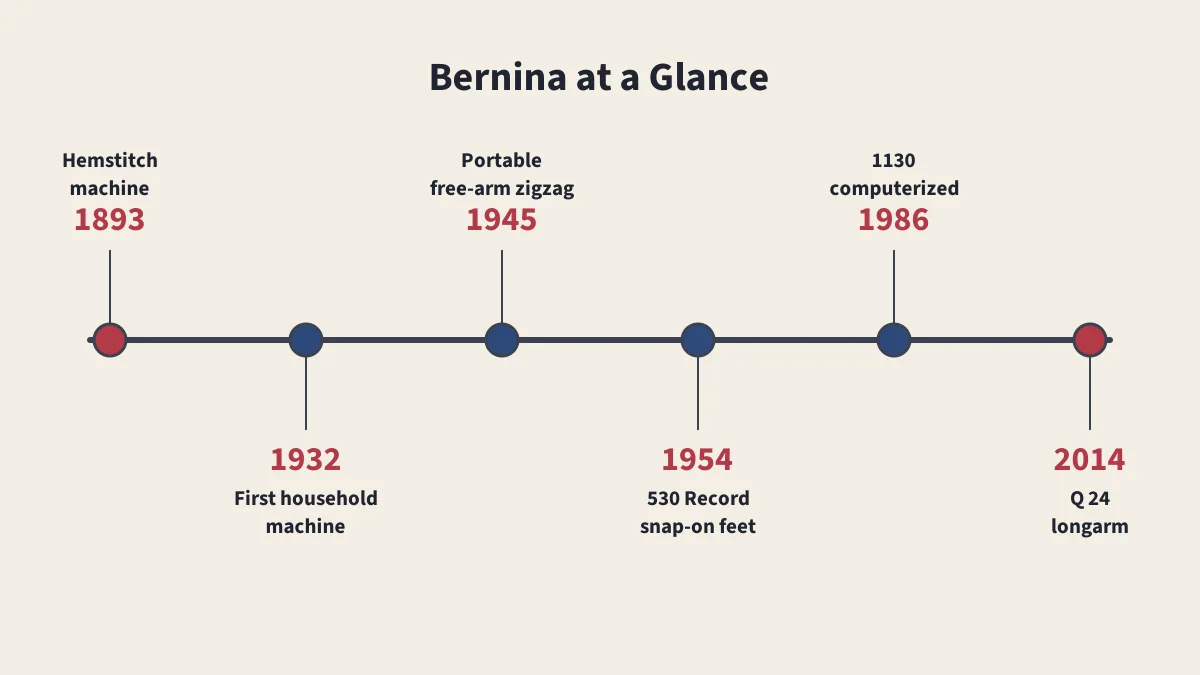
Bernina History
The Gegauf family, the first Bernina zigzag and the 530 Record.
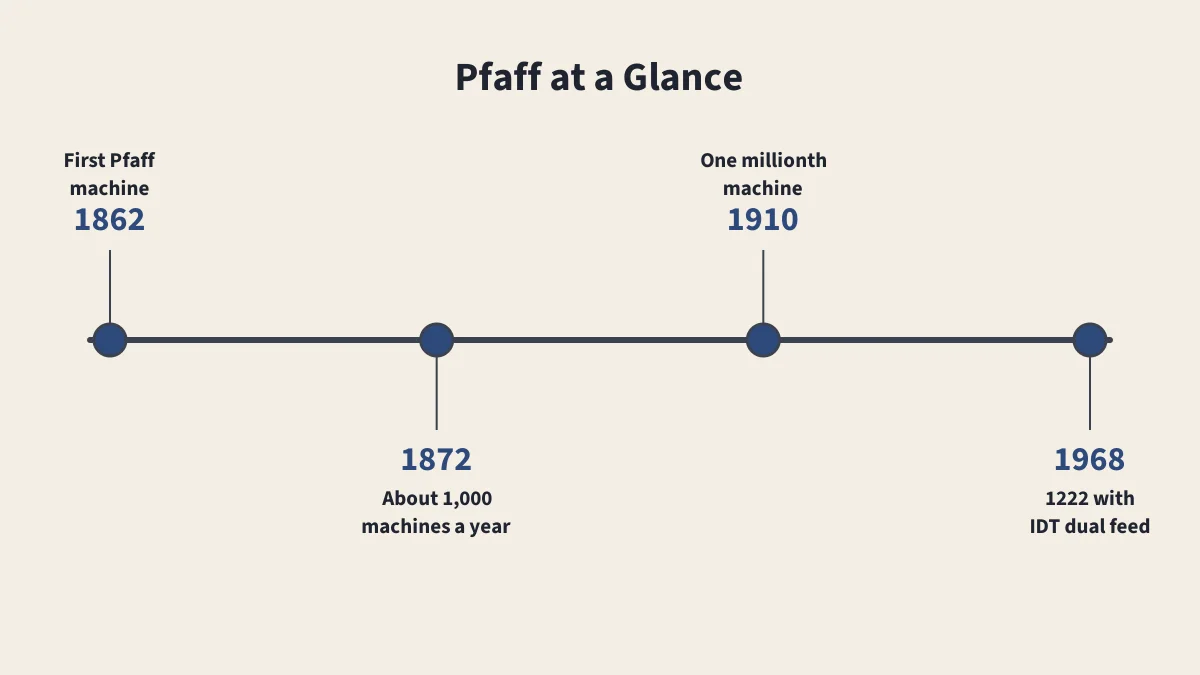
Pfaff History
Georg Michael Pfaff, Lina Pfaff's leadership and the IDT dual feed.
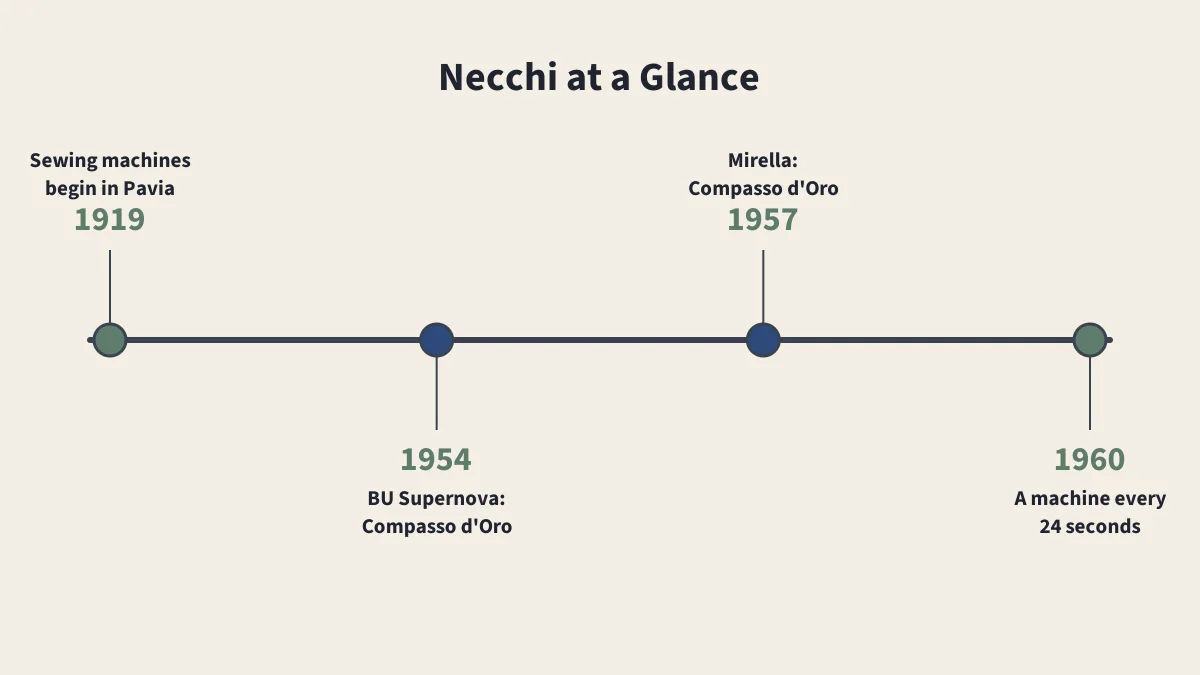
Necchi History
The Pavia foundry, Nizzoli's Supernova and the prize-winning Mirella.
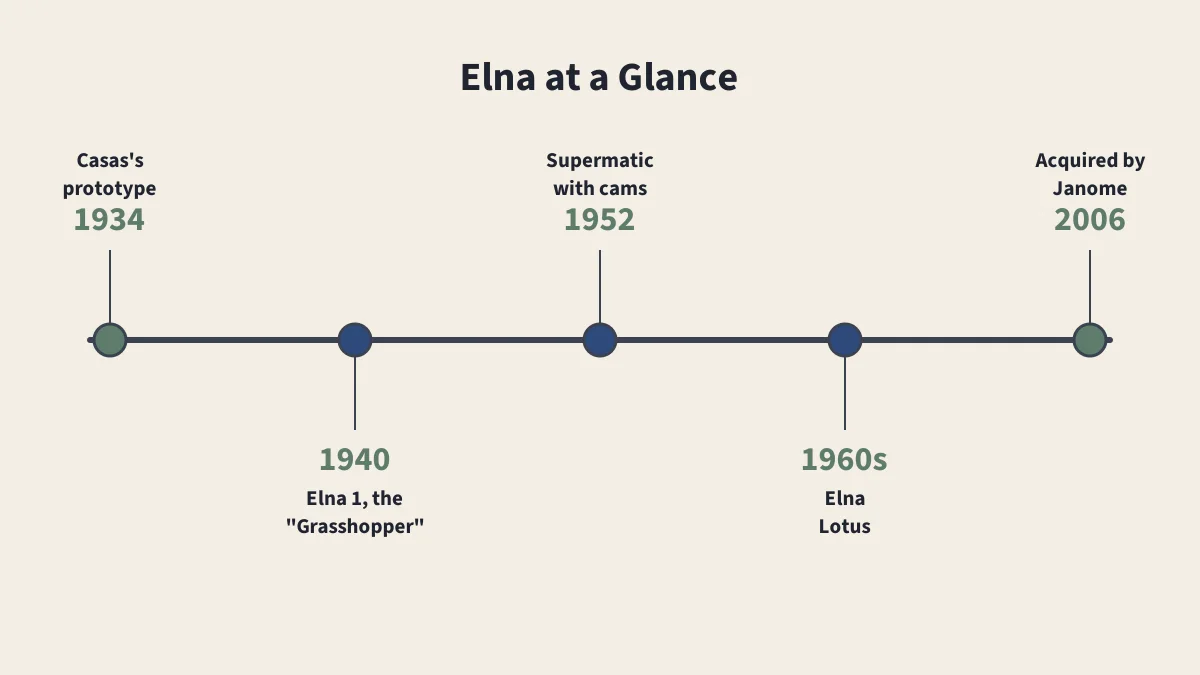
Elna History
Ramon Casas, the Elna 1 Grasshopper and the Supermatic.
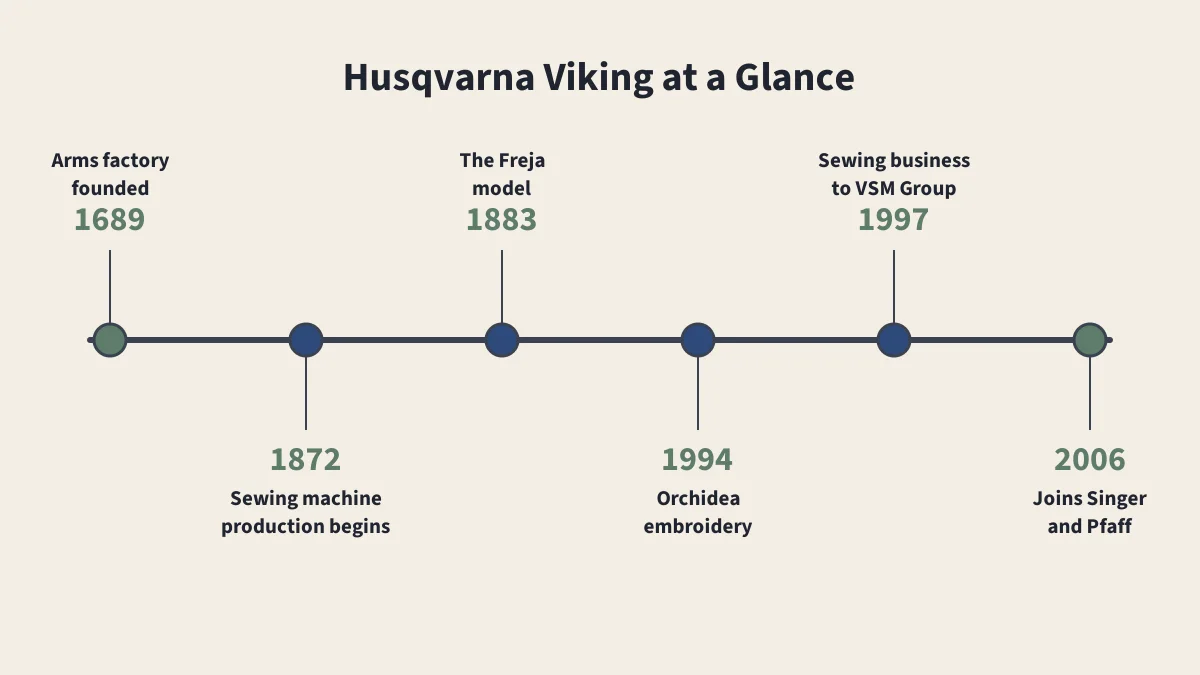
Husqvarna Viking History
The 1689 arms factory, the first machines of 1872 and the Viking brand.
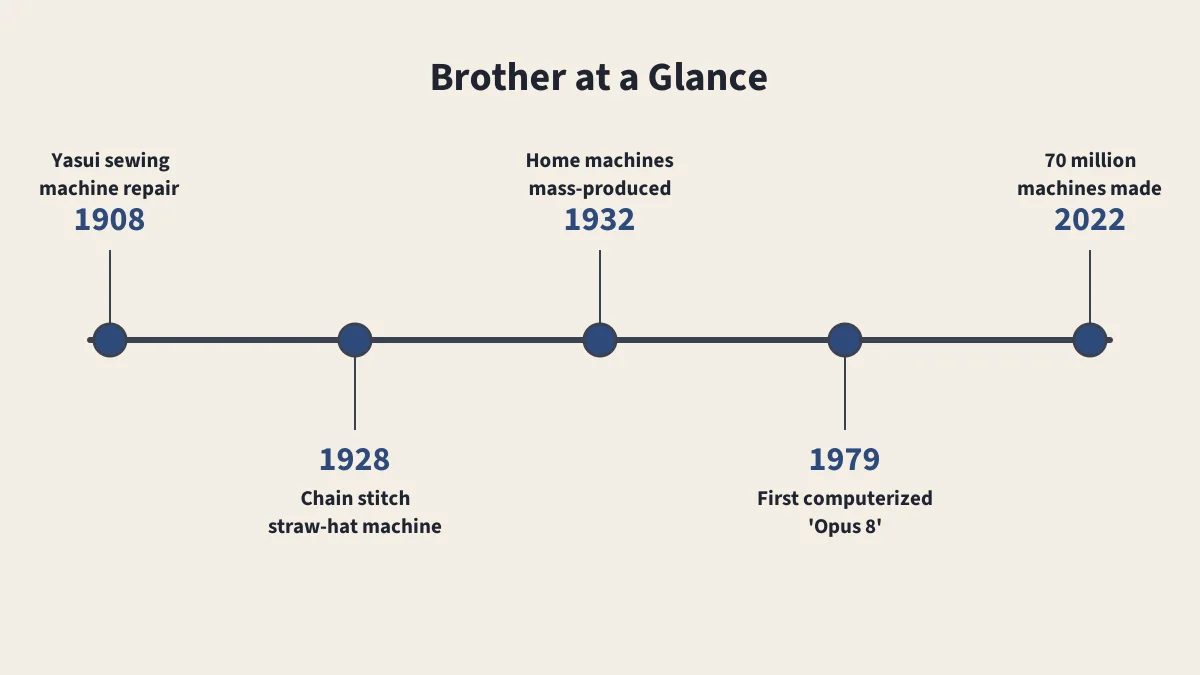
Brother History
The Yasui brothers, the straw-hat machine and the computerized Opus 8.
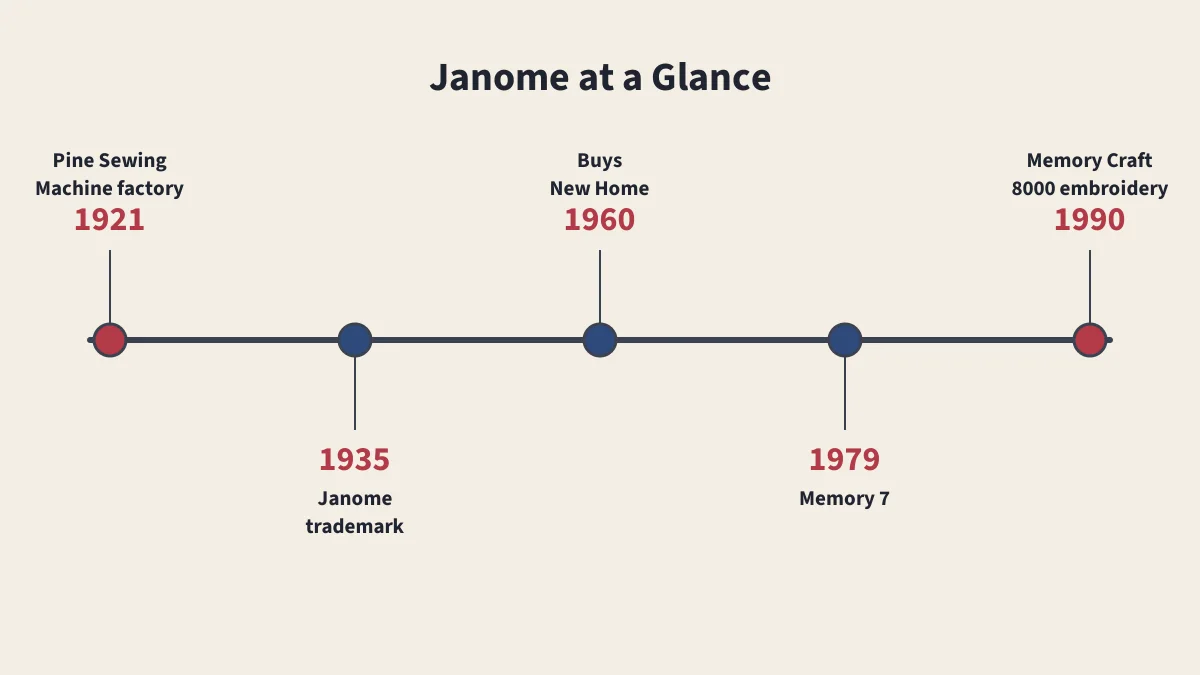
Janome History
The Pine factory, the snake's eye bobbin and the Memory 7.
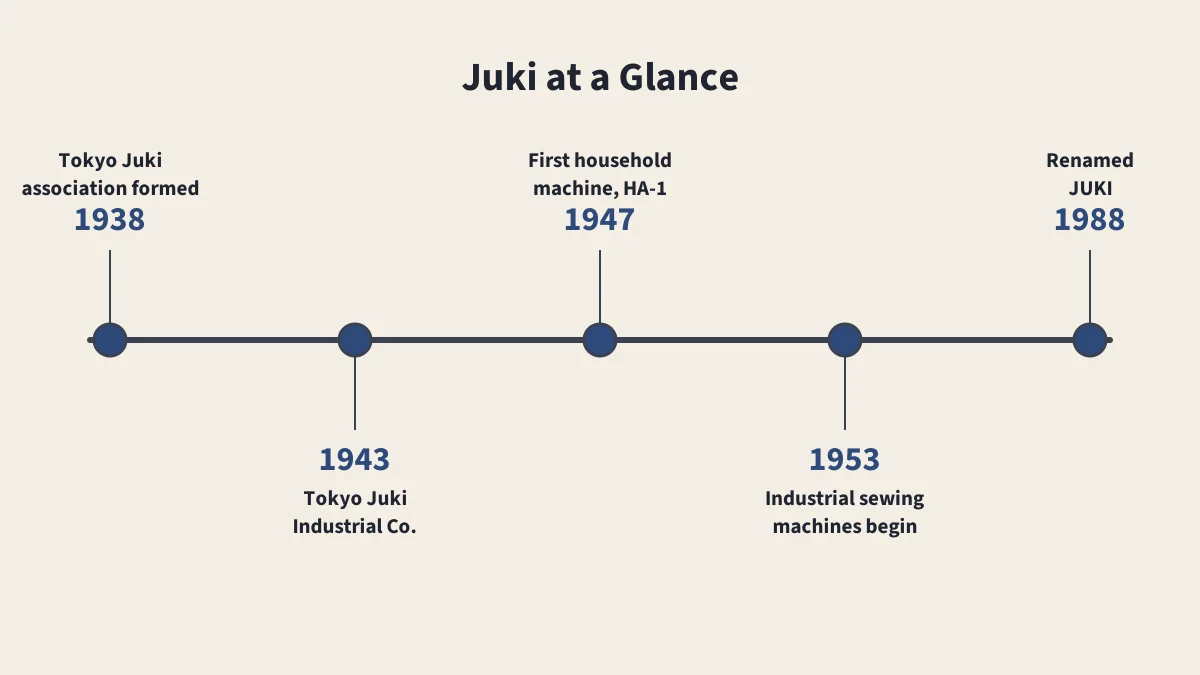
Juki History
From the 1938 association to the HA-1 and industrial leadership.
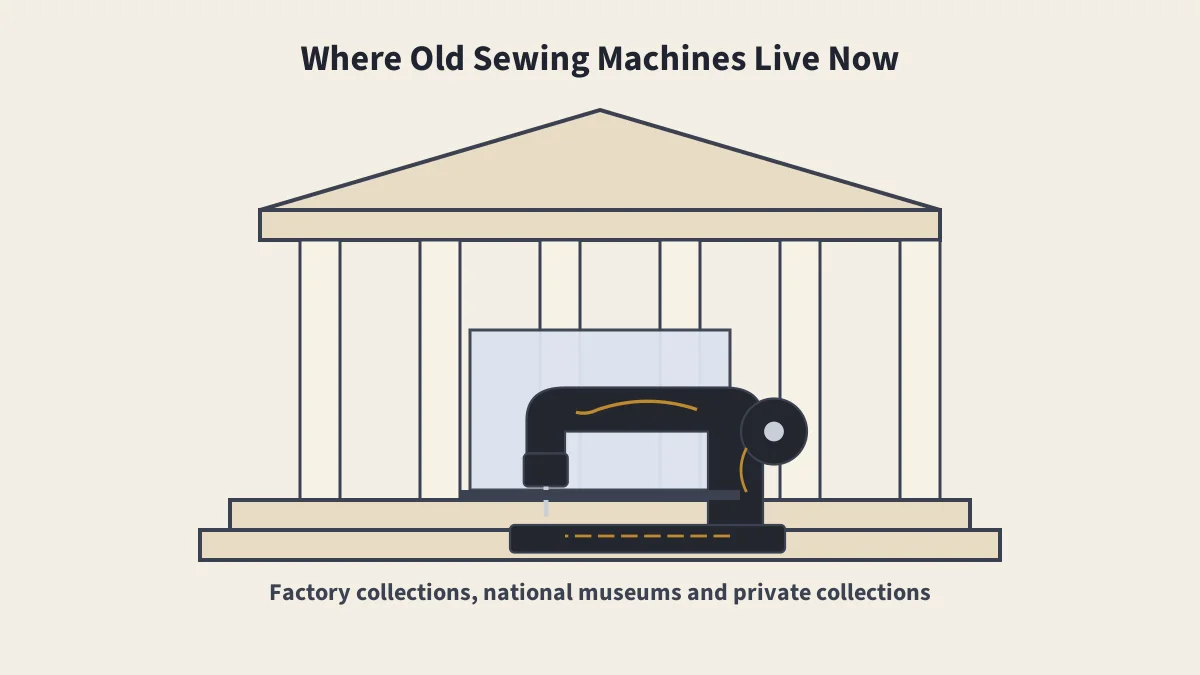
See Historic Machines in Person
Some of the most important machines ever made are preserved in museums, from patent models to the last machine built at Singer's Scottish factory.
Dating, Decals and Value
Singer Serial Numbers
Find the serial number, read the prefix and understand allotment dates.
Singer Decals Identification Guide
Sphinx, Red Eye, Tiffany, Lotus and other decal sets, with models and dates.
What Is an Old Singer Worth?
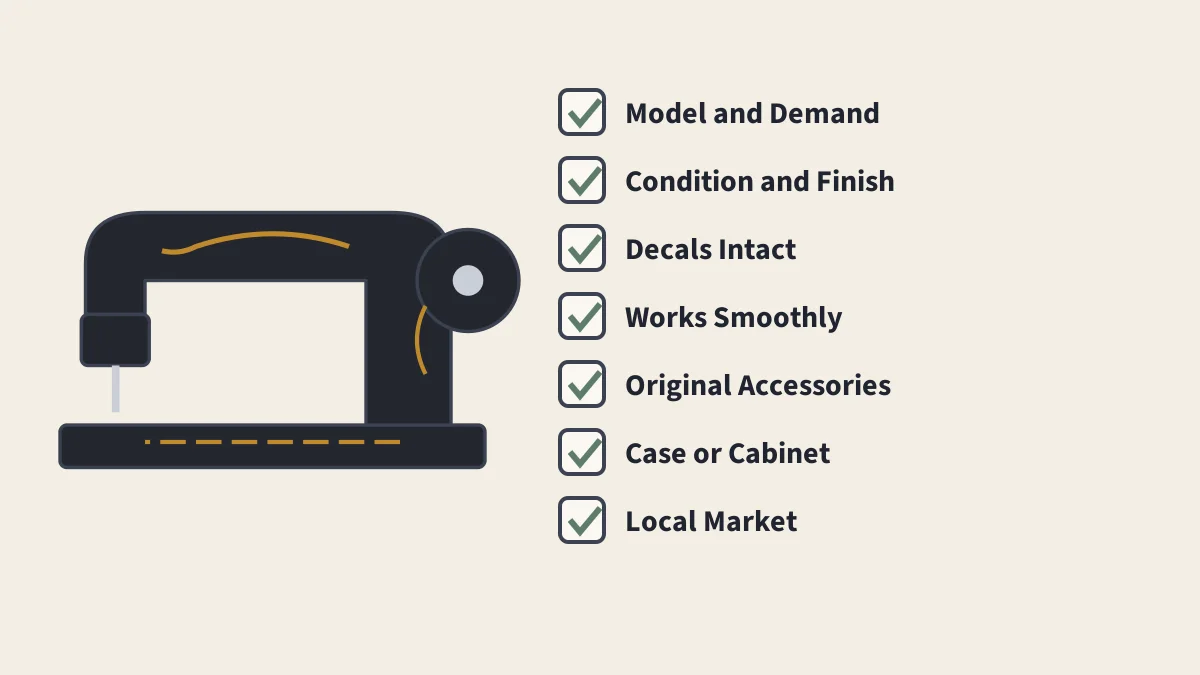
Model, condition, completeness and demand: what decides value.
Caring for a Vintage Machine
Old machines usually need cleaning and oiling before use, and electric machines should have their wiring checked before plugging in; old rubber-insulated wiring can crack and become unsafe. Our guide to sewing machine maintenance covers cleaning and oiling. For the company behind many of these machines, read our history of the Singer Company.
Sources
- Singer Corporation, Wikipedia
- Sewing machine, Wikipedia
- Merchants' Carnival Portrait: L.D. Alward Standard Sewing Machine, The Metropolitan Museum of Art
Frequently Asked Questions
How do I find out what model my old sewing machine is?
Start with the serial number, usually stamped on the bed or on a plate near the front. For Singer machines, the serial number range can usually be matched to a model and an allotment date in published tables. Then compare features such as the bobbin type, shape, decals and motor with known models.
Where is the serial number on an old Singer?
On most Singer machines, it is stamped into the bed, often on the front right-hand side, or on a small plate. On some models it is under the machine. The serial number is different from the model number.
How can I tell how old my sewing machine is?
For Singer machines, the serial number gives an allotment date, the date that block of numbers was assigned, which is close to but not exactly the date of manufacture. For other brands, design features, decals, badges and motor styles help narrow the date range.
Is my old sewing machine valuable?
Most vintage machines were made in large numbers and are valued mainly as working machines. A few models, condition, completeness and local demand make a big difference. See our guide to what an old Singer is worth.
Keep Reading
Singer Serial Numbers
Find the serial number, read the prefix and understand allotment dates.
Singer Decals Identification Guide
Sphinx, Red Eye, Tiffany, Lotus and other decal sets, with models and dates.
What Is an Old Singer Worth?
Model, condition, completeness and demand: what decides value.
Isaac Singer and the Singer Company
An actor, a lawyer and a payment plan built sewing's most famous brand.