Parts of a Garment: An Illustrated Guide to Garment Anatomy (2026)
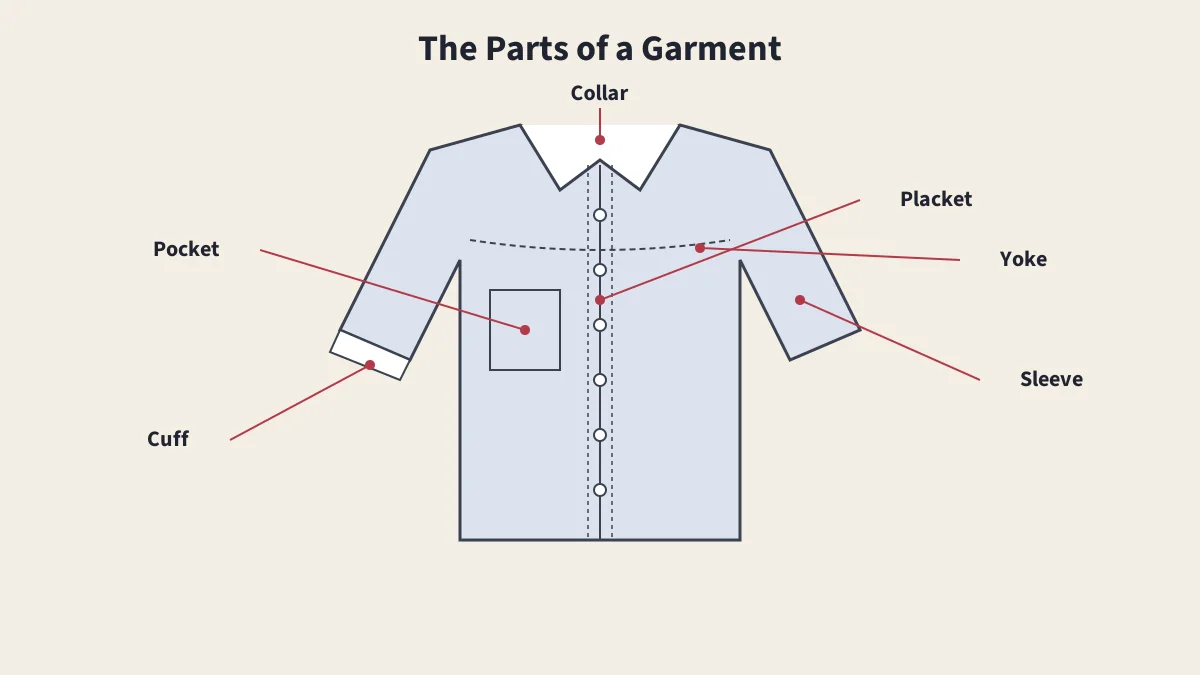
Every shirt, dress and jacket is built from named parts: collars, cuffs, plackets, yokes, pockets and more. Knowing their names makes patterns easier to follow and styles easier to describe.
In This Article
Garment Anatomy in Brief
- Around the neck: necklines, collars, lapels
- Arms: sleeves and cuffs
- Openings: plackets and waistbands
- Shaping: yokes and pleats
- Function: pockets and closures
- Styles: skirts, dresses, pants, jeans, shirts, coats
Garments are assembled from shaped pieces, and each piece and detail has a name. These guides explain the main parts of a garment, the common types of each, and how they came about. For how to sew them, follow the links to our sewing techniques.
Neck and Shoulders
The neckline frames the face; collars and lapels are the details that sit on it.
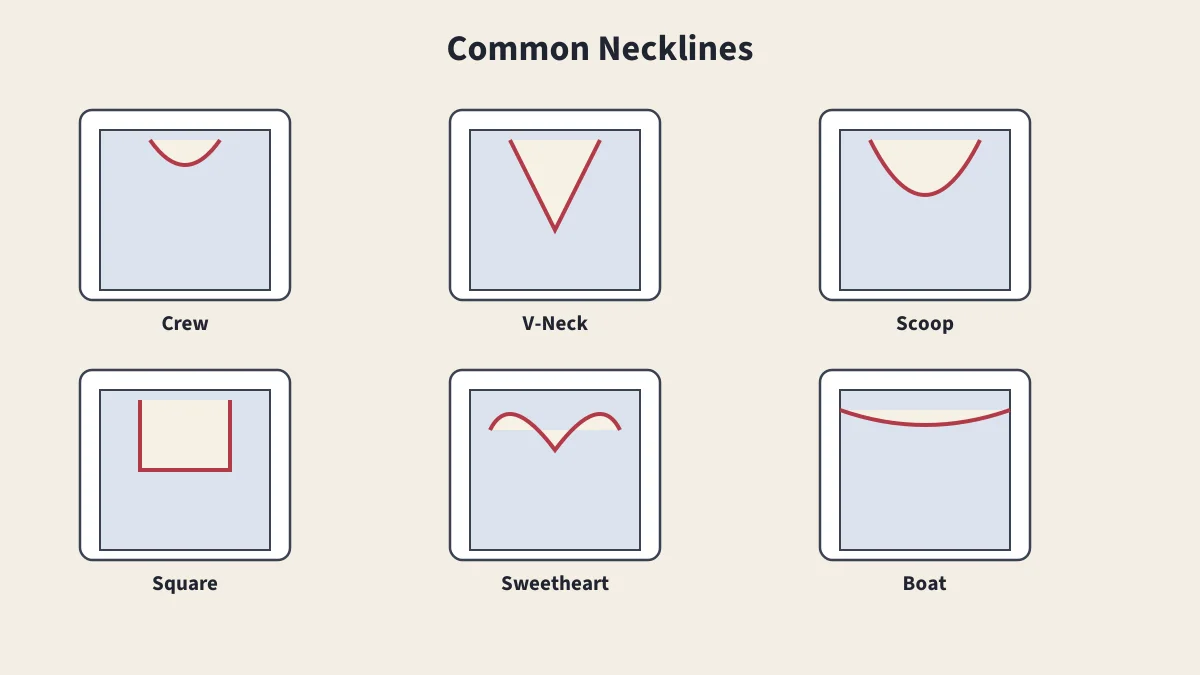
Types of Necklines
Crew, V-neck, scoop, sweetheart, boat and more.
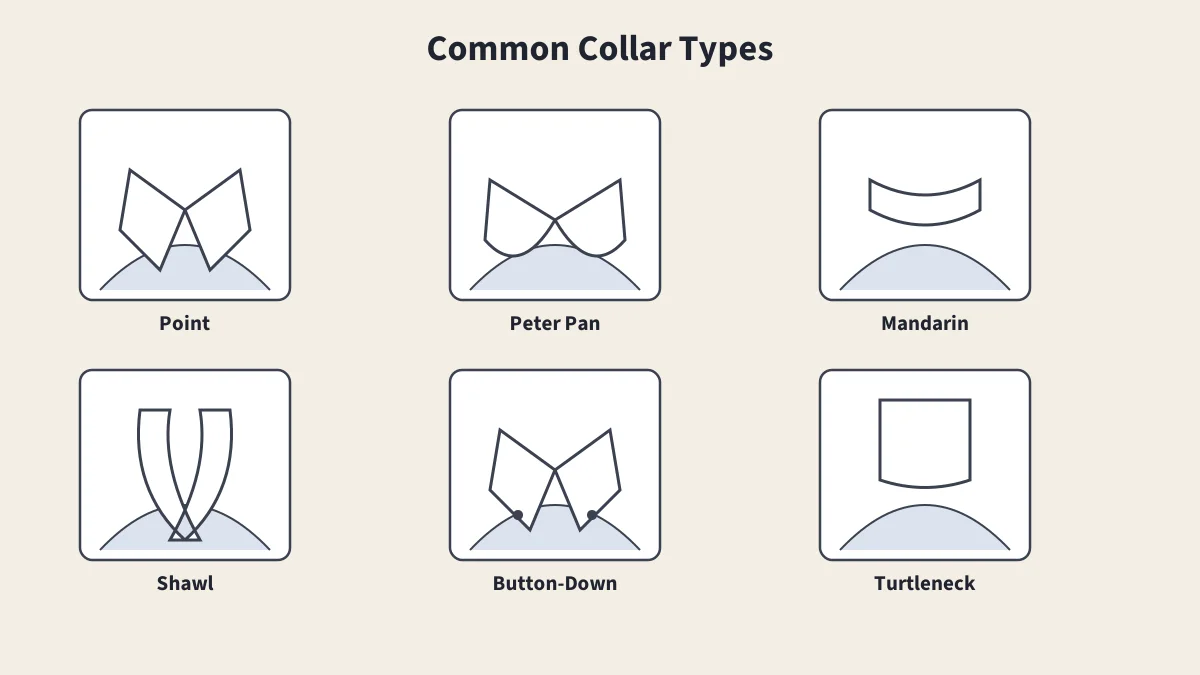
Types of Collars
Shirt, dress and historical collars explained.
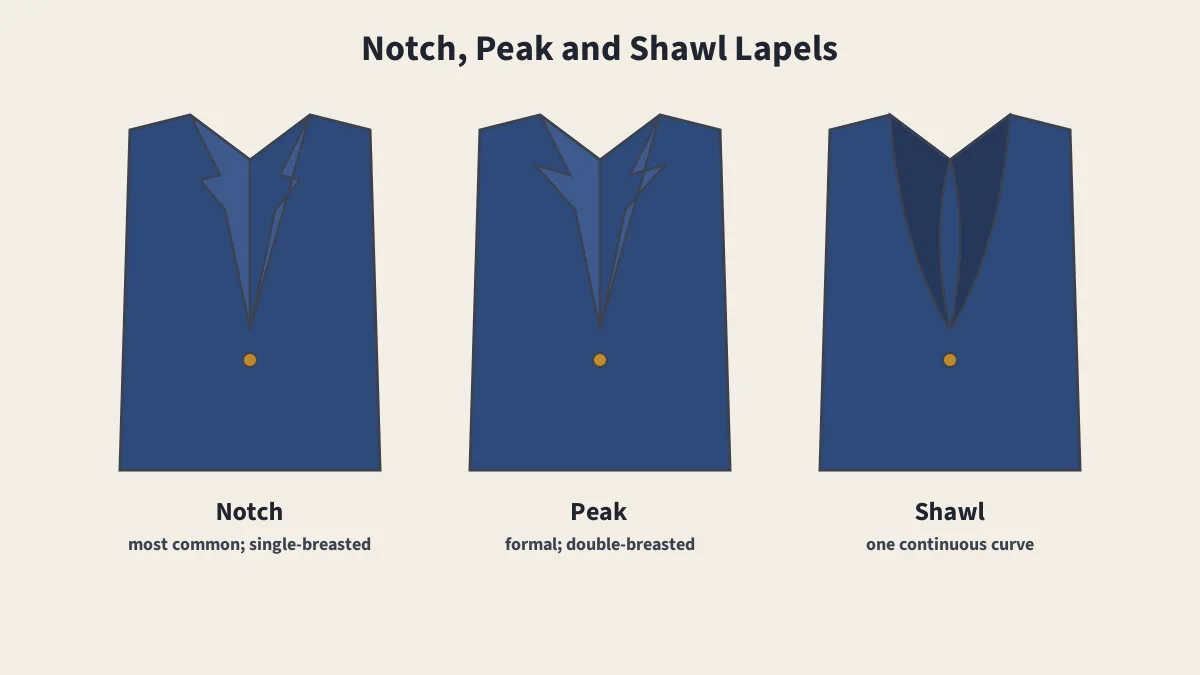
Types of Lapels
Notch, peak and shawl lapels and their history.
Sleeves and Cuffs
From cap sleeves to bishop sleeves, and from barrel cuffs to French cuffs.
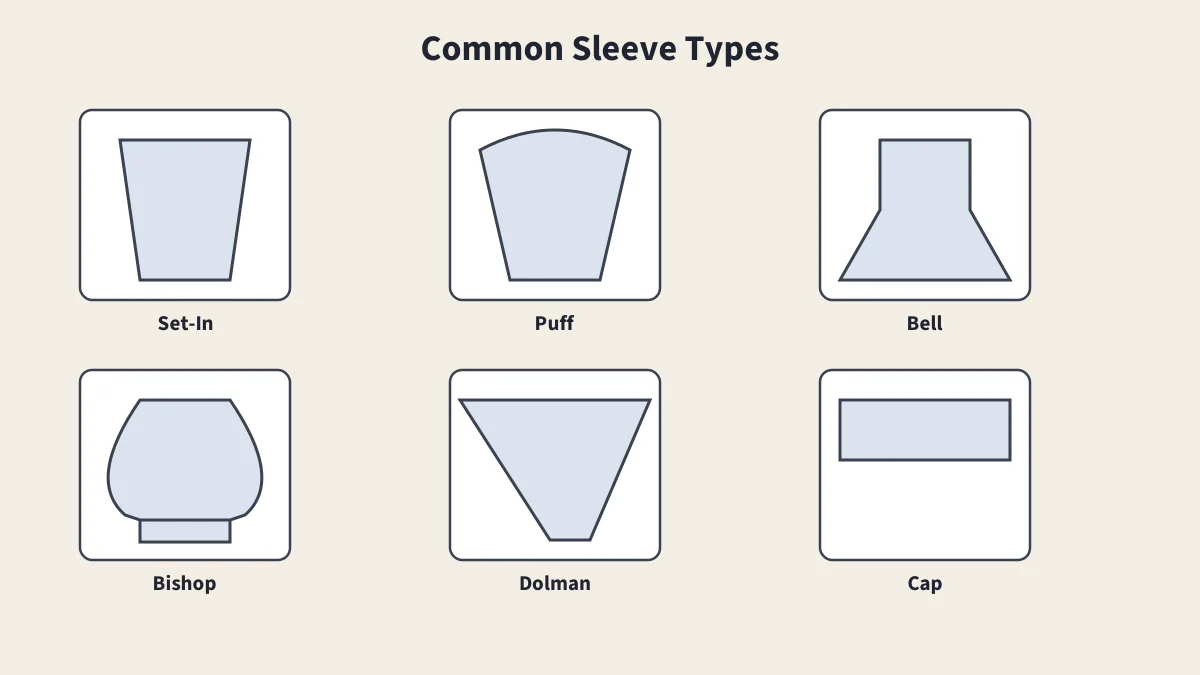
Types of Sleeves
Set-in, raglan, kimono, puff, bishop, bell and more.
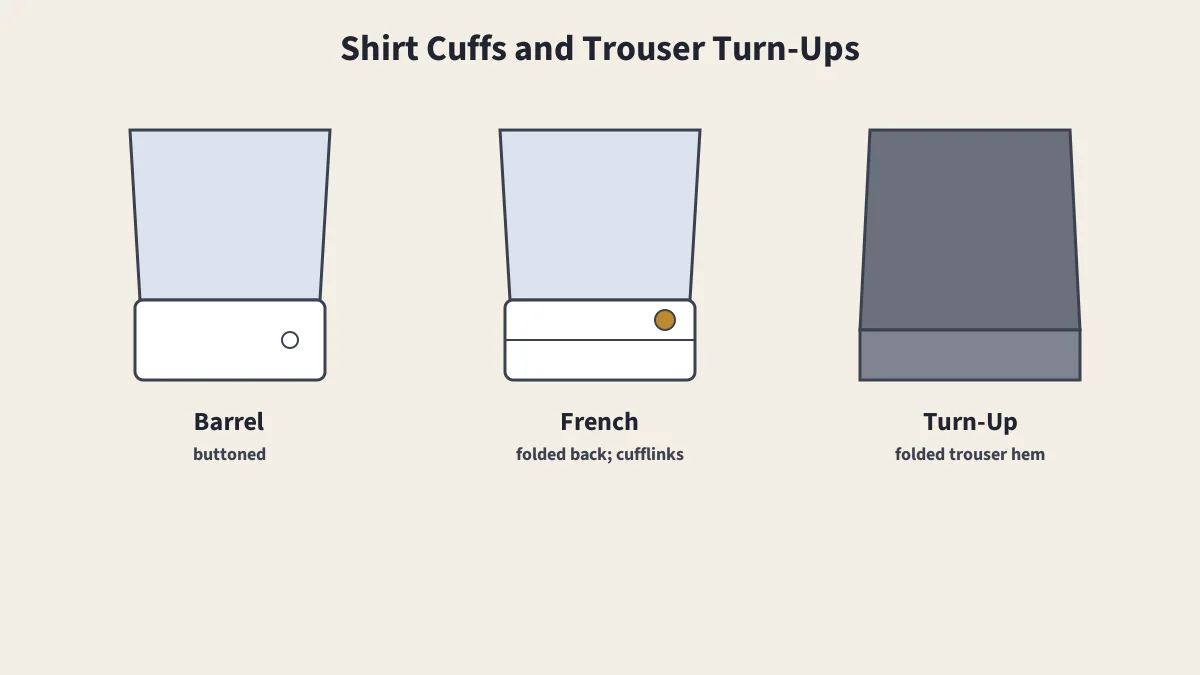
Types of Cuffs
Barrel, French and convertible cuffs, and turn-ups.
Openings and Waists
How garments open, fasten and fit at the waist.
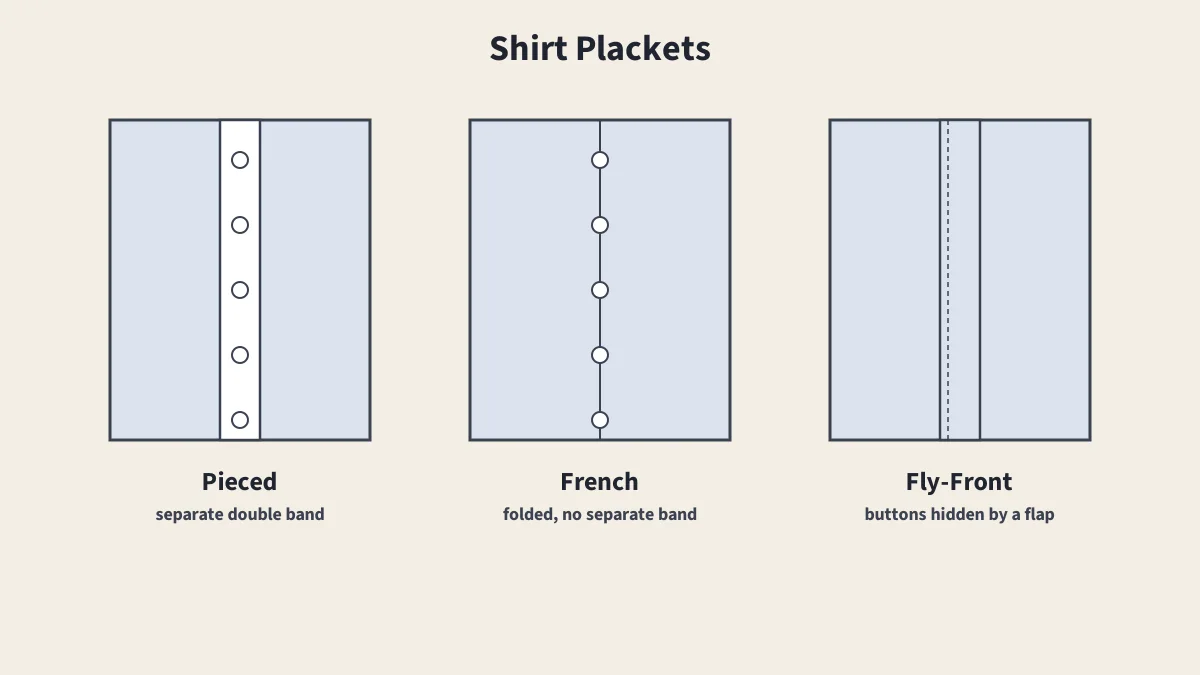
Types of Plackets
Pieced, French, fly-front and sleeve plackets.
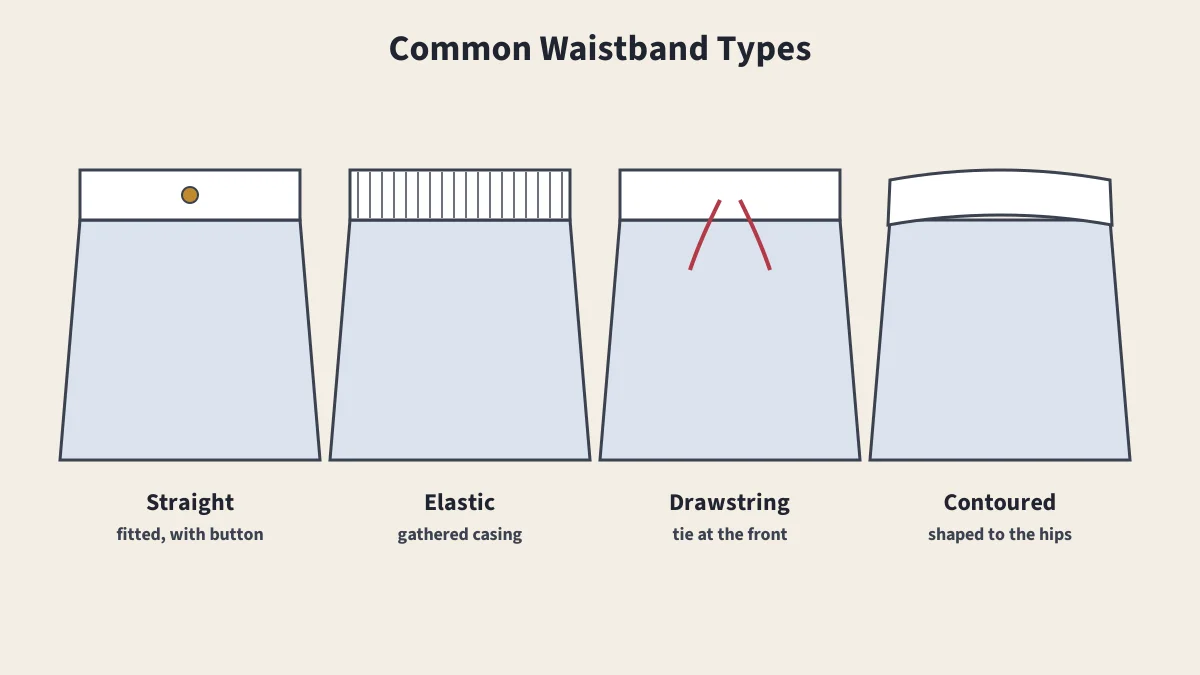
Types of Waistbands
Straight, elastic, drawstring and contoured waists.
Shaping and Function
Yokes and pleats shape fabric to the body; pockets make garments useful.
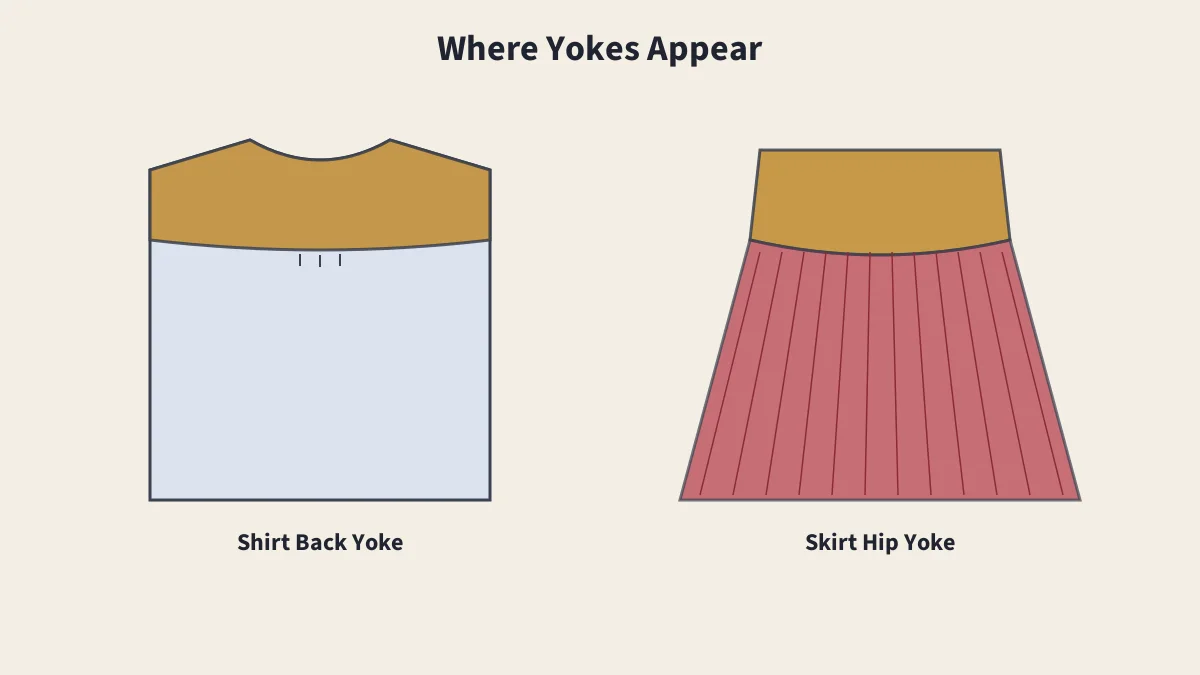
Yokes
Shirt, bodice, skirt and jeans yokes explained.
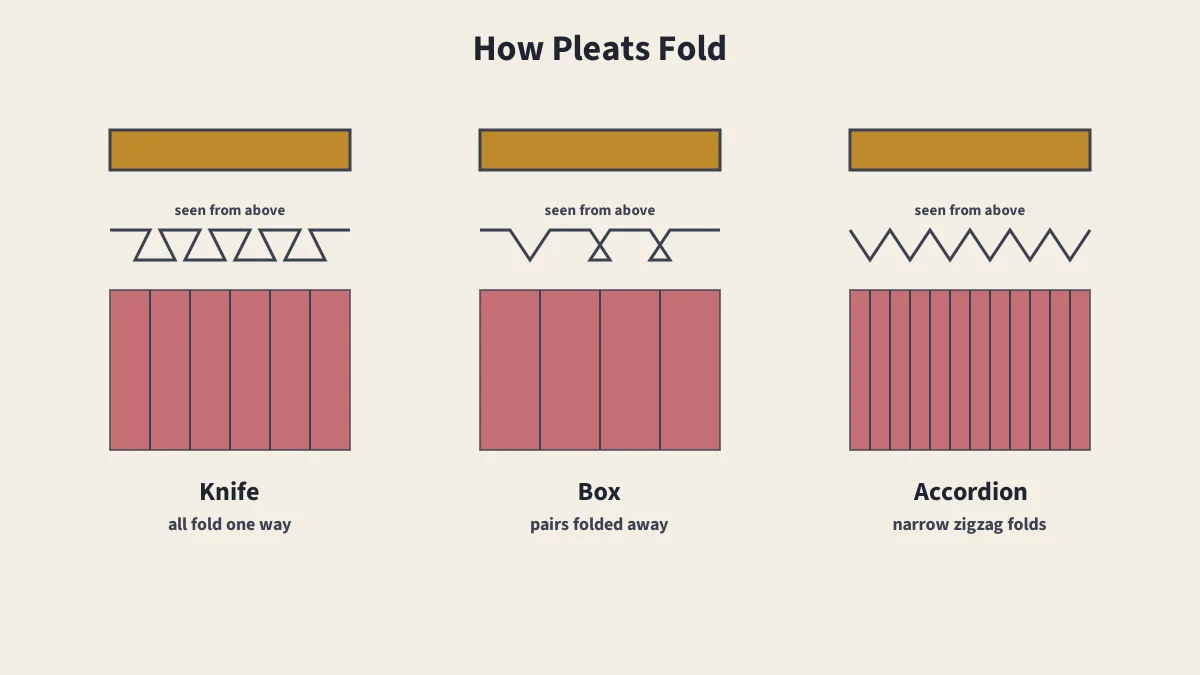
Types of Pleats
Knife, box, accordion, kick and historical pleats.
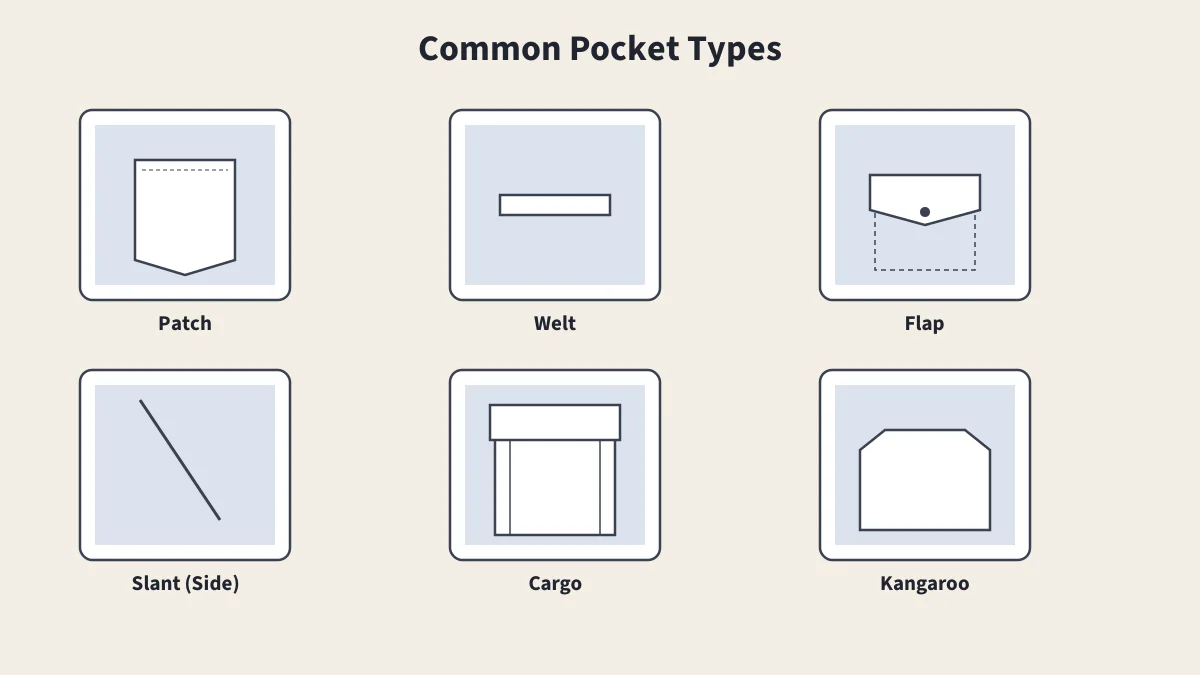
Types of Pockets
Patch, welt, flap, cargo and watch pockets, and their history.
Shaping Details
Darts, tucks, gores, godets, gussets, ruffles and flounces: the pieces and folds that give fabric shape and movement.
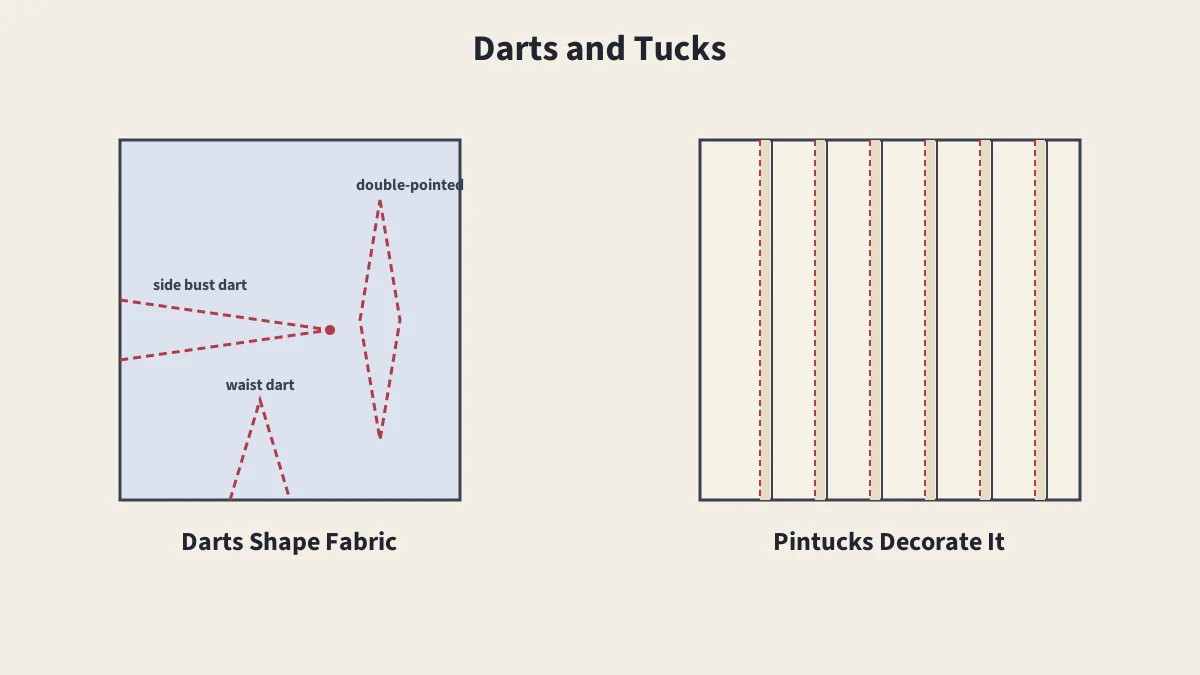
Darts and Tucks
Bust, waist and double-pointed darts, and decorative tucks.
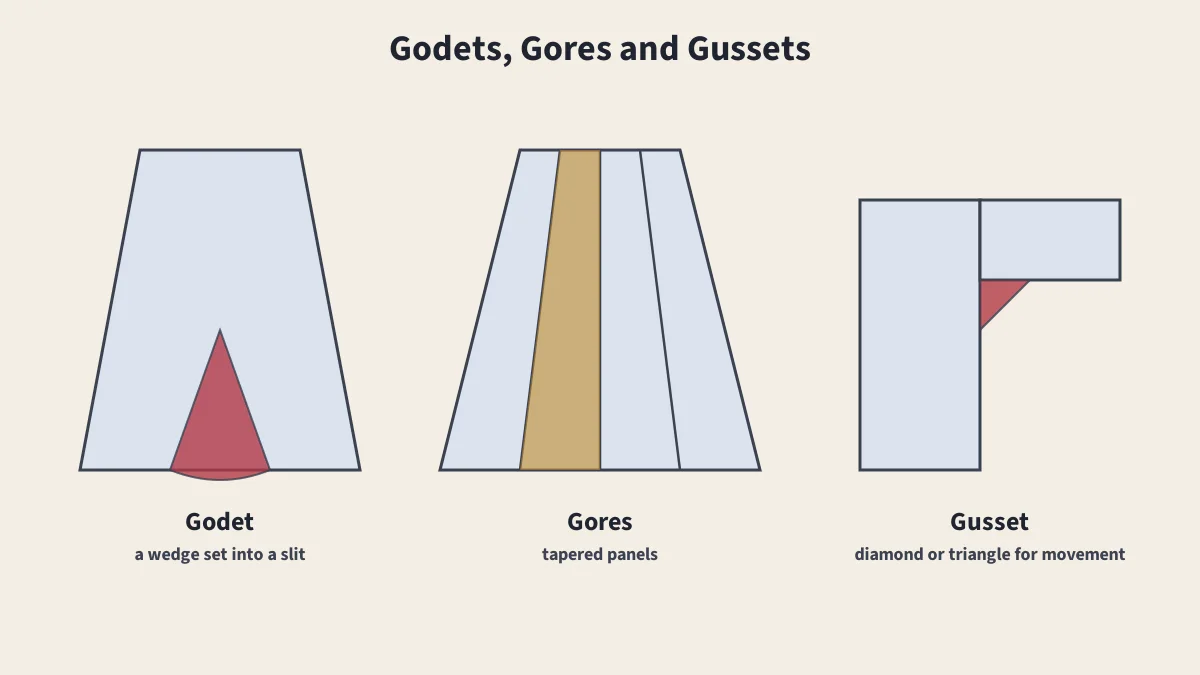
Godets, Gores and Gussets
Shaped insets for flare, fit and movement.
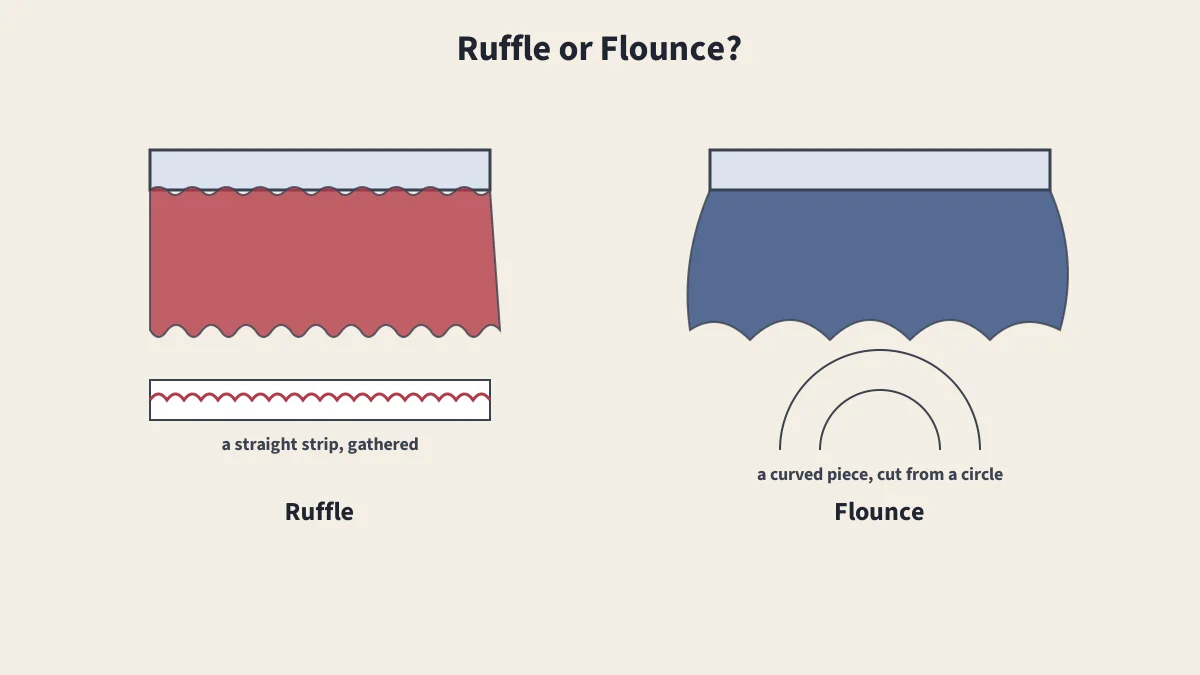
Ruffles and Flounces
Gathered ruffles, circular flounces and how to make them.
Garment Styles
The named shapes of skirts, dresses, trousers, jeans, shirts and coats.
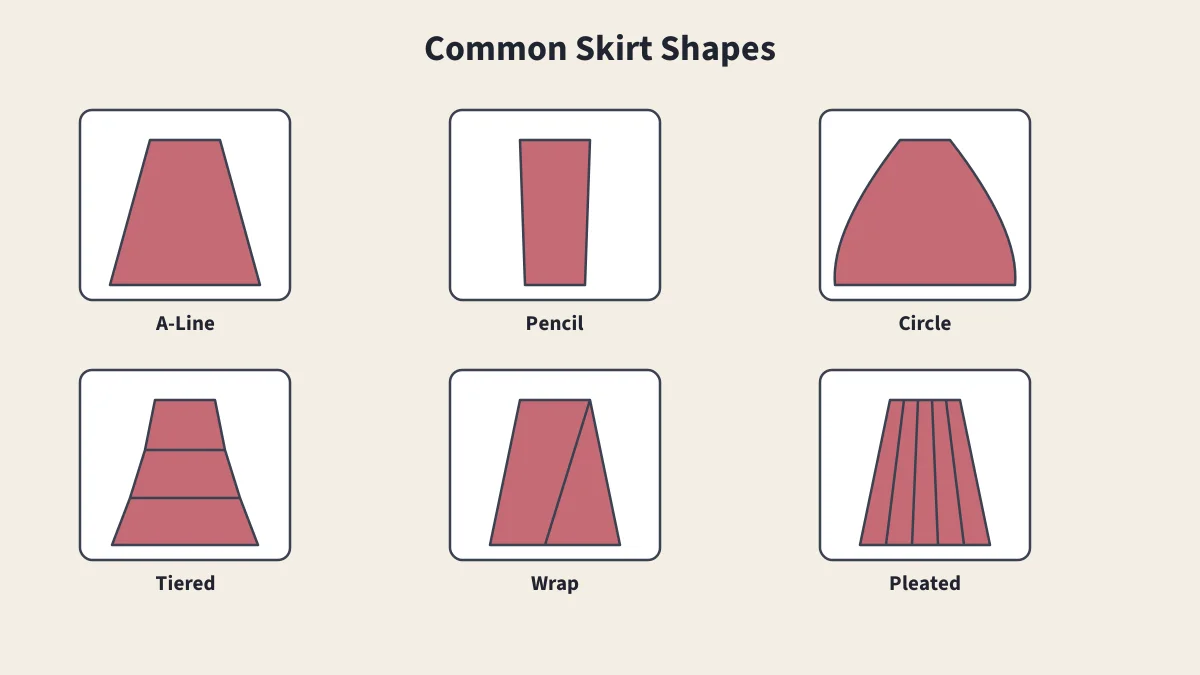
Types of Skirts
A-line, pencil, circle, gored, tiered, wrap and more.
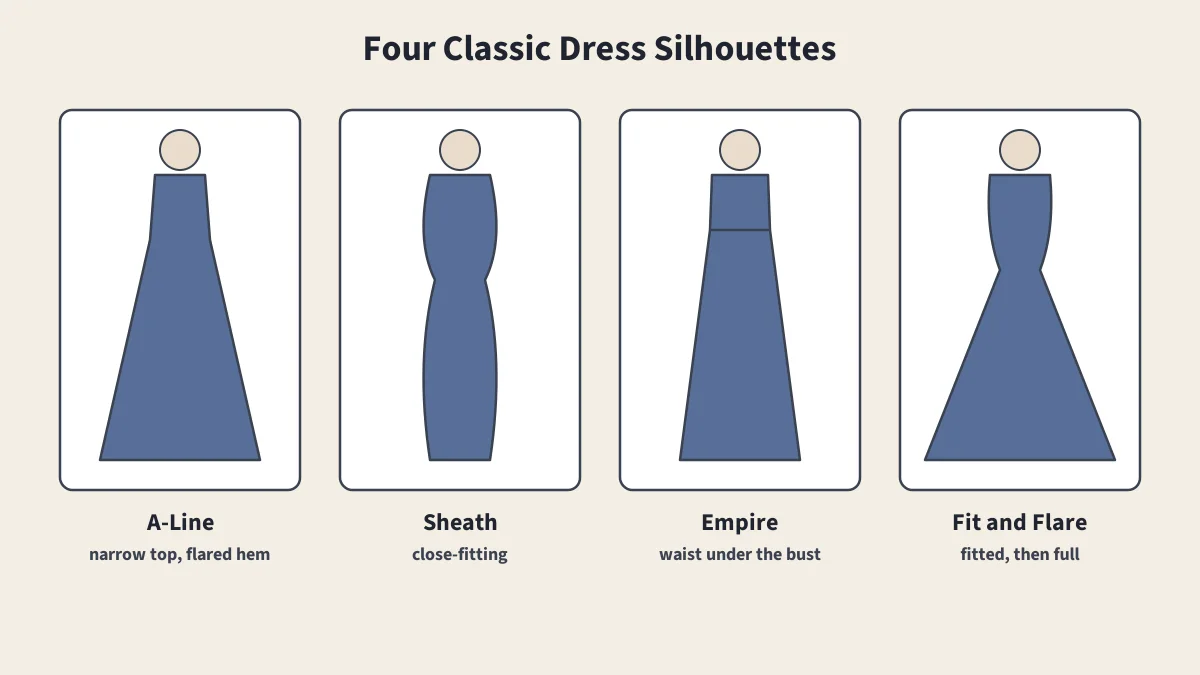
Dress Silhouettes
A-line, sheath, shift, empire and New Look shapes.
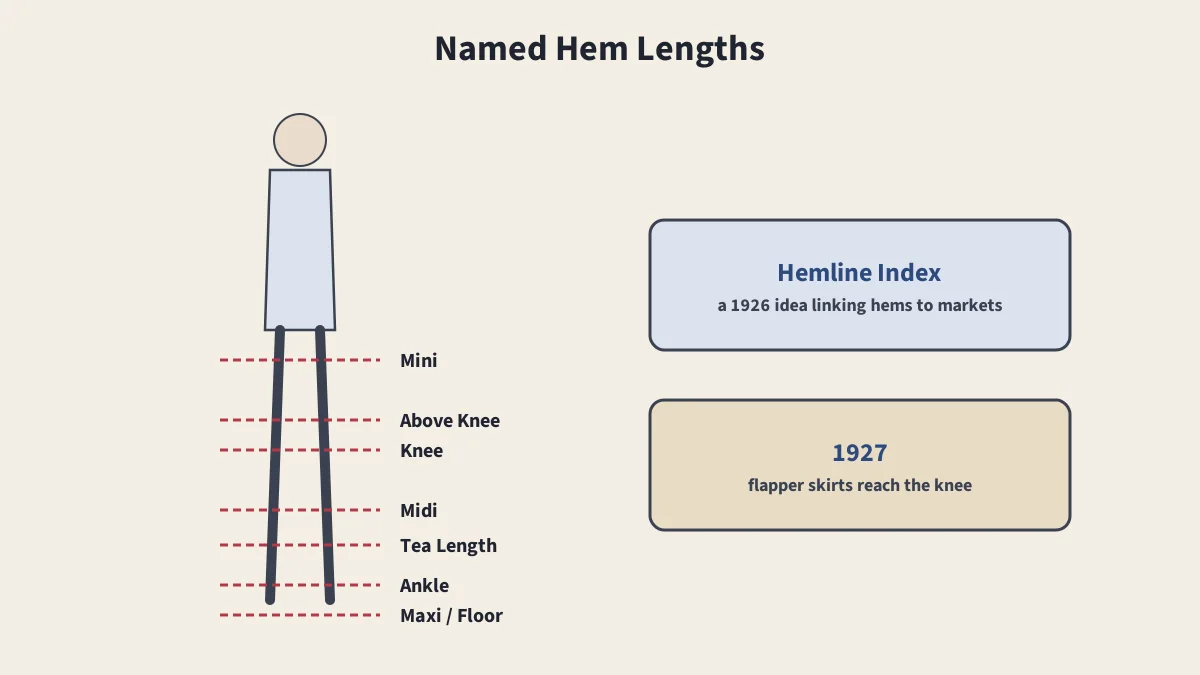
Hem Lengths
Mini, midi, maxi and every length in between.
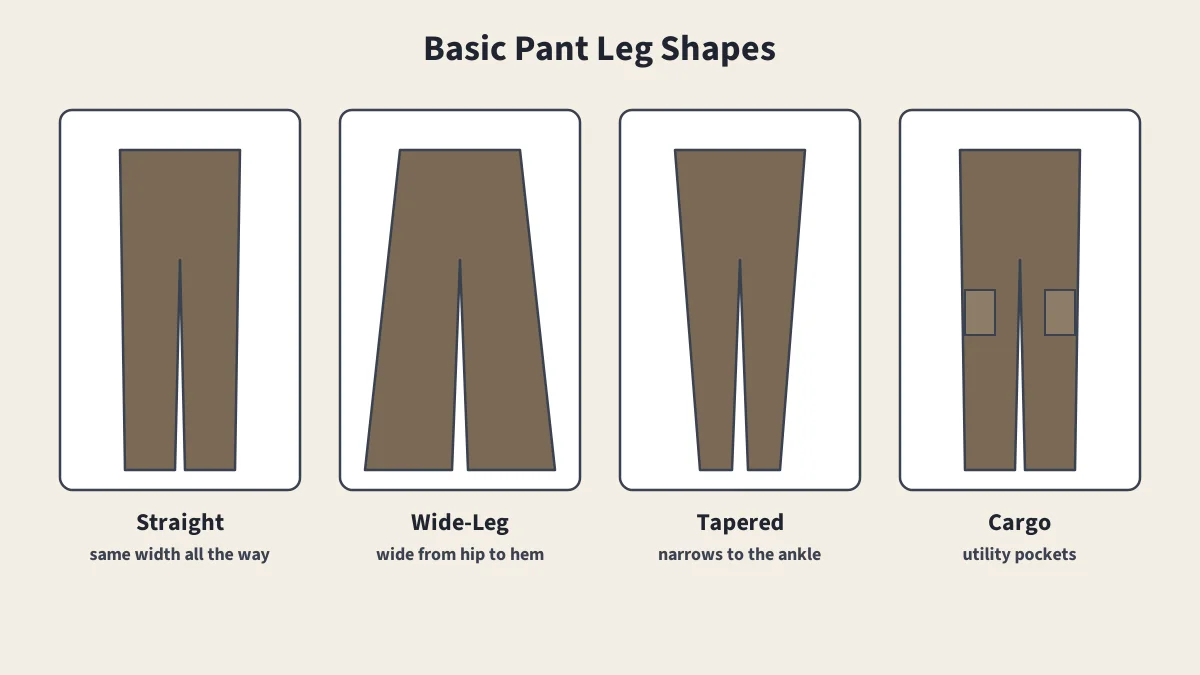
Pant Styles
Leg shapes, pleats, rises and the history of trousers.
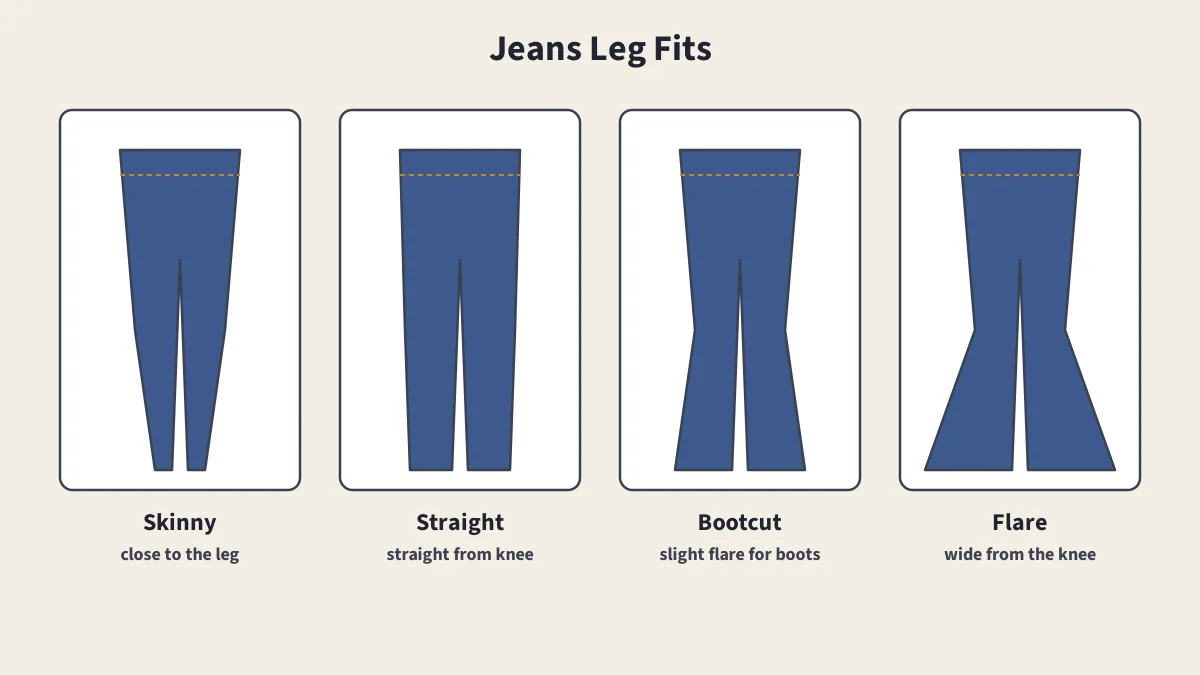
Jeans Styles and Fits
Skinny, straight, bootcut, flare, mom and more.
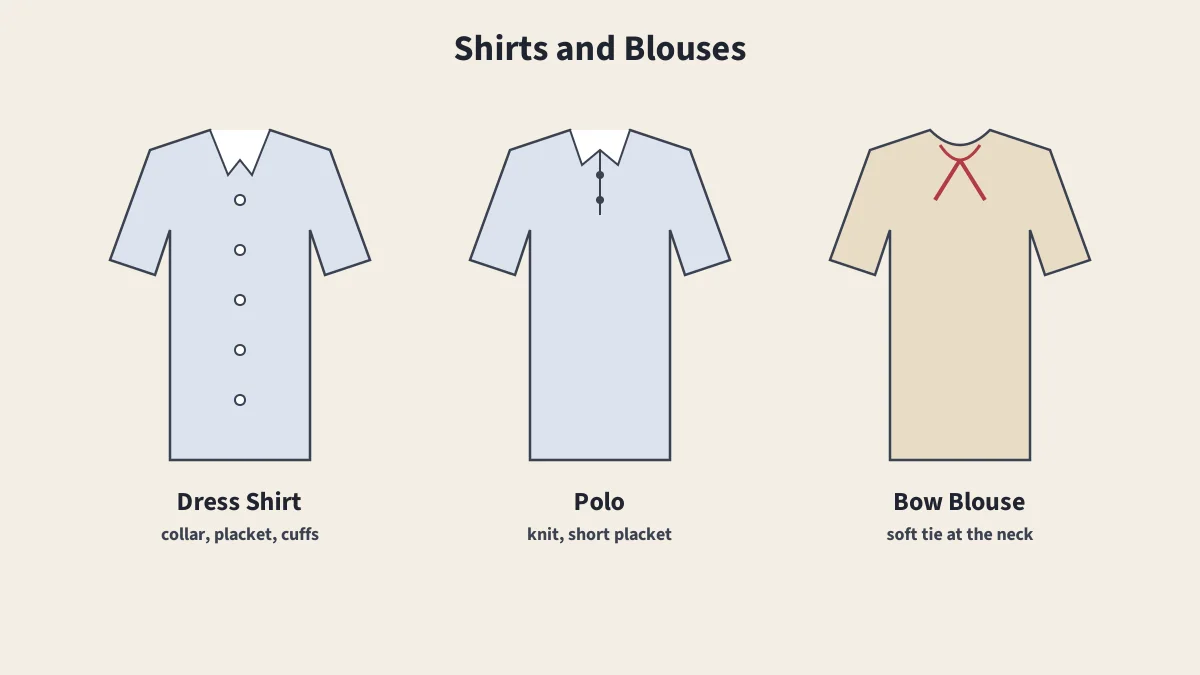
Shirt and Blouse Styles
Dress shirts, polos, shirtwaists and blouse styles.
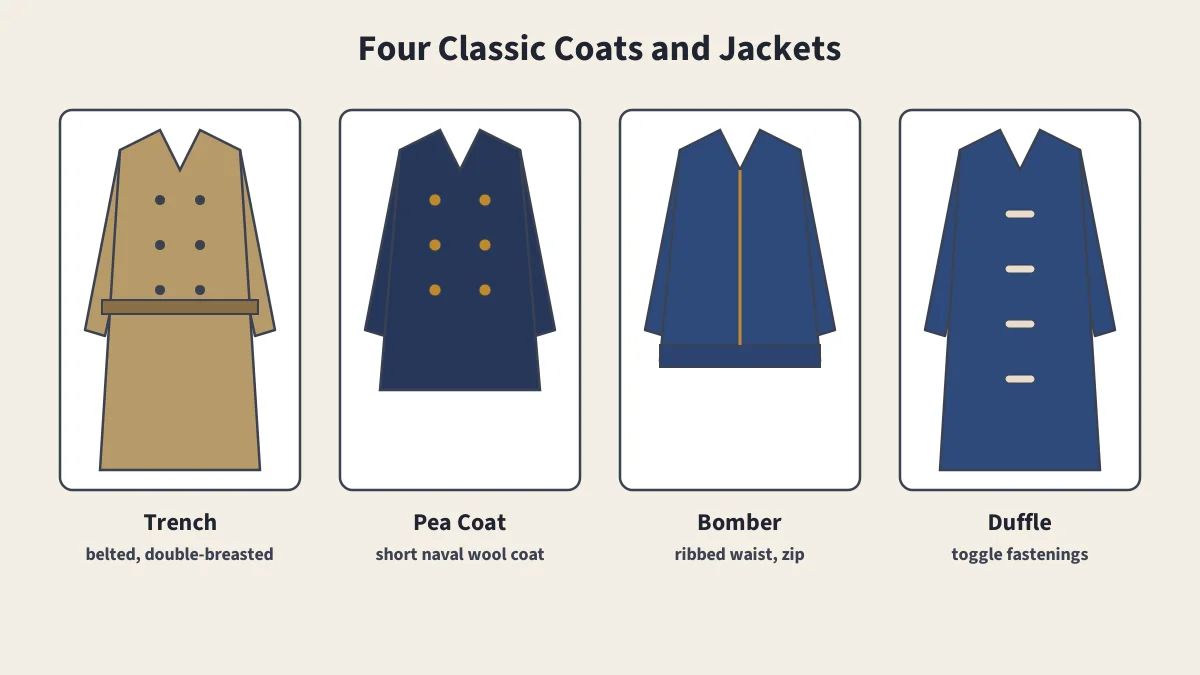
Jacket and Coat Styles
Trench, pea coat, overcoat, bomber, blazer and more.
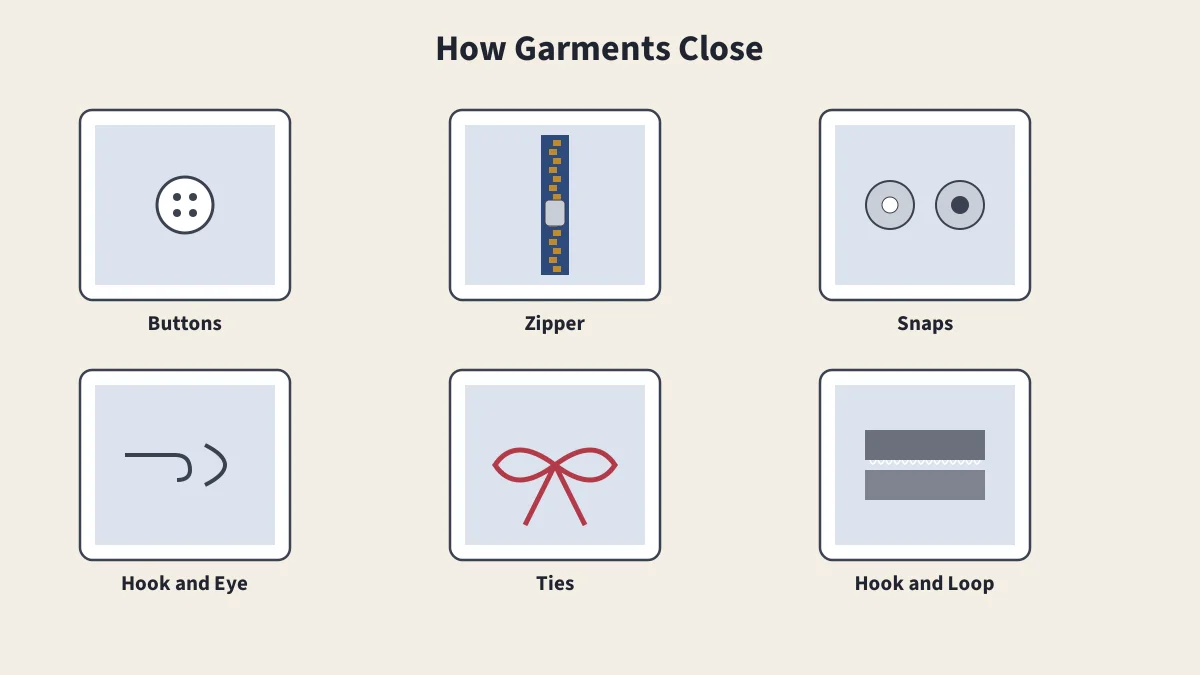
Fastenings
How garments open and close.
Related Guides
- Fasteners: buttons, zippers and snaps and hooks
- Edges: types of hems and facings vs. linings
- Construction: types of seams and set-in sleeves
Sources
- Sleeve, Wikipedia
- Collar (clothing), Wikipedia
Frequently Asked Questions
What are the main parts of a shirt?
A typical button-up shirt has a collar (often on a collar stand), a front placket with buttons and buttonholes, a back yoke, sleeves with cuffs and sleeve plackets, and sometimes pockets.
What is the difference between a collar and a neckline?
A neckline is the edge of the garment around the neck. A collar is a separate piece of fabric attached to the neckline, which stands up or folds over.
Why learn garment terms?
Patterns, sewing instructions and shop descriptions use them constantly. Knowing them makes it easier to follow a pattern, choose a style or describe what you want to a tailor.
Where are the history and construction details?
Each guide covers what the part is, its main types and a little history, with links to the sewing techniques used to make it.
Keep Reading
Types of Sleeves
Set-in, raglan, kimono, puff, bishop, bell and more.
Types of Collars
Shirt, dress and historical collars explained.
Types of Necklines
Crew, V-neck, scoop, sweetheart, boat and more.
Types of Pockets
Patch, welt, flap, cargo and watch pockets, and their history.