Sewing History Quiz: How Much Do You Know? (2026)
Twenty multiple-choice questions on sewing machines, tools, fabrics, historical dress and sewing culture. Every answer is checked and links to the full story.
In This Article
How well do you know the story of sewing? Choose an answer for each question to see whether you are right, with a short explanation and a link to learn more. Your score appears at the end. For more, browse our sewing facts.
Inventors and Machines
Question 1 of 20
Who received U.S. patent No. 4,750, the first U.S. patent for a lockstitch sewing machine, in 1846?
- Isaac Singer
- Elias Howe
- Walter Hunt
- Barthélemy Thimonnier
Show Answer
Answer: B, Elias Howe. Elias Howe received it on September 10, 1846. Singer made the machine practical from 1851. Who invented the sewing machine
Question 2 of 20
What happened to Barthélemy Thimonnier's Paris sewing workshop in 1831?
- It burned down in an accident
- Singer bought it
- Tailors afraid for their jobs destroyed dozens of machines
- It moved to London
Show Answer
Answer: C, Tailors afraid for their jobs destroyed dozens of machines. Thimonnier ran around 80 machines in 1830; in 1831, tailors destroyed dozens of them. Who invented the sewing machine
Question 3 of 20
A skilled seamstress made about 40 stitches a minute by hand. About how many could Singer's machine make?
- About 250
- About 400
- About 900
- About 3,000
Show Answer
Answer: C, About 900. Singer's machine made about 900 stitches a minute; Howe's made about 250. The Singer story
Question 4 of 20
What did the Albany Agreement of 1856 create?
- The first sewing workers' union
- The Sewing Machine Combination, America's first patent pool
- Standard sewing needle sizes
- The first paper pattern company
Show Answer
Answer: B, The Sewing Machine Combination, America's first patent pool. The Sewing Machine Combination pooled the key patents and lasted until 1877. The Sewing Machine War
Question 5 of 20
What does the sewing machine brand name Janome mean in Japanese?
- Golden thread
- Swift needle
- Little bobbin
- Snake's eye
Show Answer
Answer: D, Snake's eye. The name was chosen in 1935 because the company's new round bobbin looked like a snake's eye. Janome history
Tools and Notions
Question 6 of 20
Walter Hunt patented this item in 1849 and sold the rights for $400. What was it?
- The safety pin
- The zipper
- The snap fastener
- The thimble
Show Answer
Answer: A, The safety pin. Hunt patented the safety pin on April 10, 1849. History of the safety pin
Question 7 of 20
What was the zipper originally designed to fasten?
- Mail bags
- Boots and shoes
- Trousers
- Tents
Show Answer
Answer: B, Boots and shoes. Whitcomb Judson's 1893 "clasp locker" was designed for boots. History of the zipper
Question 8 of 20
Which word does "thimble" come from?
- Thumb
- Thin
- Tumble
- Timber
Show Answer
Answer: A, Thumb. The Old English þȳmel derives from þūma, thumb. History of the thimble
Question 9 of 20
What inspired George de Mestral to invent hook-and-loop tape, later sold as Velcro?
- Fish scales
- A spider's web
- Burdock burrs clinging to his dog
- Bird feathers
Show Answer
Answer: C, Burdock burrs clinging to his dog. In 1941 he noticed burrs clinging to his dog, Milka; the name joins velours and crochet. Snaps, hooks and Velcro
Question 10 of 20
What did Ebenezer and Ellen Butterick begin selling in 1863?
- Home sewing machines
- Steel needles
- Patterns in standard graded sizes
- Ready-made dresses
Show Answer
Answer: C, Patterns in standard graded sizes. Graded paper patterns started with children's clothes. History of sewing patterns
Fabrics and Words
Question 11 of 20
Denim takes its name from which city?
- Genoa
- Nîmes
- Calicut
- Damascus
Show Answer
Answer: B, Nîmes. Denim comes from serge de Nîmes; jeans come from Gênes, the French name for Genoa. History of denim
Question 12 of 20
The word "spandex" is an anagram of which word?
- Expands
- Spanned
- Pandas
- Dances
Show Answer
Answer: A, Expands. Spandex was invented at DuPont in 1958 and can stretch up to five times its length. Spandex
Question 13 of 20
What did Jacquard's 1804 loom use to control woven patterns?
- Wooden pegs
- Punched cards
- Steam valves
- Paper stencils
Show Answer
Answer: B, Punched cards. Charles Babbage later planned to borrow the punched-card idea. Fabric weaves
Question 14 of 20
What does the word "toile," used for a test garment, originally mean?
- Test
- Cloth
- Pattern
- Pin
Show Answer
Answer: B, Cloth. It comes from the French toile, from the Latin tela, a web. What is a toile
Question 15 of 20
What is the Bayeux Tapestry, strictly speaking?
- A woven tapestry
- A painted linen scroll
- An embroidery of wool on linen
- A quilt
Show Answer
Answer: C, An embroidery of wool on linen. A true tapestry is woven; the Bayeux Tapestry is stitched embroidery. The Bayeux Tapestry
Quilts, Dress and Culture
Question 16 of 20
The raglan sleeve is named after Lord Raglan. Who was he?
- A London tailor
- A British general who lost an arm at Waterloo
- A cotton mill owner
- A Victorian fashion editor
Show Answer
Answer: B, A British general who lost an arm at Waterloo. His coat's sleeves ran in one piece to the neck. Types of sleeves
Question 17 of 20
What does "corset" mean?
- Tight lace
- Little body
- Strong bone
- Waist belt
Show Answer
Answer: B, Little body. It comes from the Old French cors, body; earlier names were bodies and stays. Corsets and stays
Question 18 of 20
18th-century panniers are named after what?
- A French town
- Baskets slung on a pack animal
- A royal dressmaker
- Bread baskets in a bakery
Show Answer
Answer: B, Baskets slung on a pack animal. Panier is French for the wicker baskets carried by donkeys and other pack animals. 18th-century dress
Question 19 of 20
In which year did the Triangle Shirtwaist Factory fire kill 146 garment workers in New York?
- 1871
- 1901
- 1911
- 1929
Show Answer
Answer: C, 1911. The fire on March 25, 1911, led to 38 new New York labor laws. The Triangle fire
Question 20 of 20
At Japan's Hari-Kuyō, broken needles are laid to rest in what?
- Sand
- Rice
- Tofu or konnyaku
- A river
Show Answer
Answer: C, Tofu or konnyaku. Soft tofu or konnyaku gives hard-working needles a gentle resting place. Sewing folklore
How Did You Do?
| Score | Rating |
|---|---|
| 18–20 | Master tailor |
| 13–17 | Skilled dressmaker |
| 7–12 | Confident beginner |
| 0–6 | Time to thread the needle |
To go deeper, start with the history of sewing, the sewing glossary or the sewing culture section.
Frequently Asked Questions
How many questions are in the sewing history quiz?
Twenty multiple-choice questions in four rounds: inventors and machines, tools and notions, fabrics and words, and quilts, dress and culture.
Are the quiz answers checked?
Yes. Each answer is drawn from a fact verified on this site and links to the article that explains it.
Can I see the answers without taking the quiz?
Yes. Every question has a Show Answer button, and the answers also appear if your browser does not run scripts.
Where can I learn more sewing trivia?
See our list of sewing facts, each one checked against its sources.
Keep Reading
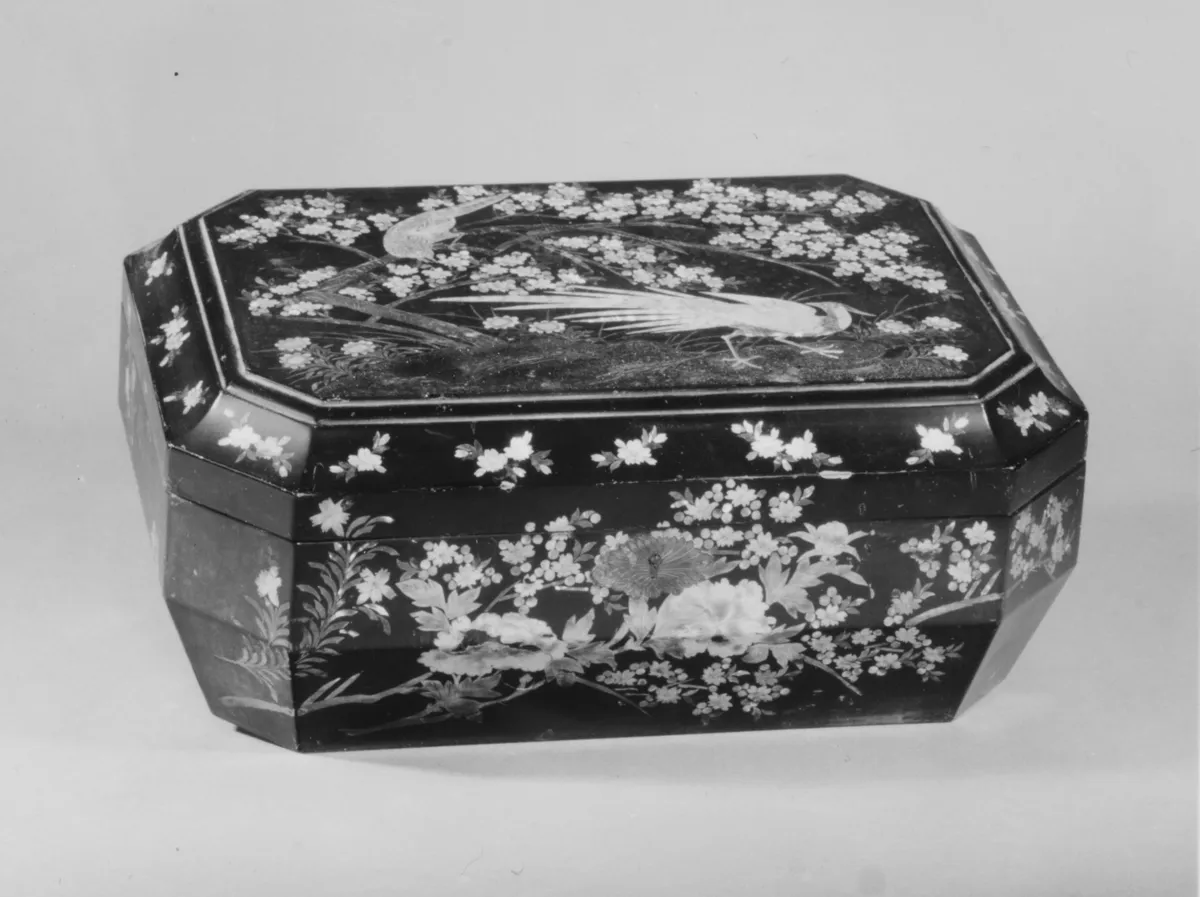
Sewing Facts
Surprising facts about sewing history, machines, tools and fabric, each one checked.
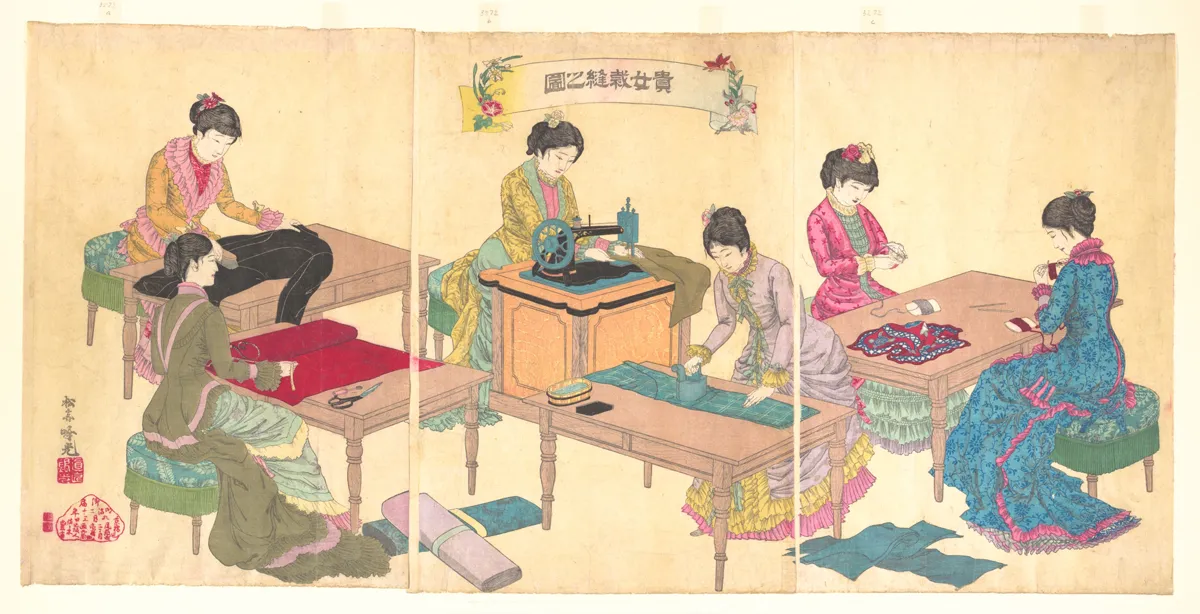
History of Sewing
How a bone splinter became a global industry, from the Ice Age to PDF patterns.
Sewing Glossary A–Z
450+ sewing terms explained in plain English, from appliqué to zipper foot.
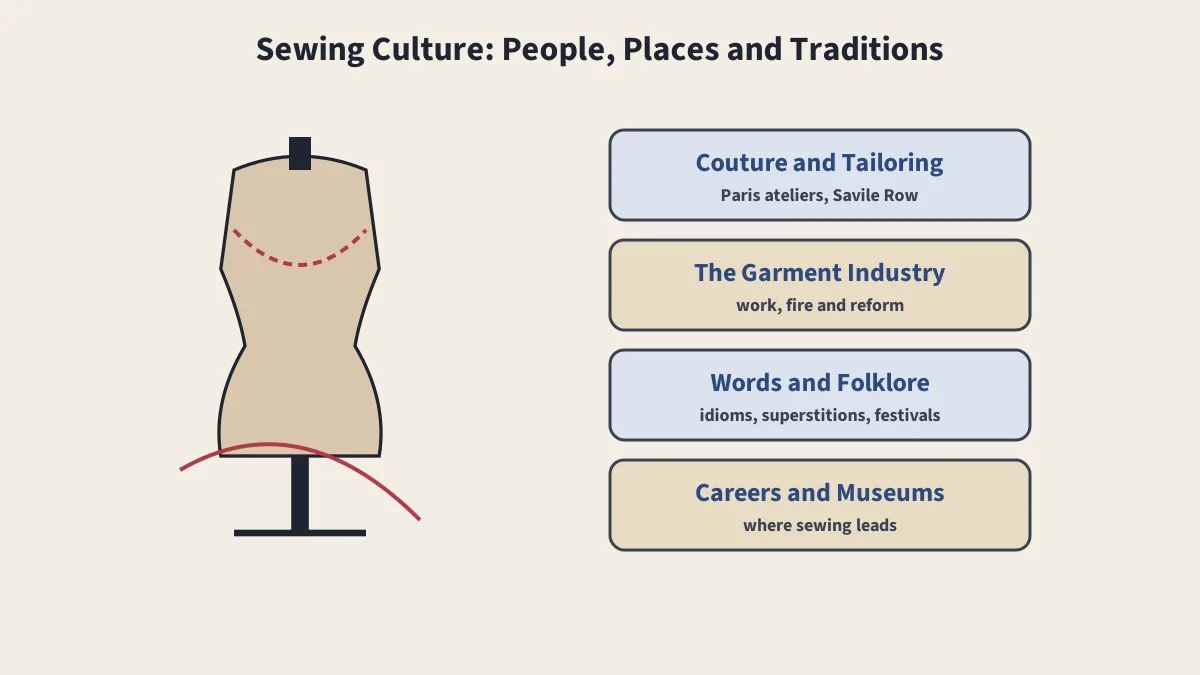
Sewing Culture
Couture, industry, careers, folklore and museums.