The History of the Sewing Needle: From Bone to Steel (2026)
The needle is one of humanity's oldest tools and probably the one most people own without thinking about it. Its story runs from Ice Age caves to a Worcestershire town that once made almost all of the world's supply.
In This Article
Needle Timeline in Brief
- c. 61,000 years ago: possible bone needle point, Sibudu Cave, South Africa
- c. 50,000 years ago: bird-bone needle, Denisova Cave, Siberia
- c. 4400–3000 BC: copper needles at Naqada, Egypt
- 3rd century BC: iron needles at Manching, Germany
- 1639: needle making recorded in the Redditch area of England
- 1846: Howe's machine patent uses an eye near the point
A needle is just a sharp point with a hole for thread. Yet getting that hole small enough, and the point smooth enough, took tens of thousands of years of trial and error. The needle you buy in a packet today is the end of a very long line of bone, bronze, iron and steel.
Before the Eye: Awls and Bone Points
The first sewing tools had no eye at all. Prehistoric people used awls, sharpened bones or stones, to punch holes in hide, then pushed sinew or plant fiber through the holes by hand. Bone awls from Blombos Cave in South Africa are roughly 73,000 to 70,000 years old. The step from awl to needle, adding an eye that pulls the thread through the hole in one motion, made sewing far faster and allowed finer, tighter seams.
The Oldest Needles Ever Found
Bone needles are fragile, so the record is patchy. A possible needle point from Sibudu Cave in South Africa dates to about 61,000 years ago. The best-known early example is a bird-bone needle from Denisova Cave in Siberia, around 50,000 years old and associated with the Denisovans, an extinct human group. A bone needle from Potok Cave in Slovenia dates to 47,000 to 41,000 years ago.
By around 30,000 years ago, eyed needles were common across Eurasia, from Kostenki in Russia to Xiaogushan in northeast China.
Copper, Bronze and Iron
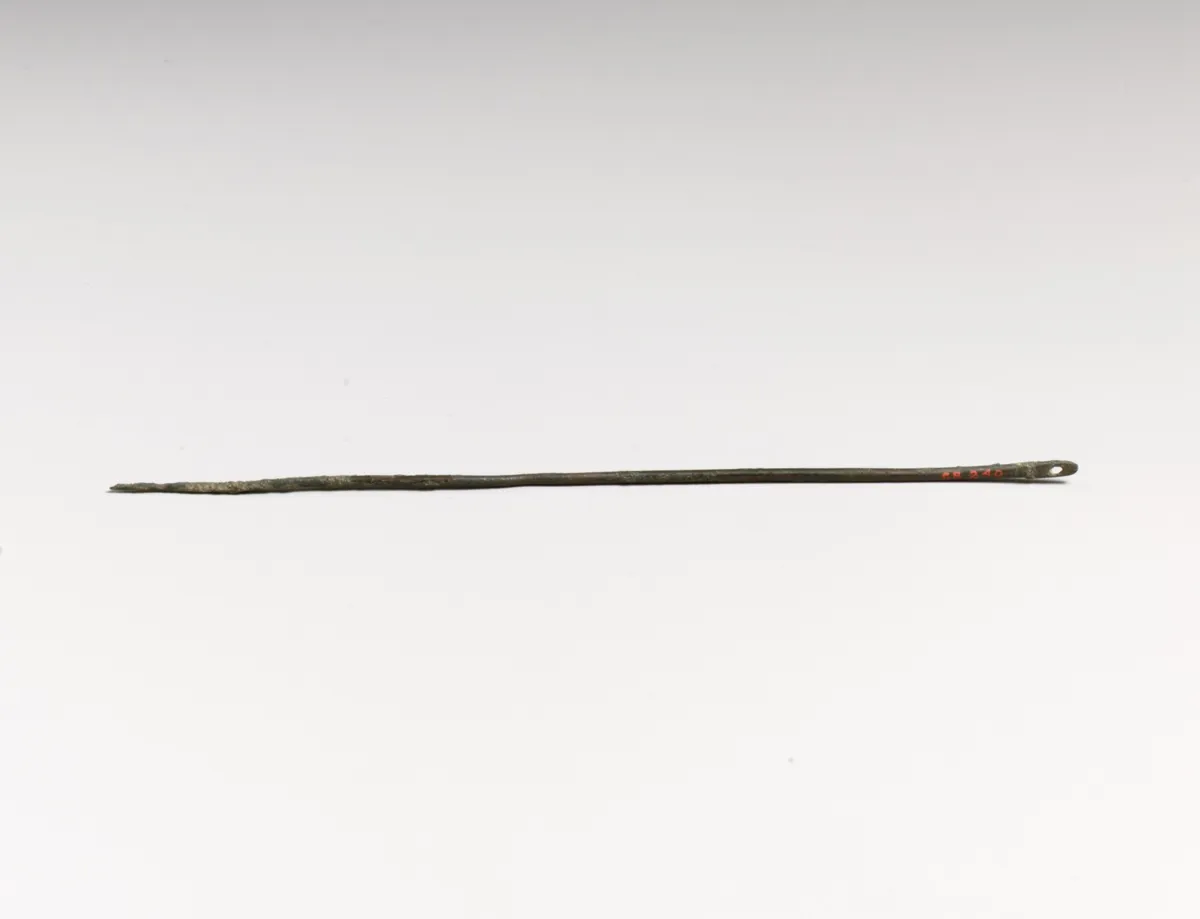
Metal needles arrived with metalworking. Flinders Petrie found copper sewing needles at Naqada in Egypt dating from about 4400 to 3000 BC. Bronze needles followed across the ancient Mediterranean and Near East, and they look surprisingly like modern ones: long, slim shafts with a small eye at one end, like the Egyptian and Roman examples in the Metropolitan Museum of Art.
Iron needles appear in Europe by the third century BC at the Celtic town of Manching in Bavaria. Iron was harder than bronze but rusted easily, which is why so many sewing kits through history included a case to keep needles dry.
Steel Needles and the Needle Trade
Steel, hard and able to take a fine polish, eventually became the material of choice. Needle making grew into a specialist trade in Europe. In London, needle makers were incorporated by letters patent from Oliver Cromwell on November 10, 1656, one of only two livery companies to receive their first charter during the Commonwealth. Charles II granted them a royal charter in 1664.
The real center of the industry, though, was Redditch in Worcestershire. Needle making was recorded in the area from 1639. Water-powered scouring mills, which polished needles in bulk, gave local makers an edge. At its peak in the 1870s, the Redditch area produced about 3.5 billion needles a year, around 90 percent of the world's supply. Firms such as Henry Milward & Sons, founded in 1730, and Abel Morrall, founded in 1785, became household names. During the Second World War, Redditch factories were still turning out 45 million needles a week.
Today the Forge Mill Needle Museum, opened in 1983, preserves what it describes as the only remaining water-powered needle scouring mill in the world.
Moving the Eye: The Machine Needle
For a machine to sew, the needle cannot pass all the way through the cloth. Inventors solved this by moving the eye to the point. The needle dips into the fabric carrying a loop of thread, and a shuttle or hook below catches the loop. Walter Hunt used this idea around 1833 or 1834, and Elias Howe's 1846 patent made it central to the lockstitch machine. Every household machine needle still works the same way, as explained in who invented the sewing machine.
Needle Sizes, Then and Now
Two different sizing systems grew up for hand and machine needles, and they run in opposite directions.
| Needle Type | How Sizes Work | Example |
|---|---|---|
| Hand-sewing needles | Higher number = finer, shorter needle | A size 12 is finer than a size 5 |
| Machine needles (metric) | Number = blade diameter in hundredths of a millimeter | An 80 is 0.80 mm thick |
| Machine needles (U.S.) | Older system, often shown alongside metric | 80/12, 90/14, 100/16 |
The Needle in Culture
A tool this important picked up meaning along the way. In Japan, the Hari-Kuyō, or Festival of Broken Needles, is held on February 8 in the Kantō region and December 8 in the Kansai region. People who sew bring bent and broken needles to shrines and temples and lay them to rest in soft tofu or konnyaku, thanking them for their work and praying for better sewing.
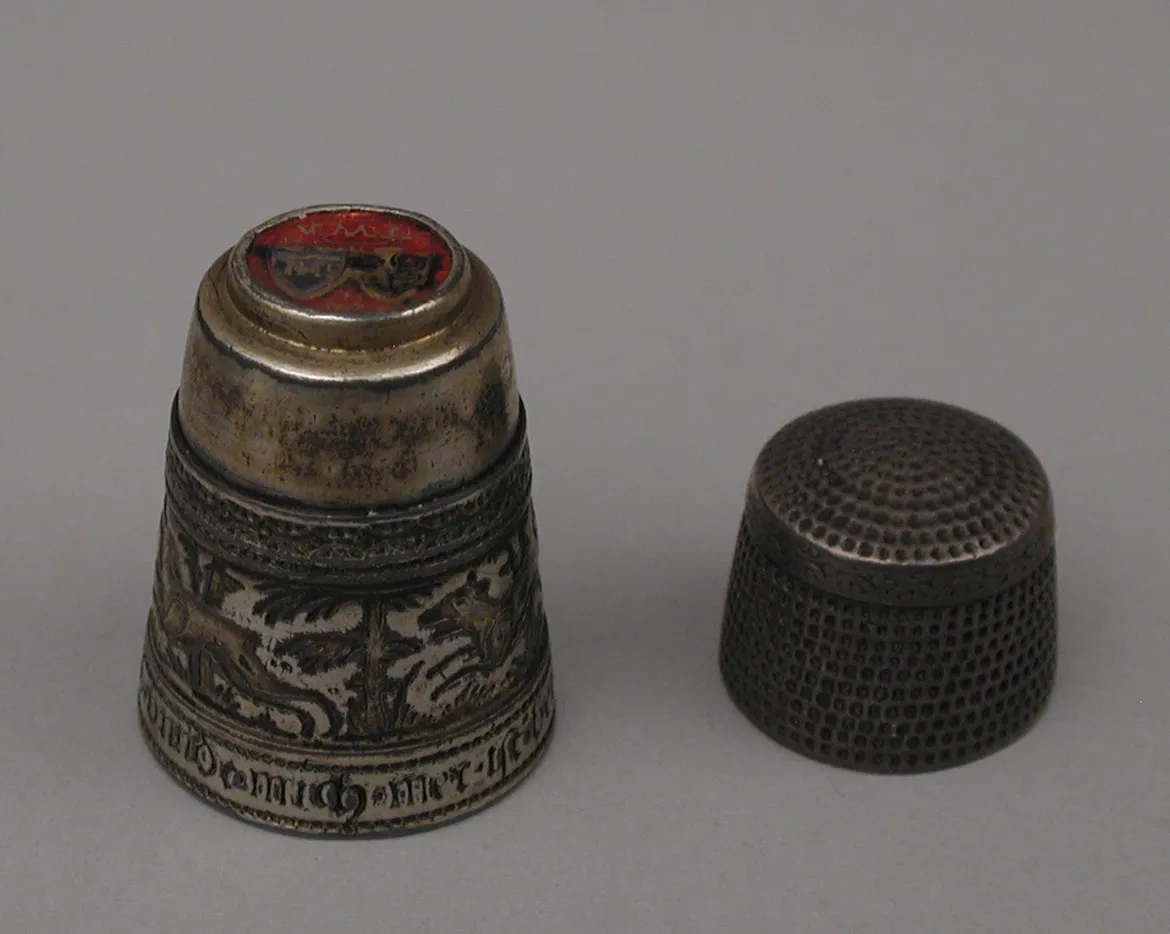
The needle also gave English some of its most familiar sayings, from "looking for a needle in a haystack" to being "on pins and needles." And its partner tool, the thimble, has a history just as rich, told in our history of the thimble.
For the needles in a modern sewing kit, see our guide to hand sewing needle types.
For festivals and folklore around needles, including Japan's Hari-Kuyō, see sewing superstitions and folklore.
Sources
- Sewing needle, Wikipedia
- Company History, The Worshipful Company of Needlemakers
- Forge Mill, Forge Mill Needle Museum
- Japan in Photos: Hari-Kuyo, Japan Up Close
Frequently Asked Questions
What is the oldest sewing needle ever found?
The oldest widely accepted eyed needle is a bird-bone needle from Denisova Cave in Siberia, about 50,000 years old. A possible needle point from Sibudu Cave in South Africa may be about 61,000 years old, but it lacks a surviving eye.
What were the first needles made of?
Bone, antler and ivory. Metal needles of copper and bronze appeared thousands of years later, followed by iron and finally steel.
Why did Redditch become famous for needles?
Needle making was recorded in the Redditch area from 1639. Water-powered scouring mills gave local makers an advantage in polishing, and by the 1870s the area produced around 3.5 billion needles a year, about 90 percent of the world's output.
Why do hand-sewing needles get thinner as the number goes up?
In the traditional system, a higher size number means a finer, shorter needle. Machine needles work the other way: a larger metric number means a thicker needle, because it measures the blade's diameter in hundredths of a millimeter.
Keep Reading
History of the Thimble
Melted for WWI hospitals, used to measure gunpowder, sold for $18,000.
History of Sewing
How a bone splinter became a global industry, from the Ice Age to PDF patterns.
Who Invented the Sewing Machine?
Saint, Thimonnier, Hunt, Howe or Singer? The inventors and who deserves the credit.
Sewing Glossary A–Z
450+ sewing terms explained in plain English, from appliqué to zipper foot.