Hand Sewing Stitches Every Sewist Should Know (2026)
Machines do the long seams, but a handful of hand stitches still handle everything a machine cannot: invisible hems, closed gaps, buttons and repairs. Here are the essential stitches, how to sew them and when to use each.
In This Article
- The Essential Hand Stitches
- Before You Start
- Running Stitch
- Basting Stitch
- Backstitch
- Prick Stitch
- Slip Stitch and Ladder Stitch
- Blind Hem Stitch
- Catch Stitch (Herringbone Stitch)
- Whipstitch
- Overcast Stitch
- Blanket Stitch and Buttonhole Stitch
- Tailor's Tacks
- Pad Stitch
- Quick Reference
- Explore Stitches and Seams
- Sources
- Frequently Asked Questions
The Essential Hand Stitches
- Running stitch: quick, simple, for basting and gathering
- Backstitch: strong seams by hand
- Slip and ladder stitch: invisible closures and linings
- Blind hem and catch stitch: hems
- Whipstitch, overcast and blanket stitch: edges
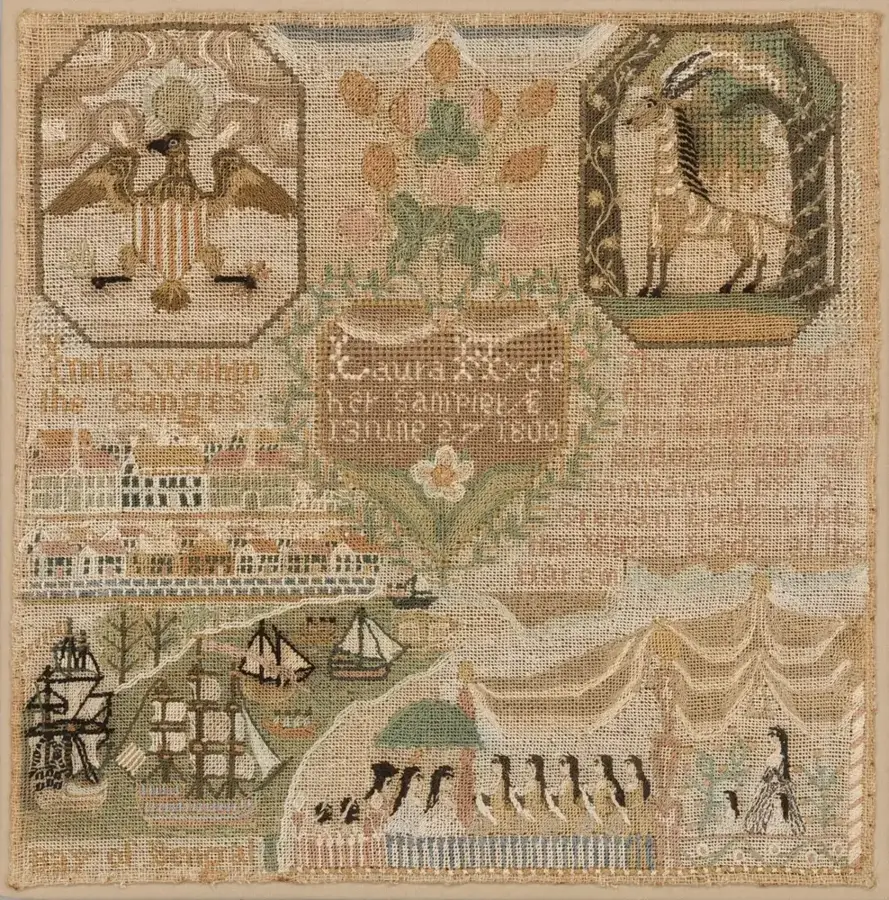
For thousands of years, every garment was sewn by hand, and children practiced their stitches on samplers like the one above, made by Laura Hyde in 1800. Machines took over long seams in the nineteenth century, but hand stitching never disappeared. Couture garments are still finished by hand, and every home sewist needs a few hand stitches for hems, closures and repairs. This page covers the essentials; our guides to machine stitch types, types of seams, seam finishes, seam allowance, hems and decorative stitches cover the rest of this section.
Before You Start
Thread your needle with about 18 to 20 inches (45 to 50 cm) of thread and secure the end with a knot or a few small backstitches. If you are new to this, start with how to thread a needle and tie a knot. Use a single thread for fine work and a double thread where strength matters.
Running Stitch
What it is: the simplest stitch: the needle goes in and out of the fabric at even intervals, leaving dashes with gaps between.
Use it for: basting, gathering, quilting by hand and light seams that will not be stressed. Loading several stitches on the needle before pulling through makes it fast.
Basting Stitch
What it is: a long running stitch, often 1/4 to 1/2 inch (6 to 13 mm) long, sewn temporarily.
Use it for: holding layers together before machine sewing, marking lines, and testing fit. Use a contrasting color so it is easy to find and pull out later.
Backstitch
What it is: each stitch goes backward to meet the end of the previous one, creating a continuous line on the front that looks like machine stitching. On the back, the stitches overlap.
Use it for: strong seams by hand, repairs to split seams and securing thread at the start and end of other stitches. It is the strongest everyday hand stitch.
Prick Stitch
What it is: a backstitch in which each stitch goes back only a few fabric threads, so only tiny dots show on the right side.
Use it for: hand-picked zippers on fine garments and subtle topstitching on tailored edges.
Slip Stitch and Ladder Stitch
What it is: the needle travels inside a folded edge and catches just a thread or two of the opposite fabric, so the stitches almost disappear. When used to close a gap between two folded edges, it is often called a ladder stitch, because the stitches look like the rungs of a ladder until the thread is pulled tight.
Use it for: closing turning gaps in pillows, stuffed toys and lined bags; attaching linings; sewing down bindings.
Blind Hem Stitch
What it is: stitches that alternate between a tiny catch in the garment fabric and a longer travel inside the hem fold, so almost nothing shows on the outside.
Use it for: hems on skirts, trousers, dresses and curtains. Use thread that matches the fabric exactly.
Catch Stitch (Herringbone Stitch)
What it is: a crossed stitch worked from left to right (for right-handed sewists), forming small X shapes that move with the fabric.
Use it for: hems on knits and stretchy fabrics, holding facings and interfacing in place, and tailoring. Its zigzag structure gives it a little stretch.
Whipstitch
What it is: small diagonal stitches that wrap over the edge of the fabric.
Use it for: joining two finished edges, sewing felt, attaching appliqué and English paper piecing in quilting.
Overcast Stitch
What it is: similar to a whipstitch, but worked over a single raw edge to stop it fraying.
Use it for: finishing seam allowances by hand when you have no machine or serger; see seam finishes.
Blanket Stitch and Buttonhole Stitch
What it is: a looped stitch along an edge, with the thread forming a line along the edge and short "legs" into the fabric. The buttonhole stitch is a closely packed version with a small knot at the edge of each stitch.
Use it for: finishing blanket edges, appliqué, felt crafts and hand-worked buttonholes.
Tailor's Tacks
What it is: loose loops of double thread sewn through two layers of fabric and the pattern, then cut between the layers so tufts of thread mark the same point on each piece.
Use it for: transferring pattern markings such as darts and dots to fabric that chalk or pens would damage.
Pad Stitch
What it is: tiny diagonal stitches worked in rows through interfacing and fabric, invisible on the right side.
Use it for: shaping collars and lapels in traditional tailoring, so they roll and hold their curve.
Quick Reference
| Stitch | Strength | Visibility | Main Use |
|---|---|---|---|
| Running | Low | Visible | Basting, gathering, hand quilting |
| Basting | Temporary | Visible | Holding layers, fitting |
| Backstitch | High | Visible | Seams and repairs |
| Prick stitch | Medium | Tiny dots | Hand-picked zippers |
| Slip / ladder | Medium | Almost invisible | Closing gaps, linings |
| Blind hem | Medium | Almost invisible | Hems |
| Catch (herringbone) | Medium, stretchy | Hidden inside | Hems on knits, facings |
| Whipstitch | Medium | Visible on edge | Joining edges, felt, appliqué |
| Overcast | Low to medium | Inside | Stopping fraying |
| Blanket / buttonhole | Medium | Decorative | Edges, buttonholes |
| Tailor's tacks | Temporary | Removed | Marking |
| Pad stitch | Structural | Hidden | Tailoring |
Explore Stitches and Seams
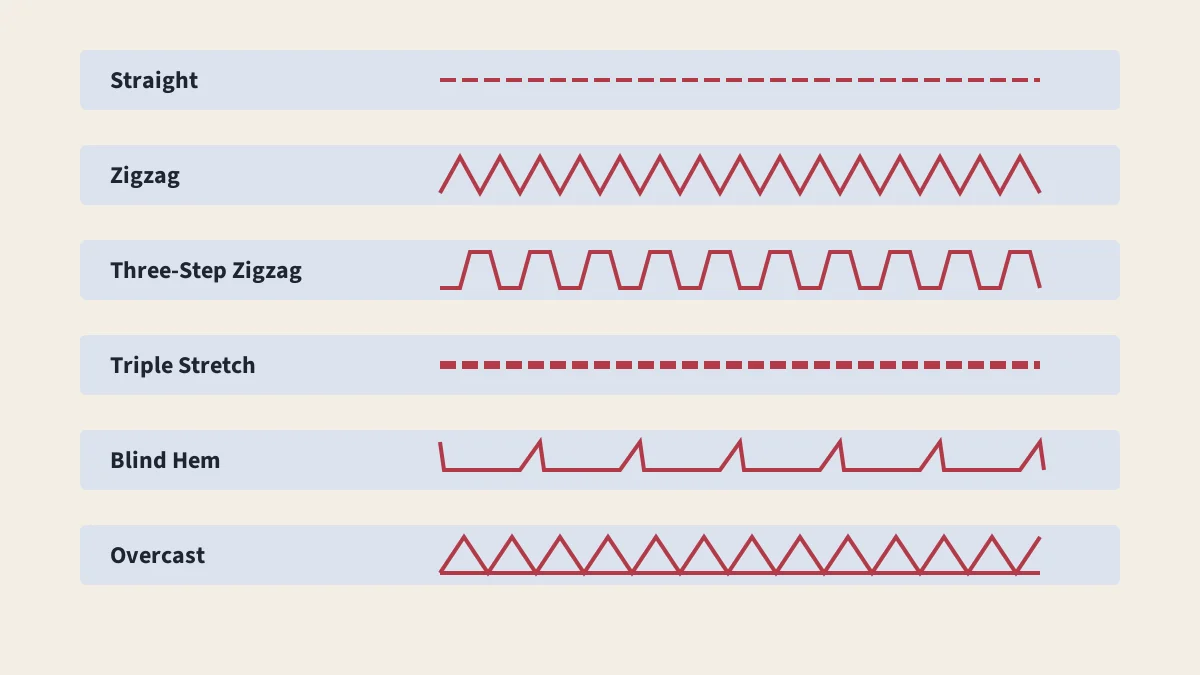
Machine Stitch Types
The utility stitches that do most of the work, and when to use each.
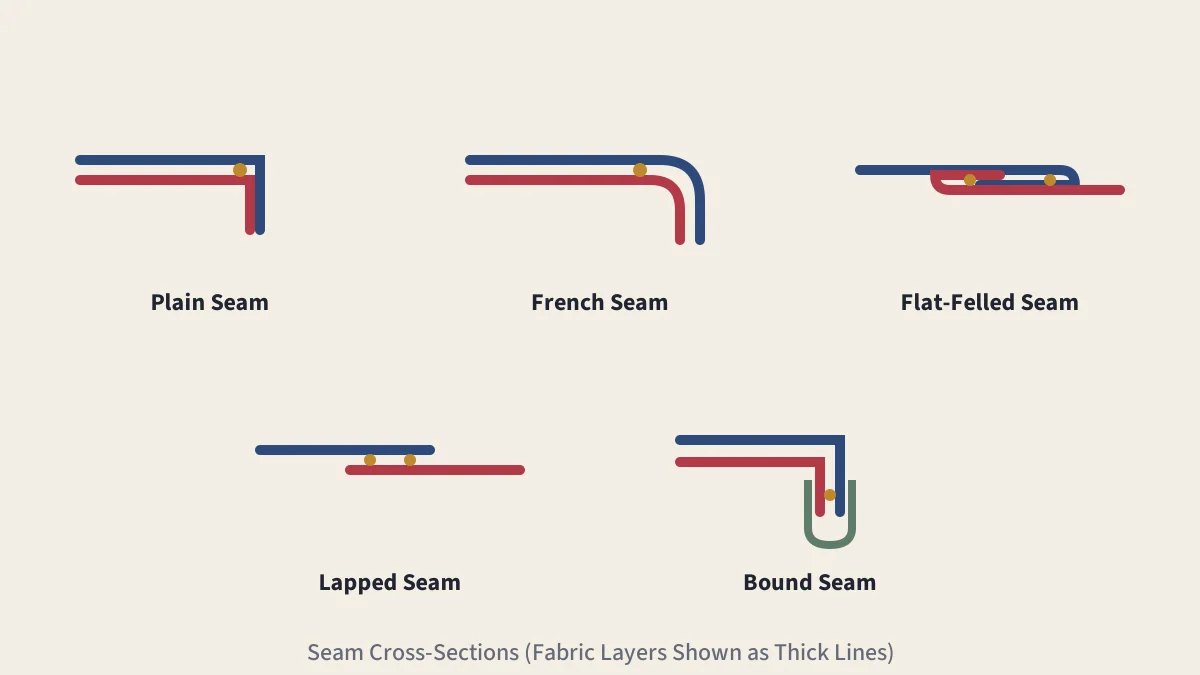
Types of Seams
Plain, French, flat-felled, lapped, bound and other seams compared.
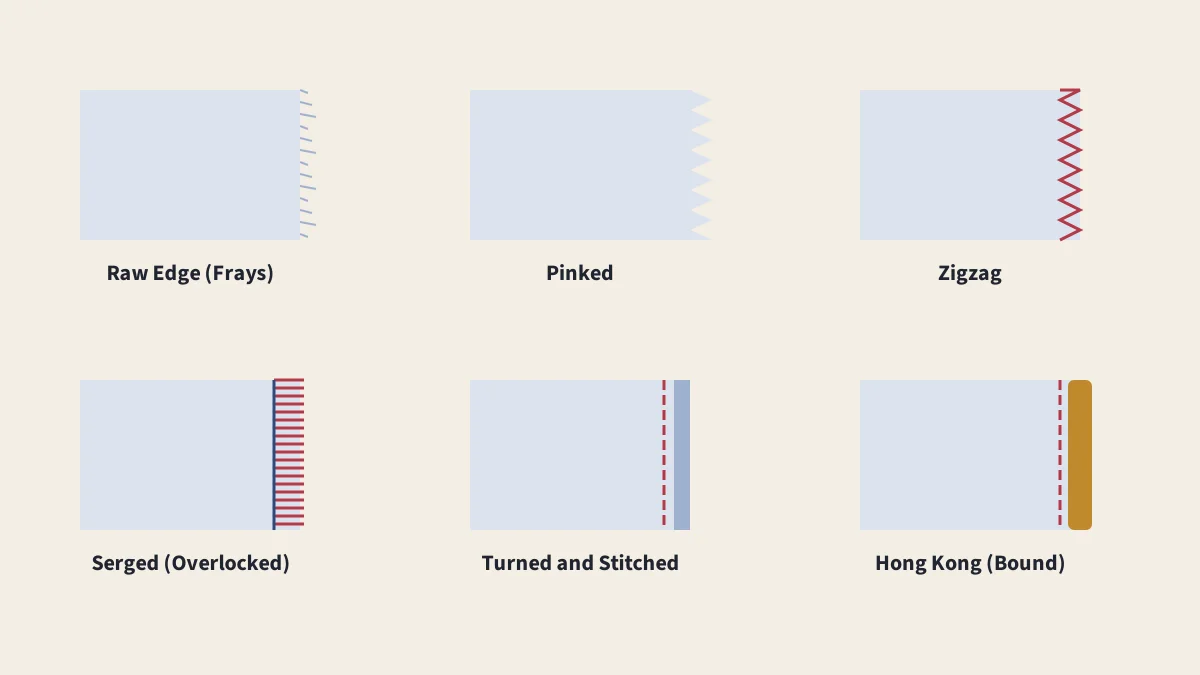
Seam Finishes
Pinked, zigzag, serged, Hong Kong, bound and enclosed finishes.
Seam Allowance Explained
Standard seam allowances, why they differ, and how to sew them accurately.
Types of Hems
Double-fold, blind, rolled, faced, bound and knit hems compared.
Staystitching, Understitching and Topstitching
Four stitching techniques that sound alike but do different jobs.
Decorative Stitches
Machine and hand decorative stitches, and how to use them well.
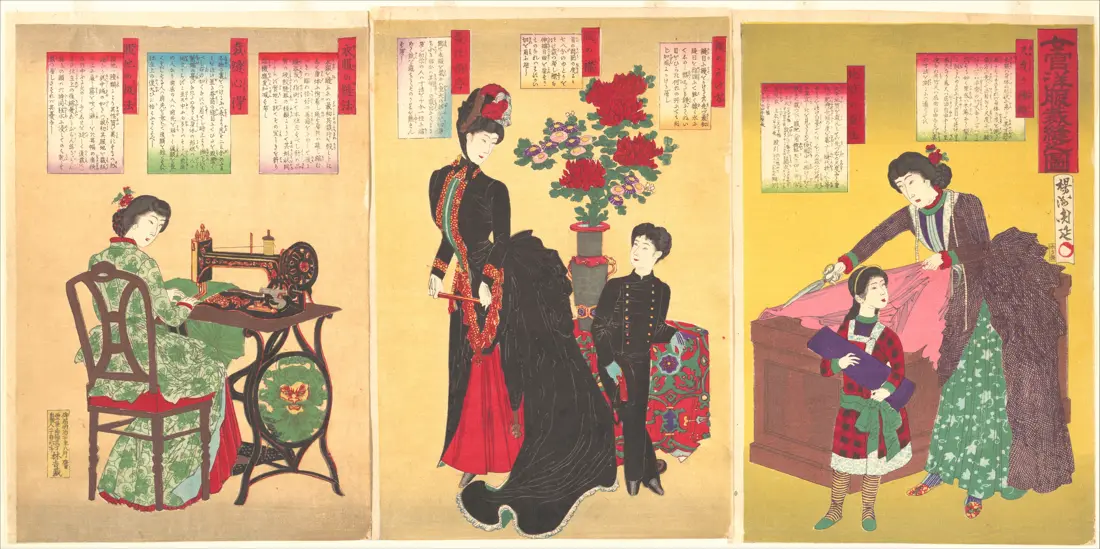
Hand Sewing vs. Machine Sewing
Speed, strength, control and cost compared, plus when to use each.
Sources
- Stitch (textile arts), Wikipedia
- Backstitch, Wikipedia
- Laura Hyde, Sampler, 1800, The Metropolitan Museum of Art
Frequently Asked Questions
What is the strongest hand stitch?
The backstitch. Each stitch overlaps the previous one, forming a continuous line that looks like machine stitching and holds well under strain, which makes it the best hand stitch for seams.
What is the most invisible hand stitch?
The slip stitch (also called the ladder stitch when closing a seam) hides the thread inside the fold of the fabric. The blind hem stitch is used for nearly invisible hems.
What hand stitch should I use to close a stuffed toy or pillow?
The ladder stitch. You take small stitches alternately inside each folded edge, then pull the thread taut, which draws the edges together and hides the stitches.
What is basting?
Basting is long, temporary stitching used to hold layers in place before final sewing or to test fit. It is removed afterward.
Keep Reading
Machine Stitch Types
The utility stitches that do most of the work, and when to use each.
Types of Seams
Plain, French, flat-felled, lapped, bound and other seams compared.
Seam Finishes
Pinked, zigzag, serged, Hong Kong, bound and enclosed finishes.
How to Thread a Needle and Tie a Knot
Thread length, threading tricks, three knots and how to finish off.