The History of the Thimble: Small Tool, Big Stories (2026)
The thimble has protected fingers for over a thousand years. It has also been a love token, a classroom punishment, a wartime donation and a Monopoly piece.
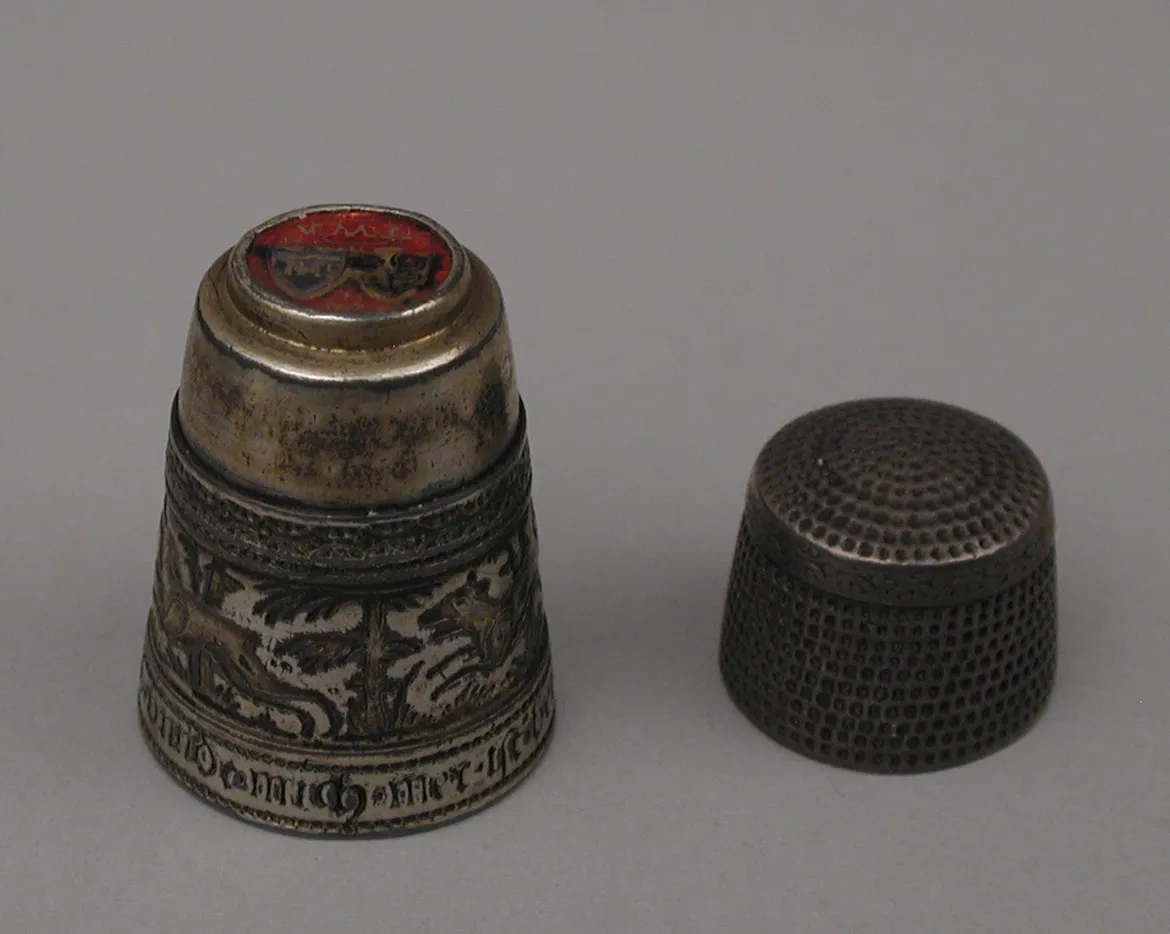
In This Article
Thimble Facts at a Glance
- Name: from Old English þȳmel, related to "thumb"
- In England: found from the 10th century, widespread by the 14th
- First big centers: Nuremberg in the 15th century, then Holland in the 17th
- London factory: opened by John Lofting in 1693
- Record: $18,000 bid for a Meissen porcelain thimble in 1979
A thimble is a small cap worn on the finger that pushes the needle through the fabric. It looks like the plainest object in a sewing box. Look closer at its history, though, and you find guilds, factories, war drives, courtship customs, a schoolroom punishment and a board game.
Where the Word Comes From
The English word "thimble" comes from Old English þȳmel, which is derived from þūma, meaning "thumb." That suggests early thimbles may have been worn on the thumb rather than the middle finger, where most sewists wear them today.
Early Thimbles
People have protected their fingers while sewing for a very long time, using leather, bone or metal. In England, thimbles dating to the tenth century have been found, and by the fourteenth century they were in widespread use.
Nuremberg, Holland and London
Thimble making became an organized trade in the late Middle Ages. Nuremberg in Germany was an early center of production in the fifteenth century. By the seventeenth century, the center of the industry had moved to Holland.
In 1693, a Dutch thimble maker named John Lofting set up a thimble manufactory in Islington, London. He later moved his mill to Buckinghamshire, where it had the capacity to make more than two million thimbles a year. By the end of the eighteenth century, thimble making had shifted to Birmingham, where makers adopted a "deep drawing" method that stretched sheet metal into shape.
Thimbles as Gifts and Status Symbols
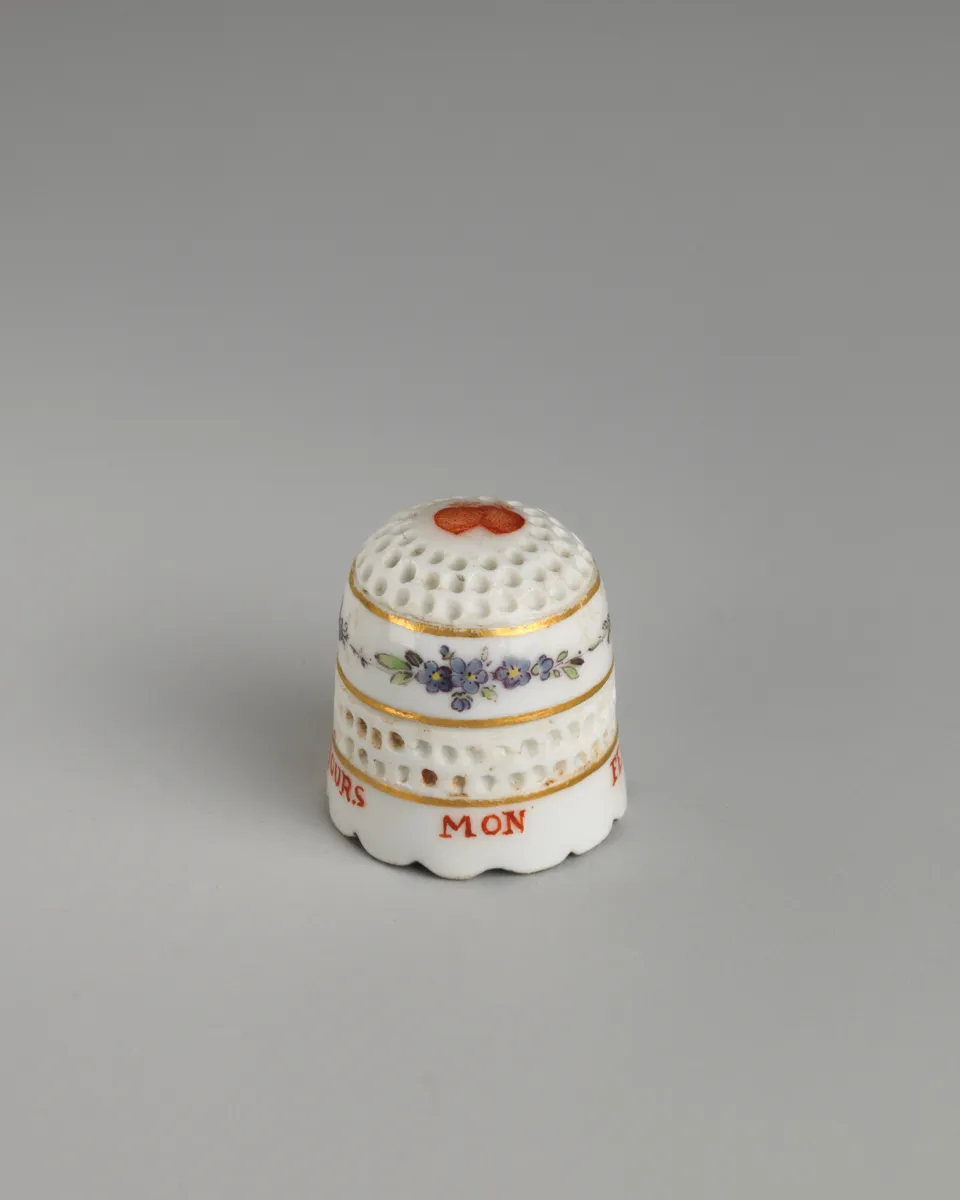
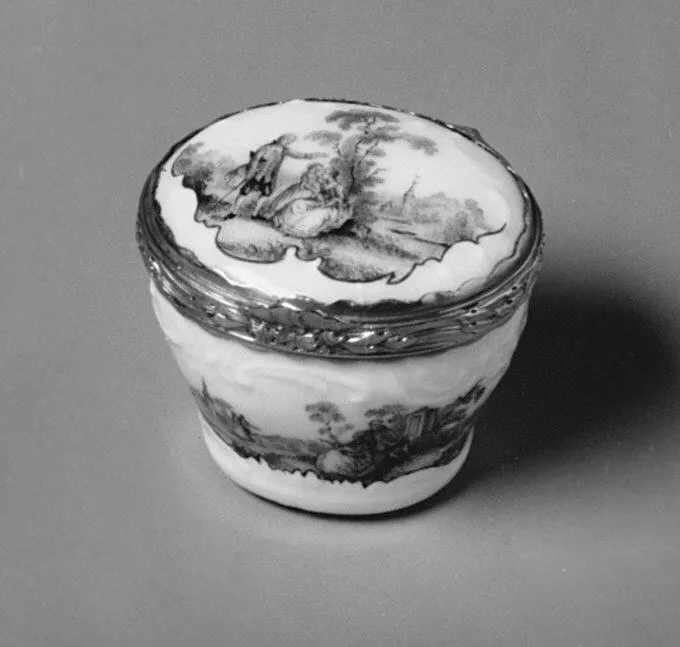
From the sixteenth century onward, a silver thimble was considered an ideal gift for a lady. Fine thimbles were made of silver, gold, porcelain, ivory and enamel, often in matching cases, and some were too delicate for real sewing. At the end of the eighteenth century, cheaper American silver made silver thimbles popular for the first time beyond the wealthy.
The high-end market still produces records. On December 3, 1979, a London dealer bid $18,000 at Christie's in Geneva for a Meissen porcelain thimble from about 1740, just over half an inch tall.
One Victorian innovation was practical rather than decorative. Charles Horner, who lived from 1837 to 1896, made the Dorcas thimble, which had a steel core covered with silver so it lasted longer than a soft silver thimble.
Types of Thimbles
| Type | Description | Typical User |
|---|---|---|
| Closed (dome) thimble | Covers the fingertip, pushed with the top or side | Dressmakers, quilters, embroiderers |
| Open (tailor's) thimble | A ring with no top, pushed with the side of the finger | Tailors |
| Sail palm | A leather strap with a dimpled metal disc worn across the palm | Sailmakers, leatherworkers |
| Leather or silicone thimble | Soft cap or pad that grips the needle | Hand quilters, appliqué sewists |
| Thimblette | A small finger pad, sold in sizes 00 to 3 | Quilters |
Thimbles in War, School and Folklore
During the First World War, the British government collected silver thimbles from the public and melted them down to pay for hospital equipment. Smaller, stranger uses run through history too:
- Thimble-knocking: Victorian schoolmistresses were known to tap unruly pupils on the head with a thimble.
- A thimbleful: thimbles were used to measure small amounts of spirits and gunpowder in the early modern period, which gave English the phrase "just a thimbleful."
- A marriage superstition: one old belief held that a person given three thimbles would never marry.
- Advertising: in the 1930s and 1940s, glass-topped thimbles carried company advertisements.
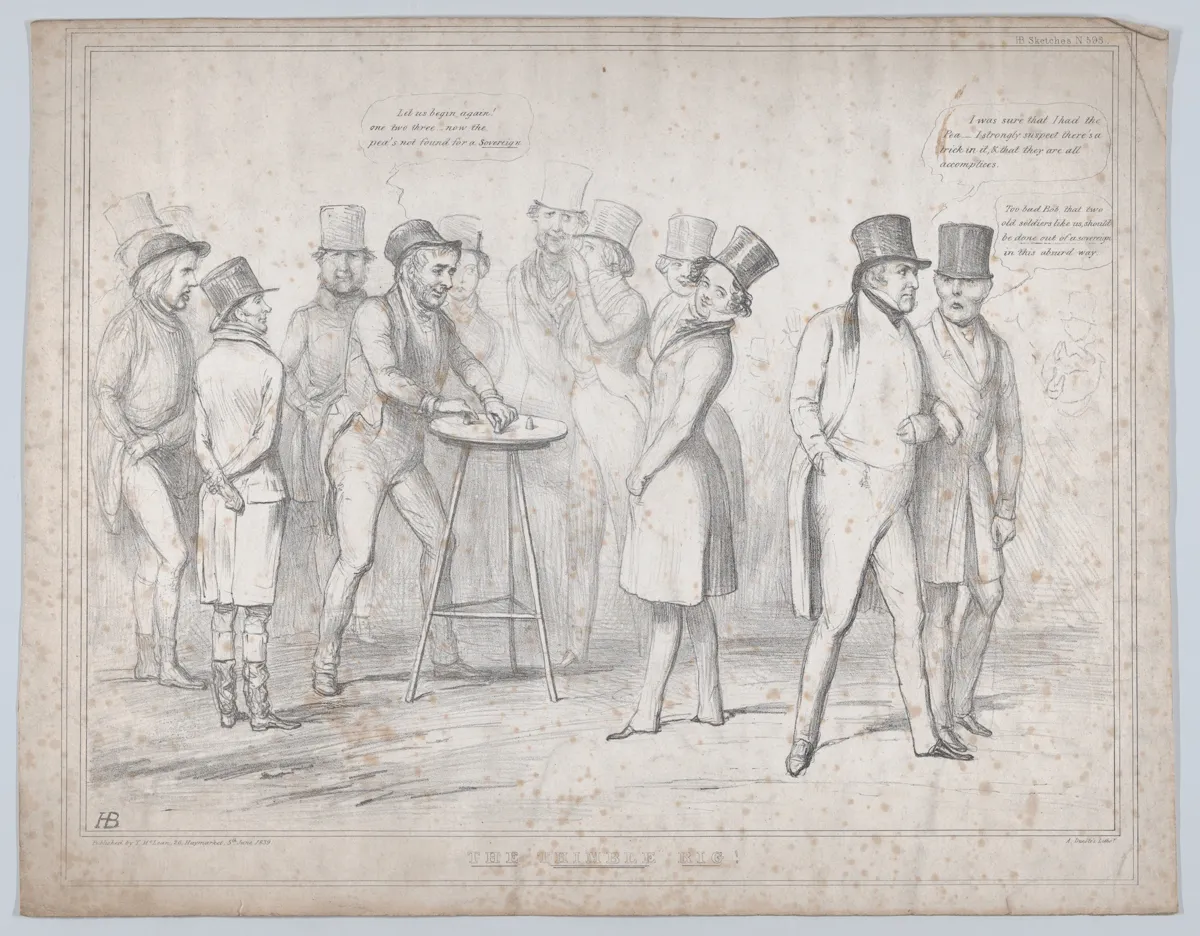
The thimble also gave its name to a swindle. "Thimble-rigging" was a street game in which a pea was hidden under one of three thimbles and shuffled, much like the shell game. The satirical print below, from 1839, borrows its name.
The Monopoly Thimble
For millions of people, the most familiar thimble is a game piece. When Parker Brothers published Monopoly in 1935, the thimble was one of its eight metal tokens. It was dropped from new sets from August 2017. Then, in a 2022 public vote run by Hasbro, the thimble returned, replacing the T-Rex.
Collecting Thimbles
Thimbles are popular with collectors because they are small, varied and often beautifully made. Collectors are sometimes called digitabulists. For sewing, though, the best thimble is still the plainest one that fits your finger snugly and keeps the needle from slipping, which is exactly what its dimples have done for centuries. For the tool it protects you from, see our history of the sewing needle.
Sources
- Thimble, Wikipedia
- Thimble, 1577, The Metropolitan Museum of Art
- The Thimble Rig!, 1839, The Metropolitan Museum of Art
Frequently Asked Questions
Where does the word thimble come from?
It comes from Old English þȳmel, which derives from þūma, meaning thumb. The earliest thimbles may have been worn on the thumb.
How old is the thimble?
Thimbles dating to the tenth century have been found in England, and they were in widespread use there by the fourteenth century. Finger protectors are much older in other parts of the world.
Why do thimbles have dimples?
The dimples catch the eye end of the needle so it does not slip as you push it through the fabric. Before the mid-eighteenth century, the dimples were punched by hand.
What is a person who collects thimbles called?
A thimble collector is sometimes called a digitabulist.
Keep Reading
History of the Sewing Needle
From Denisovan bird bone to Redditch steel, the tool behind every stitch.
History of Sewing
How a bone splinter became a global industry, from the Ice Age to PDF patterns.
Sewing Facts
Surprising facts about sewing history, machines, tools and fabric, each one checked.
Sewing Glossary A–Z
450+ sewing terms explained in plain English, from appliqué to zipper foot.