Sewing Superstitions and Folklore From Around the World (2026)
Needles, thread and scissors have gathered beliefs and rituals for centuries, from Japanese memorials for broken needles to French hatmakers' Saint Catherine's Day balls.
In This Article
Folklore in Brief
- Japan: Hari-Kuyō honors broken needles
- China: needle-threading at Qixi
- France: the Catherinettes' hats
- Belief: tools as having souls
- Popular sayings: folklore, not fact
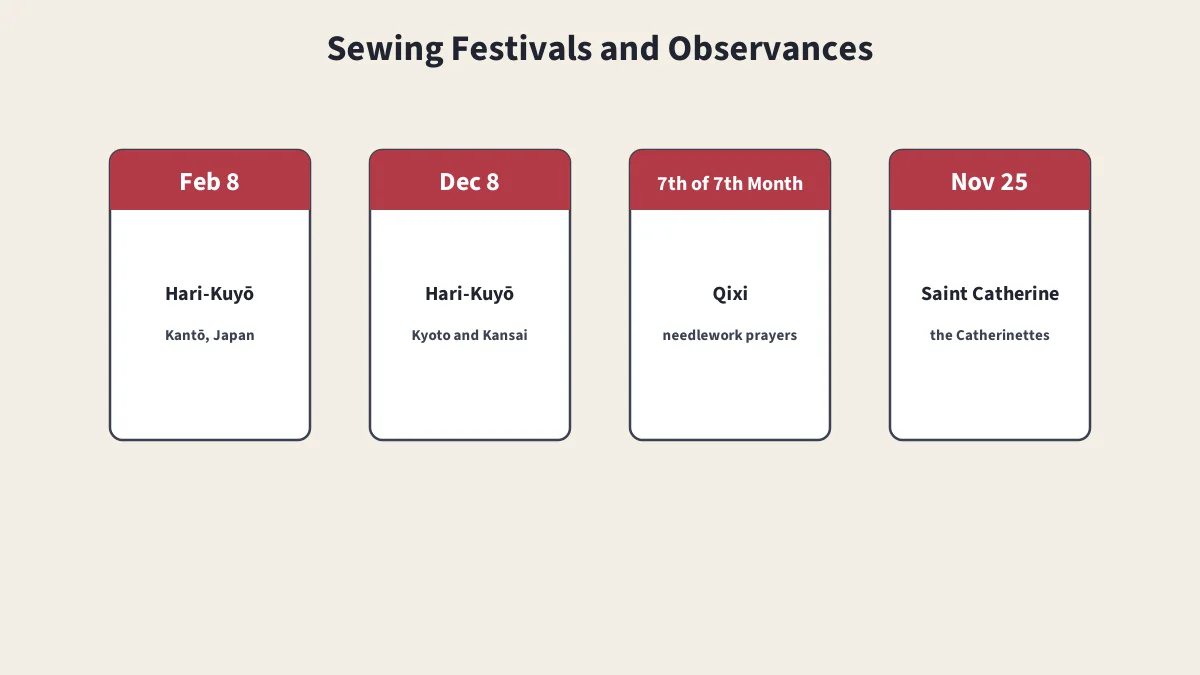
Sewing tools were once among a household's most valuable possessions, and much of women's work depended on them. It is not surprising that needles, thread and scissors gathered rituals and beliefs. For the dates of these celebrations, see sewing holidays and observances.
Hari-Kuyō: A Memorial for Needles
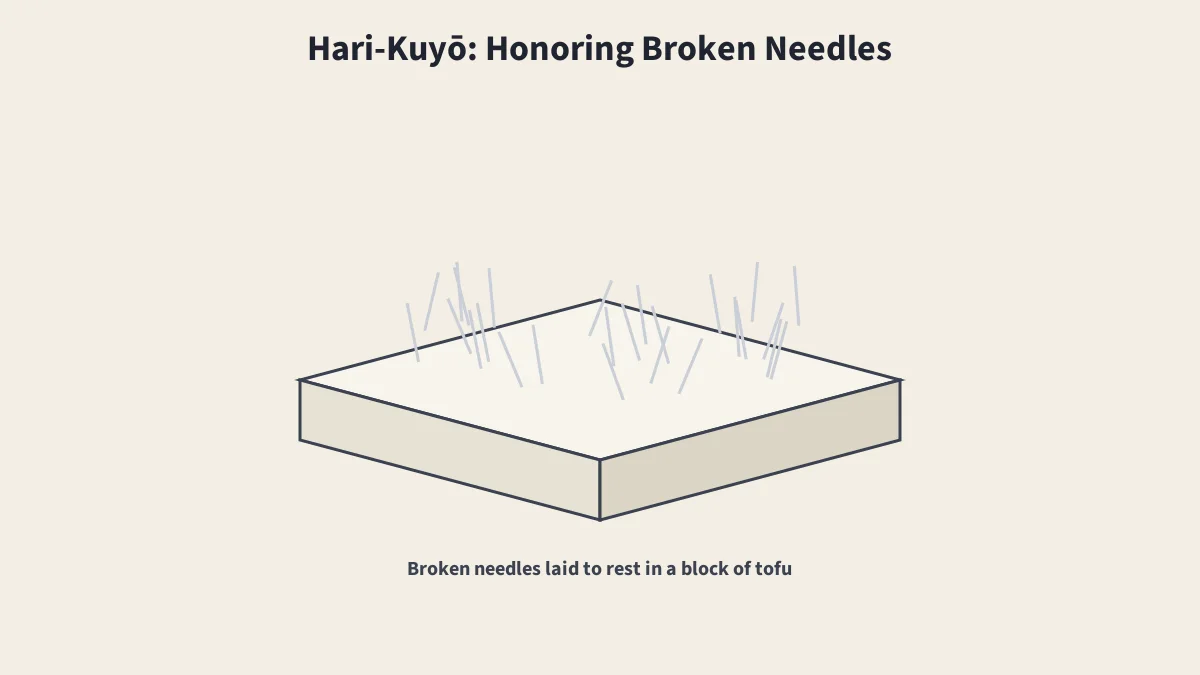
Hari-Kuyō, from hari (needle) and kuyō (memorial service), is a Japanese festival of broken sewing needles that combines Buddhist and Shinto practice. It began about 400 years ago, when housekeepers and professional needleworkers gave thanks for their work and respected their tools. Participants bring broken needles and pins to shrines and temples and stick them into tofu or konnyaku, and pray for better sewing skills. The ceremony is solemn, reflecting the animist belief that tools have souls and the idea of mottainai, not wasting and honoring small things.
Qixi: Begging for Skill
China's Qixi festival, also called Qiqiao, "beseeching craftsmanship," honors Zhinü, the Weaver Girl of legend. Girls recited prayers for skill in needlework, competed to thread needles in dim light, by an ember or a half moon, and used fortune-telling to predict their needlework ability. Needlework skill was linked to the qualities of a good spouse.
The Catherinettes
In France, a catherinette was an unmarried woman who had reached 25 by Saint Catherine's Day, 25 November. Women's groups under Saint Catherine's protection "capped" her statue each year with a headdress, and "capping Saint Catherine" came to mean being single at 25. The custom faded except in the hatmaking and dressmaking trades, where unmarried women over 25 attended a ball wearing a specially made hat.
Popular Sewing Beliefs
Many sewing superstitions are repeated today without any clear origin. We list a few as folklore, not as historical fact:
- Dropping scissors means a visitor is coming, or bad luck.
- Scissors or needles given as gifts should be "paid for" with a coin, so they don't cut the friendship.
- A dress should never be finished on the day it is first worn.
- A bride should not sew her own wedding dress.
For the needle's real history, see the history of the needle.
Sources
- Hari-Kuyo, Wikipedia
- Qixi Festival, Wikipedia
- Catherinette, Wikipedia
Frequently Asked Questions
What is Hari-Kuyō?
A Japanese festival of broken sewing needles. Participants bring broken needles and pins to shrines and temples and stick them into tofu or konnyaku, giving thanks for the tools' service.
Why stick needles in tofu?
Soft tofu or konnyaku gives the needles, which worked hard piercing cloth, a gentle place to rest. The ritual reflects the belief that tools have souls and deserve gratitude.
What did needle-threading mean at Qixi?
At China's Qixi festival, girls traditionally competed to thread needles in dim light, such as by an ember or a half moon, and needlework skill was linked to being a good spouse.
Are sewing superstitions true?
No. They are folklore, valuable for what they say about the importance of sewing in people's lives, not as predictions.
Keep Reading
Sewing Holidays and Observances
Hari-Kuyō, Qixi and Saint Catherine's Day.
Sewing Idioms and Their Origins
Phrases from cloth-making, with verified origins.
History of the Sewing Needle
From Denisovan bird bone to Redditch steel, the tool behind every stitch.
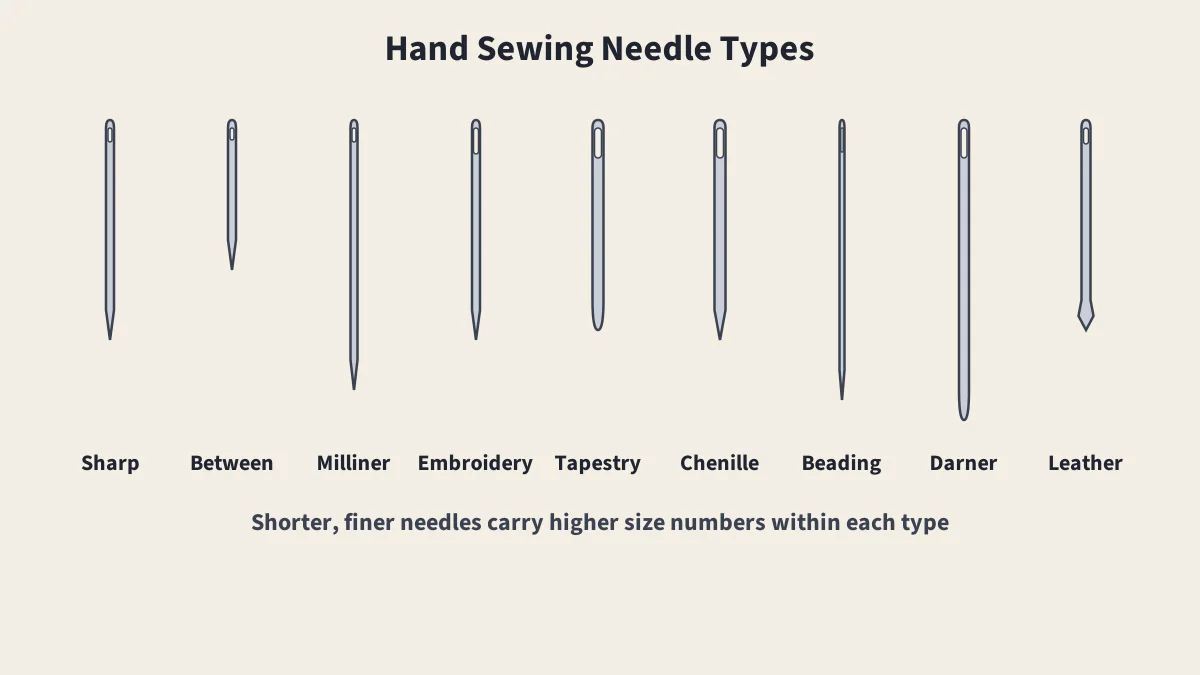
Hand Sewing Needle Types
Every common hand needle type, what it is for and how sizes work.