Hand Sewing Needle Types: Which Needle for Which Job (2026)
A packet of hand needles can look like a jumble of near-identical slivers of steel. In fact each type has a purpose, set by its length, its eye and its point. Here is how to tell them apart and read their sizes.
In This Article
Needle Types in Brief
- General sewing: sharps
- Quilting: betweens
- Basting and millinery: milliners (straw needles)
- Embroidery: embroidery (crewel), chenille, tapestry
- Special jobs: beading, darning, leather, bodkins, upholstery
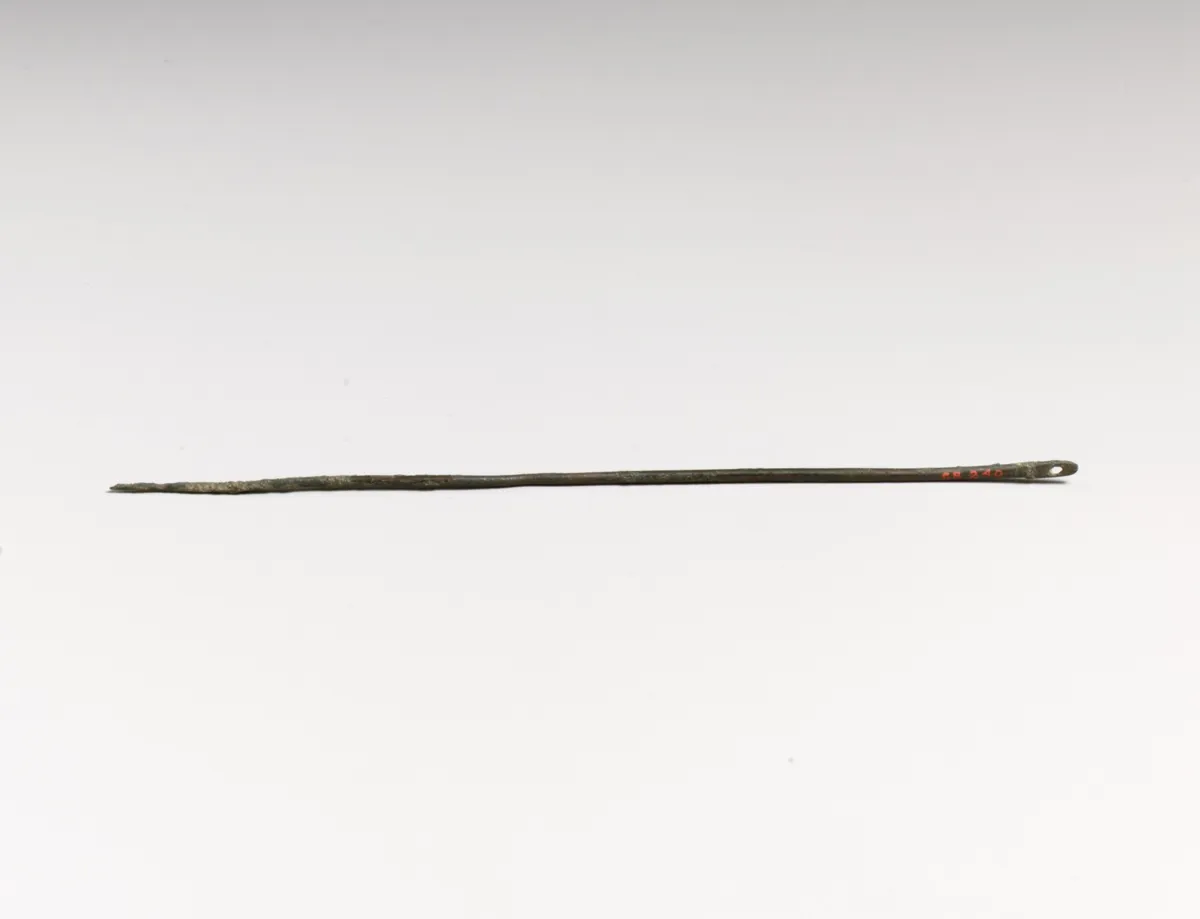
Needles are among humanity's oldest tools; see the history of the needle. A modern hand needle is a precise thing, and three features decide what it is for: its length, its eye and its point. Choosing the right one makes stitching easier and kinder to the fabric.
The Three Things That Matter
- Length: longer needles pick up several stitches at once, as in basting; shorter needles give more control for small stitches.
- Eye: a small round eye suits a single sewing thread; a long or large eye takes thicker threads, yarn or several embroidery strands.
- Point: sharp points pierce woven fabric; blunt points slip between threads of canvas or knits; wedge points cut through leather.
Hand Needle Types
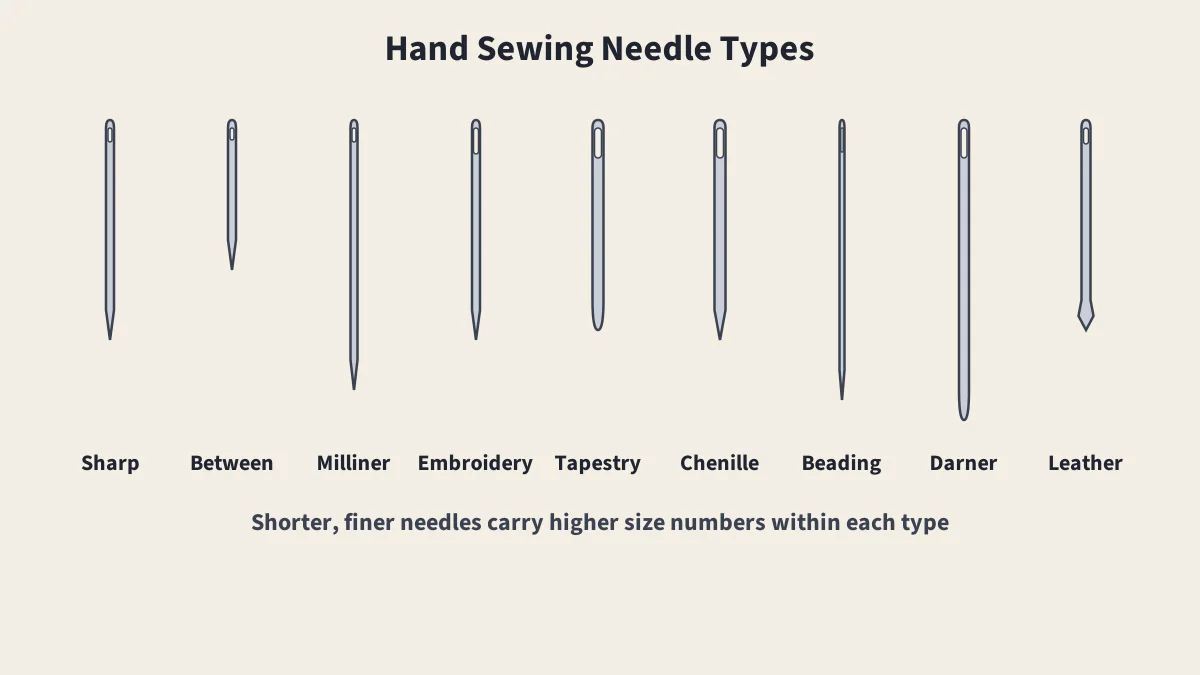
| Type | Description | Best For |
|---|---|---|
| Sharps | Sharp point, round eye, medium length | General hand sewing |
| Betweens (quilting) | Shorter than sharps, small round eye | Fine stitches on heavier fabrics; hand quilting |
| Milliners (straw) | Longer than sharps | Basting, pleating and hat making |
| Embroidery (crewel) | Like sharps but with a longer eye | Several strands of embroidery floss |
| Tapestry | Large eye, blunt tip | Needlepoint and cross-stitch on loosely woven canvas |
| Chenille | Large, long eye and a very sharp point | Thick threads on closely woven fabric; ribbon embroidery |
| Beading | Very fine, with a narrow eye | Passing through beads and sequins |
| Darners | Long, with a large eye and blunt tip | Darning and mending holes |
| Leather (glovers) | Triangular wedge point | Piercing leather without tearing it |
| Bodkin | Long and thick, ballpoint end, large eye | Threading elastic, ribbon or cord through casings |
| Upholstery | Heavy and long, sometimes curved | Furniture and hard-to-reach spots |
How Needle Sizes Work
Hand needle sizes run backward from what many people expect. Within each type, a lower number means a longer, thicker needle, and a higher number means a shorter, finer one. So a size 3 sharp is bigger than a size 10 sharp.
Machine needles use a different numbering system, in which bigger numbers mean thicker needles; see sewing machine needles.
Choosing a Needle
- Match the fabric: fine needles for fine fabrics, heavier needles for thick fabrics.
- Match the thread: the thread should pass through the eye easily without fraying.
- Match the job: short for control, long for speed, blunt for canvas, wedge for leather.
- Replace dull or bent needles: they snag fabric and make sewing harder.
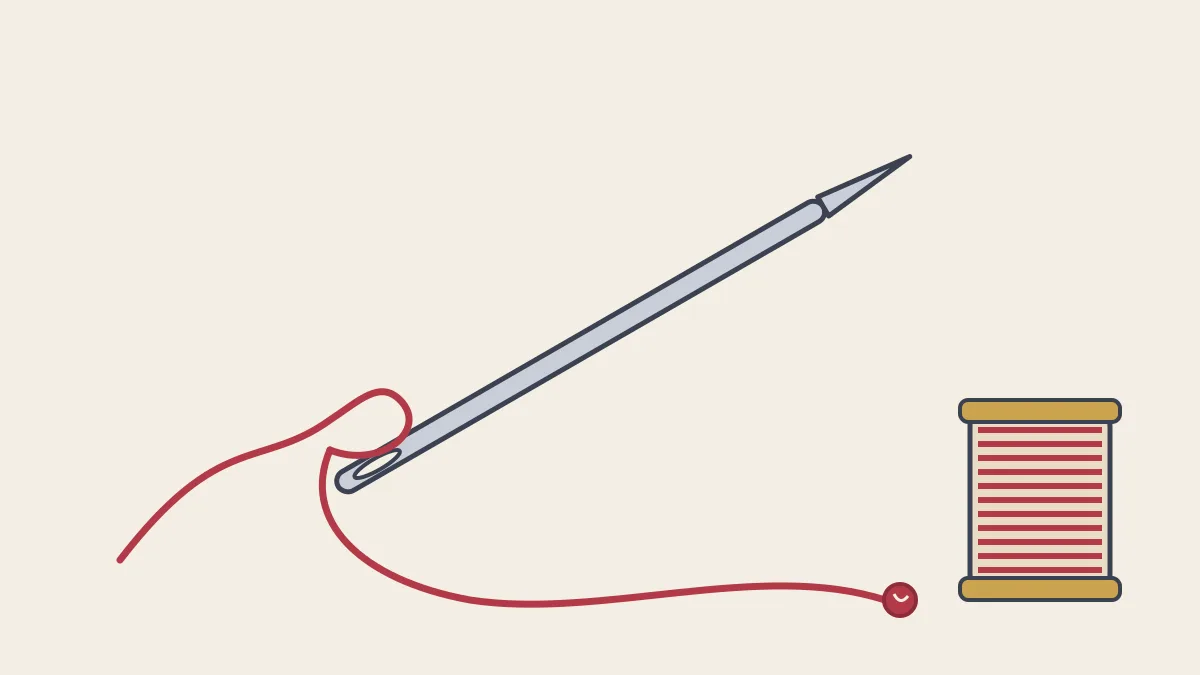
Next, learn how to thread a needle and tie a knot, then try the essential hand stitches. A thimble protects your finger when pushing a needle through thick fabric.
Sources
- Sewing needle, Wikipedia
Frequently Asked Questions
What is the most common hand sewing needle?
Sharps. They have a sharp point, a round eye and a medium length, and they are the general-purpose needle for most hand sewing on woven fabrics.
Do higher needle numbers mean bigger needles?
No. For hand needles, within each type, a higher number means a shorter, finer needle, and a lower number means a longer, thicker one. Sizes are not standardized across types, so a size 10 of one type may be thinner than a size 12 of another.
What needle should I use for quilting?
Quilters often use betweens, sometimes sold as quilting needles. They are short, with a small round eye, which suits making small, even stitches through layers.
What is a tapestry needle used for?
Tapestry needles have a large eye and a blunt tip that slips between the threads of loosely woven canvas without splitting them. They are used for needlepoint, cross-stitch and weaving in yarn ends.
Keep Reading
History of the Sewing Needle
From Denisovan bird bone to Redditch steel, the tool behind every stitch.
How to Thread a Needle and Tie a Knot
Thread length, threading tricks, three knots and how to finish off.
Types of Pins
Pin types, sizes and head styles, plus a short history of the pin.
Sewing Machine Needle Sizes and Types
Needle sizes, types, color codes and when to change them.