Sewing Careers: Jobs That Use Sewing Skills (2026)
Sewing skills lead to a surprising range of work, from bespoke tailoring and theater costumes to pattern making, upholstery and museum conservation. Here is what each role involves.
In This Article
Sewing Careers in Brief
- Making to order: tailors, dressmakers
- Fixing: alterations specialists
- Industry: pattern makers, sample makers
- Stage and screen: costume makers
- Heritage: textile conservators
Sewing has always been skilled work, and many careers still depend on it. Some roles are hands-on making, some are technical, and some combine sewing with design, teaching or conservation. To show your skills, see how to build a sewing portfolio.
Roles
| Role | What It Involves |
|---|---|
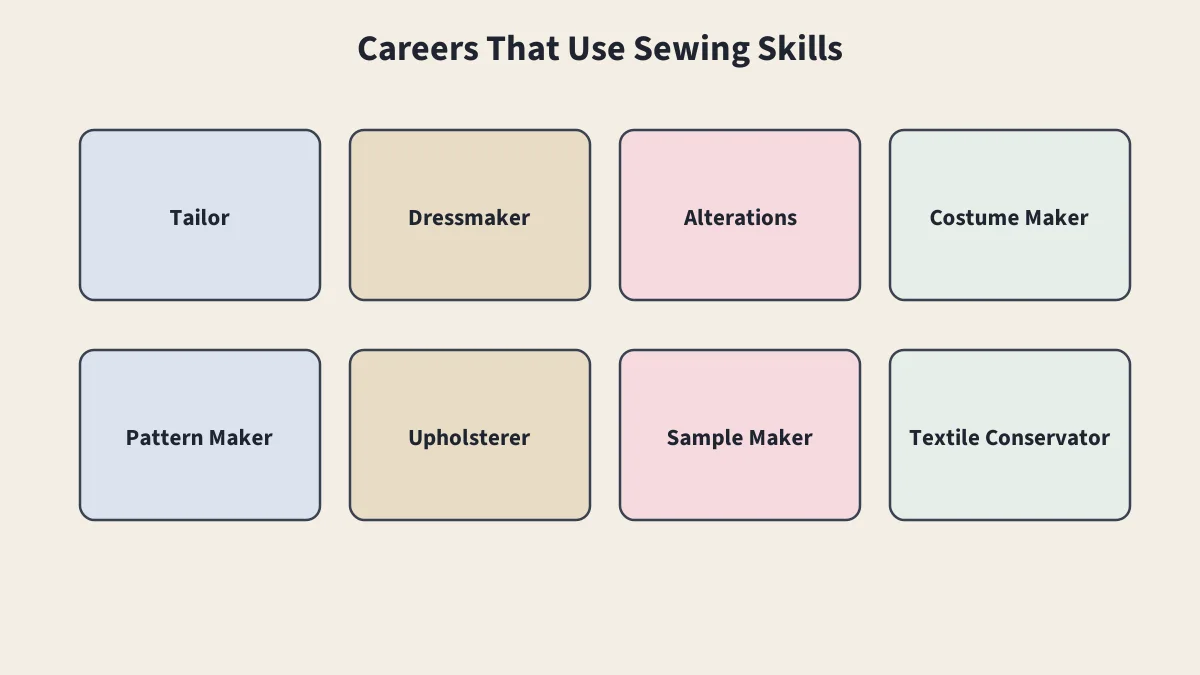
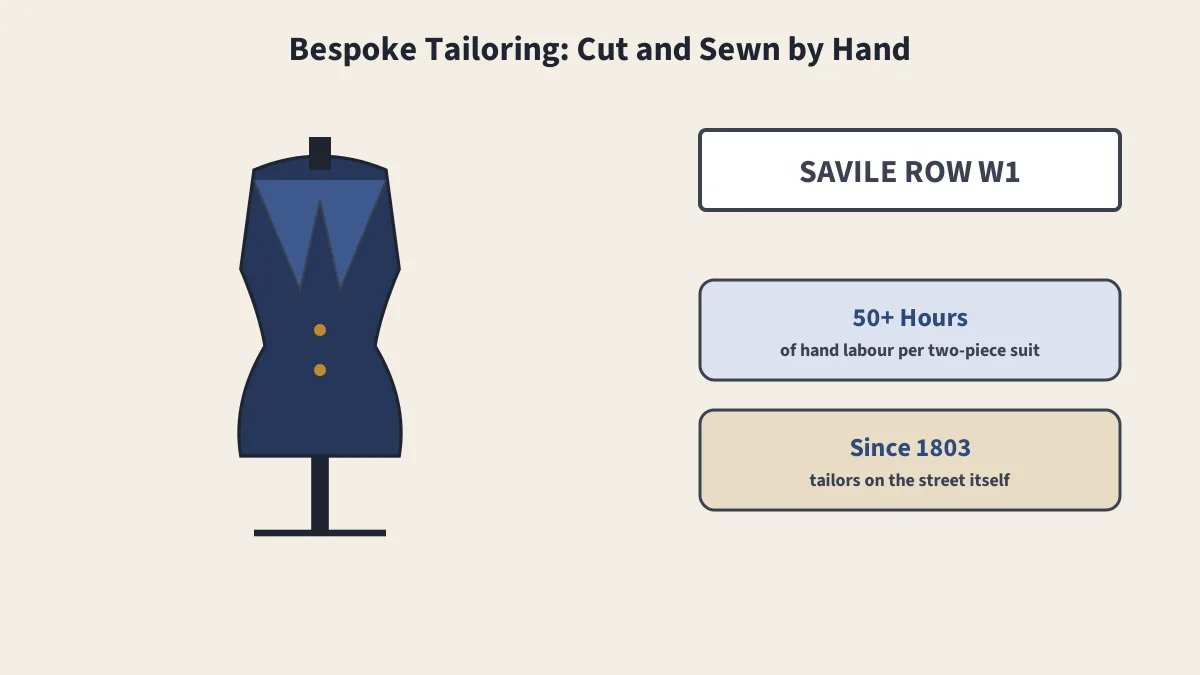
| Tailor | Custom structured garments such as suits and coats; often trained by apprenticeship; see Savile Row |
| Dressmaker | Custom women's clothing, including bridal and evening wear |
| Alterations specialist | Adjusting finished clothes to fit; see alterations |
| Costume maker | Building garments for theater, film and television, often including historical dress; see historical dress |
| Pattern maker | Drafting and grading patterns for production; see pattern grading |
| Sample maker | Sewing prototype garments before production |
| Upholsterer | Covering and padding furniture |
| Textile conservator | Caring for and stabilizing historic textiles in museums |
| Sewing teacher | Teaching classes in schools, shops and online |
| Pattern designer | Creating and selling patterns, often tested by pattern testers |
Skills That Transfer
- Accurate measuring and cutting; see cutting and layout.
- Pattern reading and fitting; see sewing patterns.
- Knowledge of fabrics and their behavior; see fabrics and fibers.
- Hand finishing and pressing; see pressing as you sew.
Training Routes
Routes vary by role and country: apprenticeships, vocational courses, fashion and costume degrees, and conservation training are all common. Requirements change, so check current guidance from schools, employers and trade bodies before choosing a path.
Sources
- Tailor, Wikipedia
- Dressmaker, Wikipedia
Frequently Asked Questions
What jobs can you get with sewing skills?
Tailor, dressmaker, alterations specialist, costume maker, pattern maker, sample maker, upholsterer, textile conservator, and sewing teacher, among others.
Do I need a degree to work in sewing?
It depends on the role. Many tailoring and alterations jobs are learned through apprenticeships or on-the-job training, while fashion design and conservation roles often involve formal study.
How do I show my sewing skills to employers?
A portfolio of finished work, with clear photos and notes on technique, is the usual way; see how to build a sewing portfolio.
Is tailoring still learned by apprenticeship?
Often, yes. Traditional tailoring has long been taught through apprenticeship, and bespoke workrooms still train apprentices.
Keep Reading
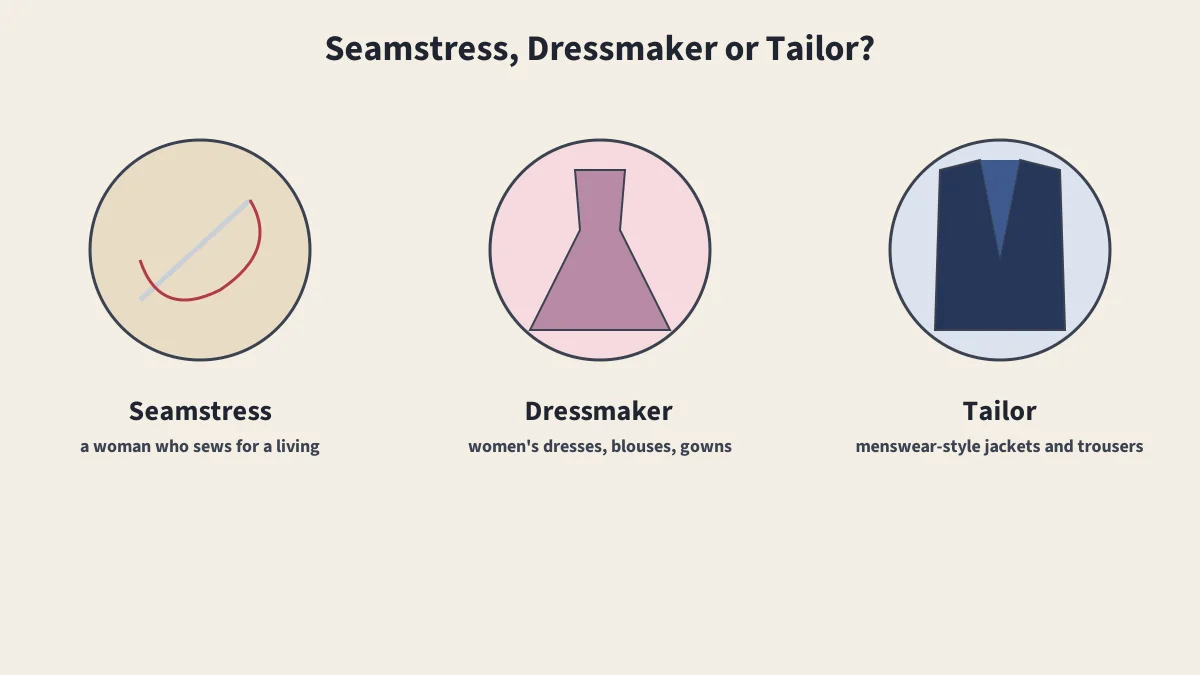
Seamstress vs. Tailor vs. Dressmaker
Who does what, and the old names for each.
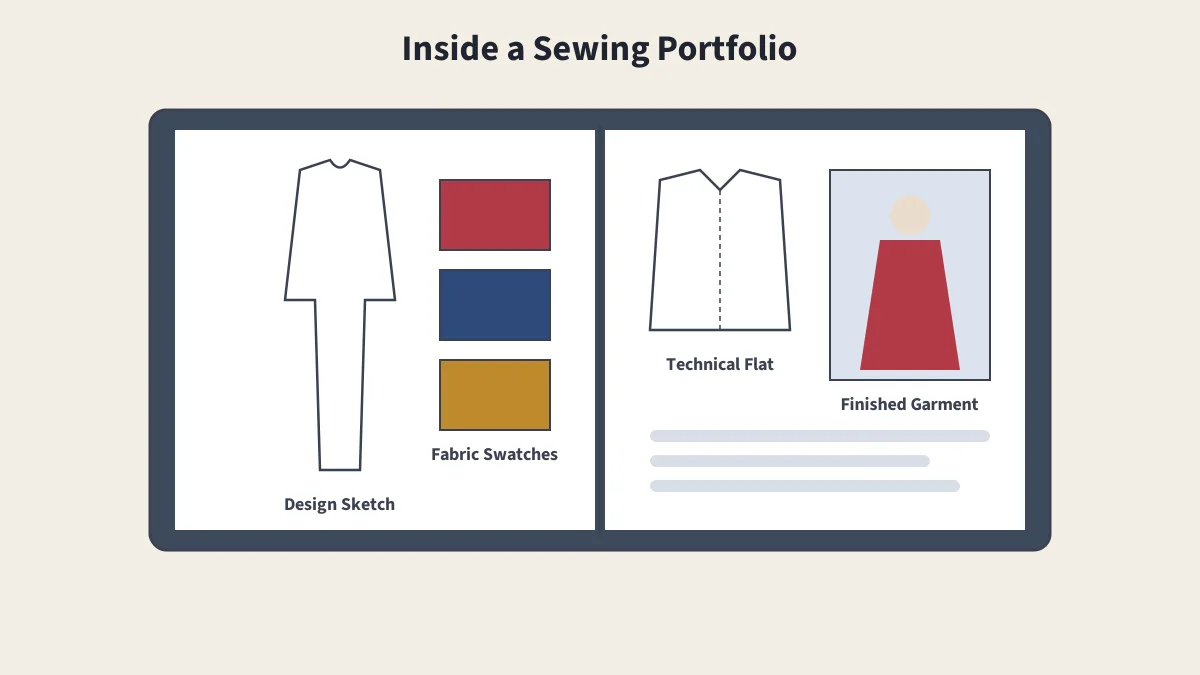
How to Build a Sewing Portfolio
What to include and how to present your work.
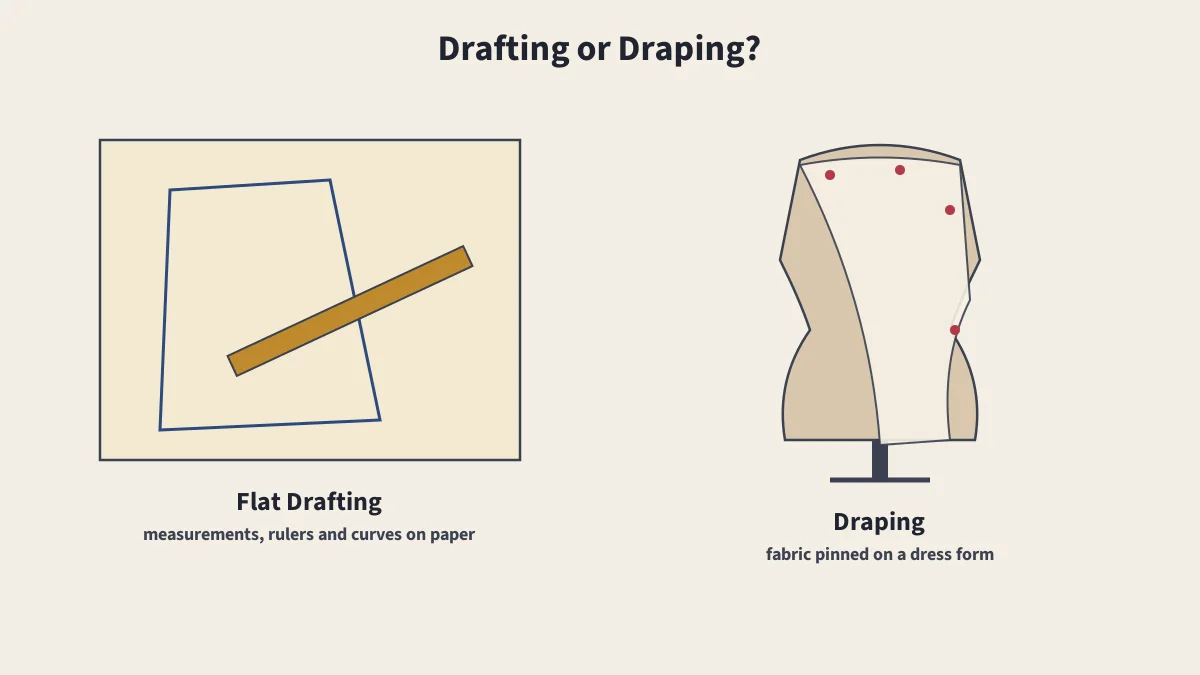
Pattern Drafting vs. Draping
Flat drafting and draping compared.
Savile Row and Bespoke Tailoring
The street, its tailors and what bespoke means.