Seamstress vs. Tailor vs. Dressmaker: What's the Difference? (2026)
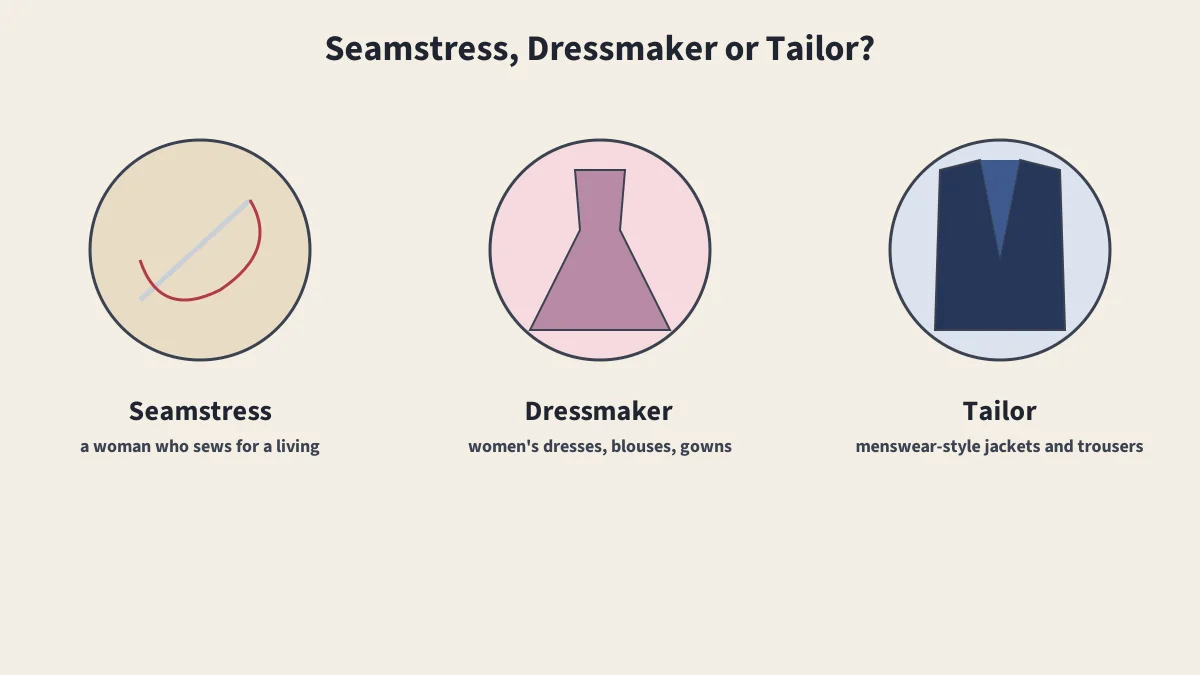
The words overlap, but each traditionally described a different kind of work. A seamstress sews for a living; a dressmaker makes women's clothes; a tailor makes structured, menswear-style garments.
In This Article
The Roles in Brief
- Seamstress: a woman who sews for a living
- Dressmaker: women's dresses, blouses, gowns
- Tailor: structured, menswear-style garments
- Old names: mantua-maker, modiste, sempstress
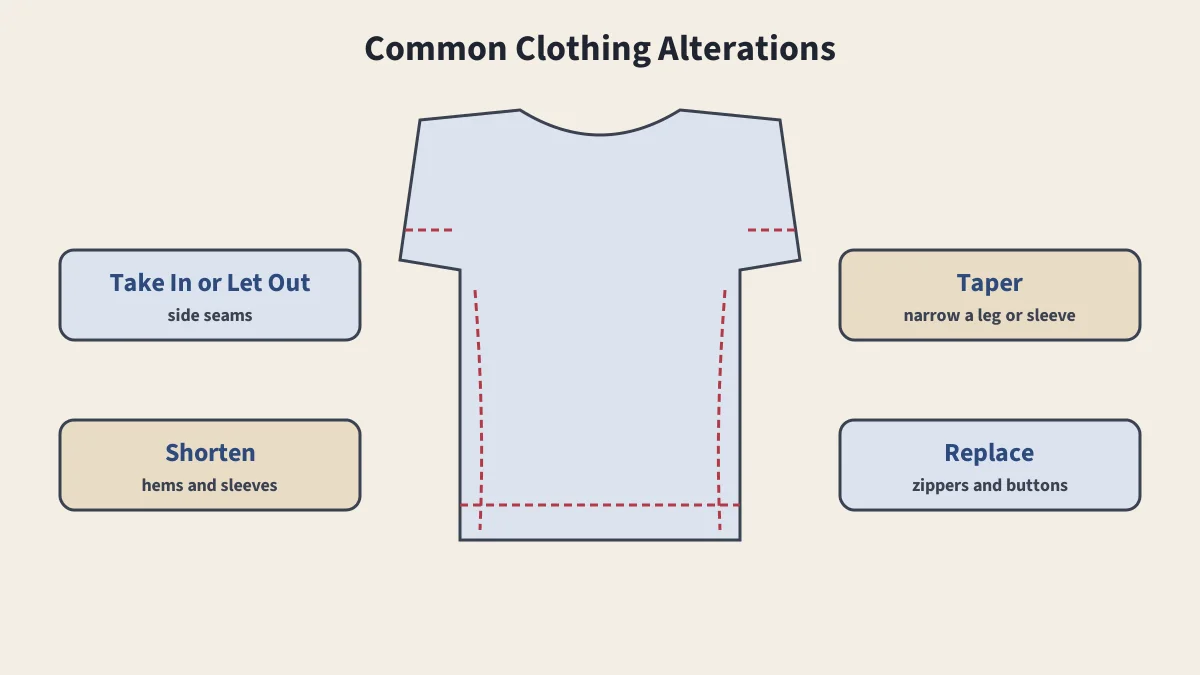
- Alterationist: adjusts finished clothes
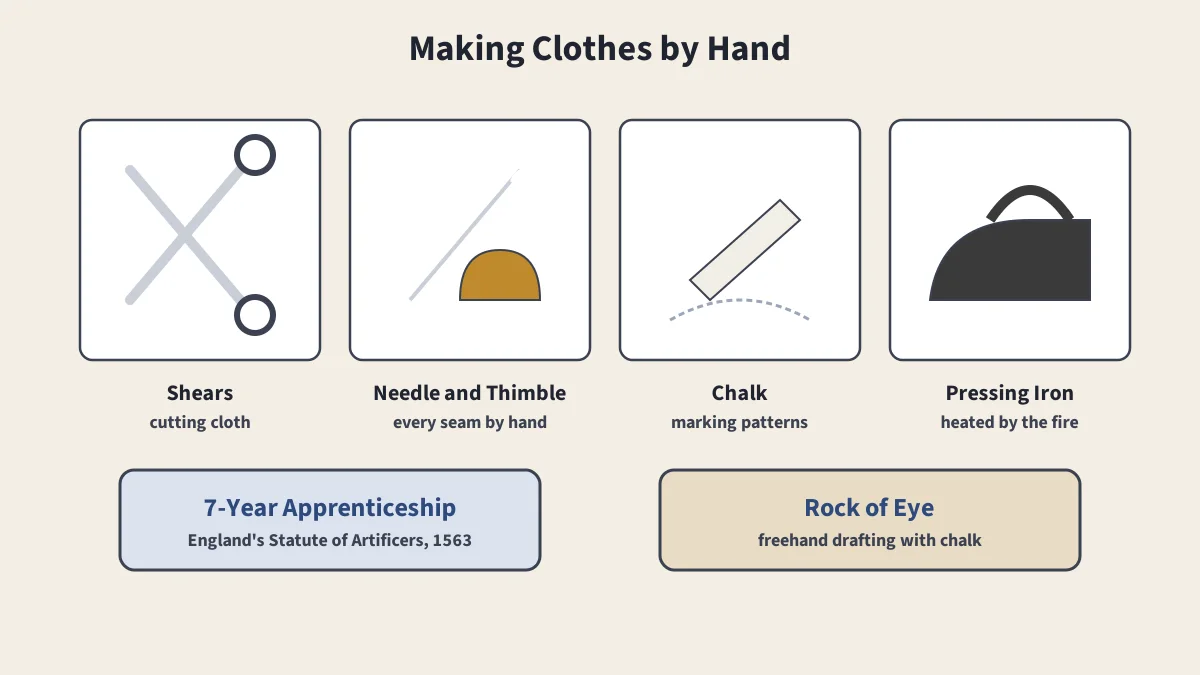
These job titles are often used interchangeably today, but they grew out of distinct trades. The differences lie in what each traditionally made and how; for earlier centuries, see how clothes were made before sewing machines.
Comparing the Roles
| Role | Traditionally Makes | Older Names |
|---|---|---|
| Seamstress | General sewing for a living, historically much of it plain hand sewing | Sempstress, seamster |
| Dressmaker | Women's clothing: dresses, blouses, evening gowns, bridal wear, lingerie | Mantua-maker, modiste, fabrician |
| Tailor | Custom menswear-style jackets and matching trousers or skirts, for men or women | Tailoress (for a woman) |
| Alterationist | Changes to finished garments |
Seamstresses
A seamstress is a woman who sews, especially one who earns a living by sewing. Before the Industrial Revolution, seamstresses did hand sewing, often under the putting-out system, in which work was given out to be done at home. Sempstress and seamster are older variants of the word.
Dressmakers
A dressmaker makes clothing for women. Historically, dressmakers were called mantua-makers, after the 18th-century mantua gown, and also modistes, makers of fashionable clothing and accessories following Paris styles. See 17th- and 18th-century dress.
Tailors
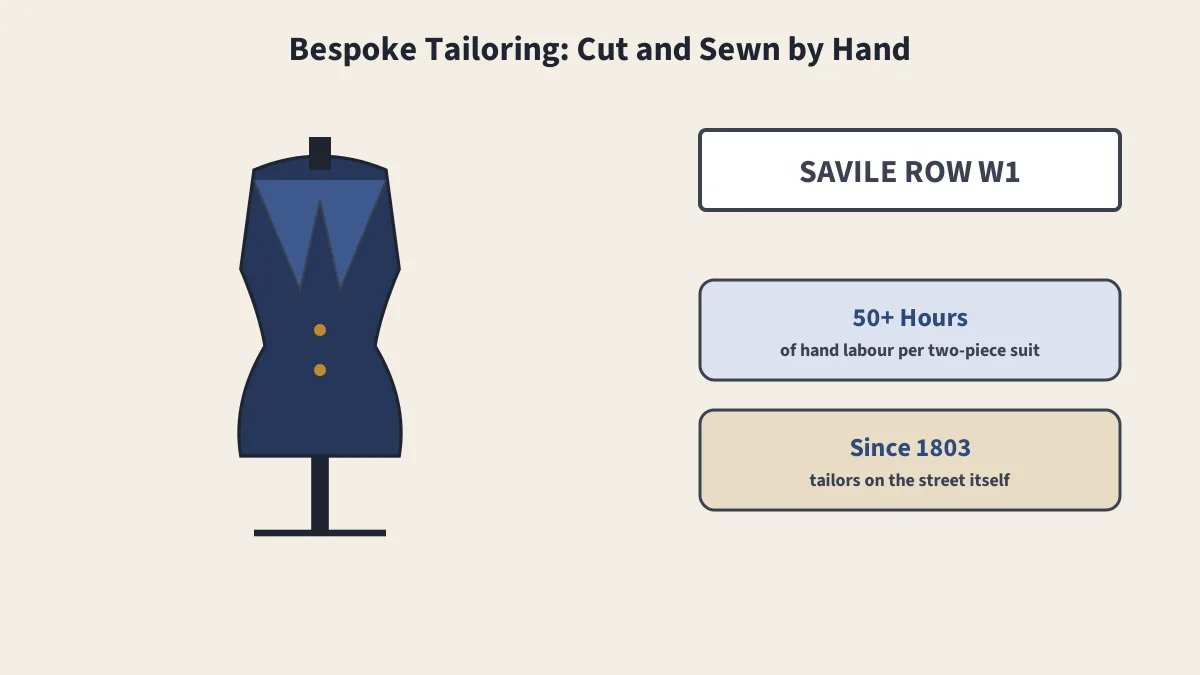
A tailor makes custom, structured, menswear-style jackets with the skirts or trousers that go with them, for men or women. Tailoring traditionally involves interfacing, pad stitching and shaping by pressing. All tailors can do alterations, but not all alterationists can tailor; see clothing alterations and Savile Row.
Sources
- Seamstress, Wikipedia
- Dressmaker, Wikipedia
Frequently Asked Questions
What is the difference between a seamstress and a tailor?
A seamstress is a woman who sews, especially for a living. A tailor makes custom menswear-style jackets and the trousers or skirts that go with them, for men or women.
What does a dressmaker do?
Makes clothing for women, such as dresses, blouses and evening gowns. A custom dressmaker may also make suits, bridal wear and lingerie.
Can a seamstress do alterations?
Yes. Alterations are a common part of sewing work, though tailoring is a broader skill: all tailors can do alterations, but not all alterationists can tailor.
What is a modiste?
A historical term for a maker of fashionable clothing and accessories, following current Paris fashions.
Keep Reading
Before Sewing Machines
Tailors, dressmakers and hand sewing before machines.
Sewing Careers
Tailoring, costume, pattern making and more.
Savile Row and Bespoke Tailoring
The street, its tailors and what bespoke means.
Clothing Alterations Basics
Easy and hard alterations, and when to see a tailor.