The Triangle Shirtwaist Factory Fire: The 1911 Disaster That Changed Labor Law (2026)
On March 25, 1911, a fire at a New York garment factory killed 146 workers, most of them young immigrant women. Locked exit doors trapped many inside. The disaster led to sweeping new safety laws.
In This Article
The Fire in Brief
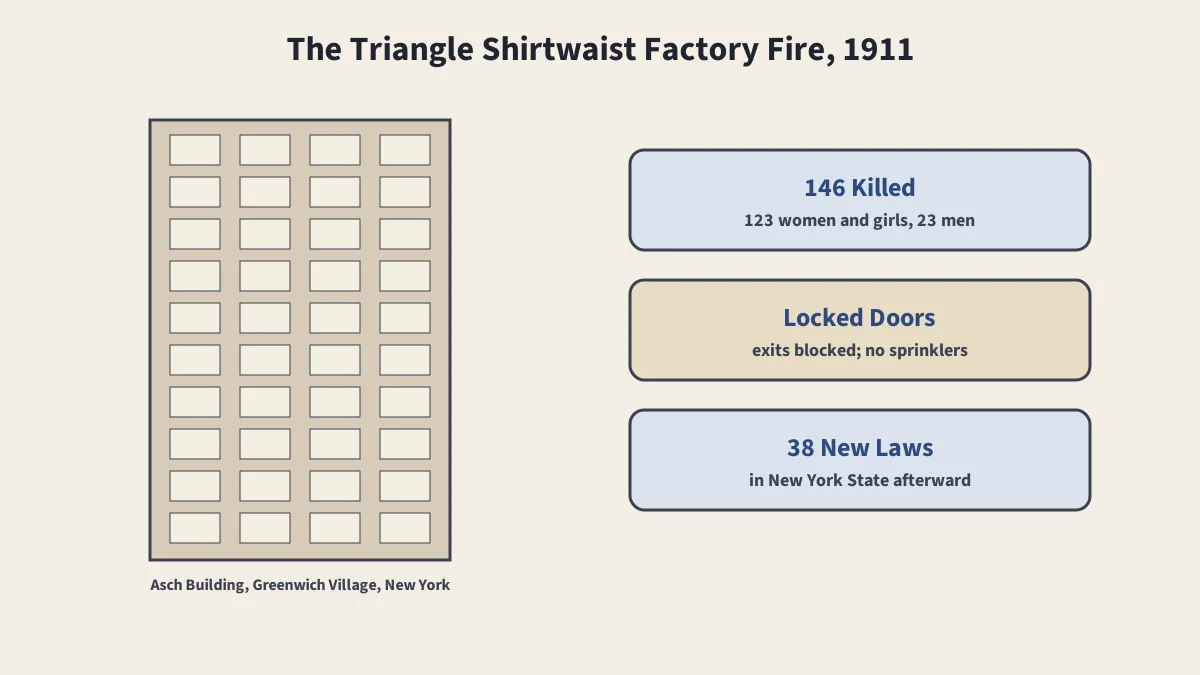
- Date: March 25, 1911
- Place: Asch Building, Greenwich Village, New York
- Deaths: 146 garment workers
- Cause of the toll: locked doors, no sprinklers
- Result: 38 new New York labor laws
The Triangle Shirtwaist Factory made women's blouses called shirtwaists, the fashionable blouse of the era; see shirt and blouse styles. On March 25, 1911, a fire at the factory, in the Asch Building in Manhattan's Greenwich Village, killed 146 workers.
The Fire
146 garment workers died: 123 women and girls and 23 men. Most were recent Italian and Jewish immigrants aged 14 to 23. The stairwell and exit doors had been locked, so many workers could not escape the flames, and many jumped from the windows. The building had no sprinklers.
The Trials
The factory's owners, Max Blanck and Isaac Harris, were acquitted of first- and second-degree manslaughter. In a civil suit in 1913, they were found liable for wrongful death, and the plaintiffs were awarded $75 per victim.
Reform
| Outcome | Detail |
|---|---|
| Factory Investigating Commission | Its findings led to 38 new labor laws in New York State |
| What the laws covered | Fire safety, fire extinguishers, alarms, sprinklers, and limits on women's and children's working hours |
| Frances Perkins | An eyewitness who headed the Committee on Public Safety, which pushed for legislation; she later became US Secretary of Labor |
| ILGWU | The International Ladies' Garment Workers' Union grew, fighting for better conditions for sweatshop workers |
Remembering the Fire
For the garment industry's later history, including the 2013 Rana Plaza collapse in Bangladesh, see the history of the garment industry.
Sources
- Triangle Shirtwaist Factory fire, Wikipedia
Frequently Asked Questions
What was the Triangle Shirtwaist Factory fire?
A fire on March 25, 1911, at the Triangle Shirtwaist Factory in the Asch Building in Greenwich Village, Manhattan, which killed 146 garment workers.
Who died in the fire?
146 garment workers: 123 women and girls and 23 men, mostly recent Italian and Jewish immigrants aged 14 to 23.
Why did so many die?
The stairwell and exit doors were locked, so many workers could not escape, and the building had no sprinklers. Many jumped from the windows.
What changed after the fire?
New York's Factory Investigating Commission led to 38 new state labor laws on fire safety, alarms, sprinklers and working hours. The International Ladies' Garment Workers' Union grew, and eyewitness Frances Perkins later became US Secretary of Labor.
Keep Reading
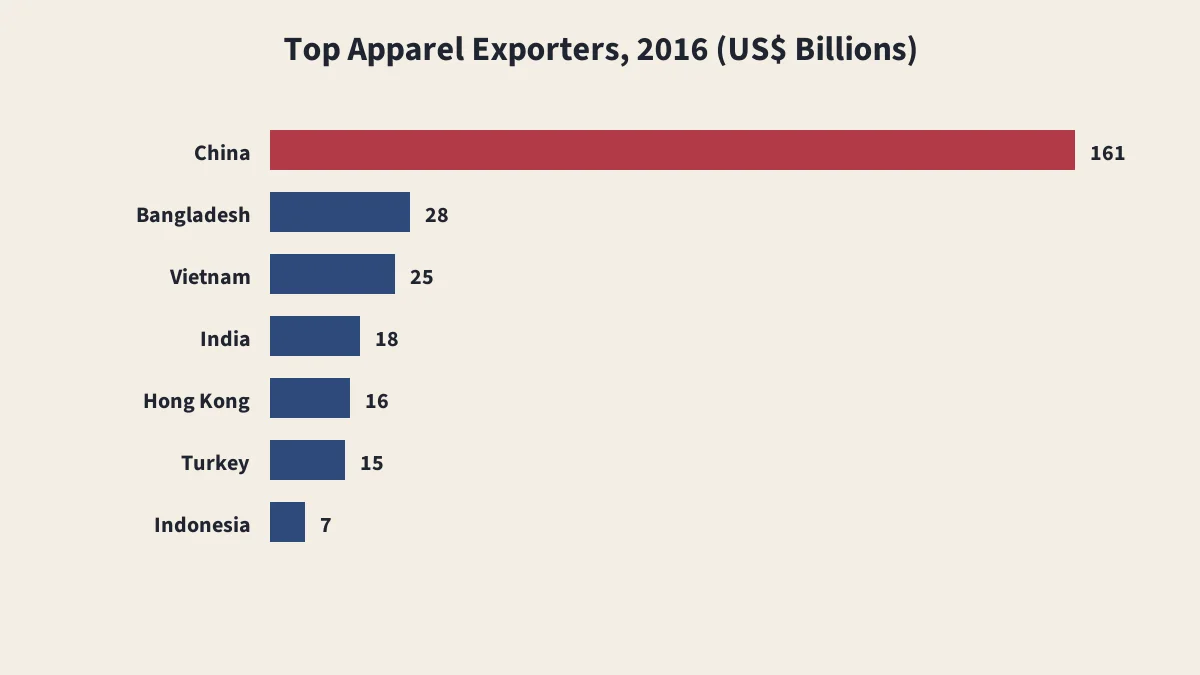
History of the Garment Industry
Industrialization, sweatshops, Rana Plaza and fast fashion.
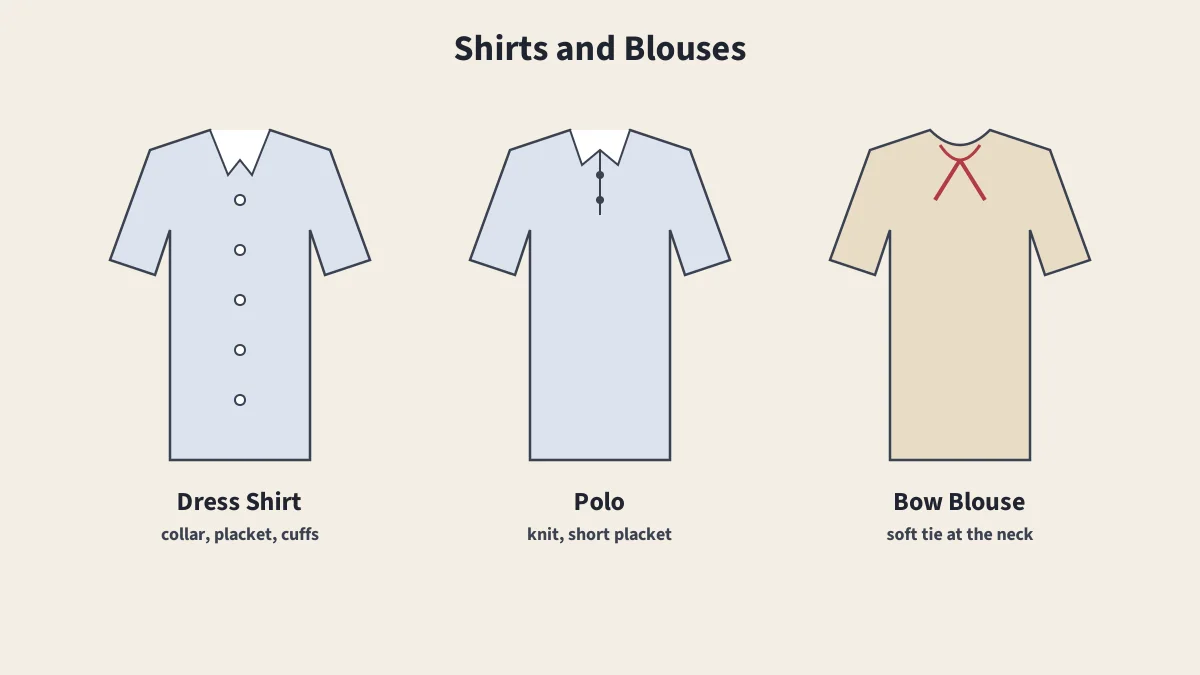
Shirt and Blouse Styles
Dress shirts, polos, shirtwaists and blouse styles.
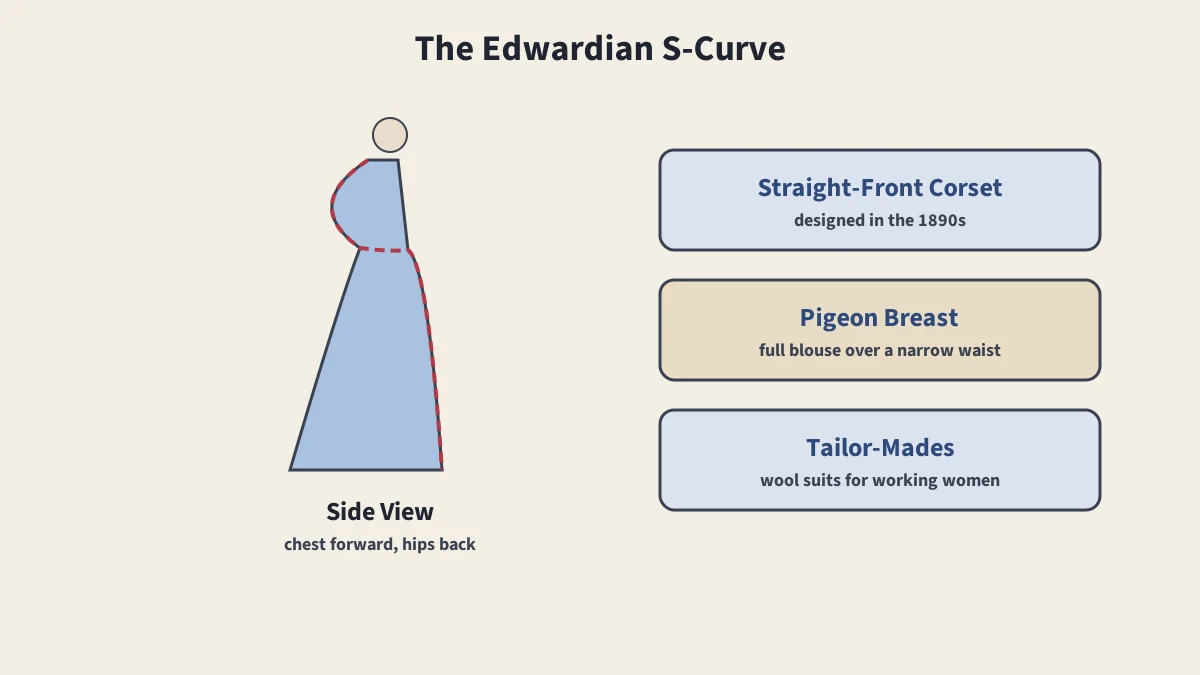
Edwardian Dress
S-curve silhouettes, shirtwaists and tailored suits.
Seamstress vs. Tailor vs. Dressmaker
Who does what, and the old names for each.