Sewing Idioms and Their Origins: What We Know and What We Don't (2026)
Everyday English is full of phrases from sewing and cloth-making. Some origins are well documented; many popular stories are guesses. Here are the phrases, with what the evidence supports.
In This Article
Idioms in Brief
- On tenterhooks: cloth stretched on a frame
- Spinster: a woman who spun
- White-collar / blue-collar: shirts at work
- Cabbage: tailors' leftover scraps
- Uncertain: many popular origin stories
Spinning, weaving and sewing were once part of everyday life, so it is no surprise that English borrowed many words and phrases from them. This page separates origins backed by sources from those that are only plausible guesses.
Phrases With Documented Origins
| Phrase | Meaning | Origin |
|---|---|---|
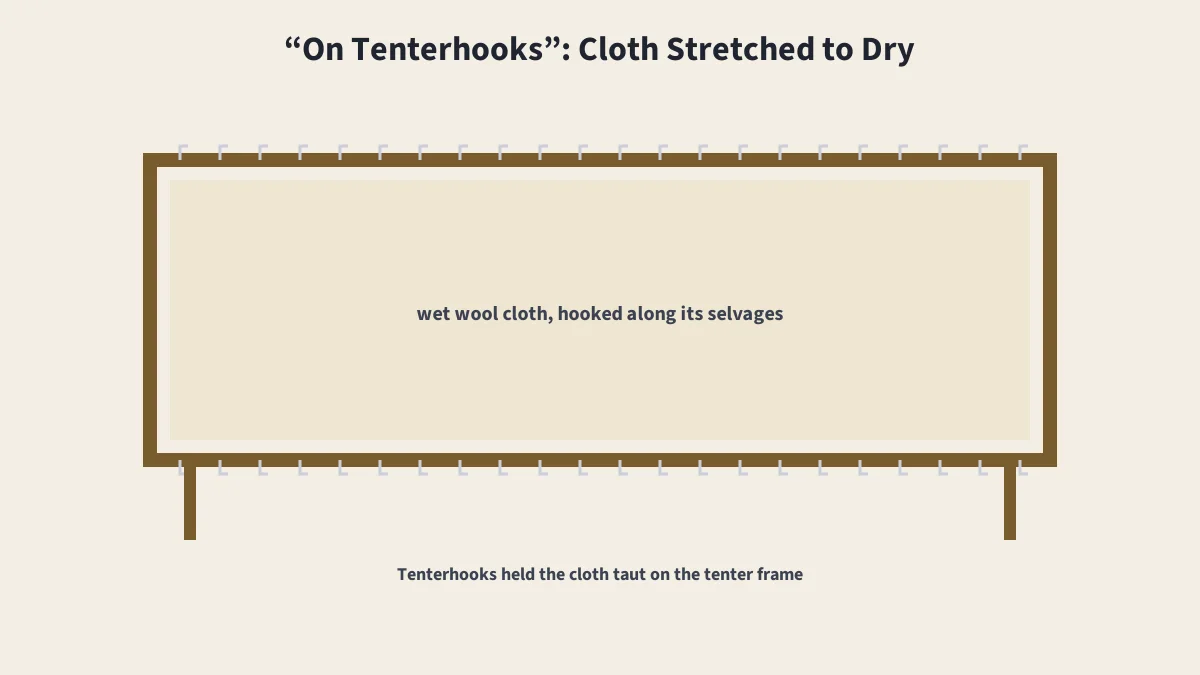
| On tenterhooks | In suspense | Tenterhooks held wet woolen cloth stretched on a tenter frame to dry; an early figurative use appears in John Ford's 1633 play The Broken Heart |
| Spinster | An unmarried woman (dated) | Originally a woman who spun; spinning was commonly done by unmarried women. Earliest cited legal use: 1699 |
| White-collar / blue-collar | Office / manual work | Businessmen's starched white collars versus laborers' blue chambray shirts; see types of collars |
| Cabbage | Leftover fabric | Tailors' term for scraps they could keep or sell |
| Dressmaker details | Ruffles, frills, trims | Contrasted with "tailored" styles; see seamstress vs. tailor |
| Sweatshop | A workplace with poor conditions and low pay | Used for crowded early 20th-century garment workshops; see the garment industry |
"Tenter" comes from the Latin tendere, "to stretch," and the hooks gripped the cloth's selvages; see grain, bias and selvage.
Everyday Sewing Phrases
These phrases clearly draw on sewing imagery, but we could not confirm their exact origins in a reliable source, so we give their meanings only.
- A stitch in time saves nine: fixing a small problem early prevents a bigger one.
- On pins and needles: anxious and waiting.
- Bursting at the seams: very full.
- Coming apart at the seams: falling apart.
- Cut from the same cloth: very similar.
- Tailor-made: made or perfectly suited for a particular purpose.
- Hanging by a thread: in a precarious state.
- Needle in a haystack: something almost impossible to find.
- Spin a yarn: tell a long story.
- Lose the thread: forget what you were saying.
Sources
- Tenterhook, Wikipedia
- Spinster, Wikipedia
- Tailor, Wikipedia
Frequently Asked Questions
Where does 'on tenterhooks' come from?
From the tenter, a wooden frame on which wet woolen cloth was stretched to dry without shrinking. Tenterhooks were the hooked nails holding the cloth's edges. John Ford's 1633 play The Broken Heart includes an early figurative use.
Why is an unmarried woman called a spinster?
The word originally meant a woman who spun wool. Spinning was commonly done by unmarried women, so the word came to mean an unmarried woman; legal documents used it this way from the 1600s to the early 1900s.
What is 'cabbage' in tailoring?
Tailors' slang for leftover scraps of a customer's fabric, which tailors could keep or sell for extra income.
Where do 'white-collar' and 'blue-collar' come from?
From the early 20th-century contrast between businessmen's starched white collars and laborers' blue chambray work shirts.
Keep Reading
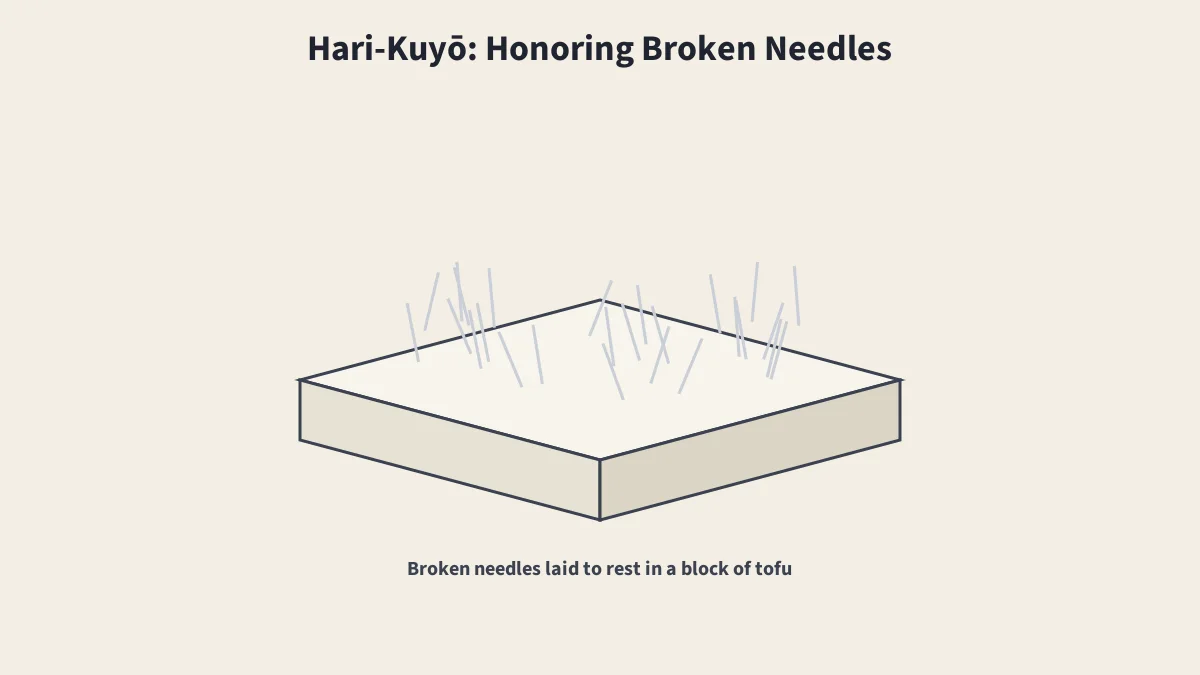
Sewing Superstitions and Folklore
Needle memorials, needle-threading contests and old beliefs.
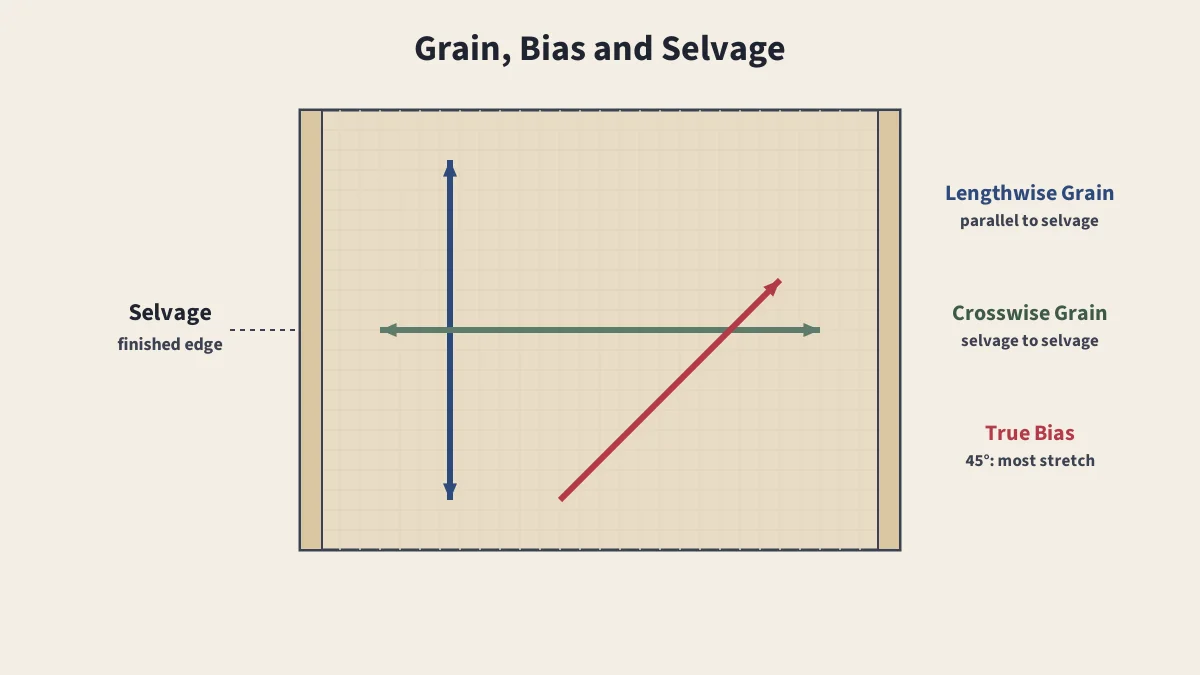
Grain, Bias and Selvage
Lengthwise grain, crosswise grain, true bias and selvage.
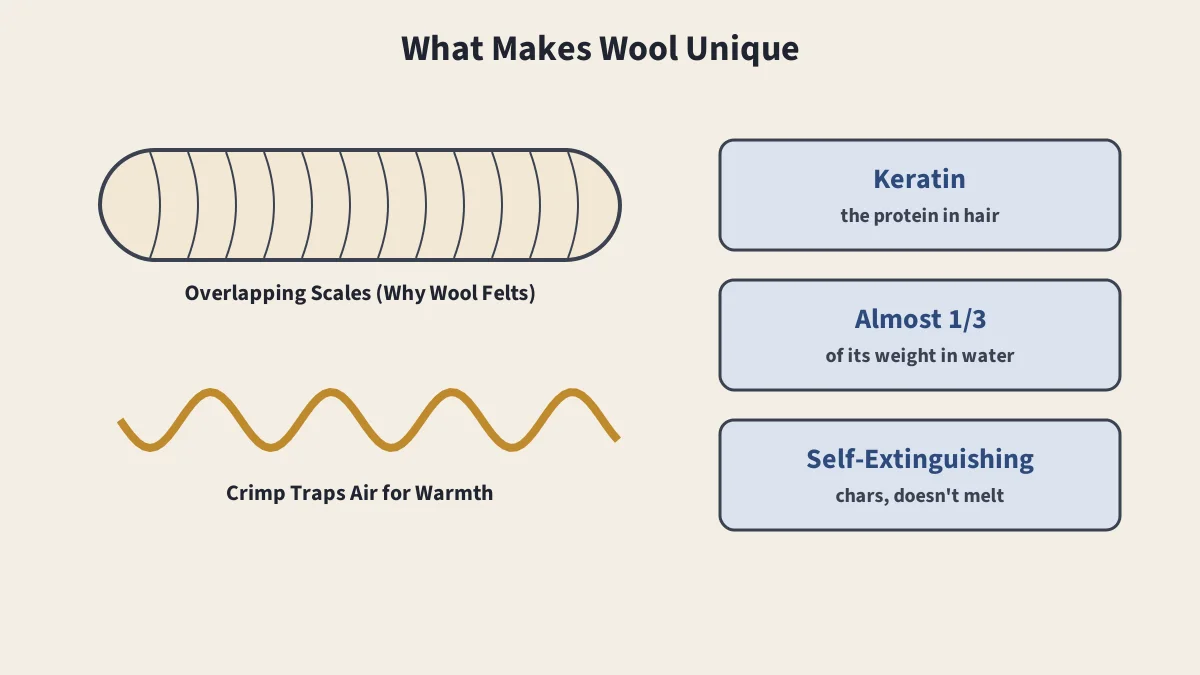
Wool
What wool is, why it is warm and felts, and how to sew it.
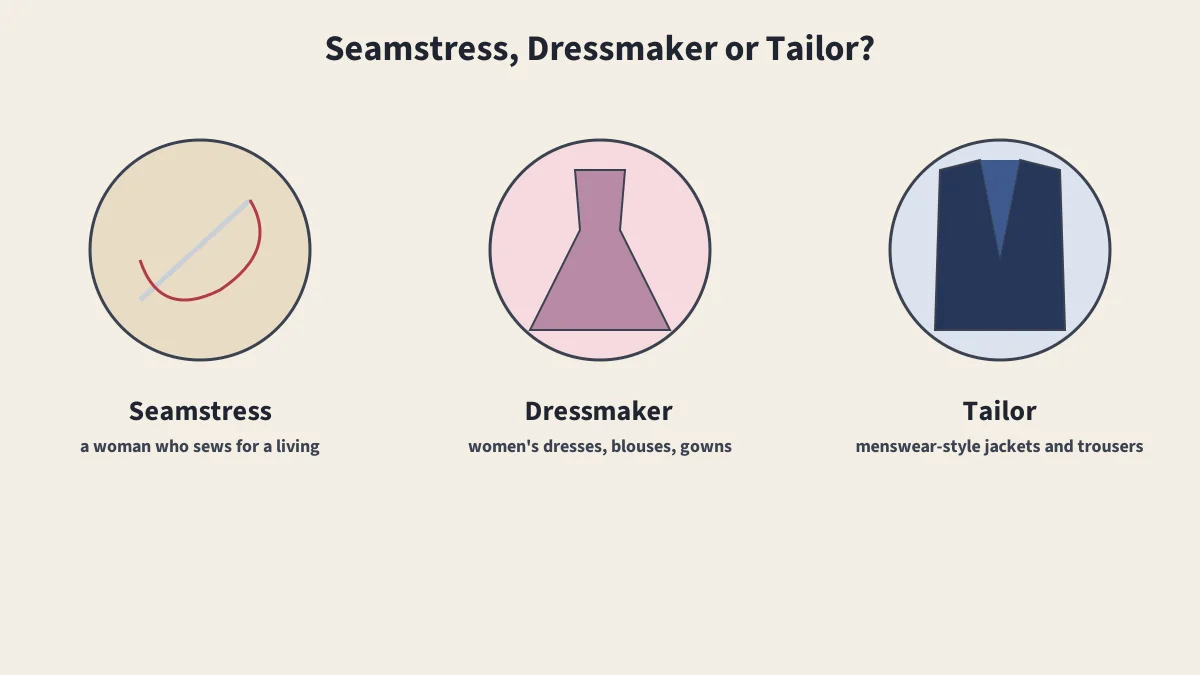
Seamstress vs. Tailor vs. Dressmaker
Who does what, and the old names for each.