How Ready-to-Wear Replaced Homemade Clothes (2026)
In 1811, most American clothing was still sewn at home. Within about 140 years, nearly everything people wore came off a rack. Here is how sailors' slops, army uniforms, sewing machines and department stores made that happen.
In This Article
- Ready-to-Wear in Brief
- A World of Homemade Clothes
- Slop Shops: The First Off-the-Rack Clothes
- Uniforms, Factories and the Civil War
- The Sewing Machine Changes Everything
- Department Stores and Mail Order
- Why Women's Clothing Came Later
- The Twentieth Century: Ready-to-Wear Wins
- What It Meant for Sewists
- Sources
- Frequently Asked Questions
Ready-to-Wear in Brief
- 1811: a U.S. government report finds two-thirds of garments worn by Americans are homemade
- War of 1812: military uniforms are mass-produced in the United States
- 1831: the first ready-made garment factory opens in New York City
- Late 1860s: about 25% of garments produced in the U.S. are ready-made
- 1890: that share reaches about 60%
- 1951: about 90% of garments sold in the U.S. are ready-made
Today almost nobody makes their own everyday clothes, and sewing is a choice rather than a necessity. For most of history it was the other way around. Clothing was made at home, by a local tailor or dressmaker, or bought secondhand. The shift to clothes sold in set sizes, ready to put on, is one of the biggest changes in the story of sewing, and it happened faster than most people realize.
A World of Homemade Clothes
A U.S. government report issued in 1811 found that two-thirds of all garments worn by Americans were made at home. Wealthier people paid tailors and dressmakers to make clothes to measure. Poorer people made do, patched and remade garments, and bought used clothing, which was by far the most common source of ready-made clothes before industrialization.
Home sewing was skilled, time-consuming work, mostly done by women. A family's clothing represented many hours at the needle, which is one reason garments were mended, turned and passed down rather than thrown away. Our article on Make Do and Mend follows that habit into the twentieth century.
Slop Shops: The First Off-the-Rack Clothes
The first off-the-rack clothing was not fashionable at all. "Slop" was old naval slang for cheap, loose, ready-made clothing that sailors bought in place of an official uniform. In the early nineteenth century, slop shops appeared on the streets near wharves in Boston, New York, Philadelphia, Baltimore and smaller ports with whaling or fishing trades. Sailors arriving in port needed clothes quickly and had no time to wait for a tailor.
Before the Civil War, most ready-made outer garments in America were made for two groups who had little say in what they wore: sailors and enslaved people. Coarse, standardized clothing for plantations was produced in quantity, and it was the bottom of the market.
Uniforms, Factories and the Civil War
War pushed the industry forward. Ready-to-wear military uniforms were mass-produced in the United States during the War of 1812, and civilian ready-made menswear followed soon after. The first ready-made garment factory opened in New York City in 1831.
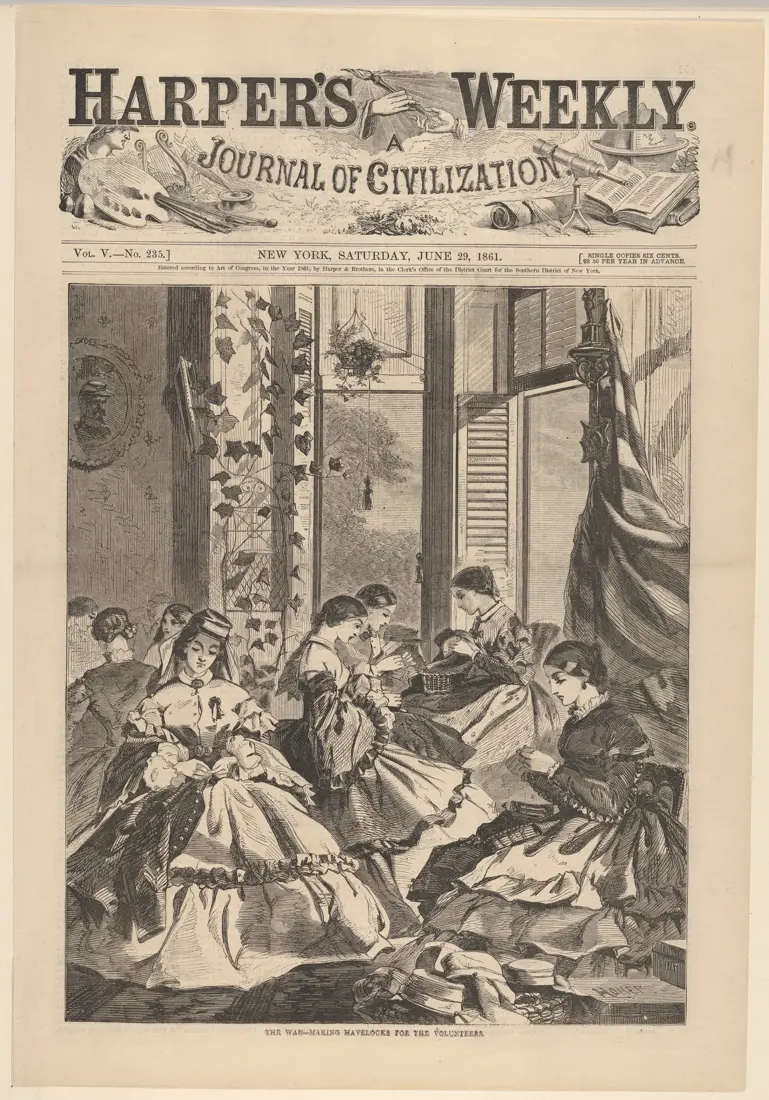
The American Civil War was a bigger turning point. Hundreds of thousands of soldiers needed uniforms, and the demand helped the garment industry grow quickly. Producing so many uniforms also generated large amounts of data about men's body measurements, which manufacturers used to develop standard sizes. Civilians, meanwhile, sewed for soldiers, as the Winslow Homer engraving below shows.
The Sewing Machine Changes Everything
None of this could have scaled without the sewing machine. From the 1850s, machines made by Singer and its rivals spread into factories and homes. A seam that took a skilled hand sewer hours could be stitched in minutes. Our histories of the sewing machine's invention and the Singer company cover how that happened.
The effect on ready-to-wear was dramatic. In the late 1860s, about 25 percent of garments produced in the United States were ready-made. By 1890, the share had risen to about 60 percent.
Department Stores and Mail Order
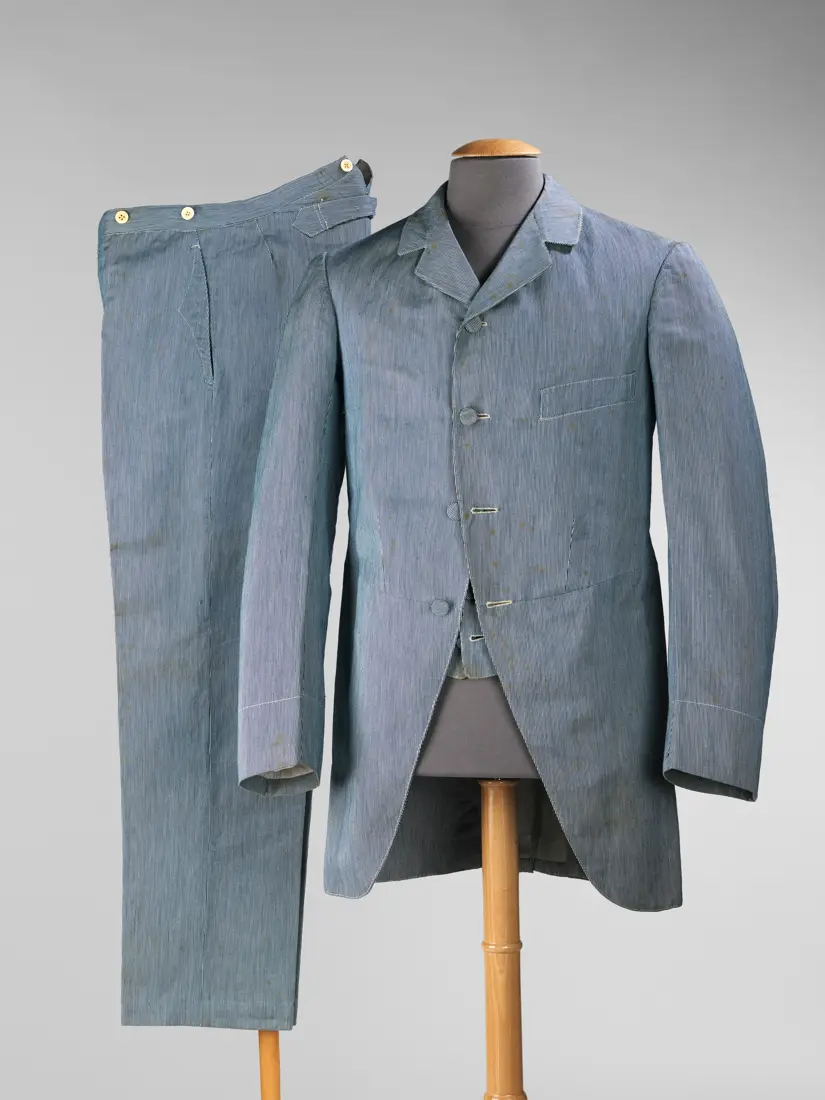
New ways of selling clothes grew alongside new ways of making them. Department stores, which gathered many kinds of goods under one roof, became a major part of city shopping from the later nineteenth century. In Paris, La Belle Jardinière was one of the best-known sellers of ready-made clothing; the suit at the top of this page was sold there around 1900. In Belgium, the Dewachter brothers opened a chain of stores offering ready-to-wear clothing for men and children in 1868.
Mail-order catalogs, helped by better postal services, carried ready-made clothing to people far from any city store. A farm family could now order a coat in a size rather than sewing one.
Why Women's Clothing Came Later
Men were the first ready-to-wear customers because men's clothing of the era was loose, durable and fairly standardized, which made it easy to cut in set sizes. Women's clothing was fitted closely to the body and changed with fashion, so it was much harder to mass-produce.
Women's ready-to-wear began with underwear, outerwear such as cloaks and coats, and accessories. Fitted dresses followed later, and for decades many women still sewed their own dresses or had them made from paper patterns.
Fashion itself helped tip the balance. As the long, layered silhouettes of the 1910s gave way to the simpler, shorter dresses of the 1920s, garments needed far less fabric and fitting. In her history of the clothing industry, Sofi Thanhauser cites an estimate that a woman's outfit used about 19 yards of fabric in 1913 and about 7 yards by 1928.
The Twentieth Century: Ready-to-Wear Wins
By 1951, about 90 percent of garments sold in the United States were ready-made, and in France about two-thirds. High fashion followed. In 1966 Yves Saint Laurent opened Rive Gauche, his first ready-to-wear boutique, a sign that even couture houses now saw off-the-rack clothing as the future.
Home sewing did not disappear. Hard times kept it alive, from feed sack dresses in the Depression to wartime mending. But its role changed: instead of being the only way to get clothes, sewing became a way to get better fit, more individual style or simply the pleasure of making.
What It Meant for Sewists
| Before Ready-to-Wear | After Ready-to-Wear |
|---|---|
| Most clothes made at home or to measure | Most clothes bought in standard sizes |
| Sewing a necessary household skill | Sewing a hobby, craft or profession |
| Garments mended, turned and remade for years | Garments replaced more often as prices fell |
| Fit tailored to one body | Fit designed for an average body, which is why many sewists today alter patterns and clothes |
That last row explains much of modern sewing. Ready-made sizes are built for averages, and few bodies match the average everywhere. Many people sew precisely because they want what ready-to-wear took away: clothes made to fit them.
For how clothes were made before mass production, see how clothes were made before sewing machines.
For the factories and workers behind mass-produced clothing, see the history of the garment industry and the Triangle Shirtwaist Factory fire.
Sources
- Ready-to-wear, Wikipedia
- Slop (clothing), Wikipedia
- Ready-to-wear, Fashion History Timeline, Fashion Institute of Technology
- Suit, La Belle Jardinière, ca. 1900, The Metropolitan Museum of Art
- The War – Making Havelocks for the Volunteers, Winslow Homer, The Metropolitan Museum of Art
Frequently Asked Questions
When did ready-to-wear clothing start?
Cheap ready-made clothing called slops was sold to sailors in port cities from at least the eighteenth century. Mass production grew in the United States with uniforms for the War of 1812, the first New York ready-made garment factory in 1831, and the Civil War. Ready-to-wear became normal for most people in the late nineteenth and early twentieth centuries.
What does prêt-à-porter mean?
Prêt-à-porter is French for ready-to-wear. The term has been attributed to the designer Sonia Delaunay after her work was shown at the 1925 Paris Exposition.
Why were men's clothes ready-made before women's?
Men's clothing of the period was looser and more standardized, so it was easier to cut in set sizes. Women's ready-to-wear began with underwear, outerwear and accessories before fitted dresses followed.
How did the sewing machine affect ready-to-wear?
Sewing machines spread from the 1850s and made factory clothing far faster to produce, which helped ready-made garments become cheap and widely available.
Keep Reading
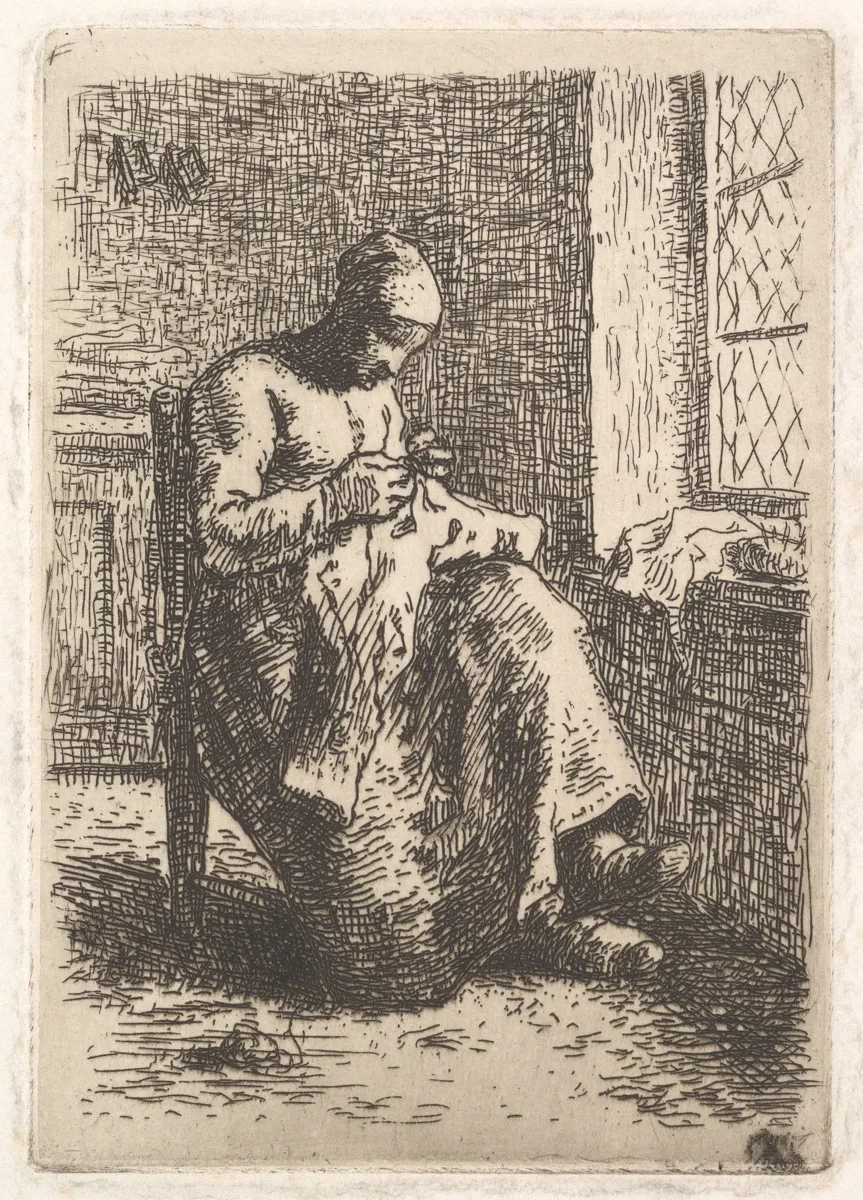
Isaac Singer and the Singer Company
An actor, a lawyer and a payment plan built sewing's most famous brand.
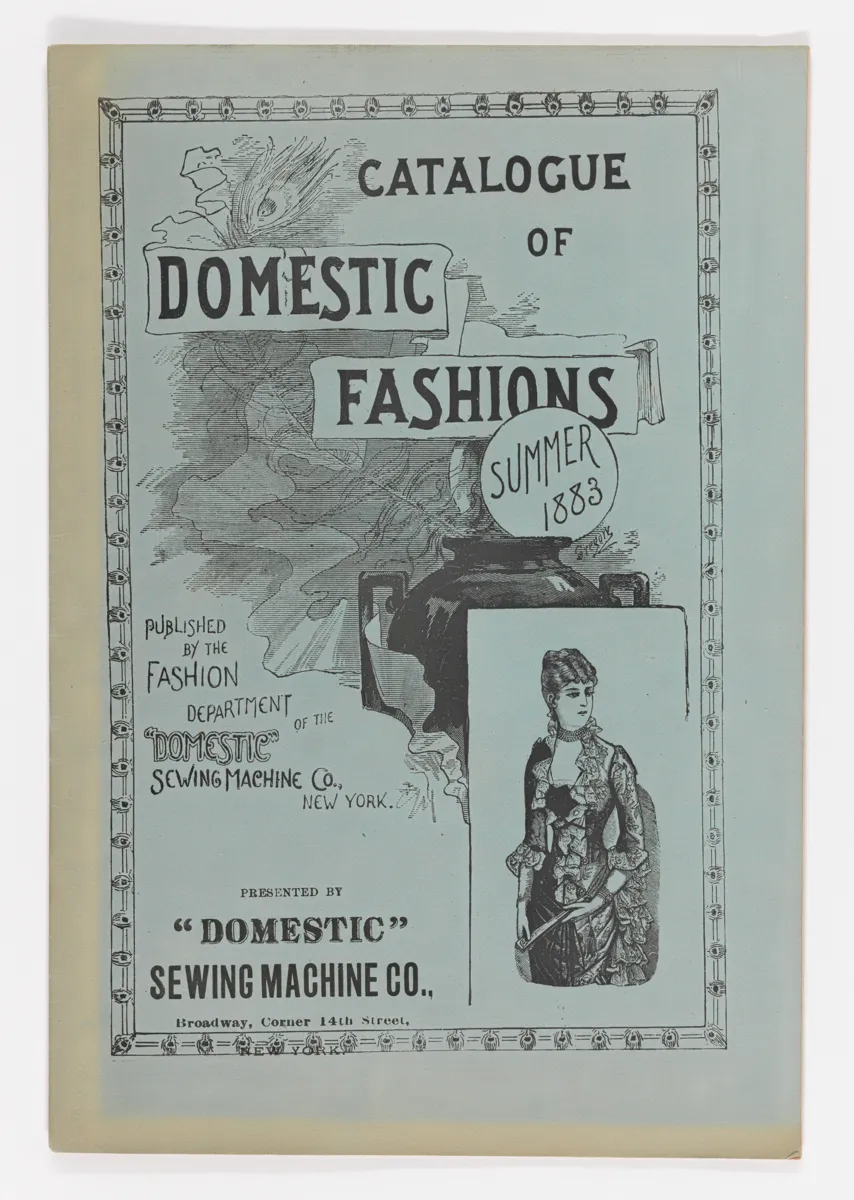
History of Sewing Patterns
Butterick, McCall's, Vogue and Simplicity, from 1800s magazines to PDFs.
Feed Sack Dresses
How flour and feed bags became printed dress fabric for rural families.
History of Sewing
How a bone splinter became a global industry, from the Ice Age to PDF patterns.