Feed Sack Dresses: When Flour Bags Became Fashion (2026)
For decades, rural families in the United States and Canada sewed clothes from the cotton bags their flour, sugar and animal feed came in. The practice grew so popular that manufacturers began competing on the prints.
In This Article
Feed Sack Facts in Brief
- Late 19th century: flour sack clothing is already being made in rural North America
- 1910s: bag manufacturers begin offering a range of softer fabrics
- 1925: Gingham Girl Flour is packed in red and white checked fabric
- 1928: President Calvin Coolidge receives flour sack pajamas from a Chicago church group
- World War II: an estimated 3 million women and children wear feed sack clothing
- Early 1960s: most feed sack production has ended
Few pieces of sewing history are as loved by quilters and vintage collectors as the humble feed sack. The bags that once held flour, sugar, seed and chicken feed were made of good cotton, and thrifty families saw no reason to waste it. What started as making do became, by the 1930s and 1940s, a small fashion industry of its own.
From Barrels to Cotton Bags
Feed sacks began as plain, heavy containers. Early ones were made of sturdy canvas, and farmers often brought their own marked sack back to the mill to be refilled. As cheaper cotton bags replaced barrels and reusable canvas, families found themselves with a steady supply of free fabric.
By the 1910s, bag manufacturers were offering a range of textiles. Flour and sugar bags were made from tightly woven, light cloth such as percale and sheeting, soft enough for underwear, dresses, towels and sheets. The coarser feed bags suited shirts, aprons and work clothes.
Sewing from sacks was not new. An 1892 short story in Arthur's Home Magazine already describes a baby looking lovely in her flour sack dress, thanks to her mother's care and ingenuity. But in the hard years that followed World War I, flour sack clothing became far more visible across the United States.
Washing Out the Logos
The first sack fabrics came printed with brand names and logos. Women soaked, scrubbed and bleached them to remove the ink, and what would not wash out often ended up on the inside of a garment or in underwear. Family stories about underwear that still showed a mill's brand name are part of feed sack folklore, and they explain why manufacturers eventually changed their approach.
The Printed Sack Boom
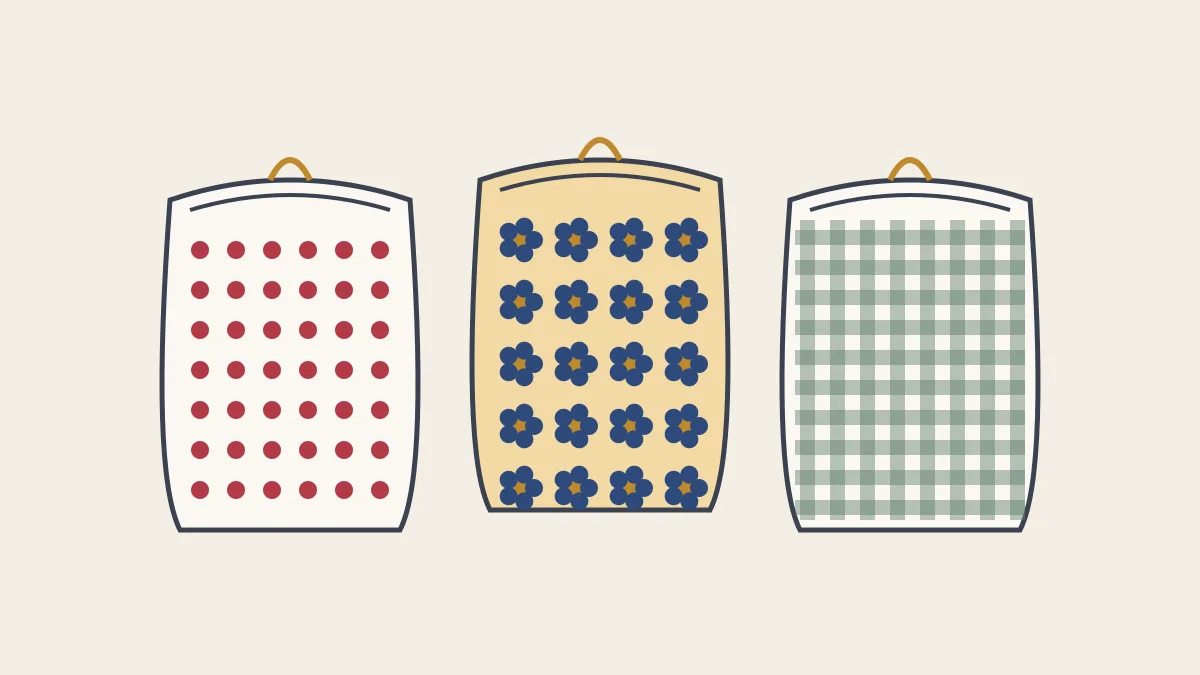
Bag makers and mills noticed what their customers were doing with the packaging. If a woman was going to make her family's clothes from the sack, the sack itself could sell the flour. In 1925 Gingham Girl Flour was packed in good-quality red and white checked fabric, and the idea spread quickly.
Through the 1930s and 1940s, companies printed sacks with florals, checks, stripes, geometric patterns and children's motifs. Some made sacks with easy-to-remove paper labels so the cloth came out clean. Others printed panels for dolls, toys, aprons or pillowcases directly on the bag. Bag companies hired designers to keep the prints fashionable, and a 1946 issue of Time singled out Peek, a vice president of the Percy Kent Bag Company, as a leading figure in the trade.
The result was a strange kind of shopping. On a trip to the feed store, a farm wife might decide which brand of chicken feed to buy based on which print she wanted for a dress.
Collecting Enough for a Dress
One sack rarely made a whole garment. An adult dress commonly took around three or four sacks of the same print, so the hard part was getting a matching set. Women asked their husbands to bring home sacks in a particular pattern, traded with neighbors, and swapped fabric at gatherings sometimes called "Sack and Snack" clubs.
What People Made From Feed Sacks
| Sack Type | Fabric Character | Typical Uses |
|---|---|---|
| Flour and sugar sacks | Light, tightly woven, soft | Underwear, dresses, children's clothes, dish towels, sheets |
| Printed feed sacks | Medium-weight cotton prints | Dresses, blouses, shirts, aprons, curtains, quilts |
| Heavy feed and grain bags | Coarser and stronger | Work clothes, towels, rugs, household cloths |
| Printed panels | Designs printed to be cut out | Dolls, stuffed toys, pillowcases, aprons |
The Great Depression and World War II
The Great Depression made sack fabric a necessity for many families, and its stigma faded as thrift became a virtue. In 1929, Southern women in home demonstration clubs exhibited coats, dresses, curtains and underwear made from sacks at farm conventions, showing how much could be made at almost no cost. Newspapers, magazines and pattern companies printed ideas for getting the most from the limited yardage of a sack.
World War II made sack sewing patriotic as well as practical, since cloth was rationed and every scrap counted. During the war, an estimated 3 million women and children in the United States were wearing clothing made from feed sacks. National outlets including Time, Reader's Digest and Business Week reported on the trend. Many families also turned their leftover sack scraps into quilts, which is why feed sack prints turn up so often in quilts from the period.
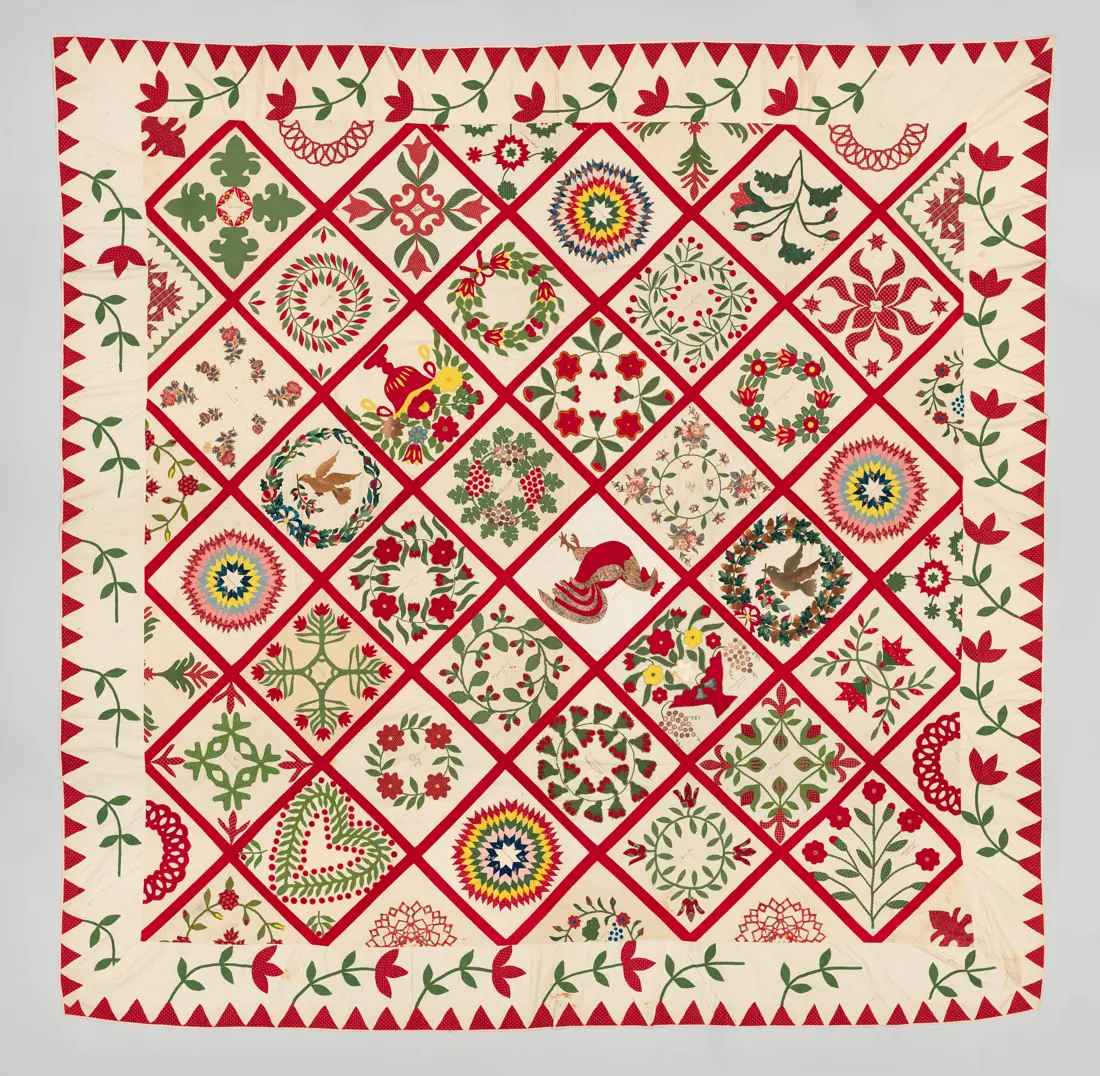
The quilt above is much older, made in Baltimore in the 1840s, but it shows the same American tradition of piecing fabric into something lasting. Our history of sewing circles and quilting bees tells more of that story.
The End of the Feed Sack Era
After World War II, packaging changed. Paper bags were cheaper to make, and cloth sacks gradually disappeared. Ready-made clothing was also becoming cheaper and easier to buy, as our history of ready-to-wear clothing explains. By the early 1960s, most feed sack production had ended.
Feed Sacks Today
Original printed feed sacks are now collected by quilters and vintage textile lovers, who value their cheerful 1930s and 1940s prints. Fabric companies regularly reproduce "feed sack" prints for quilting, and finished feed sack dresses appear in museum collections, including the Smithsonian's National Museum of American History.
If you find an old sack, look for small rows of stitch holes along the edges: sacks were closed with a chain stitch that could be unpicked in one pull, leaving a usable rectangle of cloth.
Why the Feed Sack Still Matters
The feed sack story is a reminder that sewing has always been shaped by thrift and resourcefulness. Families who could not afford fabric still made clothing they were proud of, and manufacturers ended up designing their packaging around a sewing machine in a farmhouse. The same instinct runs through Make Do and Mend and through today's upcycling and mending movements.
Rickrack was a favorite trim on feed sack dresses; see sewing trims.
Most feed sacks were cotton; read more about cotton.
Sources
- Feed sack dress, Wikipedia
- Baltimore Album Quilt, The Metropolitan Museum of Art
Frequently Asked Questions
What is a feed sack dress?
A dress sewn from the cotton bags that flour, sugar, grain or animal feed was sold in. Feed sack and flour sack clothing was common in rural U.S. and Canadian communities from the late nineteenth century to the mid-twentieth century.
How many feed sacks did it take to make a dress?
It depended on the sack size and the pattern, but an adult dress commonly needed around three or four sacks of the same print, which is why women traded sacks to collect matching ones.
When did companies start printing patterns on feed sacks?
Bag makers were offering a range of fabrics by the 1910s, and printed, patterned sacks became a selling point in the 1920s and 1930s. In 1925 Gingham Girl Flour came packed in red and white checked fabric.
When did feed sack dresses stop?
After World War II, cheaper paper bags gradually replaced cloth sacks, and most feed sack production ended by the early 1960s.
Keep Reading
Make Do and Mend
Coupons, blackout-curtain dresses and Mrs Sew and Sew in wartime Britain.
Sewing Circles and Quilting Bees
How sewing circles and quilting bees became charities, causes and clubs.
History of Ready-to-Wear Clothing
How slop shops, war uniforms and sewing machines created off-the-rack clothes.
History of Sewing
How a bone splinter became a global industry, from the Ice Age to PDF patterns.