The Safety Pin: A 3,000-Year-Old Idea Patented in 1849 (2026)
Walter Hunt is credited with inventing the safety pin, yet Bronze Age dressmakers were fastening cloaks with almost the same design. Here is how a coil of wire became one of sewing's most useful notions.
In This Article
Safety Pin Facts in Brief
- 14th–13th century BC: Mycenaean Greeks introduce the fibula, a brooch built on the safety-pin principle
- Middle Ages: buttons replace fibulae as everyday clothing fasteners
- April 10, 1849: Walter Hunt receives U.S. patent No. 6,281
- October 1849: Charles Rowley of Birmingham patents a similar pin in England
- Price of the patent: $400
Few objects in the sewing box are as quietly useful as the safety pin. It holds a hem until you can stitch it, threads elastic through a casing, marks a pattern piece and rescues a broken strap. Its story stretches from the Bronze Age to a busy New York inventor and, later, to punk rock.
The Ancient Ancestor: The Fibula
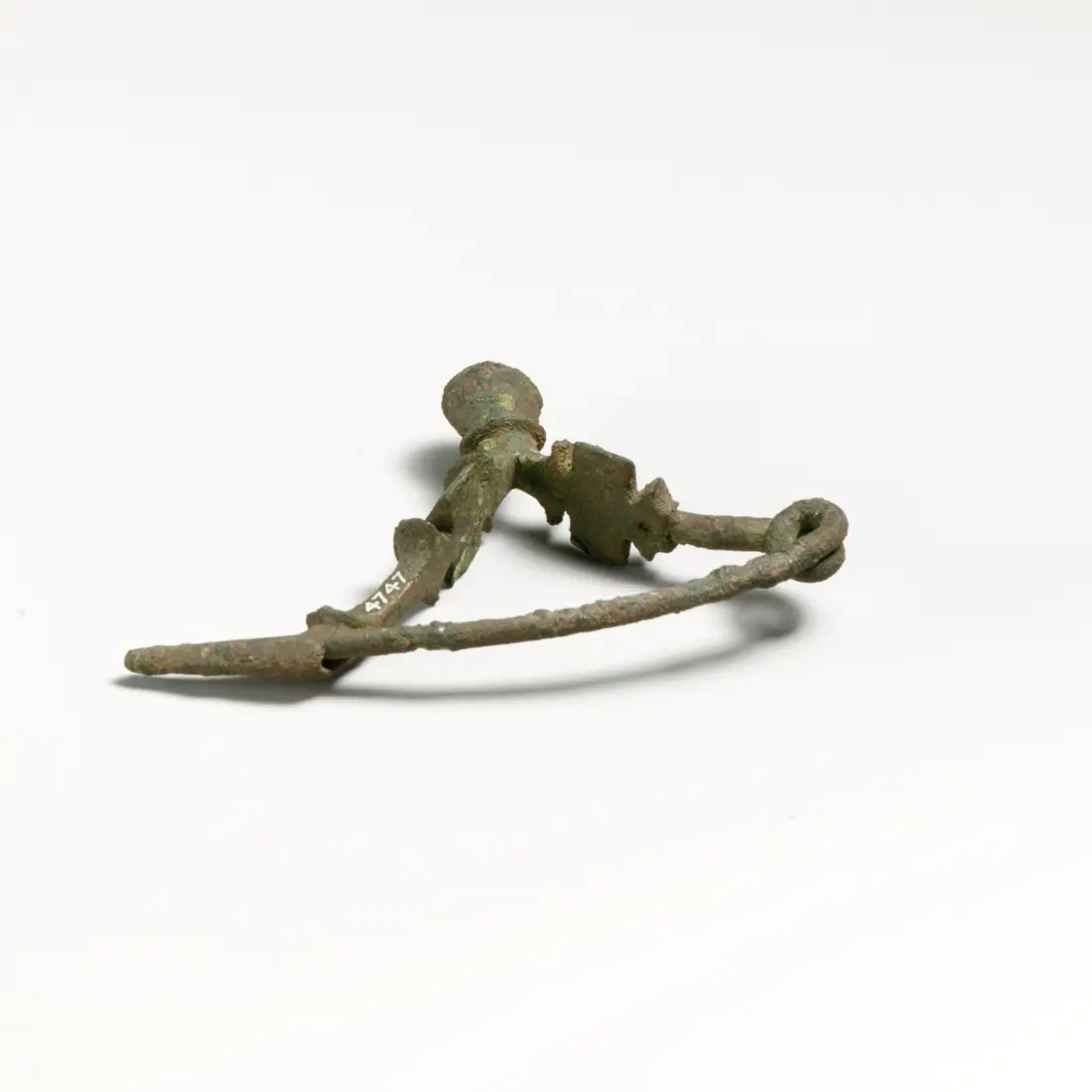
Long before anyone thought of patents, people fastened their clothing with fibulae. A fibula is a brooch made from a single piece of metal: a pin, a coiled spring that keeps it under tension, and a catch that holds the point. Every fibula, whatever its shape, was based on the safety-pin principle.
The fibula was introduced by the Mycenaeans of the Greek Peloponnese in the 14th century BC. Over the following centuries it spread across Europe and the Mediterranean, taking on countless forms, from simple violin-bow shapes to elaborate gold jewelry. The bronze example at the top of this page and the gold one below are both in the collection of the Metropolitan Museum of Art.
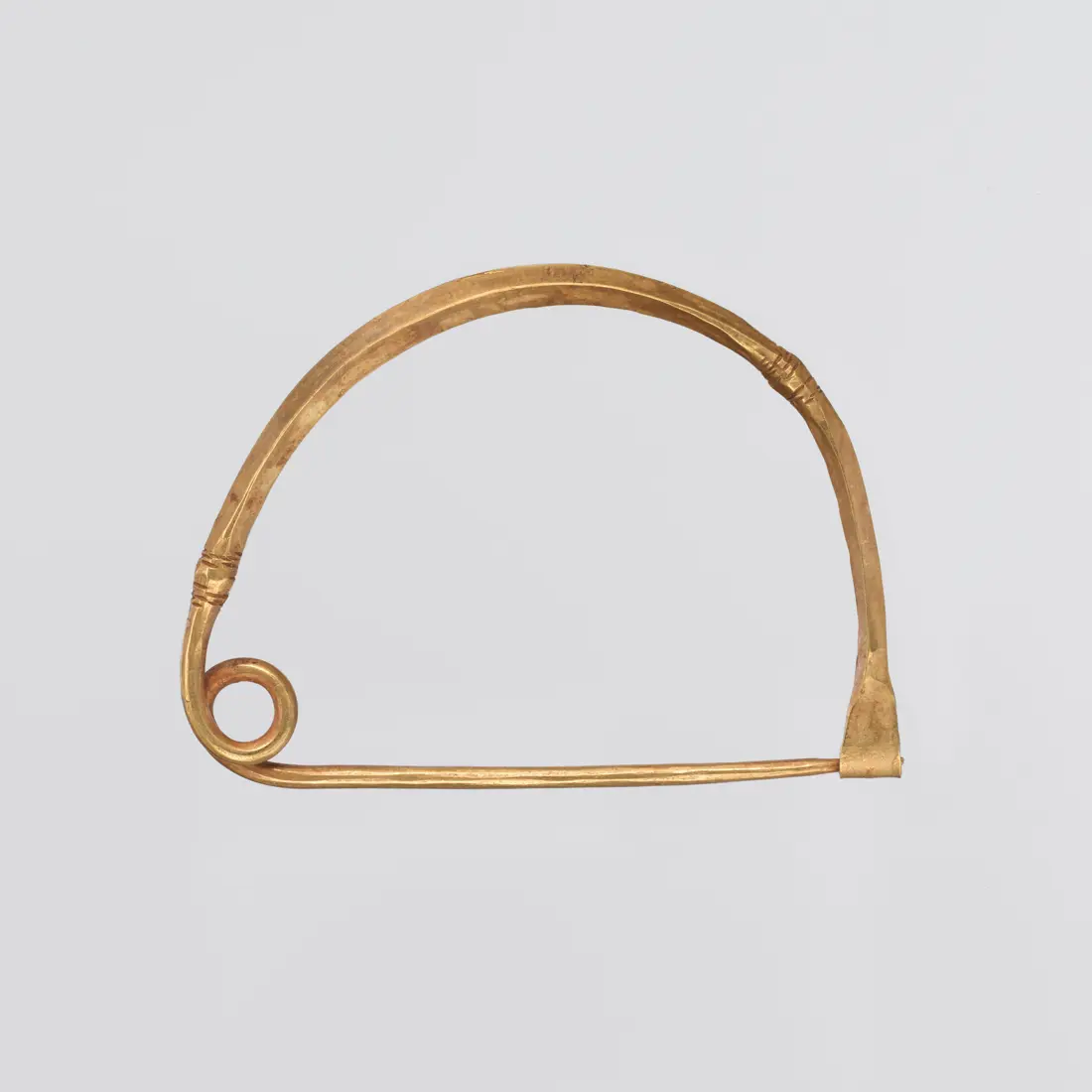
In late Roman times, the crossbow fibula became the classic type and is now the best known of all. The Latin word fibula meant both a brooch and the thin bone of the lower leg, which still carries the name. In the Middle Ages, buttons took over as everyday fasteners and the fibula faded from ordinary dress.
Walter Hunt and the 1849 Patent
Walter Hunt was a prolific New York inventor. He is also remembered in sewing history for building an early lockstitch sewing machine in the 1830s, a story told in our article on who invented the sewing machine.
On April 10, 1849, Hunt received U.S. patent No. 6,281 for what he called a "dress pin." His design twisted a single piece of wire into a coil at one end, with a clasp at the other that covered the point and kept it from opening. That clasp was the key improvement: the pin could not prick the wearer or work itself loose.
Hunt sold the rights to his patent for $400. A popular story says he made the invention to pay off a $15 debt to a friend. The story is told often, but it is poorly documented, so it is best treated as tradition rather than fact.
Fibula vs. Safety Pin
| Feature | Ancient Fibula | Hunt's Safety Pin (1849) |
|---|---|---|
| Material | Bronze, iron, silver or gold | Drawn wire |
| Spring | Coiled spring | Coiled spring |
| Point protection | Open catch plate | Enclosed clasp covering the point |
| Main role | Fastening cloaks and garments, often as jewelry | Everyday utility fastener |
The Safety Pin in Everyday Life
Safety pins became a household staple. They were widely used to fasten cloth diapers, because the covered point helped keep babies from being pricked. Sewists also adopted them for jobs a straight pin cannot do well:
- Threading elastic or drawstrings through a casing, with the pin as a guide.
- Pin basting quilt layers together before quilting, often with curved safety pins made for the purpose.
- Temporary fixes to hems, straps and waistbands until they can be properly sewn.
- Marking the right side or the front of a garment piece.
From Punk to Symbol
When punk rock emerged in the late 1970s, safety pins became part of the look, holding torn clothes together and pierced through fabric as decoration. Johnny Rotten later described them as a practical fix for clothes that were falling apart.
The pin reached the red carpet in 1994, when Elizabeth Hurley wore a dress held together by safety pins. In 2016, after the Brexit referendum, people in Britain began wearing safety pins as a sign of solidarity with victims of racist and xenophobic abuse, and the symbol spread to the United States later that year.
A Small Notion With a Long Life
The safety pin shows how often sewing history loops back on itself. A Bronze Age brooch maker and a nineteenth-century patent holder solved the same problem in nearly the same way: a coil for tension and a catch for the point. For the fasteners that came next, read our history of snaps, hooks and Velcro and the history of the zipper.
For straight pins and how to choose them, see types of sewing pins.
Sources
- Walter Hunt, Lemelson-MIT Program
- Safety pin, Wikipedia
- Fibula (brooch), Wikipedia
- Bronze fibula, The Metropolitan Museum of Art
- Gold fibula, The Metropolitan Museum of Art
Frequently Asked Questions
Who invented the safety pin?
Walter Hunt of New York received U.S. patent No. 6,281 for the safety pin on April 10, 1849. The underlying idea is much older: ancient fibula brooches used the same coiled-spring principle more than 3,000 years ago.
How much did Walter Hunt sell the safety pin patent for?
Hunt sold the rights to his safety pin patent for $400.
Was the safety pin invented to pay off a debt?
A popular story says Hunt designed it to pay off a $15 debt to a friend. The story is widely repeated, but it is not well documented, so treat it as tradition rather than established fact.
Why is it called a safety pin?
Because its clasp covers the sharp point. Unlike a straight pin, a closed safety pin cannot prick the wearer or slip out of the fabric.
Keep Reading
History of Snaps, Hooks and Velcro
Medieval hooks and eyes, 1880s snaps, and Velcro's burr-covered origins.
History of the Zipper
A shoe fastener flop, a Swedish engineer and a pair of rubber boots.
Who Invented the Sewing Machine?
Saint, Thimonnier, Hunt, Howe or Singer? The inventors and who deserves the credit.
History of Sewing
How a bone splinter became a global industry, from the Ice Age to PDF patterns.