Quilt Sizes Chart: Typical Measurements From Crib to King (2026)
There is no single standard for quilt sizes: patterns, shops and quilters all vary. But typical sizes follow the mattress, plus a drop over the sides. Here is a guide, and how to work out your own.
In This Article
Quilt Sizes in Brief
- No official standard: sizes vary
- Based on: mattress size plus drop
- Throw: about 50 × 65 in
- Queen: about 90 × 95 in
- Always: measure your own bed
There is no official standard for quilt sizes. The sizes below are typical approximations that many patterns use, rounded to make a useful starting point. For the best fit, measure your own bed and calculate.
Typical Quilt Sizes
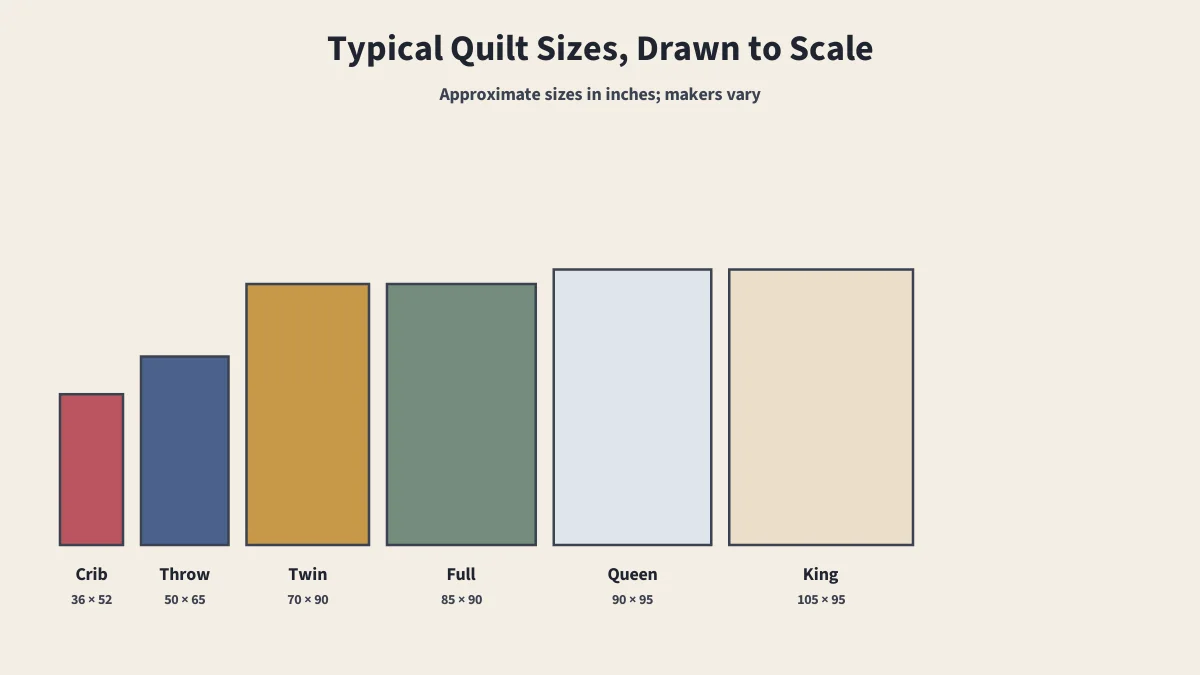
| Quilt | Typical Size (inches) | Approx. (cm) | Use |
|---|---|---|---|
| Mini / wall | Up to about 36 × 36 | 90 × 90 | Wall hangings, table toppers |
| Crib | About 36 × 52 | 90 × 130 | Cot or baby quilt |
| Lap / throw | About 50 × 65 | 125 × 165 | Sofa or lap |
| Twin | About 70 × 90 | 180 × 230 | Single bed |
| Full / double | About 85 × 90 | 215 × 230 | Double bed |
| Queen | About 90 × 95 | 230 × 240 | Queen bed |
| King | About 105 × 95 | 265 × 240 | King bed |
Calculating Your Own Size
- Measure the mattress width, length and depth.
- Decide the drop: how far the quilt should hang down the sides. To cover the mattress, the drop is at least its depth; for a coverlet to the floor, measure from the top of the mattress to the floor.
- Width = mattress width + 2 × drop.
- Length = mattress length + drop at the foot + pillow tuck (often 10–15 in), if wanted.
- Allow for shrinkage from quilting and washing, especially with cotton batting.
Backing and Batting Sizes
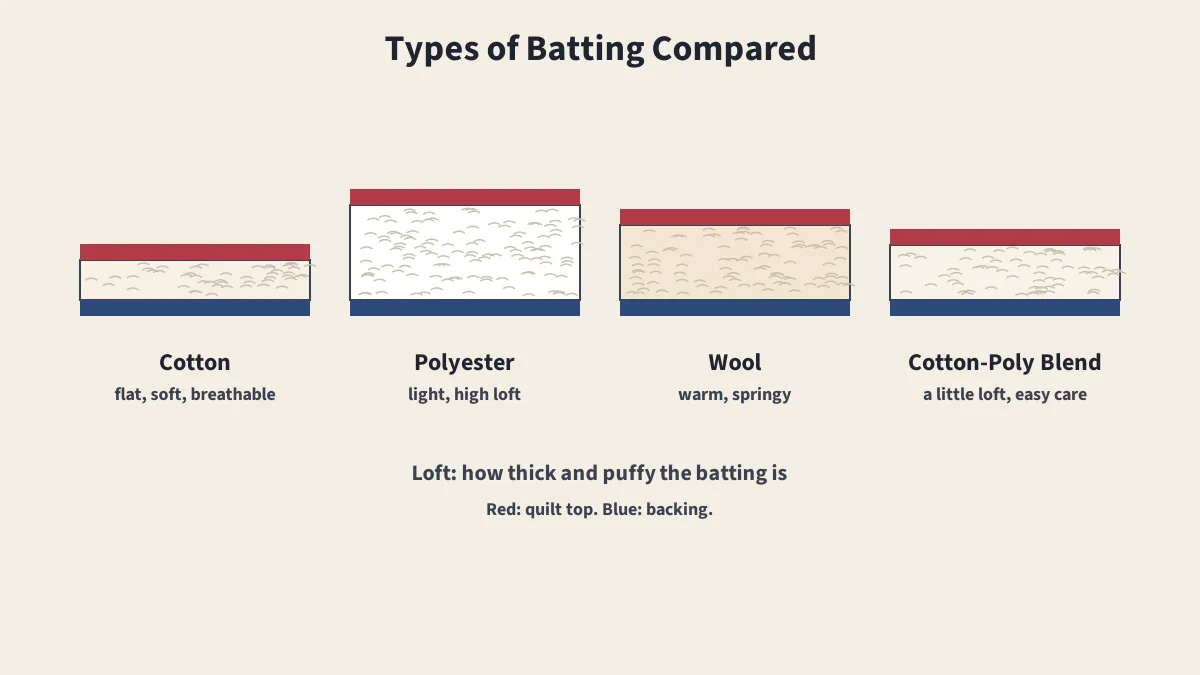
Cut the backing and batting a few inches larger than the quilt top on every side, more for longarm quilting, which needs extra for the frame clamps. Wide quilts often need pieced backing or extra-wide backing fabric. See types of batting.
Sources
Frequently Asked Questions
What size is a queen quilt?
Typically around 90 by 95 inches (about 230 × 240 cm), but sizes vary between patterns and makers. Measure the bed and decide how far the quilt should hang over the sides.
What size is a throw quilt?
Typically around 50 by 65 inches (about 125 × 165 cm), large enough to use on a sofa.
How do I calculate a quilt size?
Measure the mattress width and length, then add the drop (how far the quilt hangs down) to both sides and the foot, plus extra for a pillow tuck if you want one.
Why are quilt sizes not standard?
Mattress depths, bed styles and personal preferences all differ, and there is no official quilt-size standard, so patterns and shops use their own typical sizes.