The Underground Railroad Quilt Code: Myth vs. Evidence (2026)
A popular story says quilts hung on fences carried coded messages that guided enslaved people to freedom. It appears in books, classrooms and museums, but historians have found no evidence for it in the historical record.
In This Article
The Quilt Code in Brief
- Claim: quilt patterns signaled escape routes
- Popularized by: Hidden in Plain View (1999)
- Source: a family story, not documents
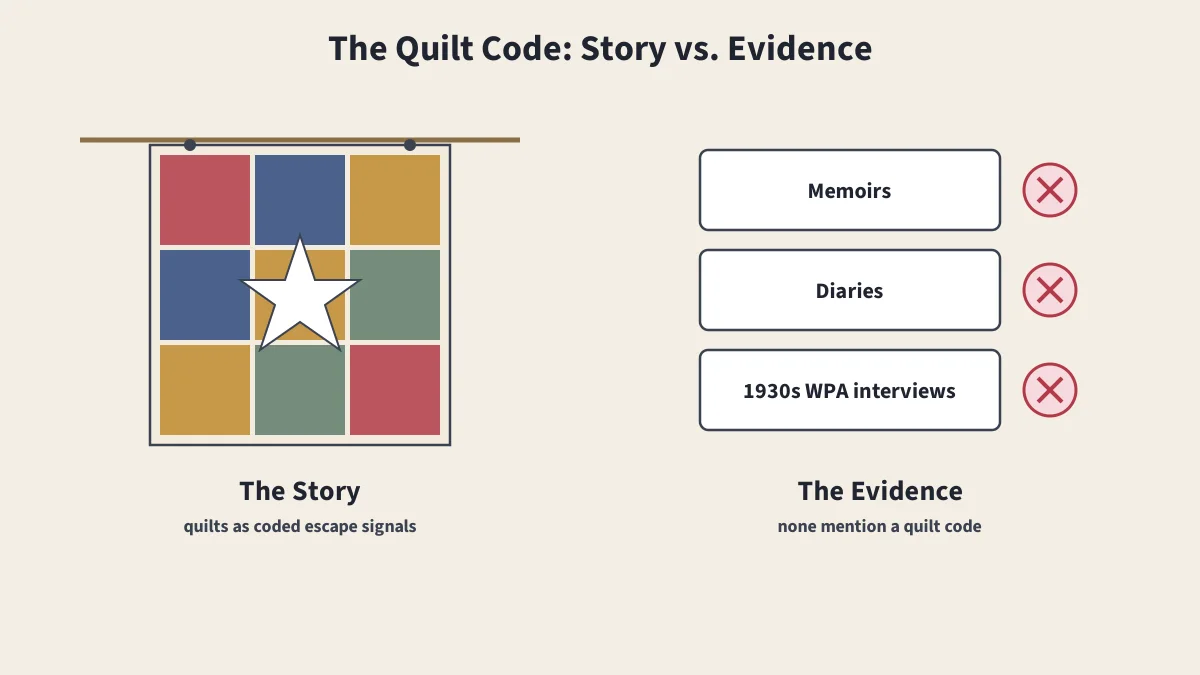
- Evidence: none in memoirs, diaries or WPA interviews
- Verdict: rejected by most historians
The Underground Railroad quilt code is the idea that quilts, hung out as if to air, carried coded instructions for enslaved African Americans escaping to freedom. It is one of the best-known stories in American quilting, and also one of the most disputed. Here is what the story says, where it came from, and why historians doubt it.
The Story
- Folklorist Gladys-Marie Fry asserted in Stitched from the Soul (1990) that quilts were used to signal escape routes.
- In 1999, Jacqueline Tobin and Raymond Dobard Jr. published Hidden in Plain View, arguing that quilt block shapes, colors and names, along with knots, formed a code.
- Their main source was Ozella McDaniel Williams, who said her family had passed down a story of quilts with ten squares, beginning with a monkey wrench block (gather supplies) and ending with a star (head north).
- Even Dobard described the book as "informed conjecture."
What Historians Say
| Objection | Detail |
|---|---|
| No documentary evidence | Historian Giles Wright notes that no memoirs, diaries or 1930s WPA interviews with formerly enslaved people mention quilt codes |
| Folklore, not record | Wright says the book relies on unsubstantiated folklore |
| Quilt historians disagree | Kris Driessen, Barbara Brackman and Kimberly Wulfert reject the theory |
| Strong criticism | Historian Fergus Bordewich has called it "fake history" |
The Case Made by Supporters
Folk art expert Maud Wahlman, who wrote the book's foreword, argued the idea could be true, citing African traditions of secret coding. John Reddick has argued that it is paradoxical to demand written evidence from people who were denied literacy. These arguments explain why the story cannot be ruled out entirely, but they do not supply evidence that it happened.
Why It Matters
Some museums and schools still present the quilt code as fact. Treating it as legend rather than history does not diminish African American quilting, which has a rich and well-documented story of its own, from quilts made under slavery to the art of Gee's Bend and the story quilts of Harriet Powers and Faith Ringgold. See the history of quilting.
Sources
- Quilts of the Underground Railroad, Wikipedia
- Quilting, Wikipedia
Frequently Asked Questions
Is the Underground Railroad quilt code real?
Historians and quilt historians generally reject it. No memoirs, diaries or 1930s WPA interviews with formerly enslaved people mention quilt codes, and the main book promoting the idea described itself as informed conjecture.
Where did the quilt code story come from?
Gladys-Marie Fry suggested quilts signaled escape routes in 1990. The best-known version comes from the 1999 book Hidden in Plain View by Jacqueline Tobin and Raymond Dobard, based on a family story told by Ozella McDaniel Williams.
Why do some people still believe it?
The story is appealing and has been taught in some schools and museums as fact. Some supporters argue that people denied literacy could not leave written evidence, and point to African traditions of coded communication.
What did quilts really mean to enslaved people?
African American quilting has a long, documented history, and its traditions developed further after the end of slavery in 1865. That history stands on its own, without the code story.
Keep Reading
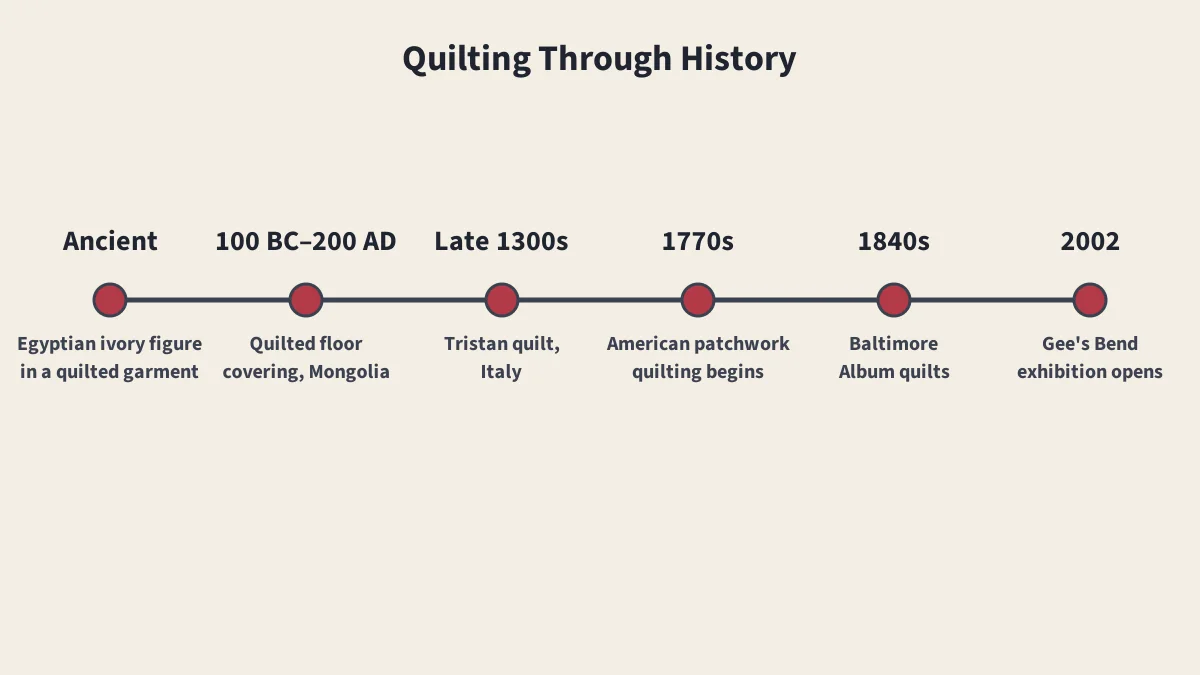
History of Quilting
From ancient quilted clothing to modern quilts.
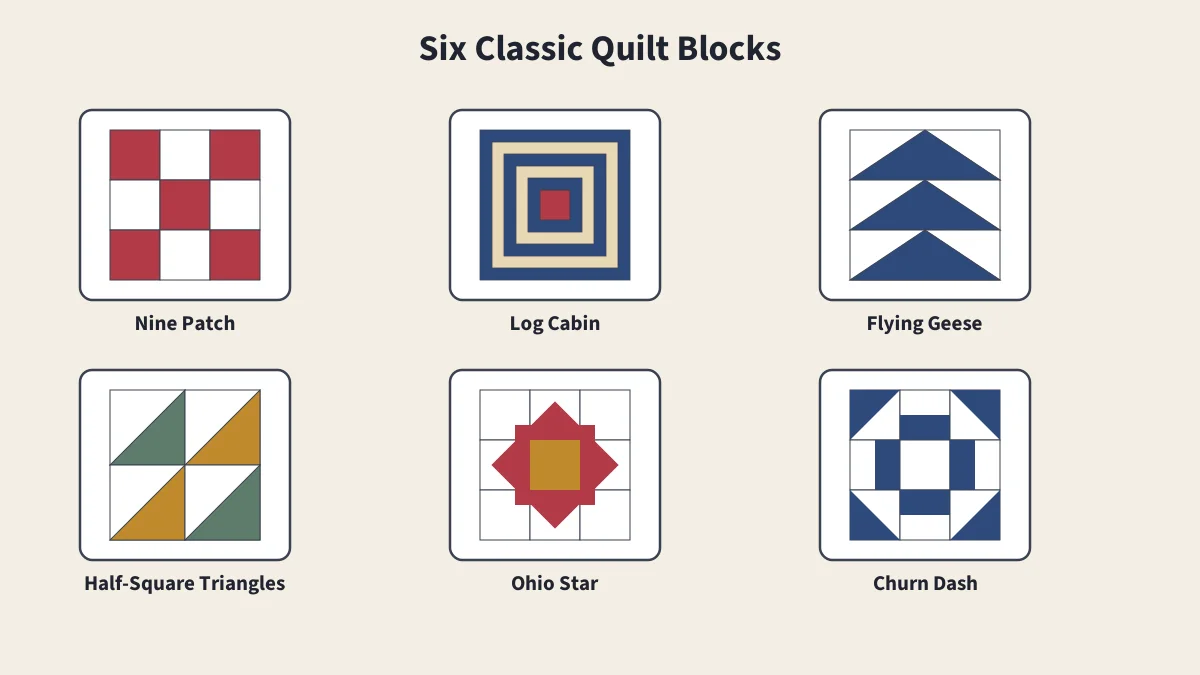
Quilt Block Names
Log cabin, nine patch, flying geese and more.
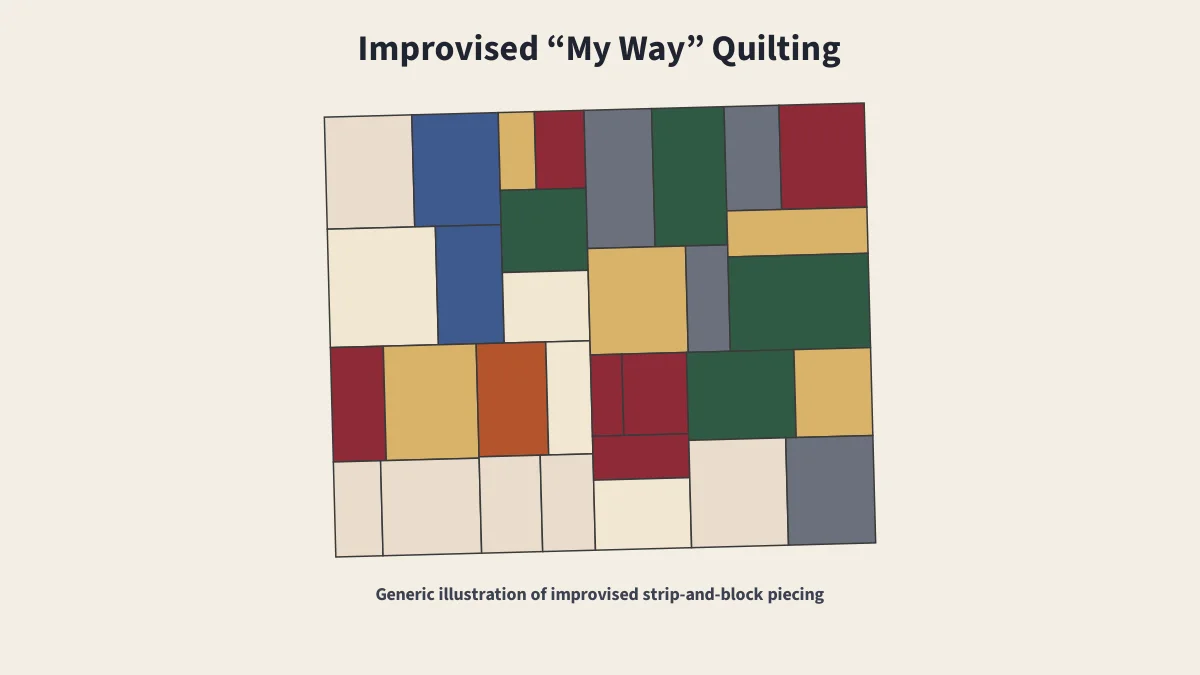
The Quilts of Gee's Bend
History, style and recognition of Gee's Bend quilting.
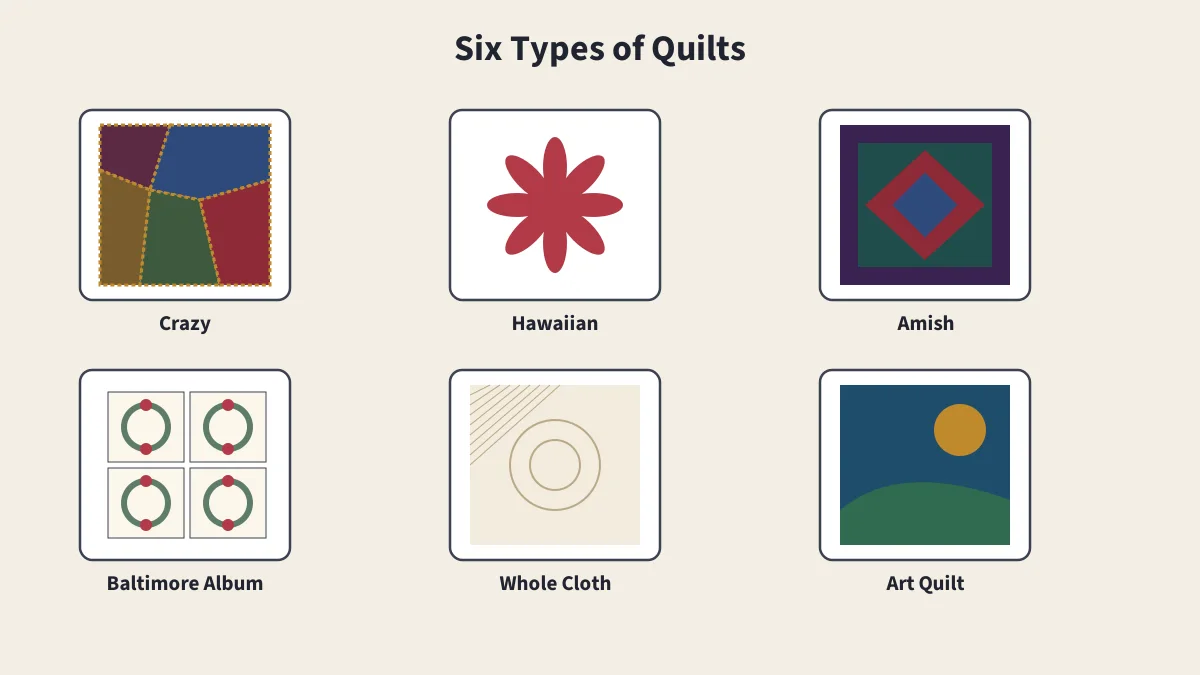
Types of Quilts
Crazy, Hawaiian, Amish, Baltimore Album and more.