The Quilts of Gee's Bend: An Alabama Community's Art (2026)
In a small, isolated community on the Alabama River, generations of women made quilts from work clothes and feed sacks. In 2002, a museum exhibition brought their bold, improvised designs national recognition.
In This Article
Gee's Bend in Brief
- Where: Boykin, Alabama, on the Alabama River
- Freedom Quilting Bee: founded 1966
- Exhibition: 2002, Museum of Fine Arts, Houston
- Stamps: US Postal Service, 2006
- Style: improvised "my way" quilts
Gee's Bend, officially Boykin, is an isolated rural community of about 700 people in Alabama's Black Belt, southwest of Selma along the Alabama River. Its women have made quilts for generations, and since 2002 their work has been shown in major art museums.
A Community's History
| Date | Event |
|---|---|
| 1816 | Joseph Gee establishes a cotton plantation; today's residents descend from the people enslaved there |
| 1937 | The federal government buys the former Pettway plantation, about 10,000 acres, and low-interest loans help residents buy land and build houses |
| Early 1960s | Officials in Camden end the ferry service, isolating the community; it is not restored until 2006 |
| March 1965 | Many quiltmakers march with Martin Luther King Jr. in Camden |
| March 1966 | The Freedom Quilting Bee is founded, later selling to retailers including Bloomingdale's and Sears; it closes in 2012 |
| 2002 | The Quilts of Gee's Bend opens at the Museum of Fine Arts, Houston, then travels to the Whitney and 11 other museums |
| 2003 | The Gee's Bend Quilters Collective is formed |
| 2006 | The US Postal Service issues ten stamps featuring Gee's Bend quilts |
| 2015 | Mary Lee Bendolph, Lucy Mingo and Loretta Pettway receive National Heritage Fellowships |
The Gee's Bend Style
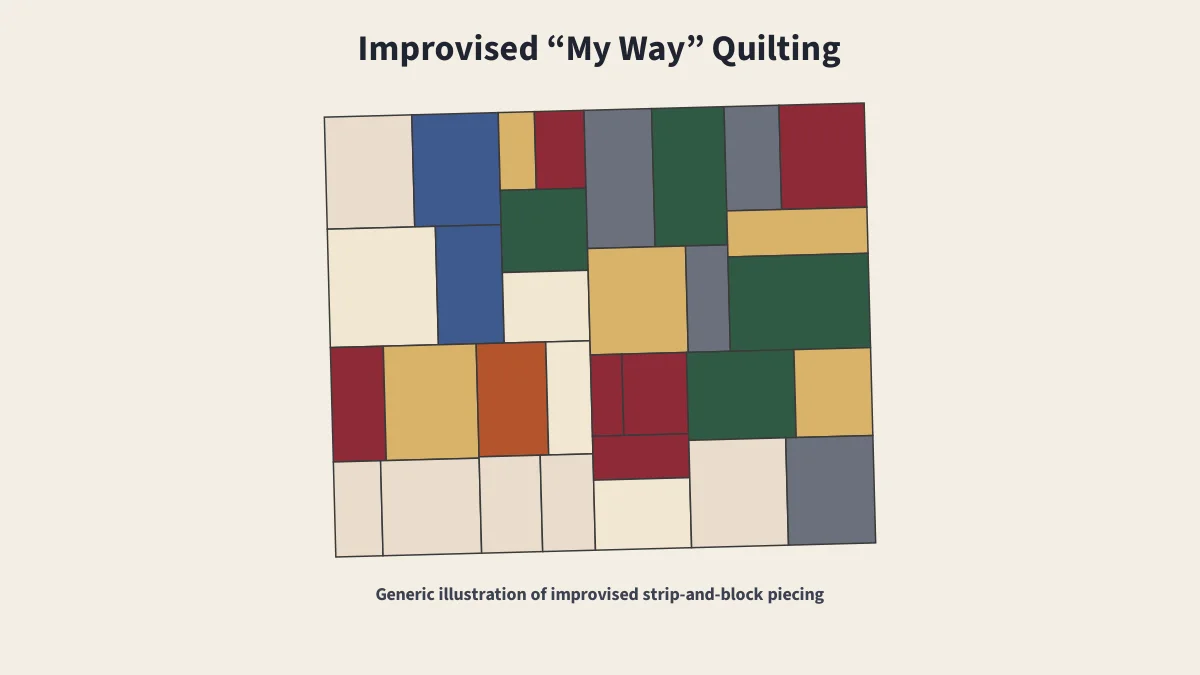
Many Gee's Bend quilts are improvisational, known locally as "my way" quilts: built from basic forms such as strips and blocks, but shaped by each maker's own choices rather than a fixed pattern. Early quilts were often pieced from worn work clothes and feed or flour sacks and made mainly for warmth, while some memorialized loved ones. See feed sack dresses for how sacks became fabric.
Recognition and Controversy
The 2002 exhibition was the first nationwide recognition of African American quilt-making on this scale and helped change how quilts are viewed as art; see art quilts. In 2007, quilters Annie Mae Young and Loretta Pettway sued curator William Arnett, alleging they had been cheated out of sales money; the case was dismissed in 2008.
Sources
- Quilts of Gee's Bend, Wikipedia
- Quilting, Wikipedia
Frequently Asked Questions
Where is Gee's Bend?
Gee's Bend, officially Boykin, is a small rural community in Alabama's Black Belt, southwest of Selma on a bend of the Alabama River, with about 700 residents.
Why are Gee's Bend quilts famous?
Their bold, improvised designs gained national attention through the 2002 exhibition The Quilts of Gee's Bend, which opened at the Museum of Fine Arts, Houston, and traveled to the Whitney Museum and 11 other museums.
What are Gee's Bend quilts made from?
Early quilts were often made from old work clothes and feed or flour sacks, primarily for warmth; some memorialized loved ones.
What is a 'my way' quilt?
The local name for an improvisational quilt, built from basic forms and shaped by each maker's individual approach rather than a fixed pattern.
Keep Reading
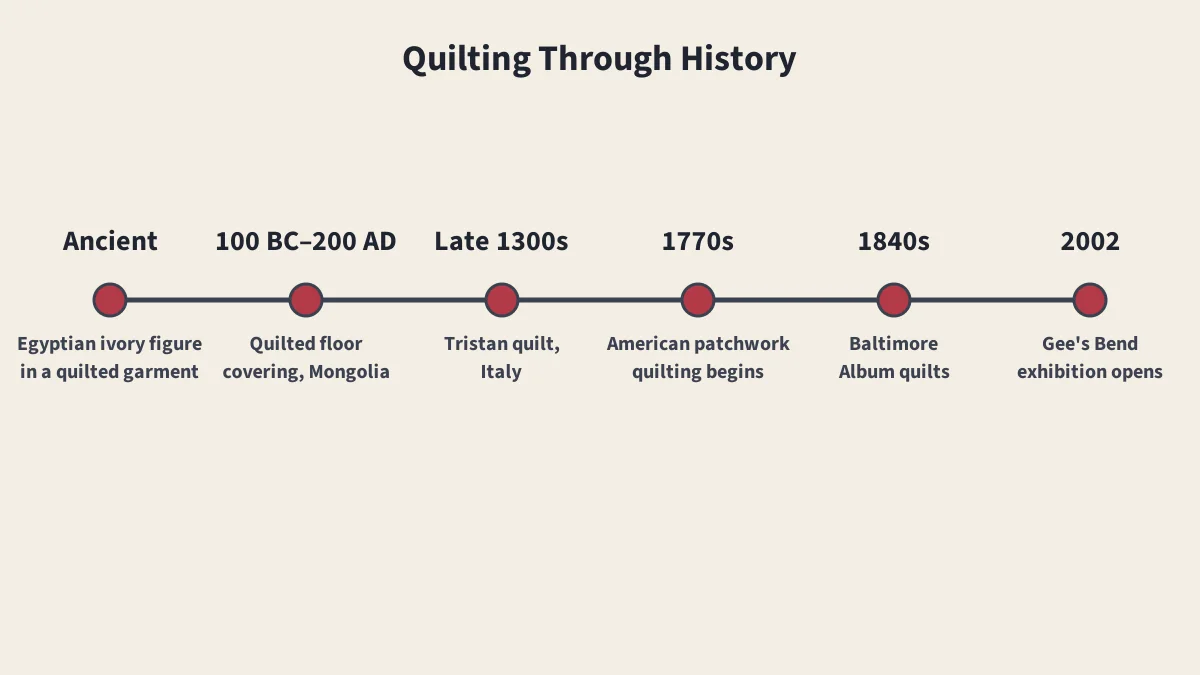
History of Quilting
From ancient quilted clothing to modern quilts.
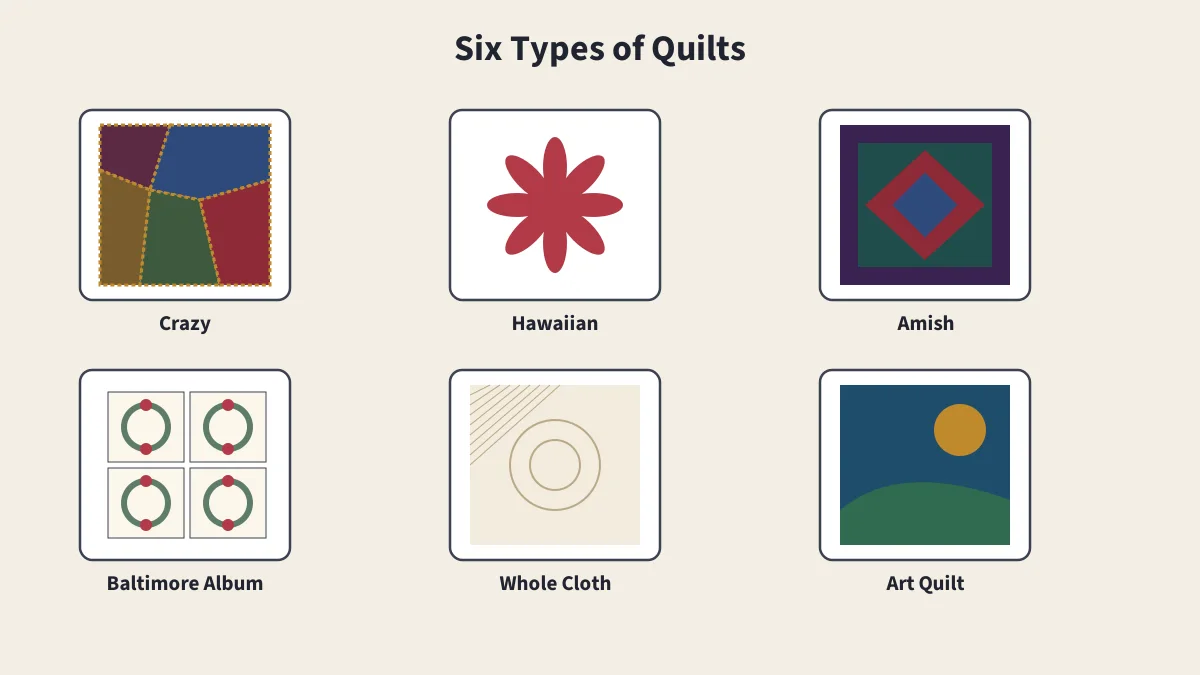
Types of Quilts
Crazy, Hawaiian, Amish, Baltimore Album and more.
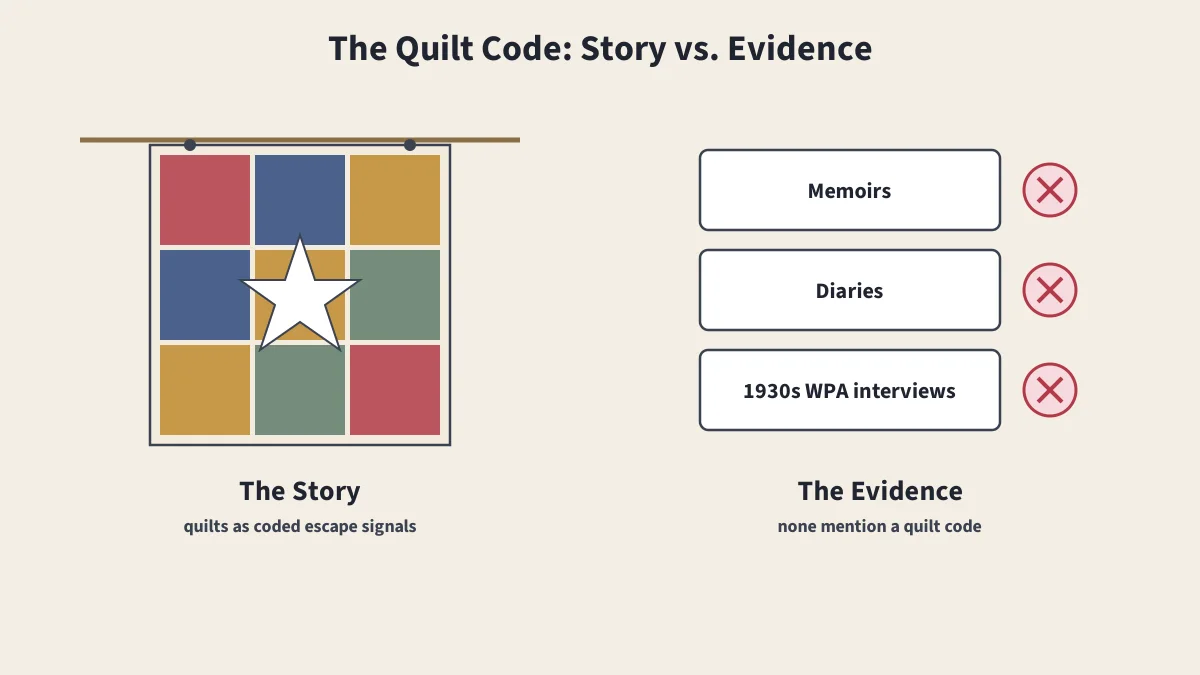
The Underground Railroad Quilt Code
The story, its origins and what historians say.
Feed Sack Dresses
How flour and feed bags became printed dress fabric for rural families.