Types of Quilt Batting: How to Choose the Right Filling (2026)
Batting, called wadding in the UK, is the hidden middle layer that gives a quilt its warmth, weight and texture. The fiber and the way it is made both change how the finished quilt looks and feels.
In This Article
Batting in Brief
- Also called: wadding
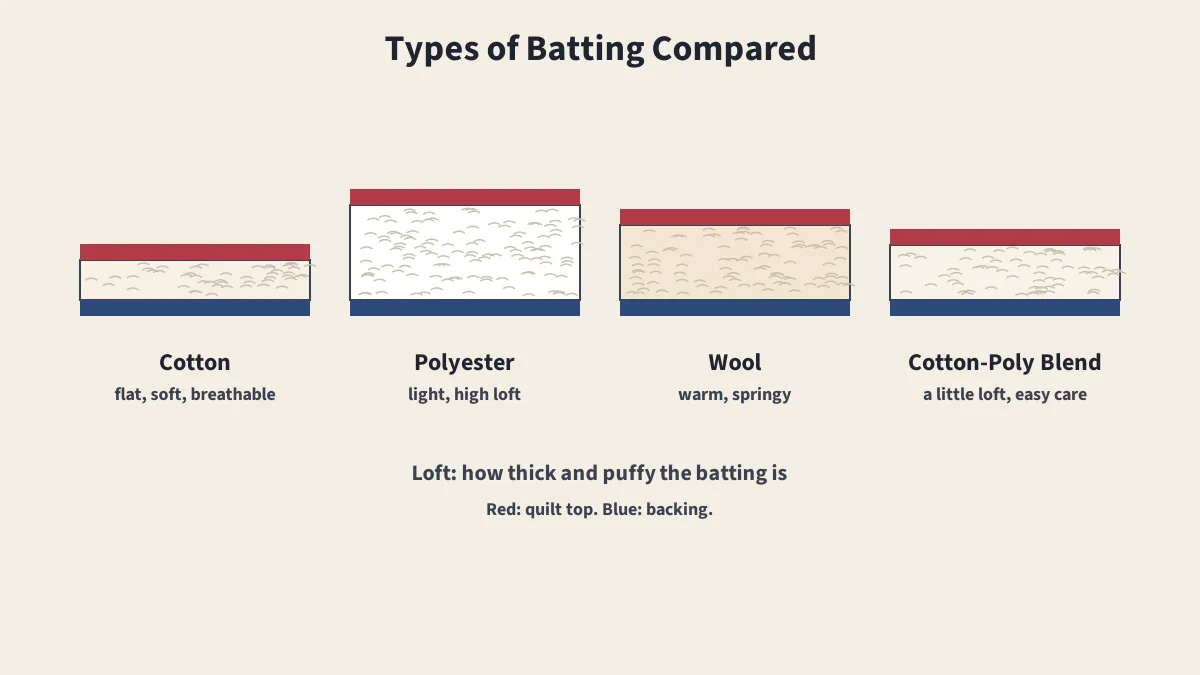
- Cotton: flat, soft, breathable
- Polyester: light, puffy, inexpensive
- Wool: warm, springy, resilient
- Check: the maximum quilting distance
Batting, or wadding, is the insulating middle layer of a quilt, between the top and backing; see parts of a quilt. Padding has a long history: historically, fibers such as wool and cotton were used to fill and shape garments and bedding. Today, quilt batting comes in several fibers and constructions, each with its own feel.
Batting by Fiber
| Fiber | Look and Feel | Good For |
|---|---|---|
| Cotton | Thin, soft, drapes well, breathable; may shrink slightly for a crinkled look | Traditional bed quilts, machine quilting |
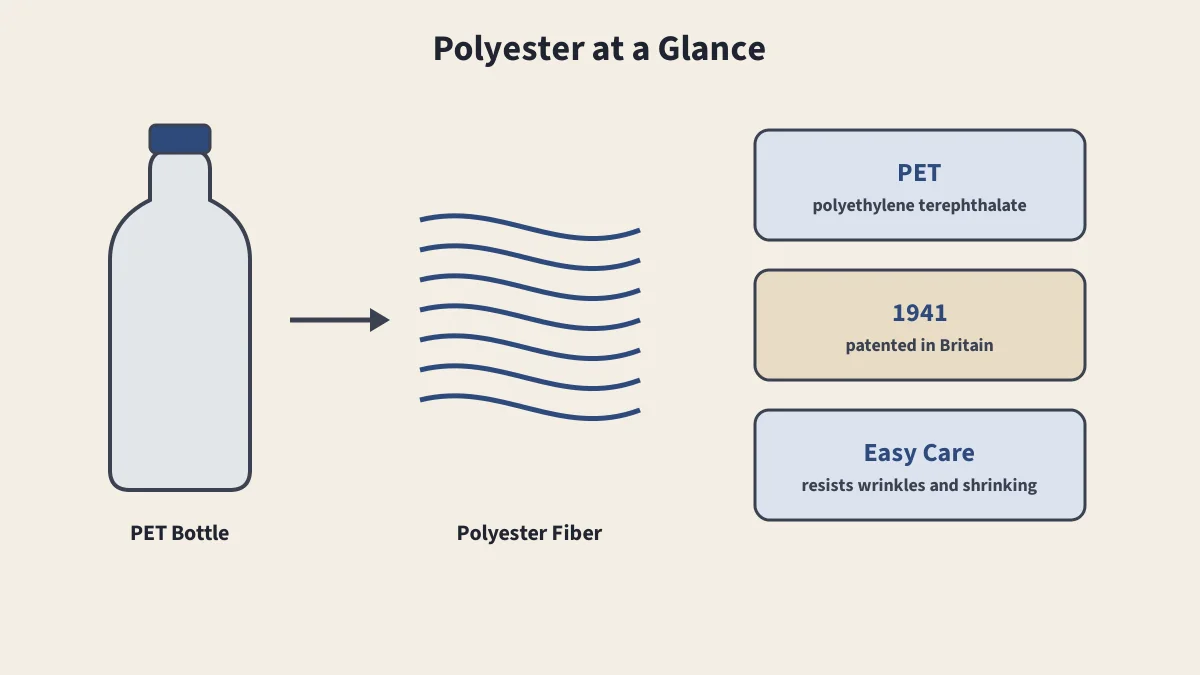
| Polyester | Light, puffy, holds its loft, doesn't shrink | Tied quilts, warm puffy quilts, budget projects |
| Cotton-poly blend | A little loft with cotton's softness and easier care | All-purpose quilting |
| Wool | Warm, light and springy, resists creases | Warm quilts and showing off quilting designs |
| Silk | Very light and drapey | Fine and garment quilting |
| Bamboo and other blends | Soft and drapey, often blended with cotton | Lightweight quilts |
For the fibers themselves, see cotton, wool and polyester.
How Batting Is Made
- Needle-punched: fibers are entangled by barbed needles, making a firm, stable batting.
- With scrim: fibers are needle-punched onto a thin stabilizing web, allowing wider spacing between quilting lines.
- Bonded: fibers are held together with a bonding agent or heat; often used for polyester.
- Fusible: coated with heat-activated adhesive to replace basting.
Choosing Batting
- Loft: low for a flat look and fine quilting, high for puffy, warm quilts.
- Quilting distance: the packaging states how far apart quilting lines can be before the batting shifts.
- Shrinkage: decide whether you want a crinkled vintage look or a flat finish.
- Method: thinner battings are easier to hand-quilt; stable battings suit machine and longarm.
- Warmth and care: consider how the quilt will be used and washed.
Sources
- Padding (batting), Wikipedia
- Quilting, Wikipedia
Frequently Asked Questions
What is the best batting for a beginner?
A cotton or cotton-polyester blend batting is a common choice: it is stable, easy to quilt by machine and widely available.
What is loft in batting?
How thick and puffy the batting is. Low-loft batting gives a flat, traditional look; high-loft batting gives a puffy look, often used for tied quilts and comforters.
Does cotton batting shrink?
Many cotton battings shrink slightly when washed, which gives a crinkled, vintage look. Pre-washing or choosing a low-shrink batting avoids it.
What is scrim in batting?
A thin stabilizing web that some battings are needle-punched onto. It helps the batting hold together and allows stitching to be spaced further apart.
Keep Reading
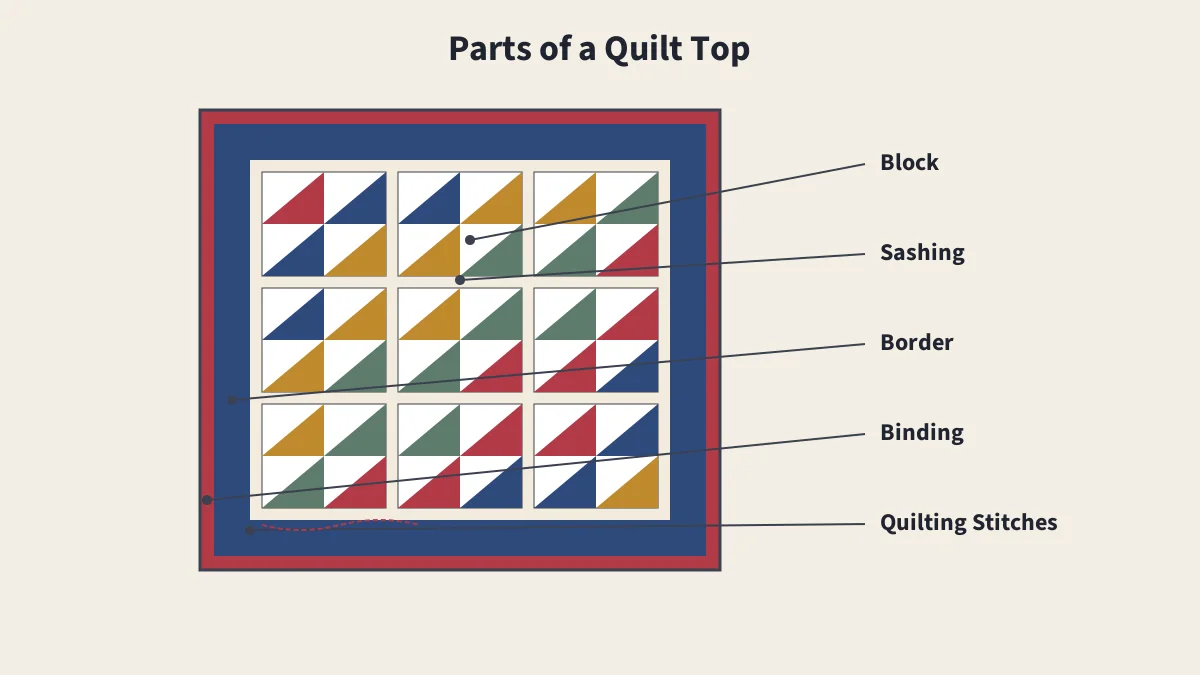
Parts of a Quilt
Blocks, sashing, borders, batting, backing and binding.
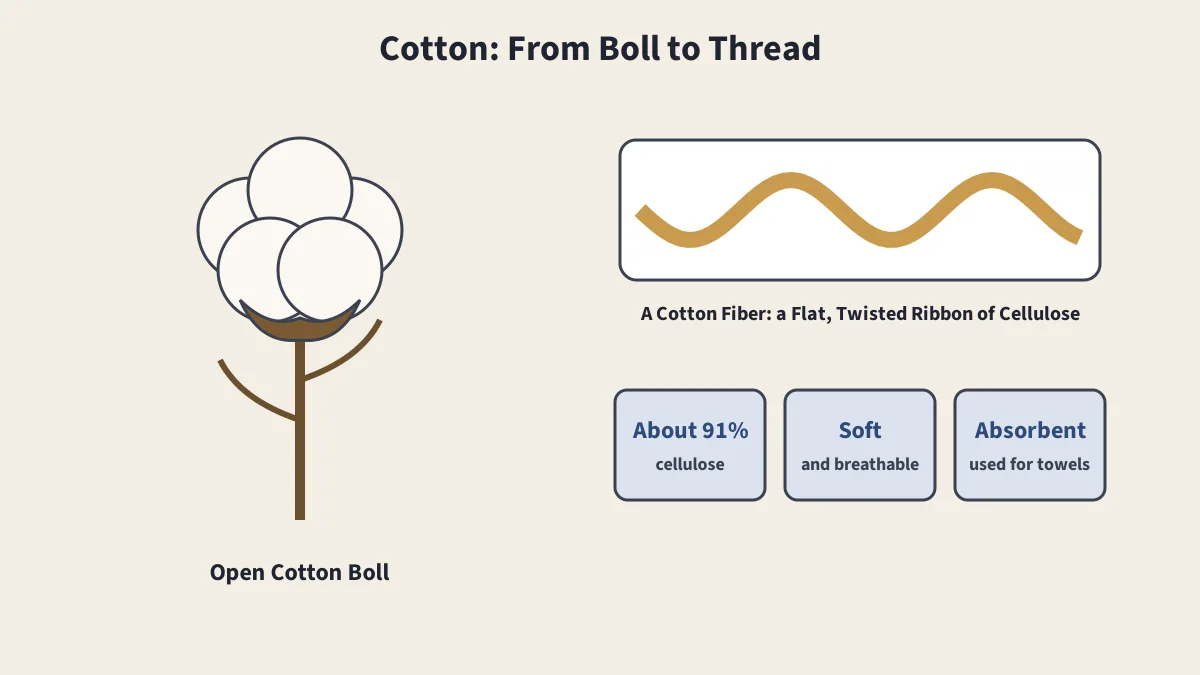
Cotton
Where cotton comes from, its history and how it behaves.
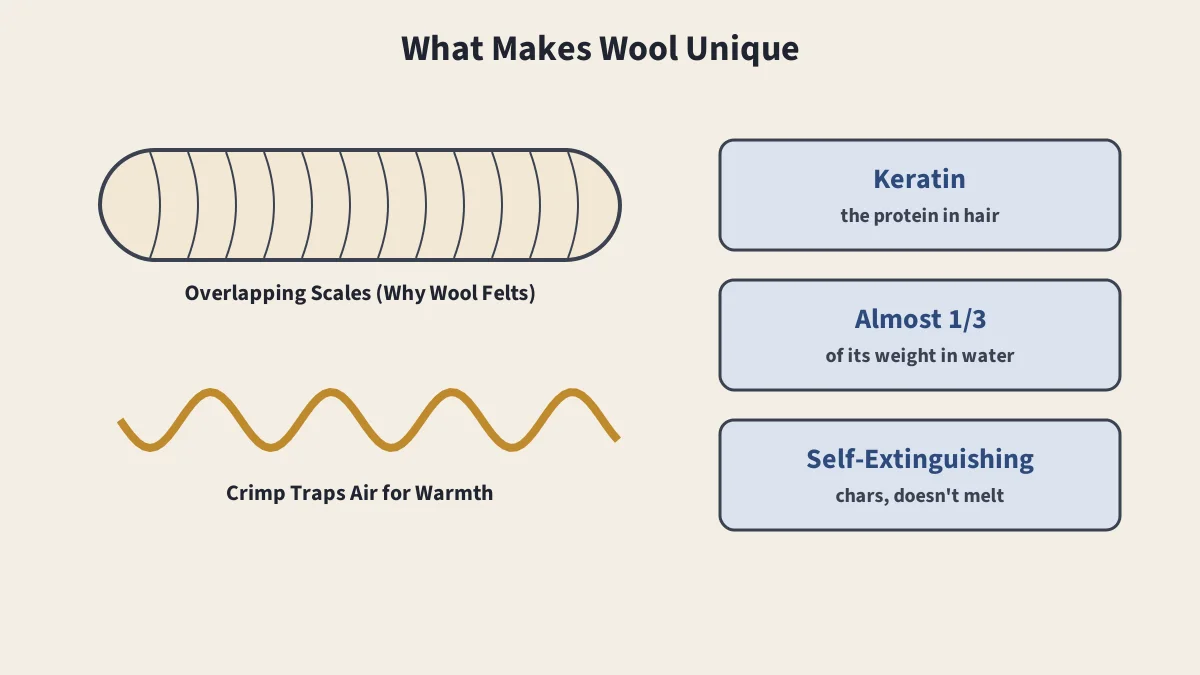
Wool
What wool is, why it is warm and felts, and how to sew it.
Polyester
What polyester is, its history, its pros and cons and how to sew it.