Hand vs. Machine vs. Longarm Quilting: Which Method Is Right? (2026)
Once a quilt top is made, the three layers have to be stitched together. You can do it by hand, on a home sewing machine, or on a longarm machine, and each gives a different look, pace and cost.
In This Article
Quilting Methods in Brief
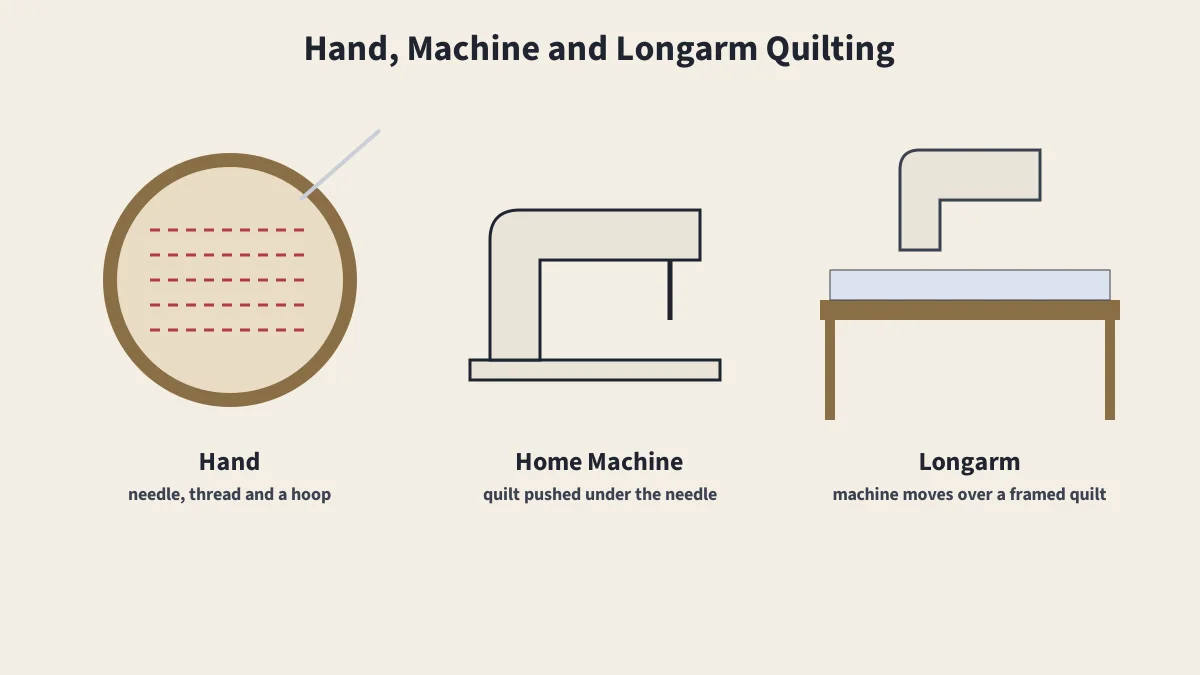
- Hand: needle, thread, hoop or frame
- Home machine: quilt moves under the needle
- Longarm: machine moves over a framed quilt
- Tying: knotted yarn, the quickest
- Longarm frame: 10 to 14 feet long
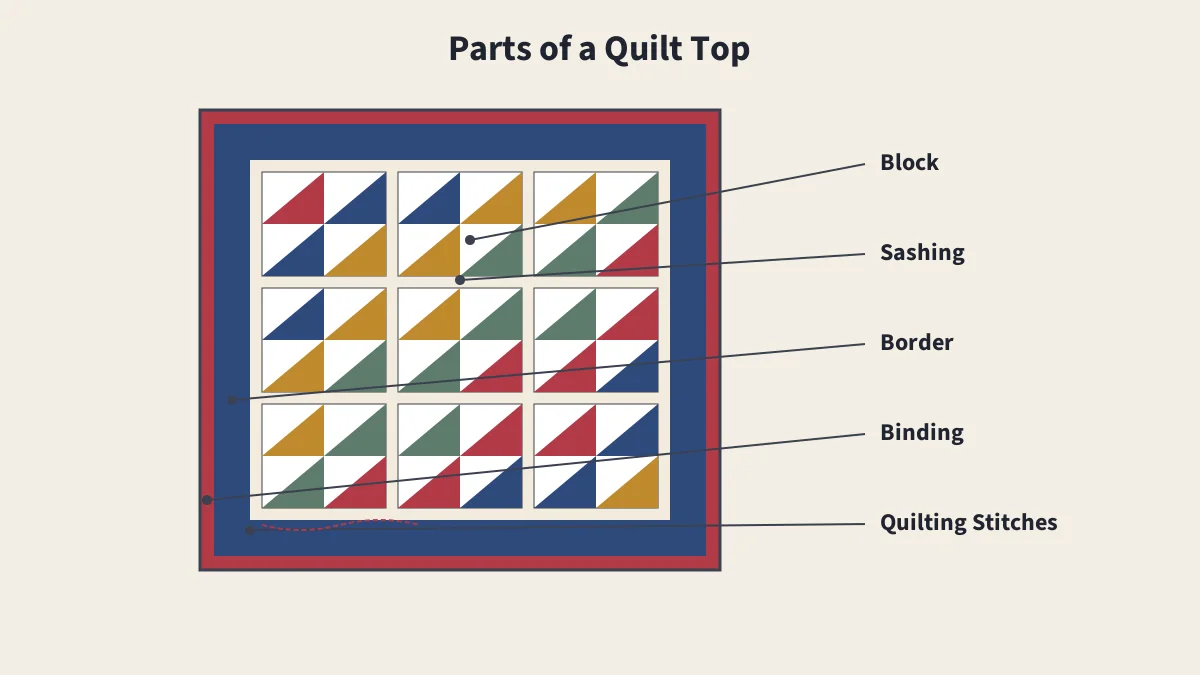
Quilting is the stitching that joins a quilt's top, batting and backing; see parts of a quilt. The method you choose affects how long the quilt takes, how much it costs and how it looks and feels.
Comparing the Methods
| Hand | Home Machine | Longarm | |
|---|---|---|---|
| How it works | Running stitch through all layers, in a hoop or frame | The quilt is pushed under a fixed needle | The machine moves over the quilt, held taut on a frame |
| Speed | Slowest | Faster | Fastest |
| Look | Soft, textured running stitch | Continuous straight or free-motion lines | Even all-over or custom designs |
| Space | Very little | A sewing table | A frame of 10–14 feet |
| Cost | Low | The machine you own | High, or rent time or hire a longarm quilter |
Hand Quilting
Hand quilting is a running stitch worked with a needle and thread through all layers, often in a frame or hoop. Variations include the stab stitch, the rocking stitch and loading several stitches onto the needle at once. A thimble protects the finger that pushes the needle; see hand sewing needles.
Machine Quilting at Home
- Baste the layers first with pins, thread or spray.
- Straight-line quilting: use a walking foot to feed all layers evenly; see the presser feet guide.
- Free-motion quilting: lower the feed dogs and use a darning or free-motion foot, moving the quilt to draw with the needle.
- Manage the bulk by rolling the quilt and supporting its weight on a table.
Longarm Quilting
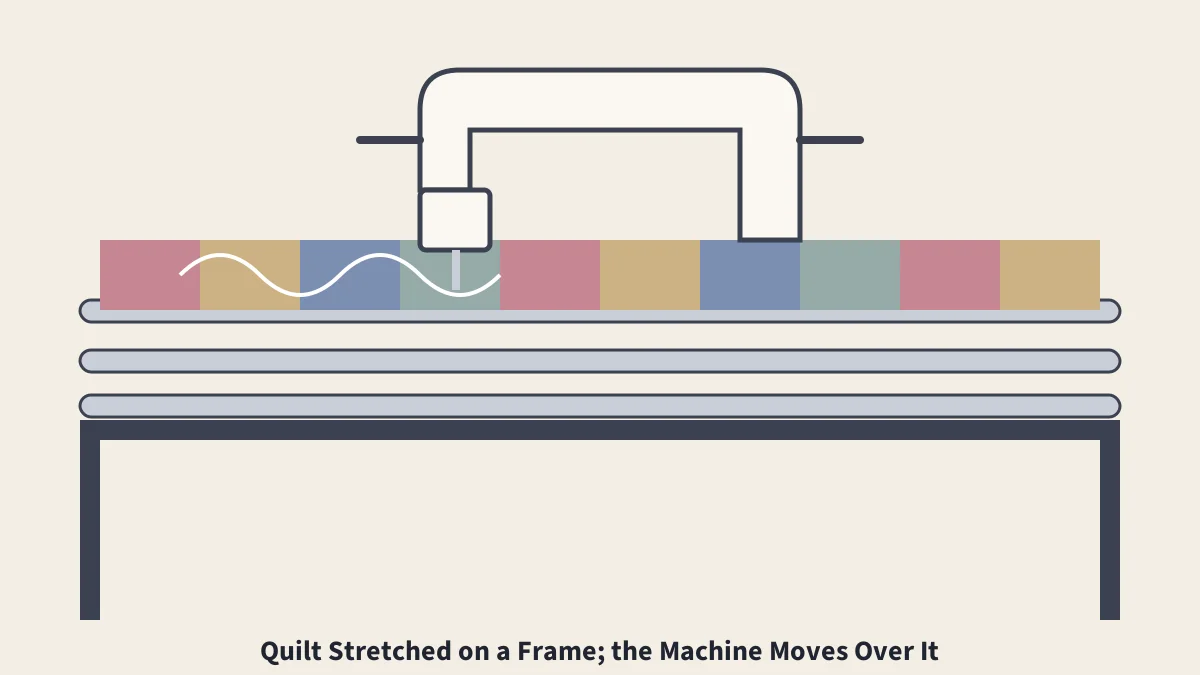
A longarm machine is mounted on a frame, typically 10 to 14 feet long, with rollers that keep the layers taut. Machines are classed by throat space, the distance from the back of the machine to the needle: mid-arms are about 15 inches and longarms range from 16 to 30 inches. Heads are guided by hand or by computer. A pantograph, a long design traced with a laser or stylus, gives a quick all-over pattern; custom designs take longer and cost more. See longarm quilting machines.
Tying
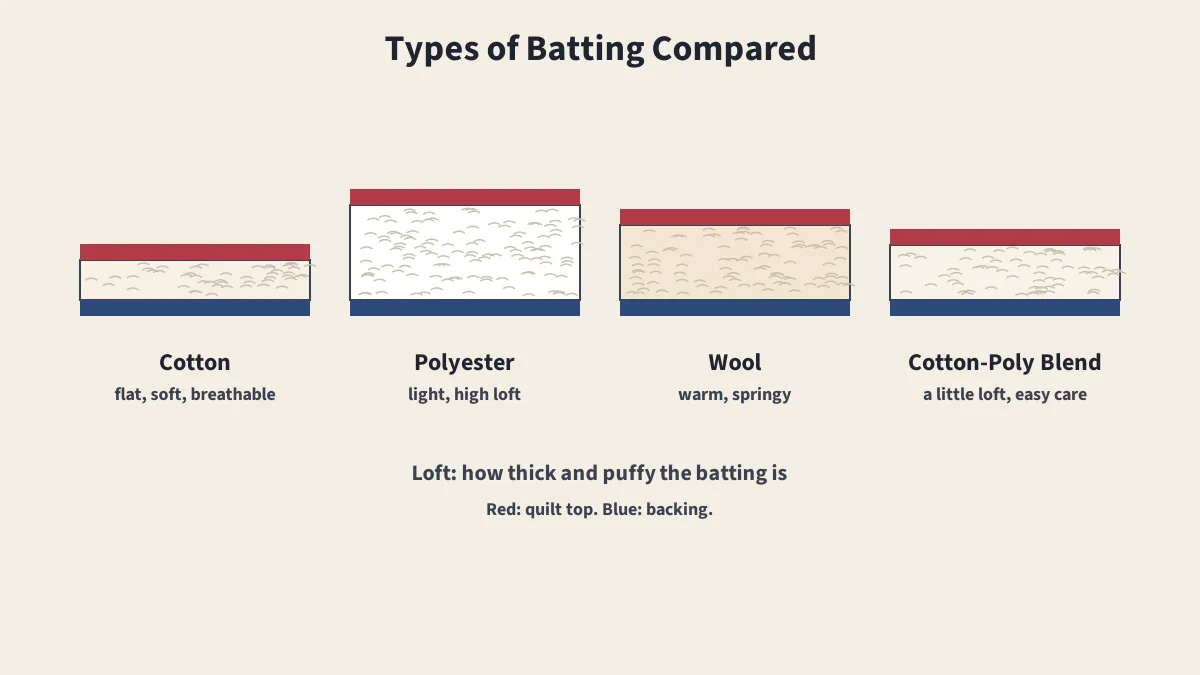
Tying joins the layers with yarn or thread knotted in square knots at intervals. It is the quickest method and is common for quilts needed quickly or with high-loft batting; see types of batting.
Sources
- Quilting, Wikipedia
- Longarm quilting, Wikipedia
Frequently Asked Questions
Is hand quilting better than machine quilting?
Neither is better; they look different. Hand quilting gives a soft, slightly irregular running stitch; machine quilting gives continuous lines and is much faster.
How big is a longarm quilting frame?
Typically 10 to 14 feet long and 2.5 to 4 feet deep, which is why longarms usually need a dedicated room.
Can I quilt a large quilt on a home sewing machine?
Yes, though it takes practice to manage the bulk. A walking foot helps for straight lines, and free-motion quilting uses a darning or free-motion foot with the feed dogs lowered.
What is a pantograph in longarm quilting?
A long printed design placed under the frame's plastic layer and traced with a laser or stylus, repeated in rows to make an all-over pattern.
Keep Reading
Longarm Quilting Machines
Frames, throat space, stitch regulation and computerized quilting.
Parts of a Quilt
Blocks, sashing, borders, batting, backing and binding.
Types of Batting
Cotton, polyester, wool and blends compared.
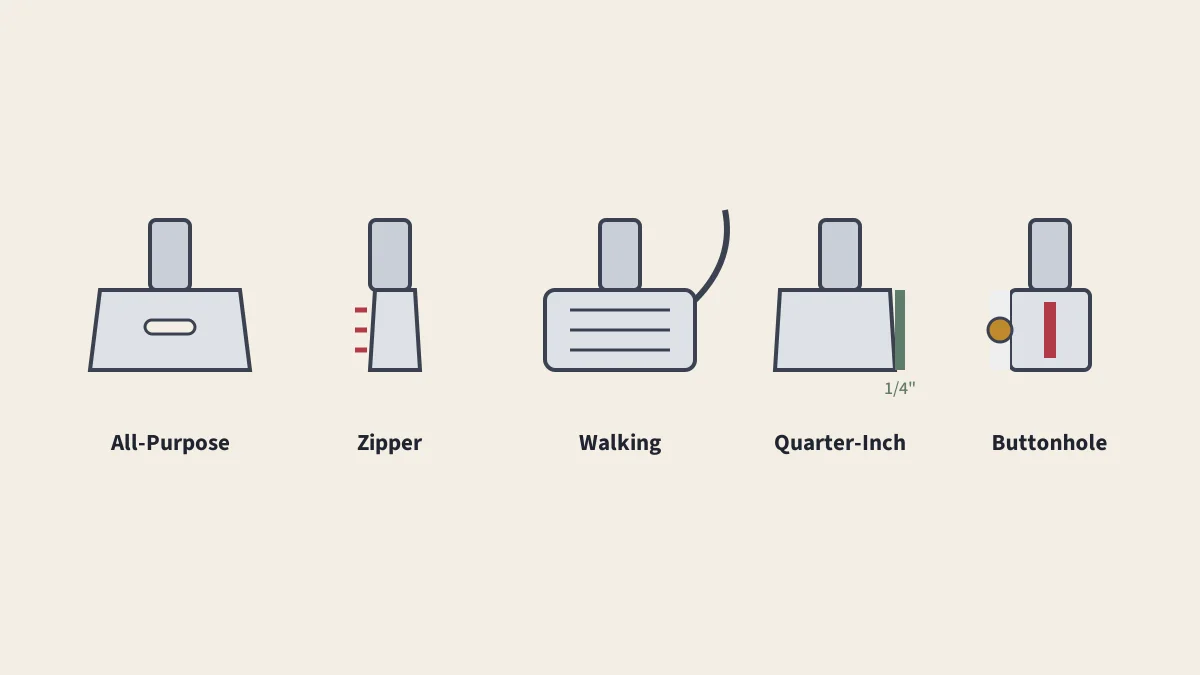
Presser Feet Guide
What each presser foot does and how to check it fits your machine.