Shirt and Blouse Styles: From Dress Shirts to Peasant Blouses (2026)
The blouse began as a French workman's smock and became a woman's wardrobe staple in the 1890s. Shirts and blouses share most of their parts but differ in fit, fabric and detail.
In This Article
Shirts and Blouses in Brief
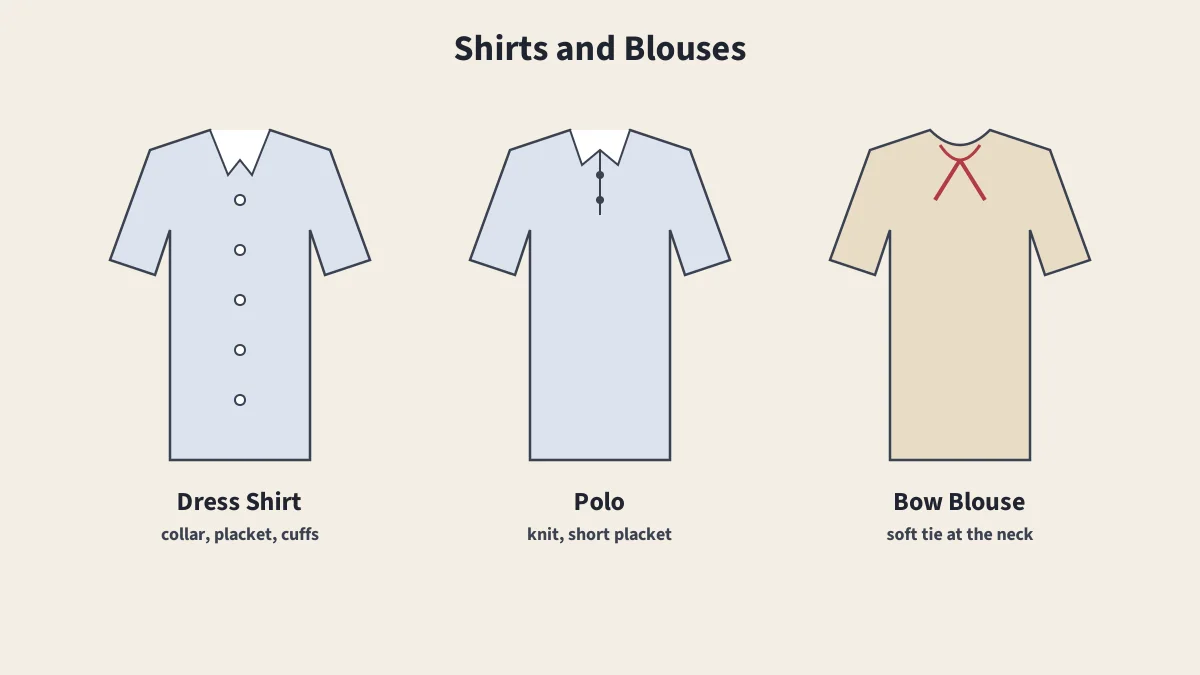
- Dress shirt: collar, placket, cuffs, yoke
- Polo: knit with a short placket
- Blouse: first used for women in 1870
- Shirtwaist: the classic women's dress shirt
- Peasant: gathered, inspired by folk dress
A blouse is a loose-fitting upper garment, today most often a woman's or girl's shirt. Blouses are usually lighter and more tailored than knit tops and may have collars, sleeves, ruffles or bows. For the parts of a shirt, see our guides to collars, plackets, cuffs and yokes.
Shirt Styles
| Shirt | Features |
|---|---|
| Dress shirt | Collar on a stand, front placket, back yoke, cuffs; woven cotton |
| Oxford / button-down | Button-down collar, often in oxford cloth |
| Camp / Cuban collar | Flat, open collar; short sleeves; boxy fit |
| Western | Pointed front and back yokes, snap fastenings, "smile" pockets |
| Polo | Knit fabric, flat collar, short placket with two or three buttons |
| Henley | Collarless knit top with a short buttoned placket |
| Band-collar | A standing band instead of a turned-down collar |
Blouse Styles
| Blouse | Features |
|---|---|
| Shirtwaist | Follows the men's dress shirt; considered the classic women's blouse |
| Peasant | Gathered neckline and sleeves, inspired by folk dress |
| Gibson Girl | Tucks and pleating; very popular in the 1900s and 1910s |
| Lingerie blouse | Light fabric heavily decorated with lace and embroidery |
| Sailor blouse | A wide square collar at the back, from naval uniform |
| Bow (pussy-bow) blouse | A soft tie at the neck |
| Wrap blouse | Crossed fronts tied at the side or waist |
| Peplum blouse | A short flared panel at the waist; see flounces |
A Short History of the Blouse
- "Blouse" comes from French, where it named the blue smock worn by workmen; English farm laborers' smocks were also called blouses.
- The word was first recorded for women's garments in 1870.
- The 1860s Garibaldi shirt echoed peasant and traditional clothing.
- Blouses became common for practical wear in the 1890s, especially for women working in offices.
- The 1900s and 1910s brought elaborate lingerie and Gibson Girl blouses.
Sewing Shirts and Blouses
- Shirts are a good intermediate project, combining collars, plackets, cuffs and buttonholes; see types of buttonholes.
- Use lightweight wovens such as shirting, lawn and poplin; see types of cotton fabric.
- French or flat-felled seams give a clean inside; see types of seams.
Sources
- Blouse, Wikipedia
- Collar (clothing), Wikipedia
Frequently Asked Questions
What is the difference between a shirt and a blouse?
A blouse today usually means a woman's or girl's shirt, often looser or softer, and may have ruffles, bows or gathers. Shirts typically follow the tailored men's dress shirt, with a collar, placket and cuffs.
Where does the word blouse come from?
It is a French loanword, originally for the blue smock worn by French workmen. It was first recorded for women's garments in 1870.
What is a shirtwaist?
A blouse styled like a man's dress shirt, often white. It became popular around the 1890s, when blouses became common for practical wear and office work.
What was the Gibson Girl blouse?
A blouse with tucks and pleating, very popular in the 1900s and 1910s, named after the fashionable women drawn by illustrator Charles Dana Gibson.
Keep Reading
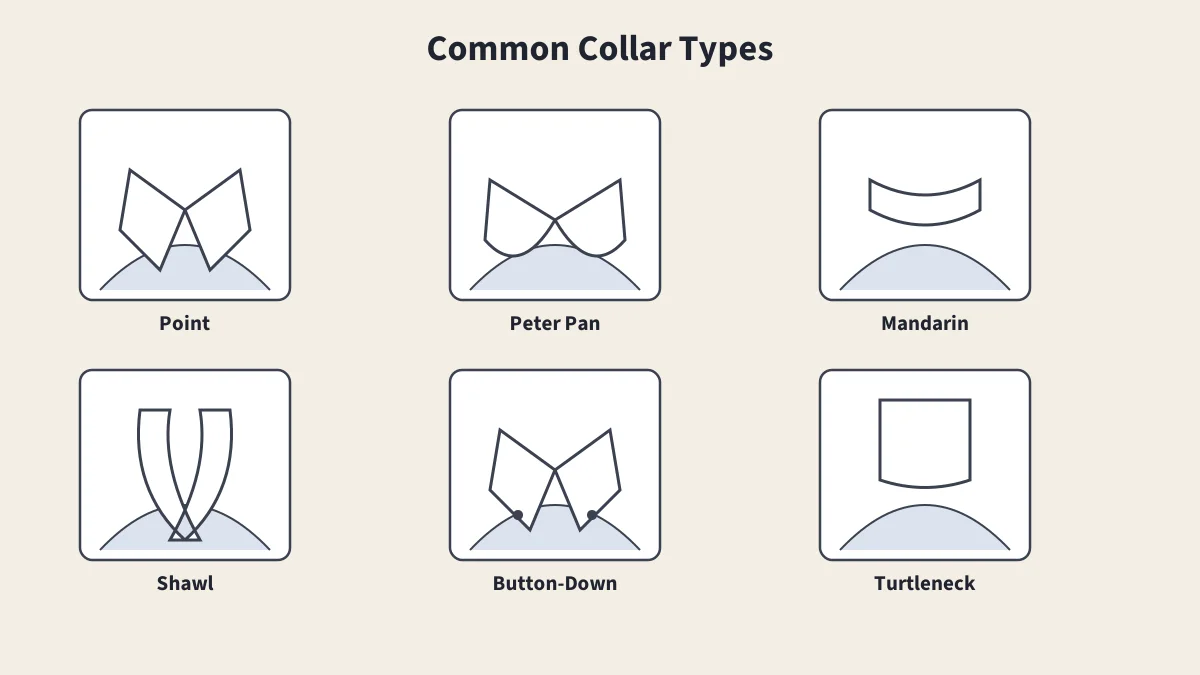
Types of Collars
Shirt, dress and historical collars explained.
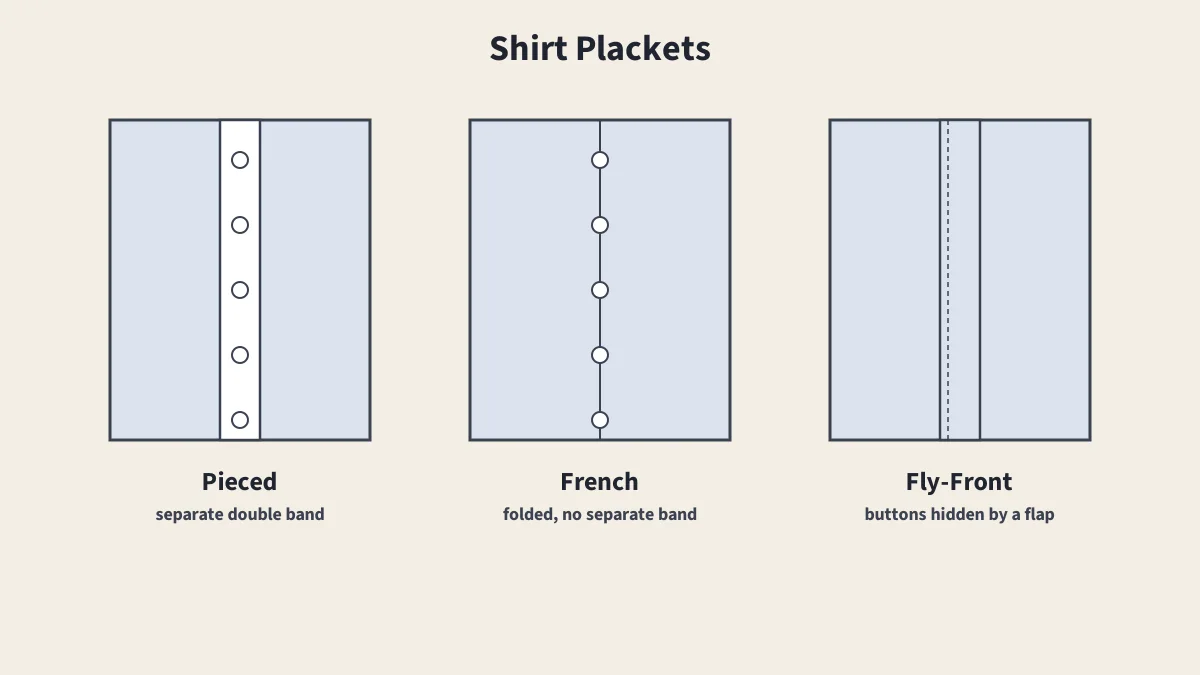
Types of Plackets
Pieced, French, fly-front and sleeve plackets.
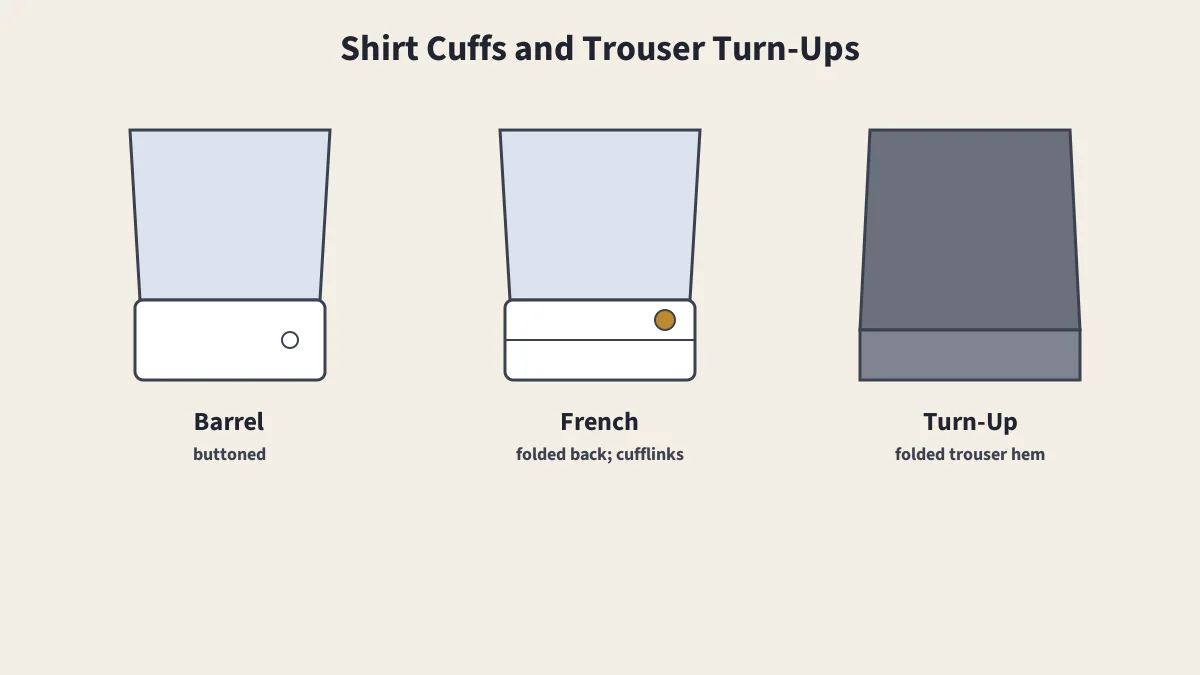
Types of Cuffs
Barrel, French and convertible cuffs, and turn-ups.
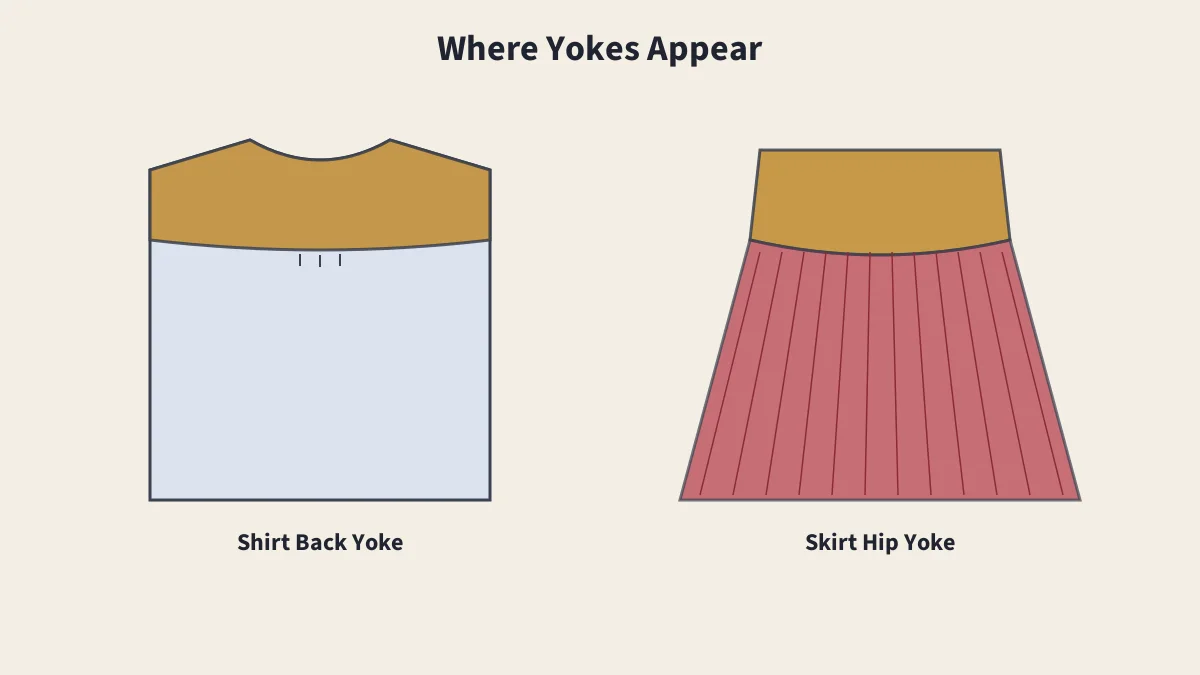
Yokes
Shirt, bodice, skirt and jeans yokes explained.