Types of Sewing Pins: From Dressmaker Pins to T-Pins (2026)
A straight pin seems too simple to need explaining, but pins come in many lengths, thicknesses and head styles. The right pin holds fabric neatly without leaving marks, and the history of making them helped explain modern economics.
In This Article
Pins in Brief
- Most common: dressmaker pins
- Longest: quilting pins
- Finest: silk pins, for delicate fabrics
- Easiest to grab: T-pins and flat-head pins
- Heat-safe heads: glass and metal
Pins hold fabric in place before it is sewn. They mark fold lines and darts, hold pattern pieces to fabric, and keep layers aligned while you stitch. Using the right pin for the fabric prevents puckers, snags and holes.
A Very Old Tool
Archaeological evidence suggests curved pins have been used for over four thousand years. Many later pins were made of brass, a relatively hard and ductile metal, followed by steel and then nickel-plated steel. Today's pins are usually stainless or nickel-plated steel.
Pin making was later mechanized. John Ireland Howe invented a pin-making machine in 1832 and an improved one in 1841, and by 1839 his company was producing 72,000 pins a day with three machines.
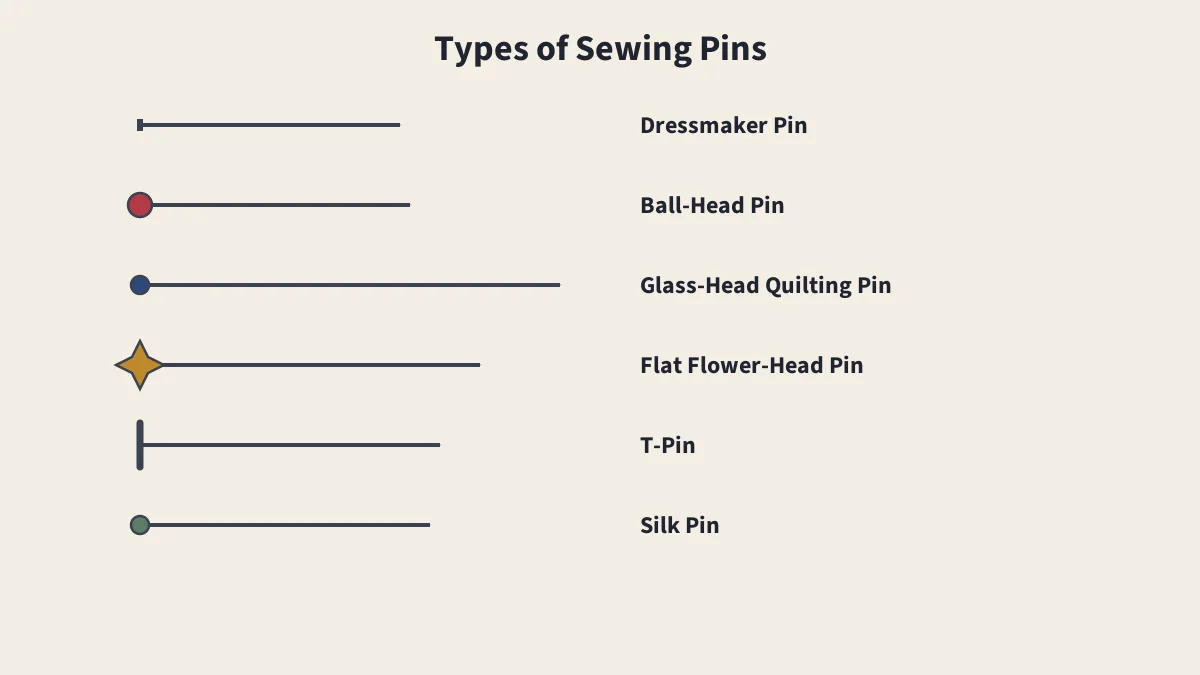
Types of Sewing Pins
| Type | Typical Length | Use |
|---|---|---|
| Dressmaker pins | About 27 mm (1 1/16 in) | The general-purpose sewing pin |
| Quilting pins | About 48 mm (1 7/8 in) | Holding thick quilt layers; often glass-headed |
| Silk pins | Fine and sharp | Delicate fabrics that show holes |
| Ballpoint pins | Rounded tip | Knits, where the tip slides between loops |
| Appliqué pins | Short | Holding small pieces in place |
| Flat flower-head pins | Long, with a flat head | Lying flat under a ruler or iron |
| T-pins | About 32 mm (1 1/4 in) | Heavy fabrics, upholstery and blocking |
Lengths are as listed by Wikipedia where available; exact sizes vary by brand.
Pin Heads
- Plain (flat metal): the classic dressmaker pin; heat-safe but small to grip.
- Glass heads: easy to see and grip, and they tolerate an iron.
- Plastic ball heads: colorful and cheap, but they can melt under an iron.
- Flat flower heads: large and easy to see, and they lie flat under rulers.
- T-heads: bent wire heads that are easy to grab and push.
Pinning Tips
- Pin at right angles to the seam line, with heads toward the edge, so they are easy to remove as you sew.
- Remove pins before the needle reaches them. Sewing over pins can break needles or damage the machine.
- Pin within the seam allowance on delicate fabrics that may mark; see seam allowance.
- Replace bent or blunt pins. They snag fabric.
- Keep a magnet handy to pick up dropped pins.
The safety pin, with its covered point, is a different invention with its own story; see the history of the safety pin.
Sources
- Pin, Wikipedia
- The Wealth of Nations, Wikipedia
Frequently Asked Questions
What is the most common sewing pin?
The dressmaker pin. Wikipedia lists it as the most common type of sewing pin, at sizes 17 to 20 and about 27 mm (1 1/16 in) long.
Why are quilting pins so long?
Quilting pins are exceptionally long, about 48 mm (1 7/8 in), so they can pass through the several layers of a quilt sandwich and stay put. They often have glass heads.
Can I iron over pins?
Pins with glass or metal heads tolerate an iron, while plastic heads can melt. It is still best to remove pins before pressing where possible, since they can leave marks.
What are T-pins used for?
T-pins have heads bent into a T shape, which makes them easy to grab and push. They are used for heavy fabrics, upholstery, blocking knitting and pinning into boards.
Keep Reading
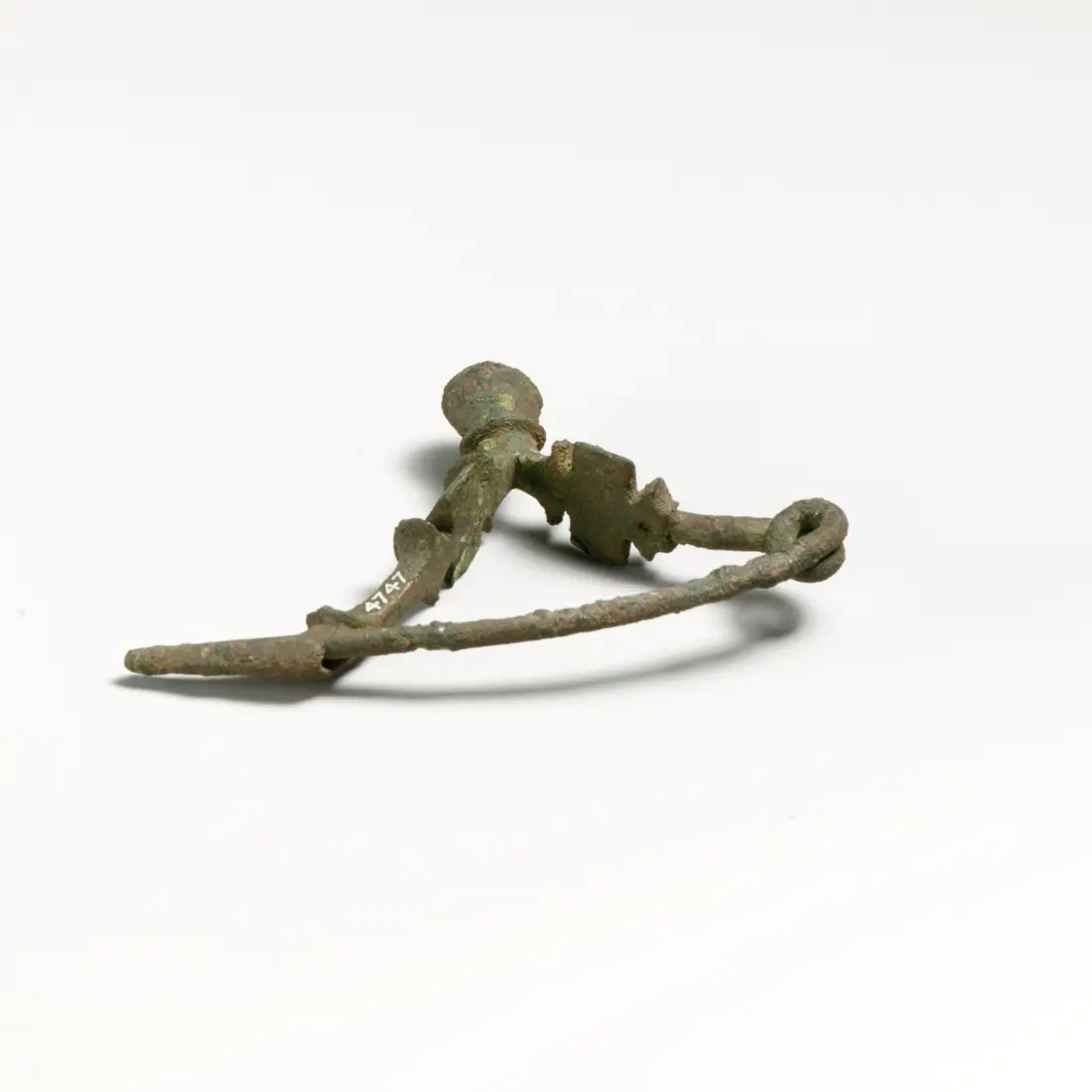
History of the Safety Pin
From Bronze Age fibulae to Walter Hunt's 1849 patent and punk.
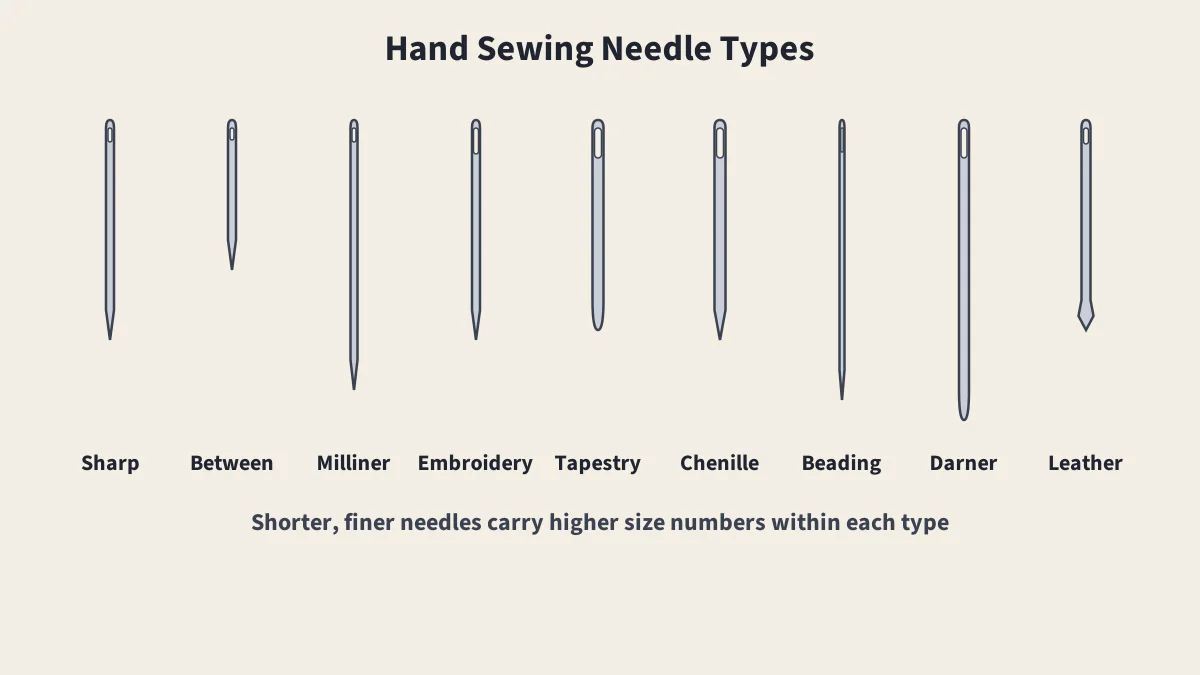
Hand Sewing Needle Types
Every common hand needle type, what it is for and how sizes work.
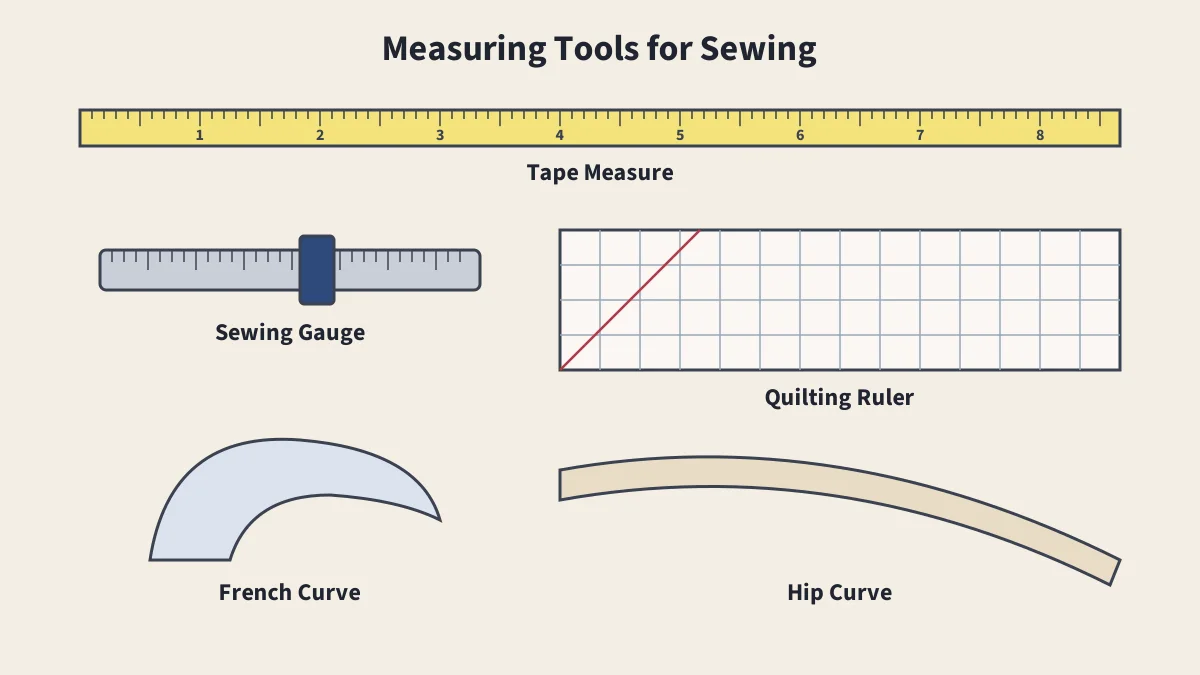
Measuring Tools
Tape measures, gauges, quilting rulers and curves explained.
Sewing Tools and Notions
The core sewing toolkit, from needles and pins to cutters and rulers.