Clothing Alterations Basics: What Can and Can't Be Changed (2026)
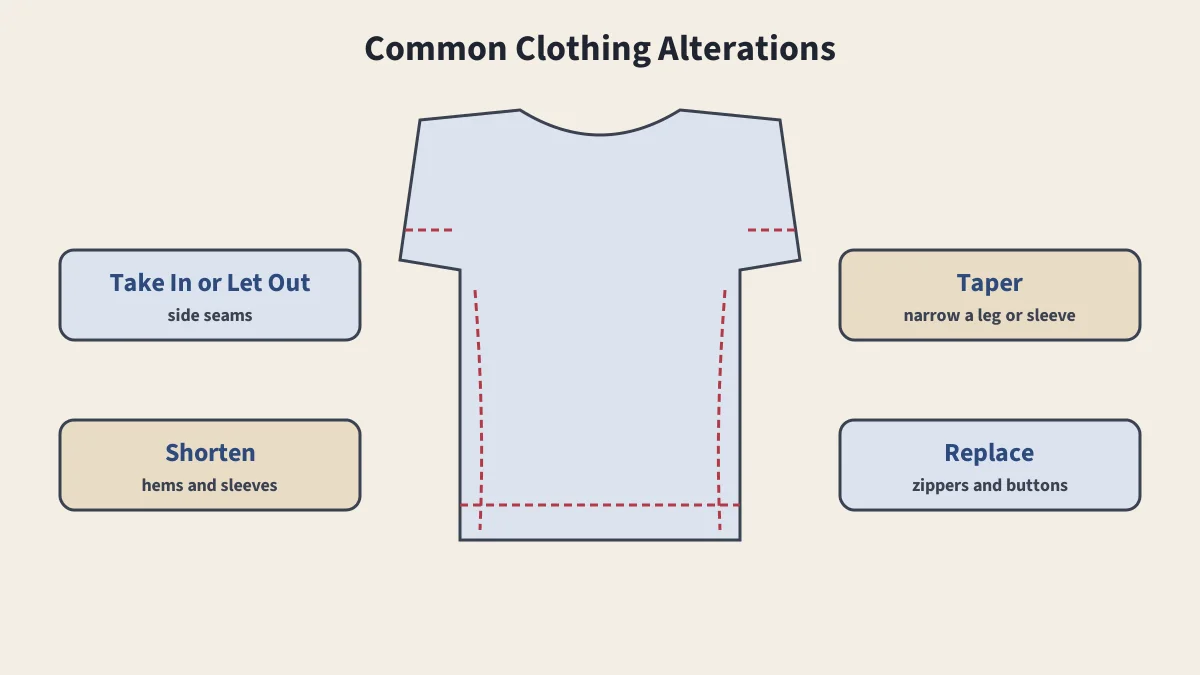
Most ready-to-wear clothes are made for an average body, so a small alteration can make them fit far better. Some changes are easy at home; others are best left to a tailor or skipped altogether.
In This Article
Alterations in Brief
- Easy: hems, buttons, taking in simple seams
- Moderate: tapering, zippers, waist adjustments
- Hard: shoulders, lined jackets, big resizing
- Limit: letting out depends on seam allowances
- Rule: fit the largest area, then alter the rest
An alteration changes an existing garment rather than making a new one. A tailor is someone who makes or alters clothing; in medieval Europe, tailoring was organized by guilds, and Bologna's tailors adopted guild statutes in 1244. Today, many alterations can be done at home with basic skills.
How Difficult Is It?
| Alteration | Difficulty | Notes |
|---|---|---|
| Hemming pants, skirts, sleeves | Easy | See hemming pants and jeans |
| Replacing buttons and snaps | Easy | See sewing on buttons |
| Taking in side seams | Easy to moderate | Simplest on unlined, unpocketed seams |
| Tapering trouser legs | Moderate | Usually taken from the inseam and outseam equally |
| Taking in a waist | Moderate | Easiest at a center back seam |
| Replacing a zipper | Moderate | See inserting a zipper |
| Letting out | Depends | Limited by the seam allowance; old stitch marks may show |
| Jacket sleeves with working buttonholes | Hard | Usually shortened from the shoulder |
| Shoulder width | Very hard | Affects collar, sleeves and lining |
Before You Alter
- Fit the largest area first. It is easier to take in a garment that fits the shoulders or hips than to enlarge one that doesn't.
- Pin while wearing it, inside out, or ask someone to help; a dress form also helps.
- Check the seam allowances before planning to let anything out; see seam allowance.
- Look at how it was made. Note the seam finishes, stitch length and thread color, and copy them.
- Take photos before unpicking anything complex.
Narrowing a Side Seam
- Turn the garment inside out and pin the new seamline, tapering smoothly into the original seam above and below.
- Try it on to check the fit.
- Mark the line, then stitch it, blending into the old seam at each end.
- Check the fit again before trimming the excess.
- Finish the new seam allowance and press.
Tapering Trouser Legs
Mark the new width at the hem, then draw a smooth line up to where the leg should stay the same, often around the knee or thigh. Take the same amount from the inseam and outseam so the crease stays centered. Unpick the hem first and re-hem afterward.
When to See a Tailor
Lined and structured jackets, formal and bridal wear, leather, beaded or sequinned fabrics, and changes of more than one size are usually worth taking to a professional. For remaking clothes into something new, see upcycling clothes.
When sewing from a pattern, it is usually easier to adjust the paper pattern first; see common fit adjustments.
Sources
Frequently Asked Questions
What are the easiest clothing alterations?
Hemming trousers, skirts and sleeves, replacing buttons, taking in side seams on simple garments, and tapering straight trouser legs are usually the most straightforward.
Can clothes be made bigger?
Only by as much as the seam allowances allow, which is often very little in ready-to-wear. Tailored trousers and jackets sometimes have wider allowances at the center back seam for this purpose.
Which alterations are hard?
Shortening jacket sleeves with working buttonholes, changing shoulder width, altering lined or beaded garments, and resizing by more than one size are difficult and usually best left to a professional.
What does a tailor do?
A tailor makes or alters clothing, traditionally especially men's clothing. Tailoring guilds formed in medieval Europe; Bologna's guild adopted statutes in 1244.
Keep Reading
Hemming Pants and Jeans
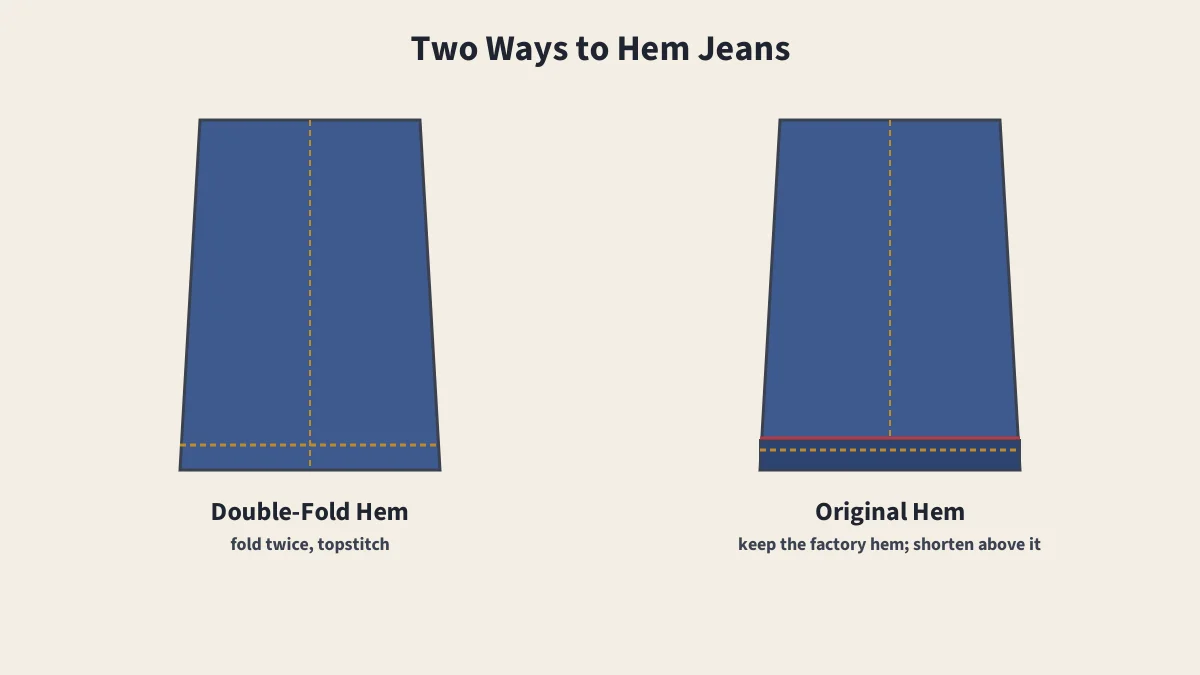
Measuring, blind hems and keeping the original jeans hem.
Seam Allowance Explained
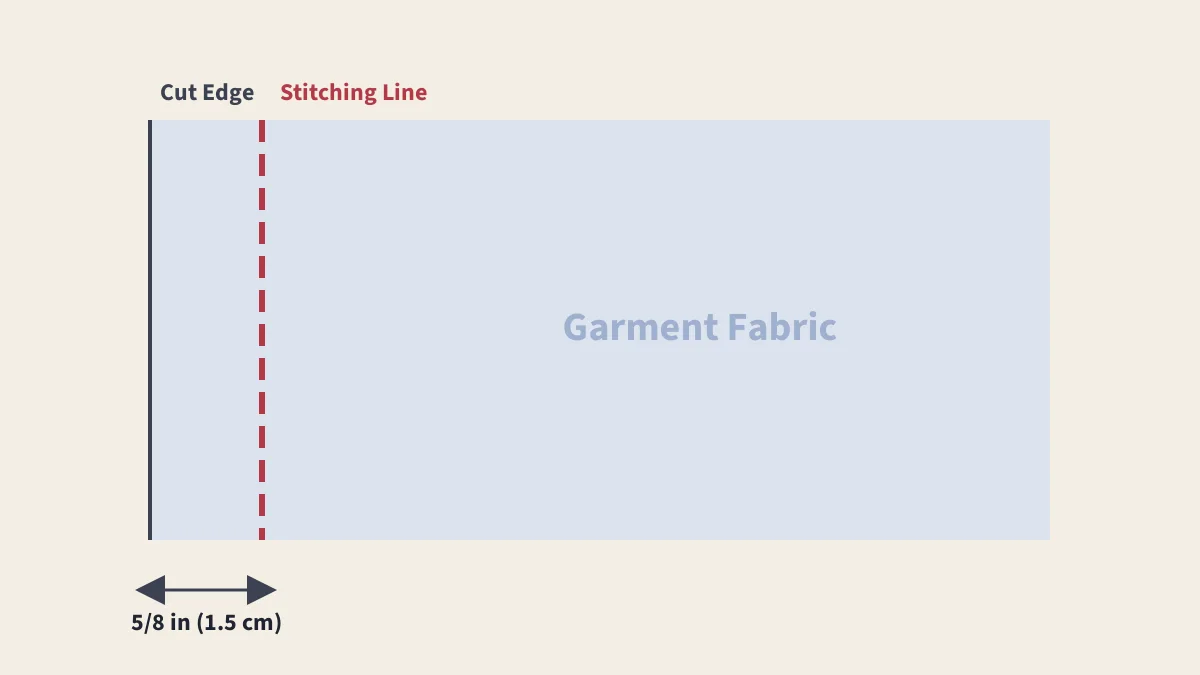
Standard seam allowances, why they differ, and how to sew them accurately.
How to Insert a Zipper
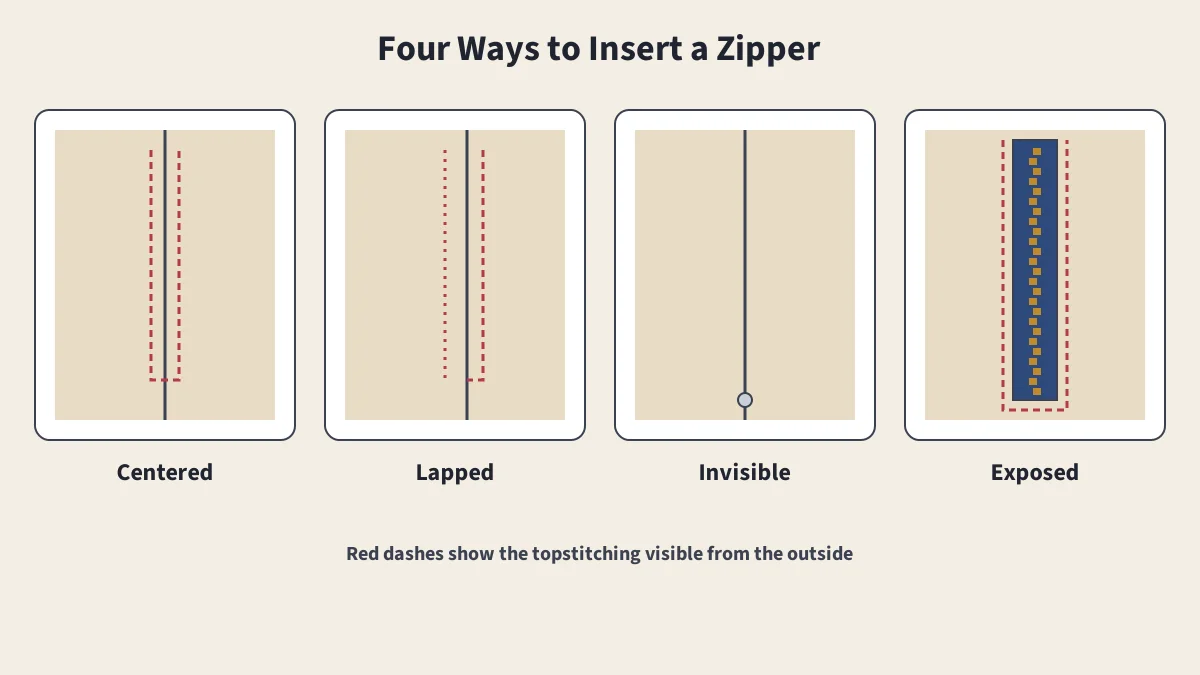
Centered, lapped, invisible and exposed zippers, step by step.
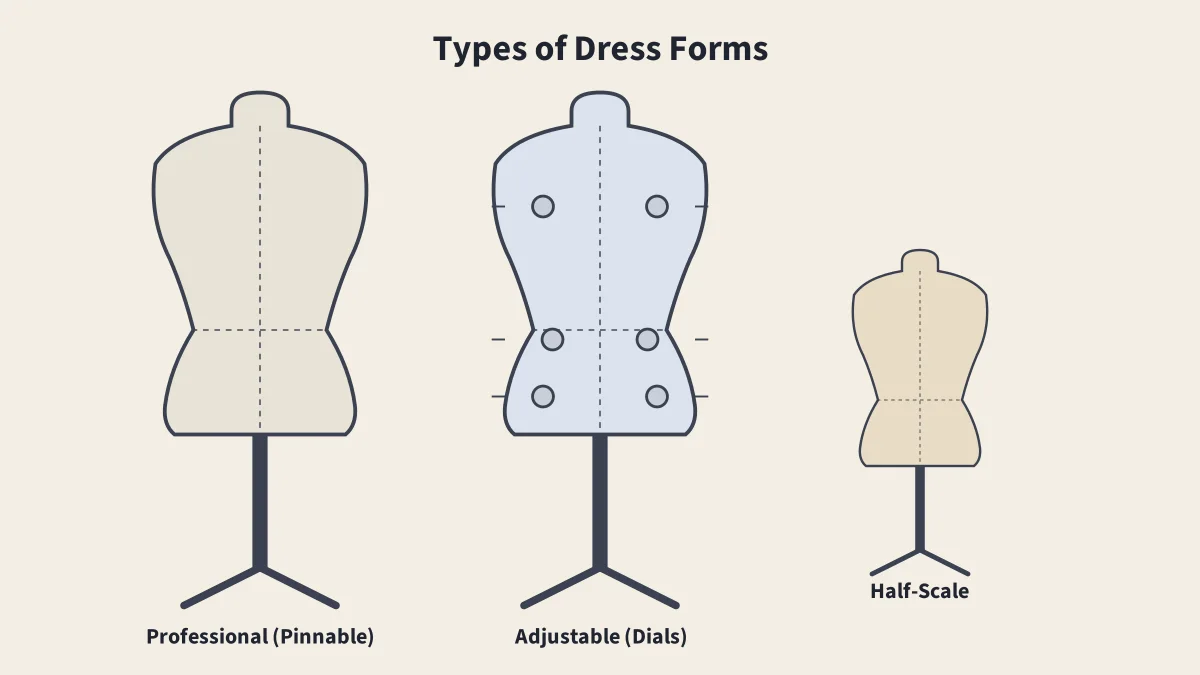
Dress Forms
Professional, adjustable, half-scale and custom-padded forms compared.