17th and 18th-Century Dress: Mantuas, Sack-Back Gowns and Panniers (2026)
In the late 17th century, the mantua replaced stiff separate bodices and skirts with a gown pleated to fit. From it came the great gowns of the 18th century, worn over stays, petticoats and panniers.
In This Article
17th–18th-Century Dress in Brief
- Mantua: new in the 1670s
- Sack-back: robe à la française
- Close-bodied: robe à l'anglaise
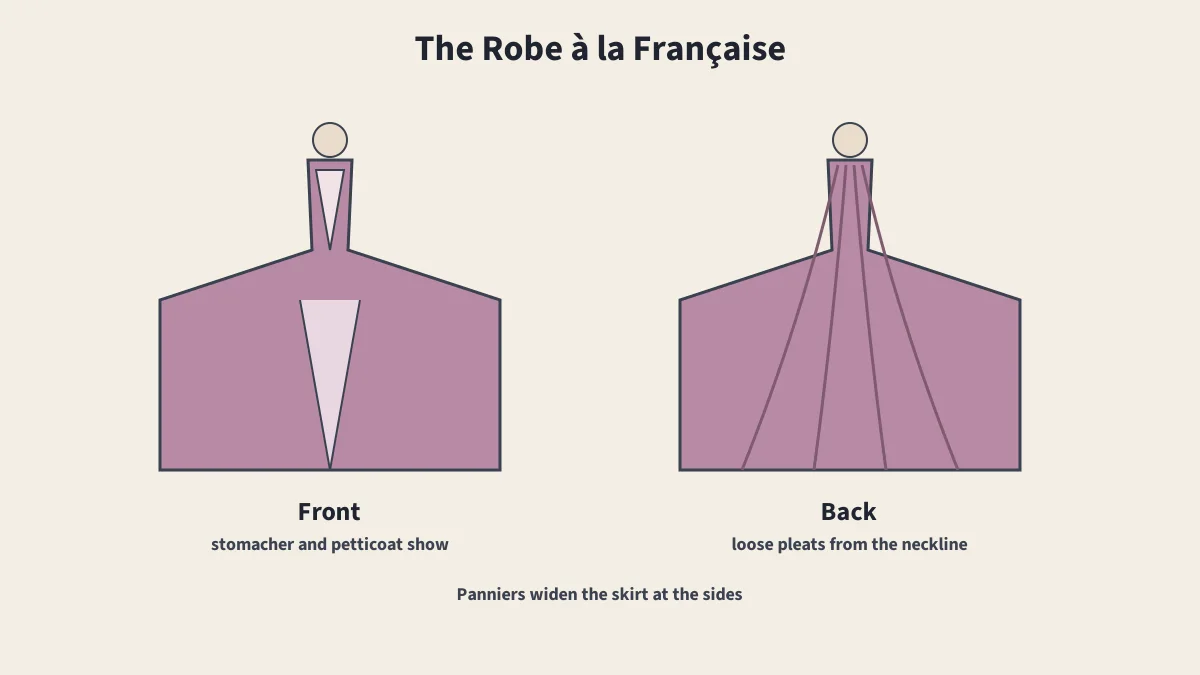
- Front: stomacher and visible petticoat
- Width: panniers and side hoops
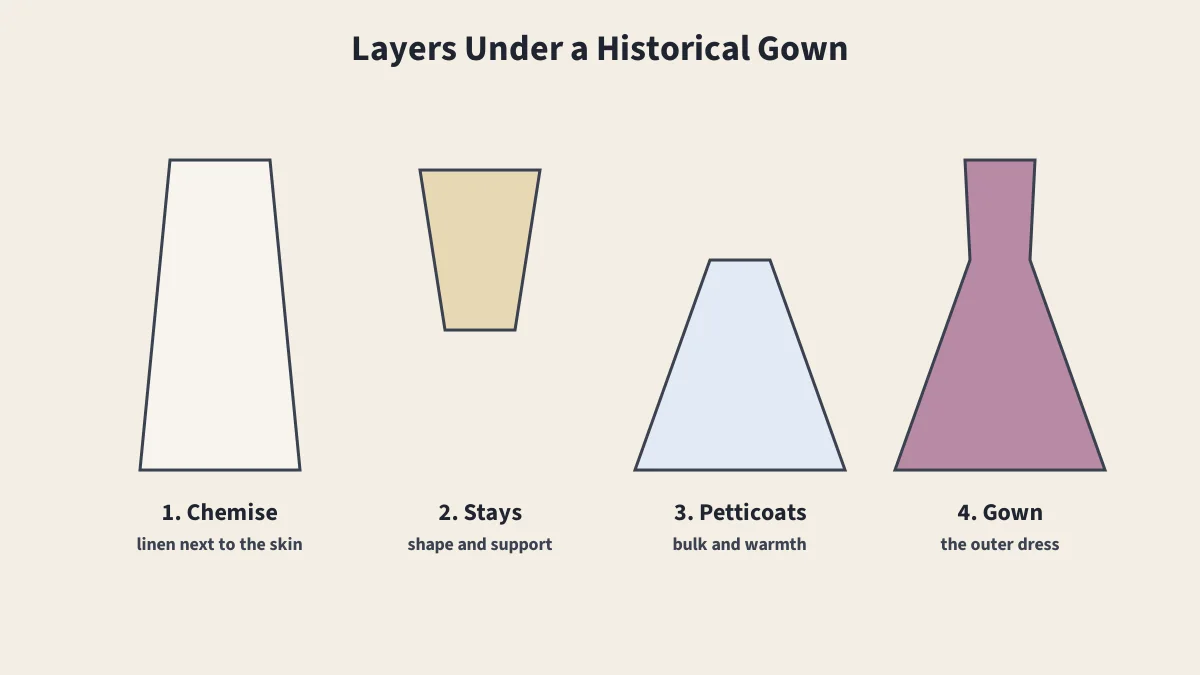
Women's dress of the late 17th and 18th centuries was built in layers: a linen shift, stays, petticoats and supports, and an open gown on top. Its key innovation was the mantua, which shaped the gown by pleating rather than by cutting separate pieces. See historical undergarments and corsets and stays.
The Mantua
The mantua arose in the 1670s and stayed in fashion through the 18th century. It was made from one length of fabric, pleated to fit and hanging from the shoulders to the floor with a long train, instead of being cut as a separate bodice and skirt. It began as a loose gown and later became an overgown worn over stays, a stomacher and a petticoat. Its name may come from Mantua, an Italian silk-producing city, or from the French manteau, "coat." The mantua made women's outerwear a formal trade, and "mantua-maker" came to mean a women's dressmaker.
Gowns of the 18th Century
| Gown | Construction |
|---|---|
| Robe à la française (sack-back gown) | Back pleats hang loosely from the neckline; the fitted bodice holds the front close to the figure |
| Robe à l'anglaise (close-bodied gown) | Back pleats are sewn in place to fit the back closely, then released into the skirt |
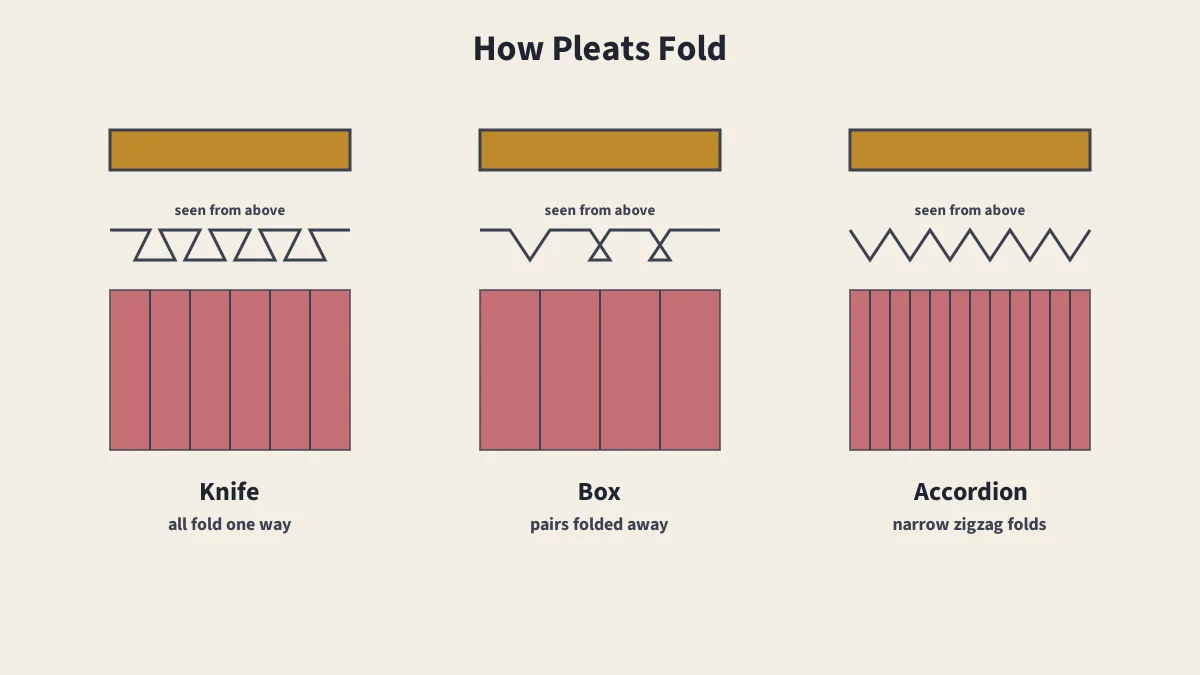
The loose back pleats are often called Watteau pleats, after the painter Antoine Watteau; see types of pleats.
The Parts of the Outfit
- Stomacher: a decorative panel filling the front opening, pinned over the lacing or to the stays.
- Petticoat: worn under the gown, which opened in front to show it; quilted with wool in cold climates.
- Engageantes: lace or fine linen ruffles beneath the elbow-length sleeves, tacked to the gown or the shift.
- Panniers: side supports of linen and cane that widened the skirt while keeping front and back flat.
Panniers and Hoops
Panniers originated in 17th-century Spanish court dress and spread to France after about 1718–1719. At their most extreme, they extended skirts several feet at each side, giving flat panels to display woven and embroidered patterns. Hoop skirts reached their largest size in the 1750s, and by the 1780s panniers were normally worn only with formal court dress.
Sources
- Mantua (clothing), Wikipedia
- 1750–1775 in Western fashion, Wikipedia
- Pannier (clothing), Wikipedia
Frequently Asked Questions
What is a mantua?
A women's gown of the late 17th and 18th centuries, made from one length of fabric pleated to fit and hanging from shoulders to floor, rather than a separate bodice and skirt. It arose in the 1670s.
What is a robe à la française?
An 18th-century gown, also called a sack-back gown, with pleats falling loosely from the back neckline and a fitted front.
What is the difference between a robe à la française and a robe à l'anglaise?
In the française the back pleats hang loose from the neckline; in the anglaise they are sewn down to fit the back closely before releasing into the skirt.
What was a stomacher?
A decorative panel that filled the front opening of a gown's bodice, pinned to the gown over the lacing or to the stays beneath.
Keep Reading
Historical Undergarments
Chemises, shifts, stays and petticoats.
Corsets and Stays
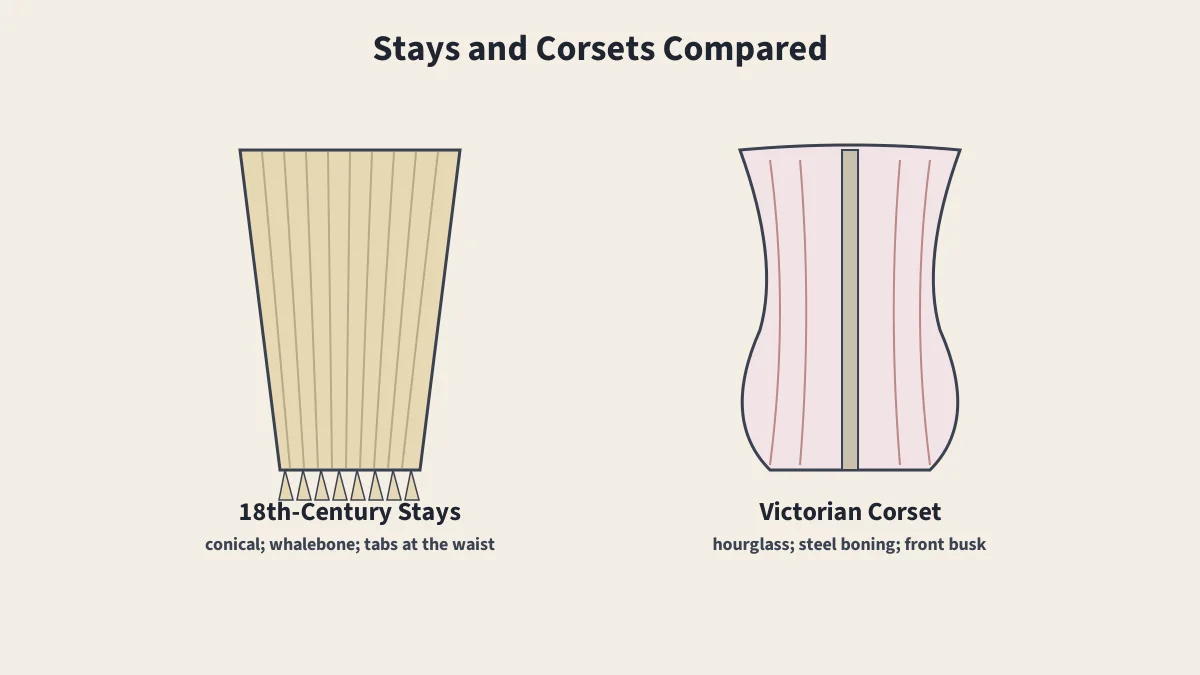
Bodies, stays and corsets through the centuries.
Before Sewing Machines
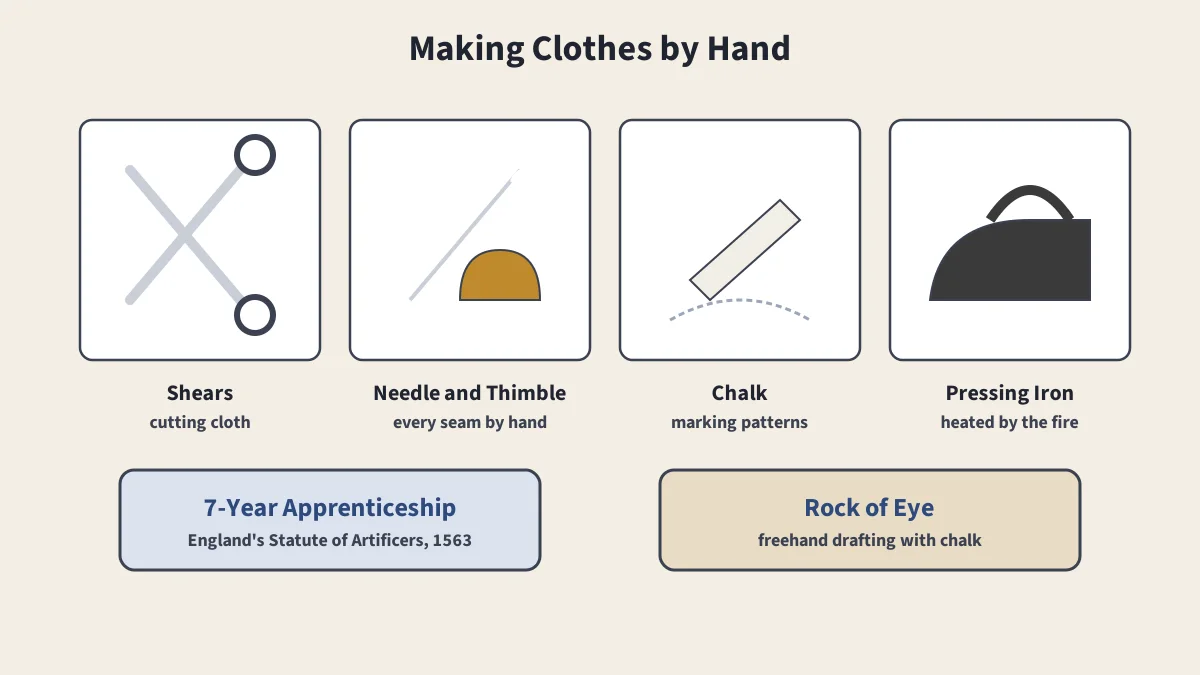
Tailors, dressmakers and hand sewing before machines.
Types of Pleats
Knife, box, accordion, kick and historical pleats.