How Clothes Were Made Before Sewing Machines (2026)
Before the 1850s, every seam in every garment was sewn by hand. Clothing was made by guild-trained tailors, mantua-makers and seamstresses, by outworkers paid by the piece, and by women at home.
In This Article
Before Machines in Brief
- Tailors: guild-trained, mainly menswear
- Mantua-makers: women's dressmakers
- Training: typically a 7-year apprenticeship
- Patterns: trade secrets until about 1790
- At home: shirts, shifts and mending
Until lightweight domestic sewing machines went on sale in the 1850s, every garment was sewn by hand. Clothes were valuable, made to last, and altered, remade and mended many times. The work was split between professional trades and the household.
Tailors
- In the High Middle Ages, European guilds organized tailoring into masters, journeymen and apprentices, limiting competition and setting standards. In 1244, Bologna's guild required every tailor to join.
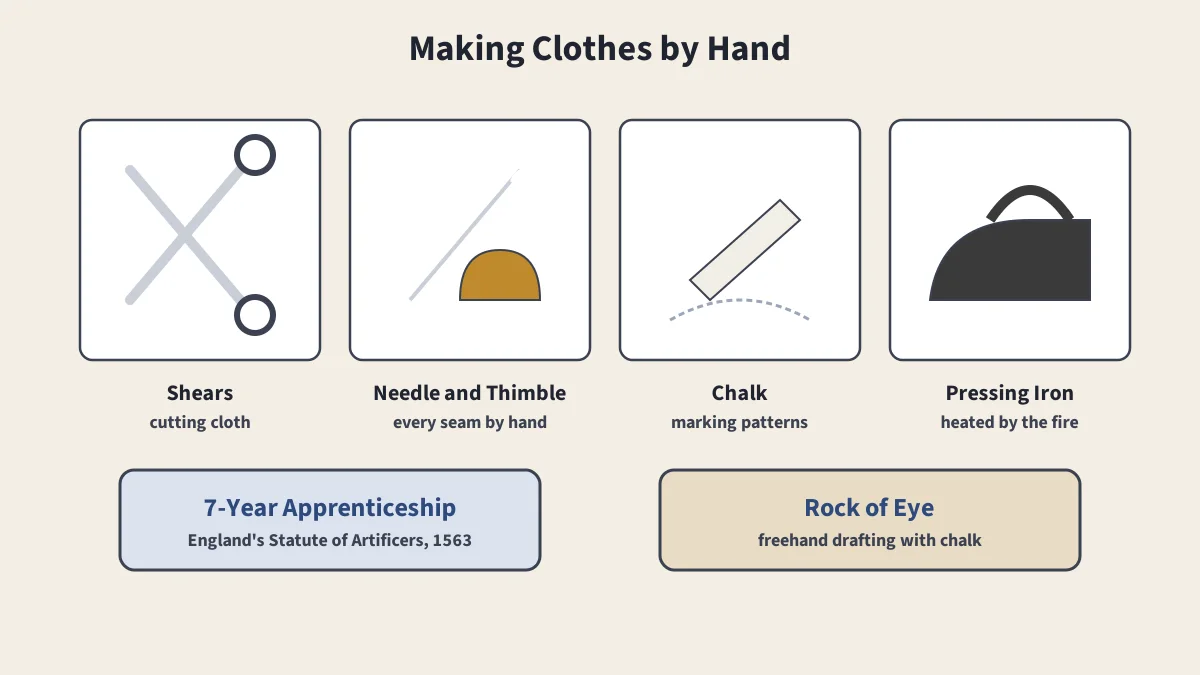
- England's Statute of Artificers (1563) allowed entry to tailoring only through apprenticeship, typically seven years; it was repealed in 1814.
- Apprentices tended the fires that heated pressing irons, ran errands and matched fabrics, while learning to sew sitting cross-legged on a raised board.
- Shops divided work into rooms for measuring, cutting, sewing, buttonholes and finishing, and long hours of hand stitching by candlelight left many tailors with poor eyesight.
Patterns and Cutting
Cutting patterns were trade secrets owned by master tailors until about 1790. The earliest surviving book on tailor's cutting is Juan de Alcega's Spanish manual of 1580, with 163 patterns. Many tailors drafted freehand by the "rock of eye" method, marking cloth with chalk. See the history of sewing patterns.
Dressmakers and Seamstresses
Women's gowns were made by dressmakers, known in the 18th century as mantua-makers after the mantua gown; see 17th- and 18th-century dress. Seamstresses did plain hand sewing, often under the putting-out system, in which work was given out to be sewn at home.
Piecework and Outworkers
- By the 18th century, cutters ranked above "mere sewers," and by the late 1700s one worker might sew only collars and sleeves.
- Masters used outworkers, often wives and family members, to avoid the costs of lighting, heating and supervision, and to escape legal limits on wages and hours.
- Tailors went on strike in 1827 and 1834 against employing women as outworkers.
- Cheap ready-made clothing, called "slops," was already popular; the 1851 British census counted 152,672 tailors.
Sewing at Home
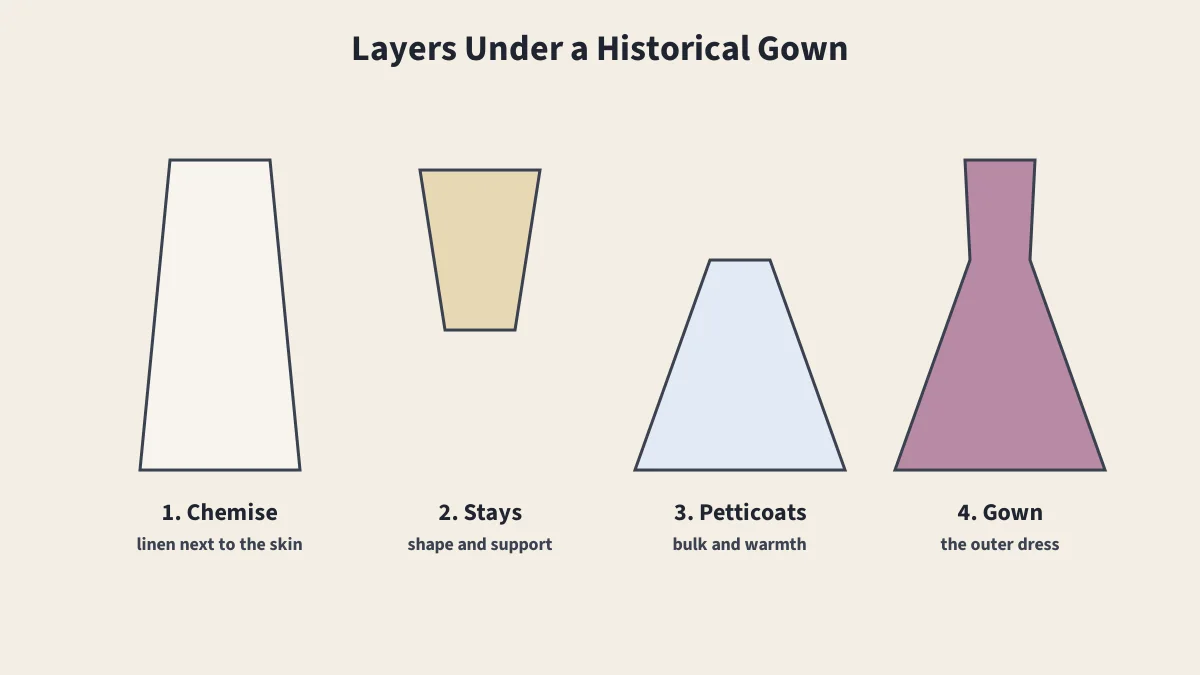
Linen shirts, shifts and other underclothes were usually sewn at home by women, cut from rectangles and triangles of cloth so that nothing was wasted; see historical undergarments. Even today, nearly 75 percent of the stitching in a custom tailored suit is done by hand.
For how the trades of seamstress, dressmaker and tailor differ, see seamstress vs. tailor vs. dressmaker.
Sources
- Tailor, Wikipedia
- Seamstress, Wikipedia
- Victorian fashion, Wikipedia
Frequently Asked Questions
How were clothes made before the sewing machine?
By hand. Professional tailors made men's clothing and dressmakers made women's; many garments, especially shirts and underwear, were sewn at home.
How long did it take to become a tailor?
In England, the Statute of Artificers of 1563 allowed entry to tailoring only through apprenticeship, typically seven years. It was repealed in 1814.
What was a mantua-maker?
Originally a maker of mantuas, a style of women's gown; by the 18th century the term meant a women's dressmaker.
What were outworkers?
People, often women and family members, paid by the piece to sew at home for a master tailor, who saved on lighting, heating and supervision.
Keep Reading
History of Ready-to-Wear Clothing
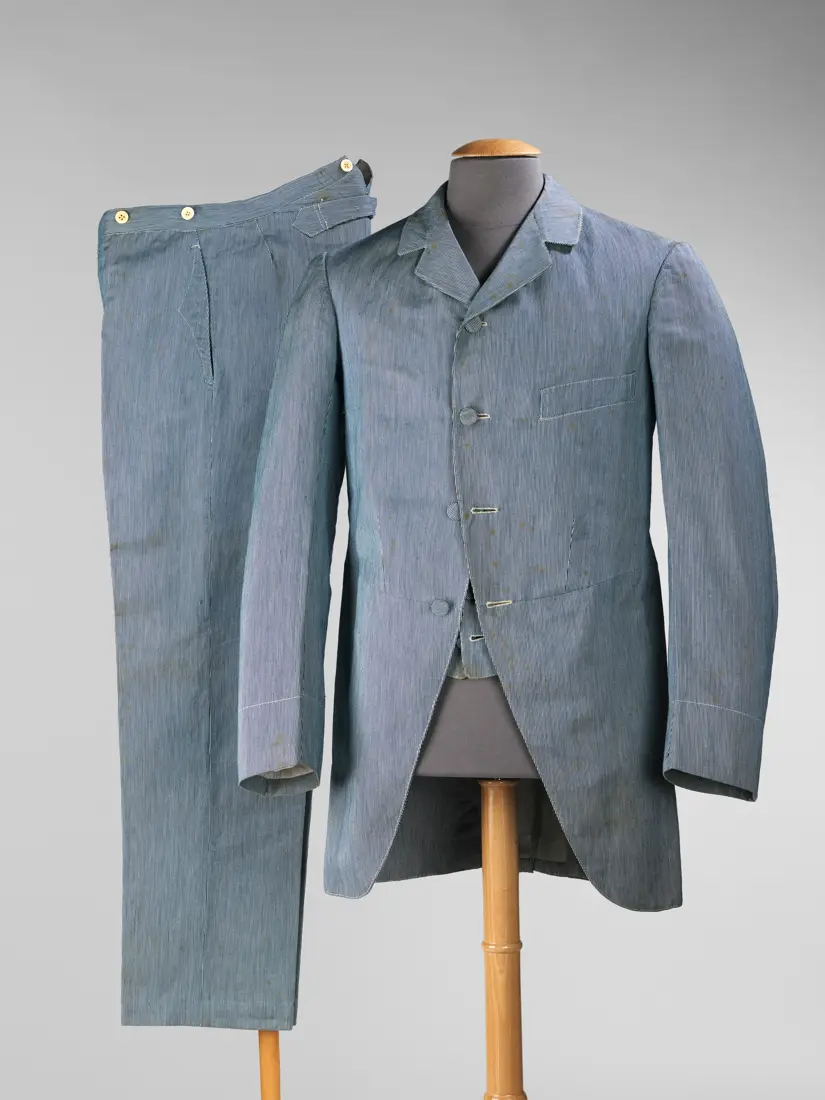
How slop shops, war uniforms and sewing machines created off-the-rack clothes.
Clothing Alterations Basics
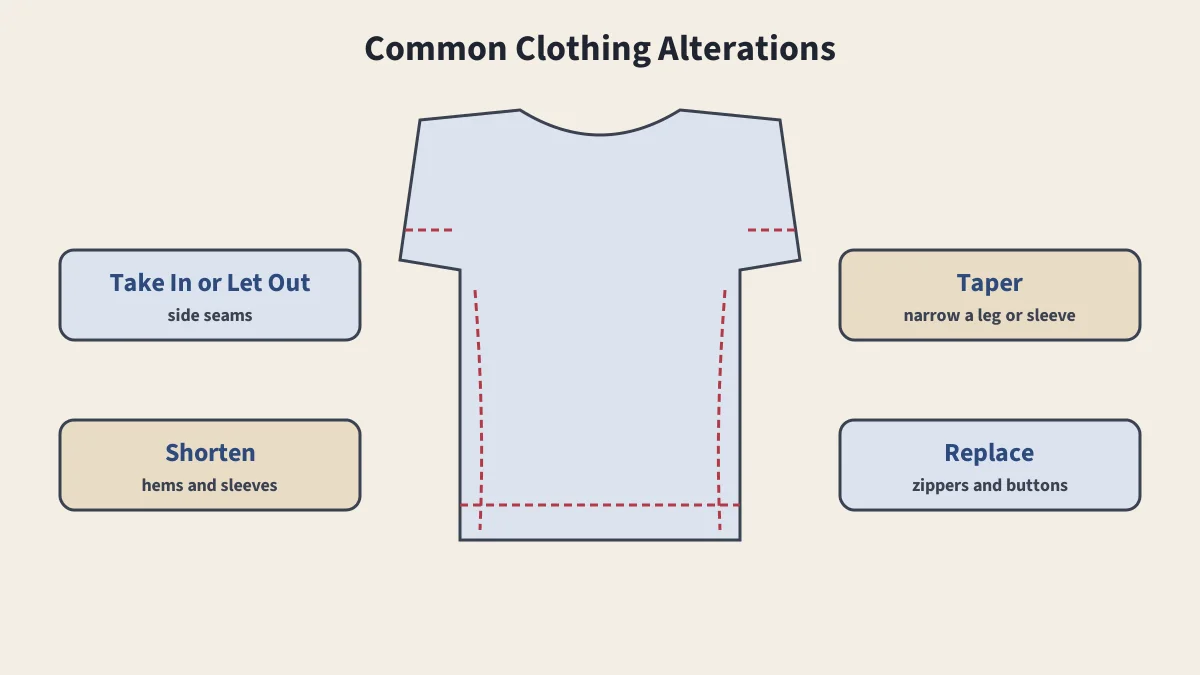
Easy and hard alterations, and when to see a tailor.
Historical Undergarments
Chemises, shifts, stays and petticoats.
History of Sewing Patterns
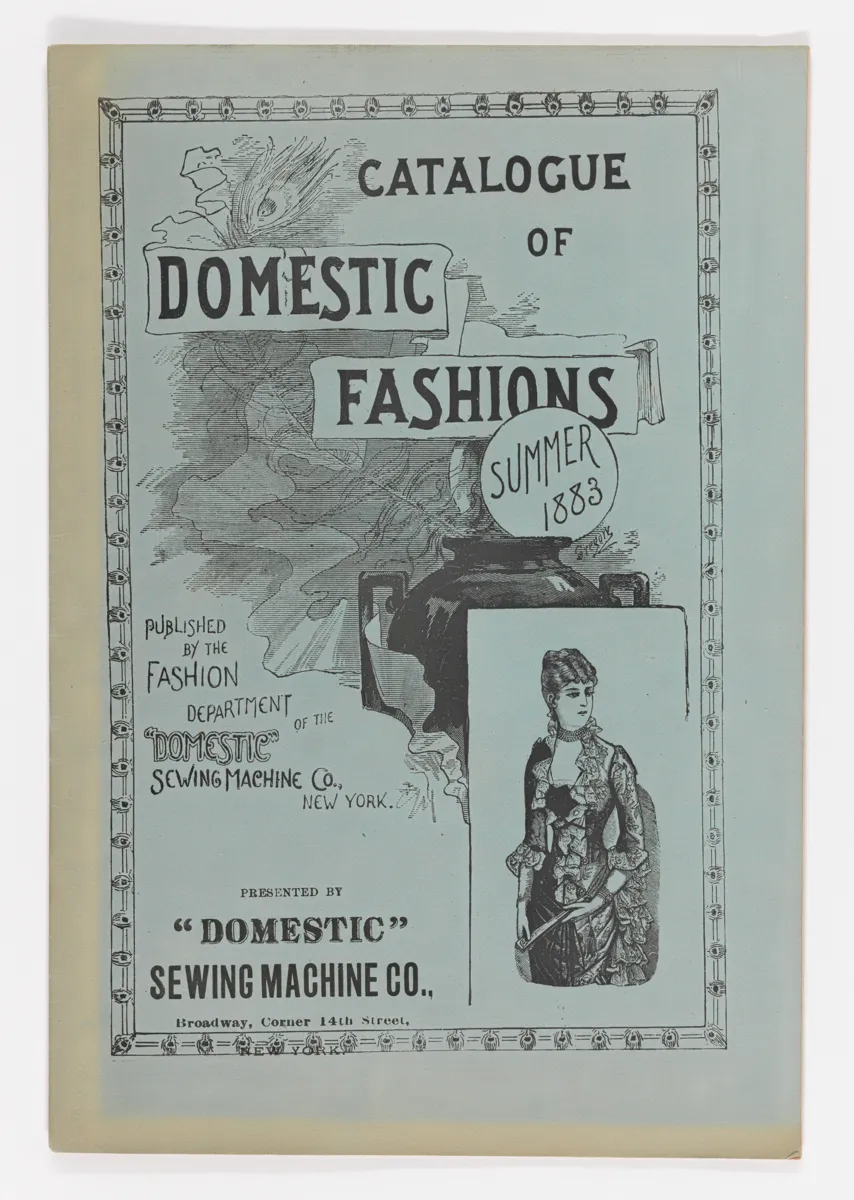
Butterick, McCall's, Vogue and Simplicity, from 1800s magazines to PDFs.