Grain, Bias and Selvage: How Fabric Direction Shapes Sewing (2026)
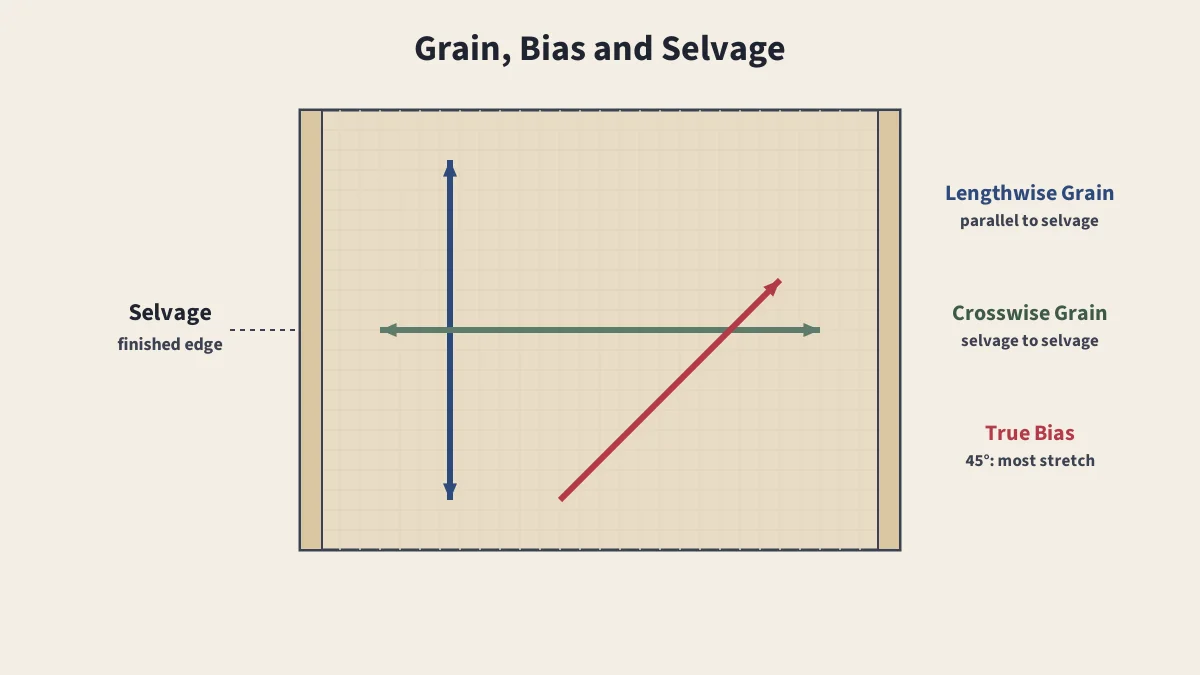
Woven fabric behaves differently in every direction. Along the threads it is stable; on the diagonal it stretches and drapes. Understanding grain, bias and selvage is the key to cutting garments that hang well.
In This Article
Fabric Directions in Brief
- Lengthwise grain: parallel to the selvage; most stable
- Crosswise grain: selvage to selvage; slightly more give
- True bias: 45 degrees; most stretch and drape
- Selvage: the self-finished edge
- Grainline: the pattern arrow you align with the grain
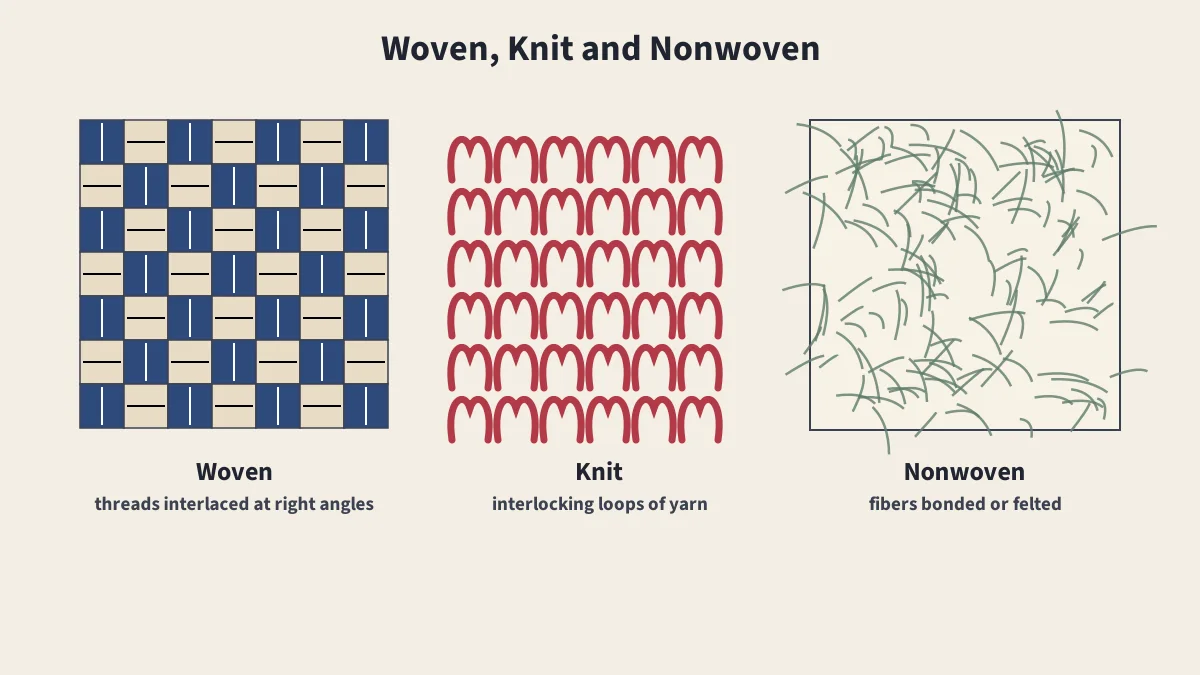
Woven fabric is made of two sets of threads crossing at right angles; see woven vs. knit vs. nonwoven. That structure means the fabric behaves differently depending on direction. Cutting pattern pieces in the right direction is one of the most important, and most overlooked, steps in sewing.
The Three Directions
| Direction | Runs | Behavior | Typical Use |
|---|---|---|---|
| Lengthwise (straight) grain | Parallel to the warp and the selvage | Stable; very little stretch | Most pattern pieces |
| Crosswise grain | Perpendicular to the selvage, along the weft | A little more give | Some pieces, borders, waistbands |
| True bias | 45 degrees to both | Most stretch and drape | Bias-cut dresses, binding, piping |
The Selvage
A selvage, or selvedge, is the self-finished edge of a fabric that stops it from unraveling. The word is a corruption of "self-edge," in use since the 16th century. On shuttle looms, the weft turns at the end of each pass to form the selvage; on shuttleless looms, the weft is cut and the edge is usually fringed or reinforced with binding threads.
Selvages are useful as a reference for finding the grain, but they are often cut away. Industrial selvages can be tighter than the rest of the cloth and may shrink or pucker in the wash, which is why home sewists and quilters usually avoid them in finished work. Printed fabrics often carry color dots and the designer's name along the selvage.
Bias Cutting
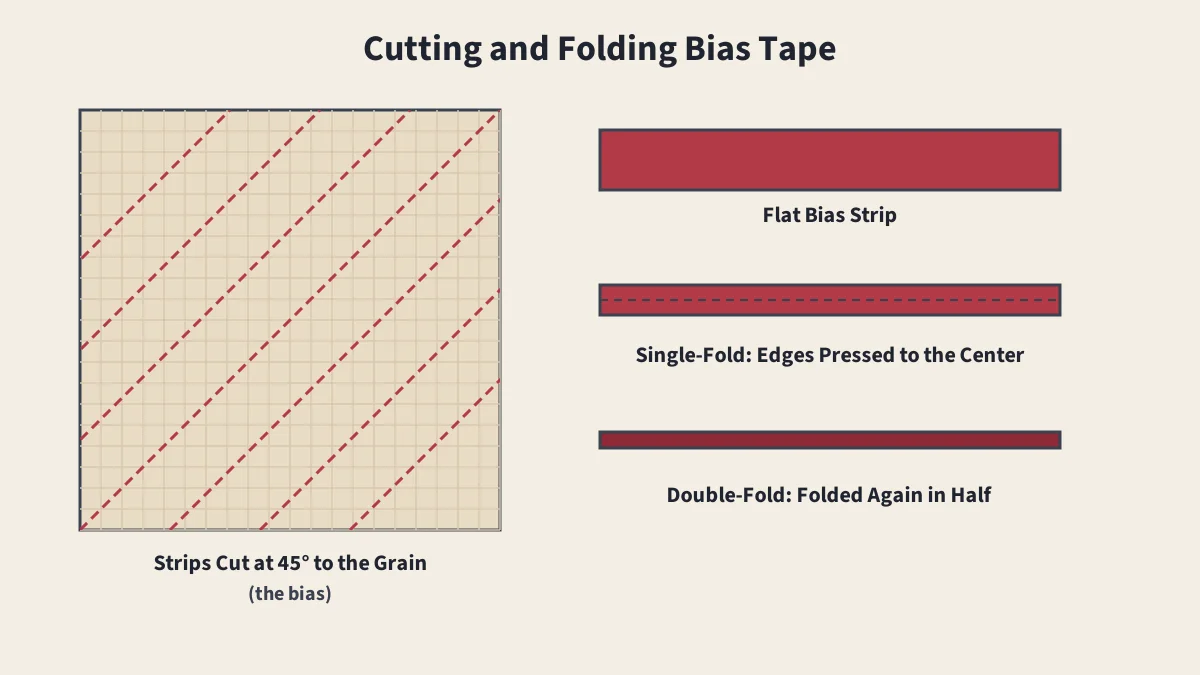
Because woven fabric is more elastic and fluid on the bias, garments cut on the bias cling and drape around the body. French couturière Madeleine Vionnet championed the technique from the 1920s, and bias-cut evening dresses became a defining look of the 1930s. Bias strips are also used for binding and piping, because they bend smoothly around curves; see bias tape.
Using the Grainline Arrow
- Find the arrow printed on each pattern piece.
- Measure from each end of the arrow to the selvage.
- Adjust the piece until both measurements are equal, then pin.
- Cut, keeping the fabric flat and unshifted; see types of scissors.
Off-Grain Fabric
Sometimes the threads in a fabric are not quite at right angles, often because of finishing. Garments cut from off-grain fabric can twist after washing. Before cutting, check that the crosswise threads run straight across; on many cottons and linens you can pull a crosswise thread to see the true line, then straighten the fabric by gently pulling it on the bias. Some finished fabrics cannot be straightened.
To put this into practice at the cutting table, see cutting fabric and layout.
Sources
- Grain (textile), Wikipedia
- Selvage, Wikipedia
- Madeleine Vionnet, Wikipedia
Frequently Asked Questions
What is the grain of fabric?
The direction of the threads in woven fabric. The lengthwise or straight grain runs parallel to the warp threads and the selvage; the crosswise grain runs perpendicular to the selvage, parallel to the weft.
What is the bias?
Any direction between the lengthwise and crosswise grain. The true bias is at 45 degrees to both. Woven fabric is more elastic and more fluid in the bias direction.
What is a selvage?
The self-finished edge of a woven fabric that keeps it from unraveling or fraying. The word is a corruption of 'self-edge' and has been used since the 16th century.
Who made bias cutting famous?
French couturière Madeleine Vionnet championed bias cutting from the 1920s, and the technique rose to prominence in the 1930s.
Keep Reading
Right Side vs. Wrong Side of Fabric
Simple checks for prints, solids, selvedges, knits and double-sided cloth.
Bias Tape and Binding
Single-fold vs. double-fold bias tape, and how to use binding.
Woven vs. Knit vs. Nonwoven
How the three constructions differ, and how to tell them apart.
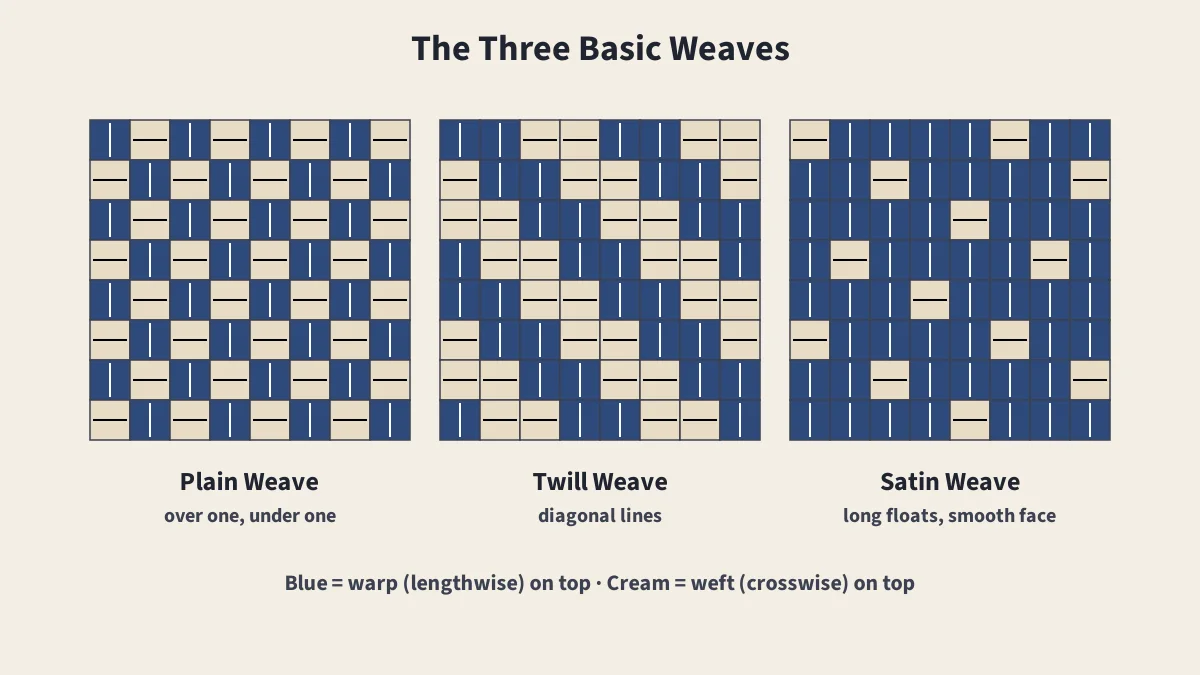
Fabric Weaves
Plain, twill and satin weaves, plus dobby and jacquard.