Types of Collars: From Peter Pan to Button-Down (2026)
Collars range from a simple band to a starched Renaissance ruff. Many carry the names of the people who wore them, from Peter Pan to Gladstone and Nehru.
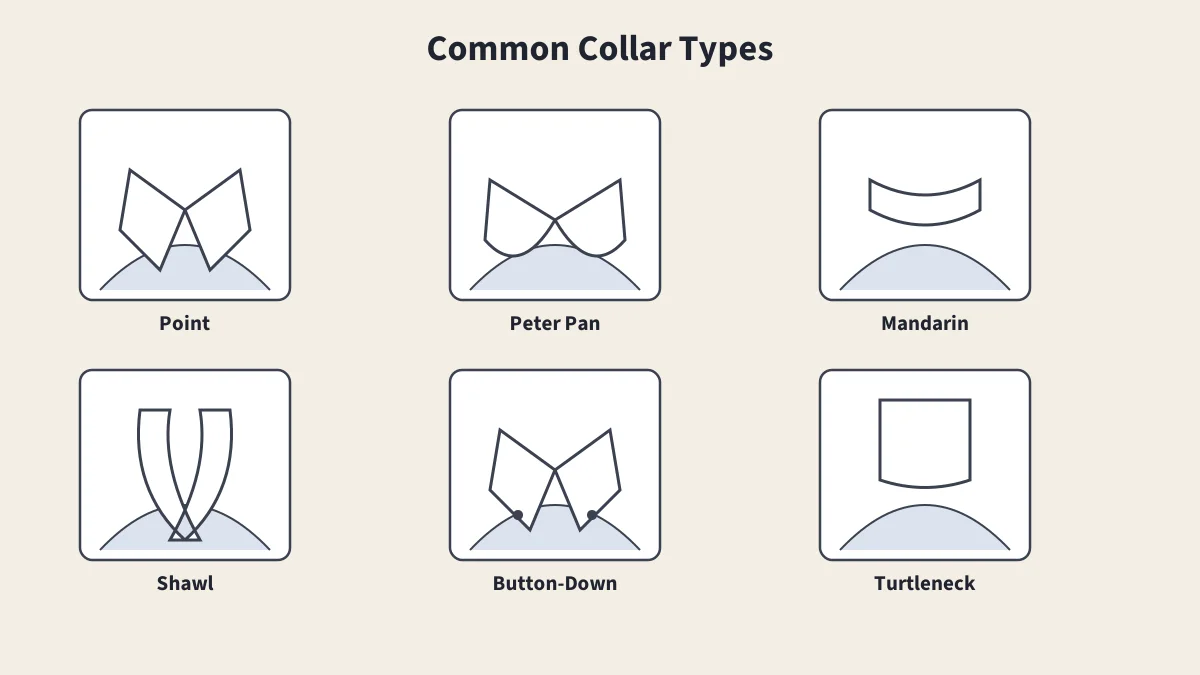
In This Article
Collars in Brief
- Standing: rises up the neck (mandarin, band)
- Turnover: stands, then folds over (shirt collars)
- Flat: lies on the shoulders (Peter Pan)
- Named after people: Peter Pan, Gladstone, Nehru
- Detachable collars: 19th-century innovation
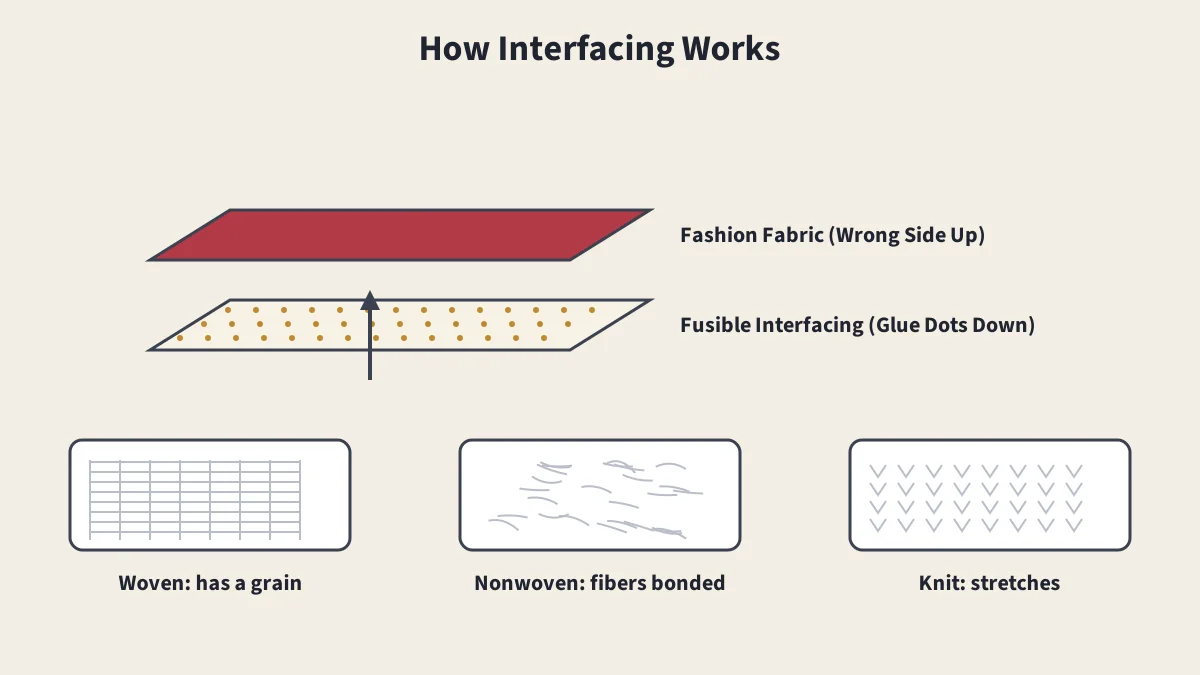
A collar is the part of a garment that fastens around or frames the neck. It may be part of the garment or a separate piece attached at the neckline. Collars are usually interfaced so they keep their shape.
Basic Collar Structures
| Structure | What It Does |
|---|---|
| Band | A strip that fastens around the neck, standing perpendicular to the garment |
| Standing | Fits up around the neck without lying on the shoulders |
| Turnover | Stands around the neck, then folds or rolls over |
| Flat (falling) | Lies flat on the shoulders |
Shirt Collars
- Point: the standard turnover collar with pointed ends.
- Spread (cutaway): a wide gap between the points, for a bulky tie knot.
- Windsor: a wide spread designed for a Windsor knot, popularized in the 1930s.
- Button-down: buttonholes on the points fasten to the shirt body.
- Tab: a small tab joins the points under the tie knot.
- Wing: a small standing collar with horizontal points, worn with evening dress and by barristers in the UK, Canada and India.
- Polo (Lacoste): a soft, flat knit collar invented by tennis player René Lacoste.
Dress and Blouse Collars
- Peter Pan: flat with rounded corners, named after Maude Adams's 1905 costume as Peter Pan.
- Mandarin: a small standing collar open at the front, based on traditional Chinese garments.
- Nehru: a small standing collar meeting at the front, based on Indian garments; popular in the 1960s with the Nehru jacket.
- Bertha: a wide, flat, round collar worn with low Victorian necklines and revived in the 1940s.
- Shawl: a continuous rolled collar without a notch; see types of lapels.
- Turtleneck: a close-fitting knitted collar that folds over and covers the neck.
Historical Collars
| Collar | Period | Description |
|---|---|---|
| Ruff | Renaissance | High, pleated, starched linen or lace |
| Falling band | 17th century | Rectangular points falling over the chest |
| Van Dyke | Second quarter of the 17th century; 1880s US | Large, deep-pointed collar |
| Eton | From the late 19th century | Wide, stiff, buttoned school-uniform collar |
| Buster Brown | About 1880–1920 | Wide, flat, round collar for boys |
Detachable Collars
In the 19th century, many shirts had a plain band to which a separate starched collar was attached, so the collar could be washed or replaced on its own. American tradition credits Hannah Lord Montague with the idea, though this is not confirmed. A collar industry grew in England from about 1840, around the same time as in America.
Sources
- Collar (clothing), Wikipedia
Frequently Asked Questions
What are the basic types of collar?
Collars fall into three basic groups: standing collars that rise up around the neck, turnover collars that stand and then fold over, and flat collars that lie on the shoulders.
Why is it called a Peter Pan collar?
It is named after the costume actress Maude Adams wore as Peter Pan in 1905. It is a flat collar with rounded corners.
What is the difference between a mandarin and a Nehru collar?
Both are small standing collars. A mandarin collar is open at the front and is based on traditional Chinese garments; a Nehru collar meets at the front and is based on Indian garments, popularized by the 1960s Nehru jacket.
Where does the term white-collar come from?
From the contrast in the early 20th century between the starched white collars worn by businessmen and the blue chambray work shirts worn by laborers.
Keep Reading
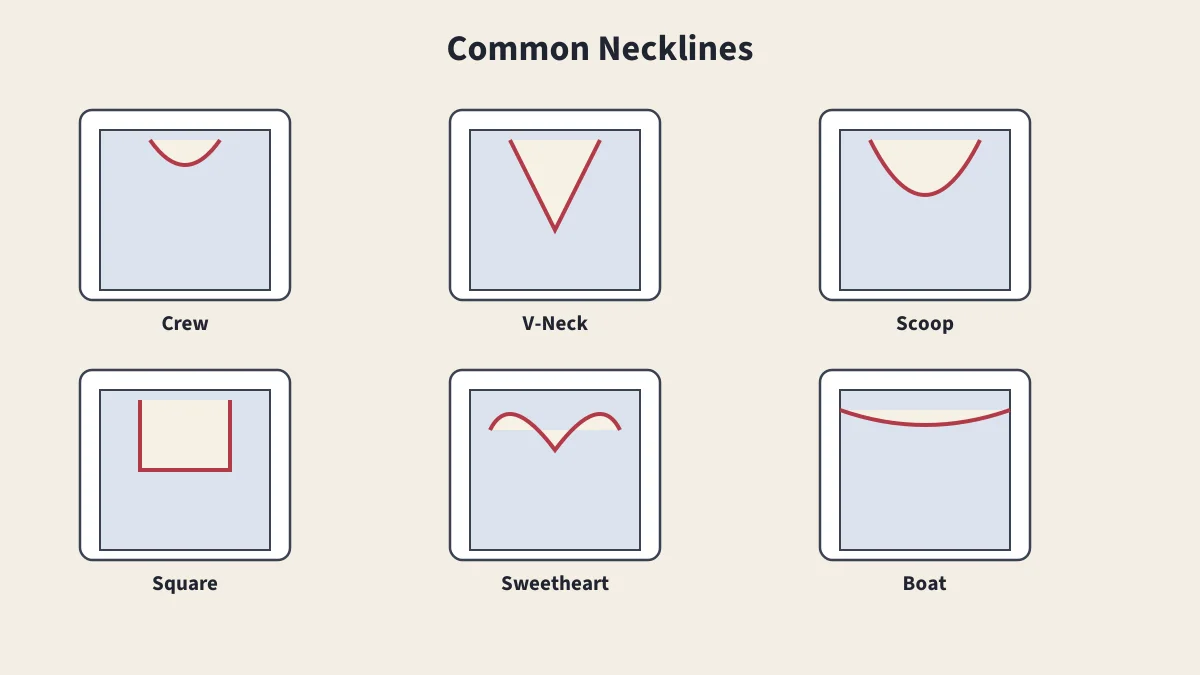
Types of Necklines
Crew, V-neck, scoop, sweetheart, boat and more.
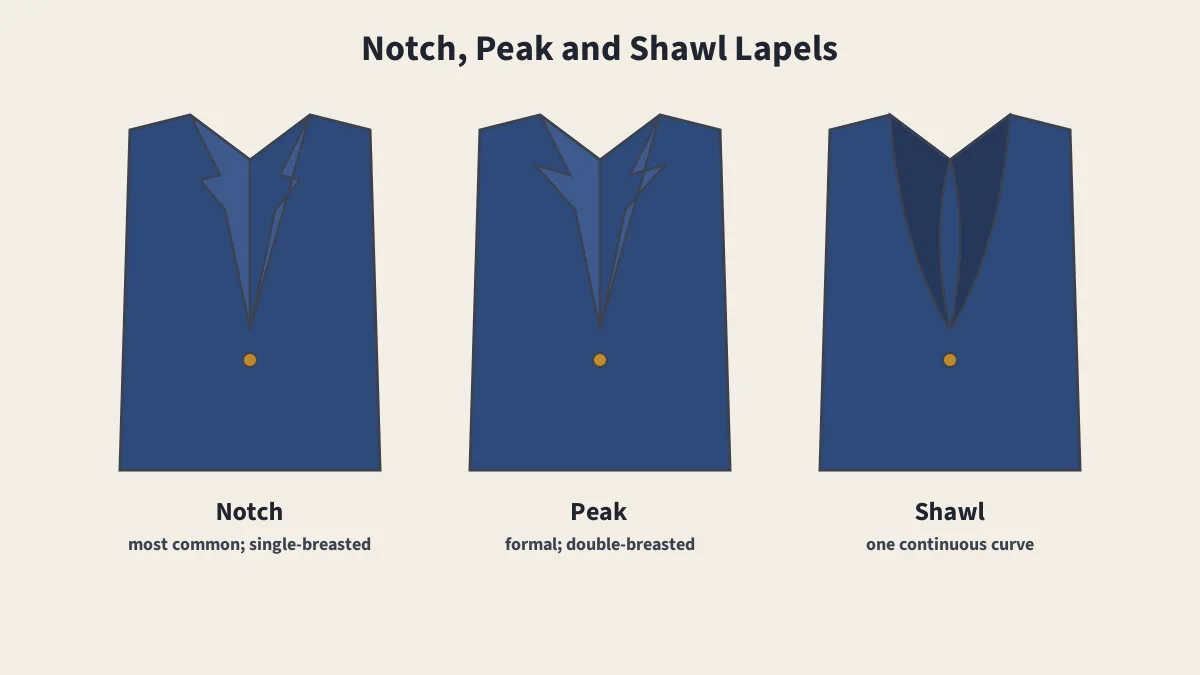
Types of Lapels
Notch, peak and shawl lapels and their history.
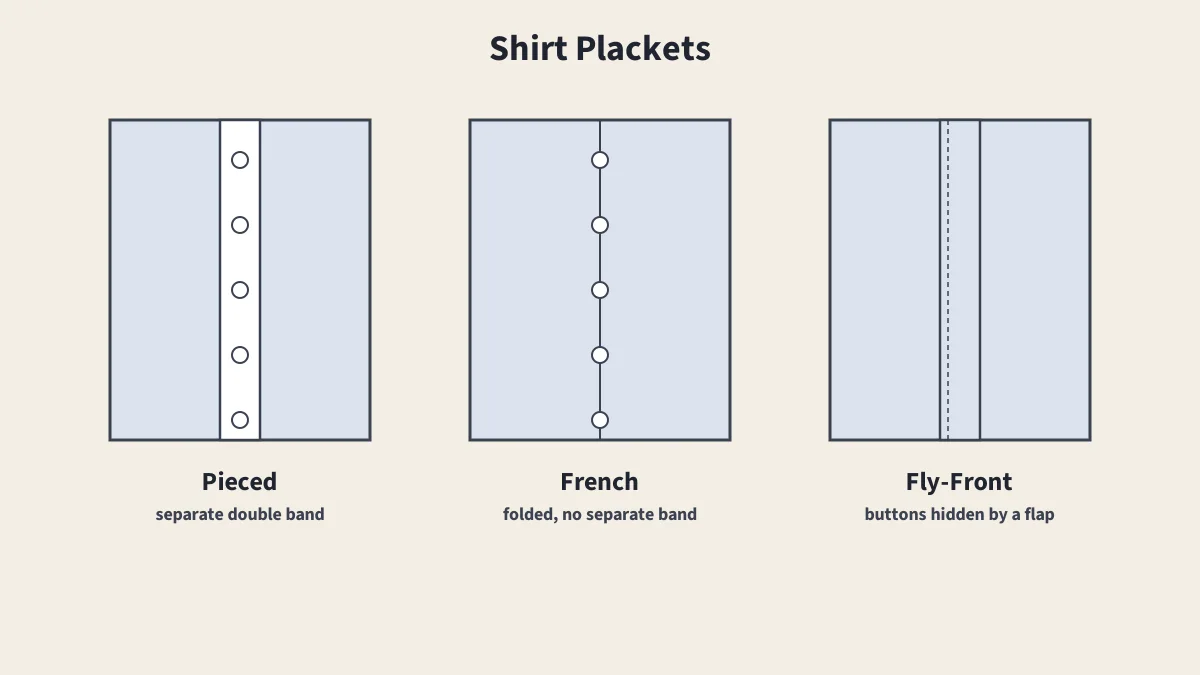
Types of Plackets
Pieced, French, fly-front and sleeve plackets.
Interfacing Types
Fusible vs. sew-in, woven vs. nonwoven vs. knit, and how to apply it.