Wool: Why Sheep's Fleece Makes Such Remarkable Fabric (2026)
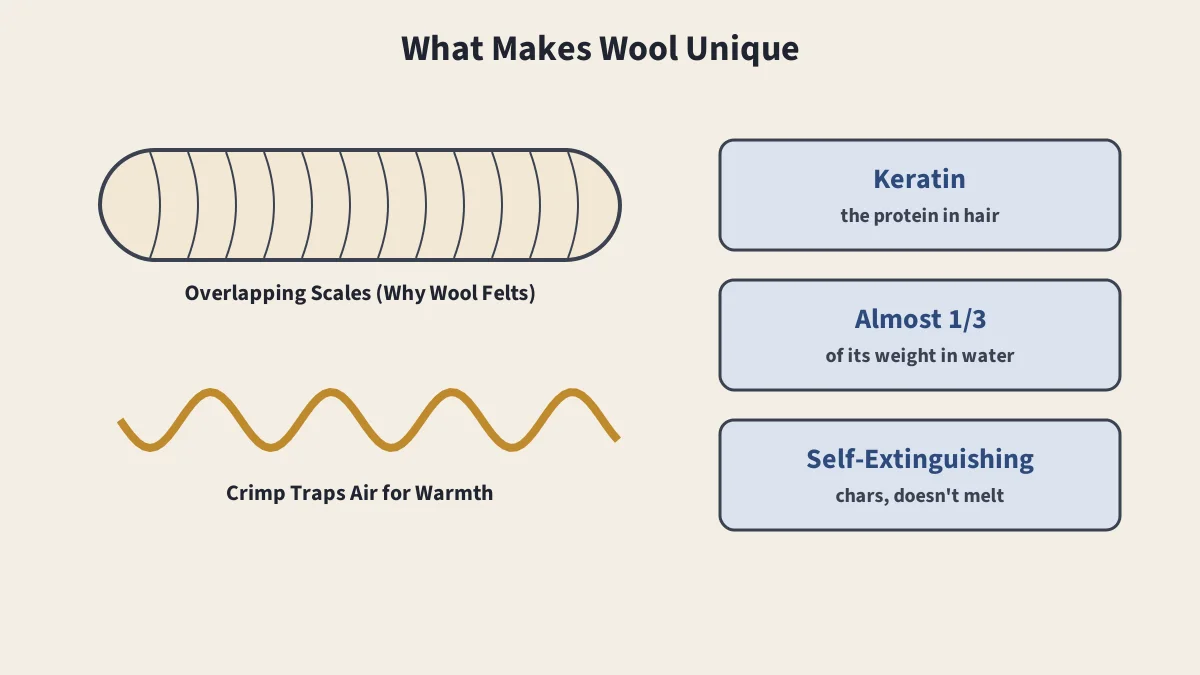
Wool keeps you warm when damp, resists flames and can be felted into solid cloth. Those qualities come from a fiber that is made of the same protein as human hair, with a crimp and a coat of tiny scales.
In This Article
Wool in Brief
- Made of: keratin protein
- Crimp: up to 40 waves per cm in fine merino
- Absorbency: almost one-third of its weight in water
- Flame: chars and self-extinguishes; does not melt
- Top producers (2024): China, Australia, New Zealand
Wool is the fiber from the fleece of sheep, and more broadly from other animals such as goats, camels and alpacas. It consists mainly of keratin, the same protein in human hair and nails. Its structure gives it a combination of qualities no synthetic has fully copied: warmth, elasticity, moisture handling and natural flame resistance.
Why Wool Behaves as It Does
Crimp
Wool fibers are naturally wavy. A fine wool like merino may have up to 40 crimps per centimeter (100 per inch). Crimp helps fibers grip each other when spun into yarn and traps air, which is a big part of wool's warmth.
Scales
The surface of each fiber is covered in microscopic overlapping scales. When wool is agitated, especially with water and soap, the fibers hook together and lock. That is felting: useful when intended, disastrous for a sweater washed on hot.
Moisture
Wool can absorb almost one-third of its own weight in water, so it can take up moisture without feeling wet, which is why wool stays comfortable in damp weather.
Fineness and Quality
Fiber diameter is the most important factor in wool's quality and price. Fine merino fibers measure between 12 and 24 microns, and merino is graded further, from ultrafine (under 15.5 microns) to strong (over 23 microns). Finer fibers feel softer against the skin; coarser fibers are hard-wearing and suit carpets and outerwear.
Other Animal Fibers
| Fiber | Source |
|---|---|
| Cashmere | The seasonal undercoat of goats |
| Mohair | The Angora goat |
| Alpaca | The alpaca, a South American camelid |
| Camel hair | Camels |
| Vicuña | The vicuña, a wild relative of the alpaca |
| Qiviut | The undercoat of the muskox |
A Long History
Sheep were domesticated roughly 9,000 to 11,000 years ago, and selective breeding for woolly fleece may have begun around 6000 BC. The oldest known European wool textile dates to about 1500 BC. In medieval and early modern England, wool was a central commodity; in 1275 the English crown imposed an export tax on wool known as the Great Custom.
Wool Today
In 2024, China, Australia and New Zealand were the three largest producers of wool by greasy weight, and global output of greasy wool was about 1.98 million tonnes. Australia leads in fine apparel and merino wool.
Sewing With Wool
- Press with steam and a pressing cloth; wool shapes beautifully under steam, and a clapper sets crisp edges; see pressing tools.
- Preshrink with steam or professional dry cleaning before cutting.
- Use a walking foot on thick wools and match plaids carefully.
- Mark with chalk or thread; see marking tools.
- Store with care, as wool can attract moths.
For worsted, tweed, gabardine and other wool cloths, see types of wool fabric.
Sources
Frequently Asked Questions
What is wool made of?
Wool consists mainly of keratin, the same structural protein found in human hair and nails, with about 2 to 3% lipid material. Raw wool also carries lanolin, which is removed during processing and used in cosmetics.
Why does wool felt?
Wool fibers have microscopic scales on their surface. With agitation, especially in hot water with soap, the fibers hook together and lock tightly, shrinking and thickening the fabric into felt.
Is wool flame-resistant?
Wool ignites at a higher temperature than cotton and some synthetics. Rather than melting or dripping, it forms a char that tends to self-extinguish.
What is merino wool?
Merino is a breed of sheep known for very fine wool. Fine merino fibers measure between 12 and 24 microns in diameter, which makes them soft enough to wear against the skin.
Keep Reading
Silk
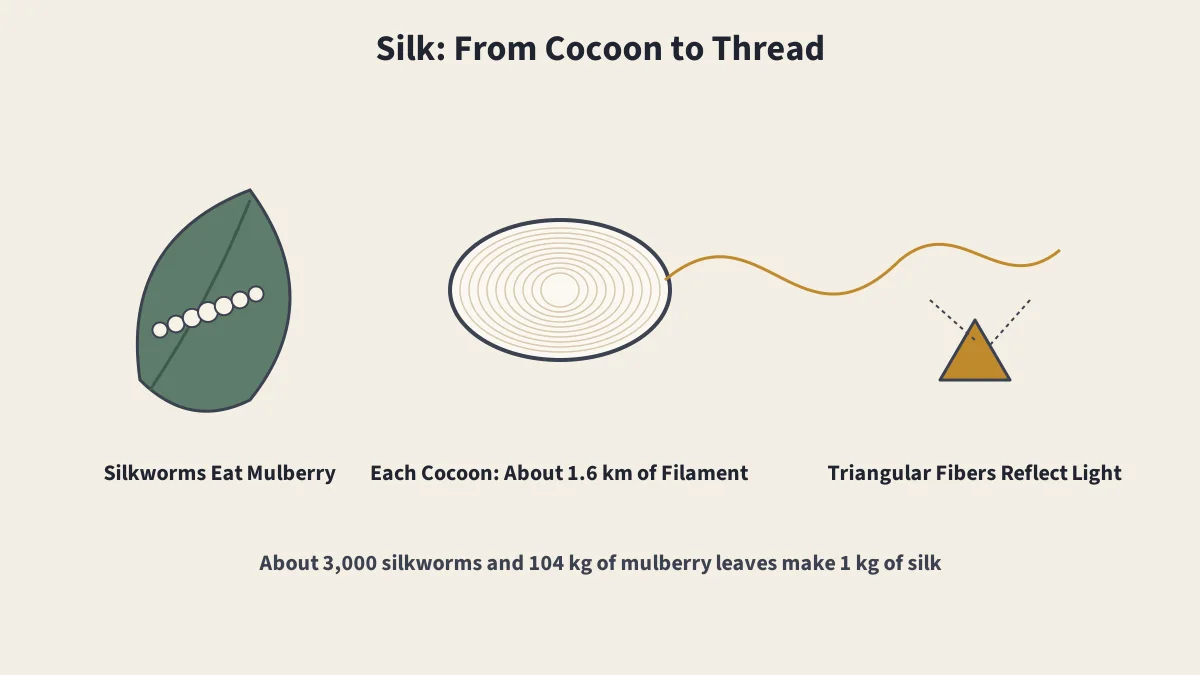
How silkworms make silk, its history and how it behaves.
Natural vs. Synthetic Fibers
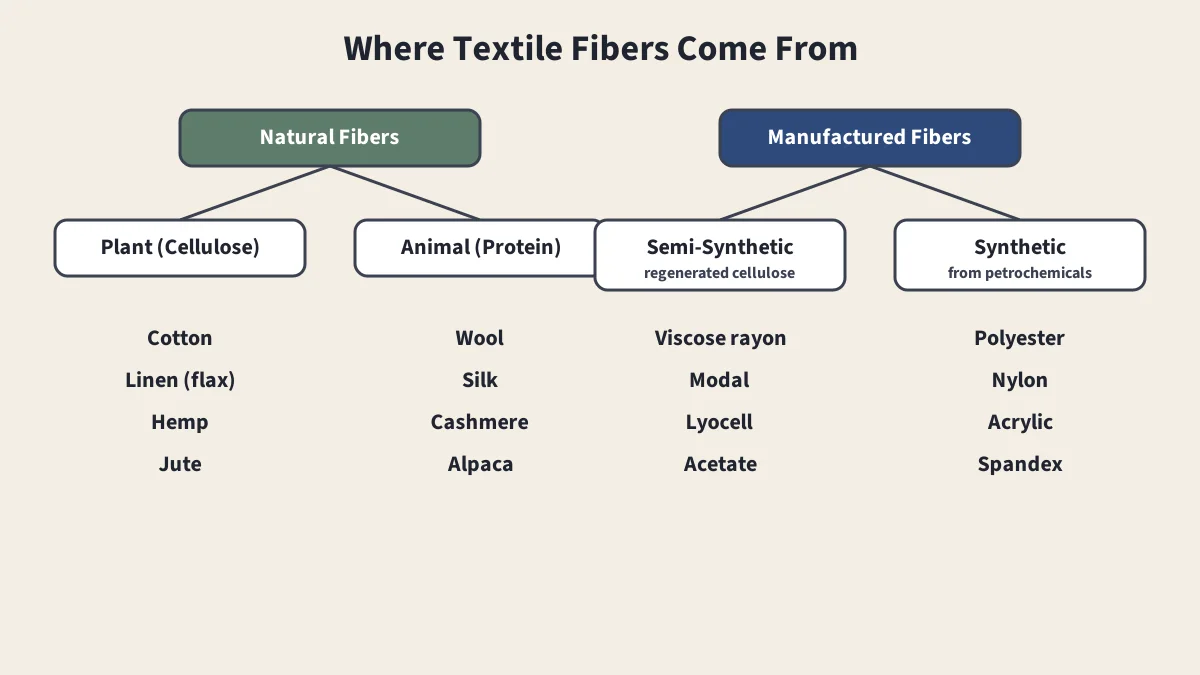
Plant, animal, semi-synthetic and synthetic fibers compared.
Pressing Tools
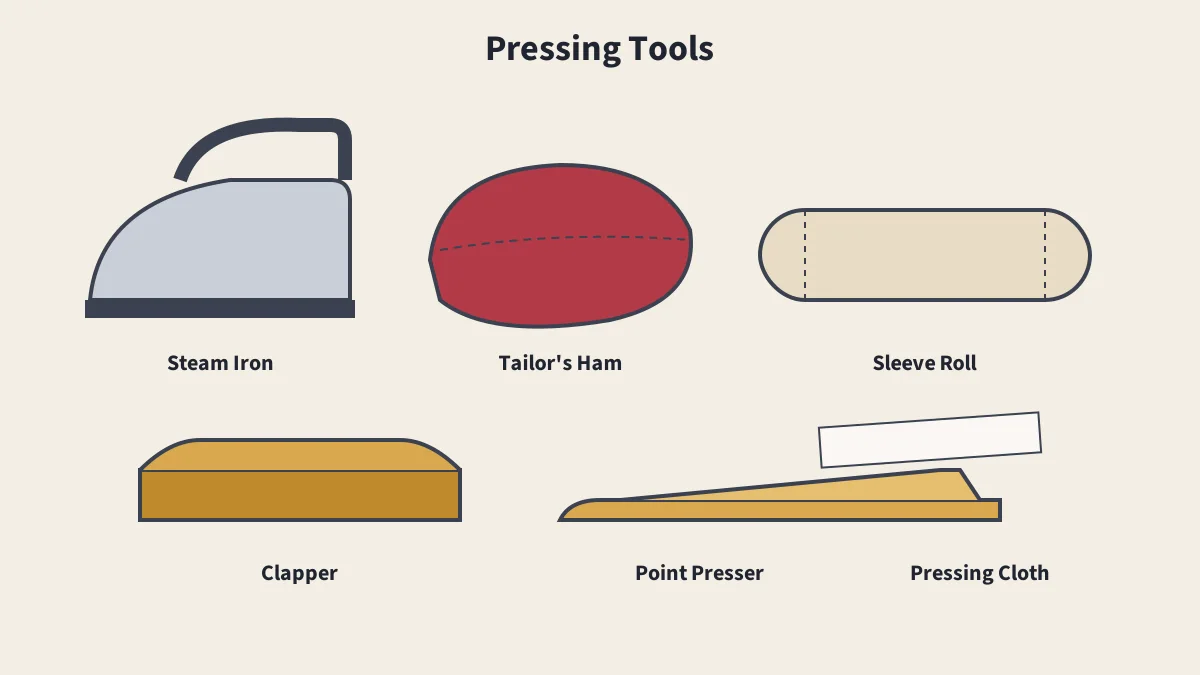
The iron, tailor's ham, sleeve roll, clapper and pressing cloth.
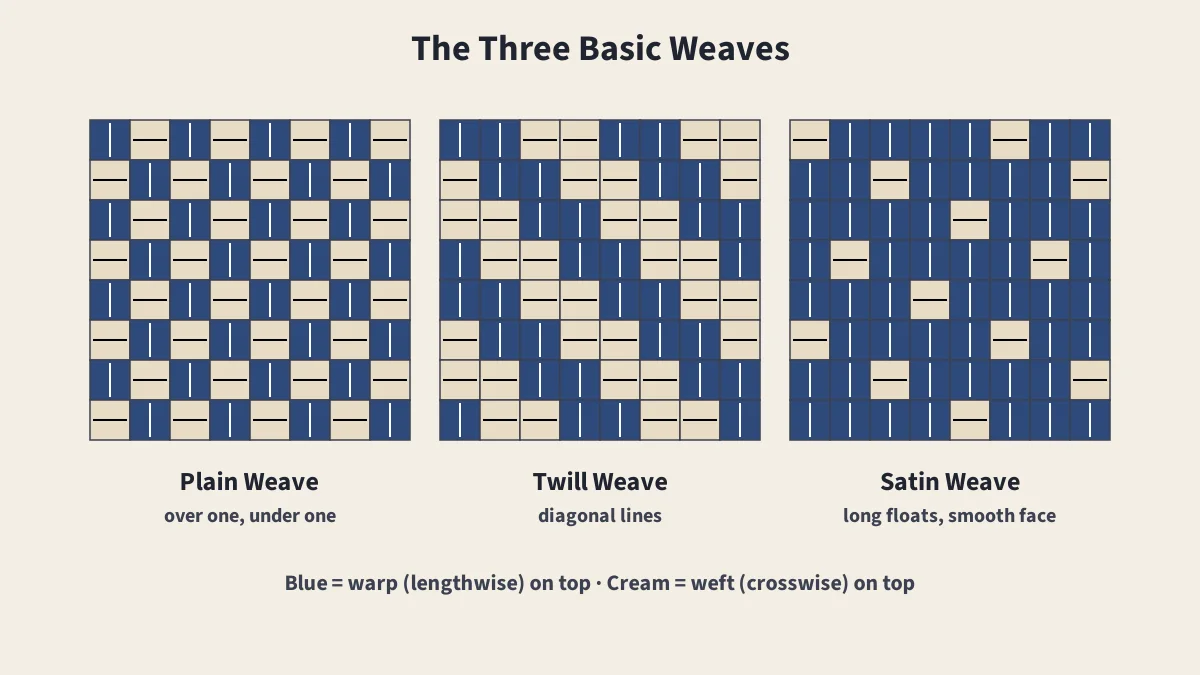
Fabric Weaves
Plain, twill and satin weaves, plus dobby and jacquard.