Cotton: The World's Favorite Natural Fiber (2026)
Cotton is the most widely used natural fiber for textiles. It was domesticated independently on more than one continent, reshaped the world economy, and remains the default fabric for everything from quilts to T-shirts.
In This Article
Cotton in Brief
- Plant: genus Gossypium, mallow family
- Fiber: about 91% cellulose
- Character: soft, breathable, absorbent, durable
- Top producers (2022): China, India, United States
- Weak points: wrinkles and can shrink
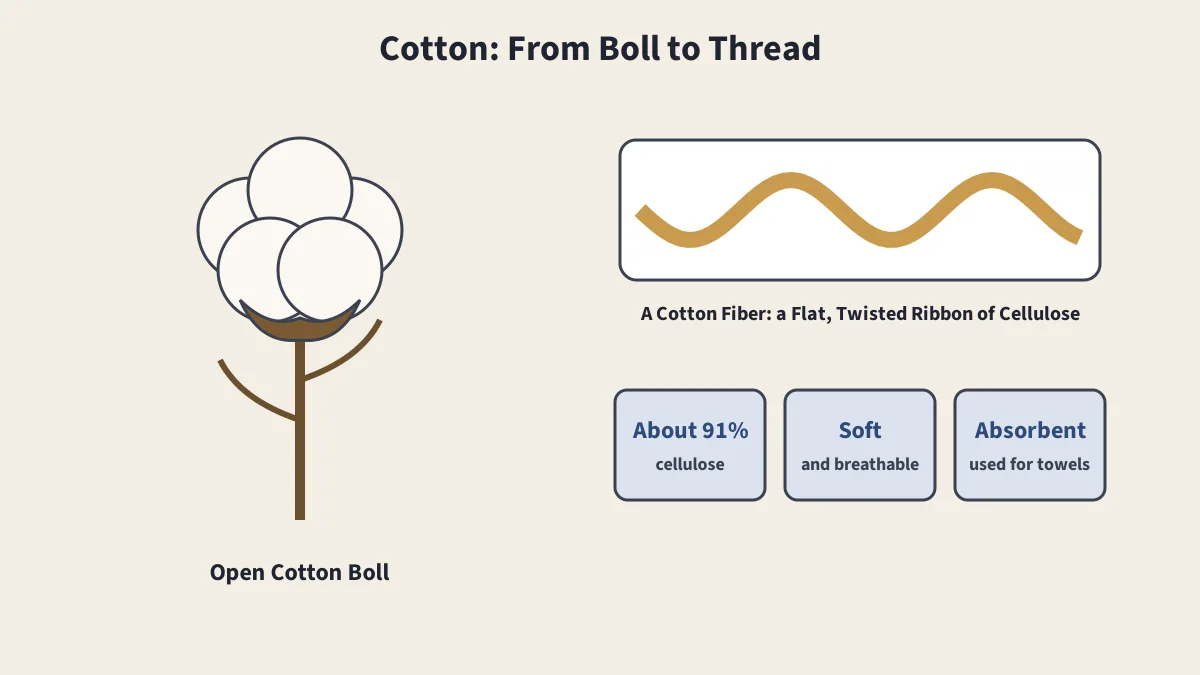
Cotton is the soft, fluffy fiber that grows around the seeds of the cotton plant. Each fiber is a single long cell, made of about 91% cellulose. When the plant's seed capsule, the boll, ripens and splits open, the fibers puff out, ready to be picked, cleaned and spun. Among natural fibers, none is produced or used on a larger scale for textiles.
An Ancient Fiber, Domesticated Twice
Cotton was domesticated independently in the Old and New Worlds. Cotton bolls found in a cave near Tehuacán, Mexico, have been dated to as early as 5500 BC, and domestication of Gossypium hirsutum, the upland cotton that makes up about 90% of world production, is dated in Mexico to roughly 3400 to 2300 BC. In the Old World, the earliest evidence of cotton use is from Mehrgarh, in present-day Pakistan, in the sixth millennium BC.
Cotton Today
Cotton is grown on about 2.5% of the world's arable land. In 2022, China produced about 26% of the world's cotton, India 22% and the United States 12%. It is also a thirsty crop, needing on average 8,000 to 10,000 liters of water per kilogram of fiber.
Properties
| Property | What It Means |
|---|---|
| Breathable | Comfortable in warm weather |
| Absorbent | Takes up moisture, which is why towels are cotton |
| Durable | Stands up to frequent washing |
| Heat-tolerant | Can be ironed at high temperatures |
| Wrinkles | Creases easily unless treated or blended |
| Shrinks | Can shrink in hot water and dryers |
Common Cotton Fabrics
Cotton is woven and knitted into an enormous range of fabrics: plain-weave muslin, calico, poplin, voile and quilting cotton; twills such as denim, chino and drill; satin-weave sateen; pile fabrics like corduroy, velveteen and terry; and knits such as jersey and interlock. See fabric weaves and types of knit fabric.
Sewing With Cotton
- Pre-wash cotton the way you will wash the finished item, so it shrinks before you cut.
- Press with steam at a high setting; cotton needs moisture to press well.
- Use a universal needle and all-purpose or cotton thread; see types of thread.
- Finish seams on wovens to stop fraying; see seam finishes.
Where the Word Comes From
The English word "cotton" came through medieval Arabic, where it was the usual term for the fiber; Wikipedia traces it further back to the Hebrew kuttṓnĕṯ.
For the many fabrics woven from cotton, see types of cotton fabric.
Before cutting cotton, see fabric shrinkage and pre-washing.
Sources
- Cotton, Wikipedia
- Cotton gin, Wikipedia
Frequently Asked Questions
Where does cotton come from?
Cotton is the fluffy fiber that grows around the seeds of plants of the genus Gossypium, in the mallow family. The fibers develop inside a capsule called a boll, which splits open when ripe.
How old is cotton?
Very old. Cotton bolls from a cave near Tehuacán, Mexico, have been dated to as early as 5500 BC, and the earliest evidence of cotton use in the Old World comes from Mehrgarh, in present-day Pakistan, in the sixth millennium BC.
Why does cotton shrink?
Cotton fibers swell when wet, and fabric stretched during manufacturing can relax back during washing and drying, especially with heat. Pre-washing cotton fabric before sewing lets this shrinkage happen before cutting.
Which countries produce the most cotton?
In 2022, China produced about 26% of the world's cotton, India about 22% and the United States about 12%, according to Wikipedia.
Keep Reading
Linen
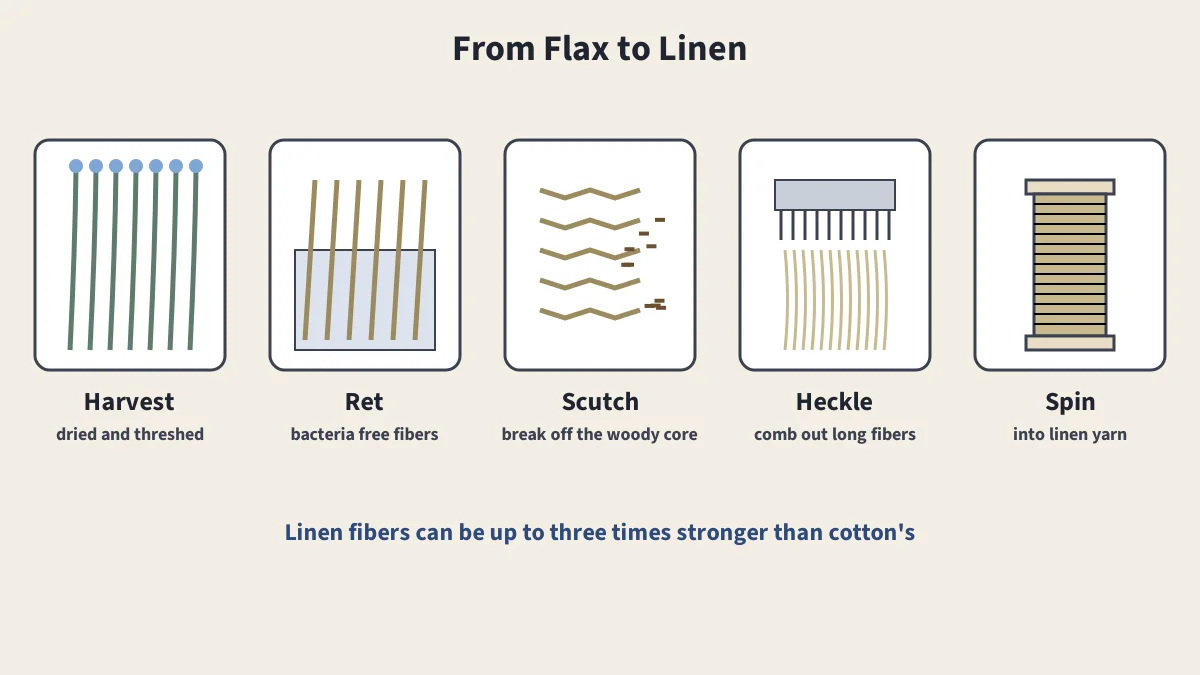
How flax becomes linen, its long history and how it behaves.
Natural vs. Synthetic Fibers
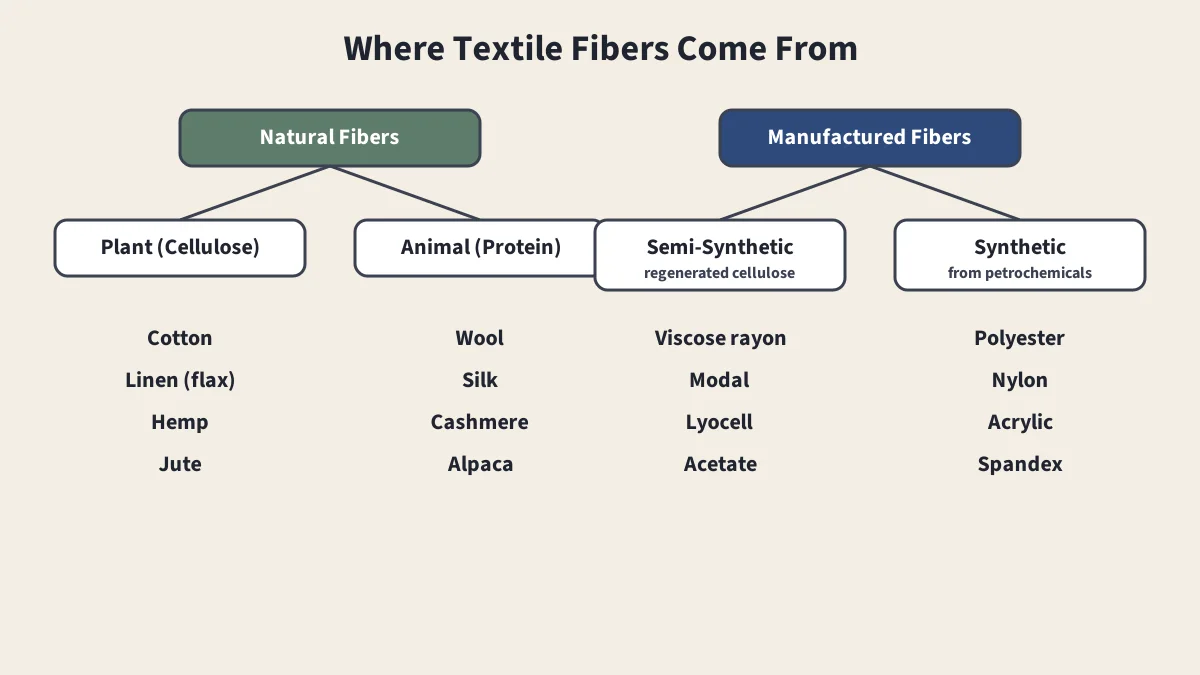
Plant, animal, semi-synthetic and synthetic fibers compared.
Fabric Weaves
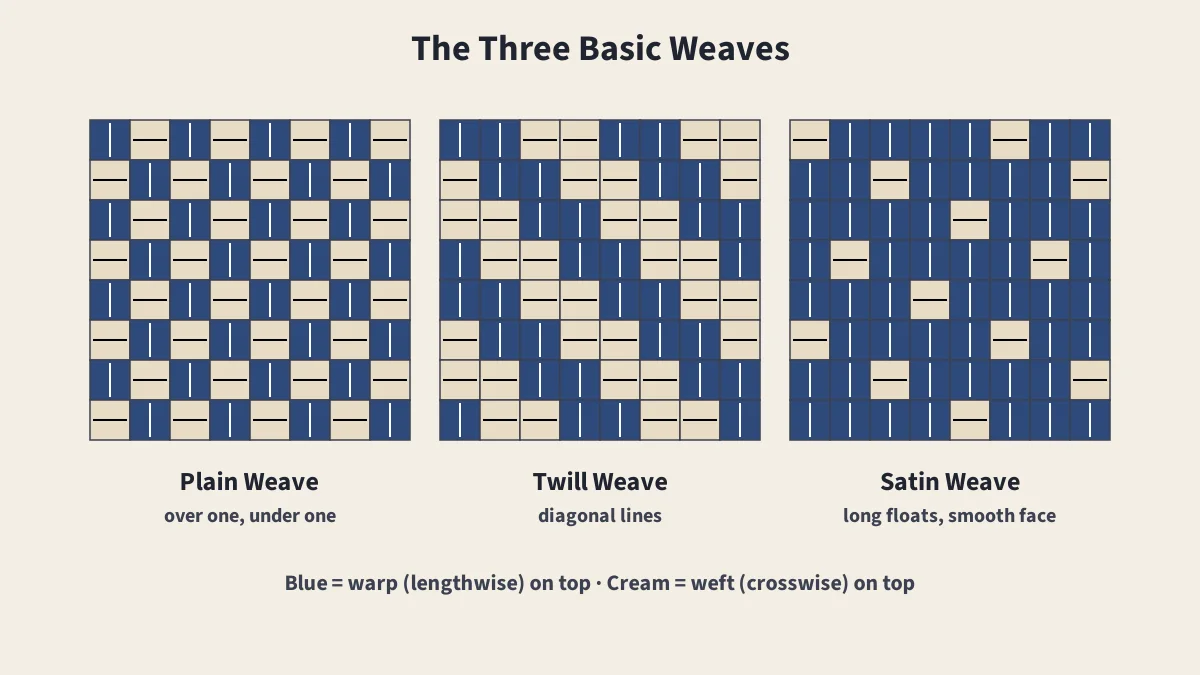
Plain, twill and satin weaves, plus dobby and jacquard.
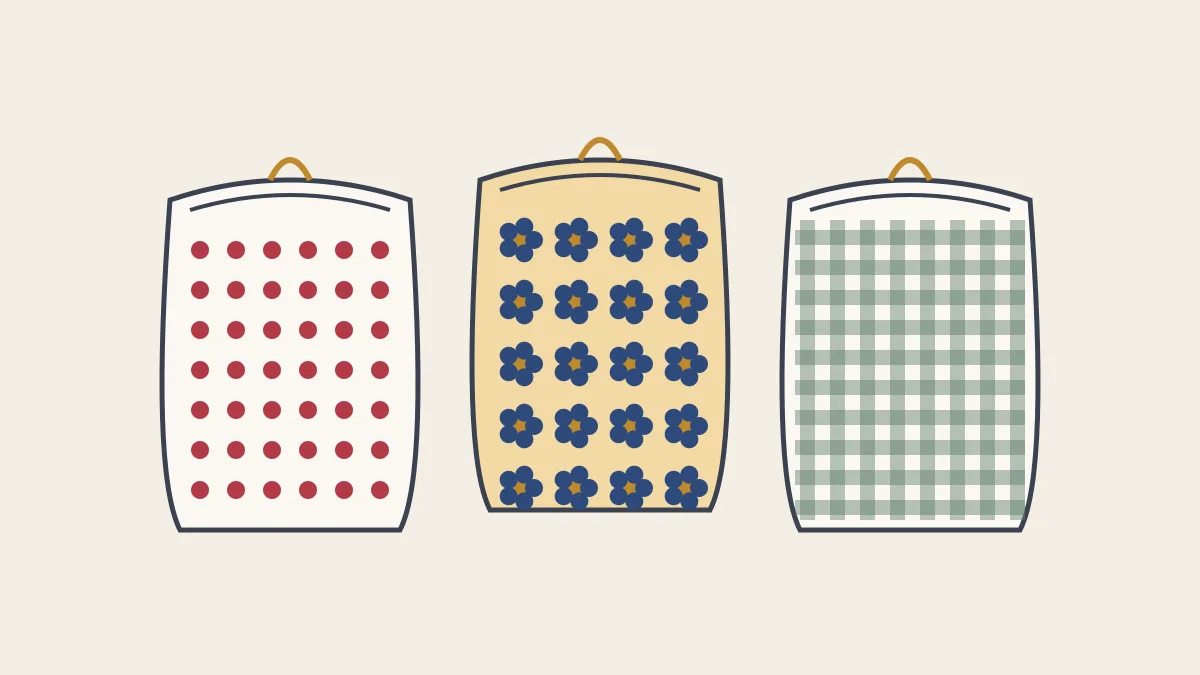
Feed Sack Dresses
How flour and feed bags became printed dress fabric for rural families.