Why Sewing Pattern Sizes Are Different From Store Sizes (2026)
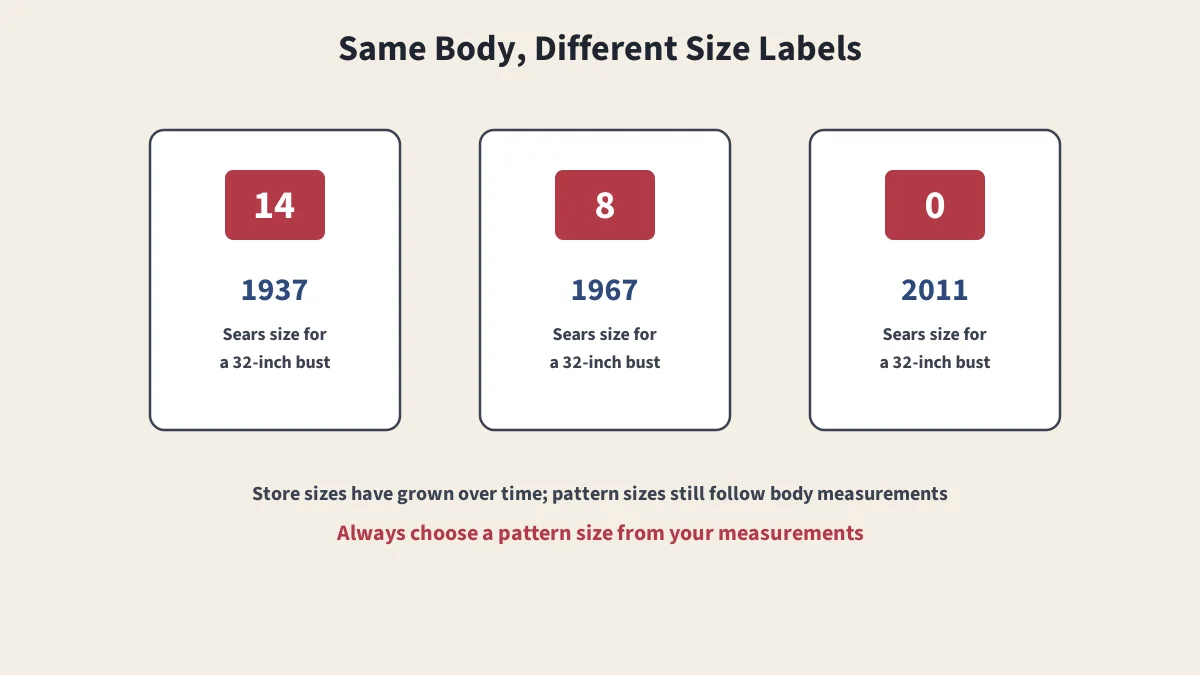
Many people are surprised to need a pattern two or more sizes larger than they buy in shops. The reason is vanity sizing: store sizes have grown over the decades, while pattern sizes still follow measurements.
In This Article
Pattern Sizes in Brief
- Store sizes: have grown over time (vanity sizing)
- Pattern sizes: based on body measurements
- 1958 standard: withdrawn in 1983
- Choose by: measurements, not shop size
- Check: finished garment measurements
Vanity sizing, or size inflation, is the tendency for ready-to-wear clothing of the same nominal size to become physically bigger over time. It has been documented mainly in the United States and the United Kingdom. Sewing patterns, which size by body measurements, have not followed the same drift, so the two systems no longer match.
How Store Sizes Grew
| Year | Sears Size for a 32-Inch Bust |
|---|---|
| 1937 | 14 |
| 1967 | 8 |
| 2011 | 0 |
Comparing the 1958 standard with a 2011 ASTM standard, a size 8 grew from a 31-inch bust to 36¼ inches, about 5¼ inches larger for the same label. Men's sizes drift too: in 2010, Esquire found trousers labeled with a 36-inch waist that measured 37 to 41 inches.
A Short History of US Sizing
- Early 20th-century sizing used the bust as the only measurement, which failed because women with the same bust can have very different waist and hip measurements.
- In the 1940s, statisticians Ruth O'Brien and William Shelton measured almost 15,000 American women and found five to seven distinct body shapes. Their system would have needed nine sizes per bust number, so it was rejected as impractical.
- In 1958, the National Bureau of Standards published a bust-based system, CS 215-58, with sizes 8 to 38 plus height and hip indicators.
- The standard was declared voluntary in 1970 and withdrawn entirely in 1983.
- ASTM International published a voluntary standard in 1995, later revised, but it has not been widely adopted.
Choosing Your Pattern Size
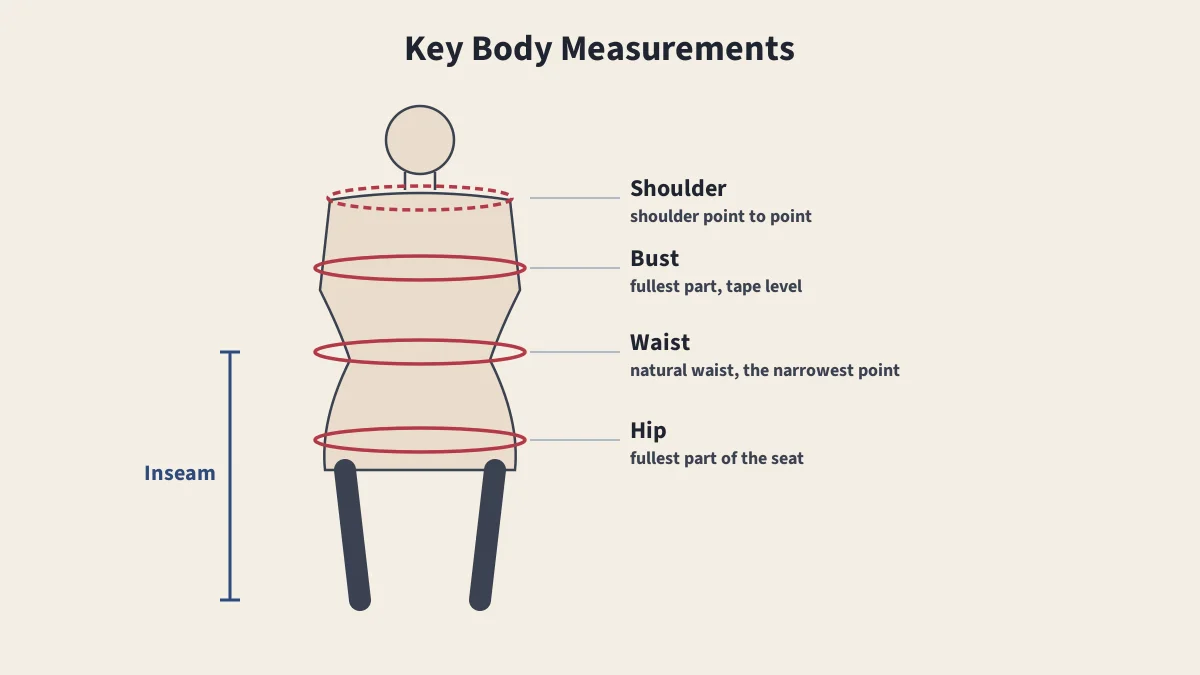
- Take your measurements; see how to take body measurements.
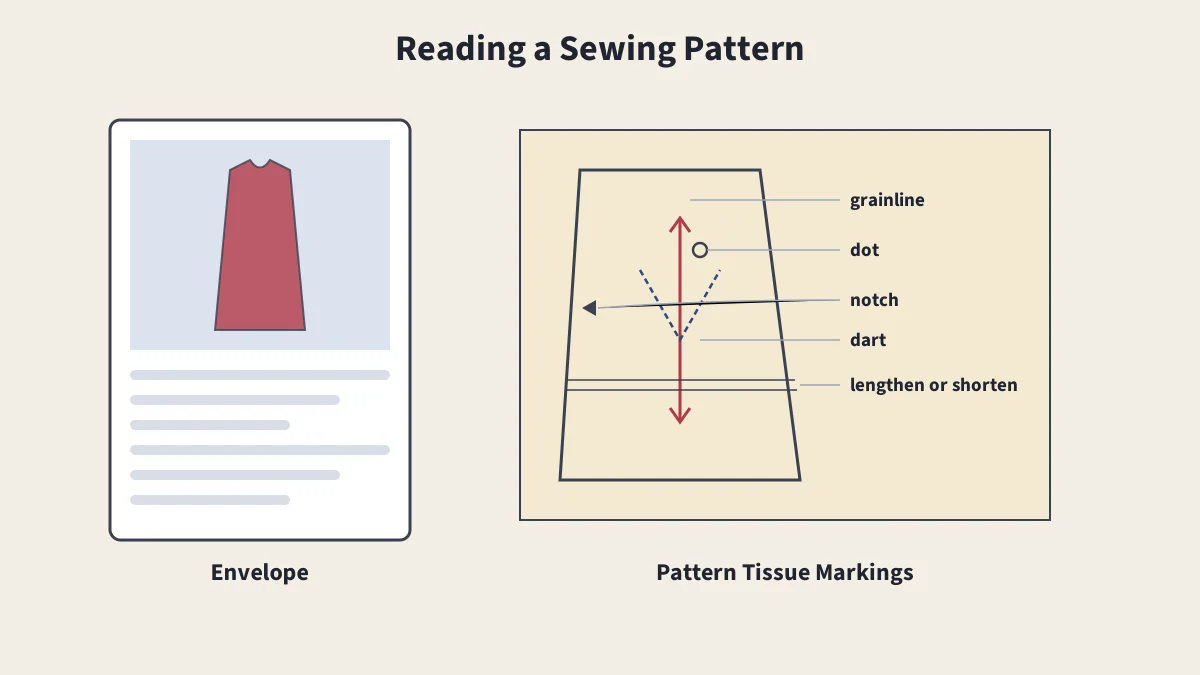
- Compare with the size chart on the envelope, ignoring the size you buy in stores.
- Choose a starting size: by bust (or high bust) for tops and dresses, by hip for skirts and trousers.
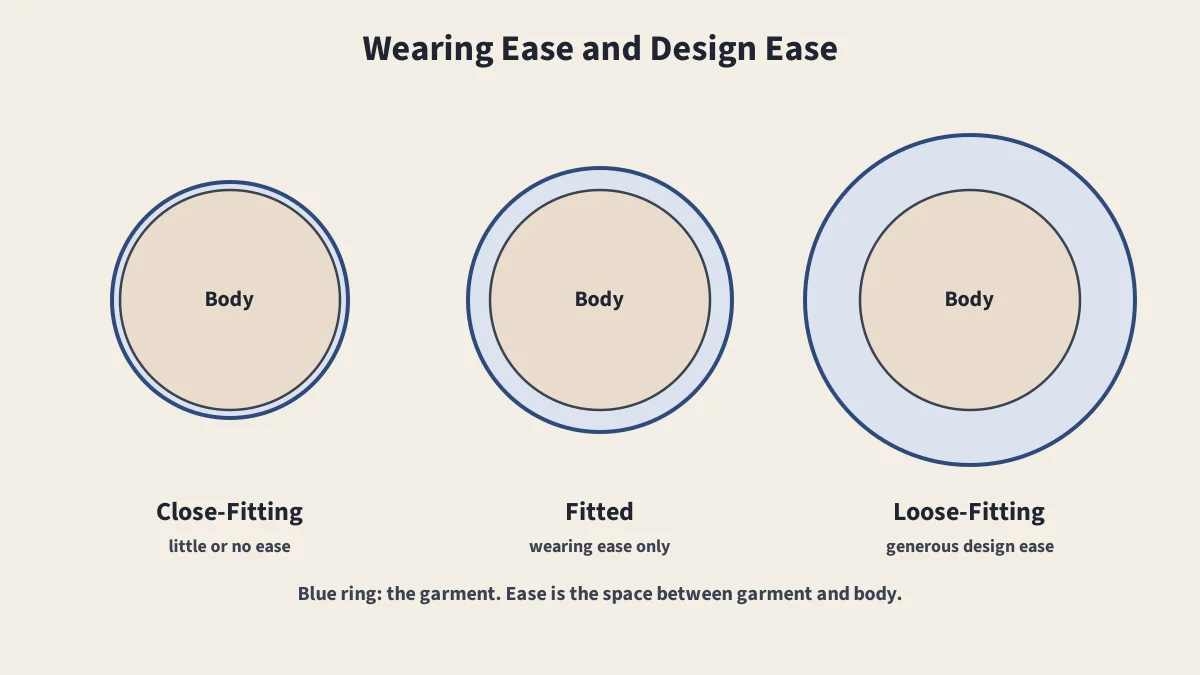
- Check the finished measurements printed on the envelope or pattern to see how much ease is included; see wearing ease vs. design ease.
- Blend between sizes on multi-size patterns if your measurements fall in different sizes.
- Make a toile for fitted garments; see what is a toile.
Sources
- Vanity sizing, Wikipedia
- US standard clothing size, Wikipedia
Frequently Asked Questions
Why is my sewing pattern size bigger than my clothing size?
Store sizes have grown over time through vanity sizing, so a garment labeled with the same size is physically larger than it used to be. Sewing patterns base their sizes on body measurements and have not inflated in the same way.
What is vanity sizing?
The practice by which ready-to-wear clothing of the same nominal size becomes physically bigger over time. It has been documented mainly in the US and UK.
How do I choose the right pattern size?
Measure your bust, waist and hips and compare them with the size chart on the pattern envelope. For tops and dresses, many sewists choose by high bust or bust; for skirts and trousers, by hip. Then check the finished garment measurements.
Is there an official US clothing size standard?
A US Commercial Standard, CS 215-58, was published in 1958, declared voluntary in 1970 and withdrawn in 1983. ASTM International publishes voluntary standards, but they have not been widely adopted.
Keep Reading
How to Take Body Measurements
Bust, waist, hips and more, measured correctly.
Wearing Ease vs. Design Ease
How patterns add room for movement and style.
Pattern Grading
Grade rules, methods and the history of graded patterns.
Sewing Patterns
The envelope, size chart, instructions and markings.