Pattern Grading: How One Pattern Becomes Many Sizes (2026)
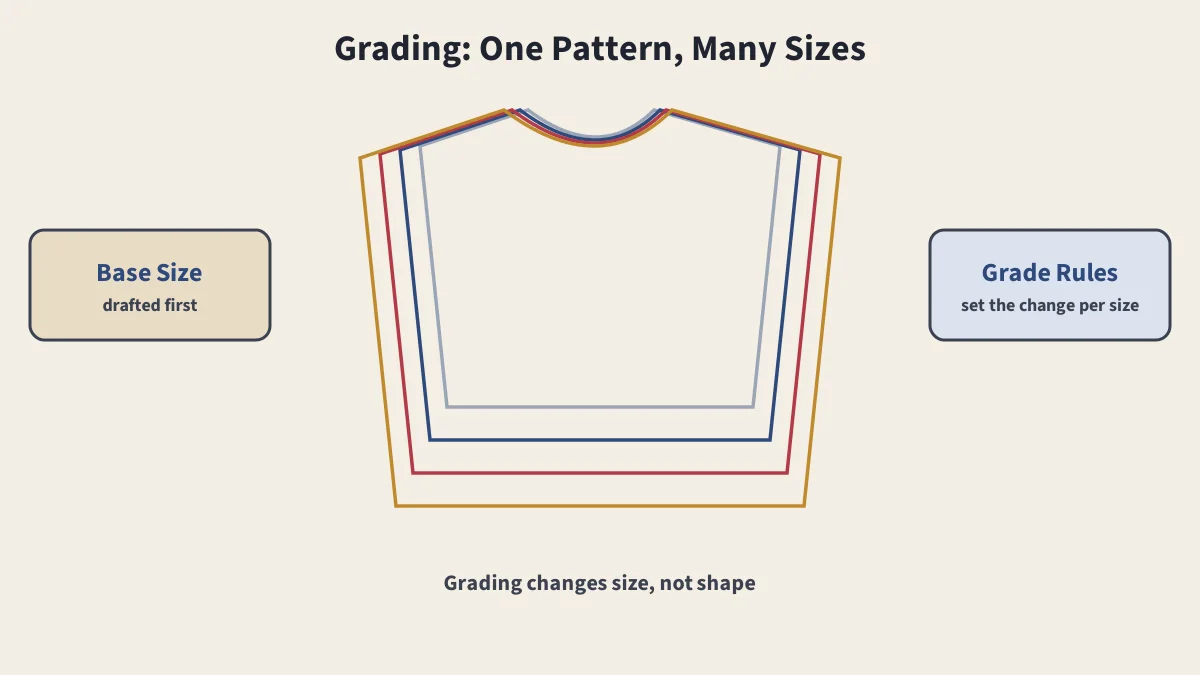
A pattern is usually drafted in one size, then graded up and down to make the rest. Grading changes the size of the shape, but not the shape itself.
In This Article
Grading in Brief
- What: making more sizes from a base pattern
- Grade rules: the change per size
- Methods: cut and spread, shifting, computer
- Limit: changes size, not shape
- Multi-size patterns: widespread from the 1970s
Pattern grading turns a base or sample-size pattern into additional sizes, using a size specification sheet or grading increments. It can be done by hand or with computerized pattern software. Importantly, grading does not create shape; it only increases or decreases the size of the original shape. That is why a pattern that fits well in its base size may need adjustment at the extremes of its range.
Grade Rules
Grade rules set how much each point of the pattern moves from one size to the next. Standard rules are based on body measurements, extended or interpolated using one of several pattern-making systems, and the system chosen often depends on the target market. Fabric type also affects grading standards. After grading, each size is checked, with seam lines compared to make sure pieces still fit together.
Grading Methods
| Method | How It Works |
|---|---|
| Cut and spread | The pattern is cut apart and spread to grade up, or overlapped to grade down. It needs only a pencil, tape, ruler and scissors, and is the basis for the other methods. |
| Pattern shifting | The pattern is moved a set distance in each direction and the outline redrawn, matching cut-and-spread results. |
| Computer grading | The newest and fastest method; it digitizes the earlier methods and scales patterns precisely. |
Industrial grading is usually done by computer, and grading must be finished before production, since the sewing factory needs a set of cutting patterns for every size.
A Short History
- Early patterns were made to fit one person, first in cloth and later in paper.
- Juan de Alcega's tailoring guide of 1589 was one of the earliest illustrated tailoring books.
- Grading developed in the 19th century alongside the tape measure, scientific tailoring systems and commercial patterns; Dr. Henry Wampen introduced the principle of gradation in works of 1834 and 1863.
- In 1863, Ebenezer Butterick began mass-producing patterns on tissue paper, sold one size per package.
- Multi-size graded patterns became widely available in the 1970s.
See the history of sewing patterns.
Grading at Home
Home sewists grade most often to blend between sizes, for example from a bust in one size to a hip in another, by drawing a smooth line between the printed cutting lines. Grading beyond a pattern's printed range is possible with cut and spread, but test the result with a toile, since proportions such as shoulder width and armhole depth may not scale evenly.
Sources
- Pattern grading, Wikipedia
- Sewing pattern, Wikipedia
Frequently Asked Questions
What is pattern grading?
The process of turning a base or sample-size pattern into additional sizes, using a size specification sheet or set grading increments.
What are grade rules?
Rules that set how much each point of a pattern moves between sizes. Standard rules are based on body measurements, extended using one of several pattern-making systems.
What are the methods of grading?
Cut and spread, the simplest and the basis of the others; pattern shifting, which moves the pattern by set amounts and redraws it; and computer grading, the fastest and most precise.
When did multi-size patterns appear?
Early Butterick patterns were sold one size per package. Multi-size graded patterns did not become widely available until the 1970s.
Keep Reading
Pattern Sizes vs. Store Sizes
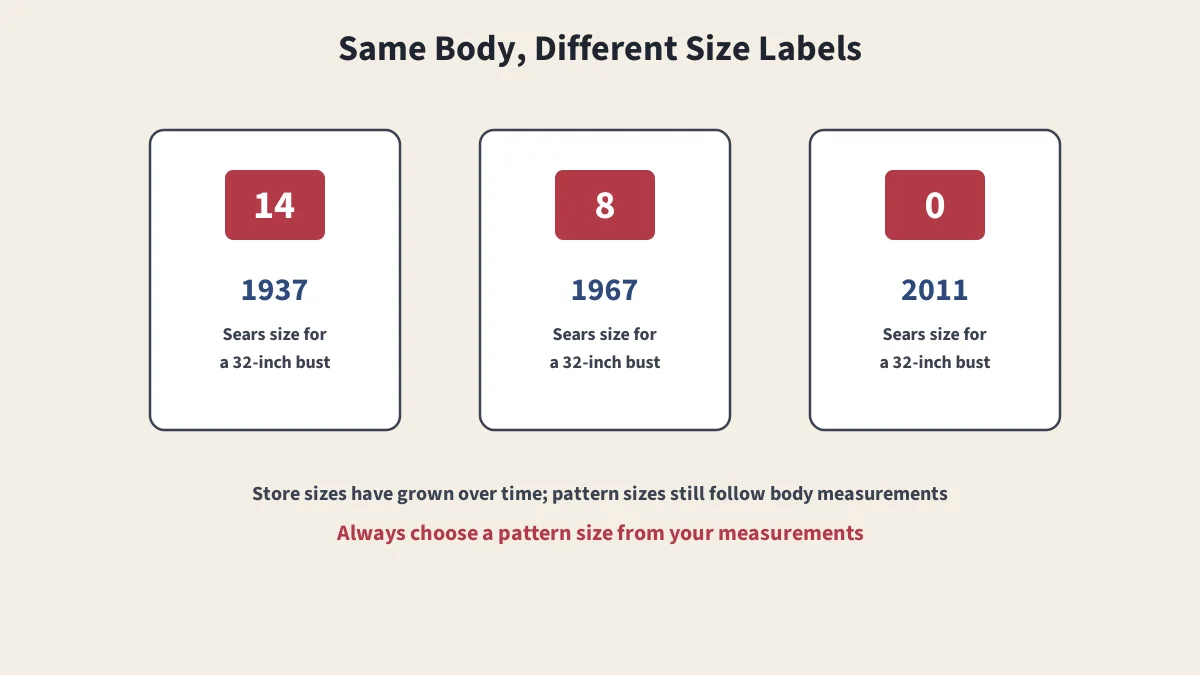
Vanity sizing and how to choose a pattern size.
Slopers and Blocks
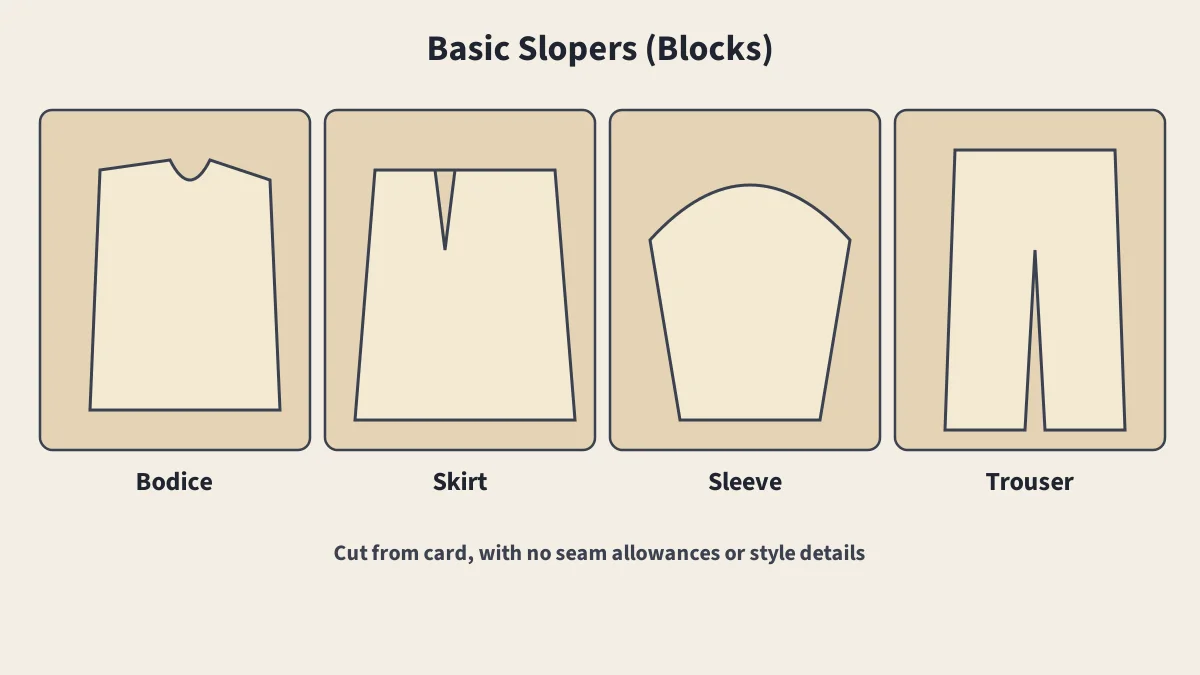
Bodice, skirt, sleeve and trouser blocks explained.
History of Sewing Patterns
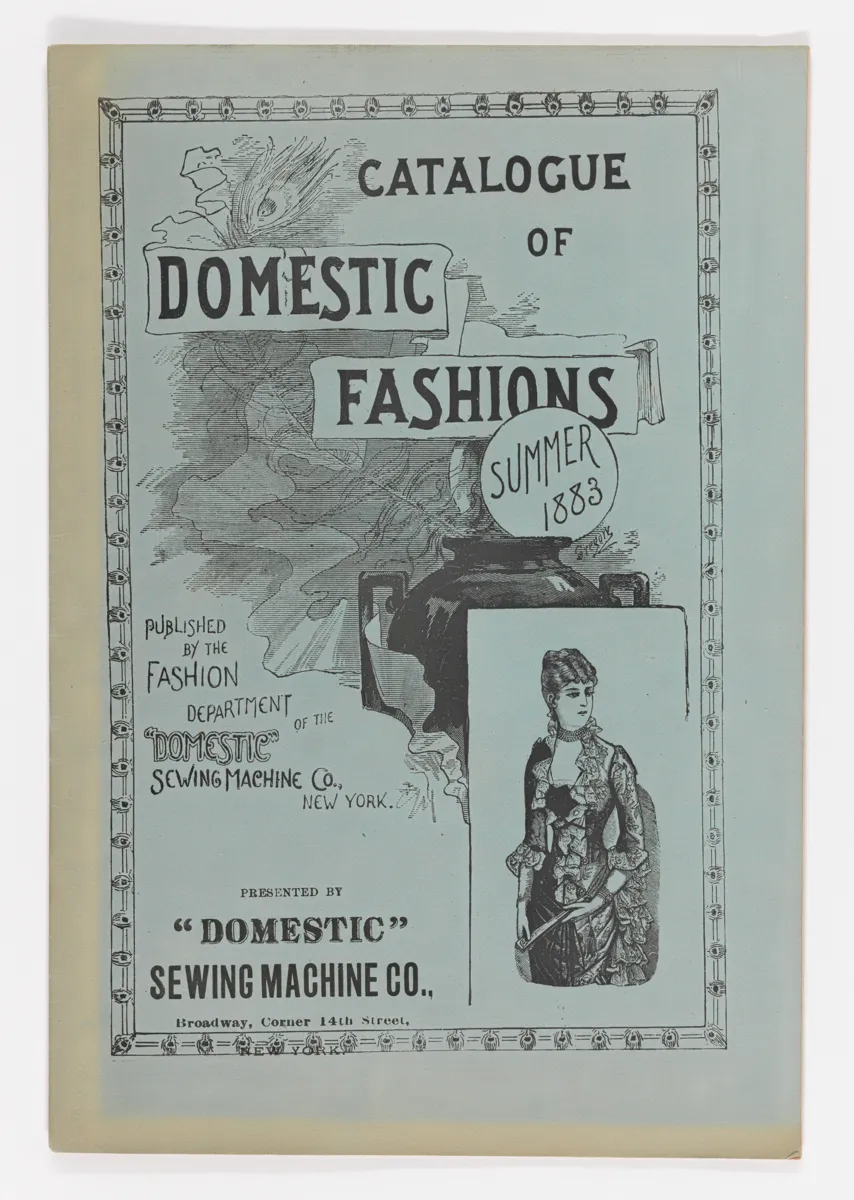
Butterick, McCall's, Vogue and Simplicity, from 1800s magazines to PDFs.
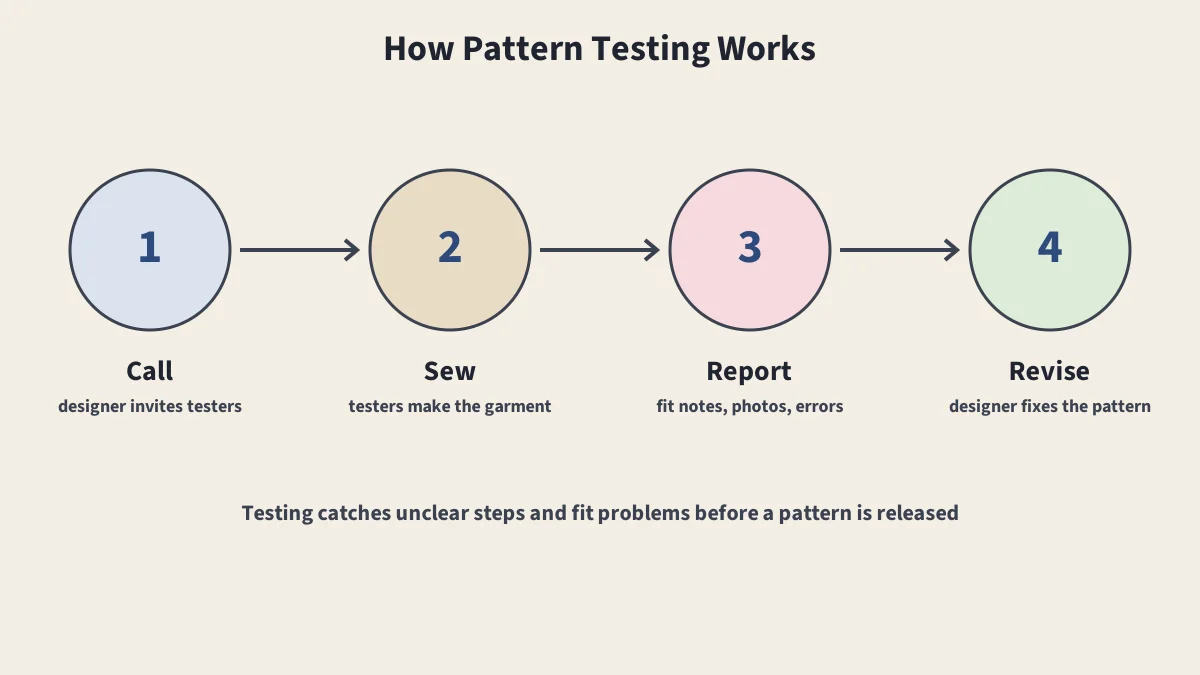
Pattern Testing
How test calls work and how to become a tester.