Types of Hems and How to Choose the Right One (2026)
A hem finishes the bottom of a garment, the edge of a curtain or the end of a sleeve. The right hem depends on the fabric, the curve of the edge and whether the stitching should show. Here are the main types.
In This Article
Hems at a Glance
- Double-fold: the everyday hem; encloses the raw edge
- Blind: nearly invisible; skirts, trousers, curtains
- Narrow and rolled: fine fabrics and curved edges
- Faced and bias-bound: curves, bulky fabrics, decorative edges
- Knit hems: coverstitch, twin needle or stretch stitches
A hem does three jobs: it stops the edge from fraying, gives it weight and shape, and adds a finished look. The depth and method you choose change how a garment hangs. A deep hem adds weight to a skirt or curtain, while a tiny rolled hem keeps a chiffon scarf light and floaty.
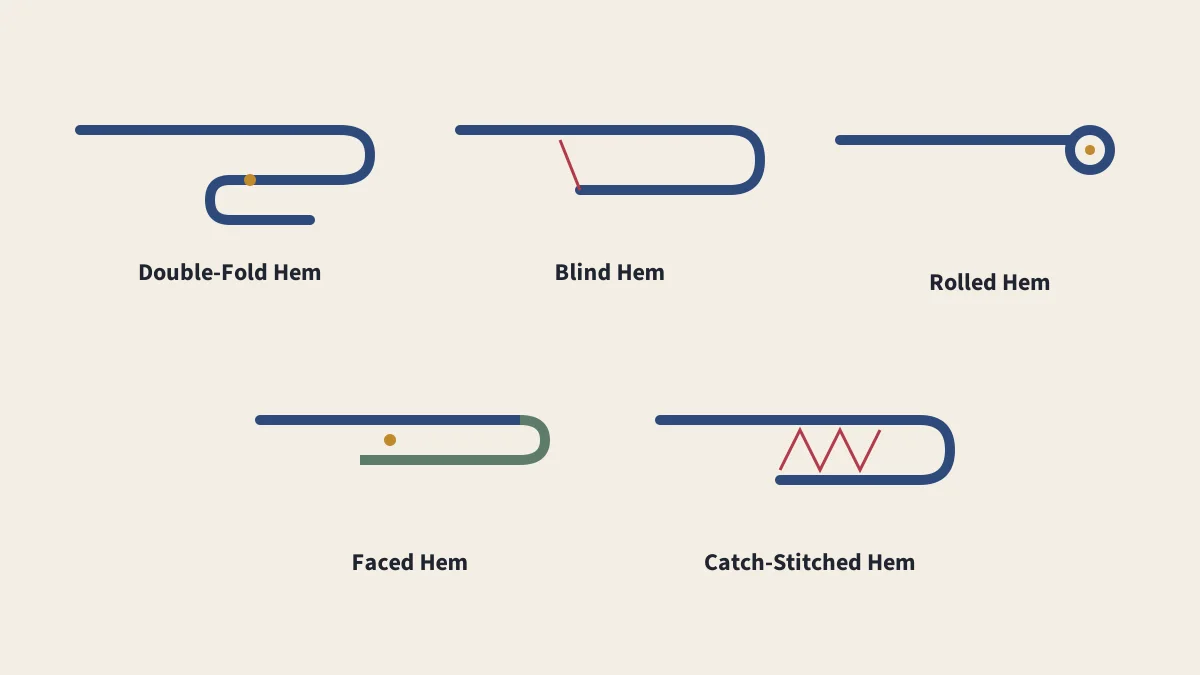
Double-Fold Hem
How: press the raw edge up by a small amount, press up again by the hem depth, and stitch close to the inner fold. The raw edge is hidden inside.
Use it for: jeans, shirts, children's clothes, curtains, napkins and most straight edges. Depth varies from 1/4 inch on shirts to several inches on curtains.
Single-Fold Hem
How: finish the raw edge with a zigzag, serger or pinking, fold it up once and stitch.
Use it for: heavier fabrics where a double fold would be bulky, such as wool or denim skirts.
Blind Hem
How: the hem is folded so the stitching catches only a thread or two of the garment. By hand, use a blind hem stitch or slip stitch; by machine, use the blind hem stitch with a blind hem foot. See hand sewing stitches and machine stitch types.
Use it for: skirts, dresses, trousers and curtains where stitching should not show.
Narrow and Rolled Hems
How: a narrow hem is a double-fold hem just 1/8 to 1/4 inch deep, often sewn with a rolled hem foot that curls the edge as you stitch. A serger can make a rolled hem too, wrapping the tiny edge in dense thread.
Use it for: sheer and lightweight fabrics, scarves, ruffles, circle skirts and curved edges.
Faced Hem
How: a separate strip of fabric, cut to the same shape as the edge, is sewn to the hem right sides together, turned to the inside and stitched down.
Use it for: curved hems, shaped hems such as scallops, bulky fabrics, and when there is not enough fabric for a turned hem.
Bias-Bound Hem
How: bias binding is sewn to the edge and wrapped around it, either showing on the outside as a decorative trim or turned entirely to the inside as a bias-faced hem.
Use it for: curved edges, children's clothes, aprons, quilts and decorative contrast.
Catch-Stitched Hem
How: the raw edge is finished, folded up and secured by hand with a catch stitch (herringbone stitch), whose crossed stitches give a little stretch.
Use it for: tailored garments, wool skirts and trousers, and knits sewn by hand.
Hems on Knit Fabric
Knits stretch, so their hems must too.
- Coverstitch: the professional choice, with parallel rows on top and looped thread underneath; see coverstitch machines.
- Twin needle: two parallel rows on a regular machine, with a zigzag of bobbin thread underneath.
- Narrow zigzag or stretch stitch: simple and effective.
- Raw edge: many knits do not fray, so some casual garments leave the edge raw.
Other Hems
- Machine-rolled baby hem: stitched, trimmed, rolled and stitched again for a tiny, fine edge.
- Horsehair braid hem: a stiff mesh braid sewn into the hem of formal skirts and bridal gowns to give them body.
- Mitered hem: double-fold hems that meet at a neat diagonal corner, used on napkins, tablecloths and quilts.
- Fused hem: held with fusible web rather than stitching, a quick option for curtains and costumes.
Choosing a Hem
| Situation | Recommended Hem |
|---|---|
| Straight edge on cotton or linen | Double-fold |
| Hem should be invisible | Blind hem |
| Sheer or lightweight fabric | Narrow or rolled hem |
| Curved or shaped edge | Narrow, faced or bias-bound hem |
| Bulky fabric | Single-fold or faced hem |
| Tailored wool garment | Catch-stitched hem |
| Knit T-shirt or leggings | Coverstitch or twin needle |
| Napkins, tablecloths, quilts | Mitered double-fold hem |
Tips for Better Hems
- Let it hang. Bias-cut and circle skirts can stretch; hang them for a day before hemming.
- Mark evenly. Measure up from the floor with a hem marker or ruler while the garment is worn.
- Press, don't iron. Lift and press the iron rather than sliding it, so the hem does not stretch.
- Ease curved hems. On a curve, the folded edge is longer than where it is stitched; easing stitches or a narrower hem help it lie flat.
Hems often combine with the stitching techniques in staystitching, understitching, topstitching and edgestitching.
For shortening trousers and jeans step by step, see hemming pants and jeans.
For the named lengths of skirts and dresses, see hem lengths.
Sources
- Hem, Wikipedia
Frequently Asked Questions
What is the most common type of hem?
The double-fold hem: the raw edge is folded up once, then again, and stitched, so the raw edge is enclosed. It is used on jeans, shirts, curtains, napkins and many other items.
How do I make an invisible hem?
Use a blind hem, either by hand with a blind hem stitch or slip stitch, or on a machine with a blind hem stitch and a blind hem foot. Only tiny catches show on the right side.
What hem should I use on curved edges?
Narrow hems, rolled hems, faced hems and bias-bound hems handle curves best, because a deep turned hem cannot lie flat around a curve without bunching.
How do I hem knit fabric?
Use a coverstitch, a twin needle, a narrow zigzag or a stretch stitch, so the hem can stretch with the fabric. A plain straight stitch can pop when knits are stretched.
Keep Reading
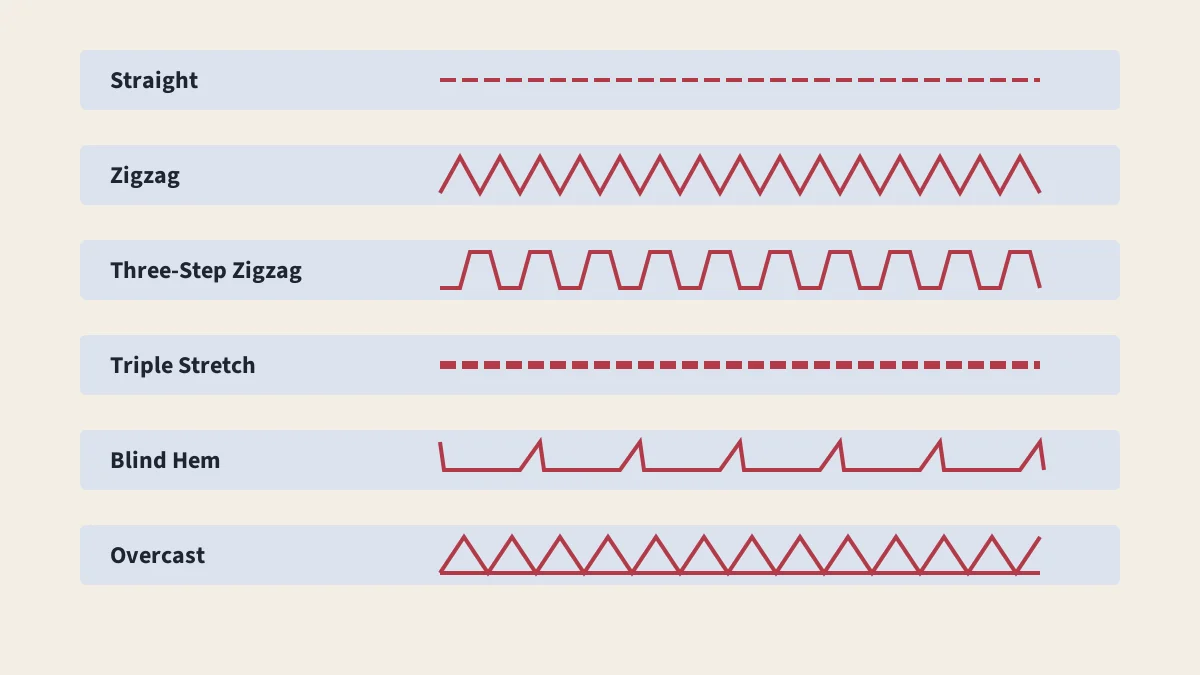
Machine Stitch Types
The utility stitches that do most of the work, and when to use each.
Hand Sewing Stitches
Every essential hand stitch, what it is for and how to sew it.
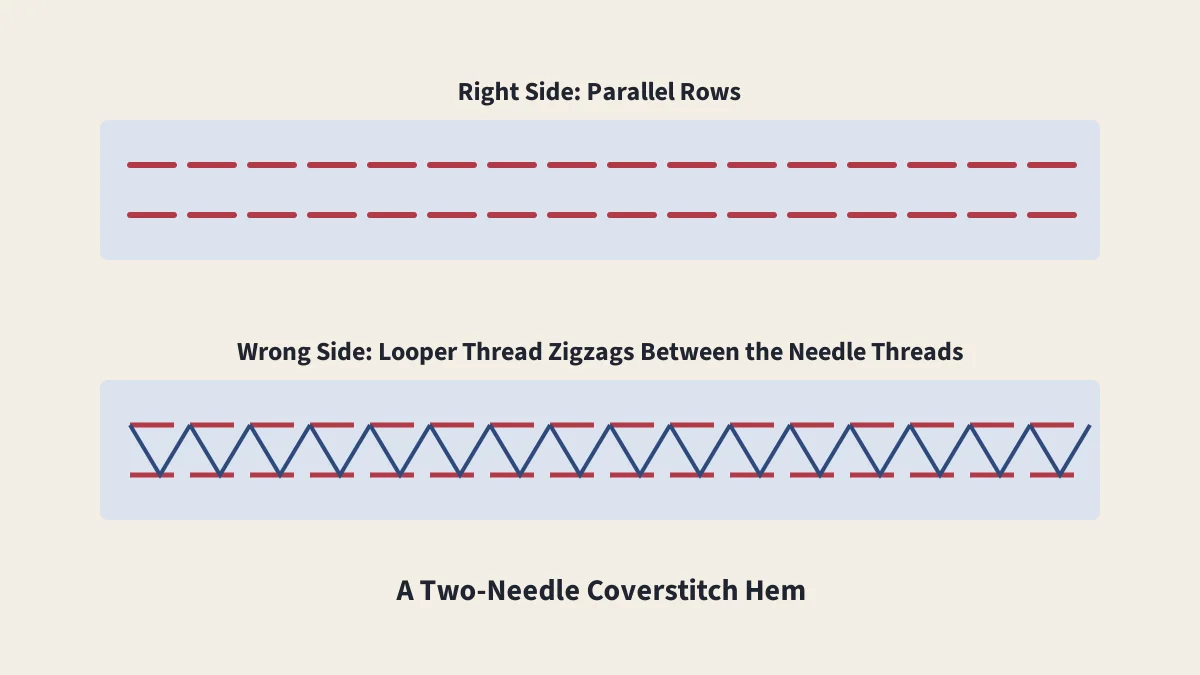
Coverstitch Machines
How coverstitch hems work and how they compare with sergers.
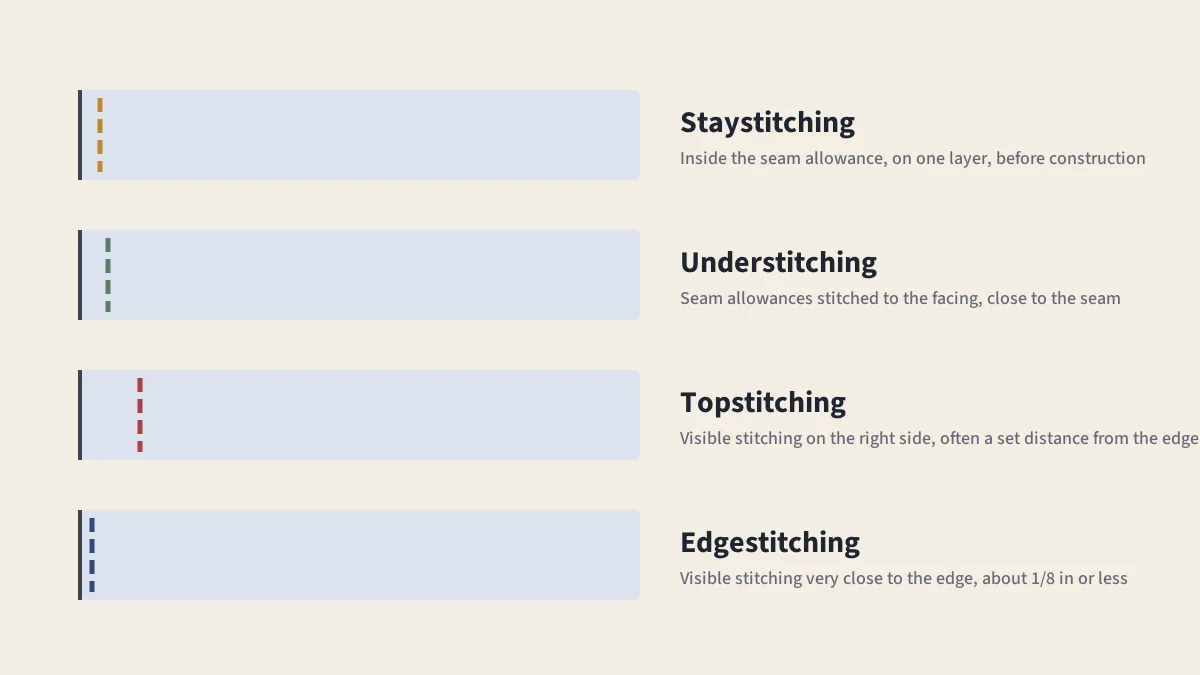
Staystitching, Understitching and Topstitching
Four stitching techniques that sound alike but do different jobs.