Decorative Stitches: How to Use Them Beautifully (2026)
Most sewing machines come with rows of decorative stitches that rarely get used. With the right stabilizer, thread and placement, they turn plain projects into special ones. Here is how they work and where they shine.
In This Article
Decorative Stitching in Brief
- Machine stitches: satin stitch, scallops, vines, heirloom stitches, lettering
- Essentials: stabilizer, good thread, the right foot and needle
- Uses: borders, hems, crazy quilting, children's clothes, gifts
- By hand: embroidery stitches such as chain, feather and French knots
A decorative stitch is any stitch chosen for how it looks as well as what it does. On a sewing machine, that means patterns built from many small lockstitches: the needle swings side to side while the feed moves the fabric forward and back in a programmed sequence. Before electronics, machines used shaped discs called cams to control these patterns, as on the Singer Slant-o-Matic models; see Singer Slant-o-Matic. Today's computerized machines store hundreds of patterns.
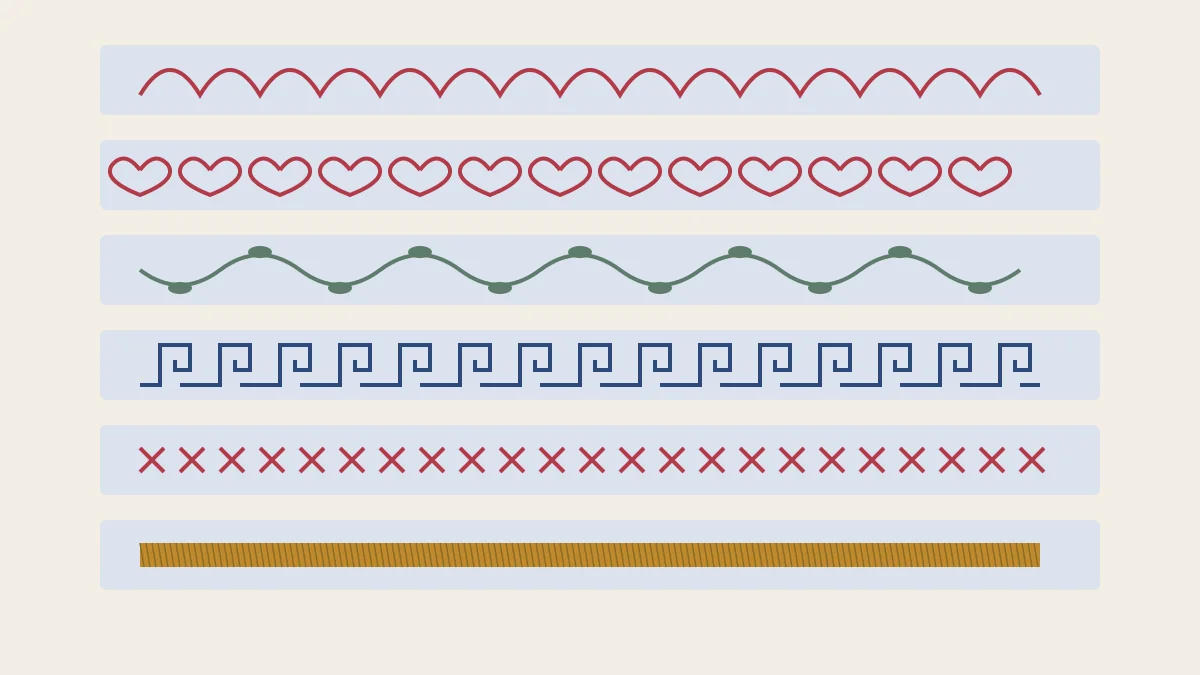
Common Machine Decorative Stitches
| Stitch | What It Looks Like | Good For |
|---|---|---|
| Satin stitch | A dense, smooth band of zigzag | Appliqué edges, monograms, borders |
| Scallop | A row of curves | Edges, collars, children's clothes; cut close for a scalloped edge |
| Vine, leaf and flower | Running botanical motifs | Borders on linens, quilts and aprons |
| Greek key and geometric | Angular repeating patterns | Bold borders and home décor |
| Cross stitch and feather stitch | Imitations of hand embroidery | Crazy quilting, heirloom work |
| Heirloom (entredeux, hemstitch) | Open, lacy holes, often with a wing needle | Christening gowns, fine linens |
| Lettering and alphabets | Built-in fonts | Names on gifts, labels, quilt labels |
| Twin-needle patterns | Two parallel rows of a decorative stitch | Pintucks, borders, hems |
How to Get Good Results
- Stabilize. Put a tear-away or wash-away stabilizer under the fabric; dense stitches pull hard and pucker unsupported fabric. See how embroidery machines work for stabilizer types.
- Use an open-toe or satin-stitch foot. The groove underneath lets dense stitching pass smoothly, and the open front lets you see; see the presser feet guide.
- Choose thread for show. Rayon, polyester embroidery thread or metallic thread show off stitches; use an embroidery, metallic or topstitch needle to match.
- Lighten the bobbin. A fine bobbin thread keeps the back flat; slightly loosening upper tension can stop bobbin thread showing on top.
- Let the machine feed. Do not push or pull, or the pattern distorts.
- Test first. Sew a sample on the same fabric and stabilizer, and adjust length and width.
- Mark a guideline. A chalk line or the edge of a foot keeps the row straight.
Creative Uses
- Borders on napkins, towels, pillowcases and table linens.
- Hems that are decorative and functional at once.
- Crazy quilting, where decorative stitches cover the seams between irregular patches.
- Ribbon and trim stitched down with a decorative stitch.
- Personalized gifts with names stitched in built-in alphabets.
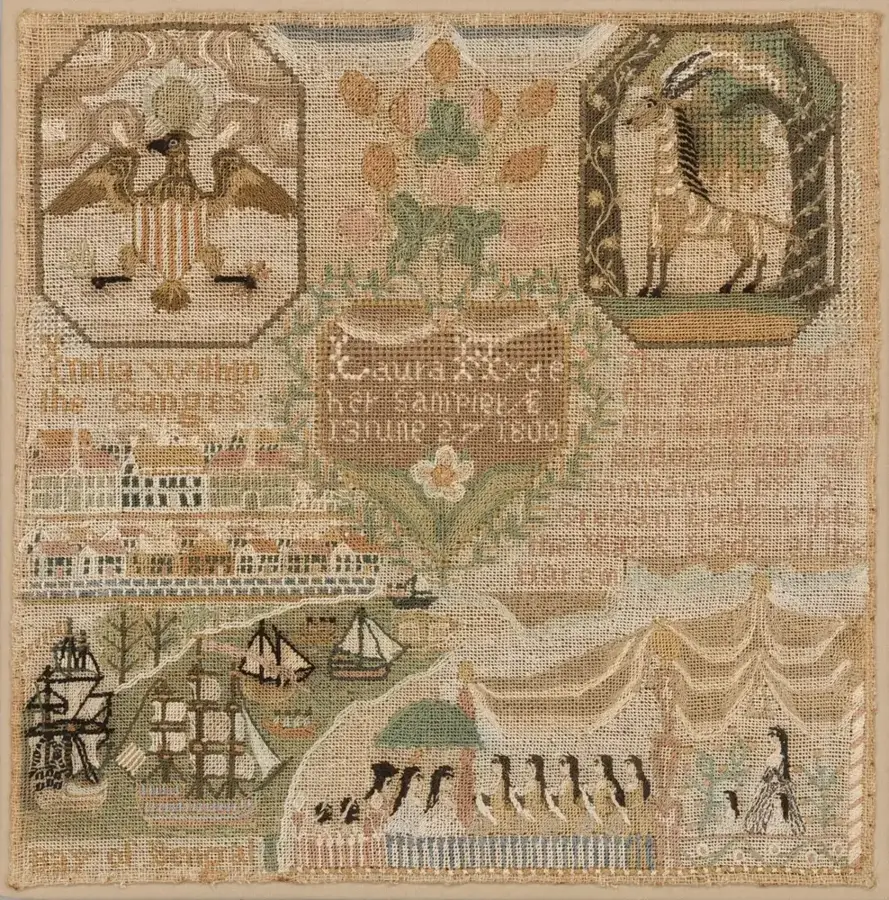
- Stitch samplers, rows of every stitch your machine makes, are a modern echo of the hand-stitched samplers children once made to learn sewing.
Decorative Stitches by Hand
Hand embroidery offers an even wider range: chain stitch, feather stitch, French knots, lazy daisy, stem stitch, satin stitch, herringbone and many more. Several functional hand stitches double as decorative ones, especially blanket stitch, running stitch and backstitch; see hand sewing stitches. Visible mending techniques such as sashiko use running stitches decoratively, turning repairs into ornament.
Decorative Stitches vs. Machine Embroidery
Decorative stitches are repeating patterns sewn in a line as the feed dogs move the fabric. Machine embroidery stitches whole designs in a hoop, which the machine moves in every direction following a digital file. Many machines do both; see mechanical vs. computerized machines.
For the hand embroidery stitches many of these imitate, see embroidery stitches.
Sources
- Zigzag stitch, Wikipedia
- Embroidery stitch, Wikipedia
Frequently Asked Questions
How do decorative stitches work on a sewing machine?
The machine moves the needle side to side and feeds the fabric backward and forward in a programmed sequence, building a pattern from many small lockstitches. Older machines used cams to control the pattern; computerized machines store patterns electronically.
Do I need a stabilizer for decorative stitches?
Usually, yes. Dense decorative stitches pull on the fabric and can cause puckering. A tear-away or wash-away stabilizer underneath keeps the fabric flat; remove it after stitching.
What thread is best for decorative stitching?
Rayon and polyester embroidery threads have a sheen that shows decorative stitches well. Use an embroidery or topstitch needle with a larger eye, and a finer bobbin thread underneath.
What is the difference between decorative stitches and machine embroidery?
Decorative stitches are repeating patterns sewn in a line as the machine feeds the fabric. Machine embroidery stitches whole designs in a hoop that the machine moves in two directions, following a digital file.
Keep Reading
Machine Stitch Types
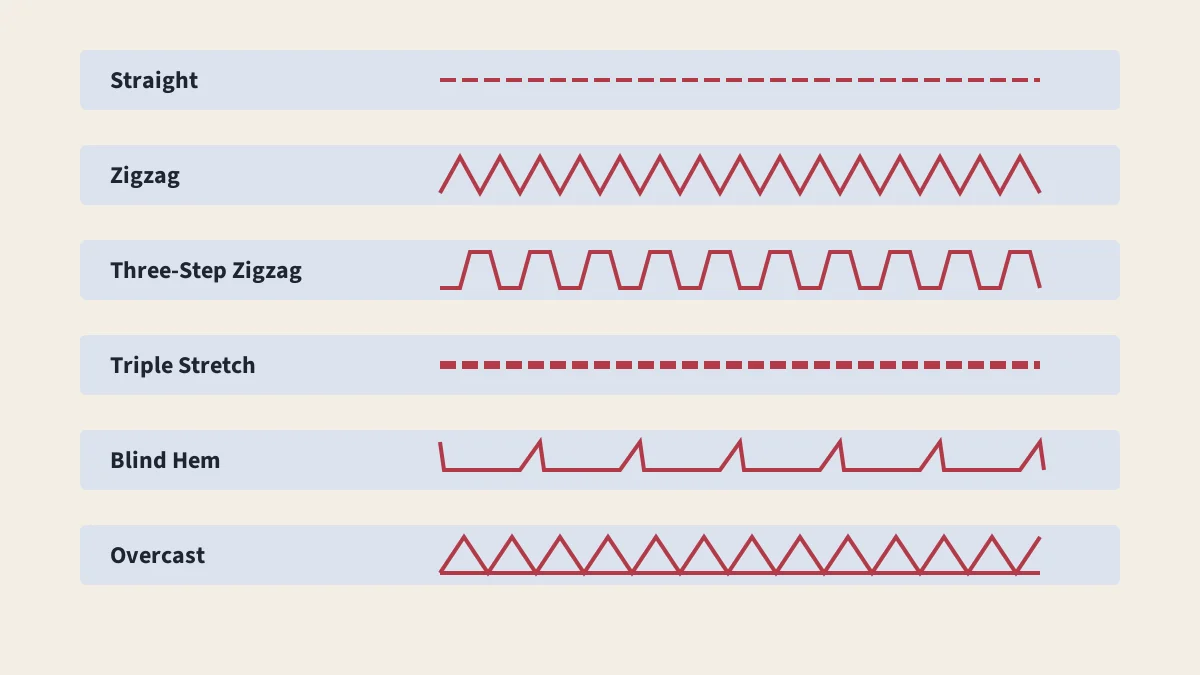
The utility stitches that do most of the work, and when to use each.
Hand Sewing Stitches
Every essential hand stitch, what it is for and how to sew it.
How Embroidery Machines Work
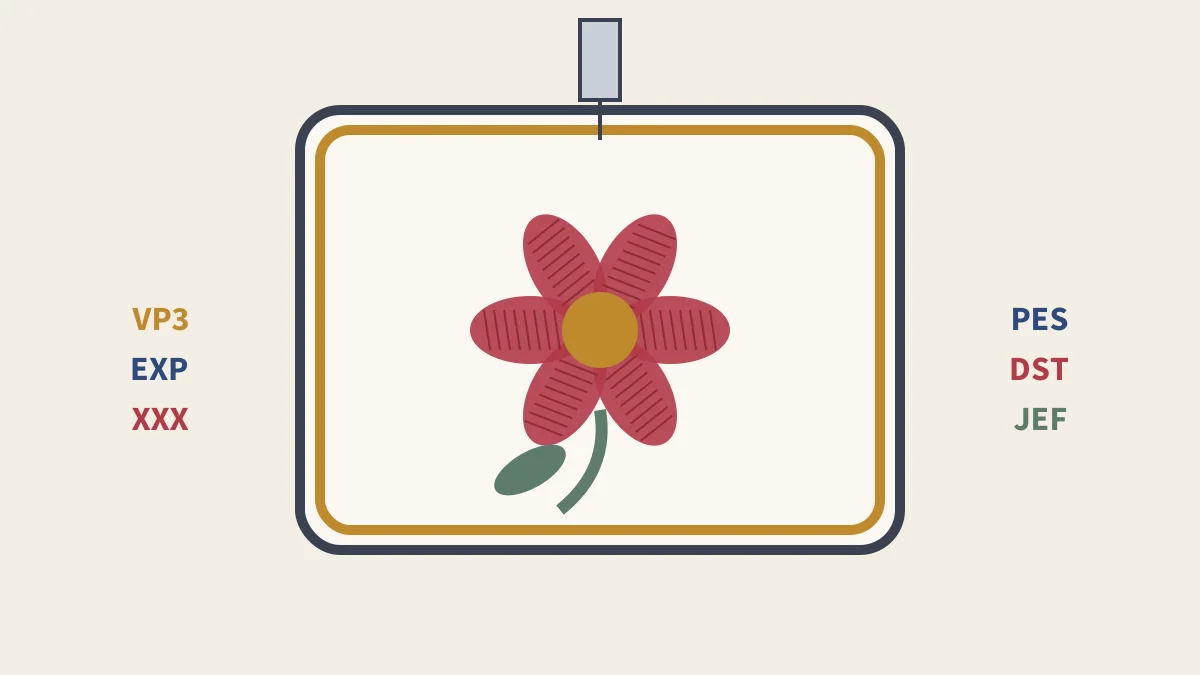
Hoops, digitizing, stabilizers and embroidery file formats explained.
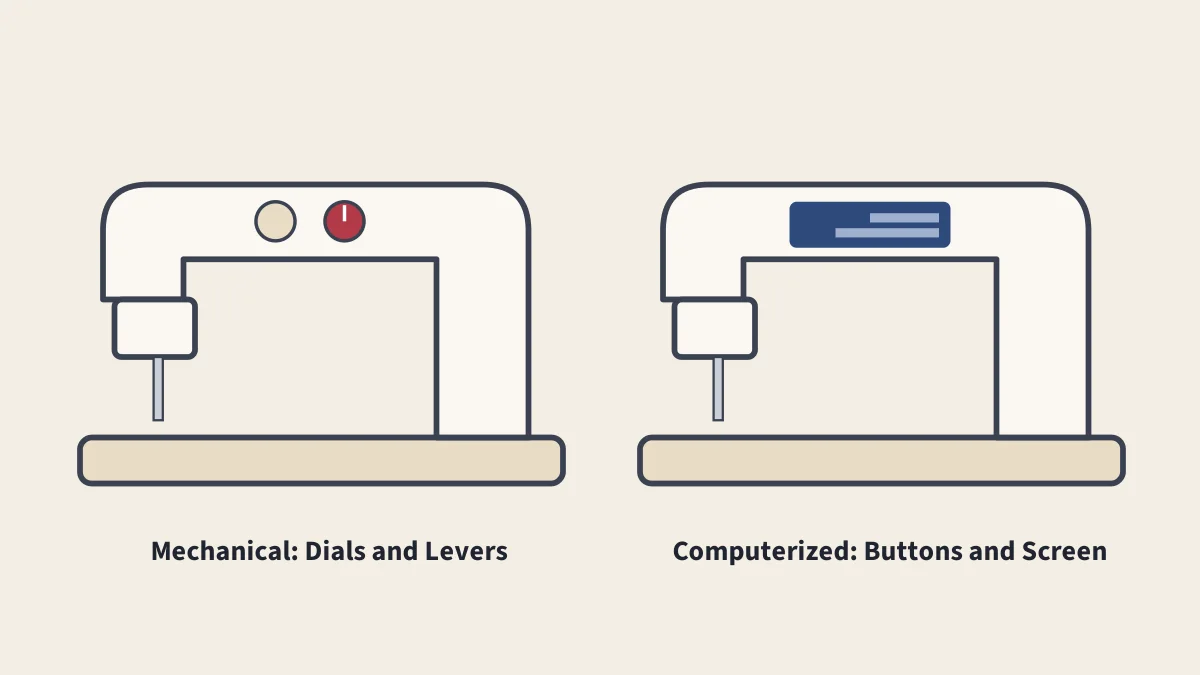
Mechanical vs. Computerized Machines
Dials vs. touchscreens: features, durability and repairs compared.