Staystitching, Understitching, Topstitching and Edgestitching Explained (2026)
Pattern instructions often ask for four kinds of stitching that sound alike but do very different jobs. Two are hidden helpers that make garments lie and hang correctly; two are visible lines that strengthen and decorate.
In This Article
The Four Techniques in Brief
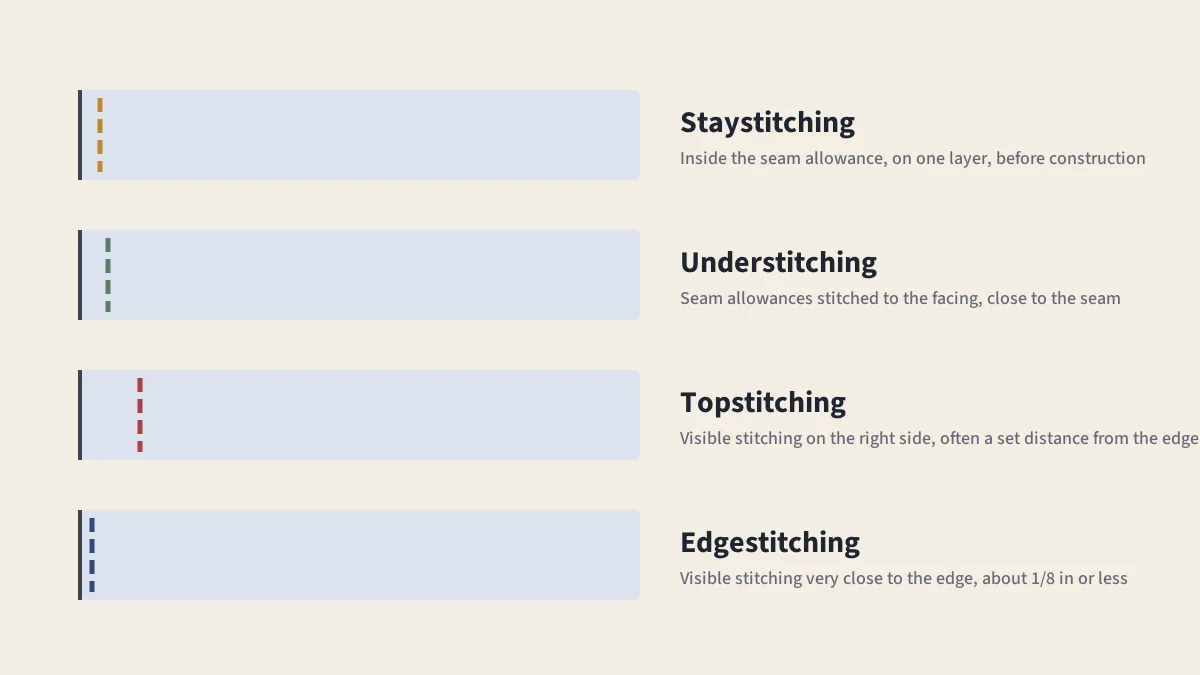
- Staystitching: hidden; stops curved edges stretching before construction
- Understitching: hidden; keeps facings and linings rolled to the inside
- Topstitching: visible; strengthens and decorates
- Edgestitching: visible; holds edges crisp, very close to the edge
These four techniques are all ordinary straight stitches. What makes them different is where they go and why. Learn them and your garments will look more professional: necklines that lie flat, facings that stay hidden and crisp, even topstitching like ready-to-wear.
Staystitching
What it is: a line of regular-length straight stitching sewn through a single layer, just inside the seam line, usually about 1/8 inch (3 mm) inside the stitching line within the seam allowance.
Why: curved and bias-cut edges, such as necklines, armholes and waistlines, stretch easily as they are handled. Staystitching stabilizes them before construction begins.
How: sew it as soon as the pieces are cut. Stitch "directionally," from the shoulder toward the center on a neckline, for example, so you do not push the fabric out of shape. The stitching stays in the garment, hidden inside the seam allowance.
Understitching
What it is: stitching that joins the seam allowances to the facing or lining, close to the seam line, sewn after the seam is pressed toward the facing.
Why: it prevents facings and linings from rolling to the outside, so the edge stays crisp and only the garment fabric shows.
How: after sewing and trimming the seam, press both seam allowances toward the facing. From the right side of the facing, stitch about 1/8 inch (3 mm) from the seam, through the facing and both seam allowances. Then fold the facing to the inside; it will roll under neatly. Understitching does not show on the outside of the garment.
Use it on: necklines with facings, armhole facings, waistband facings, lined bodices and collars.
Topstitching
What it is: visible stitching on the right side of the garment, usually parallel to a seam or edge, often 1/4 inch (6 mm) or more away.
Why: it holds seam allowances flat, strengthens seams and adds a design detail. The double rows on jeans are topstitching.
How:
- Lengthen the stitch to about 3–3.5 mm for a bold, even line; see stitch length and tension.
- Use topstitching thread with a topstitch needle, or two strands of regular thread through one needle, for a heavier look; see sewing machine needles.
- Use a guide (needle plate lines, an edge-stitch foot or a quarter-inch foot) to keep the distance even.
- Sew slowly at corners, stop with the needle down, raise the foot and pivot.
- Do not backstitch on visible topstitching; pull the threads to the back and tie them.
Edgestitching
What it is: visible stitching very close to an edge or seam, about 1/16 to 1/8 inch (1.5 to 3 mm) away.
Why: it holds edges flat and crisp, attaches patch pockets and finishes collars, cuffs and waistbands.
How: an edge-stitch foot, with a blade that runs along the edge, makes it easy to keep the line straight. Moving the needle position slightly helps you fine-tune the distance.
Side-by-Side Comparison
| Technique | Visible? | Layers | Distance | When |
|---|---|---|---|---|
| Staystitching | No | Single layer | About 1/8 in inside the seam line | Right after cutting |
| Understitching | No (inside) | Facing + seam allowances | About 1/8 in from the seam | After sewing and pressing a facing seam |
| Topstitching | Yes | All layers | Often 1/4 in or more from edge or seam | After construction of that area |
| Edgestitching | Yes | All layers | About 1/16–1/8 in from edge | After pressing the edge |
Tips for Neat Results
- Press first. Every one of these techniques works better on a well-pressed seam or edge.
- Test on scraps with the same layers, thread and stitch length.
- Match or contrast thread deliberately. Matching thread hides small wobbles; contrasting thread shows off careful work.
- Slow down around curves and corners, and keep your eye on the guide.
For the seams these techniques support, see types of seams; for edges, see types of hems.
See these techniques in use in sewing curves and corners and facings vs. linings.
Sources
- Seam (sewing), Wikipedia
- Topstitch, Wikipedia
Frequently Asked Questions
What is staystitching?
A line of straight stitching sewn just inside the seam line, through a single layer of fabric, on curved or bias edges such as necklines and armholes. It stops those edges from stretching out of shape before the garment is assembled.
What is the difference between topstitching and edgestitching?
Both are visible stitching on the right side. Edgestitching runs very close to an edge or seam, about 1/16 to 1/8 inch away. Topstitching is usually farther from the edge, often 1/4 inch or more, and is often more decorative, sometimes in thicker or contrasting thread.
What does understitching do?
Understitching sews the seam allowances to the facing or lining, close to the seam. It is invisible from the outside and stops the facing or lining from rolling to the outside of the garment.
Do I have to staystitch?
It is strongly recommended on curved and bias-cut edges, especially in loosely woven or delicate fabric. Skipping it can leave necklines and armholes stretched and wavy, which is hard to fix later.
Keep Reading
Machine Stitch Types
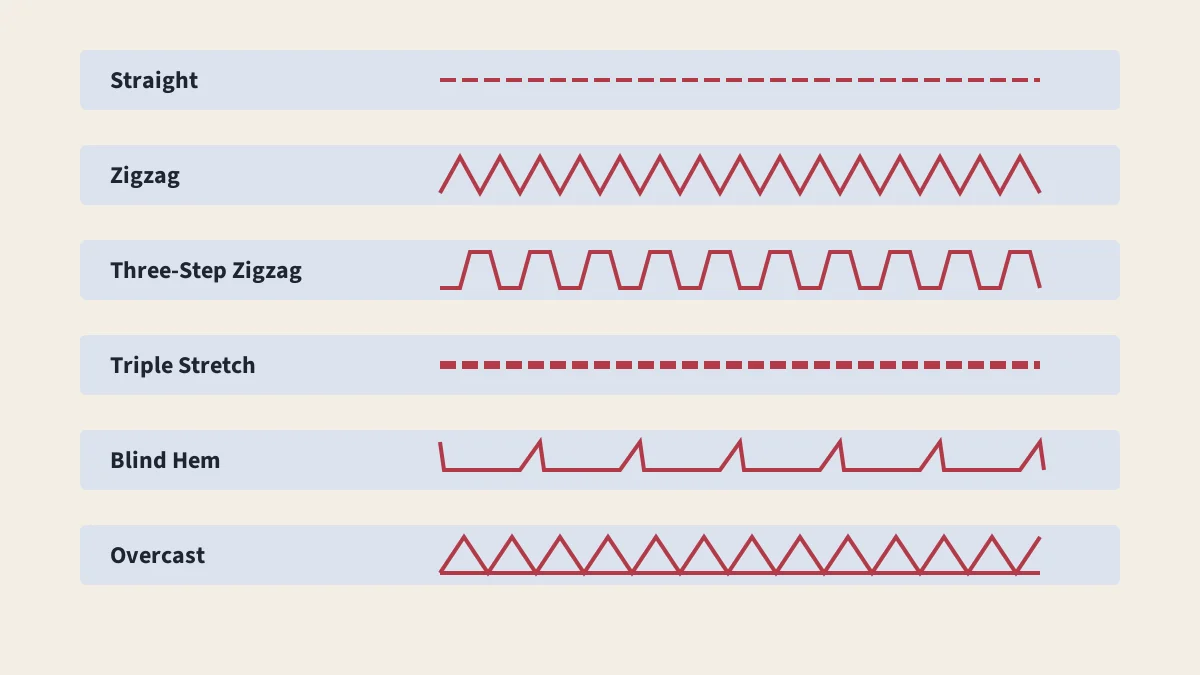
The utility stitches that do most of the work, and when to use each.
Seam Allowance Explained
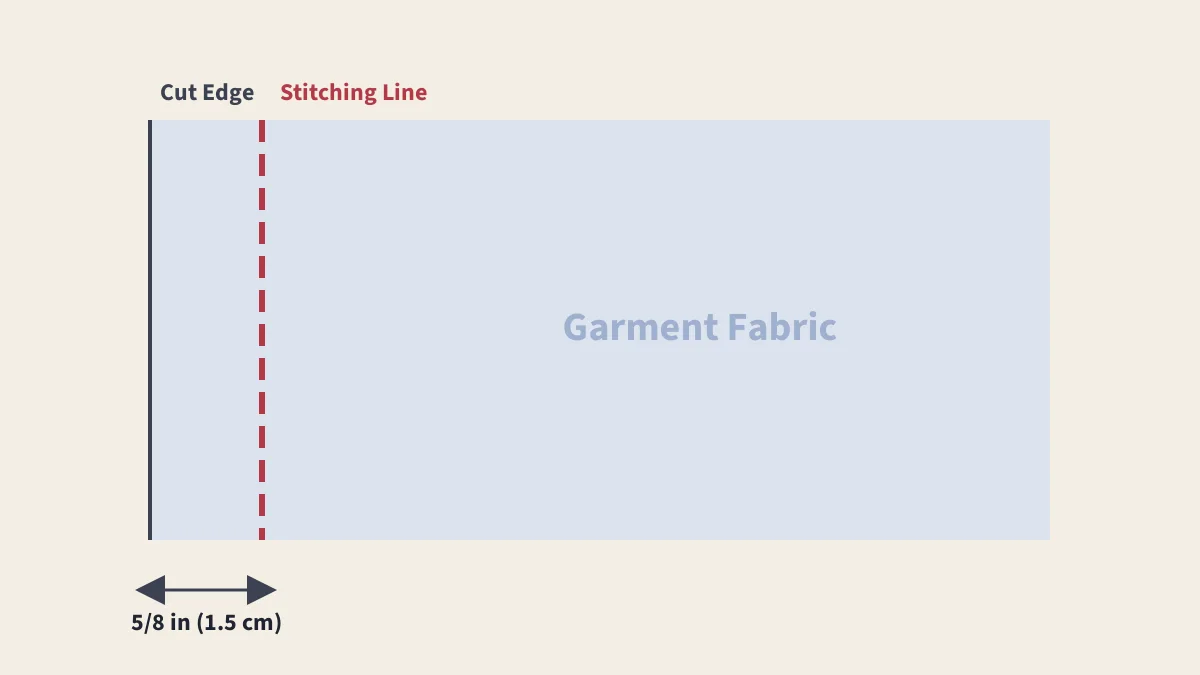
Standard seam allowances, why they differ, and how to sew them accurately.
Types of Hems
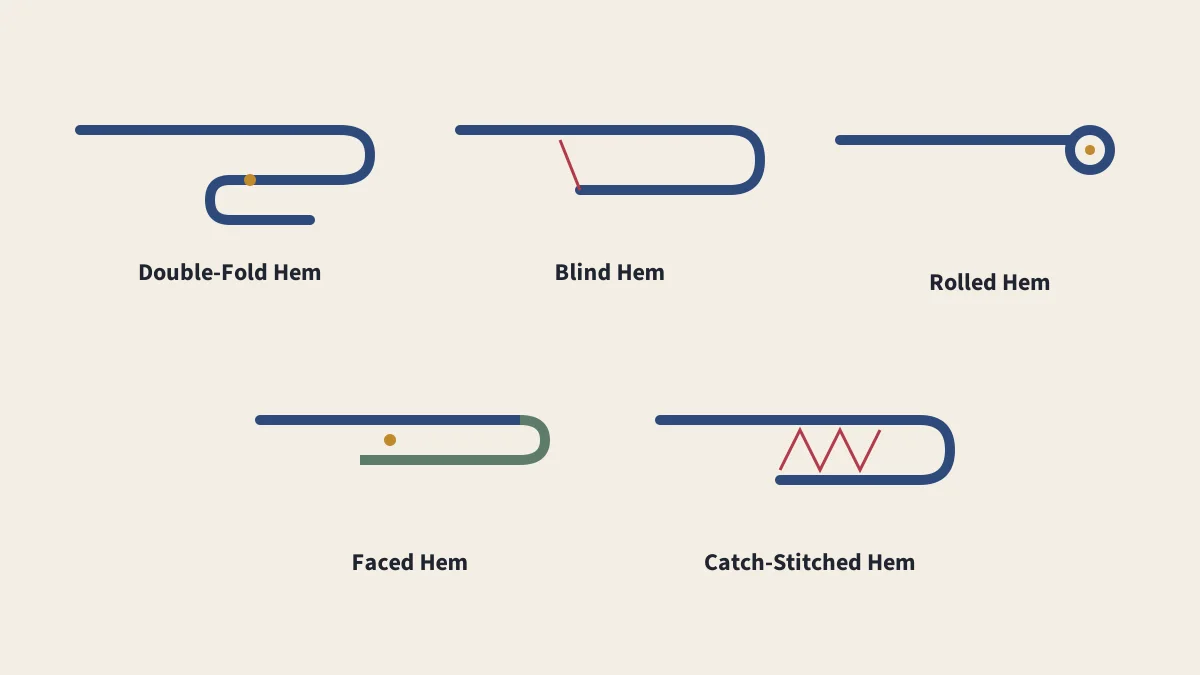
Double-fold, blind, rolled, faced, bound and knit hems compared.
Stitch Length and Tension Explained
What the dials mean, common settings, and how to balance tension.