Corsets and Stays: How They Were Made and Worn (2026)
For about four centuries, a boned undergarment shaped the fashionable torso. Its name changed from bodies to stays to corset, and its shape changed with every era's ideal.
In This Article
Corsets in Brief
- Names: bodies, stays, corset
- Boning: reed and whalebone, later steel
- 1827: metal eyelets allow tighter lacing
- Typical reduction: 5–15 cm (2–6 in)
- Decline: the 1910s and 1920s
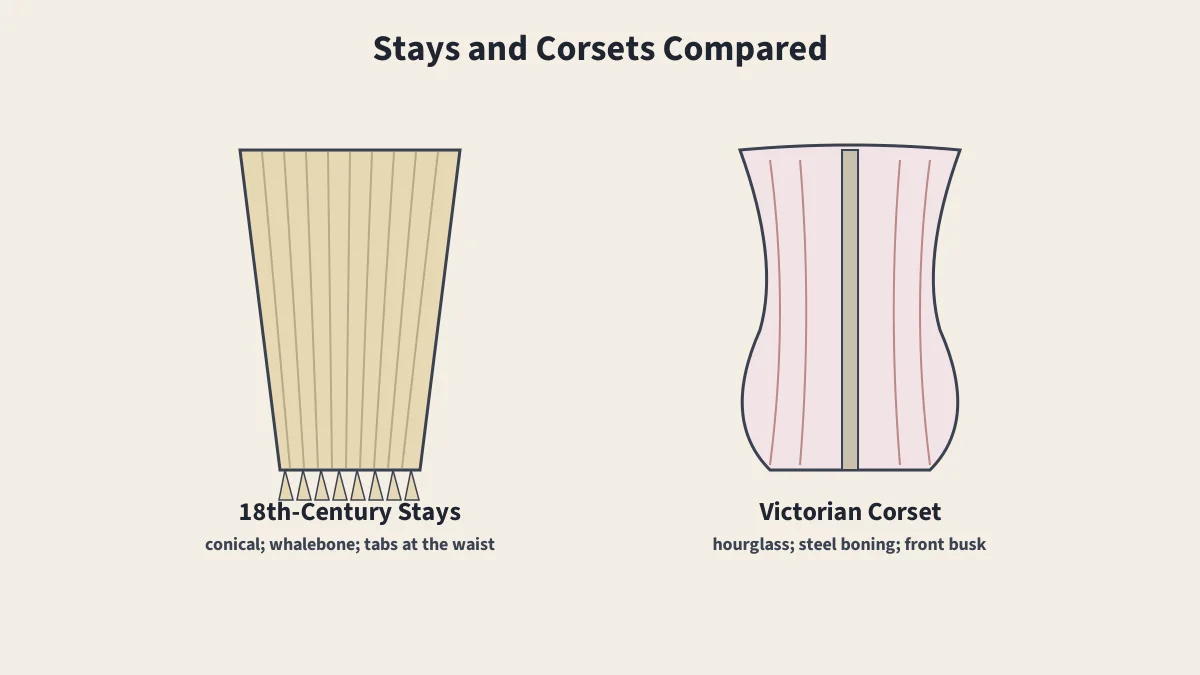
A corset is a support garment worn to shape the torso and posture, traditionally with fabric, boning, a front busk and lacing at the back. The word comes from the Old French cors, "body," so it means "little body." Earlier names were "bodies" in the 16th century and "stays" in the 17th and 18th; "corset" came into general English use in the 18th century.
Construction
- Fabric: usually sturdy non-stretch cotton, especially coutil; silk, wool and leather were also used.
- Boning: originally whalebone (baleen), with steel more common from the mid-19th century; ivory, wood and cane were also used. Modern boning is often plastic.
- Busk: a stiff front piece of wood or metal; the Victorian split busk allowed corsets to fasten at the front.
- Lacing: usually at the back, laced from the top, the bottom, or both.
Staymaking was considered men's work; in 17th-century France, staymakers were men, with women often sewing the pieces together.
A Timeline
| Date | Development |
|---|---|
| Late 16th century | "A pair of bodys," stiffened with reed or whalebone and a wooden, horn or metal busk |
| 17th–18th centuries | Stays give a conical or cylindrical torso; more whalebone is used |
| 1790s | Stays fall from fashion with neoclassical dress |
| Early 1800s | Bust gussets are added; the corset lengthens to the hip |
| 1827 | Metal eyelets allow much tighter lacing |
| 1850 | Steel boning becomes popular |
| 1870s | The spoon busk shapes the stomach |
| 1890s | Inès Gaches-Sarraute designs the straight-front corset, leading to the S-curve |
| 1911 | Rubberized elastic helps the girdle replace the corset |
| 1920s | The corset largely leaves mainstream fashion |
| Late 1940s–early 1950s | Brief revival of waist cinchers with Dior's New Look |
Health, Myths and Reform
Typical waist reduction was about 5 to 15 cm (2 to 6 in), and claims that women had ribs removed are baseless. Studies found moderate lacing reduced lung capacity by between 2 and 29 percent, about 9 percent on average, and corsets were linked to muscle wasting and other problems, though modern research is mixed. Dress reformers argued corsets were harmful, and health or "rational" corsets were offered as alternatives.
Sources
- Corset, Wikipedia
Frequently Asked Questions
What is the difference between stays and a corset?
Mostly the era and shape. 'Bodies' (16th century) and 'stays' (17th–18th centuries) gave a conical torso; 'corset', which came into general English use in the 18th century, usually refers to the curvier 19th-century garment.
What were corsets made of?
Usually sturdy non-stretch cotton such as coutil, with boning of whalebone (baleen), later steel, and a stiff front busk of wood or metal.
Did women remove ribs to wear corsets?
No. Historical claims of rib removal for smaller waists are baseless.
How much did corsets reduce the waist?
Typically about 5 to 15 cm (2 to 6 in). In the 1880s, the average corseted waist was about 53 cm (21 in), compared with about 69 cm (27 in) uncorseted.
Keep Reading
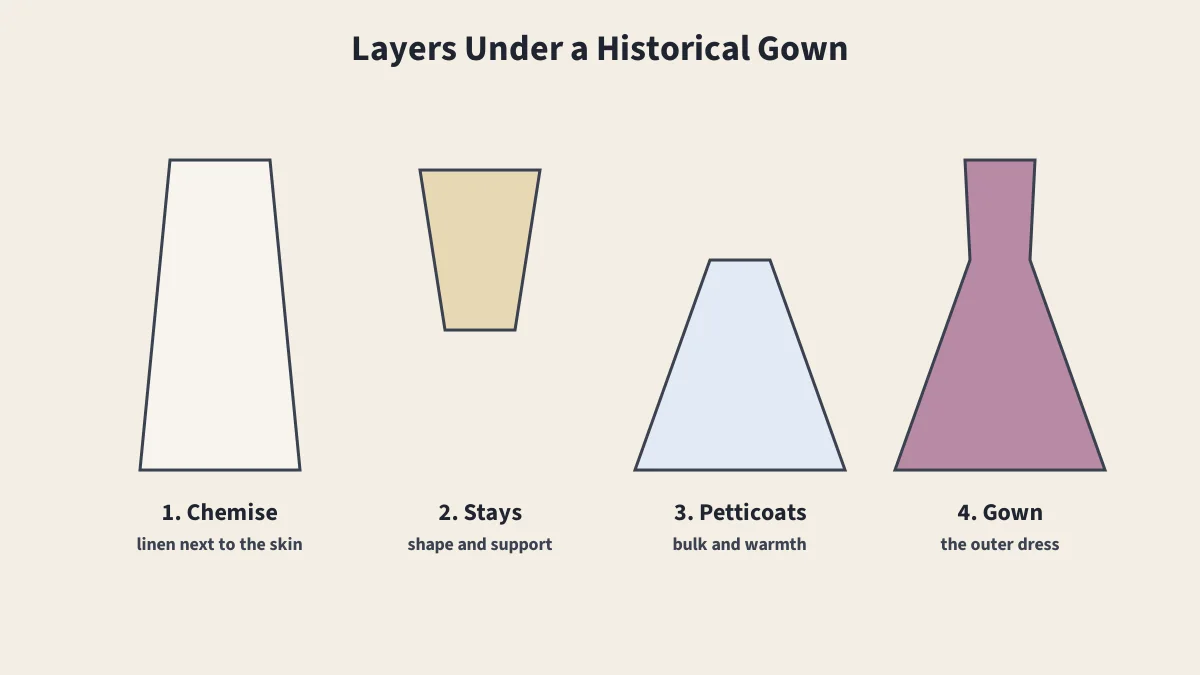
Historical Undergarments
Chemises, shifts, stays and petticoats.
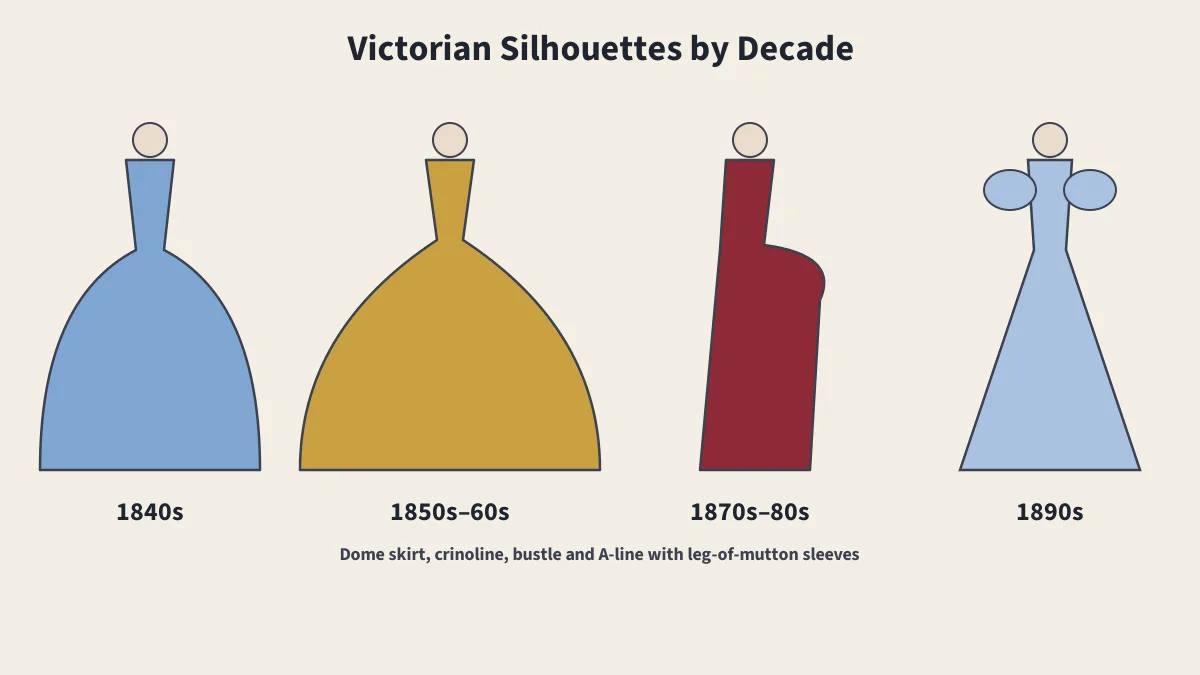
Victorian Dress
Silhouettes, technology and mourning dress.
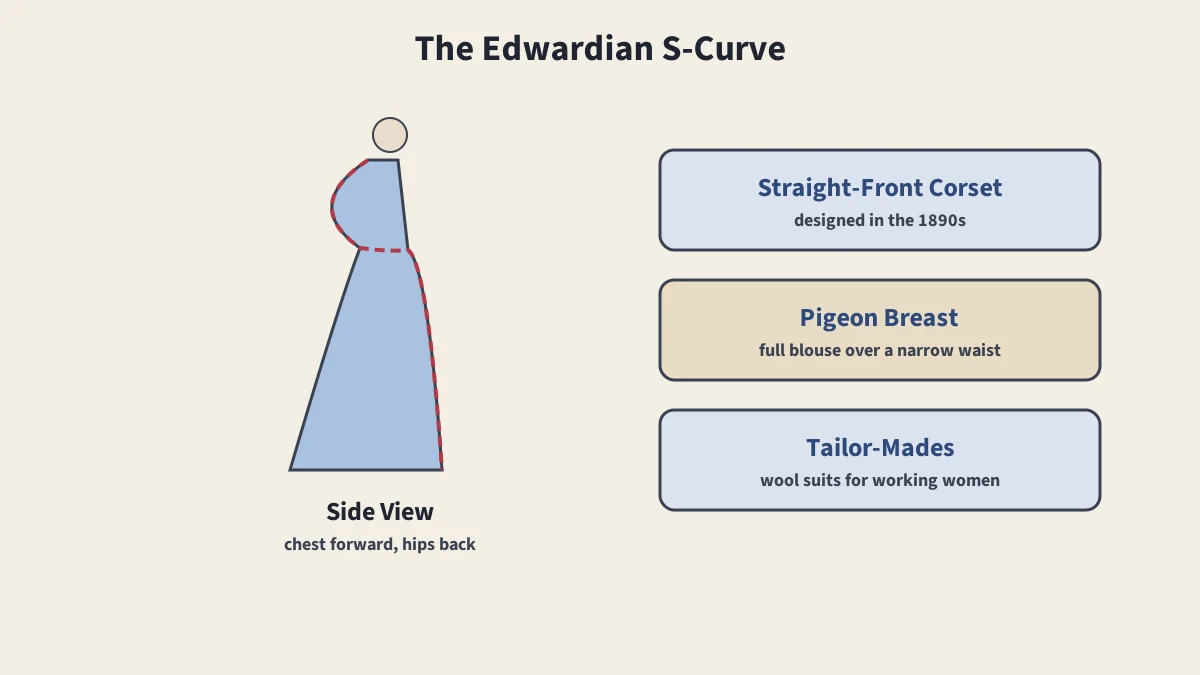
Edwardian Dress
S-curve silhouettes, shirtwaists and tailored suits.
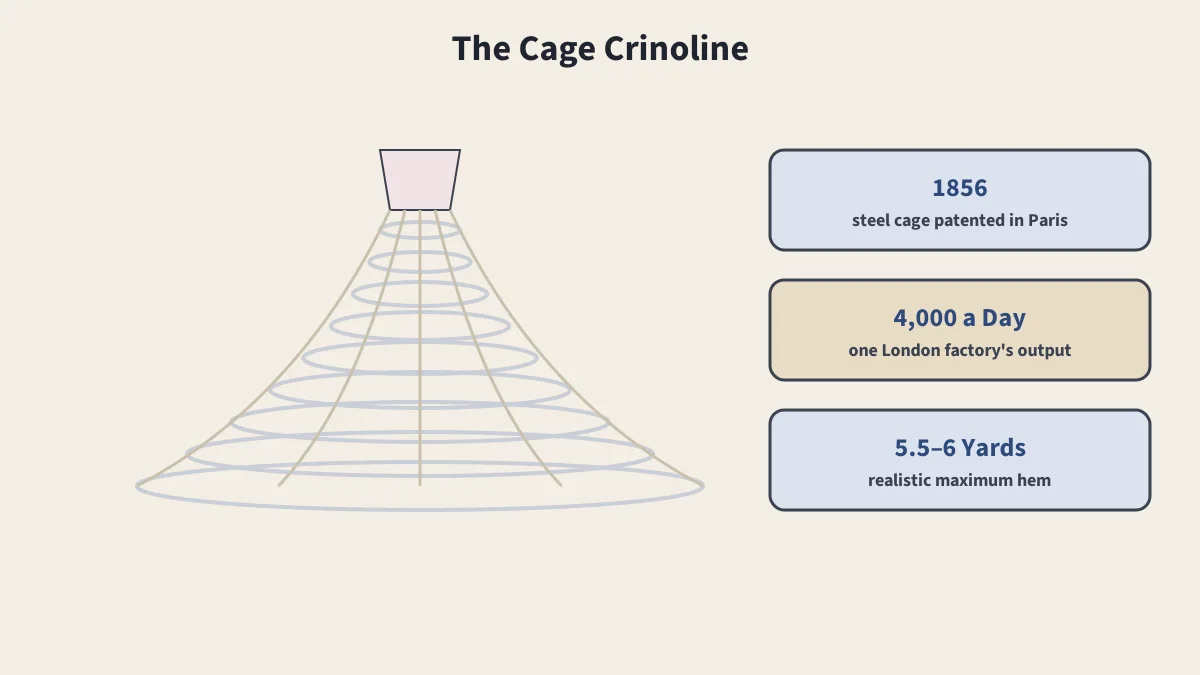
Crinolines and Hoop Skirts
Horsehair petticoats and steel cage crinolines.