Crinolines and Hoop Skirts: From Horsehair to Steel Cages (2026)
The crinoline began as a stiff horsehair fabric and became the steel-hooped cage that held out the vast skirts of the 1850s and 60s. It was light, cheap and mass-produced, and sometimes dangerous.
In This Article
Crinolines in Brief
- Name: from crin (horsehair) fabric
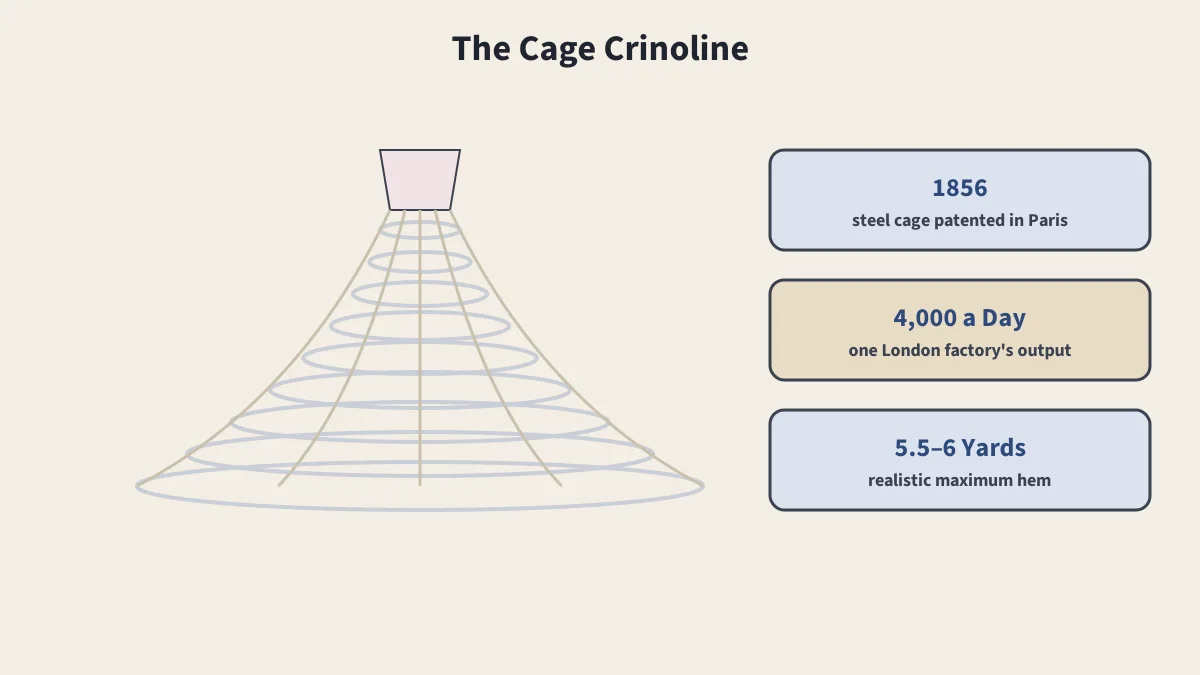
- 1856: steel cage patented in Paris
- Output: up to 4,000 a day in one London factory
- Size: about 5.5–6 yards around at most
- Decline: from about 1866
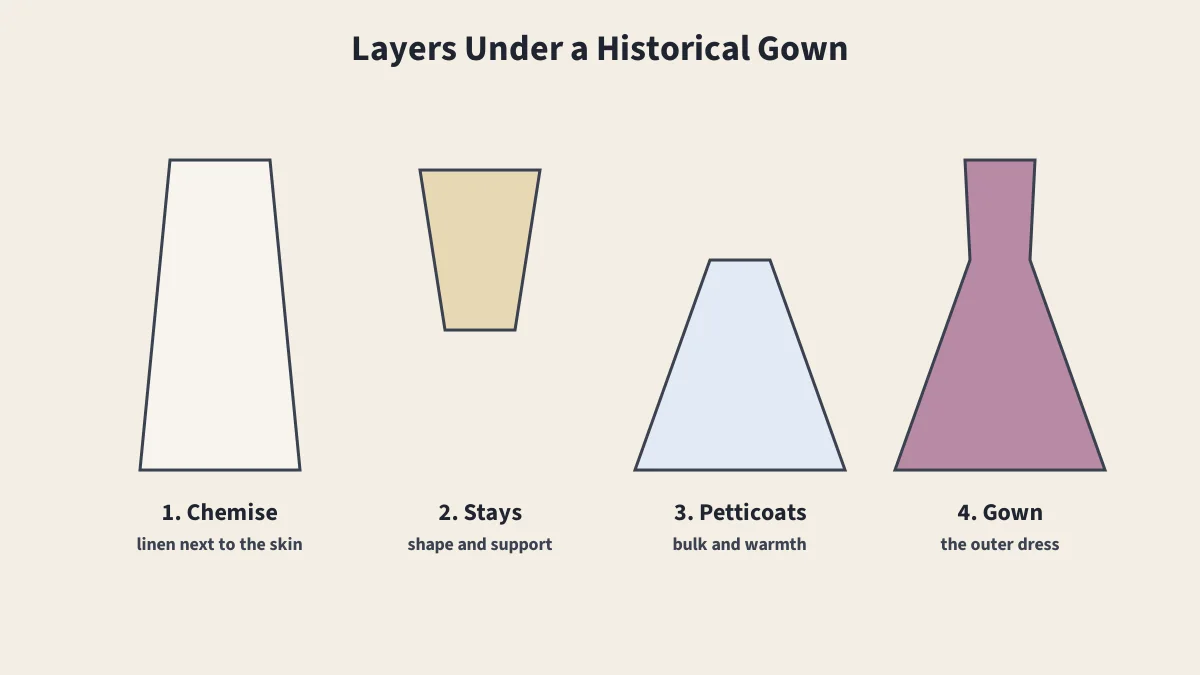
"Crinoline" originally meant a stiff fabric of horsehair (French crin) with cotton or linen, used for underskirts and dress linings. Horsehair petticoats, from about 1839, were so successful that the word came to mean any supportive petticoat, and then the steel cage that replaced them.
From Petticoats to Cages
| Date | Development |
|---|---|
| 1829 | Crinoline fabric first noted as a "fine clear stuff" |
| c. 1839 | Horsehair petticoats become popular |
| 1840s | Crinoline fabric stiffens skirt linings; stiffened cotton substitutes appear |
| April 1856 | The steel-hooped cage crinoline is patented in Paris by R. C. Milliet |
| July 1856 | A British patent follows |
| Late 1860s | Crinolines shrink; out of fashion from about 1866 |
| c. 1867–mid-1870s | The crinolette bridges the gap to the bustle |
Historian Alison Gernsheim suggested the inventor may have been Angélique Caroline Milliet.
Construction and Mass Production
A cage crinoline was a series of graduated hoops suspended from a waistband on tapes. Steel was the favorite material; whalebone, cane, gutta-percha and rubber were tried but each had drawbacks. The cage replaced many heavy layers of petticoats with a light frame. Production was huge: Thomson & Co.'s London factory made up to 4,000 crinolines a day, its Saxony plant 9.5 million over twelve years, and a New York factory 3,000 to 4,000 a day in 1859.
Dangers
Wide skirts over light frames caught fire easily. Florence Nightingale estimated that at least 630 women died from clothing catching fire in 1863–1864, and the 1863 church fire in Santiago, Chile, which killed two to three thousand people, was partly blamed on flammable crinoline dresses.
After the Crinoline
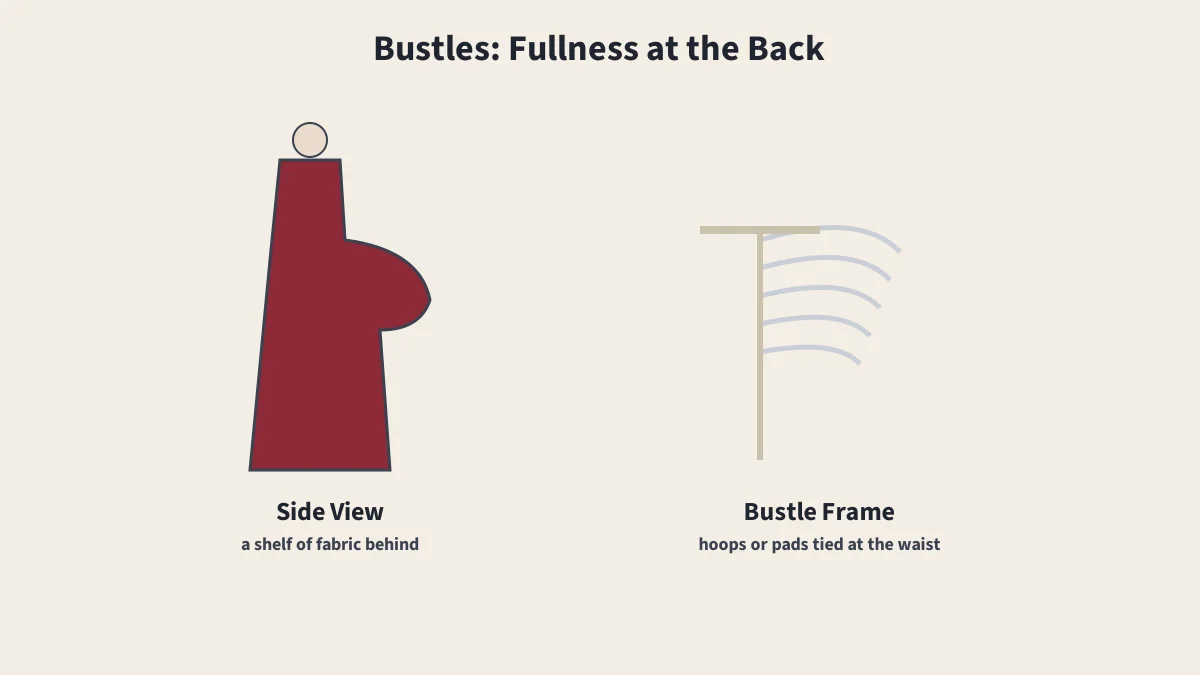
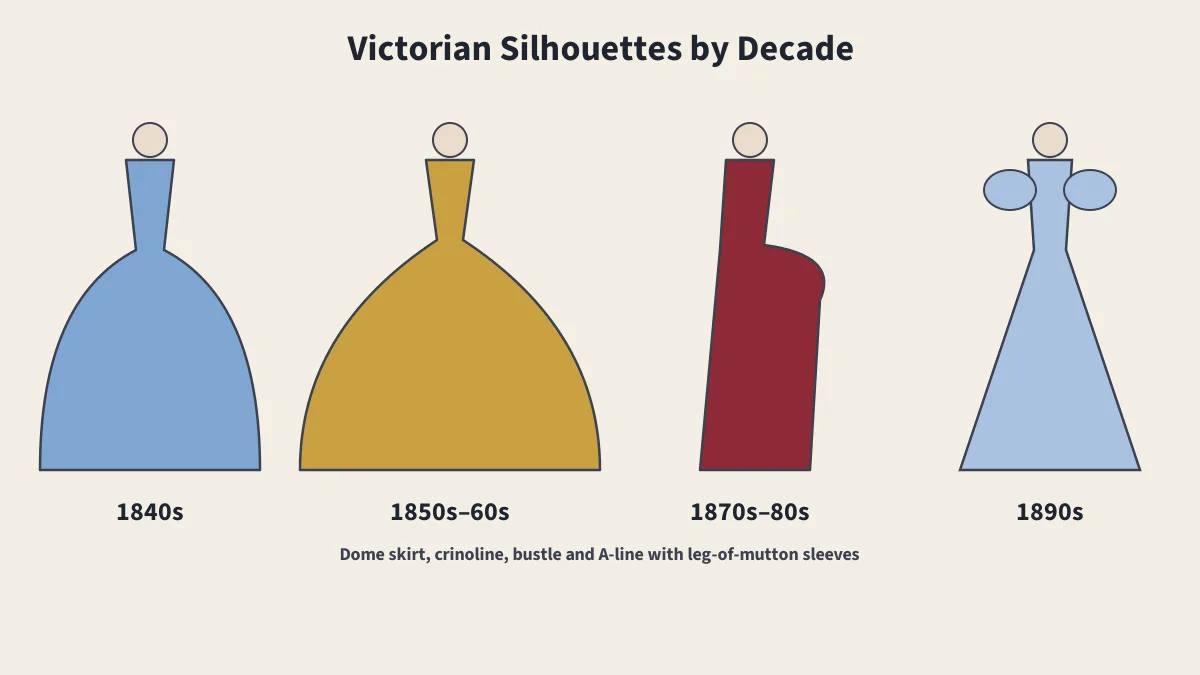
As fullness moved to the back in the late 1860s, the crinolette and then the bustle replaced the crinoline. Stiffened petticoats returned in the 1950s under New Look skirts; see historical undergarments.
Sources
- Crinoline, Wikipedia
Frequently Asked Questions
What is a crinoline?
Originally a stiff fabric of horsehair and cotton or linen used for petticoats; later the steel-hooped cage that held skirts out in the 1850s and 1860s.
When was the cage crinoline invented?
The steel-hooped cage crinoline was first patented in Paris in April 1856, by R. C. Milliet, with a British patent following in July 1856.
How big were crinoline skirts?
Historian Alison Gernsheim concluded that the realistic maximum hem circumference was about 5.5 to 6 yards, dismissing claims of 10 yards.
Were crinolines dangerous?
They could catch fire easily. Florence Nightingale estimated that at least 630 women died from clothing catching fire in 1863–1864.
Keep Reading
Bustles
Bum rolls, crinolettes and Victorian bustles.
Historical Undergarments
Chemises, shifts, stays and petticoats.
Victorian Dress
Silhouettes, technology and mourning dress.
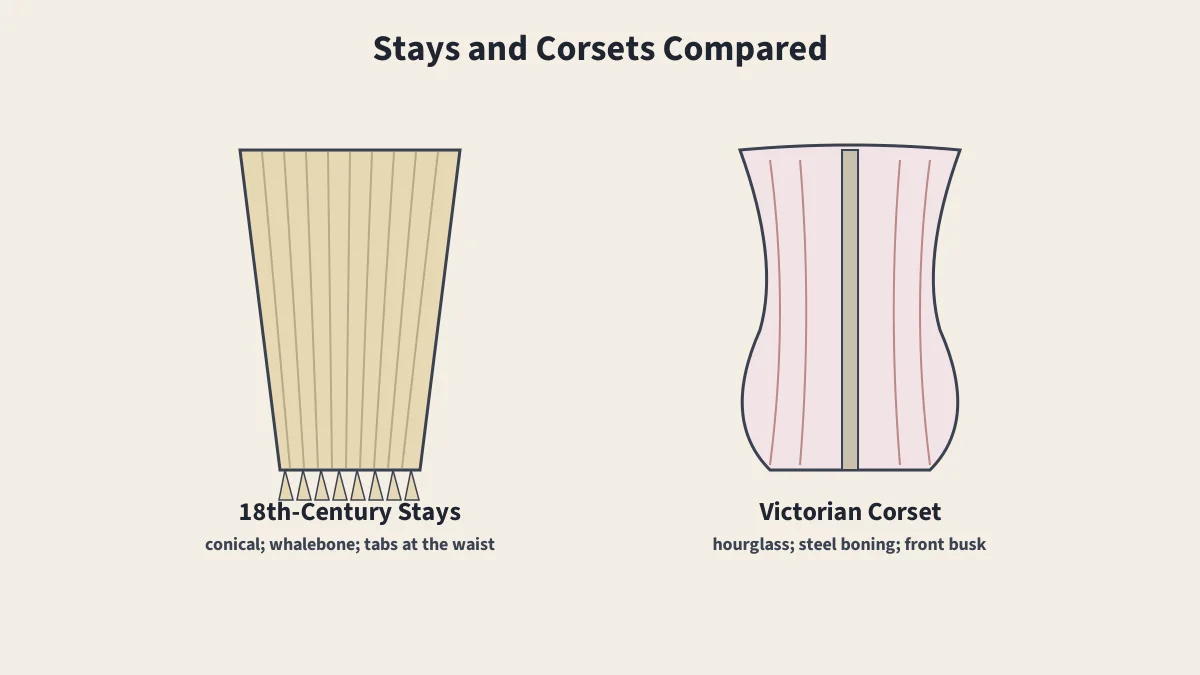
Corsets and Stays
Bodies, stays and corsets through the centuries.