1920s Dress Construction: How Flapper Fashion Was Made (2026)
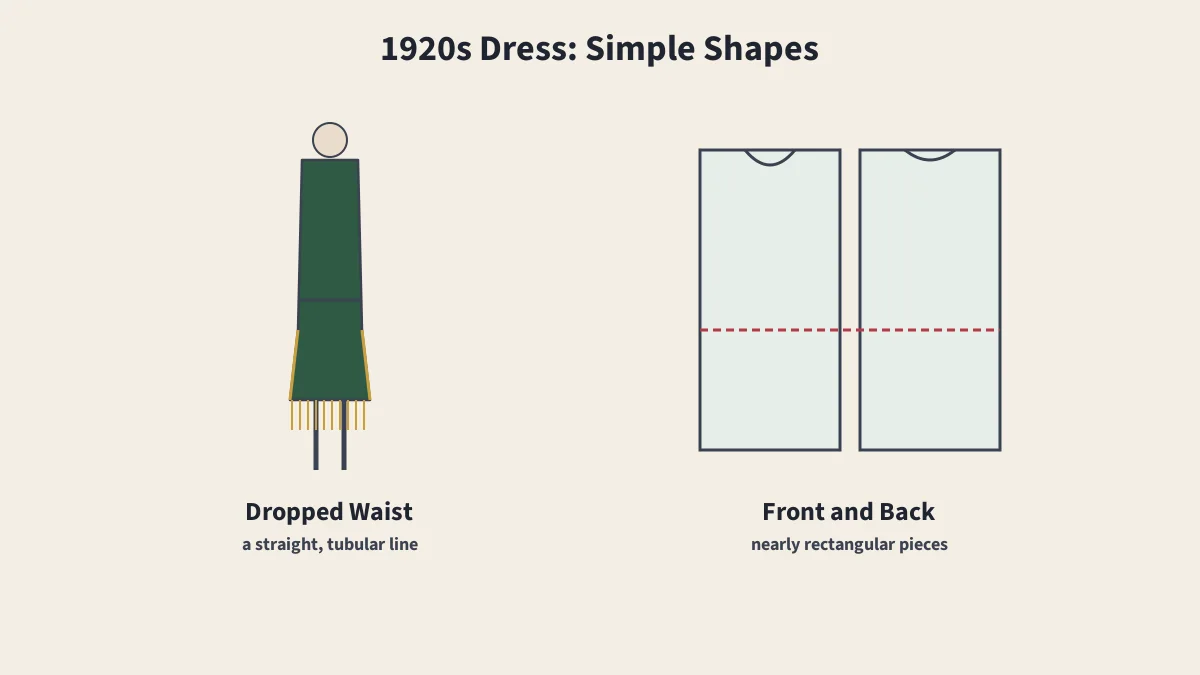
The 1920s swept away the corset and the complex construction of earlier dress. Its straight, dropped-waist chemise was so simple in shape that it could be made from little more than two rectangles.
In This Article
1920s Dress in Brief
- Shape: straight, tubular chemise
- Waist: dropped to the hip
- Hemline: just below the knee by 1925
- Underwear: corselets and bust flatteners
- Fabrics: rayon, jersey, satin, velvet
The tubular dresses of the 1910s evolved into the straight-line chemise that was the uniform of the 1920s. Day dresses had a dropped waist, marked by a belt or seam at the low waist or hip, and the bust line was flattened rather than emphasized. For the corset's decline that made it possible, see Edwardian dress.
Hemlines
| Year | Hemline |
|---|---|
| 1922 | From the ankle up to mid-shin |
| 1925 | Just below the knee |
| 1927 | Designers use multiple hemlines, such as tiers of ruffles, to accustom the eye to longer skirts |
| 1929 | Knee-length still common for day; Paris shows longer skirts |
See hem lengths.
Construction
- Simple pieces: the straight chemise needed little shaping, with front and back pieces close to rectangles.
- Dropped waist: a low seam or belt at the hip.
- Fastenings: metal hooks and eyes, buttons, zippers and snaps were all used; see garment closures.
- Decoration: beading, rhinestones and fringe on evening dresses; see bead embroidery.
- Separates: designers favored mix-and-match jersey pieces; Jean Patou made wool-jersey sweater and skirt outfits.
Underwear and Fabrics
Corsets declined in popularity, and lightly boned or unboned corselets suited working women's mobility. Girdles and bust bodices created the flatter, boyish figure. Rayon, an artificial silk made from cellulose, was used for stockings, some underwear and inexpensive clothing; see rayon. Evening dresses, slightly longer than tea gowns, were made in satin or velvet.
Accessories
The close-fitting cloche hat, often worn with bobbed hair, completed the look.
Sources
- 1920s in Western fashion, Wikipedia
Frequently Asked Questions
What did 1920s dresses look like?
Straight and tubular, with a dropped waist marked by a belt or seam at the low waist or hip, and a flattened bust line. Day hemlines rose to just below the knee by 1925.
How were 1920s dresses constructed?
Many were very simple: straight front and back pieces with little shaping, a low waist seam or belt, and decoration such as beading, embroidery or fringe.
What did women wear under 1920s dresses?
Corsets declined; women wore lightly boned or unboned corselets, girdles and bust bodices designed to give a flatter, boyish figure.
What fabrics were popular in the 1920s?
Rayon, an artificial silk made from cellulose, for stockings, underwear and inexpensive clothing; wool jersey for sporty separates; and satin and velvet for evening.
Keep Reading
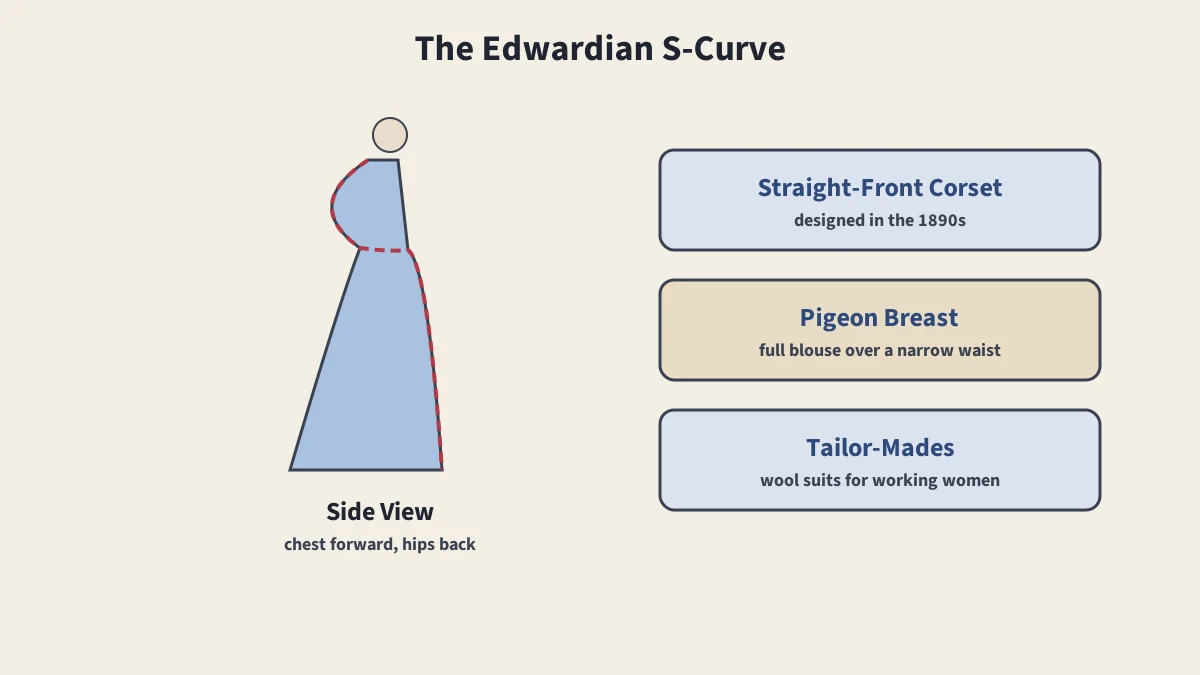
Edwardian Dress
S-curve silhouettes, shirtwaists and tailored suits.
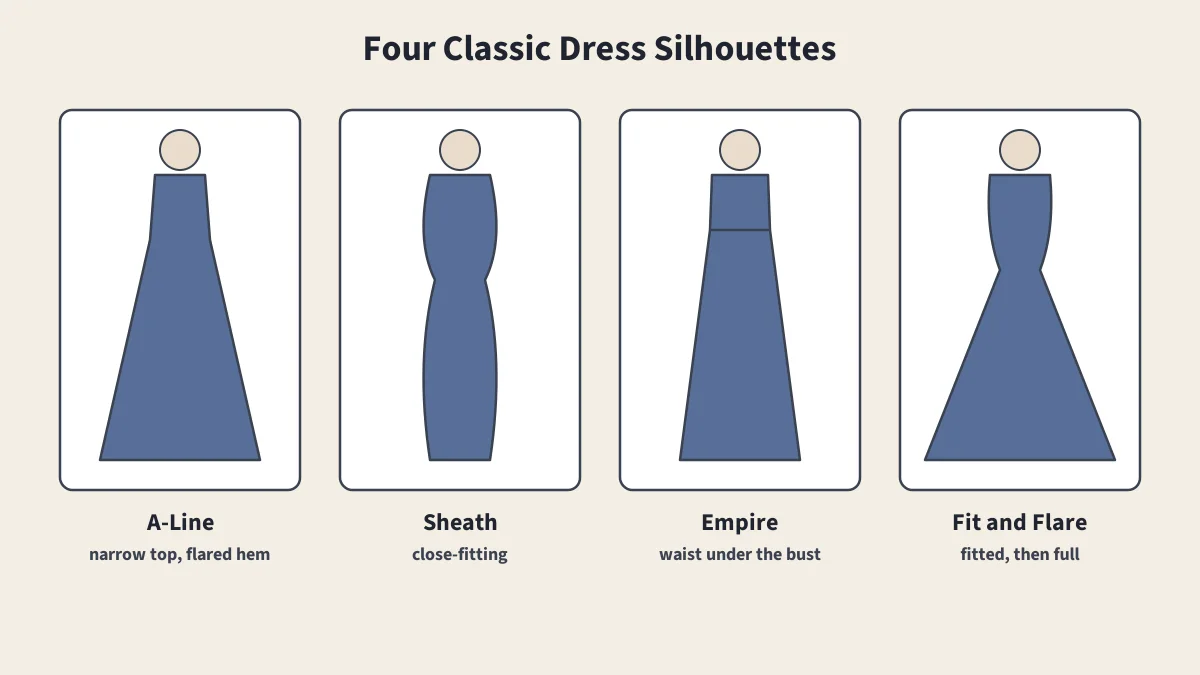
Dress Silhouettes
A-line, sheath, shift, empire and New Look shapes.
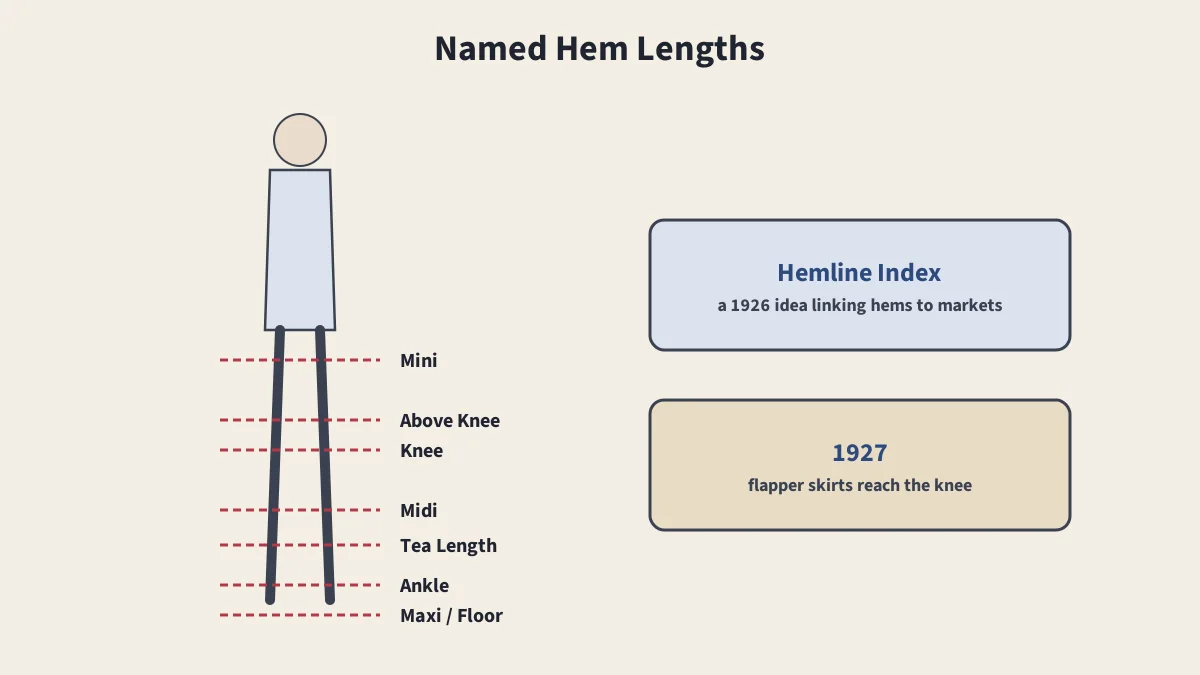
Hem Lengths
Mini, midi, maxi and every length in between.
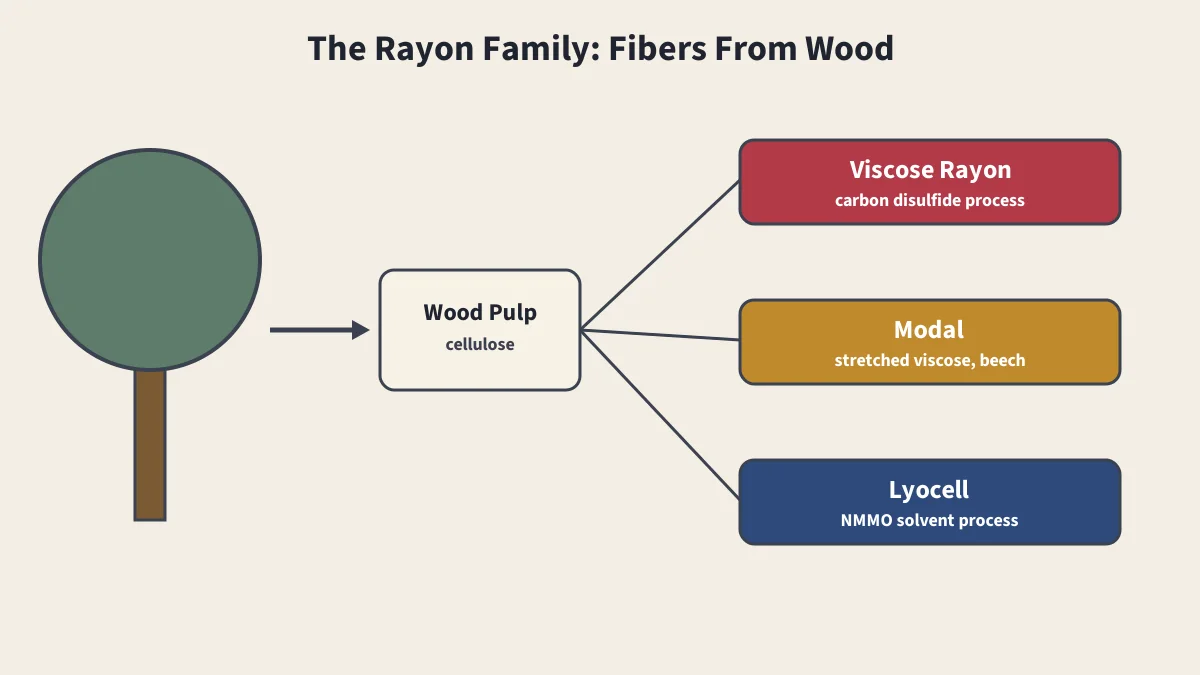
Rayon, Viscose, Modal and Lyocell
How the wood-based fibers are made, and how they differ.