Victorian Dress: How Fashion Changed From 1837 to 1901 (2026)
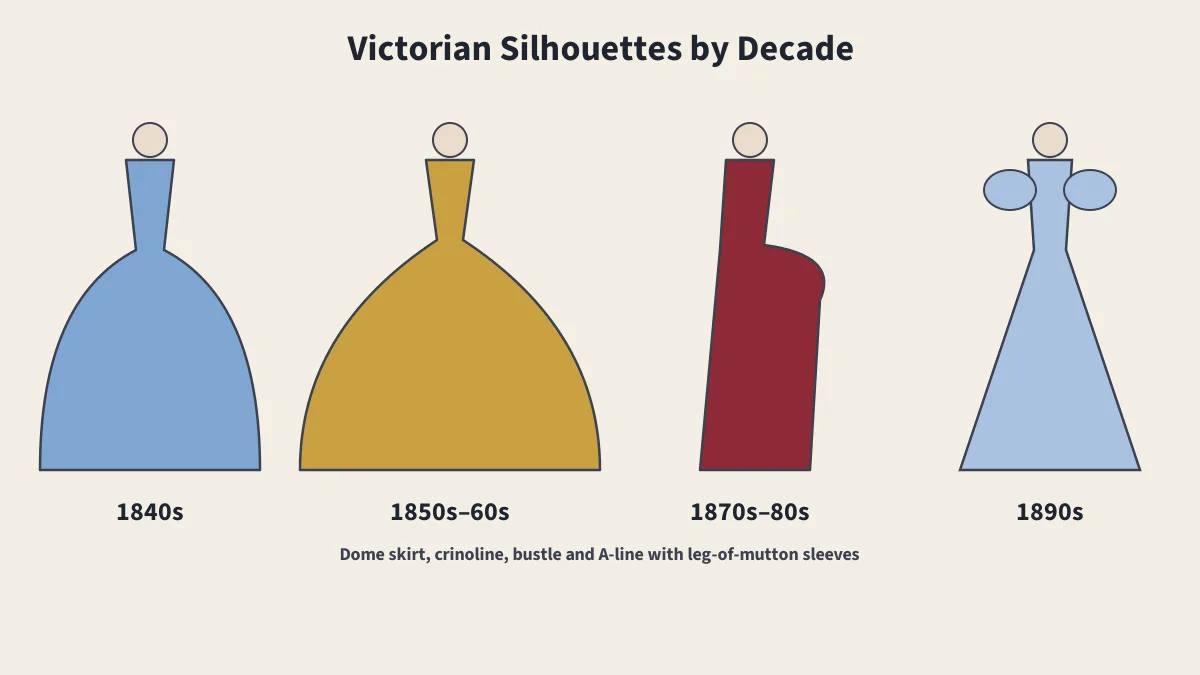
Victorian women's dress changed shape almost every decade, from the full skirts of the 1840s to the cage crinoline, the bustle and the flared skirts of the 1890s. New machines and dyes transformed how clothes were made.
In This Article
Victorian Dress in Brief
- 1830s–40s: gigot sleeves, then dome skirts
- 1856: cage crinoline; mauveine dye
- 1870s–80s: bustles and overskirts
- 1890s: A-line skirts, leg-of-mutton sleeves
- Couture: Charles Frederick Worth
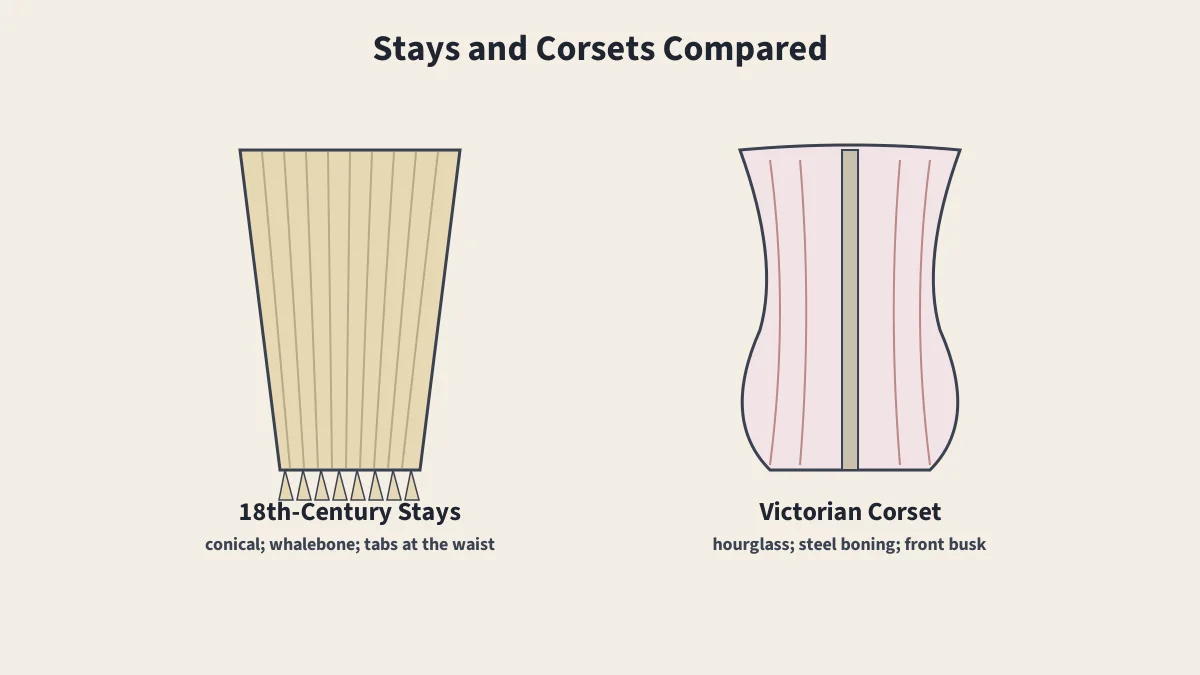
The Victorian era, 1837 to 1901, saw women's silhouettes change dramatically, driven by changing supports underneath and by new technology. See crinolines, bustles and corsets.
Silhouettes by Decade
| Decade | Women's Silhouette |
|---|---|
| 1830s | Wide shoulders, puffed gigot sleeves, slim waist, full skirt over horsehair petticoats |
| 1840s | Dome-shaped skirts; the waistline dipped to a point before returning to the natural waist |
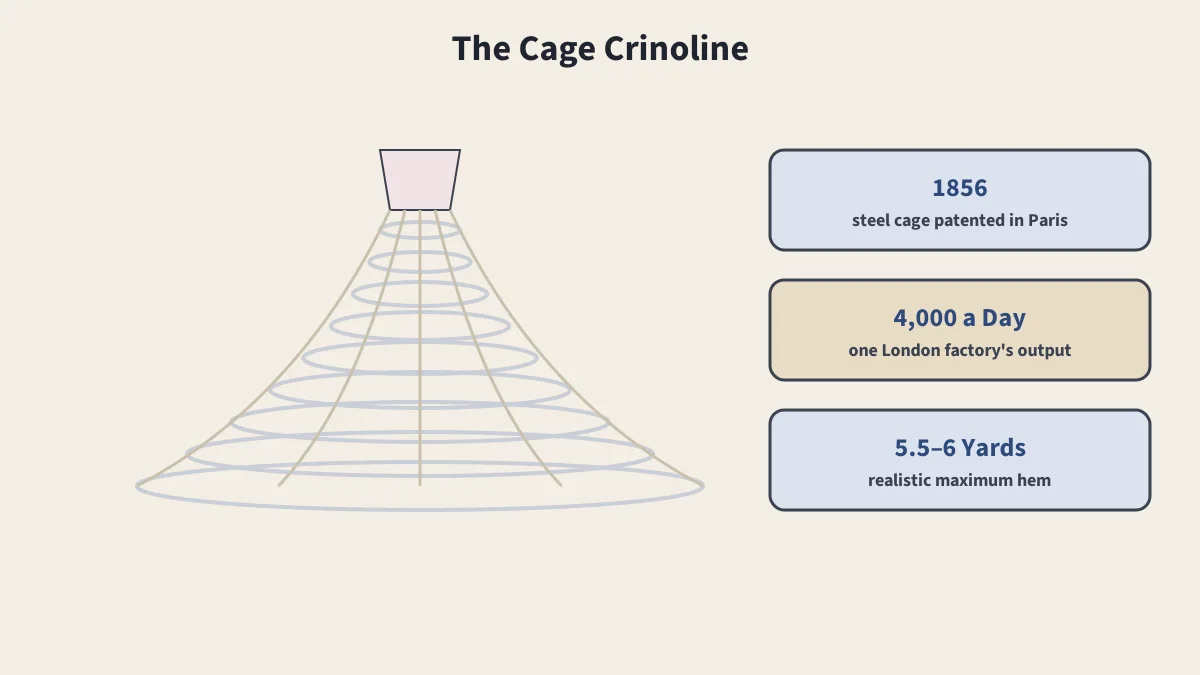
| 1850s | The cage crinoline (1856) replaces layered petticoats; pagoda sleeves |
| 1860s | Fullness shifts from front to back; trains develop |
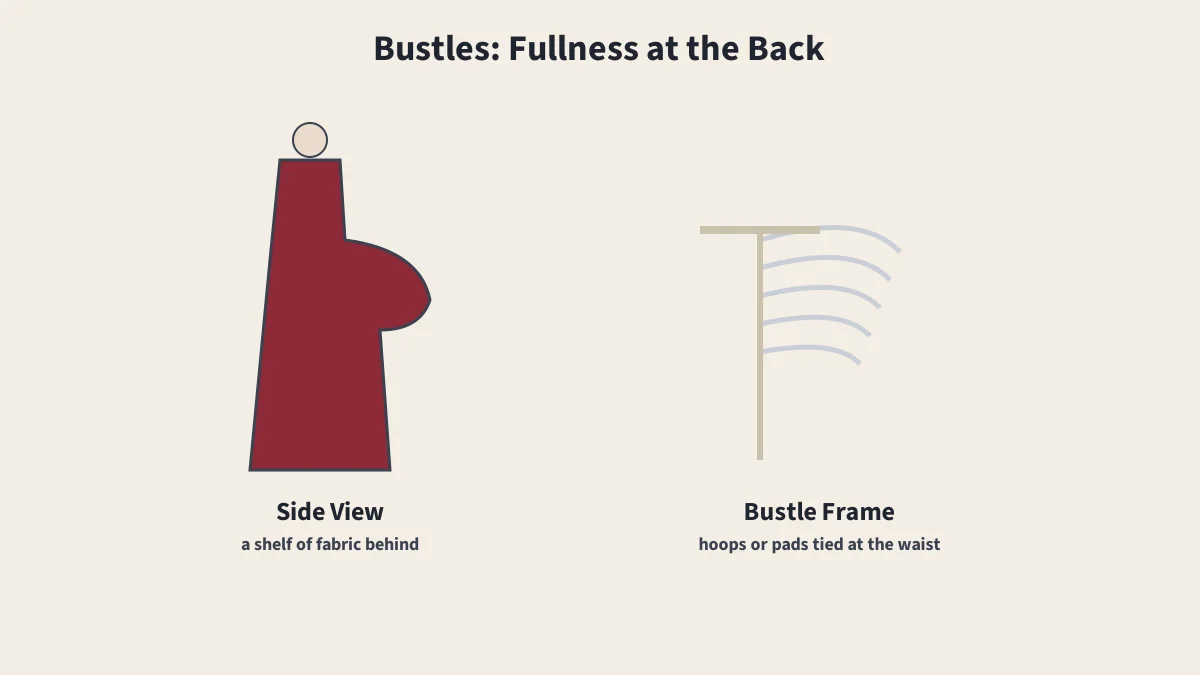
| 1870s | Slimmer, fitted dresses with bustles, overskirts and polonaises |
| 1880s | A tailored, menswear-inspired look alongside heavily decorated dresses; a horizontal bustle returns in 1883 |
| 1890s | A-line skirts; leg-of-mutton sleeves peak around 1896 |
Technology and Dress
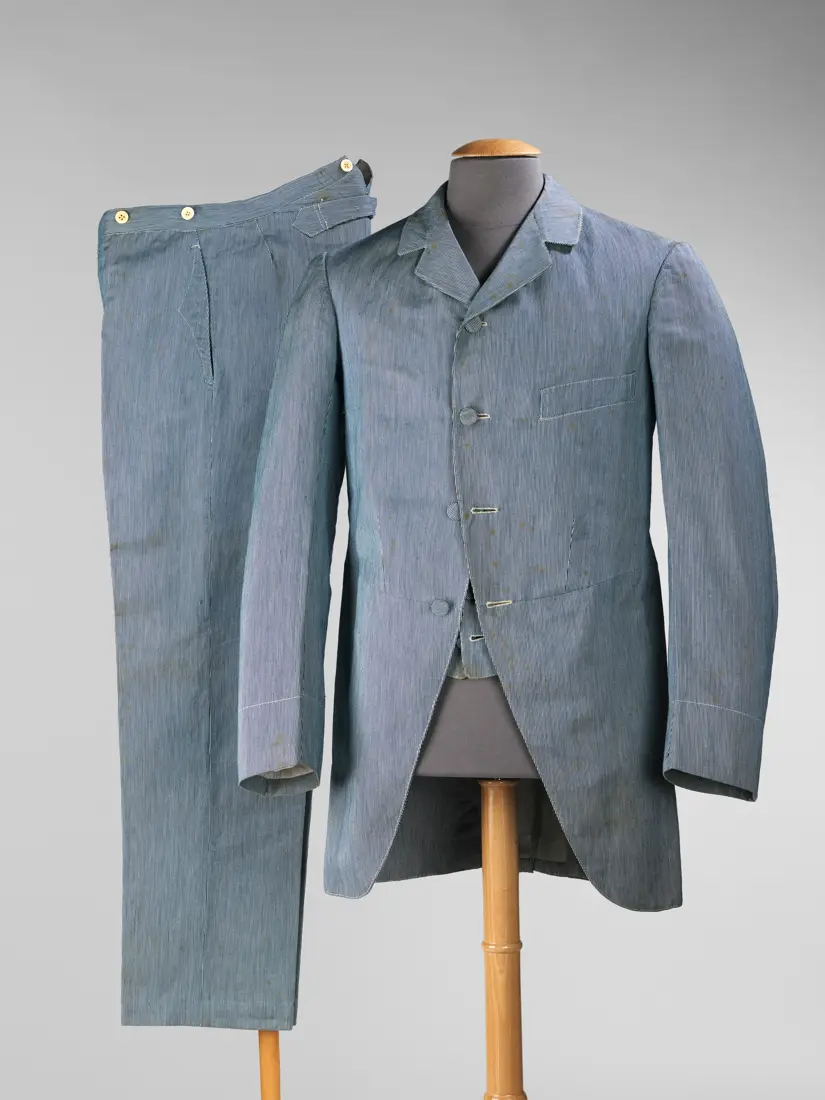
- Sewing machines: lightweight domestic machines went on sale in the 1850s, making clothing cheaper and more plentiful, with the greatest effect on men's clothing. See the sewing history section.
- Aniline dyes: synthetic dyes such as mauveine (aniline purple), from 1856, gave brighter, longer-lasting colors.
- Ready-to-wear: see the history of ready-to-wear clothing.
Charles Frederick Worth
Worth, a British-born designer based in Paris, is often called the father of haute couture. Queen Victoria appointed him her dressmaker. He popularized princess-seam construction and helped end the dominance of the crinoline cage; see darts and princess seams.
Mourning Dress
Black was the traditional color of mourning, and the required dress and its duration depended on the mourner's relationship to the dead. Widows wore full black for about a year and a month in "first mourning," then moved through stages with less black; half-mourning allowed colors such as lavender and mauve. Widows could be expected to mourn for up to four years, widowers for about three months.
For Charles Frederick Worth and the birth of Paris couture, see the history of haute couture.
Sources
- Victorian fashion, Wikipedia
Frequently Asked Questions
How did Victorian dress change over time?
Skirts were dome-shaped in the 1840s, held out by the cage crinoline from 1856, shifted fullness to the back in the 1860s, took on bustles in the 1870s and 1880s, and flared into an A-line in the 1890s.
What were Victorian dresses made of?
Silks, wools and cottons, increasingly in the bright colors made possible by synthetic aniline dyes, the first of which, mauveine, appeared in 1856.
Who was Charles Frederick Worth?
A British-born designer working in Paris, often called the father of haute couture. He dressed Queen Victoria, popularized princess-seam construction and helped end the crinoline's dominance.
What was Victorian mourning dress?
Black clothing worn after a death, with rules depending on the relationship. Widows could be expected to mourn for up to four years, moving through stages from full black to half-mourning colors such as lavender and mauve.
Keep Reading
Crinolines and Hoop Skirts
Horsehair petticoats and steel cage crinolines.
Bustles
Bum rolls, crinolettes and Victorian bustles.
Corsets and Stays
Bodies, stays and corsets through the centuries.
History of Ready-to-Wear Clothing
How slop shops, war uniforms and sewing machines created off-the-rack clothes.