Historical Undergarments: Chemises, Shifts, Stays and Petticoats (2026)
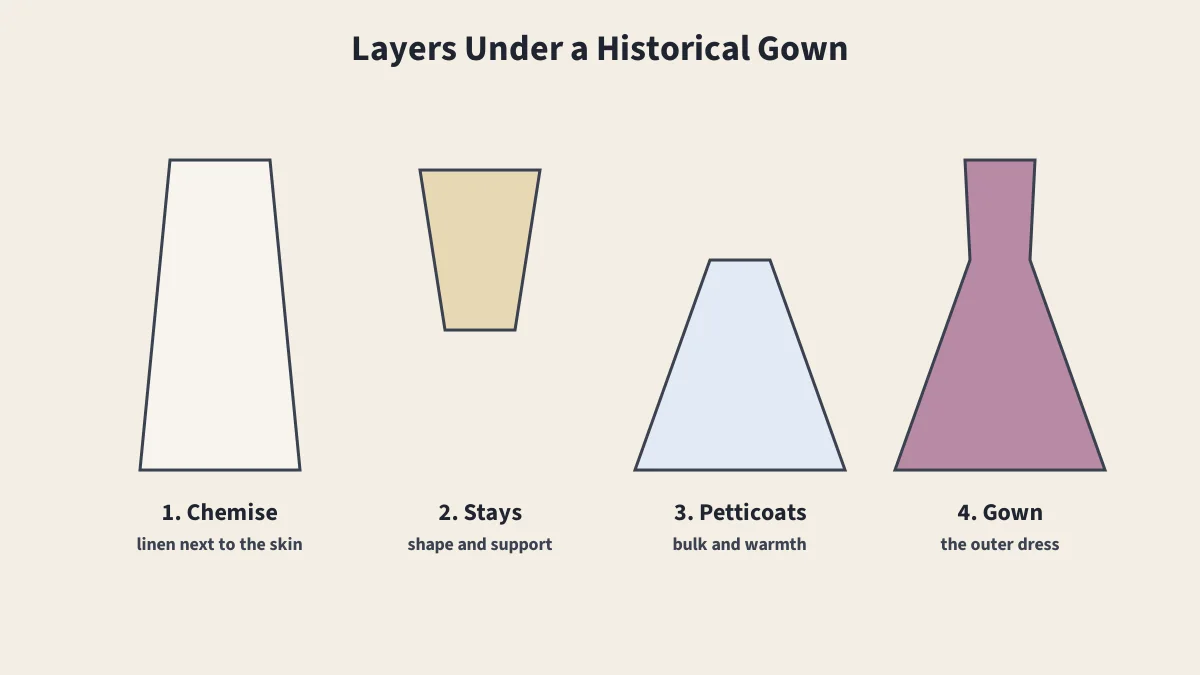
Historical clothes depended on the layers beneath them. A washable linen chemise protected costly gowns from the body, stays shaped the torso, and petticoats and hoops shaped the skirt.
In This Article
Undergarments in Brief
- Chemise / shift / smock: washable linen layer
- Stays / corset: torso shape and support
- Petticoats: bulk, warmth and display
- Panniers, hoops, bustles: skirt shape
- Replaced: by bras, slips and panties in the 20th century
Historical underwear did different jobs from today's. The layer next to the skin was a washable barrier; the next shaped the body; and further layers supported the skirt. Because outer gowns of silk or wool were hard to clean, the washable layers underneath did most of the work of keeping clothes fresh.
The Chemise, Shift or Smock
- A chemise, French for "shirt," was a simple garment worn next to the skin to protect clothing from sweat and body oils.
- It probably developed from the Roman tunica and was common in medieval Europe, where it was called a kemse or kemes; men wore chemises too.
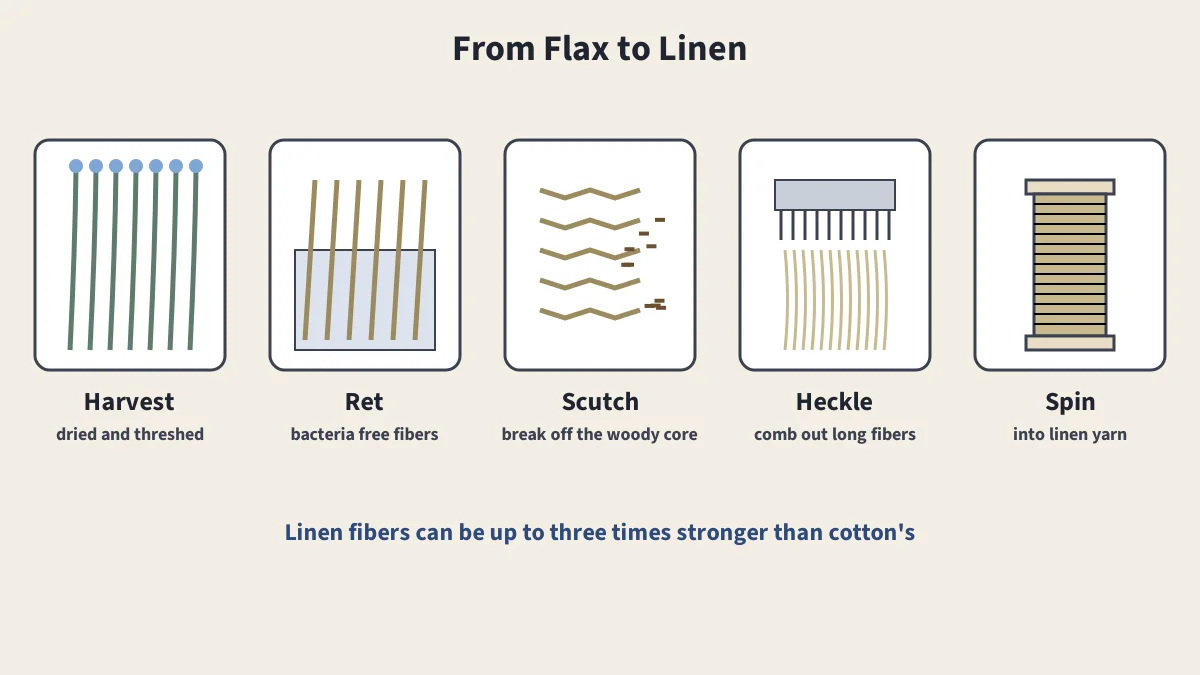
- Chemises were mostly linen until the 15th century, later also cotton, because both washed easily. See linen.
- They were usually sewn at home from rectangles and triangles cut from one piece of cloth, wasting nothing.
- In the 17th and 18th centuries, a starched white chemise was a sign of cleanliness.
- In the 18th century, "shift" slowly replaced "smock"; in the 19th, "chemise" replaced "shift" as the more refined word.
Stays and Corsets
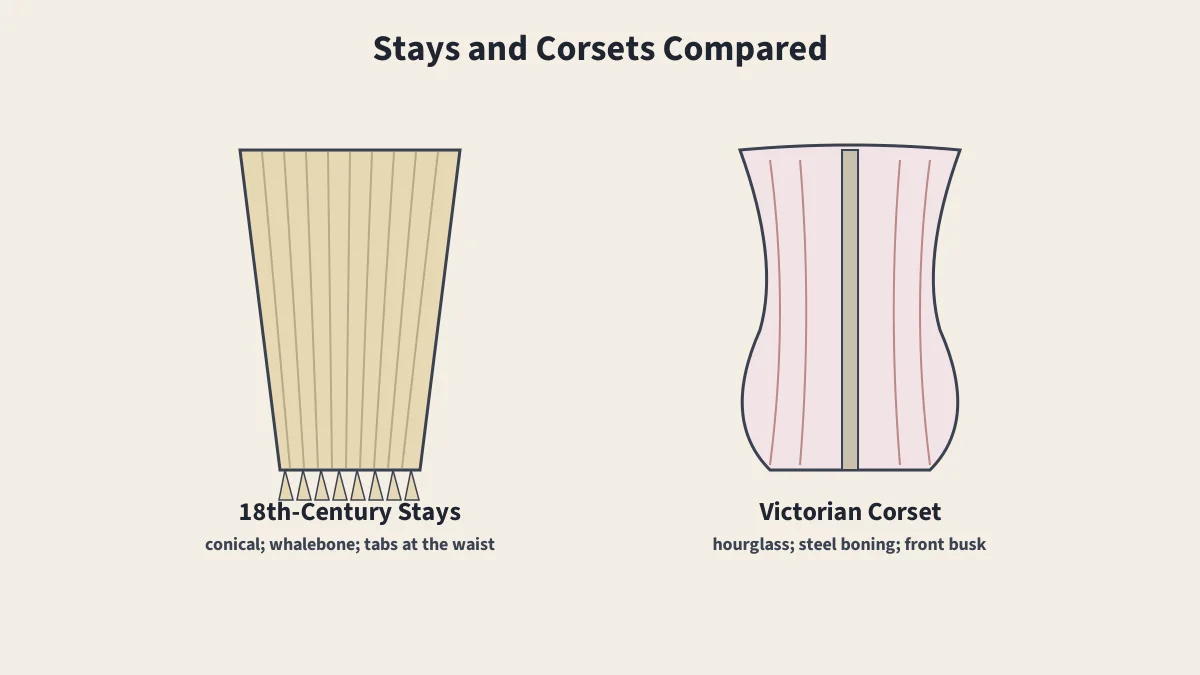
Worn over the chemise, stays and later corsets shaped and supported the torso. See corsets and stays.
Petticoats
| Period | Petticoats |
|---|---|
| 14th century | "Pety cotes," small undercoats, worn by men and women |
| 15th century | Men's padded or quilted under-doublets, later the waistcoat |
| 18th century | Visible as part of the outfit, often matching, contrasting or embroidered; quilted with wool in cold climates |
| Early 19th century | Narrow "invisible" petticoats under slim Regency gowns |
| Mid-19th century | Many layers for bulk, then worn over crinolines |
| 1950s–60s | Stiffened, tiered petticoats under New Look skirts |
Hoops, Panniers and Bustles
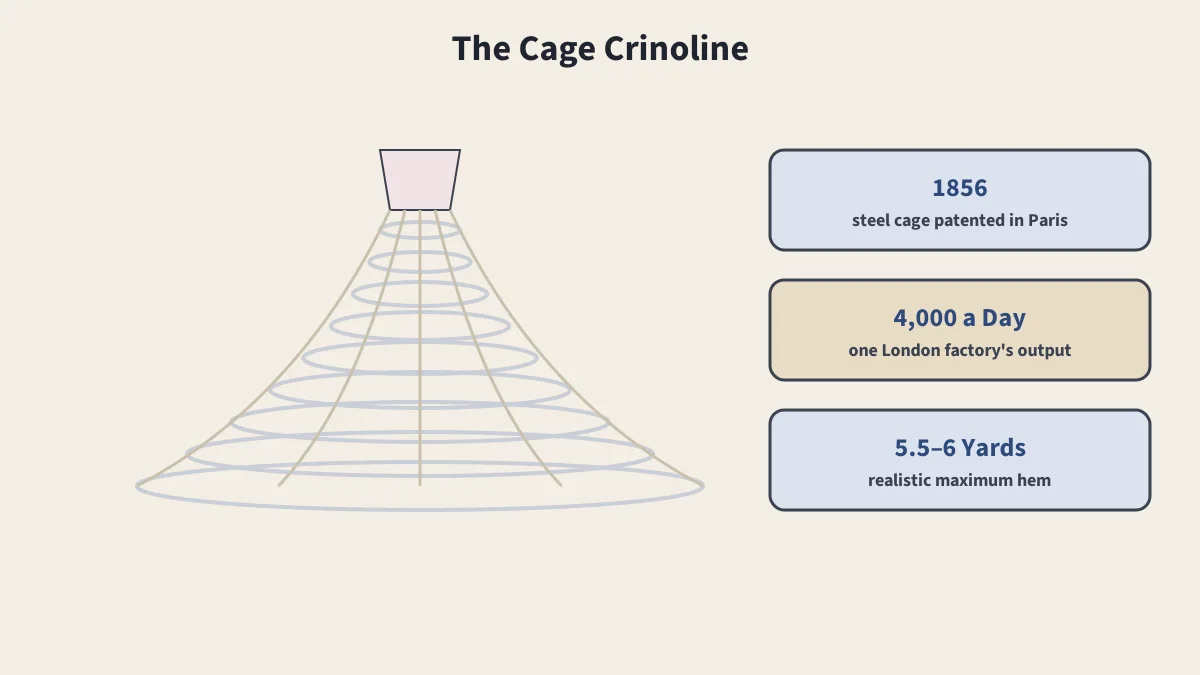
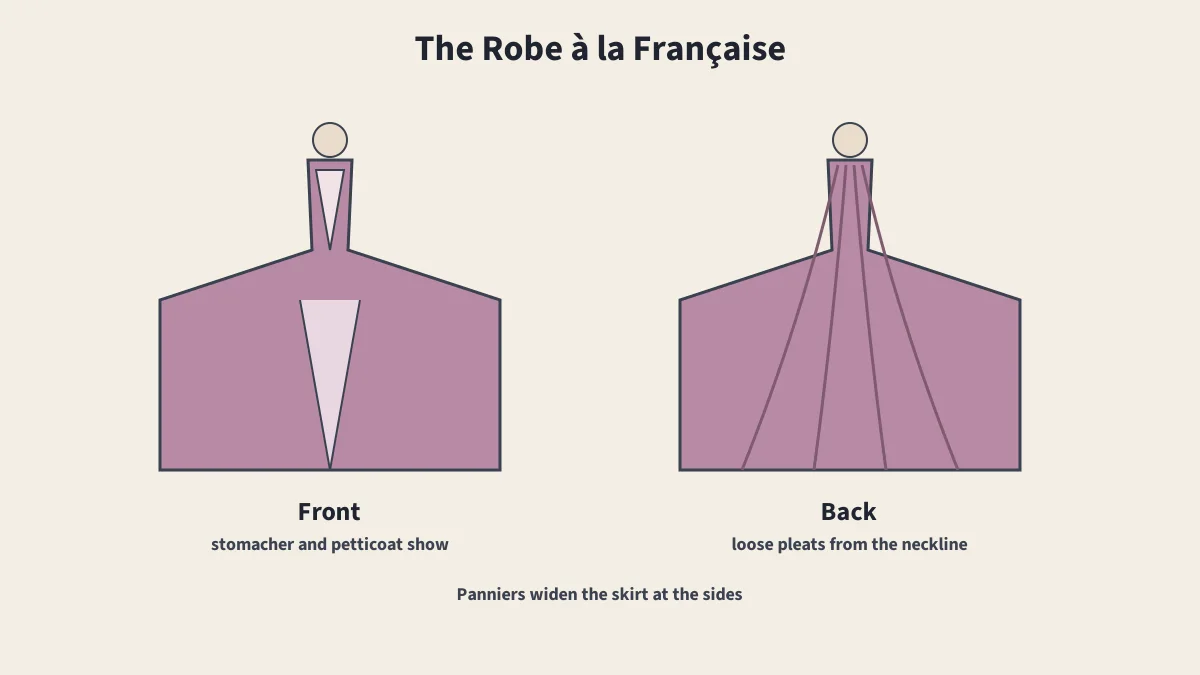
Supports under the skirt created each era's shape: panniers widened 18th-century skirts at the sides, the cage crinoline made the dome of the 1850s and 60s, and bustles pushed fullness to the back. See crinolines and bustles.
Sources
Frequently Asked Questions
What is the difference between a chemise, shift and smock?
They are names for the same basic linen undergarment at different times. In the 18th century, 'shift' slowly replaced 'smock', and in the 19th century 'chemise' replaced 'shift' because it sounded more refined.
Why did people wear a chemise?
It was worn next to the skin to protect outer clothing from sweat and body oils. Linen and cotton could be washed easily, while many outer garments could not.
What is a petticoat?
An undergarment worn under a skirt or dress. In the 18th century, petticoats were often visible, made of fine or quilted fabric as part of the outfit.
What replaced the chemise?
In the early 20th century, the brassiere, girdle, full slip and panties replaced it. The men's version survives as the T-shirt.
Keep Reading
Corsets and Stays
Bodies, stays and corsets through the centuries.
Crinolines and Hoop Skirts
Horsehair petticoats and steel cage crinolines.
Linen
How flax becomes linen, its long history and how it behaves.
17th and 18th-Century Dress
Mantuas, sack-back gowns, stomachers and panniers.