Presser Feet Explained: Which Sewing Machine Foot Does What (2026)
Most machines come with a bag of mysterious plastic and metal feet. Each one solves a specific problem, from sewing close to a zipper to feeding thick quilt layers evenly. Here is what they do and how to tell if a foot fits your machine.
In This Article
Presser Feet in Brief
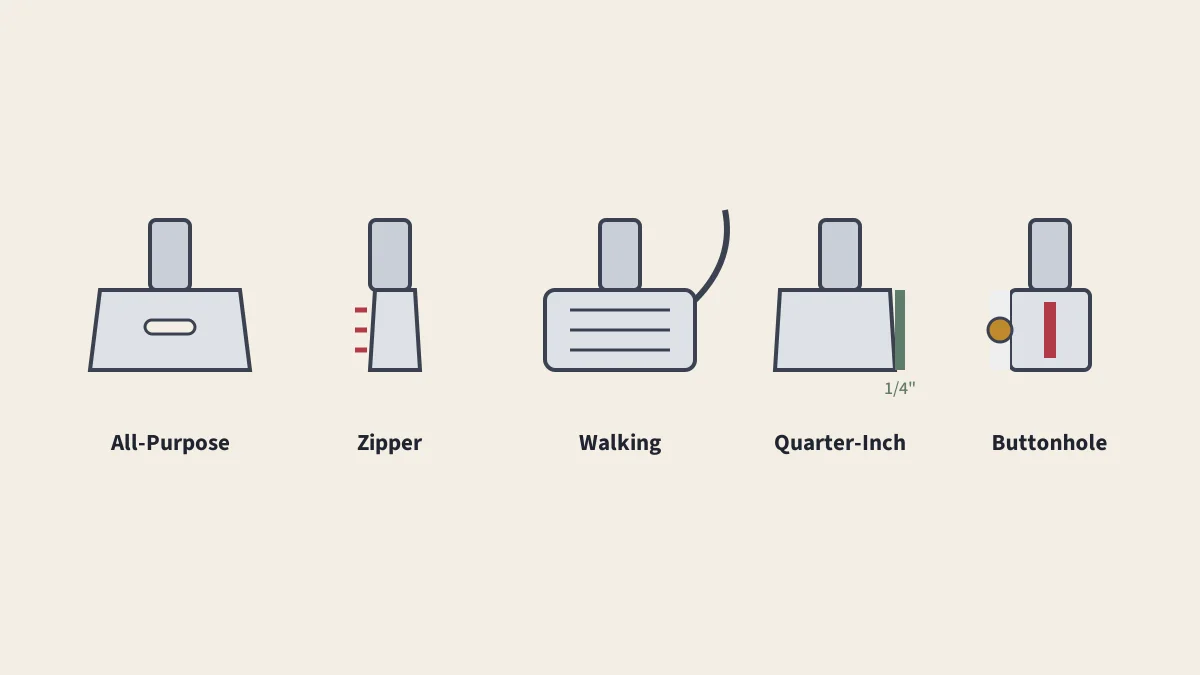
- Everyday: all-purpose (zigzag) foot
- Closures: zipper, invisible zipper, buttonhole and button-sewing feet
- Hems and edges: blind hem, rolled hem and overcast feet
- Quilting: quarter-inch, walking and free-motion feet
- Before buying: check the shank type and attachment system
The presser foot holds the fabric flat against the feed dogs while the needle stitches. Swap the foot and you change what the machine can do: sew right beside zipper teeth, roll a tiny hem, glide over leather, or feed a thick quilt sandwich evenly. Most feet are made of clear plastic or metal, with non-stick versions for vinyl and leather.
Will a Foot Fit Your Machine?
Before buying any foot, check two things.
Shank Type
The shank is the part of the machine the foot attaches to. On a high-shank machine, the distance from the bottom of the foot to the center of the attaching thumbscrew is about 1 inch (25 mm); on a low-shank machine it is about 1/2 inch (13 mm). A slant shank, found on many vintage Singer machines, is angled backward. Feet for one shank type do not fit the others.
Attachment System
Many modern machines use snap-on feet that clip to an adapter on the presser bar, while walking feet, darning feet and some others screw on directly. Some brands use their own systems: Bernina, for example, uses a proprietary attachment that differs from generic snap-on feet. Generic feet are sold for common shank types, but brand feet often fit more precisely.
Everyday Feet
| Foot | What It Does | Use It For |
|---|---|---|
| All-purpose (zigzag) foot | Wide needle opening for straight and zigzag stitches | Most general sewing |
| Straight stitch foot | A small round hole for the needle, which supports fine fabric | Precise straight seams and lightweight fabrics |
| Open-toe (satin stitch) foot | Open front and a groove underneath that rides over dense stitching | Appliqué, satin stitches, decorative stitching where you need to see |
| Edge-stitch foot | A center guide blade that runs along an edge or seam | Edgestitching, topstitching and stitching in the ditch |
Feet for Zippers, Buttons and Buttonholes
| Foot | What It Does | Use It For |
|---|---|---|
| Zipper foot | A narrow foot that lets the needle sew right beside the zipper teeth on either side | Standard zippers, piping and cording |
| Invisible (concealed) zipper foot | Grooves underneath that uncurl the zipper coil so the needle can stitch close to it | Invisible zippers in dresses and skirts |
| Buttonhole foot | Guides the dense satin stitches of a buttonhole. Manual, sliding and one-step versions exist; on a one-step foot, you put the button in a holder and the machine sizes the buttonhole automatically. | Buttonholes |
| Button sewing foot | Holds a flat button still while the machine zigzags through its holes | Sewing on buttons by machine |
Feet for Hems and Edges
| Foot | What It Does | Use It For |
|---|---|---|
| Blind hem foot | A guide that positions the fold so the machine's blind hem stitch just catches it | Nearly invisible hems on trousers, skirts and curtains |
| Rolled (narrow) hem foot | A scroll that rolls the raw edge into a tiny double fold as you sew | Narrow hems on scarves, ruffles and fine fabrics |
| Overcast (overedge) foot | Pins or wires that keep the fabric edge flat under an overcast stitch | Finishing raw edges without a serger |
Feet for Quilting and Thick Layers
| Foot | What It Does | Use It For |
|---|---|---|
| Quarter-inch (patchwork) foot | Its edge or guide sits exactly 1/4 inch from the needle | Quilt piecing, narrow seams and topstitching |
| Walking (even feed) foot | Has its own feed teeth that move the top layer in step with the feed dogs | Quilts, thick fabric, plaids and stripes, slippery or stretchy fabrics |
| Free-motion (darning) foot | Hops or floats above the fabric so you can move it in any direction with the feed dogs lowered | Free-motion quilting, thread painting, darning |
Specialty Feet
- Non-stick (Teflon) and roller feet glide over leather, vinyl, laminated cotton and oilcloth, which stick to standard feet.
- Gathering foot and ruffler gather fabric automatically as you sew.
- Piping and cording feet have grooves that guide cord or piping.
- Binding foot folds bias binding around an edge as you stitch.
- Pintuck foot has grooves for sewing evenly spaced tucks with a twin needle.
Tips for Using Presser Feet
- Check the stitch width. Before sewing a zigzag or moving the needle position, make sure the foot has room for the needle, or it can strike the foot and break.
- Turn the handwheel by hand for the first stitch after changing feet.
- Adjust presser foot pressure if your machine allows it: lighter for thick or stretchy fabric, standard for most sewing.
- Keep the manual handy. Most manuals list every included foot with an illustration.
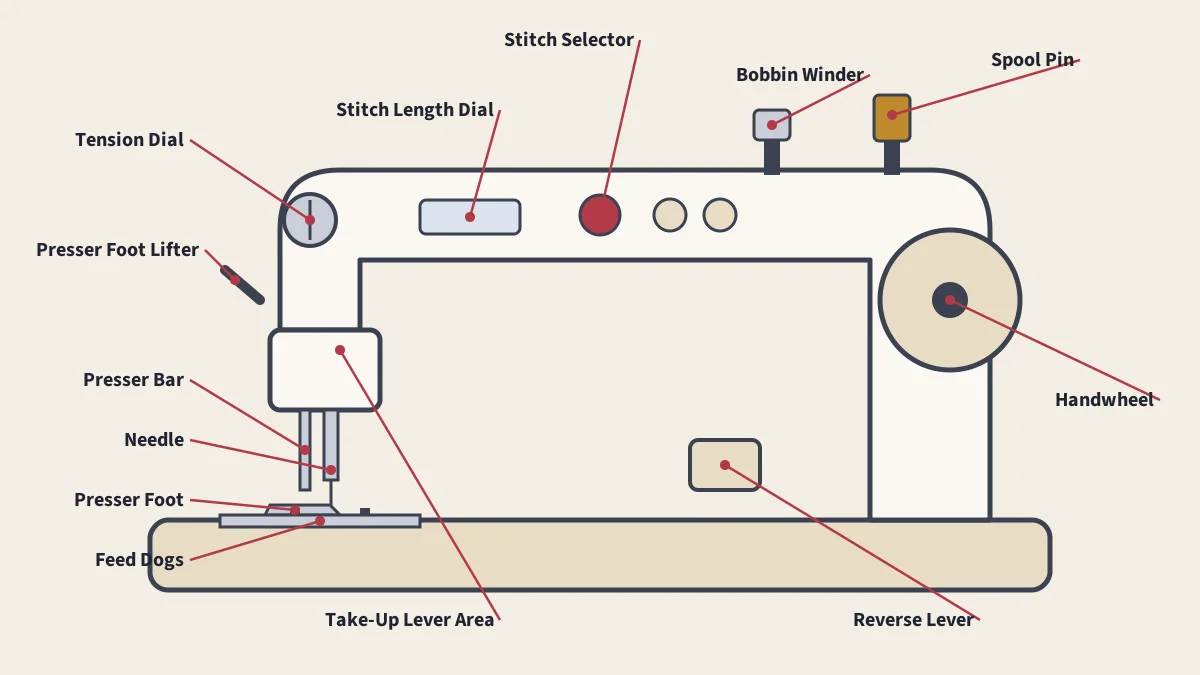
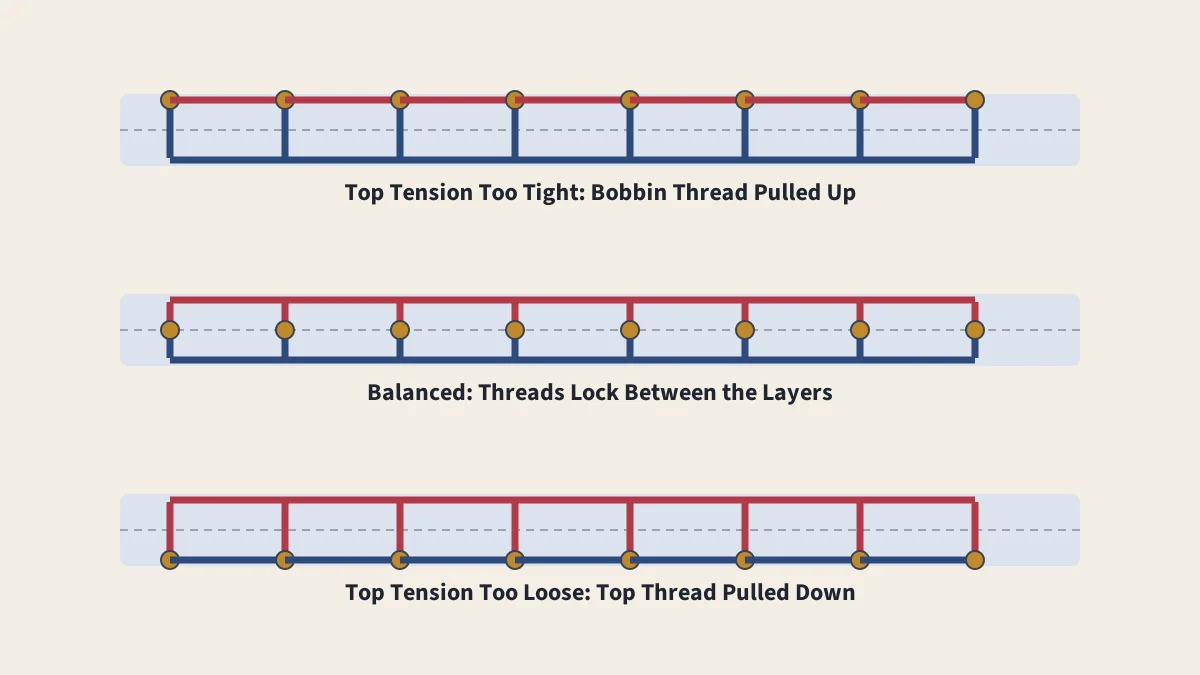
The presser foot works with the feed dogs, needle and tension; see parts of a sewing machine and stitch length and tension for how they fit together.
Sources
- Sewing machine, Wikipedia
Frequently Asked Questions
What presser feet does a beginner need?
An all-purpose (zigzag) foot, a zipper foot and a buttonhole foot cover most beginner projects. A walking foot and a quarter-inch foot are the most useful additions for quilting and thick fabrics.
Do presser feet fit all sewing machines?
No. Feet are made for different shank types: low shank, high shank and slant shank, and some brands use their own attachment systems. Check your machine's shank type and manual before buying.
What is a walking foot used for?
A walking foot has its own feed teeth that move the top layer of fabric in step with the feed dogs underneath. It prevents layers from shifting, which helps with quilts, thick fabrics, matching stripes and plaids, and slippery or stretchy fabrics.
What is the difference between low shank and high shank?
It is the distance from the bottom of the foot to the center of the screw that attaches it: about 1/2 inch (13 mm) for low shank and about 1 inch (25 mm) for high shank. Slant-shank machines have a bar angled backward.
Keep Reading
Parts of a Sewing Machine
A labeled diagram and what every part of the machine does.
Stitch Length and Tension Explained
What the dials mean, common settings, and how to balance tension.
Sewing Machine Needle Sizes and Types
Needle sizes, types, color codes and when to change them.
Types of Sewing Machines
Every type of sewing machine explained, from mechanical to industrial.