Longarm Quilting Machines: How They Work and Who Uses Them (2026)
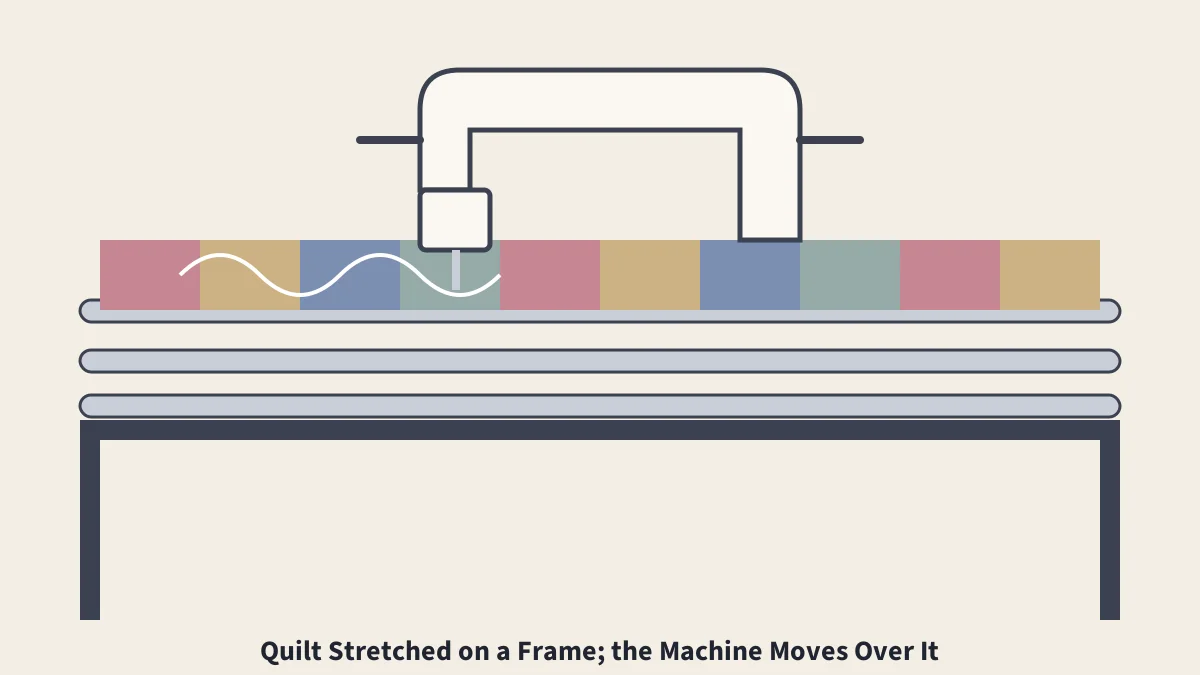
Quilting a bed-size quilt on a home machine means pushing a heavy bundle of fabric through a small space. A longarm reverses the idea: the quilt stays still on a frame, and the machine moves over it.
In This Article
Longarms in Brief
- The quilt stays still on a frame; the machine moves over it
- Long throat: more quilting space between rolls
- Stitch regulation keeps stitches even
- Computerized systems can stitch patterns automatically
- Alternatives: midarms, sit-down machines, rental time or quilting services
Quilting joins three layers, the pieced top, the batting and the backing, with stitching across the whole surface. On a regular sewing machine, the quilter rolls and pushes the whole quilt through the small space beside the needle. A longarm machine turns the job around. The layers are stretched on a frame, and the machine glides across them on wheels, guided by hand or by a computer.
A Short History
Quilting machines are almost as old as the sewing machine itself. The first quilting frames and machines consisted of just two bars that let the user move the quilt and frame beneath the machine to sew straight parallel lines. By about 1877, the design had been modified to look similar to what quilters now know as a longarm machine. Before electricity, the operator used a hand crank to move the machine along the rails. For much of the twentieth century, long quilting machines were mostly industrial tools, used for mattresses and bedding.
Longarms for individual quilters spread from the 1980s. The Missouri manufacturer Gammill began building longarm quilting machines around 1980, and computerized guidance systems followed in the 1990s. Since then the longarm has become a popular and familiar tool for quilters, and many quilters now take finished tops to professional longarm quilters who quilt them for a fee.
How a Longarm Works
- Loading the quilt. The backing, batting and top are pinned or zipped onto separate rollers on the frame, then stretched flat across it. There is no need to baste the layers together first.
- Quilting. The machine sits on a carriage that rolls on tracks, moving freely front to back and side to side. The quilter moves it with handles, following a design freehand or tracing a printed pattern with a laser pointer.
- Advancing. When one section is quilted, the quilter rolls the finished part onto the take-up roller and continues with the next section.
Longarm vs. Midarm vs. Domestic Quilting
| Feature | Domestic Machine | Midarm / Sit-Down | Longarm on a Frame |
|---|---|---|---|
| What moves | The quilt | The quilt (sit-down) or the machine (on a frame) | The machine |
| Throat space | Small | Medium | Large |
| Basting needed | Yes | Yes for sit-down; no on a frame | No |
| Space required | A table | A large table or small frame | A frame often 10 to 14 feet long |
| Best for | Smaller quilts, occasional quilting | Frequent quilting in limited space | Large quilts, frequent quilting, quilting services |
Computerized Longarm Quilting
Many longarms can be fitted with computerized robotics. The quilter chooses a digital pattern, sets its size and position, and the computer drives the carriage across the quilt, stitching edge-to-edge designs or custom motifs block by block. The first computerized systems were developed in the early 1990s. Today, a computerized longarm can stitch a dense all-over design on a king-size quilt while the quilter prepares the next one.
Popular Longarm Quilting Styles
- Edge-to-edge (all-over): one repeating design across the whole quilt, quick and popular for everyday quilts.
- Custom quilting: different designs in different blocks and borders, often for show quilts.
- Pantographs: printed paper patterns the quilter traces with a laser while stitching.
- Freehand: meanders, feathers and other designs stitched without a guide.
Do You Need a Longarm?
For most quilters, no. A domestic machine with a walking foot and a free-motion foot can quilt anything, given patience; see the presser feet guide. A longarm becomes worthwhile when you quilt often, make many bed-size quilts, or want to offer quilting as a service. Many quilt shops rent time on their longarms, which is a good way to try one first.
To compare longarm quilting with hand and home-machine quilting, see hand vs. machine vs. longarm quilting.
Sources
- Longarm quilting, Wikipedia
- Quilting, Wikipedia
Frequently Asked Questions
What is a longarm quilting machine?
A longarm is a sewing machine with a long throat, mounted on a carriage that rolls on a frame. The three layers of the quilt are stretched on rollers across the frame, and the quilter moves the machine over the quilt to stitch.
What is the difference between a longarm and a midarm?
Mainly the throat length, the space between the needle and the machine body. Midarms have a shorter throat and are often used on smaller frames or as sit-down machines; longarms have longer throats and quilt a wider area before the quilt needs to be advanced.
What is a stitch regulator?
A stitch regulator senses how fast the machine head is moving and adjusts the needle speed so stitches stay the same length, even when the quilter moves faster or slower.
Do I need a longarm to machine quilt?
No. Quilts of any size can be quilted on a domestic sewing machine with a walking foot or free-motion foot. A longarm makes large quilts faster and less physically demanding, and many quilters rent time on one or pay a longarm quilting service.
Keep Reading
Types of Sewing Machines
Every type of sewing machine explained, from mechanical to industrial.
Presser Feet Guide
What each presser foot does and how to check it fits your machine.
Sewing Circles and Quilting Bees
How sewing circles and quilting bees became charities, causes and clubs.
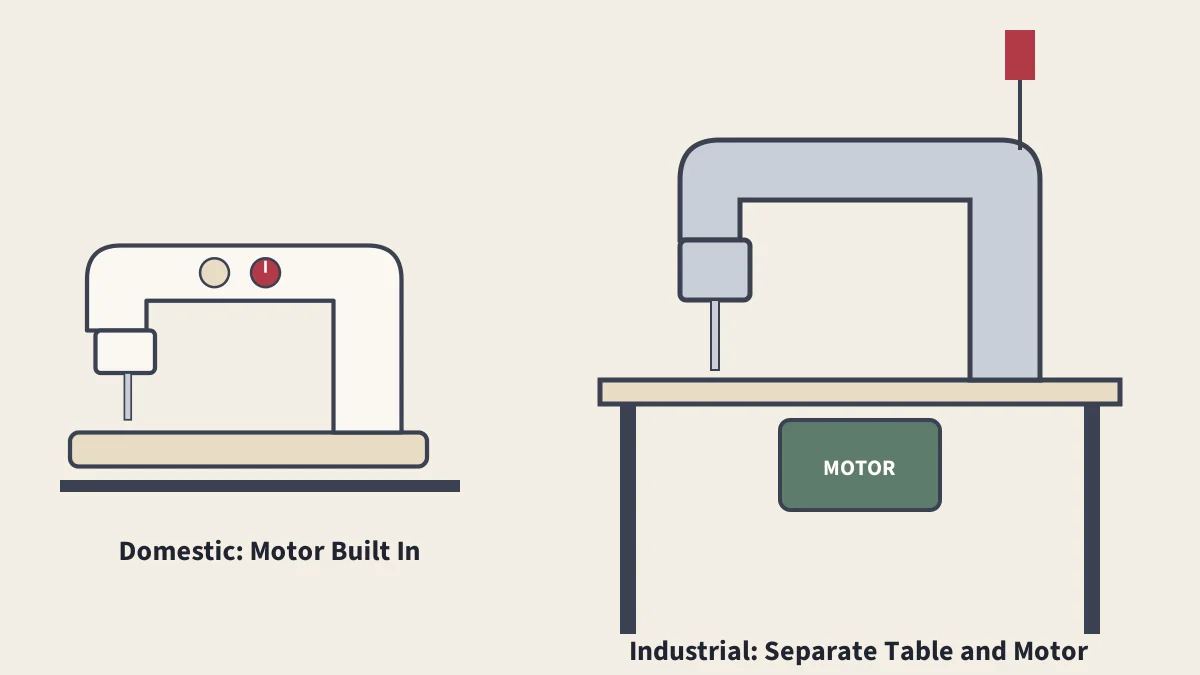
Industrial vs. Domestic Machines
Speed, motors, tables and single-purpose design compared.