Polyester: The Easy-Care Fiber Made From PET (2026)
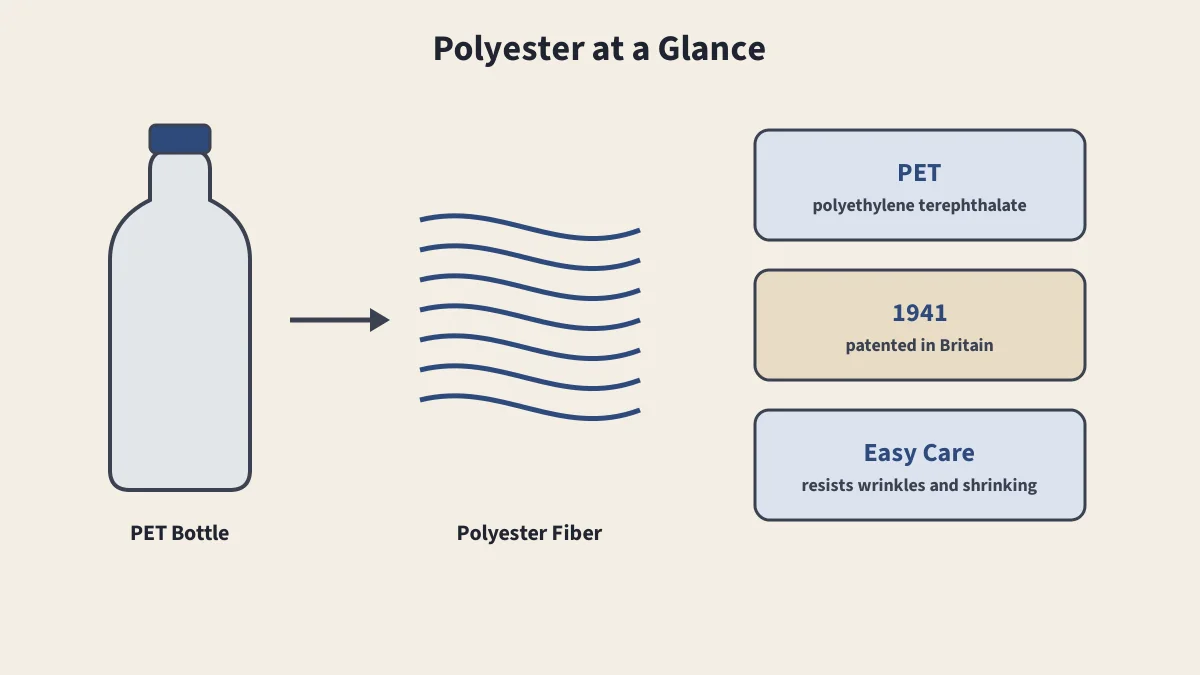
Polyester is everywhere, from sportswear to sewing thread. The same plastic used for drinks bottles is spun into fibers that resist wrinkles and shrinking, though they bring trade-offs of their own.
In This Article
Polyester in Brief
- Made of: usually PET, a petroleum-based plastic
- Invented: patented in Britain in 1941
- Strengths: resists wrinkling and shrinking, dries fast
- Weak points: low absorbency, static, can melt
- Uses: clothing, thread, fleece, linings, home textiles
Polyester is a family of plastics, and the polyester in most fabric is polyethylene terephthalate, or PET. That is the same material used for many drinks bottles. Melted and forced through tiny holes, it becomes long filaments that can be used as they are or cut into short staple fibers and spun like cotton. See natural vs. synthetic fibers.
A British Invention
British scientists John Rex Whinfield and James Tennant Dickson patented PET in 1941. It became the basis for fibers sold as Terylene in Britain and Dacron in the United States, and polyester went on to become one of the most widely used fibers in the world. Worldwide production of PET, for all uses, was around 30.5 million tonnes in 2019.
Properties
| Property | What It Means for You |
|---|---|
| Resists wrinkling and shrinking | Easy care; little ironing |
| Hydrophobic | Absorbs little water, so it dries fast and resists many stains |
| Strong and durable | Long-lasting thread and fabrics |
| Holds color | Colorfast when dyed correctly |
| Heat-sensitive | Can melt or glaze under a hot iron |
| Static and oil-attracting | Can cling and hold oily stains |
Recycled Polyester
Recycled PET, often called rPET and largely made from used bottles, is increasingly used in textiles. It keeps plastic out of landfill, but the resulting fabric still sheds microfibers and is difficult to recycle again, especially when blended with other fibers.
Microfibers
Synthetic fabrics release tiny fibers in the wash. A Plymouth University study estimated that an average 6 kg load of polyester fabric could release about 496,030 fibers, compared with about 137,951 for a polyester-cotton blend and 728,789 for acrylic. Washing less often, at lower temperatures, and fully loading the machine are commonly suggested ways to reduce shedding.
Polyester in Blends
Polyester is often blended with cotton (polycotton) for easy-care shirts and sheets, with wool for durable suiting, and with spandex for stretch. Blends combine polyester's strength and wrinkle resistance with the comfort of natural fibers.
Sewing With Polyester
- Use a sharp, fine needle for woven polyester and a ballpoint or stretch needle for knits; see sewing machine needles.
- Use polyester thread so thread and fabric behave alike.
- Press on low heat with a pressing cloth; test first, as polyester can melt or develop shine; see pressing tools.
- Expect slipperiness in fine polyester; pin within the seam allowance.
- Seams may pucker on tightly woven polyester; try a slightly longer stitch and lighter tension.
Sources
- Polyester, Wikipedia
- Polyethylene terephthalate, Wikipedia
Frequently Asked Questions
What is polyester made of?
Most polyester fabric is made of polyethylene terephthalate (PET), a plastic made from petrochemicals. The same material is used for drinks bottles and food packaging.
Who invented polyester?
British scientists John Rex Whinfield and James Tennant Dickson patented PET in 1941. It became the basis for fibers sold under names such as Terylene and Dacron.
Is polyester breathable?
Not very. Polyester is hydrophobic, so it absorbs little moisture. That makes it quick-drying and stain-resistant, but it can feel less comfortable than cotton in hot weather unless the fabric is engineered for wicking.
Does polyester shed microplastics?
Yes. One study found an average 6 kg wash load of polyester fabric could release an estimated 496,030 fibers, compared with 137,951 for polyester-cotton blends.
Keep Reading
Nylon
The first synthetic fiber, from stockings to parachutes.
Natural vs. Synthetic Fibers
Plant, animal, semi-synthetic and synthetic fibers compared.
Spandex, Elastane and Lycra
The stretch fiber behind leggings, swimwear and stretch denim.
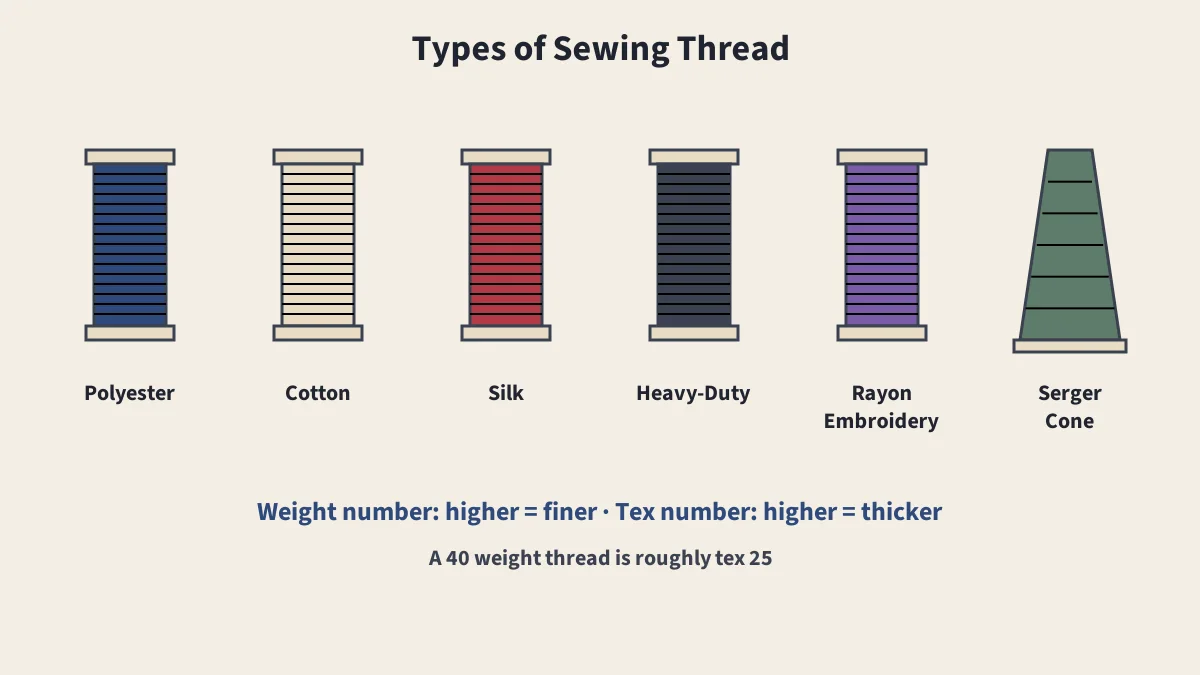
Types of Thread
Thread fibers, uses, and weight, tex and denier explained.